

Drive or Ship Your RV When Relocating? Complete Cost Comparison (2026)
Most RV owners planning a relocation make a critical mist...
19 June 2026
You found the perfect car. It has the right trim, the low mileage you wanted, and a price that beats anything in your local zip code. There is just one problem: it’s sitting on a lot 1,400 miles away.
Calculate Shipping Quotes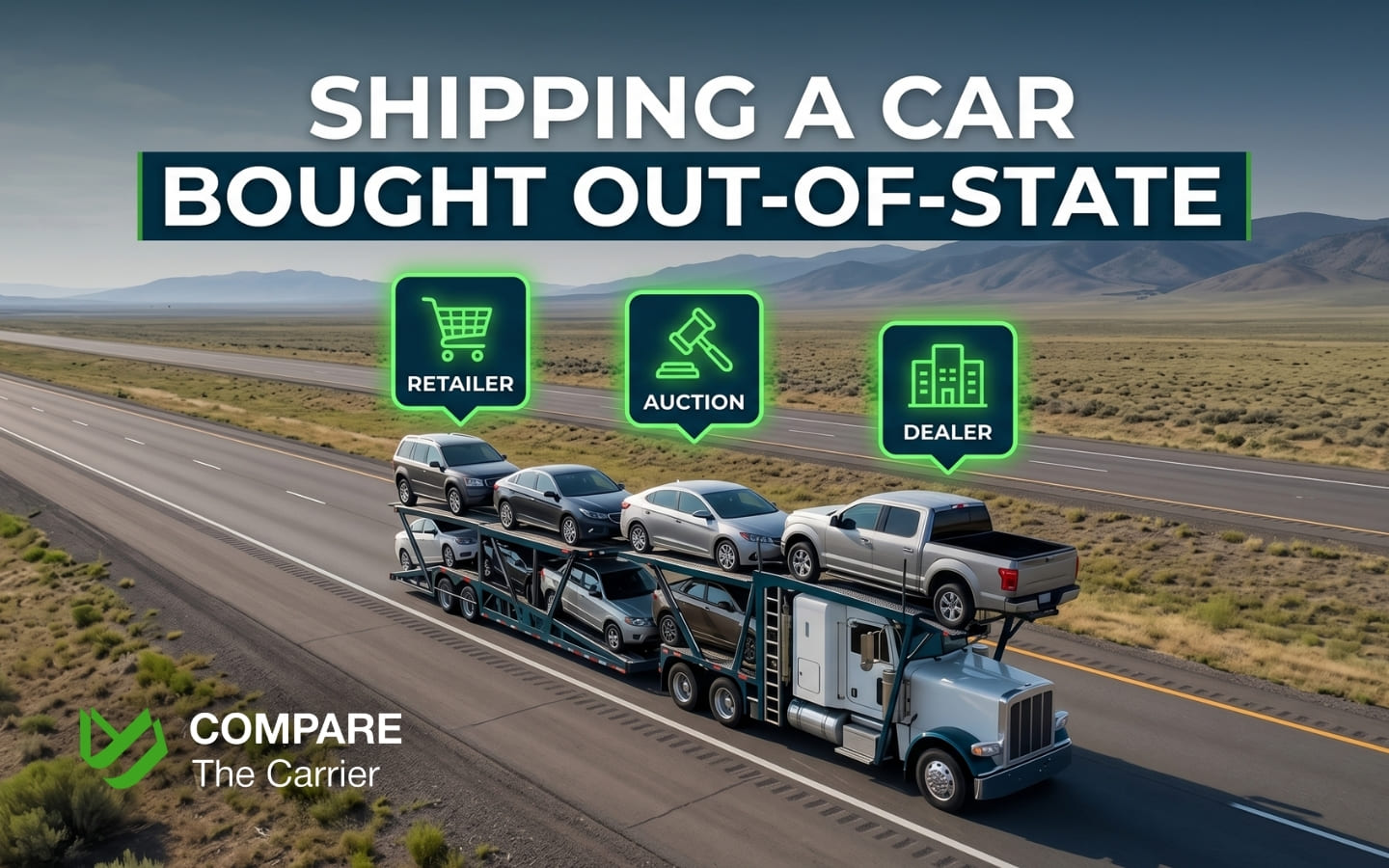
Buying a car out of state used to be a logistical nightmare reserved for professional collectors. In 2026, thanks to the Costco Auto Program, online auctions like Copart, and national listings on CarGurus, it is a standard Tuesday for many savvy buyers. However, finding the car is only half the battle. Getting it to your driveway without overpaying or risking damage is where the real work begins.
Whether you are navigating a pre-negotiated Costco deal, a time-sensitive auction win, or a standard dealership purchase, this guide will walk you through the logistics – the specific paperwork you need, how to avoid gate fees at auctions, and the reality of registration and sales tax that most guides ignore. For a full breakdown of transport methods and costs, see our Costco auto transport guide.
The platform you used to find the car is rarely the one that will ship it. A common misconception we see on Reddit is the assumption that Costco or CarGurus handles the delivery – they don’t. Shipping is almost always arranged separately, through a broker or carrier the buyer books directly.
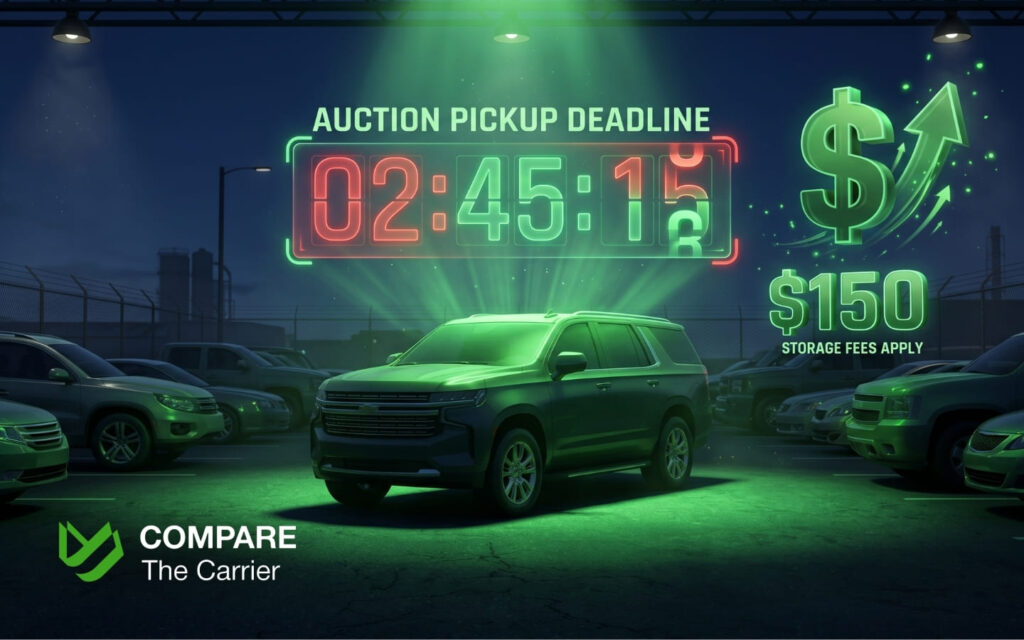
Whether you bought through Costco, won a bid on Copart, or found a deal on AutoTrader, the logistics of getting that car to your driveway work the same way every time – you’re the one responsible for booking transport. The table below breaks down what each buying channel typically expects from you before a carrier can be dispatched.
| Feature | Costco Auto Program | Online Auctions (Copart/IAAI) | Out-of-State Dealership |
| Pricing | Pre-negotiated, no-haggle | Bidding (market-driven) | Standard negotiation |
| Urgency | Flexible | High (storage fees apply) | Moderate |
| Vehicle Condition | New or certified pre-owned | Often salvage/non-running | New or used |
| Shipping Responsibility | Buyer (dealer may offer) | Buyer (must provide release) | Buyer (dealer may offer) |
Costco provides a fantastic discount through participating dealerships. However, that dealership might be several states away.
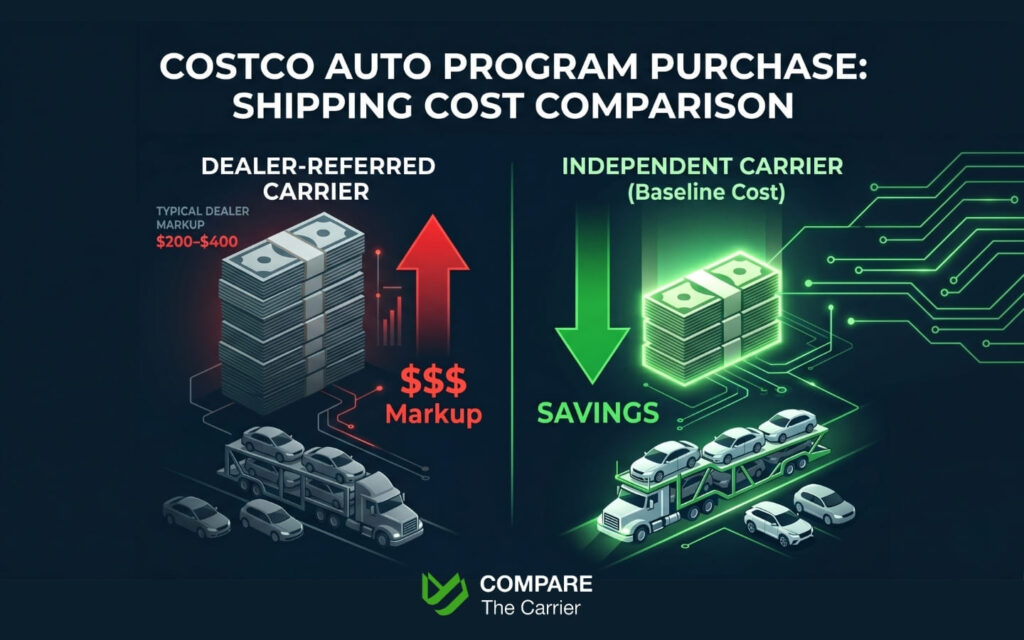
Costco-Referred vs. Independent Carrier
Dealerships often have “preferred” shippers. While convenient, this is rarely the cheapest way to move a car bought out of state. Dealers typically add a convenience markup of $200–$400 to the quote.
| Route: NY to FL | Dealer-Referred Carrier | Independent Carrier | Potential Saving |
| Open Transport | $1,350–$1,500 | $900–$1,150 | ~$400 |
| Enclosed Transport | $1,900–$2,200 | $1,400–$1,800 | ~$500 |
Pro Tip: Always use our vehicle shipping calculator to get an independent baseline before signing the dealer’s shipping contract.
Step-by-Step: Shipping Your Costco Purchase
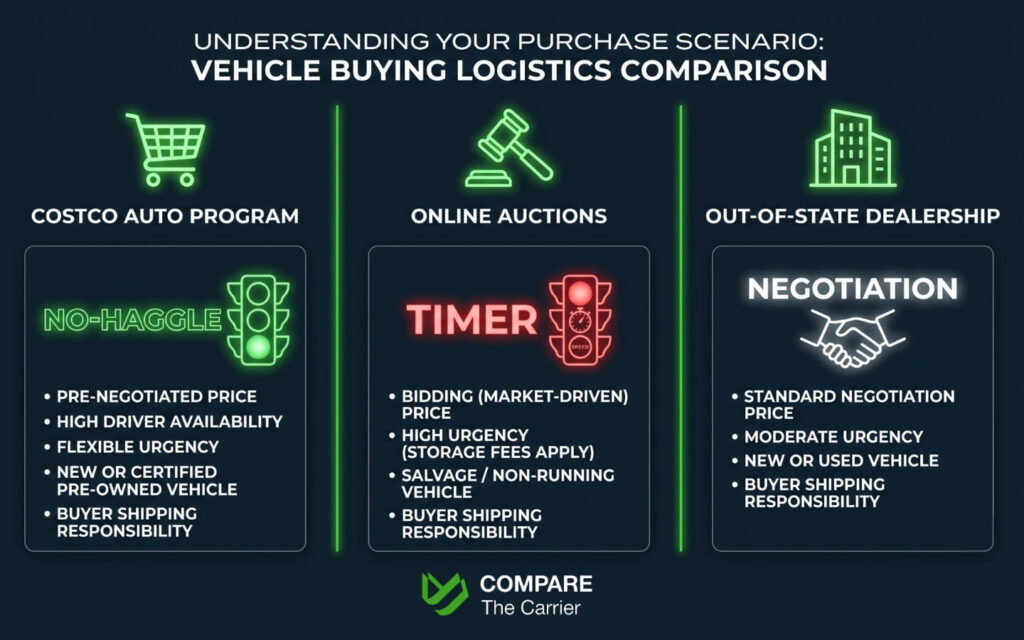
Auction shipping (Copart, IAAI, Manheim) is the most time-sensitive scenario. If you don’t have your logistics ready the moment the hammer falls, you will lose your savings to storage fees.
The Auction Shipping Timeline – Act the Same Day You Win
| Day | Phase | Action Required |
| Day 0 | Win | Pay for the vehicle immediately |
| Day 1 | Booking | Book your carrier – provide Lot # and Buyer ID |
| Day 2–3 | Verification | Send the Release Sheet (Gate Pass) to your carrier |
| Day 3–5 | Pickup Window | Carrier arrives before storage fees kick in |
| Day 6+ | Penalty Phase | Auction charges $50–$150/day in storage/gate fees |
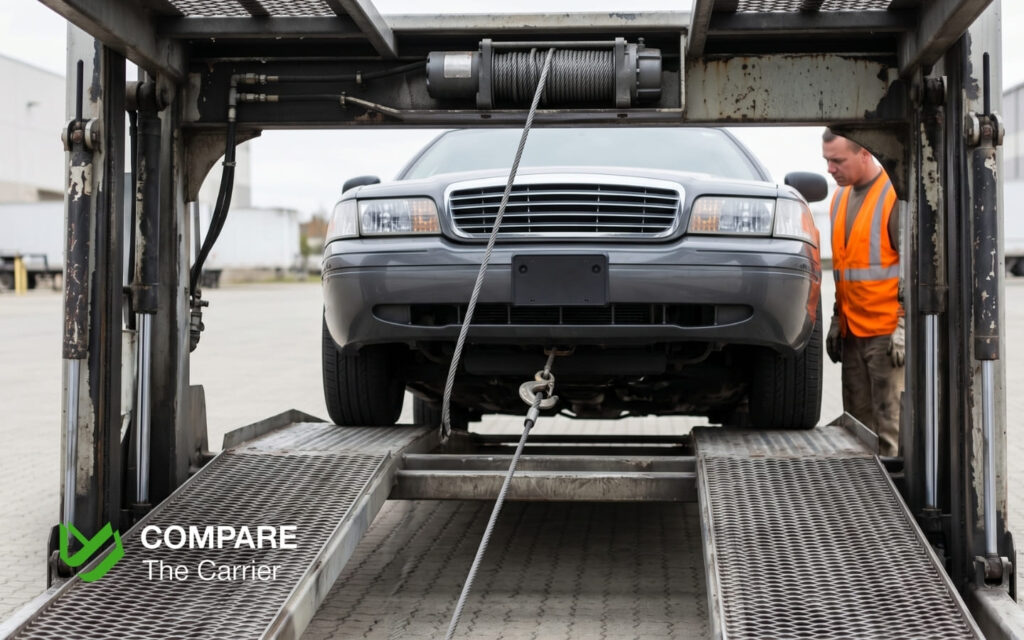
Important: If the car is non-running, notify the carrier before booking. Loading an inoperable vehicle requires a winch truck, which adds a $150–$250 Winch Fee. A carrier without winch equipment will be turned away and charge you a Dry Run fee of $150+. For the full Copart pickup process, including gate pass authorization, see our guide on how to ship a car from Copart.
The Release Sheet: A carrier cannot simply show up and ask for “the blue Ford.” You must send your Buyer’s Storage Release or Gate Pass to the carrier before pickup. Without it, the auction yard will turn the driver away.
Salvage Titles: If you bought a salvage title car to rebuild, check your state’s laws before shipping. Some states require a specialized inspection before the car can be entered on a trailer.
If you are buying from a standard dealership, you have the most leverage to negotiate shipping as part of the total out-the-door price.
The 200-Mile Rule: Drive vs. Ship
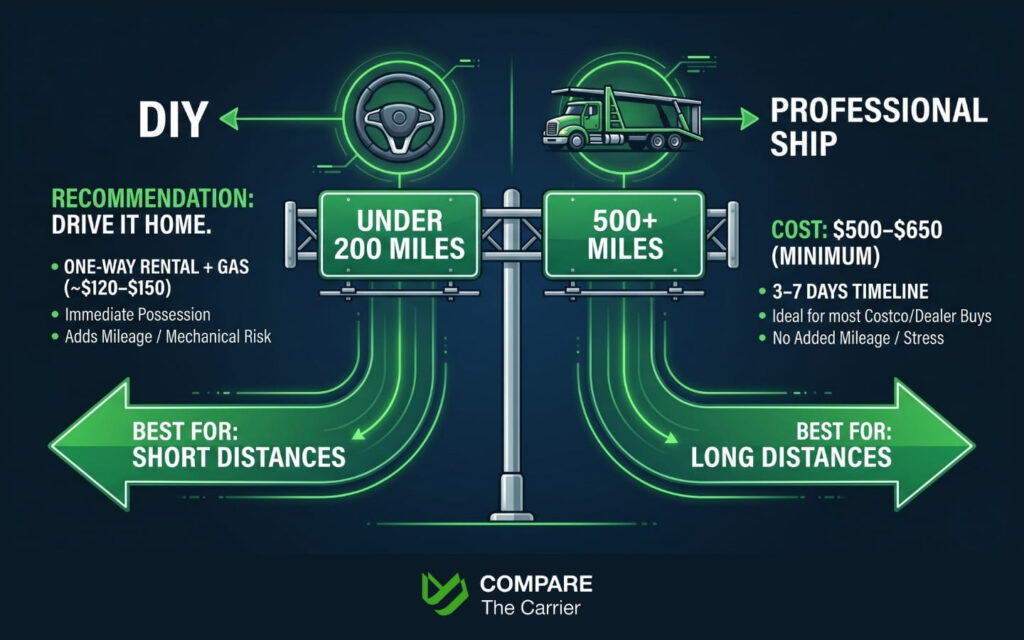
If the dealer is within 200 miles, professional shipping is often overpriced. Carriers charge a minimum fee of around $500 regardless of distance.
| Option | Cost | Best For |
| Professional shipping | $500–$650 | 500+ miles |
| DIY: one-way rental + gas | ~$120–$150 | Under 200 miles |
Recommendation: Under 200 miles – drive it home. Over 500 miles – use open auto transport.
Negotiating delivery: On high-margin vehicles (luxury SUVs, new trucks), dealers will often include shipping in the deal. If they refuse, ask them to split the cost.
Verify the carrier: If the dealer arranges shipping, demand the transport company’s name and MC number. Verify it at FMCSA.dot.gov before agreeing.
Remote inspection: Ask the salesperson to record a video of the car as it is loaded onto the trailer. This is your best defense if damage appears that “wasn’t in the listing.”
The biggest headache of an out-of-state purchase isn’t the distance – it’s the DMV. If your paperwork isn’t in order before the carrier picks up the car, you may end up with a vehicle you cannot legally drive or register.
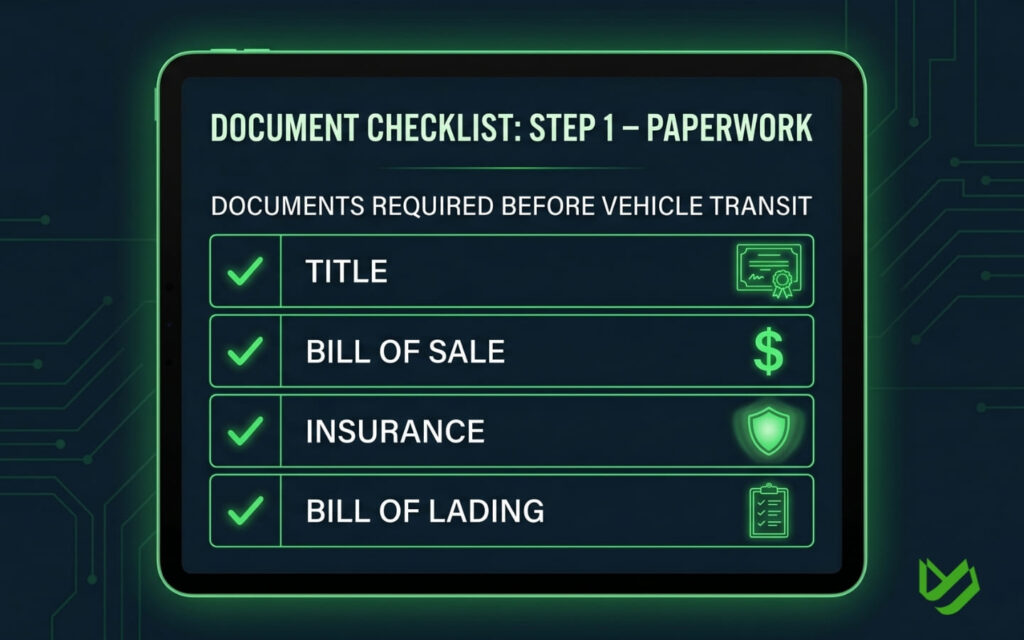
| Document | Responsibility | Why You Need It |
| Original Title | Seller / Dealer | To prove ownership and register in your home state |
| Bill of Sale | Seller / Dealer | For sales tax calculation at your DMV |
| Insurance Binder | You | Most policies cover a new car 7–30 days; verify before pickup |
| Bill of Lading (BOL) | Carrier | The condition report – do not sign until you inspect at delivery |
| Lien Release | Seller’s lender | Required if the seller had an outstanding loan on the vehicle |
| Transit Plate | You / DMV | Required only if you are driving the car home |
Note on liens: If there is an unpaid loan on the vehicle, the lien must be fully satisfied and released before the title can be transferred to you. Confirm this in writing before sending a carrier.
A recurring question: “How do I drive the car home if I don’t have plates yet?”
Most states offer a Trip Permit or Temporary Tag – many allow you to apply online through the DMV of the state where you bought the car. In states like Massachusetts, where temporary tags are difficult to obtain, you may need to register the car in your home state by mail and have plates sent to you before you fly out to pick it up.
Cost by Route (2026 – Aligned with Market Rates)
| Route | Distance | Open Carrier | Enclosed Carrier |
| NY to FL | ~1,280 mi | $900–$1,150 | $1,400–$1,800 |
| CA to TX | ~1,430 mi | $950–$1,200 | $1,500–$1,900 |
| CA to NY | ~2,800 mi | $1,100–$1,400 | $1,700–$2,200 |
| IL to FL | ~1,330 mi | $900–$1,150 | $1,400–$1,800 |
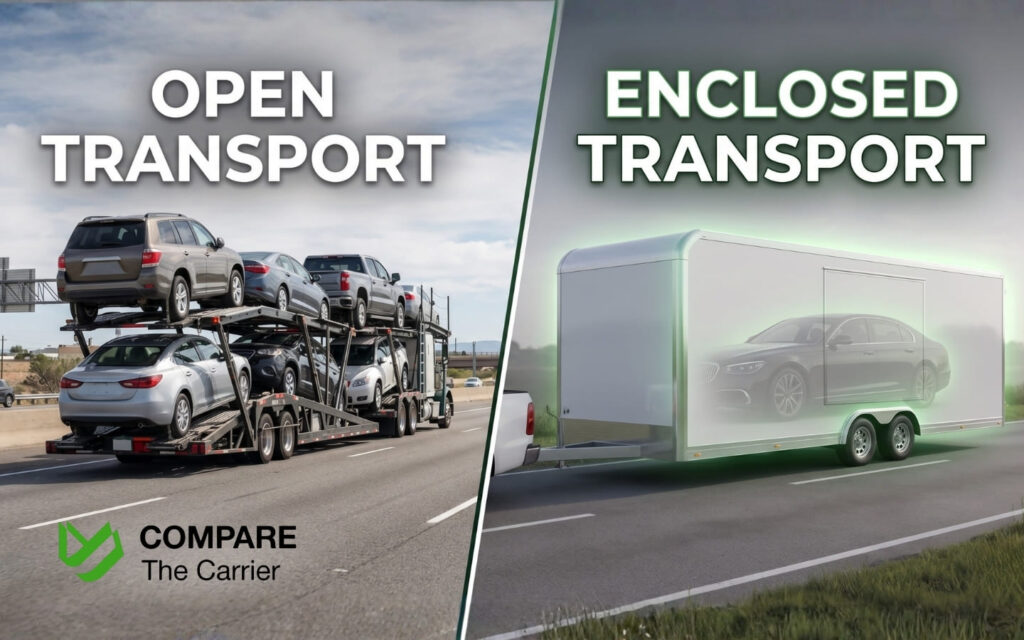
The most economical and widely available method – used for 90% of all shipments.
Your car travels inside a covered trailer – the white-glove option.
Drive-Away / Self-Drive
You fly to the location and drive the car home.
| Method | Avg. Cost (1,000 mi) | Timeline | Ideal Scenario |
| Open Transport | $800–$1,100 | 3–7 days | Most Costco/dealer buys |
| Enclosed Transport | $1,400–$1,800 | 5–10 days | Luxury / classic auction finds |
| Self-Drive | $150–$500 | 1–3 days | Under 200 miles |
Broker vs. Direct Carrier
Brokers don’t own trucks. They use a load board database (Central Dispatch) to find drivers for your route. About 95% of companies you find online are brokers – useful because they access thousands of drivers.
Carriers own the trucks. Dealing directly can be cheaper, but they only run specific routes.
What Drives Your Quote in 2026
Red Flags: How to Spot a Shipping Scam
The low-ball quote: If three companies quote $1,200 and one quotes $700, the $700 is a trap. They take your deposit, find no driver, then call back demanding $600 more to “guarantee” pickup.
100% upfront payment: Legitimate brokers do not charge the full amount until a driver is assigned or the car is picked up.
No FMCSA registration: No DOT or MC number means they are likely a lead-generator site that sells your phone number to telemarketers.
If you bought from a dealer, send them this checklist.
¼ tank rule: No full tank – it adds weight. A quarter tank is enough for loading and getting to the nearest gas station on arrival.
Remove personal items: Carriers are not licensed to move household goods. Items left in the car are uninsured. If a weigh station inspector finds a car full of personal belongings, the carrier faces fines – and passes them to you.
Disable alarms: Road vibrations trigger alarms constantly. Drivers will disconnect them.
Photo documentation: Take high-resolution photos of all four sides, the roof, wheels, and odometer before the car is loaded. These are your only pieces of evidence if damage is disputed at delivery.
Remove E-ZPass: Interstate sensors can trigger toll transponders while the car sits on the trailer, charging you for trips you never drove.
Ready to schedule pickup? Get instant shipping quotes to compare carriers before your car is loaded.
When and Where to Pay Sales Tax
The general rule: you pay sales tax in your home state when you register the car, not in the state of purchase.
The California rule: If you take physical delivery inside California and drive it out, the state may charge CA sales tax. This is why buyers shipping from CA dealers ensure the carrier picks up directly from the dealer lot – this establishes the car was exported, exempting you from CA tax.
Shipping directly from a dealer lot? Compare carriers that offer dealer-to-door pickup.
Out-of-State Title Transfer
To get home-state plates, you need: the original out-of-state title signed over to you, the bill of sale, and proof of local insurance.
VIN inspection: States including Florida, Kansas, and Arizona require a physical VIN inspection for any out-of-state vehicle. A police officer or DMV employee must verify that the dashboard VIN matches the title.
Registration window: Most states give you 30–90 days from the purchase date. Missing the window triggers late registration penalties.
Salvage and Rebuilt Titles (Auction Buyers)
If you bought a salvage title car from Copart or IAAI, you cannot register it as-is. The vehicle must be repaired to road-legal standards and pass a Rebuilt Salvage inspection. Only then will the DMV issue a Rebuilt title. Note: Many insurers will not provide full coverage on rebuilt titles.
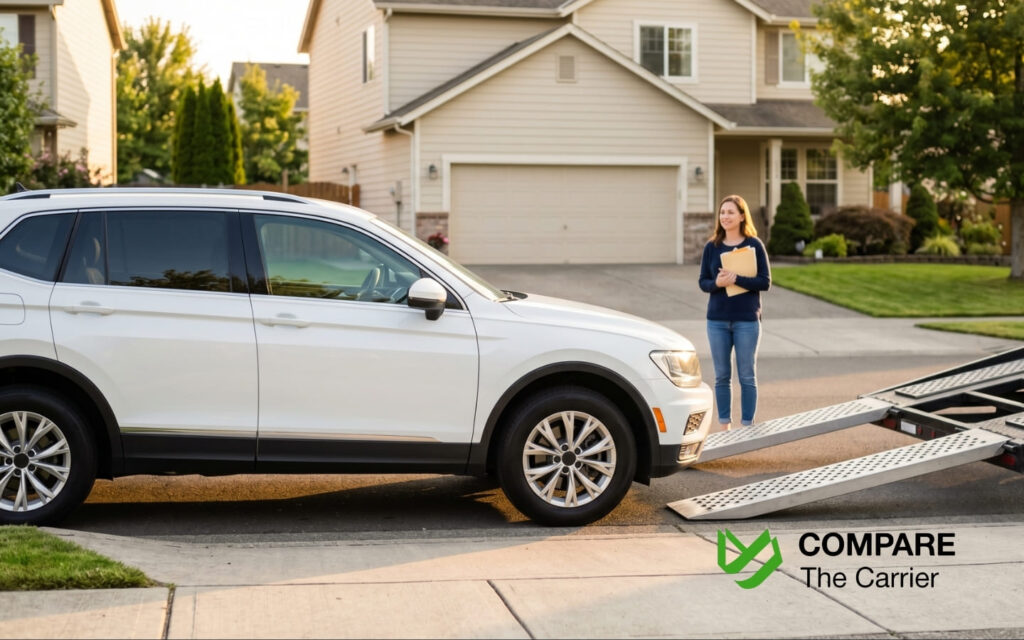
Shipping a car you bought out of state doesn’t have to be a gamble. Whether you used the Costco Auto Program, won a project car on Copart, or found a rare gem at a distant dealership, the process is the same: verify your paperwork, choose the right shipping method, and document everything.
Book at least two weeks in advance for the best price, verify any carrier’s MC#, and never pay 100% upfront.
Ready to bring your new purchase home? Compare real-time car shipping quotes from vetted carriers
For auction-specific logistics, read our full guide on how to ship a car from Copart.
No. The Costco Auto Program is a pricing service, not a logistics company. While the dealer may arrange shipping, Costco does not operate carriers. You are responsible for organizing transport, or picking the car up yourself.
Technically no. Carriers are not licensed to move household goods. While many drivers allow up to 100 lbs in the trunk, these items are not insured. If the car is broken into or items are damaged, neither the carrier’s cargo insurance nor your auto policy will cover the loss.
Transit itself takes 3–7 days for cross-country moves and 1–3 days for regional moves under 500 miles. Plan for an additional 2–5 day pickup window after booking. To minimize the wait and get a lower rate, book 14–21 days before your desired pickup date – carriers plan routes 2–3 weeks out, and competition for your load is higher.
Yes. Without a plate, you cannot legally drive the vehicle. Obtain a Temporary Transit Permit or Trip Permit from the DMV of the state where the car is located. A Bill of Sale in the window is not a substitute.
Do not sign the Bill of Lading until you have inspected the car in good light. Note any damage clearly on the BOL before signing and photograph it immediately. File a claim with the carrier’s insurance before the driver leaves your property.
Yes, but disclose this when booking. The carrier needs a winch-equipped truck, which adds $150–$250 to the cost. If you fail to disclose and the driver arrives without the right equipment, you will be charged a Dry Run fee of $150+ and need to rebook.
In most states, at your local DMV, when you register the car, you receive permanent plates. Keep your Bill of Sale as proof of the purchase price – the tax is calculated on that amount, not the car’s market value.





Don't have time to fill out the form?
Call a transport company directly to get a quote now!
Select the category you need
Partner with Compare The Carrier & Grow!
We're open to collaborations, partnerships, and mutual growth! Whether you're an individual or a business, we offer exciting opportunities to work together. Fill out the form below to explore how we can collaborate.
Something Went Wrong
We're sorry, but something went wrong. Please briefly describe the problem you experienced in the text area below. Providing your contact information will allow us to follow up if needed.

Thank you,
your form has been accepted.
Your form has been successfully submitted. We appreciate your effort — our team will review it shortly and take the next steps.


