

How Long Does Car Shipping Really Take in 2026?
Car shipping in the US takes 3 to 14 days, depending on d...
15 May 2026
The cheapest way to move two cars to another state depends on distance. For moves under 500 miles, driving both cars in a convoy costs roughly $420 in gas with zero shipping fees. For moves over 1,000 miles, shipping both cars with a multi-car discount ($1,350–$1,710 for 1,500 miles) beats driving when you factor in hotels, fuel, and vehicle wear and tear.
Calculate Shipping Quotes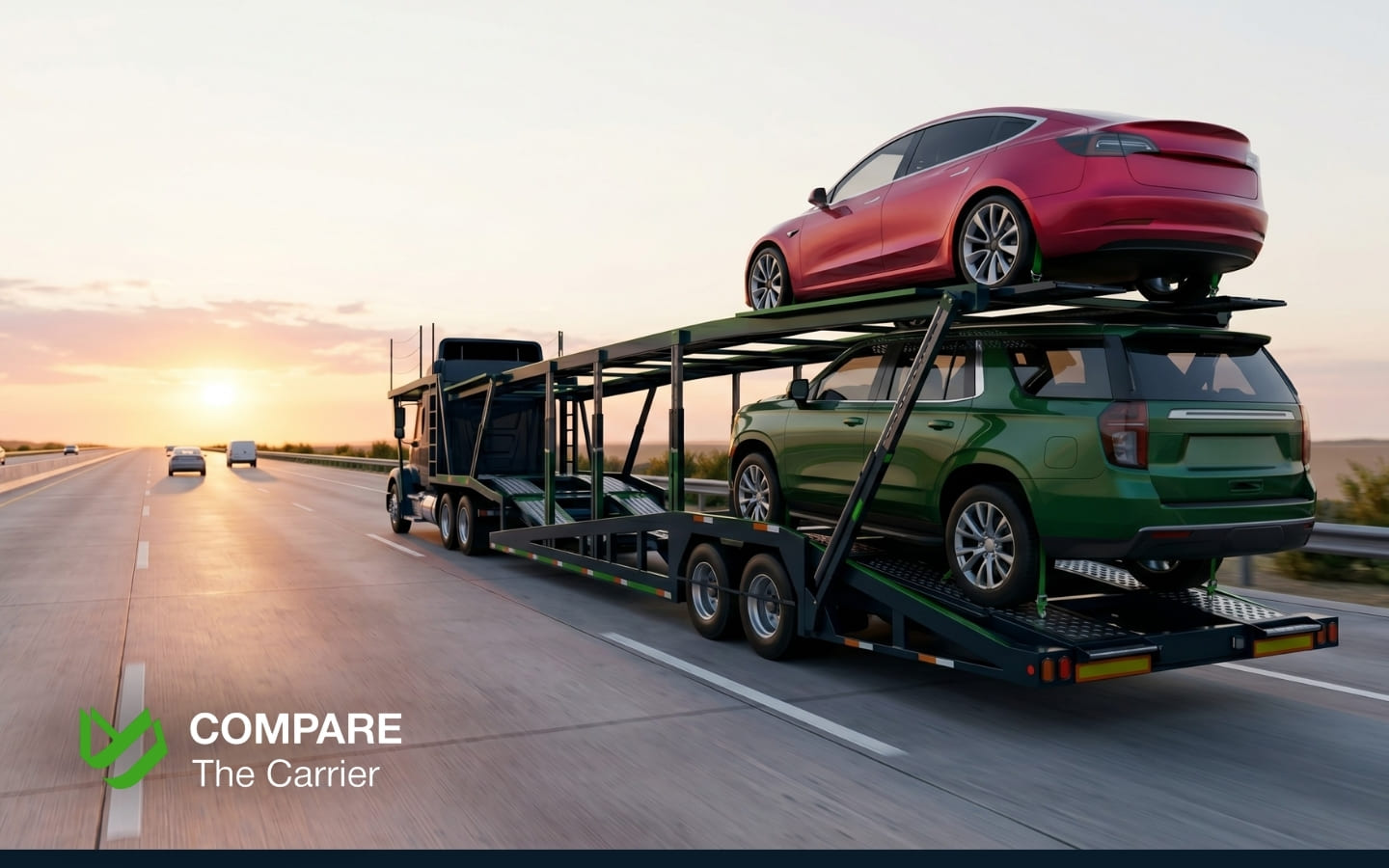
The four main strategies are: drive both cars, drive one and ship one, ship both, or rent a moving truck and tow one car on a dolly.
This guide breaks down the exact cost math for each option so you can find the cheapest solution for your specific route.
Relocating a single vehicle is straightforward: you either drive it or put it on a truck. Moving two cars introduces a compounding problem: you need two competent drivers available at the exact same time.
If both of you drive the cars, who drives the truck with your furniture? If you rent a U-Haul, you can only tow one car – what happens to the second? The logistics get messy fast. Driving two cars also doubles your travel expenses. You aren’t just paying for gas; you are paying for twice the fuel, twice the toll fees, and adding thousands of miles of wear and tear to two separate engines and sets of tires.
To solve this, you need a strategy that balances your budget with your sanity.
Your Main Options: A Quick Overview
Before we dive into the exact math, here are the four primary strategies for moving two cars to another state:
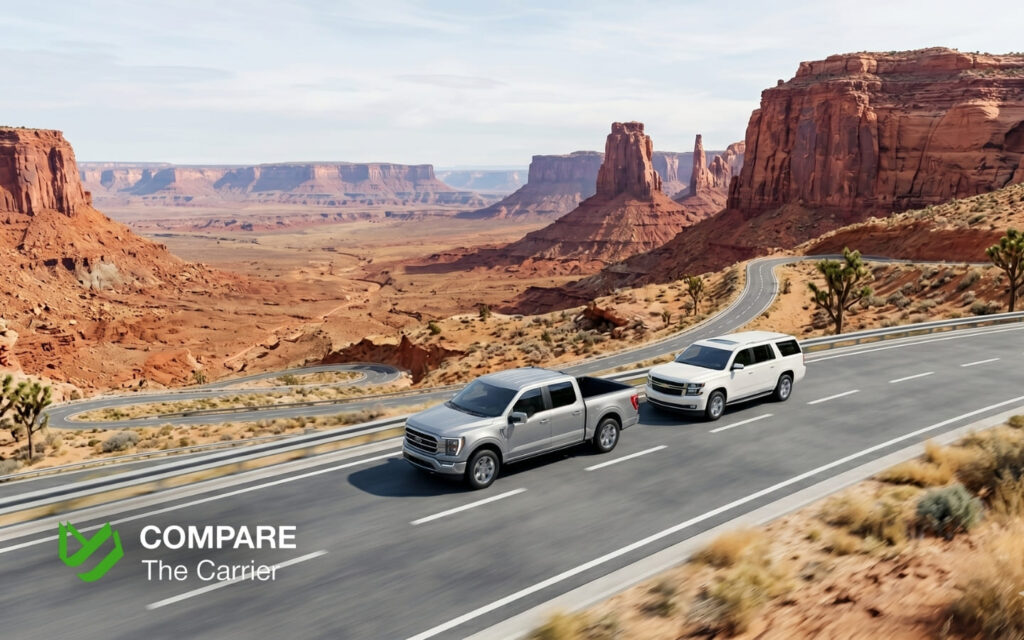
This is usually the first idea people have because it feels like the cheapest option. You don’t have to pay a transport company, so it must save money, right? Not always.
When it works: This strategy is viable for short-to-medium moves (under 500 miles) where the drive can be completed in a single day without requiring a hotel stay.
The Real Cost Math
To figure out if this is actually cheaper, use this formula:
(Total Miles ÷ Vehicle MPG) × Gas Price × 2 Cars + (Hotel Cost × Nights) + (Food Budget × 2 People × Days) = Total Cost
For a 1,500-mile move (e.g., Chicago to Miami) at $3.50/gallon, with an average 25 MPG for both cars:
The Hidden Cost: You are also adding 3,000 miles of combined wear and tear to your vehicles. According to AAA, driving costs roughly $0.10 to $0.15 per mile in maintenance and depreciation – an invisible $300–$450 cost on your tires, oil, and brakes.
When it DOESN’T work: Do not choose this option if you have small children, easily stressed pets, only one licensed driver, or if the drive is over 1,000 miles. Driving in a convoy is exhausting, and getting separated in heavy traffic or construction zones adds unnecessary stress to an already stressful week.
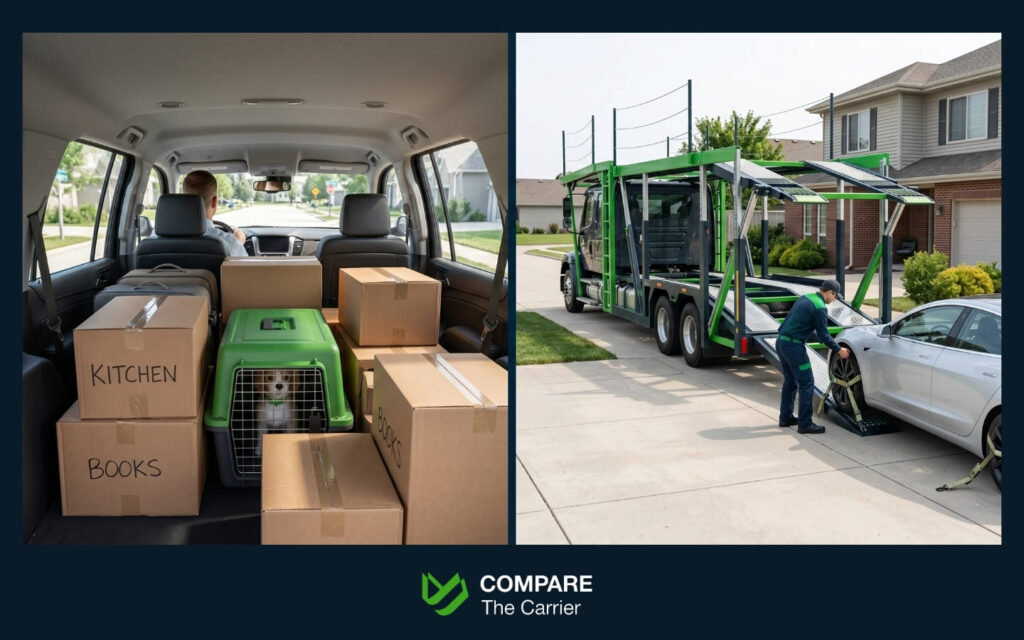
This is the most popular strategy for couples relocating. It offers the perfect middle ground between budget and convenience.
How it works: You take the larger or more reliable of your two vehicles (like an SUV), load it with fragile items, electronics, and pets, and one partner drives it to the new state. The second car (usually the commuter sedan) is picked up by an open carrier auto transport company. The second partner takes a cheap flight to the destination city a few days early to sign the new lease, get the keys, and be present to accept the delivery of the shipped car.
The Real Cost
Pros
Cons
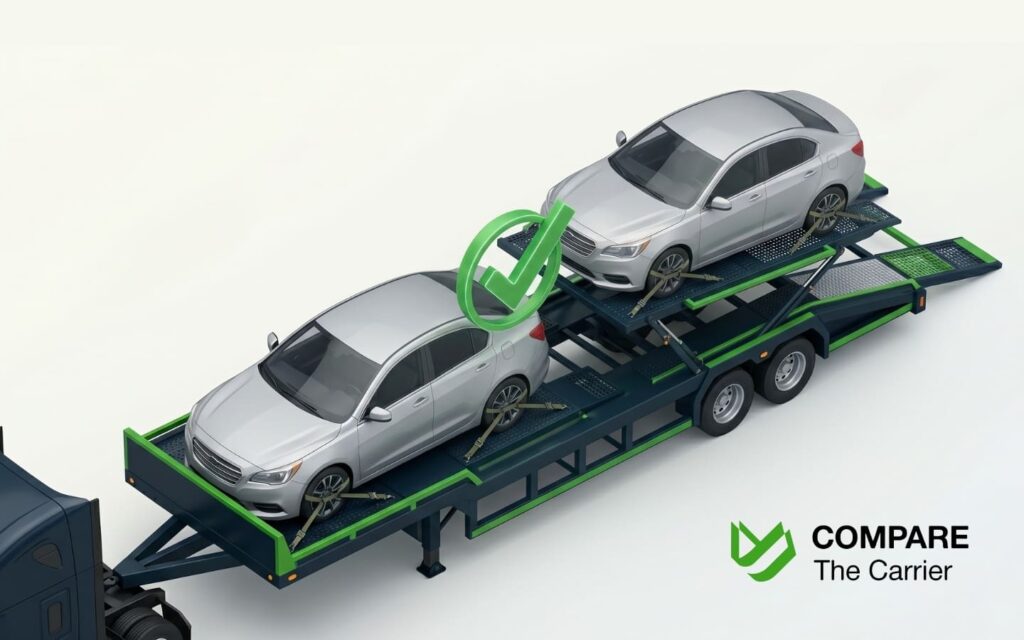
If you are moving out of a 1-bedroom apartment, chances are you are either renting a moving truck or using a portable storage container (like a POD) for your furniture. If you’re driving a large moving truck, neither of you will want to drive a separate car behind it for 2,000 miles. Shipping both cars is the ultimate stress-saver.
The biggest secret to multi-car shipping is that auto carriers want your dual booking. A truck driver makes more profit by loading two cars at the same location and dropping them off at the same destination – it saves them hours of driving around suburban neighborhoods looking for single cars. Brokers and carriers will almost always offer a 10% to 20% discount on the total invoice when you ship two cars together.
When it works: This is the best option for cross-country moves (1,500+ miles), families moving with small children who need to fly, or couples who are hiring a moving company and simply want to arrive via a two-hour flight.
| Distance | Avg Cost (1 Car) | Estimated Cost (2 Cars w/ Discount) | Savings via Discount |
| 800 miles | $550 – $700 | $990 – $1,260 | $110 – $140 |
| 1,500 miles | $750 – $950 | $1,350 – $1,710 | $150 – $190 |
| 2,500 miles | $1,000 – $1,300 | $1,800 – $2,340 | $200 – $260 |
Note: Prices are estimated 2026 rates for standard sedans on an open carrier. SUVs and trucks will cost slightly more due to weight.
While paying $1,500+ upfront sounds steep, compare it to Option 1. Once you factor in $1,100 in gas and hotels – plus wear and tear – shipping both cars often breaks even with driving, while saving you four days of highway exhaustion.
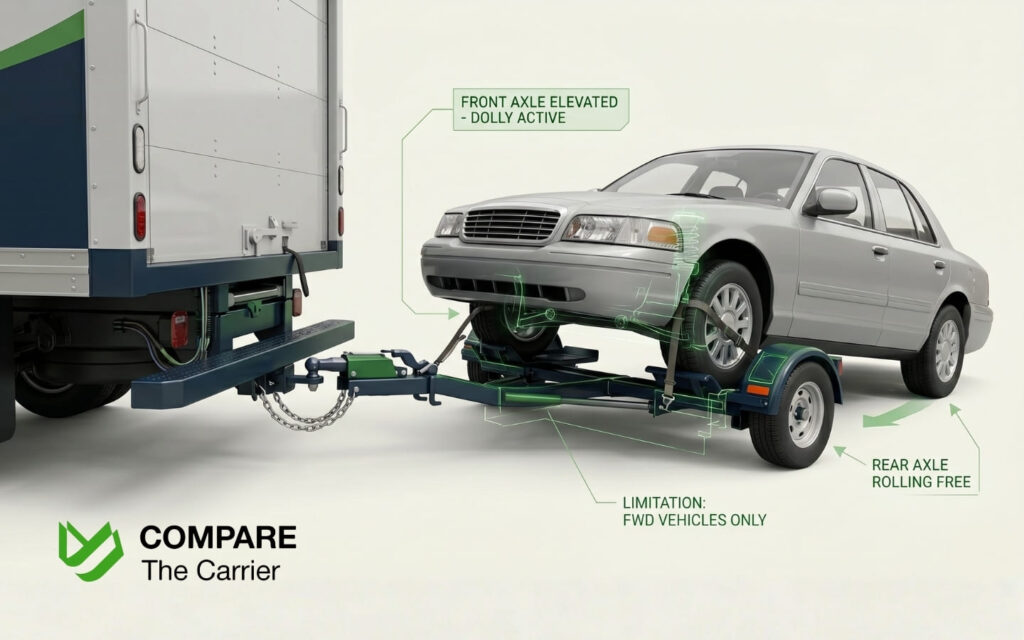
If you are already planning a DIY move for your 1-bedroom apartment, combining your household goods and vehicles into one trip seems logical. In this strategy, you rent a moving box truck, attach a car dolly to the back for Car A, and your partner drives Car B behind you.
How it works: You load your furniture into a 15-foot or 20-foot rental truck. You then secure Car A to a tow dolly (which lifts only the front wheels off the ground) or an auto transport trailer (which keeps all four wheels off the ground). Your partner follows in Car B.
Do not look only at the base rental price of the truck. Moving truck companies make their margin on mileage fees, insurance, and the extreme fuel consumption of a fully loaded commercial vehicle pulling a car.
You cannot put just any vehicle on a cheap car dolly. A tow dolly is exclusively for Front-Wheel Drive (FWD) vehicles. If you attempt to tow an All-Wheel Drive (AWD), 4-Wheel Drive (4WD), or Rear-Wheel Drive (RWD) vehicle with its rear wheels spinning on the highway, you will destroy the transmission within 50 miles. AWD and RWD cars absolutely require a full flatbed auto transport trailer, which is heavier, more expensive to rent, and significantly harder to maneuver.
When it DOESN’T work: Driving a 20-foot box truck is difficult. Driving a 20-foot box truck with a car attached to the back is incredibly stressful, especially through mountains, crosswinds, or city traffic. You cannot put the truck in reverse easily, making gas stations and hotel parking lots a nightmare. Unless you have experience hauling heavy loads, the minimal savings are rarely worth the high stress.
If shipping two cars is your best route, you still need to optimize the booking to keep costs down. Auto transport pricing is a fluid spot market governed by supply, demand, and driver availability. Apply these strategies to pull the price down by $200 to $400.
The ideal booking window is 3 to 4 weeks before your desired pickup date. If you book early, brokers have time to post your double-load on the central dispatch board at a lower rate and wait for a carrier to accept it. If you book 3 days before you move, the broker must post a premium“expedited” price to bribe a driver into altering their route.
Carriers operate on windows, not exact dates. If you give a strict 24-hour pickup requirement, you will pay a premium. If you offer a 3-day to 5-day open pickup window, you give the dispatcher flexibility to slot your two cars into their most efficient route, resulting in a lower quote.
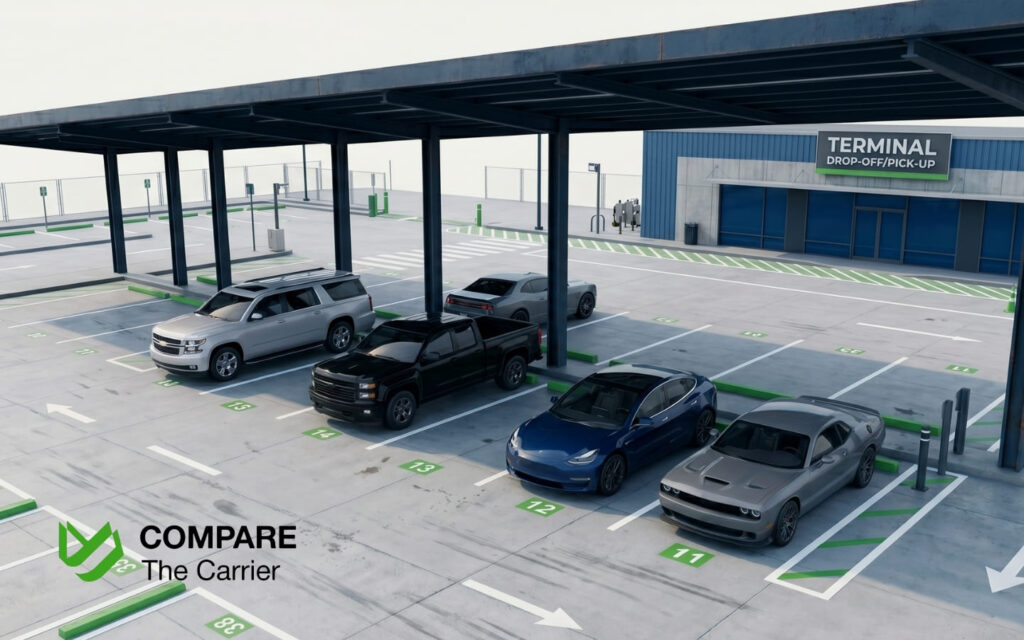
Standard auto transport is door-to-door, meaning an 80-foot truck navigates into your residential neighborhood. If you are willing to drop off both cars at a regional carrier depot and pick them up at a depot in your new state, you save the driver hours of local navigation. This strategy reliably cuts $50 to $150 off the price per car. Learn more about terminal-to-terminal vs door-to-door auto transport.
Unless one of your vehicles is a classic car, a high-value exotic, or has very low ground clearance, stick to open carrier auto transport. Enclosed shipping costs 30% to 50% more. Open transport is how dealerships move 95% of brand-new inventory across the country – it is perfectly safe for your daily drivers.
Never assume the discount is automatically applied to your online quote. After receiving an initial estimate, call the broker directly and state: “I have two running vehicles moving from the exact same pickup zip code to the exact same delivery zip code. What is your multi-car discount for this load?” Expect a 10% to 20% reduction.
The auto transport industry relies heavily on promotional discounts. If you belong to specific demographics, force the broker to stack the savings:
Ask the broker directly if they will combine your multi-car discount with your demographic discount.
The most expensive time to ship a car is between May and August. Learn more about how seasonality impacts auto transport costs. Prices also surge at the end of every month when apartment leases expire. If you have control over your schedule, book your pickup for the middle of a month in the fall or winter to secure off-peak rates.
Most consumers use auto transport brokers who have access to a network of 15,000+ carriers. Understand the difference between a carrier and a broker before you start. Get quotes from at least three different brokers. Discard the lowest quote – it is usually a bait-and-switch tactic – and negotiate between the middle and highest quotes based on their FMCSA safety records. You can also check our list of top car shipping companies for vetted options.
Handing over the keys to two vehicles simultaneously requires absolute certainty about liability. By federal law, every active motor carrier must hold valid cargo insurance to operate. Read our full auto transport insurance guide before you book.
The carrier’s cargo policy covers damage caused by their equipment or driver negligence – such as a loading ramp scratching a bumper or the truck getting into an accident. It generally does not cover “Acts of God” (like hail damage during transit) or standard road debris (like a pebble cracking a windshield on the highway), which are considered inherent risks of open transport.
What is NOT covered: Personal belongings packed inside the vehicle are strictly excluded from the carrier’s cargo insurance. If someone breaks into your car at a truck stop and steals your television, the carrier is not liable.
The Bill of Lading (BOL): This is the most critical document in auto shipping. When the driver arrives, you will walk around both cars and document every existing scratch and dent on the BOL. You must repeat this process upon delivery. If one of your cars arrives with a new dent but you sign the delivery BOL without noting the damage, your insurance claim will be automatically denied. Document everything on paper before signing. See also: how to handle auto transport claims.
Prepping two vehicles for a long-distance haul requires more than just handing over the keys. Read our full vehicle condition documentation guide and run this checklist for both vehicles 48 hours before the truck arrives:
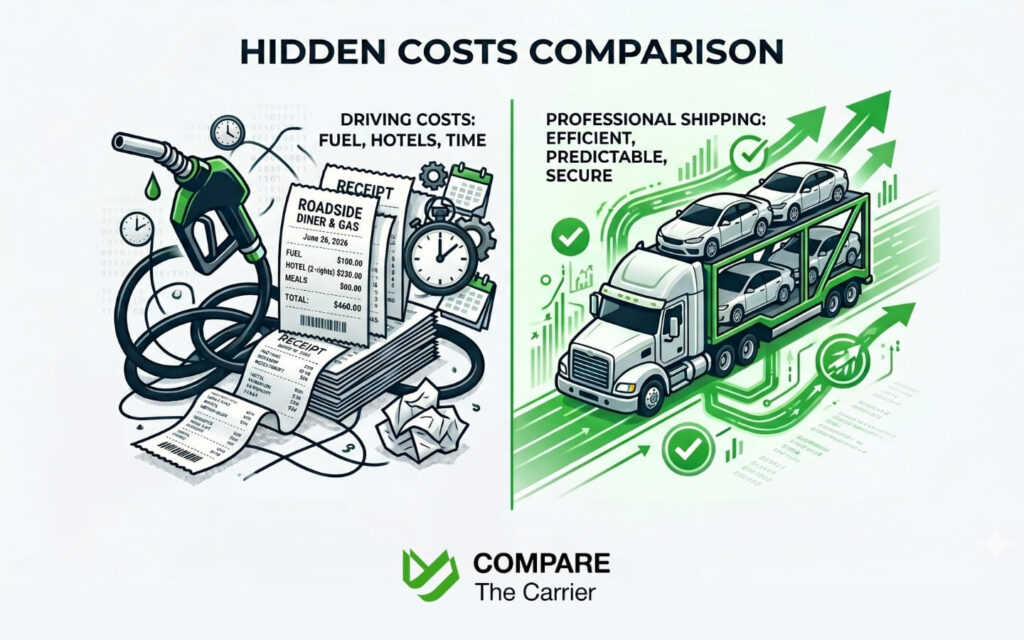
To find the absolute cheapest strategy, you must look at the total landed cost of the move. Here is the master comparison for a standard 1,500-mile cross-country move involving two adults, two standard sedans, and the contents of a 1-bedroom apartment.
| Strategy | Household Moving | Vehicle Transport | Travel & Lodging | Est. Total |
| Option 1: The Convoy | PODS = $1,500 | Both drive = $420 (gas) | $690 (hotels + food) | ~$2,610 |
| Option 2: The Split | Moving Truck = $1,500 | 1 drives, 1 ships ($850) | $550 gas/hotel + $150 flight | ~$3,050 |
| Option 3: Ship Both | PODS = $1,500 | Ship 2 cars = $1,550 | 2 flights = $300 | ~$3,350 |
| Option 4: The Dolly | Moving Truck = $1,500 | Dolly $300 + gas $210 | Truck gas $650 + $690 hotel | ~$3,350 |
For distances under 500 miles: Option 1 (driving both cars) is undeniably the cheapest, as you eliminate hotel costs entirely and only pay for gas.
For distances over 1,000 miles: The math shifts heavily. Driving two cars or towing a dolly incurs massive hidden costs in fuel, hotel nights, and physical exhaustion. Option 3 (Shipping Both) costs slightly more on paper, but it removes 3,000 miles of vehicle depreciation, eliminates the risk of driving a box truck with a tow dolly, and turns a grueling 4-day highway slog into a 3-hour flight.
Booking at the last minute: If you try to book auto transport fewer than 7 days before your move, you will pay a $200–$400 “expedited” premium. See our guide to expedited auto transport to understand when it’s worth it.
Hiding the car’s true condition: If one of your cars does not start, tell the broker immediately. Non-running vehicles require a carrier with a winch, which incurs a $150–$200 surcharge. If the driver arrives and discovers the car is dead, lowered, or lifted, they will refuse the load and keep your deposit.
Choosing a carrier purely on price: Unlicensed brokers will quote you $500 for a $1,000 route just to get your credit card on file, then hold your car hostage later. Always verify the company’s USDOT number via the FMCSA SAFER system before signing a contract. Check our list of auto transport companies to avoid and learn how to verify an MC number.
Leaving valuables in the car: Carriers are targets for theft at truck stops. Your carrier’s cargo insurance does not cover laptops, jewelry, or cash left in your glovebox.
Skipping the pre-load photos: If the driver scratches your bumper during loading but you don’t have time-stamped photos proving the bumper was clean before pickup, your insurance claim will be denied.
Moving to another state with two cars is not twice the problem – it is twice the planning. The difference between a $2,600 move and a $4,400 move comes down to one decision: whether you let logistics happen to you, or whether you take control of it before moving week arrives.
You now have the complete picture. You know the real math behind driving two cars in a convoy, why the car dolly strategy is far more expensive than the rental quote suggests, and exactly how multi-car shipping discounts work – and how to force brokers to apply them.
The strategy is simple: for anything under 500 miles, drive both cars. For anything over 1,000 miles, ship both cars with a multi-car discount, buy two cheap plane tickets, and arrive at your new home rested instead of exhausted from four days on the highway.
One thing that catches most people off guard is timing. The moment your moving date is confirmed, your first call should be to an auto transport broker – not your last. Carriers need 3 to 4 weeks to slot two vehicles onto the same truck at the best rate. Wait until the week of the move, and that discount disappears.
Ready to get a number for your specific route? Get instant quotes from FMCSA-licensed carriers who specialize in multi-car moves:
Calculate Your Two-Car Shipping Cost
Yes. Auto transport companies prefer multi-car loads because it saves the driver from driving to multiple pickup locations. Brokers and carriers typically offer a multi-car discount of 10% to 20% off the total invoice when you ship two vehicles from the same origin to the same destination simultaneously.
Most carriers allow up to 100 pounds of personal belongings secured in the trunk. These items must be packed below the window line to comply with federal line-of-sight safety regulations. Personal items are forbidden in the front seats and are never covered by the auto transport company’s cargo insurance.
For a standard cross-country move (1,500 to 2,500 miles), expect transit to take between 5 and 10 days. Routes moving north-to-south (like New York to Florida) are faster due to high truck volume. The carrier will provide a 2-day to 3-day delivery window rather than an exact hour, as drivers are subject to weather, traffic, and mandatory DOT rest periods.
For short moves (under 500 miles), driving both cars in a convoy is the cheapest option. For long-distance moves (over 1,000 miles), shipping both cars with a multi-car discount and buying two cheap plane tickets is often the most cost-effective strategy once you factor in hotel rooms, highway food, towing rentals, and vehicle depreciation.
Either you or a designated, trusted adult over the age of 18 must be physically present at both the pickup and delivery locations. This person must hand over the keys and carefully inspect the vehicles alongside the driver to sign the Bill of Lading. If you cannot be there, assign a neighbor, friend, or relative to act on your behalf.
Yes, you can ship an inoperable vehicle alongside a running one, but it requires a carrier equipped with a winch. You will still qualify for a multi-car discount, but expect a $150–$200 winch surcharge for the non-running vehicle. The inoperable car must still be able to roll, brake, and steer so the driver can safely pull it onto the trailer.
Yes. When you book a multi-car shipment, brokers dispatch both vehicles to a single carrier to secure the discounted rate. This ensures both cars are loaded together and arrive at your new home on the exact same day. If severe weight restrictions on the carrier’s route force a split shipment, your broker must notify you and confirm the logistics before dispatching.









Don't have time to fill out the form?
Call a transport company directly to get a quote now!
Select the category you need
Partner with Compare The Carrier & Grow!
We're open to collaborations, partnerships, and mutual growth! Whether you're an individual or a business, we offer exciting opportunities to work together. Fill out the form below to explore how we can collaborate.
Something Went Wrong
We're sorry, but something went wrong. Please briefly describe the problem you experienced in the text area below. Providing your contact information will allow us to follow up if needed.

Thank you,
your form has been accepted.
Your form has been successfully submitted. We appreciate your effort — our team will review it shortly and take the next steps.


