

Auto Transport Myths: The Truth About Tracking, Timing & Delivery
The auto transport industry is a massive, complex machine...
18 December 2025
Hot shot car transport is a specialized vehicle shipping method that uses medium-duty trucks and compact trailers to move 1–3 vehicles at a time. Unlike traditional 10-car open carriers, hot shot haulers offer faster departure times, easier access to residential and rural areas, and a more direct door-to-door experience across the United States.
Calculate Shipping Quotes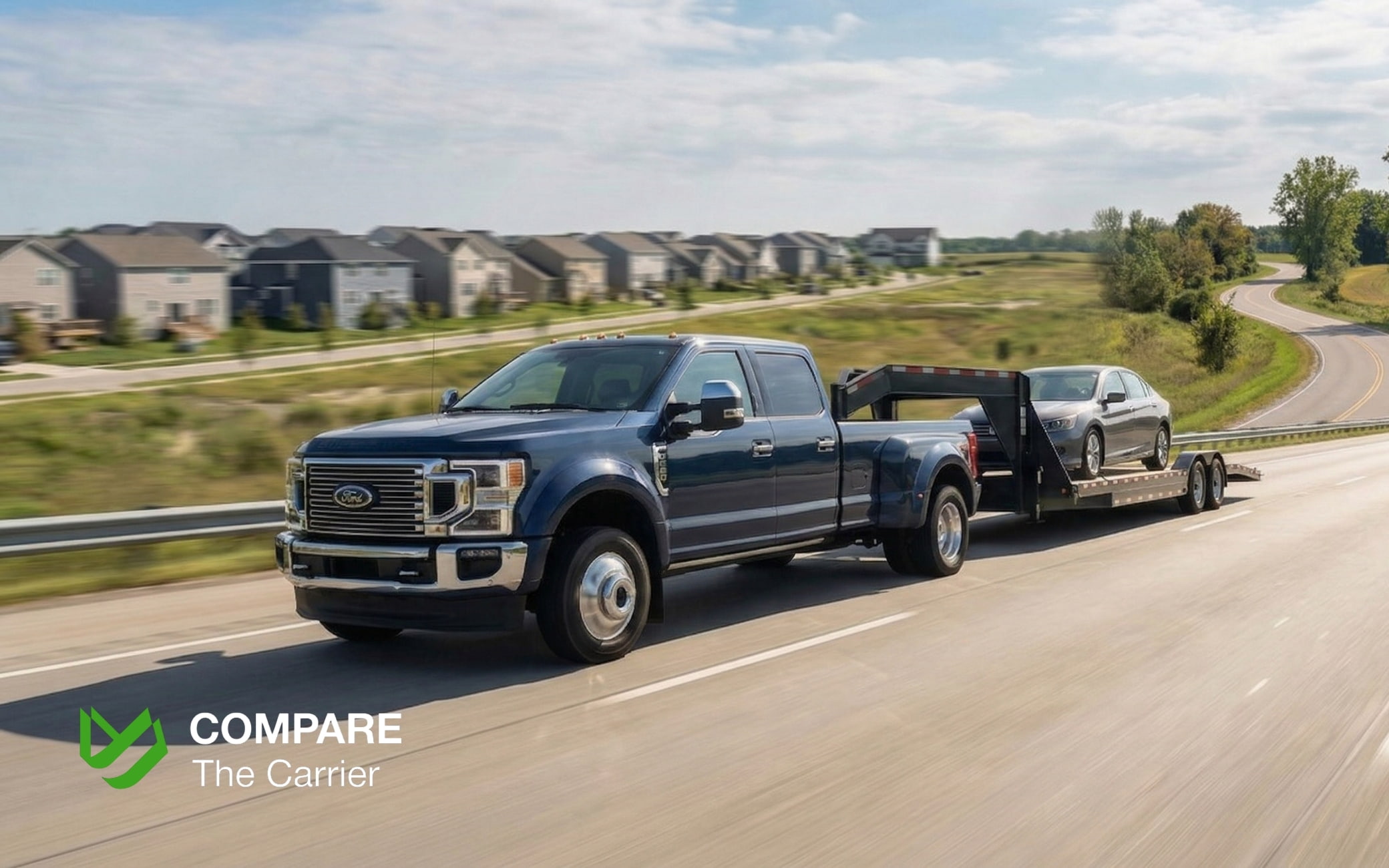
When people hear “hot shot,” they often picture a guy in a dually pickup truck towing a car and hitting the highway. While that’s the skeletal version, the professional reality is a highly regulated, agile sector of the logistics industry.
Hot shot trucking originated in the oil fields of Texas, where “hot” parts were needed “right now” to keep rigs running. That same DNA speed and precision has migrated into the auto transport world.. In this context, it’s the bridge between the expensive, dedicated, single-car hauling and the slow-moving “wait until the trailer is full” model of massive car carriers.
The mechanics of a hot shot move are straightforward but physically demanding. A carrier uses a heavy-duty pickup (like a RAM 3500 or Ford F-450) equipped with a gooseneck hitch to pull a wedge trailer or a small flatbed.
Because these setups are smaller, they don’t face the same “logistical nightmares” as a 75-foot-long commercial carrier. They don’t need massive staging lots. They don’t need to spend three days circling a metro area to pick up nine different cars from nine different dealerships. A hot shot driver picks up your car, maybe one other, and hits the interstate immediately. It is “linear” transport rather than “hub-and-spoke.”
If you’re moving a standard sedan and you have two weeks to spare, a 10-car open carrier is your cheapest bet. But “cheap” comes with a side of “slow.” Hot shot fills the gaps where the big rigs fail:
In the world of hot shot, the truck’s “Class” determines its legal weight limit and the types of cars it can safely pull. If you are hiring a carrier, knowing what they are driving tells you a lot about their capability.
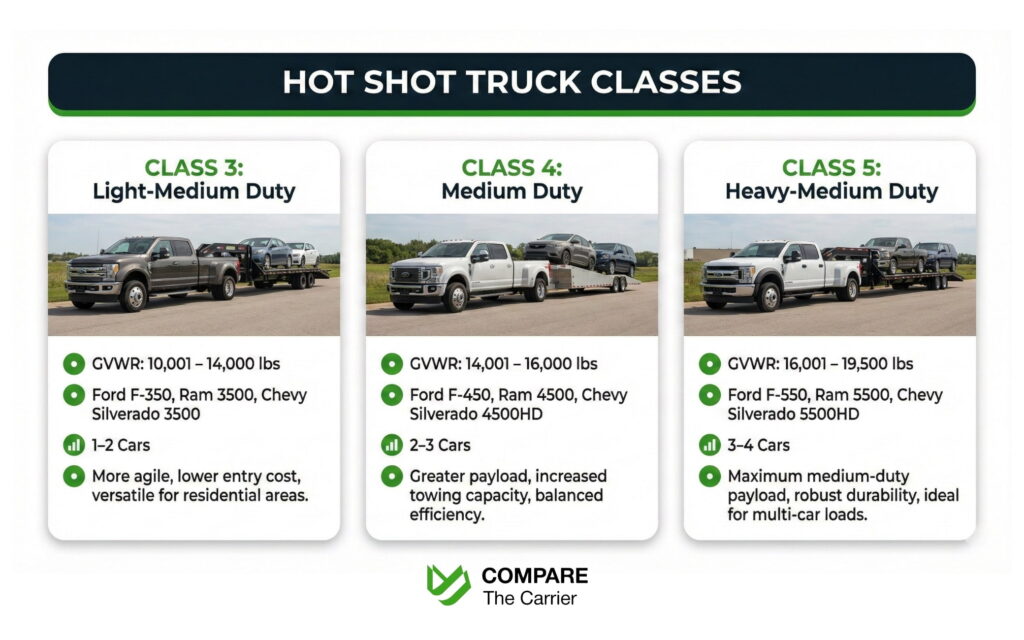
These are the workhorses of the individual car hauling world. These trucks have a Gross Vehicle Weight Rating (GVWR) of 10,001 to 14,000 pounds.
Slightly beefier, these trucks sit in the 14,001-16,000-pound range.
These are the kings of the hot shot world, with a GVWR of 16,001 to 19,500 pounds.
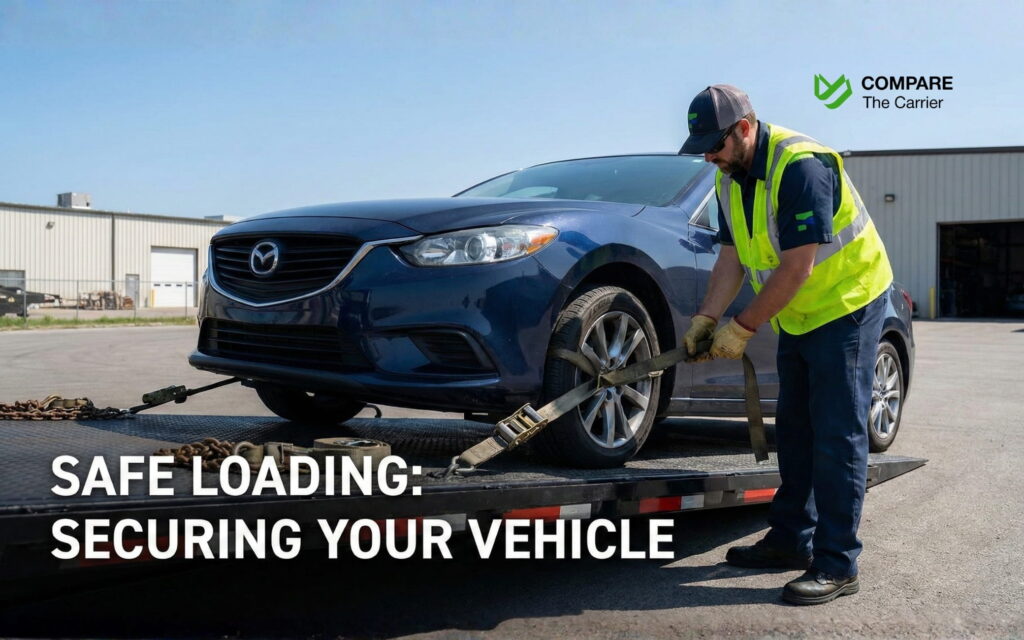
We often get asked: “Is it safer than a big carrier?” Safety doesn’t come from the truck; it comes from reduced handling. Every time a car is loaded or unloaded to make room for another vehicle on a 10-car carrier, the risk of a “ramp strike” or a scratch increases. In hot shot transport, your car is loaded once and stays there until it reaches your driveway.
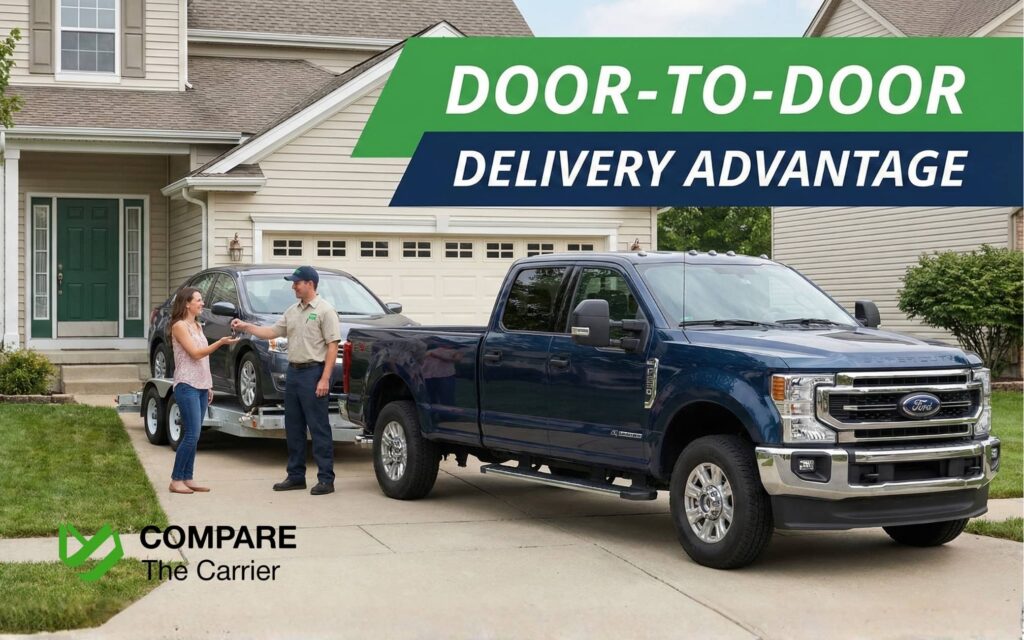
Most hot shot carriers operate exclusively on a door-to-door basis.
Big carriers love terminals because they save them time. They drop 10 cars at a lot in Jersey City, and you have to go find an Uber to take you there. Hot shot drivers don’t want to pay terminal fees. They would much rather pull up to your curb, hand you the keys, and head to their next pickup.
A common misconception is that hot shot drivers can bypass the “annoying” rules that big trucks follow. That is false. A professional hot shot carrier must have:
If a “carrier” tells you they don’t need these because they are “just a hot shot,” run away. They are likely uninsured and flying under the radar.
There are three specific scenarios where you shouldn’t even look at a standard carrier:
Hot shot demand isn’t evenly distributed. Certain states generate a disproportionate share of moves, either because of geography, industry, or car culture.
Texas – The birthplace of hot shot trucking. The Permian Basin’s oil industry still drives enormous demand for rapid equipment moves, and the state’s massive size (Dallas to El Paso is 630 miles alone) makes hot shot the logical choice for intrastate moves. Rates here run among the highest in the country: $2.00–$4.50/mile in oilfield corridors.
California – The largest auto auction market in the US. Copart’s national headquarters is here, and the state’s geography (mountains, narrow canyon roads, dense metro areas) makes standard 10-car carriers impractical in many zones. Hot shot is the default for moving cars from rural auctions to dealerships in LA or the Bay Area.
Florida – The snowbird effect creates massive seasonal demand, particularly October–February, when residents drive car shipping costs up 15–25%. Hot shot fills the gap when standard carriers are booked solid. The rural Florida Panhandle is also heavily hot-shot dependent for residential deliveries.
Montana, Wyoming, Idaho – The “Ranch States.” Standard carriers simply don’t go to gravel driveways 20 miles off the interstate. Hot shot is often the only door-to-door option for rural residents in these states.
Georgia – Home to one of the largest auto auction ecosystems in the Southeast (Manheim Atlanta). The combination of auction traffic and proximity to rural areas in North Georgia creates consistent hot shot demand year-round.
Michigan – The automotive heartland. Prototype vehicles, dealer trades, and fleet moves between OEM facilities all rely on hot shot carriers that understand vehicle-specific tie-down requirements.
| Region | Primary Driver | Relative Cost |
| Texas (West) | Oilfield + distance | $$$$ |
| California | Auctions + terrain | $$$ |
| Florida (seasonal) | Snowbird migration | -$ |
| Mountain West (rural) | Geographic access only | $$$ |
| Southeast | Auction ecosystem | $$ |
| Midwest (Michigan) | Automotive industry | $$ |
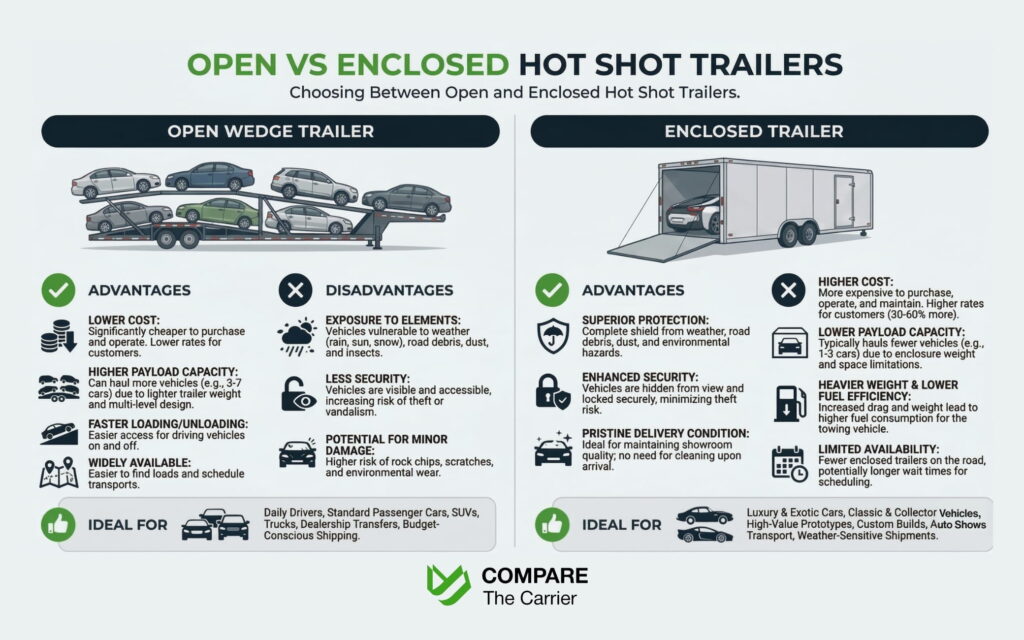
When you opt for hot shot, you aren’t just choosing speed; you’re choosing the level of protection. In this niche, there is no “one-size-fits-all” trailer. The setup used for a Ford F-150 is fundamentally different from what a vintage Porsche 911 requires.
Most hot shot carriers utilize “wedge” trailers. These are open-air structures that allow for 1 to 3 vehicles to be loaded at an angle.
If you are moving something non-standard, like a lifted truck, a dually, or even light agricultural equipment, you need a flatbed.
This is the elite tier of hot shot transport. These are small, enclosed trailers, usually built for one or two cars.
Let’s be real: hot shot is usually more expensive than a spot on a massive 10-car hauler. You are paying for the exclusivity of the trailer space. But how exactly is that check calculated?
In standard hauling, the price per mile drops significantly as the distance increases. In hot shot, that curve is much flatter. Since the driver is only moving 1–3 cars, their operational costs (fuel, insurance, truck maintenance) are split among fewer customers.
| Hot Shot | Standard Open Carrier | Enclosed Carrier | |
| Price/mile (under 500 mi) | $1.50–$2.00 | $1.00–$1.50 | $1.50–$2.25 |
| Price/mile (500–1,500 mi) | $1.25–$1.75 | $0.80–$1.10 | $1.20–$1.65 |
| Price/mile (1,500+ mi) | $1.00–$1.50 | $0.60–$0.85 | $0.90–$1.28 |
| Typical total (500 mi) | $750–$1,000 | $500–$750 | $750–$1,125 |
| Typical total (cross-country ~2,500 mi) | $2,500–$4,375 | $1,500–$2,125 | $2,250–$3,200 |
| Transit time | 1–3 days | 5–14 days | 5–14 days |
| Vehicles per load | 1–3 | 8–10 | 1–2 |
| Door-to-door | ✅ Always | ⚠️ Often terminal | ✅ Usually |
| Inop vehicle surcharge | $150–$300 | $100–$200 | $150–$250 |
| Expedited option | ✅ Yes | ❌ Rarely | ❌ Rarely |
Rates reflect 2025–2026 US market averages. Final price depends on route, vehicle weight, and urgency.
When you work with a hotshot carrier, you are usually talking directly to the driver or a small, family-run dispatch. This changes the dynamic entirely.
On a massive car carrier, the driver is often an employee who hasn’t even looked at your specific order until the moment of loading. In hot shot hauling, the driver is the business owner. Their reputation on load boards like Central Dispatch is their livelihood.
Big carriers operate on rigid windows (e.g., “a 3-to-5 day pickup window”). Hot shot drivers are much more agile. Do you need a pickup on a Sunday at 7:00 AM because you’re catching a flight? With a private hot shot owner, that’s a conversation you can actually have.
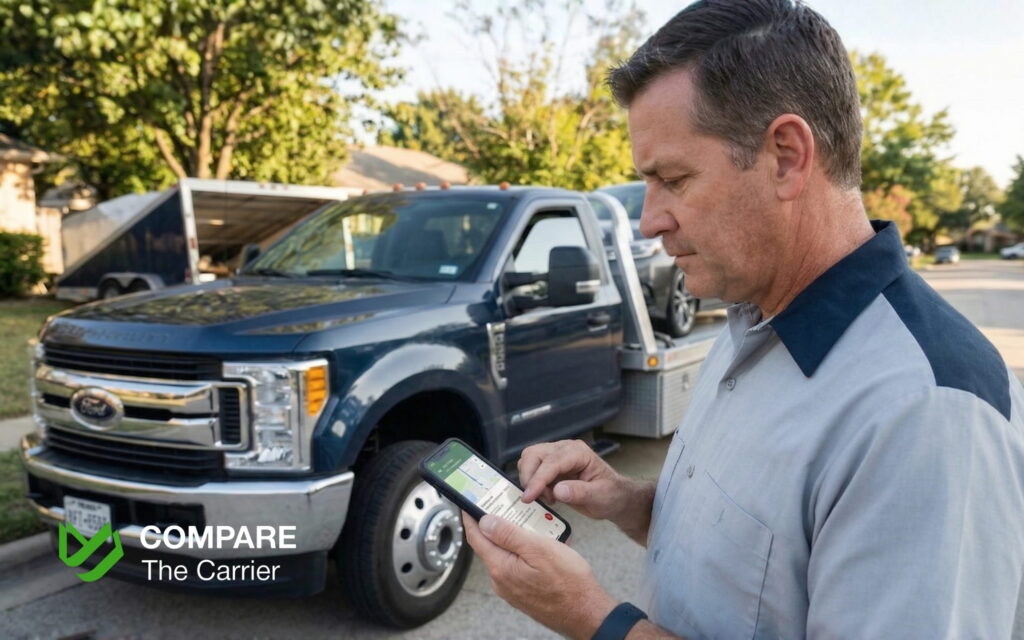
Don’t let the “residential” look of a hot shot truck fool you into relaxing. This is professional logistics, and it requires professional paperwork.
The standard for hot shot carriers is $100,000 to $250,000 in cargo coverage. Always ask for a copy of the COI (Certificate of Insurance).
Pro Tip:
Check if the insurance covers the specific trailer type. Some policies exclude open-air damage or specific luxury brands.
This is your most important document. At pickup, the driver marks every existing scratch or chip.
Because the barrier to entry for hot shot trucking is lower than for heavy-duty semi-trucks, the market is flooded with both experts and amateurs. You need to know how to spot the difference before you hand over your keys.
1. Verify Credentials (The “No-Negotiables”)
Never take a carrier’s word at face value. A legitimate hot shot car hauler must be registered with the Department of Transportation.
2. Check the “Wedge” Experience
Car hauling is a skill. It involves managing weight distribution and securing vehicles with high-tension straps. A driver who usually hauls hay bales or construction equipment might not understand the delicate tie-down points of a Tesla or a classic Mercedes. Ask specifically: “How many cars have you hauled this month?”
3. Review the Equipment
A professional hot shot takes pride in their rig. If the truck looks like it’s held together by duct tape and the trailer is rusted through, your car is at risk. Modern, well-maintained Class 3–5 trucks are the hallmark of a carrier that reinvests in its business.
| Hot Shot | Standard Open Carrier | Enclosed Carrier | |
| Price/mile (under 500 mi) | $1.50–$2.00 | $1.00–$1.50 | $1.50–$2.25 |
| Price/mile (500–1,500 mi) | $1.25–$1.75 | $0.80–$1.10 | $1.20–$1.65 |
| Price/mile (1,500+ mi) | $1.00–$1.50 | $0.60–$0.85 | $0.90–$1.28 |
| Typical total (500 mi) | $750–$1,000 | $500–$750 | $750–$1,125 |
| Typical total (cross-country ~2,500 mi) | $2,500–$4,375 | $1,500–$2,125 | $2,250–$3,200 |
| Transit time | 1–3 days | 5–14 days | 5–14 days |
| Vehicles per load | 1–3 | 8–10 | 1–2 |
| Door-to-door | Always | Often terminal | Usually |
| Inop vehicle surcharge | $150–$300 | $100–$200 | $150–$250 |
| Expedited option | Yes | Rarely | Rarely |
Rates reflect 2025–2026 US market averages. Final price depends on route, vehicle weight, and urgency.
The hot shot market has a low barrier to entry, which means bad actors exist alongside the professionals. Before you hand over your keys, watch for these warning signs.
Hot shot transport is fast, but it’s still a journey. To ensure a “white-glove” experience, you have a few responsibilities as the owner.
It might seem counterintuitive to wash a car that’s going on an open trailer, but it’s essential. A clean car allows for an accurate Bill of Lading (BOL). If the car is covered in mud, the driver can’t see the small scratches, and you won’t be able to prove they happened during transit.
Hot shot drivers are strictly regulated by weight. If every customer leaves 100 lbs of “stuff” in their trunk, the driver could be overweight at a scale house. More importantly, cargo insurance covers the car, not the golf clubs or the laptop in the backseat.
Hot shot car transport is the “premium economy” of the shipping world. It’s faster and more personal than the big rigs, but cheaper than a dedicated private transporter.
Choose Hot Shot if:
Stick to Standard Hauling if:
Not sure which method fits your specific route? Our state-to-state car towing guide breaks down every transport option – from tow dollies to open carriers – with real cost comparisons for long-distance moves.
Hot shot car transport has revolutionized the way individuals and dealerships move high-value or time-sensitive inventory. By leveraging the agility of medium-duty trucks, this method offers a level of service that traditional logistics companies struggle to match. While it requires a slightly higher investment, the peace of mind and the time saved often pays for itself before the car even leaves your driveway.
Yes. Hot shot transport is significantly faster because the carrier handles fewer vehicles (usually 1–3). Traditional carriers wait until they have 9–10 cars to fill a trailer before departing. For regional moves (under 500 miles), a hot shot driver can typically pick up and deliver your vehicle within 1–3 days. For cross-country transport, expect 4–7 days – still considerably faster than the 10–14 days typical of standard open carriers.
Yes. One of the primary advantages of hot shot hauling is the ability to navigate narrow residential streets, cul-de-sacs, and rural roads. Unlike 75-foot-long commercial car carriers, hot shot rigs (truck and trailer) are much more maneuverable and can usually provide true door-to-door service without requiring a meeting in a parking lot.
Hot shot hauling is very safe for luxury vehicles, especially when using an enclosed trailer. Because fewer cars are on the trailer, there is less loading and unloading of other vehicles around yours, which reduces the risk of accidental damage. Additionally, hot shot trailers often have lower loading angles – typically 8–12 degrees versus 20+ degrees on a standard double-deck carrier – which is critical for low-clearance sports cars and modified vehicles.
On average, hot shot car transport costs 15–30% more than a spot on a standard 10-car open carrier. For short distances under 500 miles, the price difference is often negligible – especially when you factor in avoided storage fees or the cost of a missed deadline. For cross-country moves, the premium is more noticeable. See the full cost comparison table above for a detailed breakdown by distance and transport type.
Professional hot shot carriers typically carry between $100,000 and $250,000 in cargo insurance, separate from their liability coverage. Always request a Certificate of Insurance (COI) before booking – not after – to verify that your vehicle’s full value is covered for the entire duration of the trip. If the carrier hesitates to provide a COI, treat that as a red flag.
Yes, but with conditions. Not every hot shot carrier is equipped with a winch, which is required to load a non-running vehicle onto the trailer. Always confirm upfront that the carrier has winch capability. Expect an additional surcharge of $150–$300 for inoperable vehicles, which covers the extra time and equipment involved. If your car has no brakes or is missing wheels, discuss this with the carrier before booking – some loads require a flatbed rather than a standard wedge trailer.
Most professional hot shot carriers provide direct communication throughout the trip – typically via text or phone – since you are usually dealing with the owner-operator directly rather than a corporate dispatch center. Many carriers also send photos at pickup and delivery. For real-time GPS tracking, ask specifically before booking, as not all hot shot operators have a dedicated tracking portal. The direct line of communication with a single driver is one of the key advantages of hot shot over large carriers, where reaching someone with live information can take 30–40 minutes on hold.








Don't have time to fill out the form?
Call a transport company directly to get a quote now!
Select the category you need
Partner with Compare The Carrier & Grow!
We're open to collaborations, partnerships, and mutual growth! Whether you're an individual or a business, we offer exciting opportunities to work together. Fill out the form below to explore how we can collaborate.
Something Went Wrong
We're sorry, but something went wrong. Please briefly describe the problem you experienced in the text area below. Providing your contact information will allow us to follow up if needed.

Thank you,
your form has been accepted.
Your form has been successfully submitted. We appreciate your effort — our team will review it shortly and take the next steps.


