

Copart vs IAAI – Which Auction Is Better? The Complete 2026 Guide
Copart and IAAI are the two largest salvage and insurance...
2 July 2026
No, Carvana delivery is not always free. Carvana only waives the delivery fee when your vehicle is already sitting in your local market, usually within 100 to 150 miles of a Carvana hub or Car Vending Machine. Outside of that zone, you’ll pay a delivery fee that can range anywhere from under $200 to well over $1,000, depending on how far the car has to travel.
Calculate Shipping Quotes
That single detail trips up a lot of online car buyers. Carvana’s marketing leans hard on convenience and “skip the dealership” messaging, so it’s easy to assume delivery is baked in at no extra cost. It isn’t always. Below, we’ll break down exactly when Carvana delivery is free, when it isn’t, how the fee is calculated, whether it’s refundable, and what your options are if the price tag surprises you.
Key Takeaways
Table of Contents
Carvana built its reputation on touchless, as-soon-as-next-day delivery, and in plenty of cases, that delivery really does cost nothing. The catch is that “free” only applies inside what Carvana calls a local market: an area close enough to one of its inspection and reconditioning hubs that getting a car to your driveway doesn’t involve a long-haul carrier.
| Scenario | Is Delivery Free? | Typical Cost |
| Vehicle is already in your local market | Usually yes | $0 |
| Vehicle is outside your local market | No | $199–$599+ |
| Cross-country delivery | No | Can exceed $1,000 |
| Picking up at a Car Vending Machine | Often free | $0 (sometimes a small fee) |
| Fly-and-drive pickup program | Partially subsidized | Carvana credits part of travel cost |
So the honest answer is: it depends entirely on where the specific car you’ve chosen happens to be sitting in Carvana’s network relative to your address. Two buyers in the same city can see two completely different price tags on the same model, just because the inventory came from different hubs.
Why People Get Confused About This
A few things make this feel murkier than it should:
What Counts as a “Local Market”?
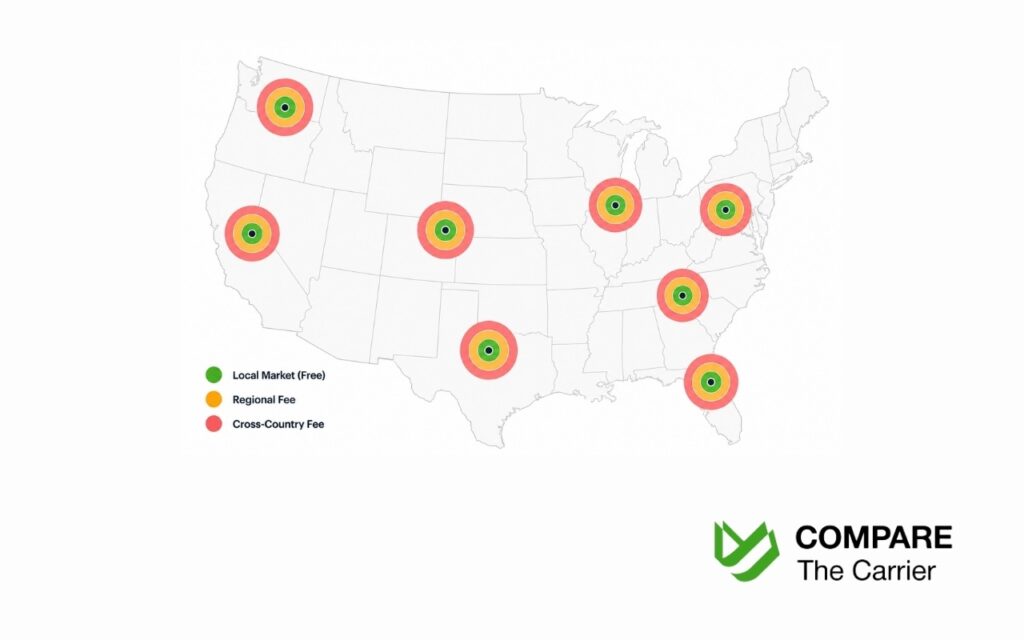
Carvana has expanded its as-soon-as-next-day delivery footprint to hundreds of metro areas across the country, from major cities down to mid-sized markets. A local market generally means the metro area surrounding one of Carvana’s logistics hubs or Car Vending Machine locations, places where Carvana already has the infrastructure and staff to move a car the final few miles without booking outside transport.
This matters because Carvana’s local-market map isn’t static. New cities get added on a rolling basis as the company expands its hub network, which means a route that wasn’t free six months ago might be free today, and vice versa if a hub’s territory shifts. The only way to know for certain is to check the specific listing with your ZIP code entered, rather than relying on what a friend or forum post said about their own delivery.
It’s also worth noting that “local” is about the car’s current location within Carvana’s network, not just your home address. A buyer in a major metro area can still see a shipping fee if the exact vehicle they want happens to be sitting at a hub several states away, even though that buyer’s own city has plenty of free-delivery inventory. This is the single biggest source of confusion in online discussions about Carvana pricing, and it’s why two listings sitting side by side on the same search results page can carry two very different fees. If you want a clearer comparison point before you commit, you can run your specific route through Compare The Carrier’s auto transport calculator to see what an independent carrier would charge for the same distance.
dress. A buyer in a major metro area can still see a shipping fee if the exact vehicle they want happens to be sitting at a hub several states away, even though that buyer’s own city has plenty of free-delivery inventory. This is the single biggest source of confusion in online discussions about Carvana pricing, and it’s why two listings sitting side by side on the same search results page can carry two very different fees.
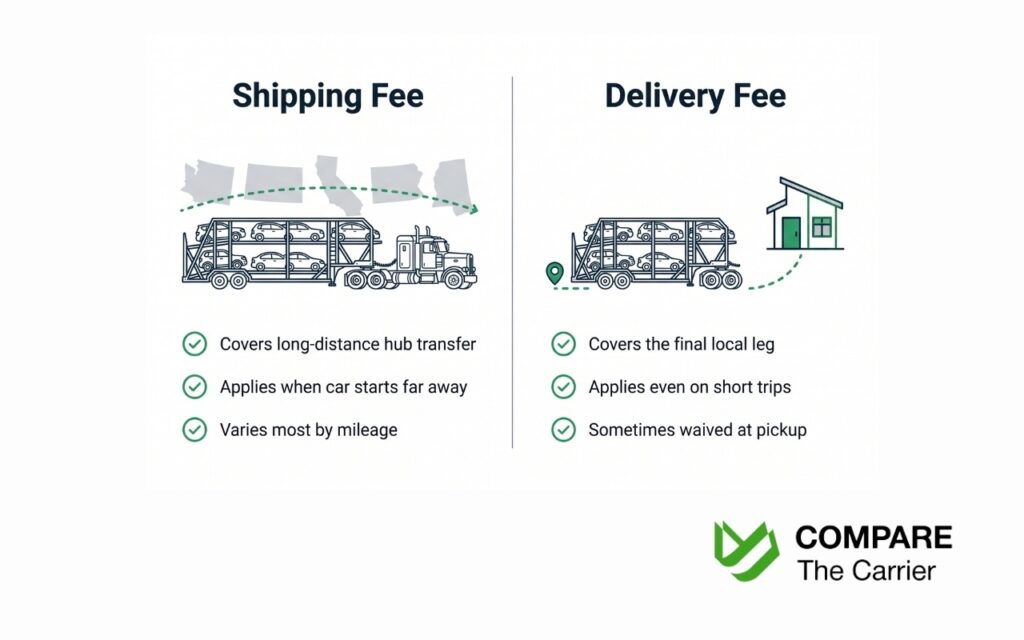
Carvana actually uses two related but distinct terms, and mixing them up is where a lot of the “is it free” confusion starts.
Shipping fee covers moving the vehicle from a distant Carvana facility or hub into your local market. This is the higher, more variable cost, and it’s the one tied to the vehicle’s starting location in Carvana’s national inventory.
Delivery fee covers the final leg: getting the car from a local hub or Car Vending Machine to your actual driveway, once it’s already in your area. If you’re willing to pick the car up yourself at a hub or vending machine, this fee is often avoidable.
| Fee Type | What It Covers | Can You Avoid It? |
| Shipping fee | Long-distance move from a distant hub to your local market | No, if the car isn’t already local |
| Delivery fee | Final mile from local hub to your address | Often, by picking up yourself |
Both fees show up as a single line item at checkout in most cases, which is part of why buyers describe the pricing as confusing. For a side-by-side look at how this compares to a traditional car-buying experience, our guide on how to transport a car from a dealer walks through the dealership delivery process for comparison.
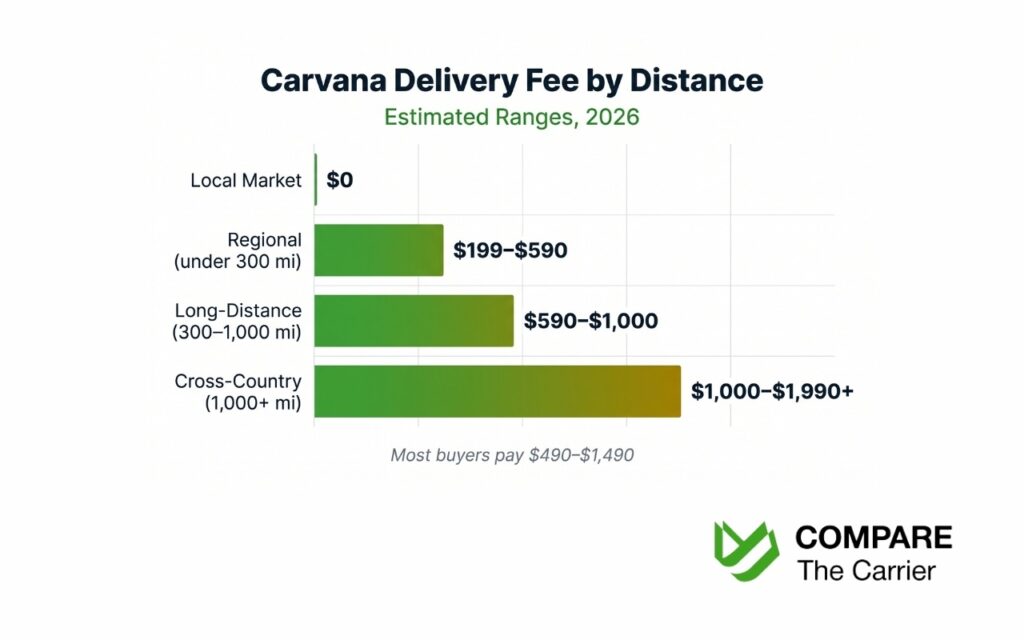
When a fee does apply, Carvana calculates it based on distance from the originating hub, not a flat national rate. Buyers and industry estimates put the range at roughly $190 to $1,990, though most people land somewhere in the $490–$1,490 range.
| Distance Tier | Estimated Fee Range |
| Local market | $0 |
| Regional (under ~300 miles) | $199–$590 |
| Long-distance (300–1,000 miles) | $590–$1,000 |
| Cross-country (1,000+ miles) | $1,000–$1,990+ |
Real-world numbers buyers have reported on forums and review sites fall right in line with this. One buyer noted paying $590 to have a 2025 model shipped to their home, a fee that’s consistent with a mid-range regional delivery.
Keep in mind this fee is flat and locked in at checkout. It isn’t negotiable the way a price quote from an open auto transport carrier might be.
Three factors decide your final number:
Distance from the nearest hub. Carvana operates a network of logistics hubs and Car Vending Machines across the country. The farther your chosen vehicle is from one of these locations relative to your address, the higher the fee climbs.
Vehicle location in Carvana’s inventory, not your location alone. This is the part that surprises people. The same buyer, searching from the same ZIP code, will see different fees on different listings because each car already sits somewhere specific in Carvana’s network. A car that happens to be sitting two states away will cost more to ship than one already parked at your local hub, even though you’re the one searching from a fixed location.
Delivery method chosen. Home delivery, pickup at a Car Vending Machine, or the fly-and-drive program (where Carvana subsidizes a one-way flight to a vending machine location) each carry different cost structures.
A Real-World Example of How Distance Changes the Fee
To make this concrete, think about a buyer searching for a specific used sedan from two different starting points.
If that sedan is already sitting at a hub in, say, Texas, and the buyer also lives in Texas, the listing is far more likely to show free or low-cost delivery, because the car never has to leave its home region. That’s similar to the kind of in-state moves we cover in our guide to Texas auto transport, where shorter routes consistently run cheaper than interstate ones.
Now imagine the exact same sedan, but the buyer is shopping from Alabama. If Carvana doesn’t have inventory at an Alabama-area hub and the car has to travel from Texas, that listing will likely carry a real shipping fee, even though it’s the identical vehicle. You can see the regional breakdown of carrier availability and typical pickup windows on state-level pages like Alabama auto transport, which gives a sense of how distance and regional carrier density affect pricing across the board, not just for Carvana.
This is also why it rarely makes sense to compare your delivery fee with a friend’s, even if you live in the same city. Unless you’re both buying the exact same car from the exact same hub, the fees aren’t really comparable.
This is one of the most-searched follow-up questions, and the answer is nuanced.
In most cases, the delivery or shipping fee is treated as a sunk cost. If you use Carvana’s seven-day return window and send the vehicle back, you typically get the vehicle price refunded, but the delivery fee usually is not returned, because the logistics work has already been completed.
There’s an important exception worth knowing: if you live within a local market and the delivery was free to begin with, there’s nothing to refund. The friction mainly shows up for buyers who paid a meaningful shipping fee and then changed their mind.
| Situation | Delivery Fee Refunded? |
| You return the car within 7 days, fee was $0 (local market) | N/A, nothing was charged |
| You return the car within 7 days, fee was charged | Usually no |
| Carvana cancels or fails to deliver as promised | Often yes, case-by-case |
| You used a third-party carrier instead of Carvana’s own delivery | That separate cost is on you, and is not something Carvana refunds |
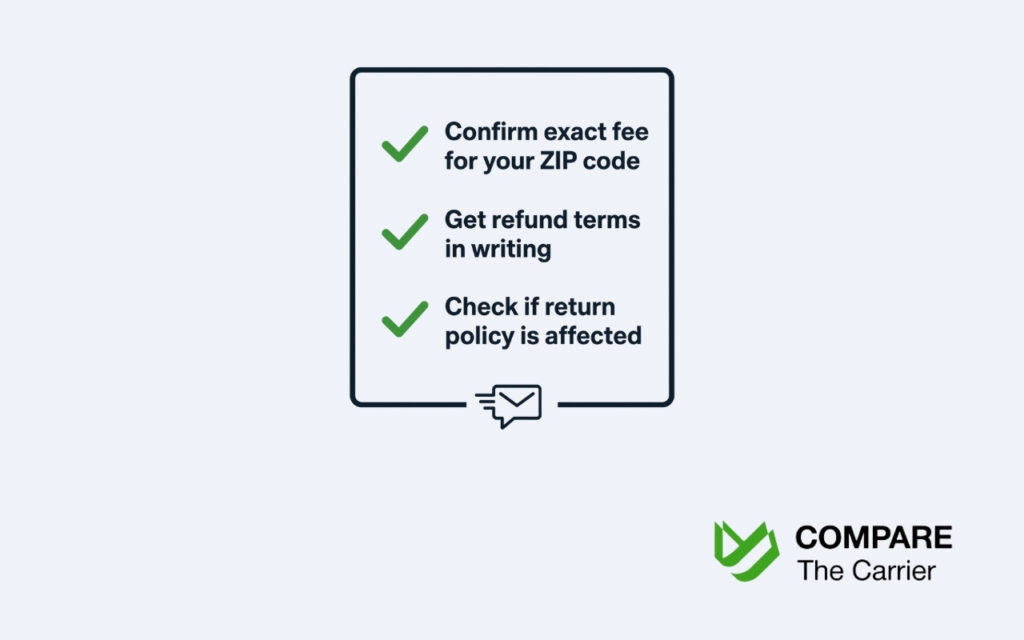
Because policies can be updated, always get written confirmation (via chat or email) on refund terms for your specific order before you finalize a purchase, especially if there’s a real chance you’ll use the return window.
A few practical moves can shrink or eliminate the fee:
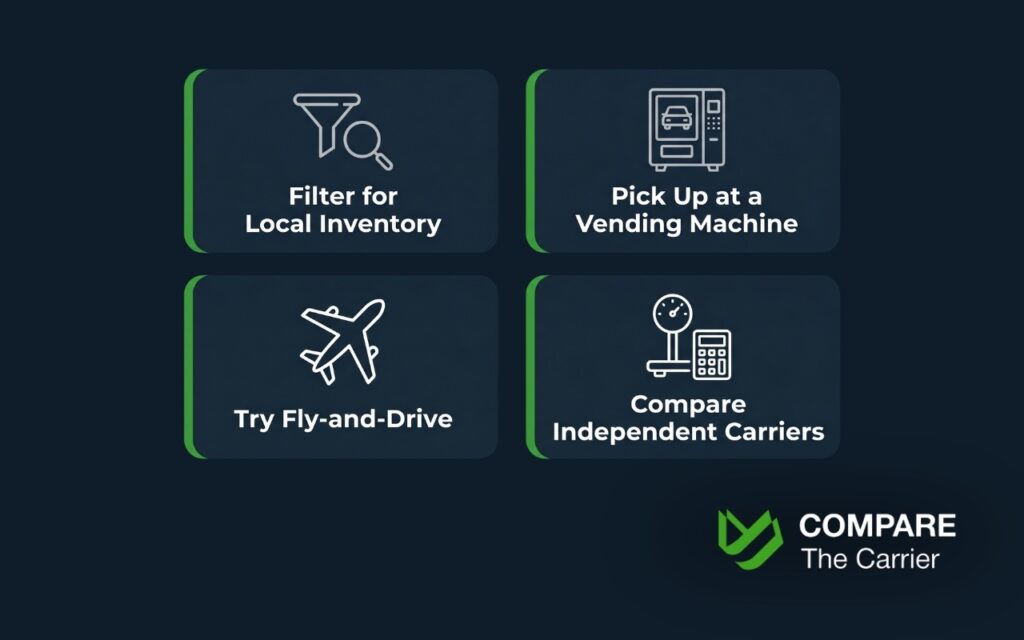
Filter for vehicles already in your local market. Carvana’s search lets you filter listings, and choosing a car that’s already nearby is the single most reliable way to land on $0 delivery.
Pick up at a Car Vending Machine instead of home delivery. If a vending machine is within your local market, self-pickup frequently avoids the final-mile delivery fee, even when the home-delivery version would have cost something.
Use the fly-and-drive option if it’s offered for your order. Carvana subsidizes part of the travel cost to get you to a vending machine location, which can work out cheaper than a long-distance home delivery fee, especially for buyers willing to make a short trip.
Compare the total cost against shipping the car yourself. If the Carvana fee is high because the vehicle is sitting far away, it’s worth checking what a licensed auto transport carrier would charge for the same route, particularly for cross-country moves.
Carvana’s delivery system is convenient, but it isn’t always the cheapest or most flexible option, and it’s worth understanding the trade-offs before you assume it’s your only path.
| Factor | Carvana Delivery | Independent Auto Transport |
| Pricing | Flat, fixed, non-negotiable | Market-based, can shop multiple quotes |
| Transport type | Standard open transport only | Open or enclosed, your choice |
| Timing flexibility | Scheduled by Carvana | Often more flexible pickup windows |
| Carrier choice | None, Carvana assigns it | You choose a vetted,FMCSA-licensed carrier |
| Best for | Buyers who want a single, bundled transaction | Buyers prioritizing cost or scheduling control |
If you’re comparing the economics of shipping a car long distance in general, regardless of whether it’s coming from Carvana or a private seller, our breakdown of how much it costs to ship a car to another state is a useful reference point. And if the vehicle you’re eyeing on Carvana happens to be a long way off, it can be worth running the numbers through Compare The Carrier’s auto transport calculator before committing to Carvana’s quoted fee.
One more thing worth knowing: if you arrange an independent carrier to pick the vehicle up directly from a Carvana location instead of using Carvana’s own delivery, that’s generally allowed, but you’ll want to confirm with Carvana ahead of time that it doesn’t affect your return-policy eligibility, and get that confirmation in writing.
When Independent Transport Makes More Financial Sense
There are a few scenarios where stepping outside Carvana’s own delivery system and booking independent transport tends to pay off:
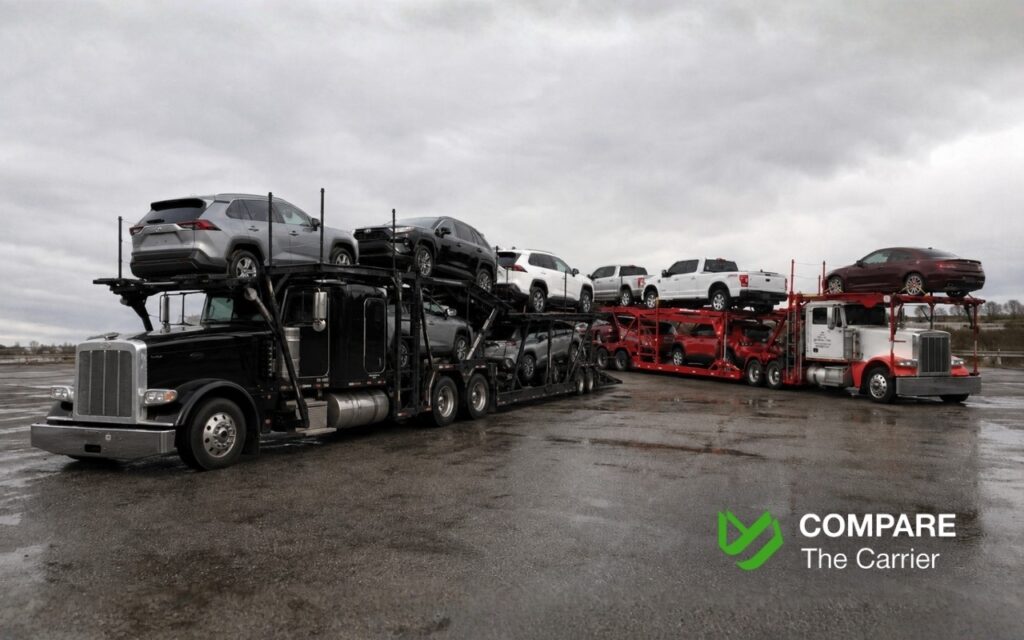
The vehicle is far from any hub. If your dream car happens to be sitting two or three states away and Carvana’s quoted fee creeps toward four figures, it’s worth getting a second quote. Open carrier rates for cross-country routes typically run in the $500–$1,100 range industry-wide, which can undercut Carvana’s flat fee on longer hauls.
You want enclosed transport. Carvana’s own delivery network uses standard open transport. If the vehicle is a rarer trim, a performance model, or something you simply want extra protected from road debris and weather, an enclosed auto transport provider is the only way to get that, since Carvana doesn’t offer it as an option.
You need more scheduling flexibility. Carvana assigns your delivery window. Independent carriers, especially when booked through a broker, often have more room to negotiate pickup and drop-off dates around your schedule, which matters if you’re juggling a move, a trade-in, or a tight timeline.
You’re buying from a private seller or auction, not Carvana at all. This guide focuses on Carvana specifically, but the same logic, free local delivery versus a real shipping cost for distance, applies broadly across the used car market. If you’re sourcing a vehicle from an auction platform rather than Carvana, our guide to shipping a car from Copart walks through a similar cost structure for auction purchases.
Carvana’s delivery fee comes up constantly in buyer discussions online, and the sentiment is fairly consistent: people are generally fine with the fee once they understand it, but frustrated when it shows up as a surprise late in checkout.
On car-buying forums, buyers describe scenarios where shipping a specific in-demand model added several hundred dollars to the total, prompting questions about whether the fee is fair or avoidable. The recurring theme is that the fee feels less predictable than traditional dealership delivery, simply because it depends on where that exact car happens to be sitting in Carvana’s network rather than a flat regional rate.
The practical takeaway echoed across these discussions matches what we’ve laid out above: check the fee for your specific ZIP code and that specific listing before you get emotionally attached to a particular car, and don’t assume “free shipping” filters apply to every vehicle just because some do.
Carvana delivery can absolutely be free, but only when the math lines up: the vehicle has to already be sitting in your local market. Once it isn’t, you’re looking at a real cost that can range from under $200 to well over $1,000, depending on distance, and that fee is typically locked in, non-negotiable, and often non-refundable if you later return the car.
The smartest move before you commit is simple: check the delivery fee for your exact ZIP code and the specific listing you want, not a general assumption about how Carvana prices things. If the number is higher than expected, it’s worth comparing it against what a licensed independent auto transport company would charge for the same trip. Compare The Carrier connects buyers with vetted, FMCSA-licensed carriers so you can see how the cost stacks up against Carvana’s flat fee, whether the car is coming from a dealership, an online marketplace, or a private seller. And if you’re buying through a vehicle history report site rather than Carvana directly, our guide on whether Carfax delivers cars covers how delivery logistics work when the platform itself isn’t the one shipping the vehicle.
Looking to ship a vehicle without the unpredictability of Carvana’s flat fees? Get a free quote from Compare The Carrier and see how licensed independent carriers price the same route.
Sometimes. Carvana ships for free only when the vehicle is already located within your local market, generally within 100 to 150 miles of a hub or Car Vending Machine. Outside that radius, a shipping or delivery fee applies.
Fees typically range from about $190 to $1,990, with most buyers paying somewhere between $490 and $1,490 depending on distance. Cross-country deliveries can exceed $1,000.
Filter your search for vehicles already located in your local market, or choose to pick up the car yourself at a nearby Car Vending Machine instead of opting for home delivery.
Usually not. The vehicle price is refunded under Carvana’s seven-day return policy, but the delivery or shipping fee is generally treated as a non-refundable cost since the transport has already taken place.
The shipping fee covers moving the car from a distant Carvana hub into your local area. The delivery fee covers the final leg from a local hub to your driveway. Both can appear as a single combined charge at checkout.
In some cases, yes. You can arrange for an independent, licensed carrier to pick the vehicle up from a Carvana location. Confirm with Carvana in writing beforehand that this doesn’t affect your return policy eligibility.
Because the fee depends on where the specific vehicle is sitting in Carvana’s inventory network, not just on the buyer’s location. A car already at a nearby hub will ship for less (or free) compared to one located several states away, even for buyers in the same ZIP code.
Often, there’s no charge if the vending machine location is within your local market. Some buyers do see a small fee depending on the vehicle’s specific location, so it’s worth confirming for your exact order before finalizing the purchase.





Don't have time to fill out the form?
Call a transport company directly to get a quote now!
Select the category you need
Partner with Compare The Carrier & Grow!
We're open to collaborations, partnerships, and mutual growth! Whether you're an individual or a business, we offer exciting opportunities to work together. Fill out the form below to explore how we can collaborate.
Something Went Wrong
We're sorry, but something went wrong. Please briefly describe the problem you experienced in the text area below. Providing your contact information will allow us to follow up if needed.

Thank you,
your form has been accepted.
Your form has been successfully submitted. We appreciate your effort — our team will review it shortly and take the next steps.


