

State-to-State Car Towing & Shipping: Complete 2026 Guide
State-to-state car towing costs $300–$1,400 depending on ...
27 July 2025
You have handed over your keys to a stranger. Your car is about to travel hundreds – maybe thousands – of miles without you. What exactly happens to it?
Calculate Shipping Quotes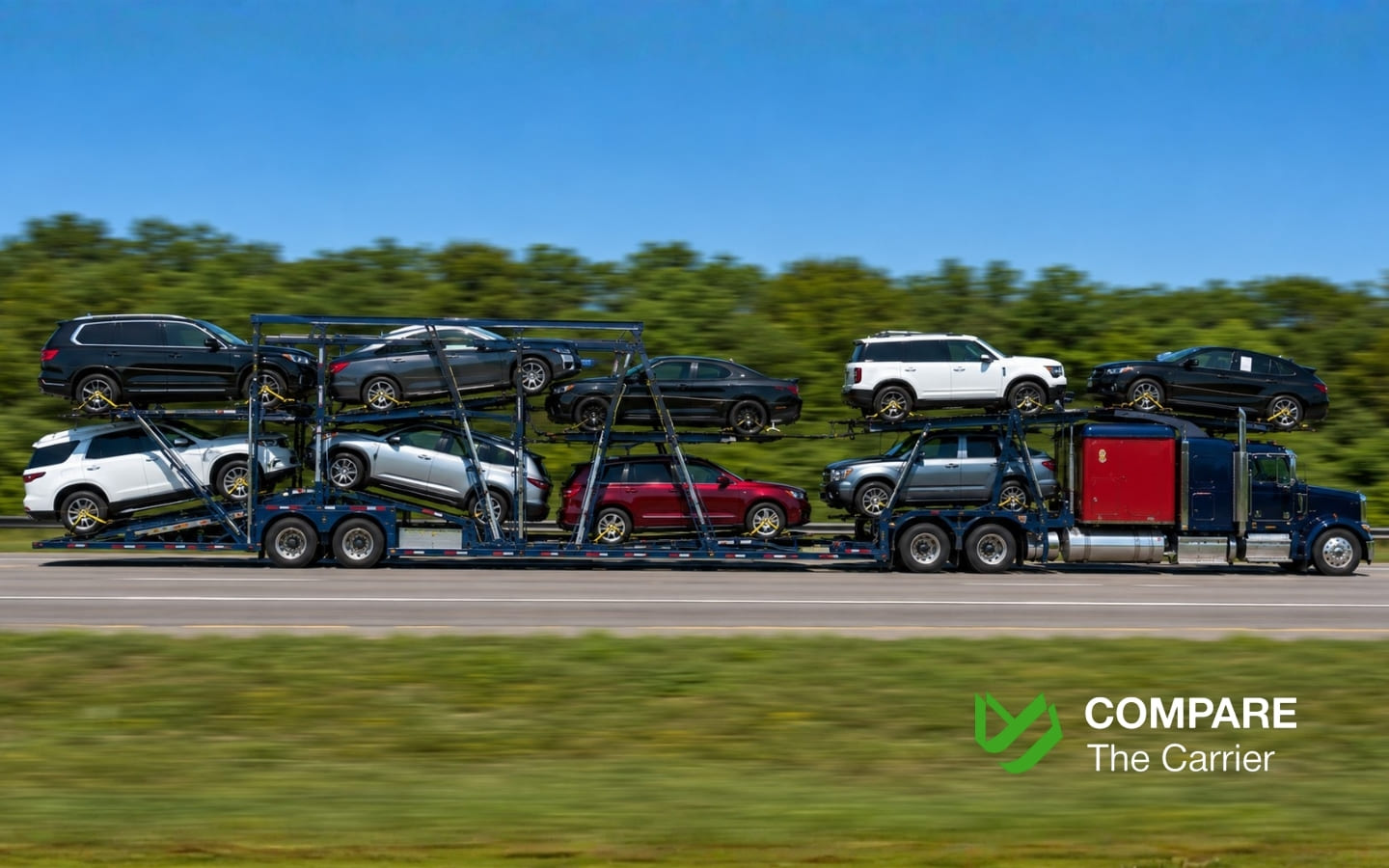
It is completely normal to feel anxious. For most people, a vehicle is their second-largest investment. Watching it drive away on the back of a massive commercial trailer raises many questions: Who is actually driving it? Where does it park at night? Will the odometer spin up while it is out of sight?
Here is the short answer: during state-to-state car transport, your vehicle undergoes a documented pickup inspection, is secured to a carrier, travels on interstate routes under cargo insurance, and is inspected again at delivery.
If you are setting up state-to-state car transport for the first time, a brief summary is not enough. You need to know the exact logistics of the journey – the physical, legal, and logistical reality of what happens to your car from the moment you hand over the keys to the moment it arrives in your new driveway.
This guide covers every step in full detail.
A smooth transport experience begins a few days before the truck arrives. Every item on this car shipping checklist exists for a specific legal or financial reason – not as busywork.
Wash the exterior thoroughly. You might think it is pointless to wash a car right before it gets strapped to a dusty open trailer. However, you are washing it for the inspection, not for aesthetics. Dust and mud easily hide clear-coat scratches, door dings, and small chips. If the driver cannot see existing damage at pickup, they will note the car as “condition obscured by dirt,” which gives the carrier an easy defense if you try to claim a scratch at delivery.
Clear out all personal items. The Department of Transportation (DOT) allows up to 100 lbs of personal items secured in the trunk of a shipped vehicle. Despite this, almost every carrier will ask you to empty the car completely. Why? Carriers can be fined at federal weigh stations if their commercial trucks exceed strict weight limits. Auto transport cargo insurance also covers the vehicle itself – not the contents inside it. If your laptop is stolen or a heavy box shifts during braking and cracks your rear window, you bear full responsibility. For a deeper look at this topic, see our guide to shipping a car with personal items.
Document existing damage with timestamped media. Do not rely solely on the carrier’s paperwork. Take high-resolution photos and a slow walk-around video of the car in good, natural lighting before the driver arrives. Make sure the timestamps are visible. Pay special attention to bumpers, mirrors, and lower rocker panels – the areas most vulnerable during loading. Our vehicle condition documentation guide walks through the exact process.
Lower the fuel level to approximately a quarter tank. A full tank adds over 100 lbs of unnecessary weight. Multiply that across eight to ten vehicles on a single trailer, and the carrier is suddenly hauling close to an extra thousand pounds – a real risk at federal weigh stations. A lower fuel level is also safer in the rare event of a transit emergency.
Disable alarms and remove toll transponders. If your alarm goes off while the car is doing 65 mph on I-80, the driver does not have the key fob context to silence it quickly. Disable the alarm entirely before pickup. More critically, remove your EZPass, SunPass, or any other electronic toll transponder. High-speed toll gantries will read your transponder as the carrier drives under them, and you will end up paying for the truck’s entire journey.
Retract antennas and fold in your mirrors. Transport trucks pack vehicles tightly. Custom antennas and extended mirrors are prime targets for snagging on hydraulic ramps or overhanging branches at tight delivery locations.
Check for active fluid leaks. Drivers can – and frequently will – refuse to load a vehicle that is actively leaking oil, transmission fluid, or brake fluid. On a multi-level carrier, your leaking fluid drips directly onto the paint of the vehicle parked on the deck below.
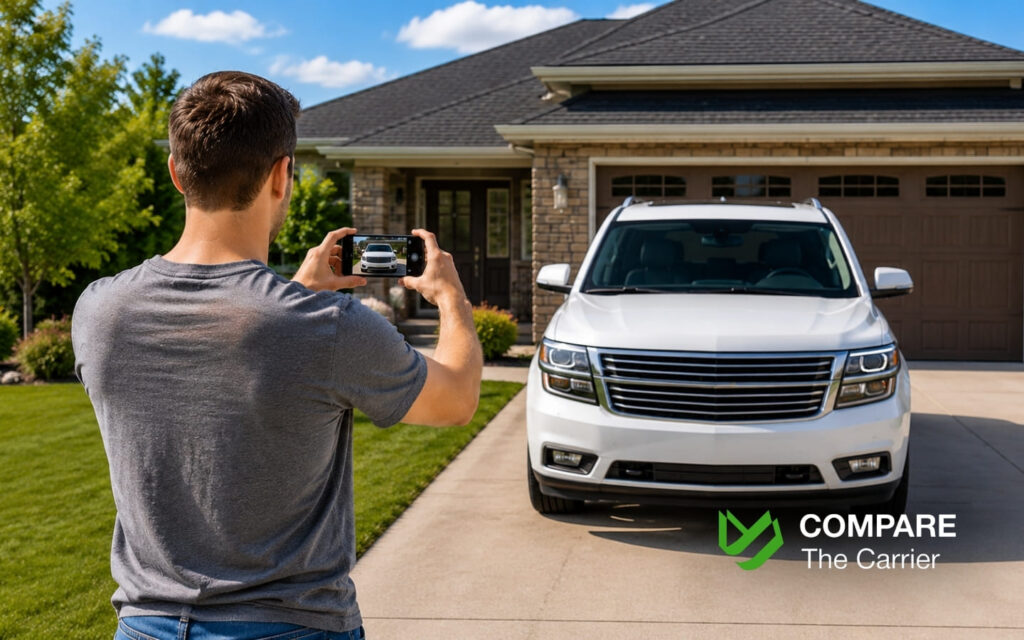
Pickup day is when your vehicle is legally transferred. Understanding the car shipping pickup process prevents costly mistakes.
Who actually shows up. If you booked your shipment online, you likely worked with a broker. A broker is a logistics coordinator – they do not own the trucks. The person pulling up to your location is the carrier: a commercially licensed truck driver who will be physically responsible for your vehicle during transit. To understand exactly how these two roles differ, see our breakdown of the difference between a carrier and a broker.
The pickup location reality. You may have booked door-to-door transport, but an 80-foot commercial car hauler cannot navigate narrow residential streets, cul-de-sacs, or areas with low-hanging power lines. If the driver encounters clearance issues, they will call you to meet in a nearby open area – a large grocery store lot or a big-box retail parking lot. Terminal-to-terminal shipping is different; in that case, you drop the car off at a regional storage lot, and the truck picks it up on its route. See our door-to-door vs. terminal-to-terminal comparison for a full breakdown.
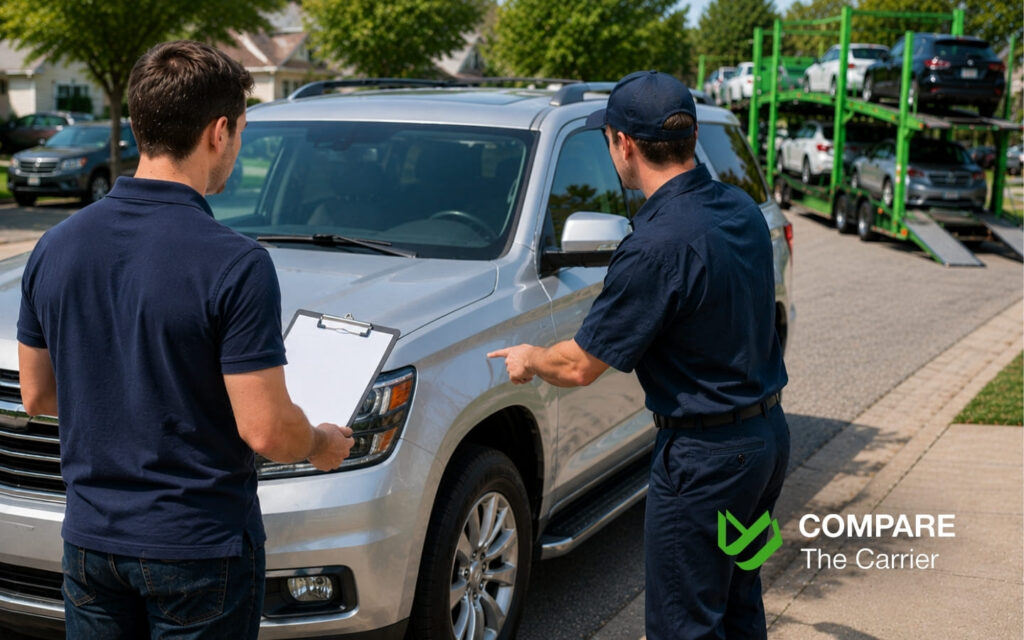
The inspection walkthrough. The driver will conduct a thorough walkaround of your vehicle, noting every pre-existing scratch, dent, and paint chip they can find. Do not take this personally. They are protecting themselves from false damage claims, just as your own photos and videos protect you.
The Bill of Lading (BOL) is explained. Once the inspection is complete, the driver will hand you a digital tablet or paper clipboard with the Bill of Lading. The BOL is the single most important document in the auto transport industry.
The odometer reading. The driver records your exact mileage on the BOL at pickup. This number is your definitive proof of the car’s starting mileage – hold onto it.
Expect delays at pickup. If the driver arrives late to your pickup window, it is rarely poor planning. Auto transport is highly unpredictable. A previous customer may have been late, traffic may be gridlocked, or a car two stops before yours had a dead battery and took an hour to winch onto the trailer. Build flexibility into your schedule on pickup day.
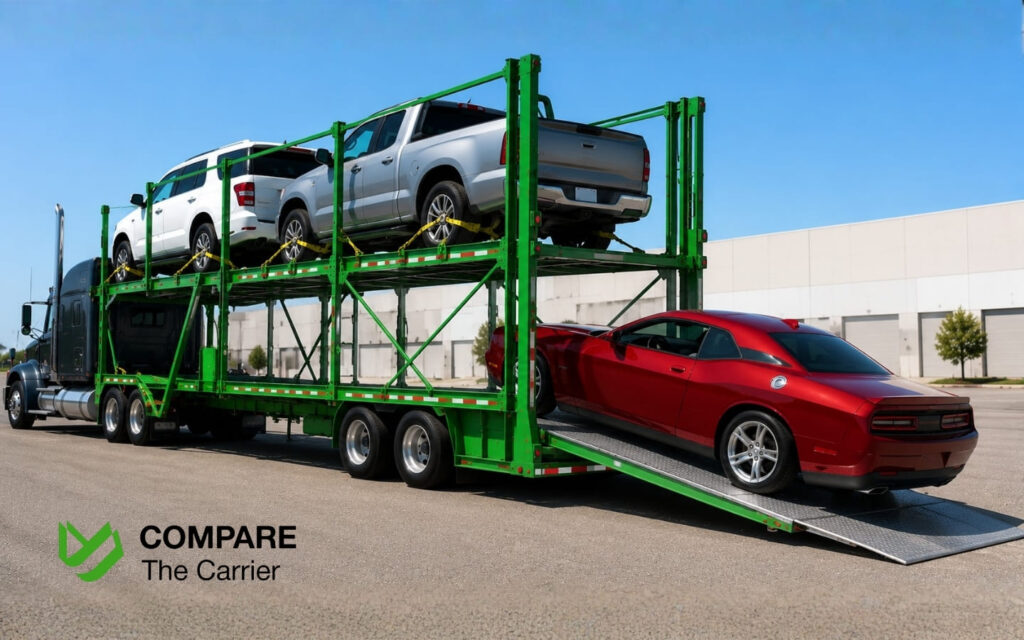
Once the paperwork is signed, your car is ready to be loaded. Understanding how cars are loaded on transport trucks addresses one of the most common anxiety points of the entire process.
Driven up ramps vs. winched. If your car runs and drives normally, the driver will personally drive it up the hydraulic steel ramps onto the trailer – slowly, with precise clutch or brake control. If your vehicle is non-running, the driver uses a heavy-duty steel cable winch to pull the car up. For non-running or inoperable vehicles, see our salvage car shipping guide.
Upper deck vs. lower deck positioning. Standard open carriers have two levels, and your car’s position matters.
You typically cannot request a specific deck position, but knowing the difference helps you set expectations.
How your car is secured: wheel straps vs. axle straps. Once positioned, the car must be locked down. Modern auto transport relies primarily on wheel straps – heavy-duty nylon straps that weave over the tires and ratchet tightly into the perforated steel floor of the trailer. Wheel straps secure the tires while allowing the suspension to flex naturally and absorb highway vibrations, which prevents stress on your car’s frame.
Older setups or heavy-duty vehicles may use axle straps or chassis chains that pull the frame down directly, compressing the suspension. Wheel straps are the preferred standard for passenger vehicles.
What open carrier transport actually means for your car. On an open carrier, your car is exposed to the same conditions it would experience if you were to drive it: rain, dust, UV exposure, and the occasional unfortunate bird. The statistical risk of serious damage from road debris is very low. Well over 90% of all vehicles shipped in the United States travel on open carriers without incident. For a detailed breakdown of the open carrier process, see our open auto transport guide.
What enclosed carrier transport actually means. Enclosed carriers look like standard box trailers. They shield the vehicle entirely from weather, debris, and road grime.
With your car loaded and strapped down, the driver hits the road. This is when anxiety peaks for most first-time shippers. Here is the reality.
The car shipping odometer mileage truth. No one is joyriding in your car. When you check the odometer at delivery, it will show a maximum of one to five additional miles – the distance driven to maneuver the car onto and off the trailer. A cross-country shipment does not mean cross-country wear and tear on your engine, transmission, or tires.
Route optimization and multi-stop logistics. Your car is not the only vehicle on the truck. A standard carrier holds 8 to 10 vehicles going to different destinations. The driver follows established interstate routes, dropping off and picking up cars in a calculated sequence. Your car may travel slightly off a direct route to accommodate another customer’s delivery.
How long does state-to-state car transport take? Distance sets the baseline, but multi-stop logistics determine the actual delivery day. Typical transit windows:
| Distance | Estimated Transit Time |
| Under 500 miles | 1 – 3 days |
| 500 – 1,500 miles | 3 – 5 days |
| 1,500+ miles (cross-country) | 5 – 9 days |
Timelines vary by route and season. Use our auto transport calculator to estimate your specific delivery window.
The HOS regulations reality. If your delivery is delayed, the most common reason is federal law, not driver laziness. The Federal Motor Carrier Safety Administration (FMCSA) enforces Hours of Service (HOS) regulations. A commercial driver is legally permitted to drive a maximum of 11 hours per day, and only after 10 consecutive hours off duty. Electronic Logging Devices (ELDs) track every truck continuously. A driver physically cannot push through the night to speed up delivery without risking their commercial license.
Where do you park your car overnight? When the driver reaches their HOS limit, they pull into a large, well-lit commercial truck stop or a secured carrier yard – not a random neighborhood street. The driver typically sleeps in the truck’s sleeper cab, meaning someone is physically present with the loaded trailer overnight.
What happens in severe weather? If the truck hits a bad storm, the driver slows down or pulls over – the same as any responsible driver. Dispatchers monitor weather systems and, when possible, attempt to route around severe cells. An open carrier cannot protect against hail if a storm is truly unavoidable, which is one reason high-value vehicle owners opt for enclosed transport.
Passive mechanical issues during transit. Because your car sits unused for several days, older batteries can drain. If temperatures drop significantly, a tire with a slow leak may go fully flat. Drivers carry jump boxes and portable air compressors to address these situations before unloading.
Tracking your vehicle. Do not expect a real-time GPS app. Most carriers provide milestone updates through your broker – confirmation of pickup, a midpoint update, and a 24-hour delivery notice. If real-time tracking is a priority, ask specifically before booking. Our article on whether to use a GPS tracker when shipping a car explains your options.
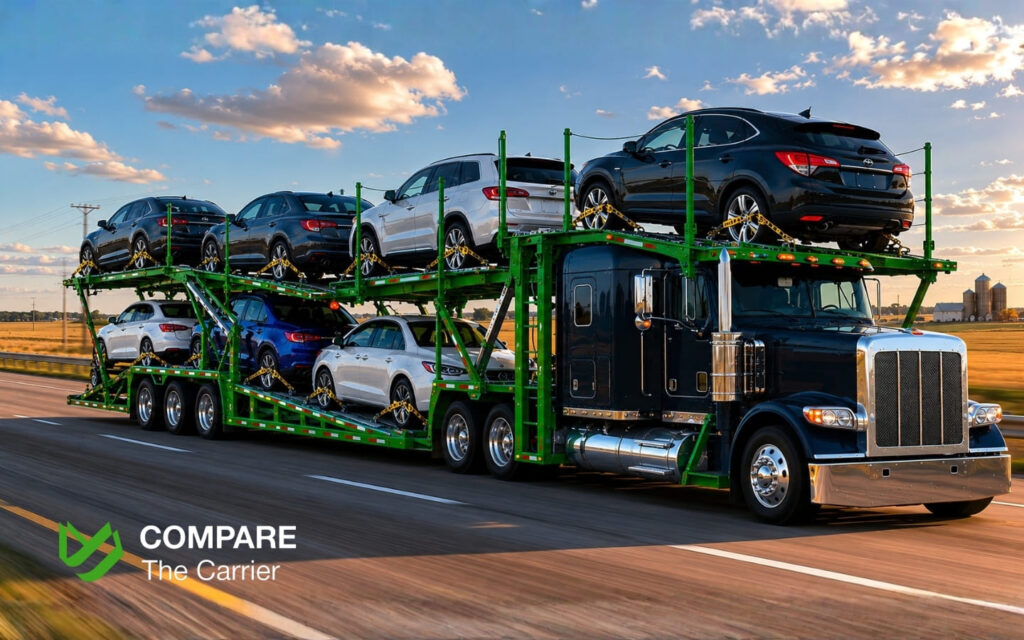
The delivery inspection is the most financially critical moment of the entire process. Handle it with full attention.
You must be present. You, or a trusted adult you formally designate, must be physically present at delivery. If the driver unloads the car and no one is there to inspect it, you forfeit your legal right to claim any damage.
The final walkthrough. Pull out your pickup BOL and the photos you took before the driver arrived. Walk the entire car with the driver in good light. Do not let anyone rush you.
How to handle discovered damage. If you find damage that was not on the original BOL, act immediately – before you do anything else.
Late-discovered damage. If you wash the car two days later and find a fresh scratch, your chances of a successful claim are extremely slim. Once the BOL is signed and the driver has left, proving the carrier caused the damage is very difficult. The delivery inspection must be exhaustive and unhurried.
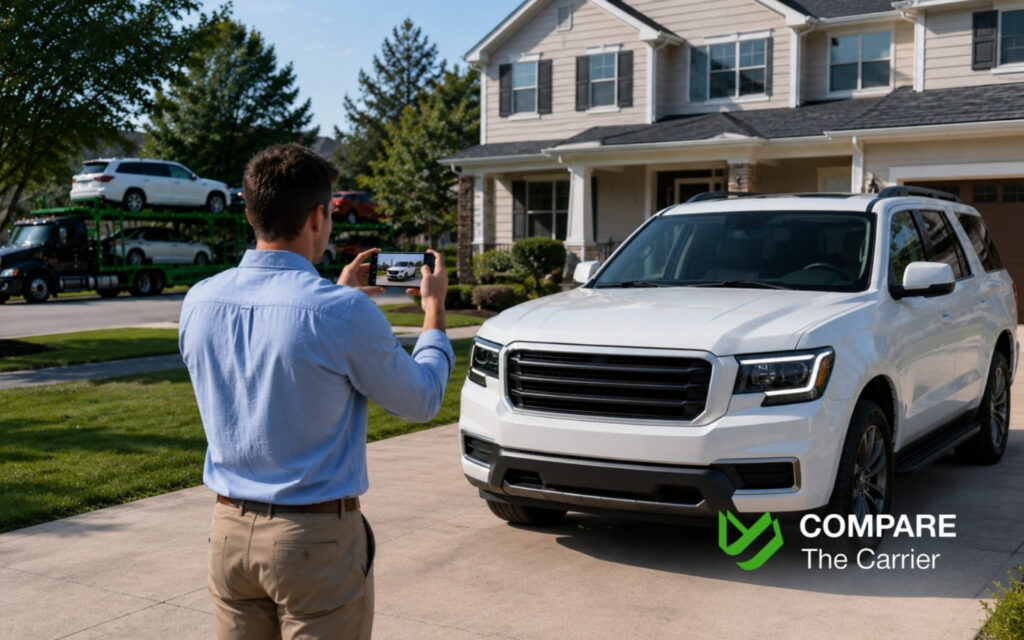
Once the transport truck drives away, your responsibilities shift to the local bureaucracy. Shipping a car across state lines triggers several deadlines.
Update your auto insurance. Call your insurance agent immediately. Your current policy may not meet the minimum liability requirements of your new state, and your zip code directly affects your premium rate. Failing to update your garaging address can result in denied claims in the future.
Register the vehicle in your new state. Most states give new residents a 30- to 90-day grace period to register an out-of-state vehicle. Missing this window results in late fees and potential traffic violations. Check your local DMV website for the exact deadline. If you are navigating a full interstate move, our guide on how to move from one state to another covers the full checklist.
Transfer your title and driver’s license. Vehicle registration and a new driver’s license are separate processes. You typically have 30 to 60 days to swap your out-of-state license. If you bought the car from an out-of-state seller and shipped it directly to yourself, finalize the title transfer at your local DMV before registering.
Pass local inspections. Many states require a local emissions test or mechanical safety inspection before issuing new plates. Confirm requirements on your state’s DMV website before you go in.
The open vs. enclosed decision is the most significant financial decision in the shipping process.
| Factor | Open Carrier | Enclosed Carrier |
| Average Cost | $500 – $1,800 | +30–50% premium |
| Weather Exposure | Rain, dust, UV, debris | Fully protected |
| Availability | Very common | Limited, longer lead time |
| Vehicles per Truck | 8 – 10 | 2 – 6 |
| Best For | Standard vehicles, daily drivers, SUVs | Exotic, classic, luxury, lowered vehicles |
When enclosed transport is worth the premium:
For 90% of everyday vehicles, open transport is the correct and cost-effective choice. Our full enclosed auto transport guide and 5 reasons to choose enclosed over open article cover edge cases in detail.
Want a quick cost estimate for your specific route? Use our auto transport calculator to get an instant ballpark figure.
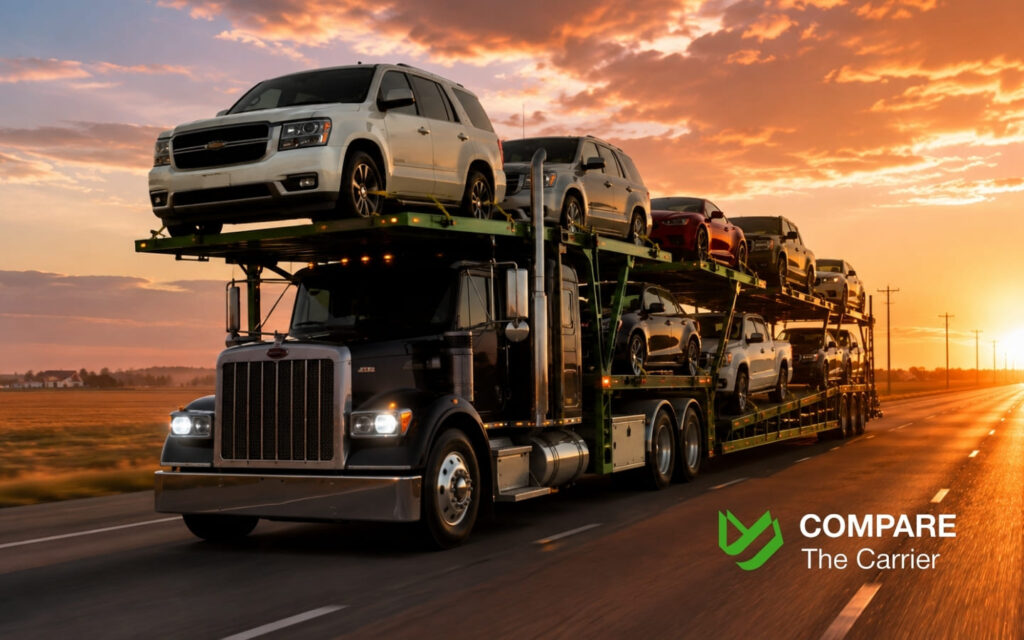
Understanding car transport insurance is how you sleep well while your car is on the road.
The federal mandate. By law, the FMCSA requires all licensed auto haulers to carry active cargo insurance. Standard auto haulers typically carry a minimum of $100,000 in coverage, while larger operators maintain policies of $250,000 to $1,000,000 to cover a full-loaded trailer. You can verify any carrier’s insurance and registration status directly on the FMCSA’s SAFER system. Our guide on how to verify a carrier’s MC number walks you through the process step by step.
What cargo insurance covers. The carrier’s cargo insurance pays for damage caused by their direct negligence during transit: improper strapping, loading errors, collisions, or roll-overs.
What cargo insurance does NOT cover.
Your personal auto policy is a backup. Call your personal auto insurer before you ship. Some comprehensive policies provide secondary in-transit coverage, which acts as a safety net if the carrier’s policy disputes an “Act of God” claim.
The BOL is your shield. Insurance companies operate entirely on documentation. Without a properly signed and noted Bill of Lading, any insurance claim you attempt to file will be denied. For the full picture, see our auto transport insurance guide.

Now that you know exactly what happens to your vehicle at every stage – from the pre-pickup checklist through the final delivery inspection – you can approach the process with confidence rather than anxiety.
The process is systematic, federally regulated, and has successfully moved millions of vehicles across state lines every year. Your job is to document well, ask the right questions before booking, and treat the delivery inspection as seriously as the paperwork.
Browse all car shipping services on Compare The Carrier, or use our auto transport calculator to compare quotes for your specific route.
Only a handful. The odometer records only the miles driven to load and unload the vehicle at pickup, any intermediate terminals, and delivery. The total is typically under 5 miles. Your car is not driven across the country – it rides securely on the carrier the entire way.
Yes. The vast majority of vehicles in the United States are shipped on open carriers every year without incident. Open transport is the industry standard, is highly regulated, and is structurally appropriate for virtually all everyday passenger vehicles. Enclosed is an excellent option for high-value or classic vehicles, but open is safe and correct for most cars.
Technically, the DOT permits up to 100 lbs of personal items secured in the trunk. In practice, most carriers discourage it strongly. Personal items are not covered by cargo insurance, extra weight is a liability at federal weigh stations, and loose objects can shift and damage your interior. If you must, use soft bags in the trunk only – no hard boxes, nothing in the passenger compartment. Full guidance in our car shipping with personal items article.
Note the exact damage in writing on the delivery BOL before you sign. Photograph it immediately while the car is still beside the truck. Do not drive the vehicle away before documenting everything. Contact the carrier and broker within 24 hours to initiate a formal cargo insurance claim.
Under 500 miles: 1 to 3 days. Between 500 and 1,500 miles: 3 to 5 days. Cross-country: 5 to 9 days. Delays occur due to HOS federal regulations, multi-stop route logistics, and weather. Always build in buffer time – never schedule delivery for the same day you need the car.
You typically book through a broker, who finds and coordinates the logistics. A licensed carrier’s driver physically moves your vehicle. The broker handles communication and paperwork; the carrier owns the truck and carries the active cargo insurance. Both should be FMCSA-registered. Verify them at FMCSA SAFER before you pay a deposit.
The Bill of Lading (BOL) is the legal document recording your vehicle’s exact condition at both pickup and delivery. It is your receipt, your condition record, and your primary legal protection if damage occurs. Read it carefully, photograph your vehicle independently before signing, and keep your copy until well after successful delivery.
Most standard carriers do not offer real-time GPS tracking to customers. You typically receive milestone updates through your broker – pickup confirmation, midpoint check-in, and a 24-hour delivery estimate. Ask your broker about their specific update process before booking, and confirm you have the driver’s direct phone number.
Costs vary by distance, carrier type, vehicle size, and season. Short hauls under 500 miles typically run $500–$1,000; cross-country shipments range from $1,000–$1,800 on average. Use our auto transport cost calculator to get an instant estimate for your specific route.







Don't have time to fill out the form?
Call a transport company directly to get a quote now!
Select the category you need
Partner with Compare The Carrier & Grow!
We're open to collaborations, partnerships, and mutual growth! Whether you're an individual or a business, we offer exciting opportunities to work together. Fill out the form below to explore how we can collaborate.
Something Went Wrong
We're sorry, but something went wrong. Please briefly describe the problem you experienced in the text area below. Providing your contact information will allow us to follow up if needed.

Thank you,
your form has been accepted.
Your form has been successfully submitted. We appreciate your effort — our team will review it shortly and take the next steps.


