

Cross Country Car Shipping Guide 2026
The cross-country shipping process may seem very complica...
9 November 2021
Container auto transport is an extra safety measure for shipping your exotic cars, but what exactly should you consider before booking one?
Calculate Shipping Quotes
When shipping a classic, exotic, or high-value vehicle, standard transport methods don’t always cut it. Container auto transport provides the ultimate peace of mind, securely enclosing your car in a wind- and water-tight steel box to protect it from theft, harsh weather, and transit damage.
While roll-on/roll-off (RoRo) or open carriers might be cheaper, enclosed container shipping is the industry standard for overseas moves and maximum security. At Compare The Carrier, we help you navigate this premium service to ensure you get top-tier protection at the most competitive rate.
In this guide, we break down exactly how container car shipping works in 2026. You’ll find updated average costs, exact container dimensions, the required paperwork, and tips on how to confidently book top-rated carriers for your route.
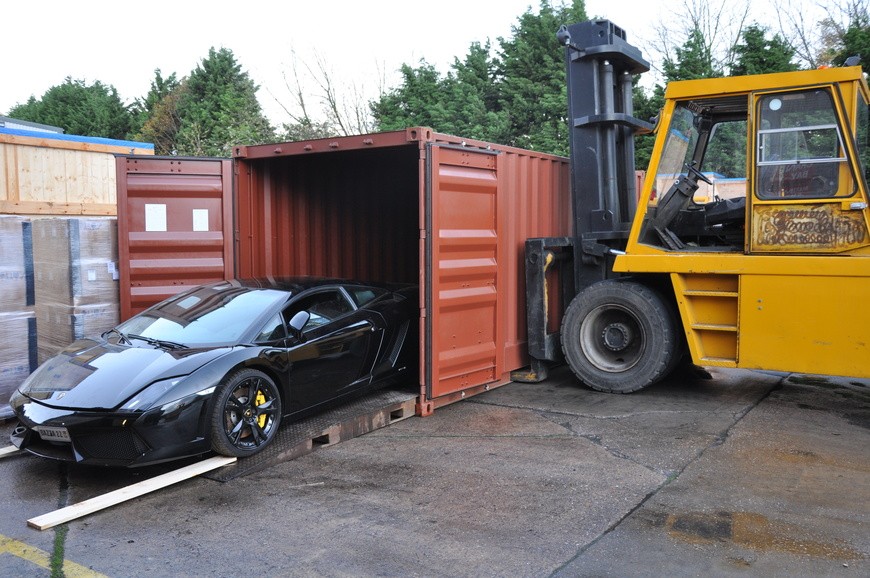
The most popular method of car shipping is roll-on roll-off (RoRo), but container car shipping might be a better choice if you’re moving to a new state or sending your car overseas. The RoRo method involves rolling your vehicle down from a flatbed truck onto the deck of the cargo vessel. But car container transport has a unique procedure for loading your vehicle and preparing it for transport.
Under this car transportation method, you need to first find a trusted and reputable auto transport company that will manage the shipment, prepare any required paperwork, and transport your vehicle to the agreed destination safely and on time. The next step is to schedule a pickup and drop-off date, time, and location.
On the scheduled date for pick up, the driver picks up your vehicle and transports it to the nearest port where it will be carefully loaded and positioned into the shipping container. The vehicle’s wheels will then be latched onto the corners of the container using ratchet straps. This shipping method protects your vehicle from external hazards during the journey.
An average shipping container comes in two sizes; 20 ft cubic and 40 ft cubic. The knowledge of the container’s capacity is a key variable to consider in the logistics of international vehicle shipping. A reputable shipping company will load your vehicle according to your preference. As such, exotic cars may have preferential treatment like provisions of extra safety, whereas other cars may be victims of consolidated shipping. Below are the shipping container specifications and dimensions.
Length | 19’4″ | 5.89m |
Width | 7’8″ | 2.33m |
Height | 7’10” | 2.38m |
Door height | 7’6″ | 2.28m |
Door width | 7’8″ | 2.33m |
Tare weight | 4,916 lb | 2.229kg |
Max. Cargo | 47,999 lb | 21,727kg |
Capacity | 1,172 ft³ | 33.18 m³ |
Inside length | 39’5” | 12.01m |
Inside width | 7’8” | 2.33m |
Inside height | 8’10” | 2.69m |
Door width | 7’8″ | 2.33m |
Door height | 8’5” | 2.56m |
Tare weight | 8,750 lb | 3,968kg |
Max. Cargo | 58,450 lb | 26,512kg |
Capacity | 2,694 ft³ | 76.28m³ |
Inside length | 44’6″ | 13.56m |
Inside width | 7’77”’ | 2.35m |
Inside height | 8’7″ | 2.70m |
Door width | 7′-8 1/8″ | 2.34m |
Door height | 8′-6” | 2.59m |
Tare weight | 10,360 lb | 4,699kg |
Max. Cargo | 71,500 lb | 32,432kg |
Capacity | 3, 040 ft³ | 86m³ |
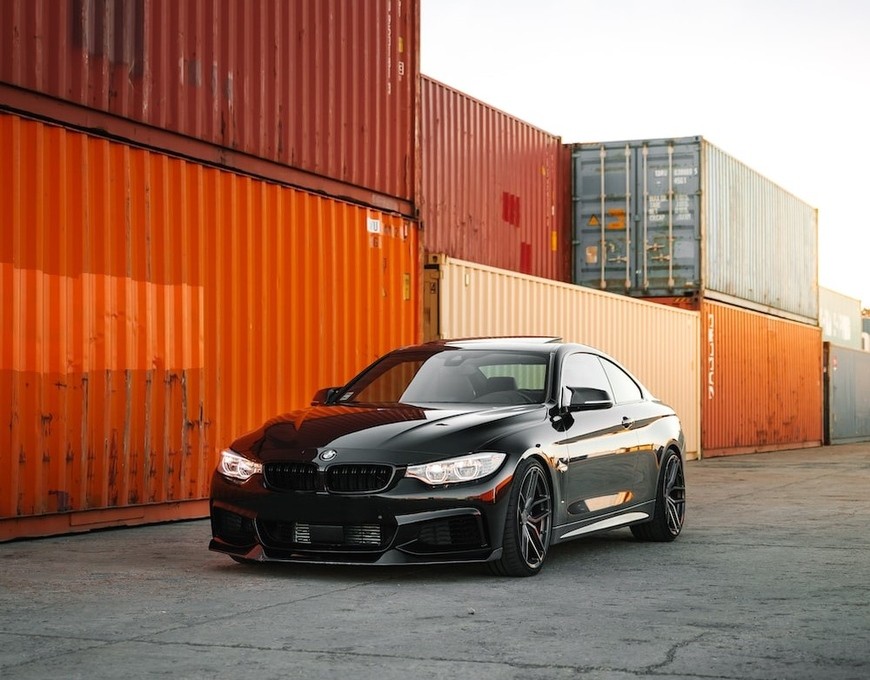
In shipping vehicles, there are two major types of cargo vessels: RoRo vessels and container ships. The car container transport offers the ideal option for shipping most types of vehicles like all kinds of SUVs, motorcycles, sedans, pickup trucks, and RVs. But, it has some limitations in shipping oversized vehicles like tractors and trailers that transcend the regular dimensions.
The success of shipping a car in a container depends on the vehicle’s capacity. As mentioned above, an average auto transport container comes in two sizes: 20ft cubic and 40ft cubic. The 20ft cubic accommodates one or two vehicles depending on their size, while the 40 ft cubic can contain four average-sized vehicles (depending on their sizes). It is often the most cost-effective option for shipping two cars.
If you’re searching for a cheaper option to transport a used or older vehicle, you may consider the RoRo method. But if you’re shipping an exotic or vintage car, then use a car container transport option for its extra safety measures.
Most big cities in the States have a port terminal where vehicles are loaded and transported in containers. These cities are New York, Boston, Baltimore, Miami, Charleston, Los Angeles, Savannah, New Orleans, Houston, Oakland, and Seattle.
If your home or the vehicle you want to ship is far from the cities mentioned above, you can contact an auto transport company to move your vehicle from your front door or garage to one of these ports.
Amidst the many companies that use container auto shipping, we were able to highlight five that offer the best and most affordable shipping services. Below are the five of them. This heading x-ray one of the best shipping companies; Compare The Carrier.
Best Car Shipping Companies | Motor1 Award | Overall |
 Montway Auto Transport | Best overall | 4.6 |
 SGT Auto Transport | Comprehensive options | 4.5 |
 Sherpa Auto Transport | Locked-in price | 4.4 |
 AmeriFreight | Best discounts | 4.4 |
 Easy Auto Ship | Best for a Quick pick up | 4.3 |
This is the premier choice in the car shipping quotes comparison. Offering rates from companies that operate in 50 States and overseas, and can offer top-notch car delivery services such as door-to-door auto transport.
We also extend to the shipment of specialty automobiles like classic cars, motorcycles, heavy equipment, etc within the States and overseas.
The shipping container transport cost ranges from $1,000 to $4,500 depending on the location, vehicle’s size, and minus any additional fees. For example, an average shipping company would typically charge at least $1200 to ship a vehicle from the West Coast to the East Coast.
Then, using a car shipping container to transport a vehicle abroad will cost $1,500 to $5000 depending on the pickup and dropoff locations. Though it’s more expensive than RoRo, it offers more safety during transit.
Here are average quotes for shipping a car in the container to overseas territories:
1. In a 20-foot container from the US to Puerto Rico can cost around $1,500 to $2,500
2. In a 40-foot container from the US to Guam can cost around $3,000 to $5,000
3. In a 40-foot container from the US to the US Virgin Islands can cost around $1,500 to $3,000
4. In a 20-foot container from the US to American Samoa can cost around $3,000 to $5,000
5. In a 40-foot container from the US to the Northern Mariana Islands can cost around $4,000 to $6,000
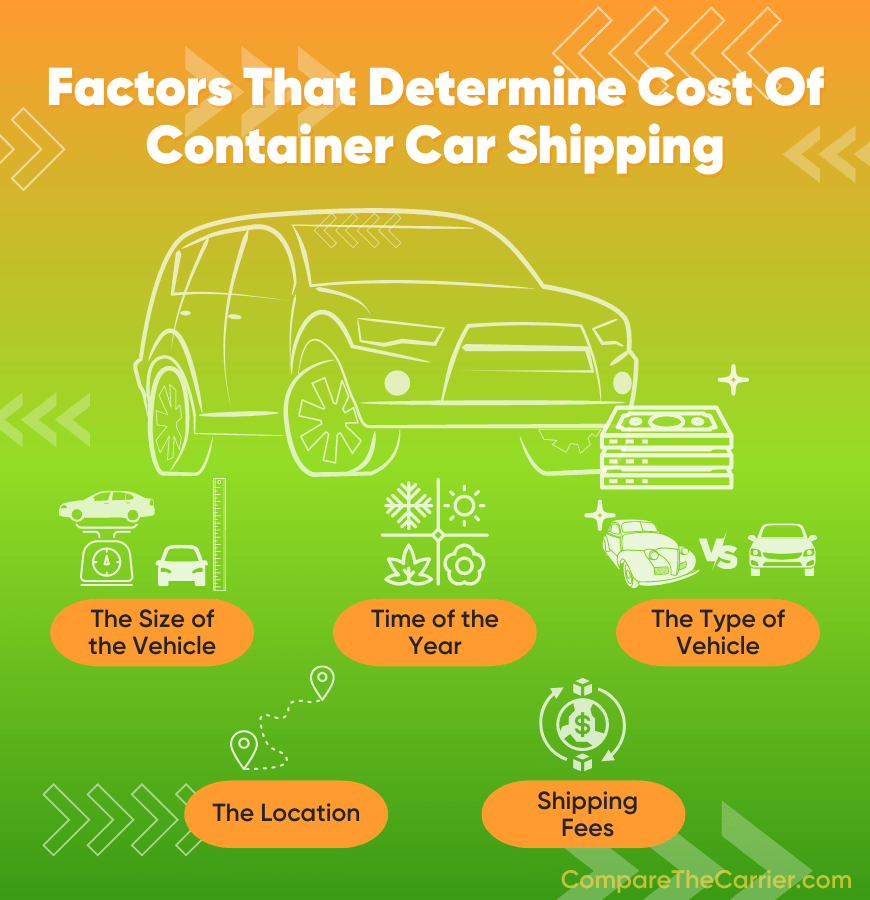
Overall, the following factors determine the cost of container car shipping.
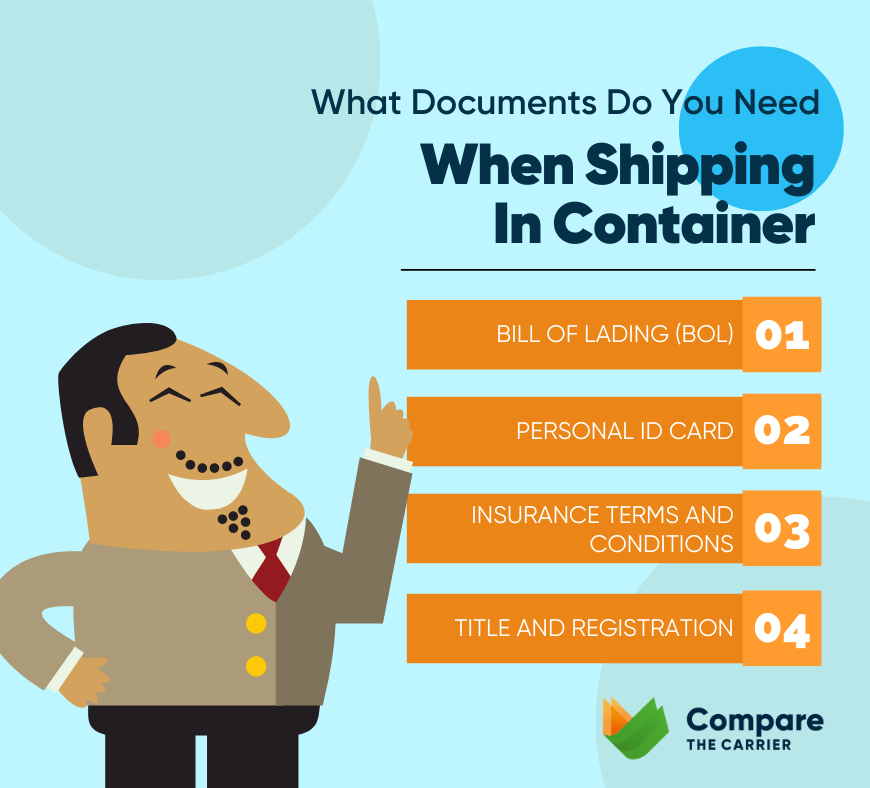
Are you ready to ship your car but the process looks complicated to you? Not to worry, because we will now consider the different documents required for shipping vehicles via containers.
These are the documents you need to check before shipping your vehicle to your desired destination.
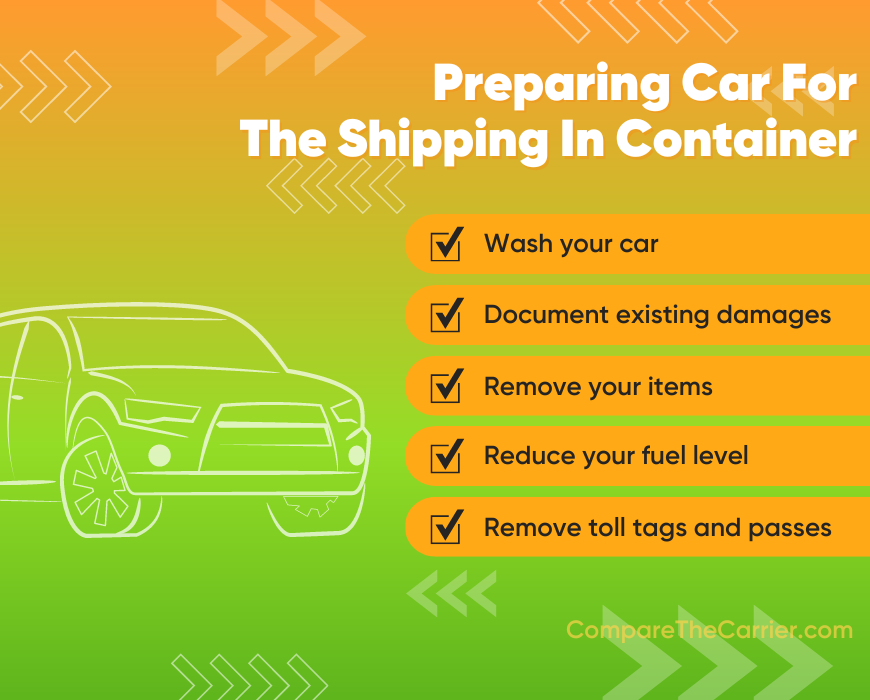
Apart from the documents above, the following are some other important things you should do to keep your vehicle safe in transit:
Are you an owner or dealer of exotic cars or any other vehicle that needs extra protection and handling measures, and you are going to move it somewhere in the US? Then container auto transport is the best option for you. Alternatively, you may consider using the RoRo option as it is cheaper and easily affordable.
Container auto transport offers a secure and cost-effective way to ship your car. Whether you’re relocating for a new job, vacationing in style, or sending a vehicle to loved ones abroad, this method provides peace of mind and flexibility.
Remember, Compare The Carrier is your one-stop shop for all your car shipping needs. With our extensive network of partners, competitive rates, and transparent process, we ensure a smooth and stress-free experience. Get your free quote today and let us help you navigate the exciting world of container auto transport!
Vehicles are either driven or safely winched into the container using a dedicated loading ramp. Once inside, the car is secured to the floor’s D-rings using heavy-duty soft-tie ratchet straps over the wheels. Wooden chocks are also placed firmly against the tires to prevent any shifting during transit.
A standard 20-foot shipping container holds exactly one vehicle, leaving extra space for personal belongings. A 40-foot container typically accommodates two average-sized cars parked end-to-end. By utilizing specialized metal racking systems, a 40-foot high-cube container can securely hold up to four standard sedans or classic cars
You must provide a clean title, valid registration, and a government-issued ID. The vehicle should be thoroughly washed for an accurate pre-shipment inspection. Drain the fuel tank to less than a quarter full, disconnect the car alarm, and remove all toll tags. Personal items can be packed but must be secured.
Yes, container shipping provides significantly higher security than Roll-on/Roll-off (RoRo) transport. Because the vehicle is locked inside a solid steel box, it is completely protected from harsh ocean elements, debris, and potential theft. This makes it the required method for safely transporting classic, exotic, and high-value luxury cars.
The average cost to ship a car in a container ranges from $1,500 to $5,000, depending on the destination and container size. A dedicated 20-foot container costs more, while sharing a 40-foot container reduces the rate. Total costs also include port handling charges, customs clearance, and inland transport fees.










Don't have time to fill out the form?
Call a transport company directly to get a quote now!
Select the category you need
Partner with Compare The Carrier & Grow!
We're open to collaborations, partnerships, and mutual growth! Whether you're an individual or a business, we offer exciting opportunities to work together. Fill out the form below to explore how we can collaborate.
Something Went Wrong
We're sorry, but something went wrong. Please briefly describe the problem you experienced in the text area below. Providing your contact information will allow us to follow up if needed.

Thank you,
your form has been accepted.
Your form has been successfully submitted. We appreciate your effort — our team will review it shortly and take the next steps.


[…] for shipping a luxury vehicle overseas. It typically included the roll-on/roll-off method and container car transport. The latter is suitable for luxury vehicles as you can select a whole container for luxury car […]