

Auction Car Shipping Guide In 2026
Have you ever thought that almost eleven million cars are...
24 January 2022
Think you can’t afford your dream car? Think again. We’re spilling the beans on auction car buying, even if it’s your first time at the auction block.
Calculate Shipping Quotes
So, you’re thinking about diving into the exciting world of car auctions, huh?
Good for you!
It’s a fantastic way to potentially snag a sweet ride for a fraction of the price you’d pay at a polished dealership with free coffee and balloons. But let’s be real – if you’re a first-timer, walking into a car auction (or logging into one) can feel a bit like stepping into the Wild West. The auctioneers talk faster than humanly possible, people are flashing hand signals like baseball coaches, and cars are moving through lanes at breakneck speeds. It’s a high-energy environment that can be intimidating.
Don’t sweat it, though. This guide is packed with insider car auction tips to help you navigate the bidding wars, avoid rookie mistakes, and drive off with a deal that’ll make your friends jealous. We aren’t just going to give you a list of rules; we are going to teach you the psychology of the auction, how to spot a lemon from fifty feet away, and the specific auction strategies the pros use to make money.
We’ll walk you through everything you need to know, from understanding the different types of auction cars available whether that’s a pristine fleet vehicle or a fixer-upper from a crashed car auction to getting an auction license (if you need one), inspecting cars like a mechanic, setting a budget that won’t bankrupt you, and mastering the art of bidding. We’ll even cover those pesky car auction fees for buyers so there are no surprises when you pull out your wallet.
Whether you’re hunting for a used car auction bargain to get to work or a classic car auction gem to restore in your garage, we’ll show you how to buy a car at auction with confidence. Consider this your crash course in “Car Auctions 101” – we’re here to make sure your first auction experience is a successful one.
Buckle up, it’s going to be a fun ride!
Okay, so you’ve decided to dip your toes into the exciting world of car auctions. Smart move! But before you jump in headfirst, let’s get you familiar with the lay of the land. Car auctions, while potentially lucrative, have their own set of rules, rhythms, and unwritten codes of conduct.
At its core, a car auction is a fast-paced marketplace where vehicles are sold to the highest bidder. It’s a bit like a high-stakes game of “who wants it more?” but with cars instead of antique furniture. The goal of the auction house is simple: move inventory fast. They don’t want to chat about the car’s feelings; they want to hear the next bid.
Getty Images
Now, not all auctions are the same. There are a few different flavors of car auto auction events you might encounter, and choosing the right one is step one of your journey.
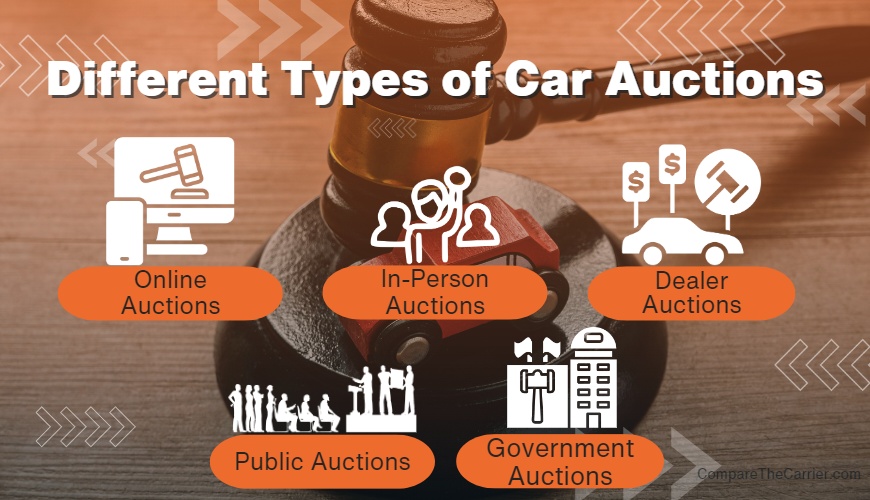
No matter which type of auction you choose, understanding the specific rules and regulations is key. Some auctions may require you to obtain an auction license before you can bid. Others may have specific car auction fees for buyers that you’ll need to factor into your budget. Do your homework beforehand so you’re not caught off guard.
Here’s a quick rundown of the typical auction process:
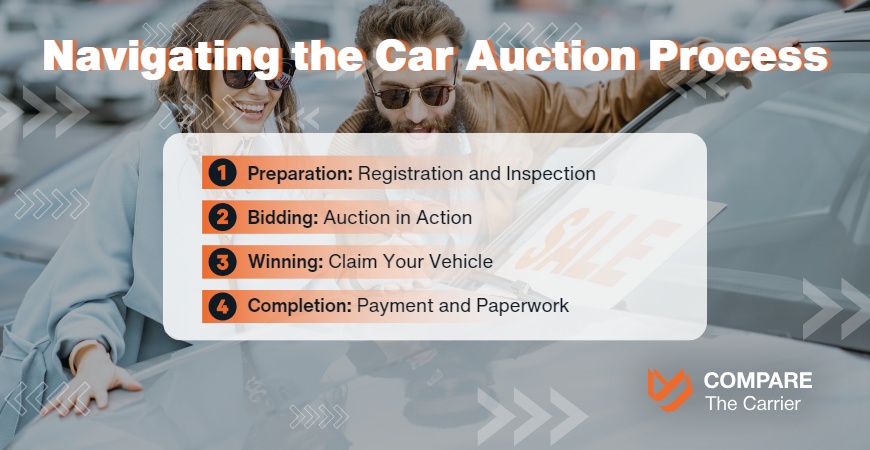
Sounds simple enough, right?
Well, it can be, but there are definitely some insider car auction buying tips and strategies that can help you navigate the process like a pro. We’ll dive deeper into those in the next sections, but for now, just remember – knowledge is power in the auction world!
Alright, now that you understand the basics of how car auctions work, it’s time to roll up your sleeves and get ready for the big day. Buying a auction car isn’t something you should do on a whim on a Saturday morning. It requires prep work.
Remember, success at an auction isn’t just about showing up and waving your bidder paddle around. It’s about strategy, preparation, and a little bit of savvy.
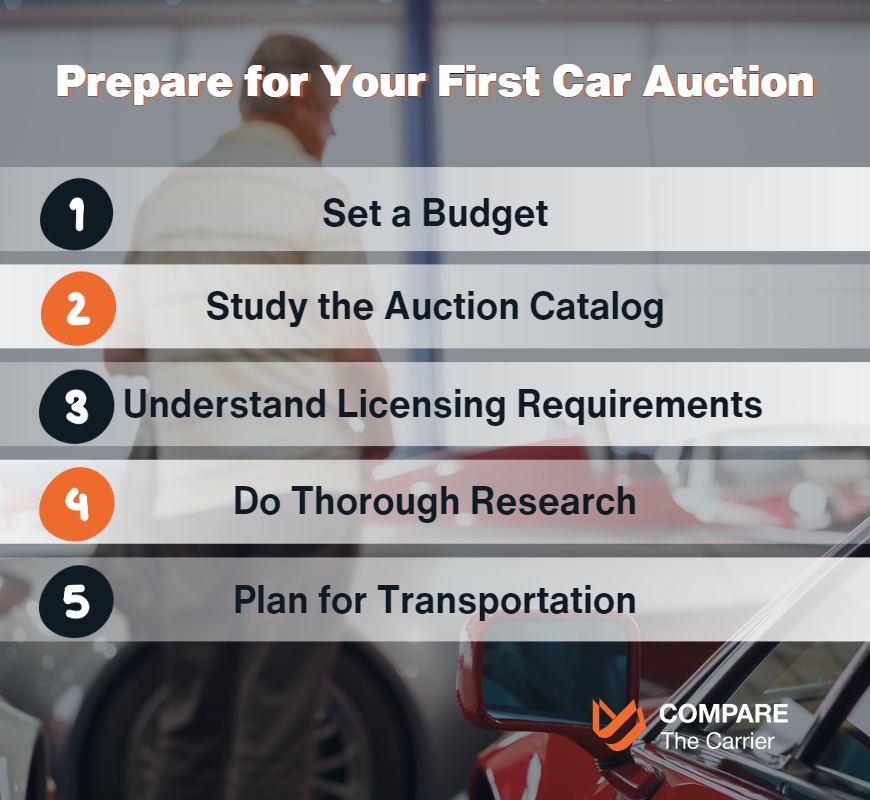
If you’re considering bidding on a car from an auction across the country, it’s crucial to understand the logistics of cross country auto transportation to factor in the costs and planning required.
Remember, the goal of preparing for an auction isn’t just about winning a bid, it’s about winning the right bid – one that gets you a car you love at a price you can afford. So take your time, do your research, and go into the auction with a clear head and a solid plan. You got this!
Alright, you’ve done your homework, set your budget, and you are ready to rumble. Now it’s time for the main event: inspection day. This is your chance to get up close and personal with the vehicles you’re considering.
Think of it as a first date – you want to make a good impression, but you also want to make sure they aren’t hiding a dark secret (like a cracked engine block).
At a public car auction, you usually cannot test drive the cars on the road. You can start them, shift the gears while stationary, and walk around them. This means you need to be Sherlock Holmes.
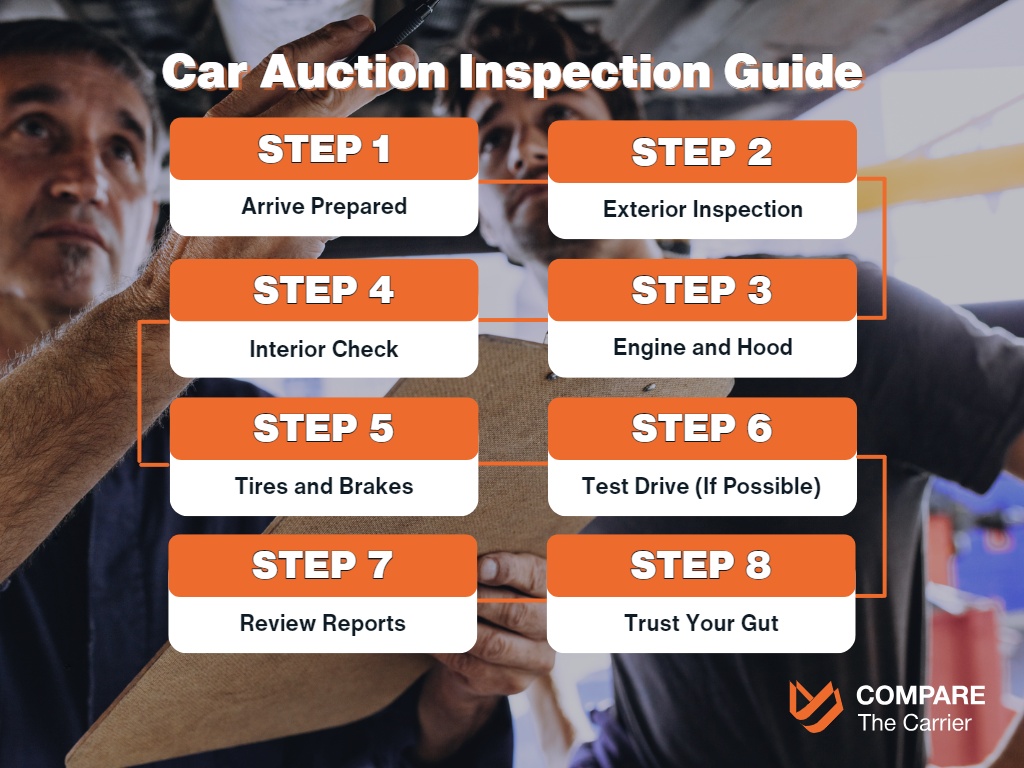
Now, for the inspection itself. Don’t be shy – you’re entitled to a good look! Here’s a basic checklist to get you started:
In addition to your physical inspection, don’t forget to do your due diligence on paper:
Remember, knowledge is power when buying a used car. Arm yourself with information, inspect thoroughly, and don’t be afraid to walk away if something doesn’t feel right. A car auction can be a great place to find a deal, but only if you’re a savvy and informed buyer.
Alright, let’s tackle a bit of red tape, shall we? While most public car auto auction events are open to anyone with a hankering for a good deal, there are certain scenarios where you might need a special license to participate. Think of it like a VIP pass to the bidding floor.
This is a game-changer for car auction buying. If you want access to the huge dealer inventory (like Copart or IAAI) but don’t have a dealer license, you can use a Broker Service or a Proxy Bidder.
Websites like online auto brokers (or similar services) act as the middleman.
If you decide you want to go all-in and get licensed:
Remember, even if you don’t need a license to buy at a specific public car auction, obtaining one can open doors to dealer-only auctions where the repossessed car auction deals are often cleaner.
Alright, you’ve done your research, you’ve inspected your favorite cars, and now it’s time for the heart-pounding moment: the bidding.
When the auction heat rises, remember who’s boss! You are.

Stick to your budget, no matter how tempting the bids get!
Picture this: the auctioneer’s rapid-fire chant, the crowd buzzing with anticipation, the adrenaline coursing through your veins. It’s easy to get caught up in the excitement, but remember, keeping a cool head is crucial to snagging a good deal at a car auction.
Before you place your bid, it’s wise to familiarize yourself with an auction car shipping guide to understand the logistics and costs involved post-auction.
Here’s a friendly reminder: emotions can run high at auctions, leading to impulsive decisions and overbidding. It’s essential to remember that there will always be other cars, other auctions. Don’t let the fear of missing out cloud your judgment. Stick to your budget and walk away if the bidding goes beyond your limit.
Now, let’s explore some tried-and-true bidding tips to help you navigate the auction floor (or online platform) with confidence:
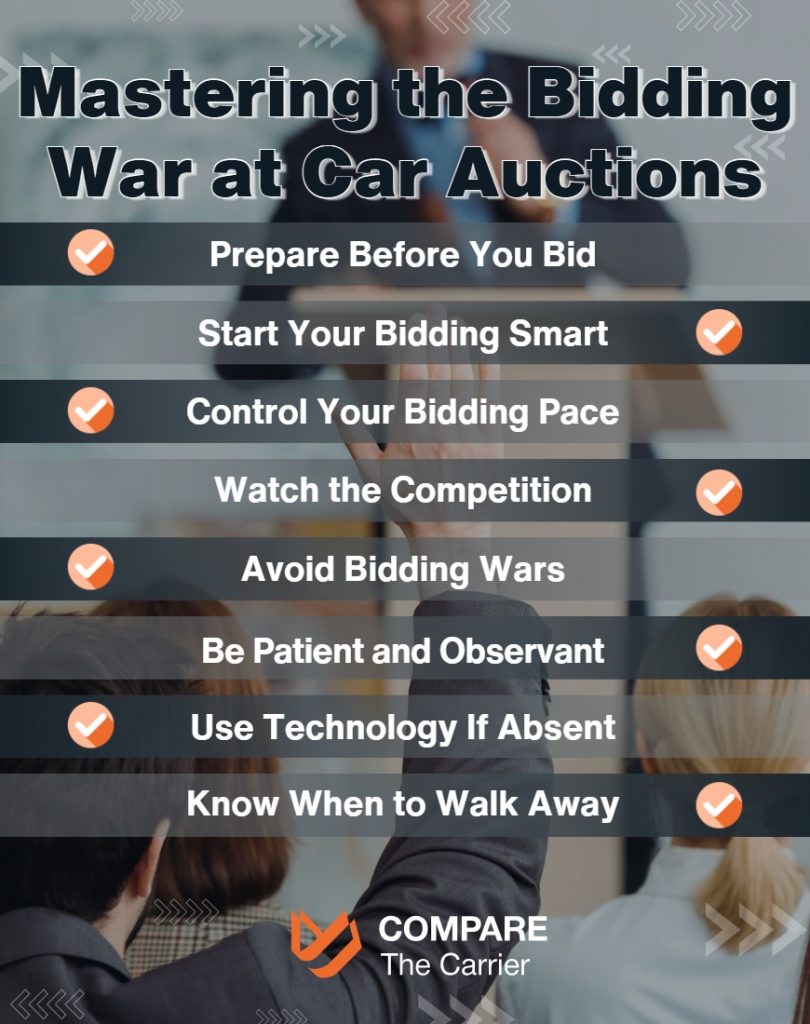
By following these car auction tips and keeping a level head, you’ll increase your chances of scoring a great deal on your next used car. Happy bidding!
Alright, the gavel’s dropped, the dust has settled, and you’re the proud new owner of a shiny (or maybe not-so-shiny) set of wheels. Congratulations!
But hold your horses, the auction isn’t quite over yet. There’s still some important paperwork and logistics to handle before you can hit the open road.
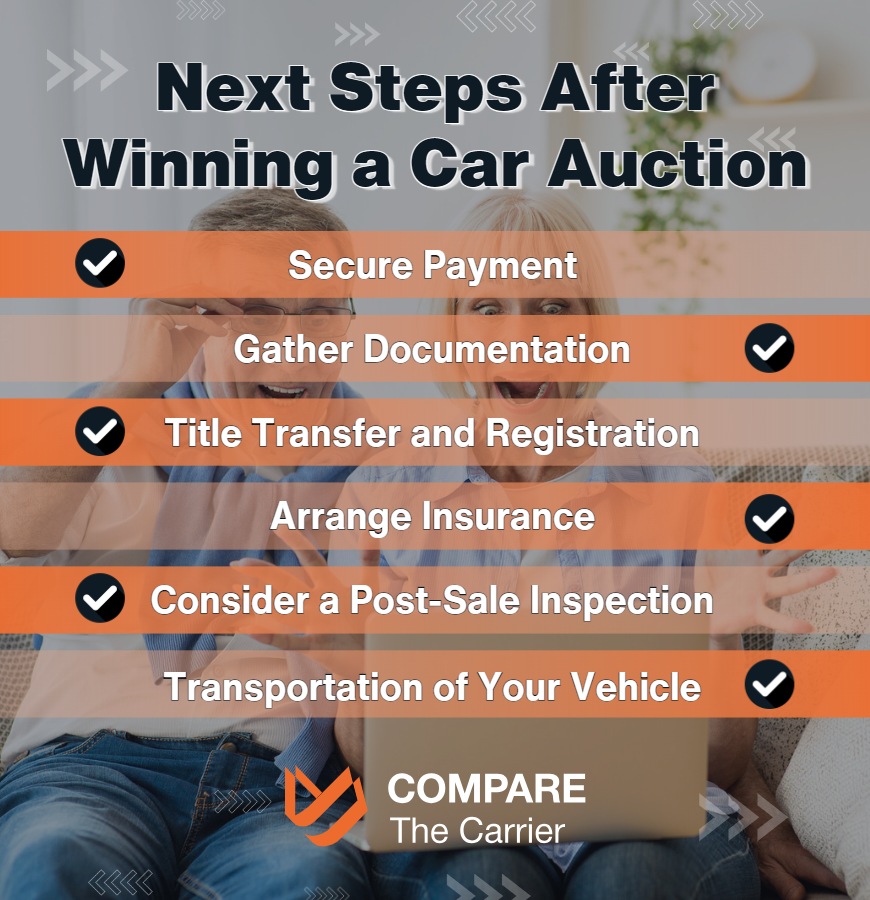
Let’s break down the post-auction process so you know what to expect:
And finally, let’s not forget about getting your new ride home. If you’re not planning on driving it yourself, you’ll need to arrange transportation.
That’s where a reliable car shipping service can come in handy. They can handle all the logistics, ensuring your car arrives safely and on time. (Shameless plug: Compare The Carrier is a great option for finding competitive quotes and reliable transporters. 😉)
If you’ve purchased a vehicle from a dealership through an auction, you can learn more about shipping cars from dealers to ensure a smooth process.
The post-auction process might seem a bit overwhelming at first, but it’s all part of the journey to becoming a proud car owner.
Just take it one step at a time, stay organized, and don’t be afraid to ask questions if you’re unsure about anything. And remember, once you’ve completed all the necessary steps, you can finally hit the road and enjoy the fruits of your auction success!
Alright, you’ve successfully navigated the auction, won your bid, and completed the paperwork. Now comes the exciting part getting your new ride home. Whether it’s a classic car auction beauty or a practical daily driver, getting it out of the auction yard is your final mission.
First things first, consider the distance and your comfort level. If the auction is local and you’re confident behind the wheel, driving it home might be the most straightforward option. However, if you’re dealing with long-distance transport, consider all your options, including state-to-state vehicle towing to ensure your new purchase arrives safely.
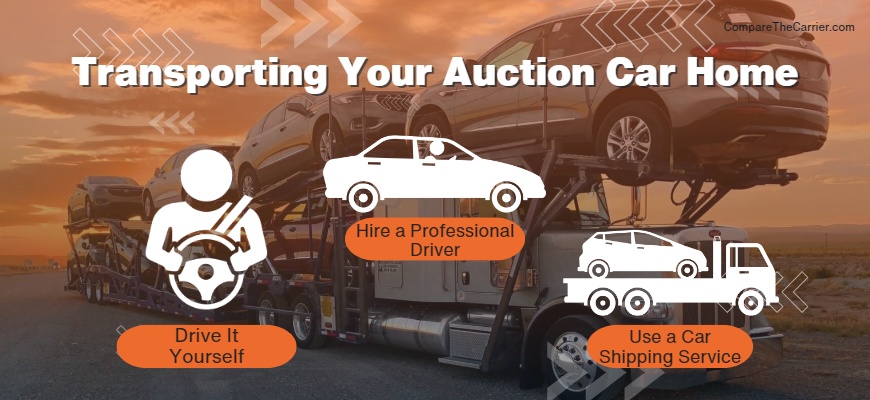
This is the DIY approach. It’s the cheapest, but it’s risky.
Verdict: Only do this if the car is in great shape, the drive is short, and you have legal tags.
The Risk: The car has been sitting. The battery might be weak, the tires might have flat spots, and the gas might be old.
The Legal Side: You need license plates. Some states issue temporary transit tags at the auction; others do not. Driving without plates is a great way to get pulled over.
f you have a truck, you can rent a tow dolly or trailer. This is a great middle-ground for buying a auction car. It’s safer than driving an unknown car, but it requires you to do the physical work of loading it.
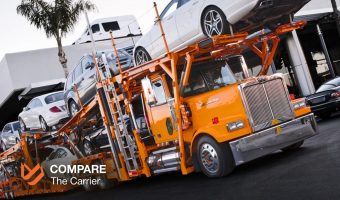
FFor long-distance transport or added peace of mind, a car shipping service is your best bet. These companies specialize in transporting vehicles safely and efficiently, often offering door-to-door service and insurance coverage. When choosing a provider, consider factors like cost, reputation, insurance options, and estimated delivery time.
If you decide to ship your vehicle, you might choose an open vehicle transport option for cost-effectiveness, especially if you’re looking for a standard solution that doesn’t require additional protection.
For classic cars or vehicles that require extra care, enclosed car haulers provide additional protection against the elements and potential road hazards. Consider these top-rated enclosed car shipping companies to ensure your car arrives in pristine condition.
Psst… remember us? Compare The Carrier can help you find the best car shipping deals, saving you time and money. And to get an accurate estimate of how much shipping your auction car will cost, use our vehicle shipping calculator to plan your budget effectively.
‘‘
Here’s a quick comparison of your options:
Option | Pros | Cons |
Drive it Yourself | Most control, potentially quickest, no additional cost | Time-consuming for long distances, potential wear and tear on car |
Hire a Driver | Convenient, especially for special handling or long distances | Can be expensive, less control over the transport process |
Car Shipping | Safe and efficient, door-to-door service, insurance options | Can be more expensive than driving yourself, longer delivery time |
No matter which option you choose, be sure to do your research and compare quotes. Ask about insurance coverage, tracking options, and any additional fees that may apply. Remember, your newly acquired treasure deserves the best care during its journey home.
For those who need their vehicle transported urgently or internationally, consider the option of shipping cars by plane to save time and reduce the risk of damage.
So, there you have it – a breakdown of your options for transporting your auction car. Now, go forth and enjoy the fruits of your bidding victory!
So there you have it your crash course on car auctions. It might feel a bit overwhelming at first, but if you do your homework and stick to your budget, you can find some amazing deals.Just remember: inspect carefully and bid with your head, not your heart. And remember, when it comes to transporting your prized auction find, Compare The Carrier is here to ensure a smooth and worry-free journey home. Happy bidding and happy driving!
Generally, no. Most auction cars are sold “AS-IS,” meaning once you buy it, it is yours, warts and all. Some auctions offer a very limited “Green Light” guarantee (e.g., the engine works for 1 hour after sale), but for the most part, you are on your own. This is why inspection is vital.
Don’t do this. Failing to pay is called “reneging.” You will lose your security deposit, you will likely be banned from that auction house permanently, and they may even sue you for the difference if they resell the car for less money later.
On average, you can expect to save 20% to 30% off retail dealership prices. At a repossessed car auction or impound car auction, savings can be even higher (up to 50%), but the risk of hidden mechanical issues is also higher.
The record is currently held by a 1955 Mercedes-Benz 300 SLR Uhlenhaut Coupé. It sold at a private RM Sotheby’s auction in 2022 for a mind-blowing €135 million (approx. $142 million USD). While you likely won’t find that at your local public auction, it’s a fun fact to know!
Yes! You can attend a public car auction or a government auction without a license. For dealer-only auctions, you can use a licensed broker service or a site like a certified broker to bid on your behalf.
The secret to how to win auctions isn’t having the most money; it’s having the most discipline. Do your research, inspect the vehicle thoroughly, set a strict budget, and wait until the vehicle is about to sell before placing your final bid (the “sniper” method).
You can drive it yourself if it’s roadworthy and you have plates. However, the safest bet is using a professional transporter. Compare The Carrier can help you find the best car shipping deals, saving you time and money.







Don't have time to fill out the form?
Call a transport company directly to get a quote now!
Select the category you need
Partner with Compare The Carrier & Grow!
We're open to collaborations, partnerships, and mutual growth! Whether you're an individual or a business, we offer exciting opportunities to work together. Fill out the form below to explore how we can collaborate.
Something Went Wrong
We're sorry, but something went wrong. Please briefly describe the problem you experienced in the text area below. Providing your contact information will allow us to follow up if needed.

Thank you,
your form has been accepted.
Your form has been successfully submitted. We appreciate your effort — our team will review it shortly and take the next steps.


