

Everything You Need to Know About Hot Shot Car Transport
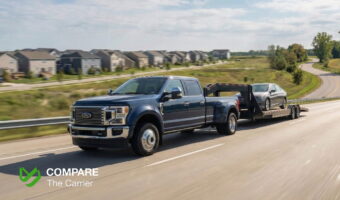
Hot shot car transport is a specialized vehicle shipping ...
21 April 2026
North Carolina auto transport costs vary by route, vehicle, season, and transport type. Standard open car shipping tends to be most competitive on major corridors such as I-95, I-85, and I-40, while rural and mountain pickups can take longer to schedule. Typical transit times range from a few days for regional routes to about two weeks for longer cross-country shipments, and winter weather near Asheville can add delays on I-26 and I-40.
Calculate Shipping Quotes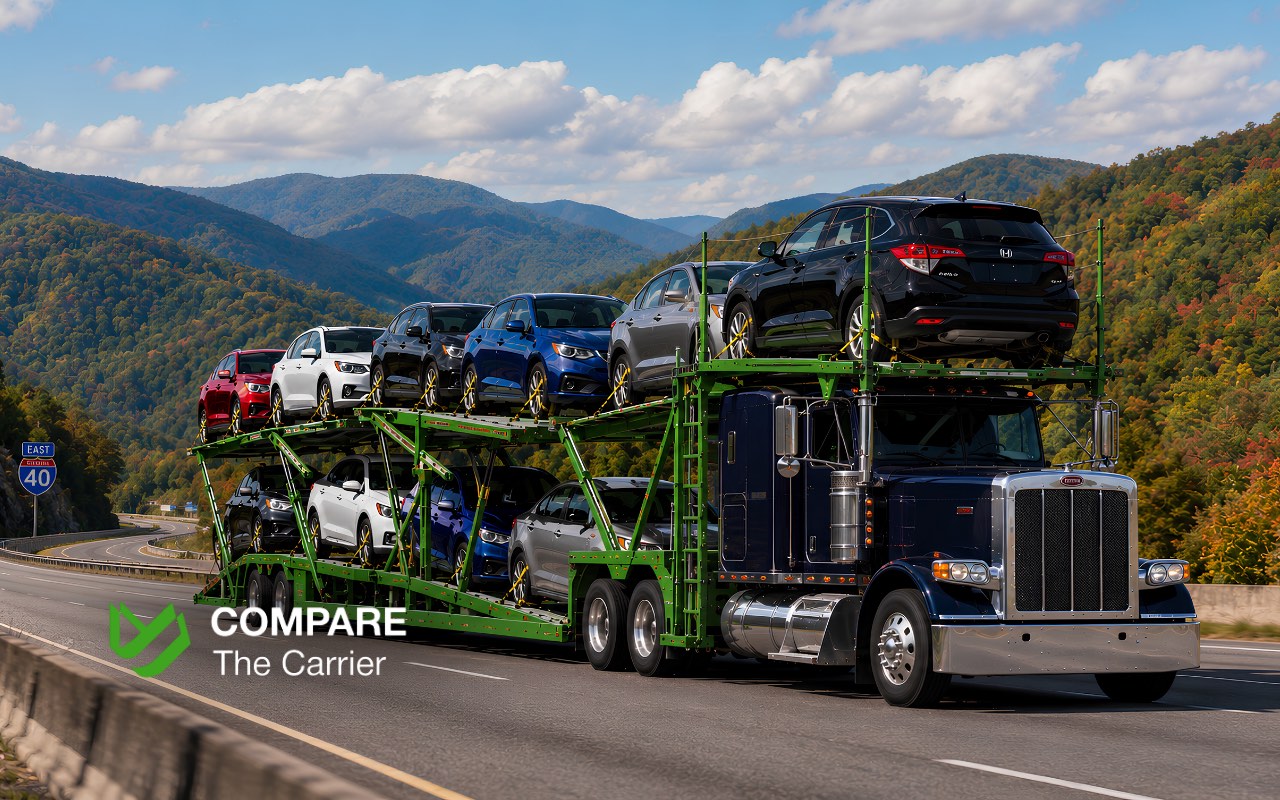
If you’re planning to transport a car to or from North Carolina, choosing the right auto transport service can make the process easier and more predictable. Whether you’re relocating, buying or selling a vehicle, moving for work, or sending a car to family in another state, professional car shipping can save time and avoid the need for a long-distance drive. North Carolina’s location and extensive highway network make it a common starting point, destination, and transit state for vehicle transportation.
Table of Contents
Most people arranging North Carolina car transport don’t call a trucking company directly – they go through a broker who matches the load to a carrier already running that lane. That distinction matters in North Carolina because the corridor carries heavy Northeast-to-Florida traffic, and a load priced below what carriers on that lane expect can wait longer for a truck.
The process itself is fairly linear. You request a quote using pickup and delivery zip codes, vehicle details, and a target date. A broker or car shipping services provider then offers that load to carriers with active runs on the I-95, I-85, or I-40 corridors, and once one accepts, you get a pickup window. The driver inspects your vehicle at pickup, both of you sign a Bill of Lading documenting its condition, and the vehicle travels – usually on an open, multi-car trailer – until it reaches your delivery address or an agreed nearby meeting point.
| Detail | What to Expect |
|---|---|
| Shipping method | Usually open, multi-car transport |
| Pickup | Door-to-door when accessible; nearby lot if needed |
| Transit | About 1–15 days depending on route |
| Inspection | Vehicle condition recorded on the Bill of Lading |
| Payment | Deposit and payment terms vary by provider |
Practical tip: If your pickup address is in a dense urban area, such as downtown Raleigh or Charlotte, consider meeting the driver at a shopping center lot outside the urban core. A full-size car carrier may not be able to navigate a narrow residential street, and a short drive to a wide lot can make pickup faster and easier.
Distance influences the price most, but it’s rarely the only factor. Several variables can raise or lower a quote on the same route – sometimes by a few hundred dollars.
Practical tip:
If a quote is significantly below the typical range for your route, ask what is included and whether the price can change before pickup.
An SUV or a truck will price above a sedan on the same route because it takes up more trailer space and adds weight. How much more depends on the carrier and the specific vehicle, so it’s worth confirming with your exact make and model rather than assuming a flat markup.
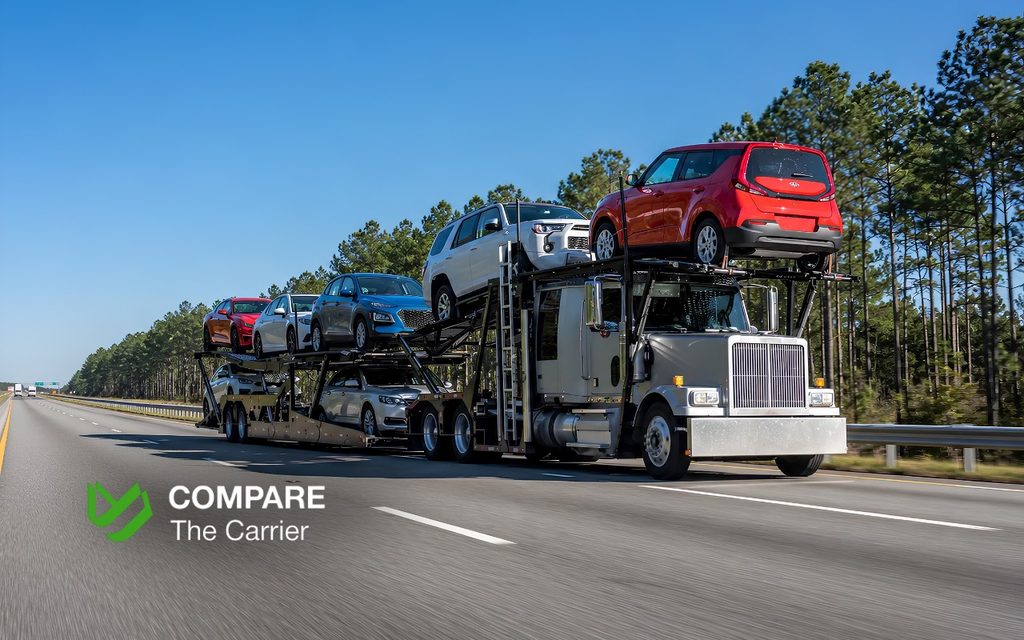
Transit time generally increases with distance, but mileage is not the only factor. Pickup scheduling, route density, traffic, weather, driver hours, and the number of stops can all affect the delivery window. Drivers are subject to federal hours-of-service rules, so daily mileage varies by route, traffic, stops, weather, and other operating conditions.
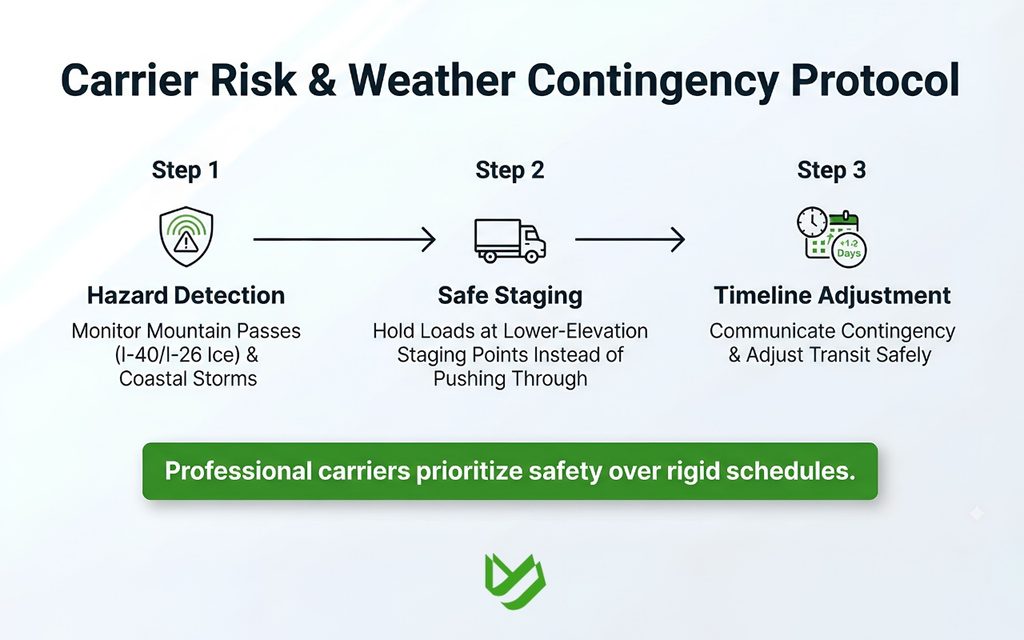
There’s one factor specific to this state. Winter weather on the western mountain routes near Asheville – ice or snow closing stretches of I-26 or I-40 – can add a day or two to an otherwise on-schedule shipment. Carriers with regular runs through that region often wait at lower-elevation points rather than push through a closure, which keeps the vehicle safe but adds time.
| Distance | Average Transit Time |
|---|---|
| 0–799 miles | 1–4 days |
| 800–1,499 miles | 4–7 days |
| 1,500–2,399 miles | 6–10 days |
| 2,400+ miles | 10–15 days |
Transit times are estimated and based on national shipping averages, which are subject to change.
These figures cover time on the truck once your vehicle is loaded. Matching your load with a carrier often takes another one to five business days before pickup, and it can take longer during peak weeks.
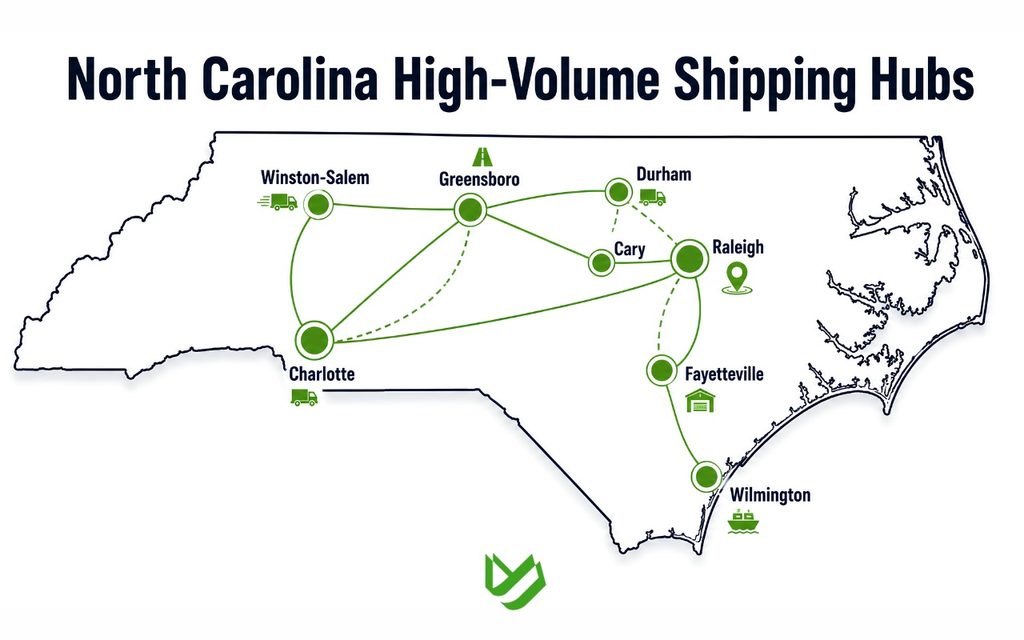
North Carolina’s shipping hubs – Charlotte, Raleigh, Greensboro, Durham, Cary, Fayetteville, Winston-Salem, and Wilmington – connect to nearly every major freight lane in the country, and North Carolina auto shipping volume concentrates on a handful of city pairs rather than spreading evenly across the map. Below are estimated costs on some of the routes carriers run most often.
| Route | Distance | Estimated Cost | Cost per Mile | Transit Time |
|---|---|---|---|---|
| Charlotte, NC to Los Angeles, CA | ~2,680 miles | $992 | $0.37 | 10–15 days |
| Raleigh, NC to Houston, TX | ~1,485 miles | $728 | $0.49 | 4–7 days |
| Greensboro, NC to Jacksonville, FL | ~755 miles | $469 | $0.62 | 1–4 days |
| Durham, NC to New York City, NY | ~765 miles | $475 | $0.62 | 1–4 days |
| Philadelphia, PA to Winston-Salem, NC | ~740 miles | $458 | $0.62 | 1–4 days |
| Chicago, IL to Fayetteville, NC | ~1,080 miles | $562 | $0.52 | 4–7 days |
| Columbus, OH to Cary, NC | ~720 miles | $448 | $0.62 | 1–4 days |
| Atlanta, GA to Wilmington, NC | ~715 miles | $443 | $0.62 | 1–4 days |
Prices are estimates for standard open transport of a sedan, based on national shipping averages. They can change based on route, vehicle, season, fuel prices, and carrier availability.
For a number tied to your exact pickup and delivery cities, use the auto transport calculator – a Charlotte pickup and an Asheville pickup headed to the same destination rarely price the same.
Most North Carolina shipments run along a handful of busy lanes. Relocations from the Northeast and Midwest usually come in on I-95, I-85, and I-40. Outbound shipments mostly go to the Sun Belt and the West Coast. The route guides below cover pricing, timelines, and scheduling tips for each lane.
If your move runs through the Carolinas specifically, it’s worth reading up on North Carolina and South Carolina car shipping together, since carriers frequently combine loads across the two states on a single run.
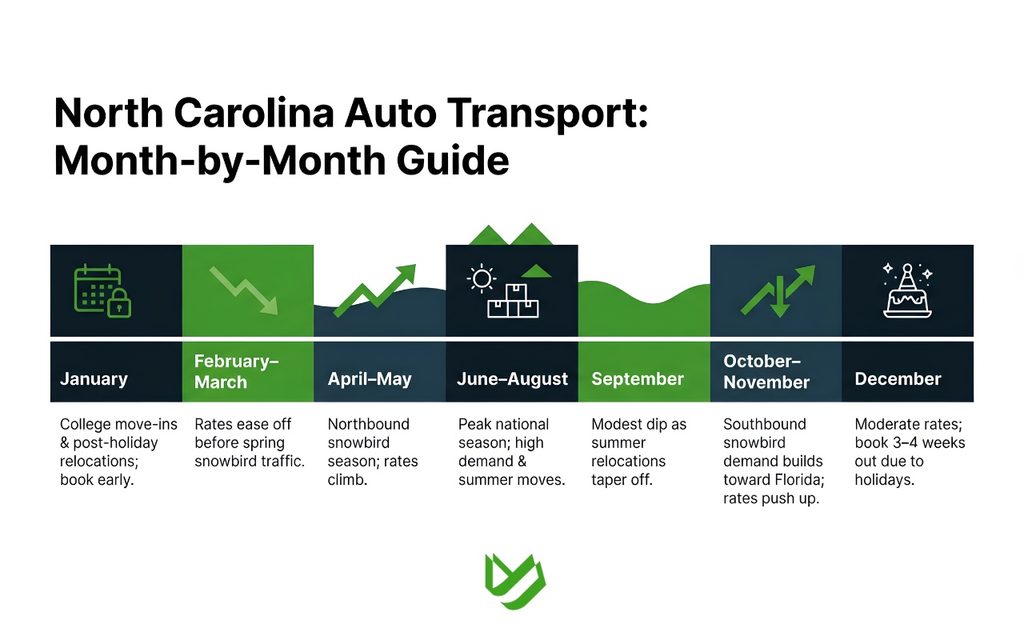
Cost and timing also shift by month more than most shippers expect. North Carolina’s position between the colder mid-Atlantic and warmer Florida means demand swings with the seasons in both directions.
| Time of Year | What to Expect |
|---|---|
| January | College move-ins and post-holiday relocations tighten truck space fast; book early. |
| February–March | Rates ease off as the January rush clears, before spring snowbird traffic ramps up. |
| April–May | Northbound snowbird season picks up, and rates climb again. |
| June–August | Peak season nationally – summer relocations and college shipments keep demand high, especially during August move-in week. |
| September | A modest dip once summer relocations taper off. |
| October–November | Southbound snowbird demand builds toward Florida, pushing rates up on that corridor specifically. |
| December | Moderate rates, but book three to four weeks out since drivers take holiday time. |
For a deeper look at how demand shifts month to month across the whole country, our breakdown of seasonal auto transport costs covers the national pattern this state fits into.
Practical tip: If your dates are flexible, late February and early September are often good windows for North Carolina shipments – you avoid the heaviest snowbird and college move-in demand for truck space.
Many brokers handling NC auto transport ask for a deposit to confirm your booking. The amount and timing vary by provider – some charge it when you accept a quote, others only once a carrier is assigned – and it secures your spot in the schedule rather than paying for the shipment outright.
The remaining balance is often due to the driver at delivery, and many carriers require cash or a certified form of payment rather than a personal check or card. Confirm the accepted payment method before your vehicle is loaded, since arriving at delivery without the right form of payment can delay the handover.
Some brokers offer a price guarantee that protects the quoted rate from rising once you’ve booked, even if market conditions shift before pickup. If that protection matters to you, ask about it directly before booking rather than assuming it’s included.
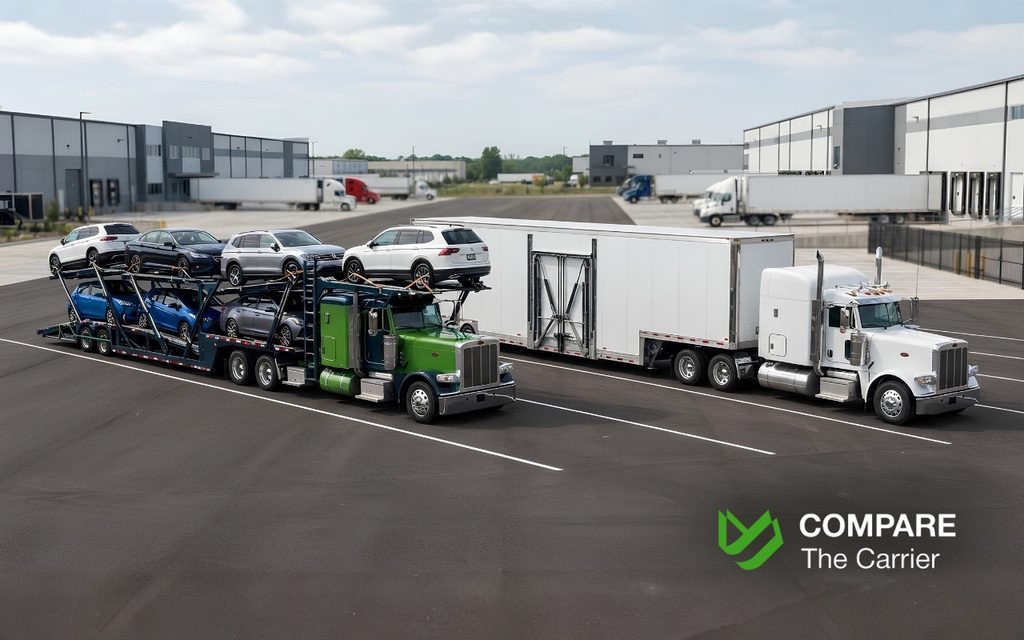
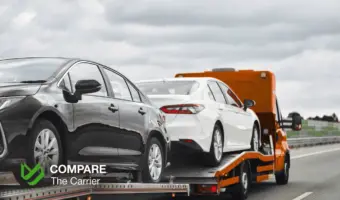
Open transport is the default for the vast majority of North Carolina shipments – the same style of multi-car trailer used to move new inventory to dealerships. It’s affordable, widely available, and well suited to standard sedans, SUVs, and trucks where a little road dust isn’t a concern.
Enclosed transport loads your vehicle into a fully covered trailer, shielded from weather and road debris for the entire trip. It often costs roughly $300–$500 more than open service on a typical NC route, which makes sense for classic, exotic, or high-value vehicles where paint condition matters most, but is usually unnecessary for a daily driver.
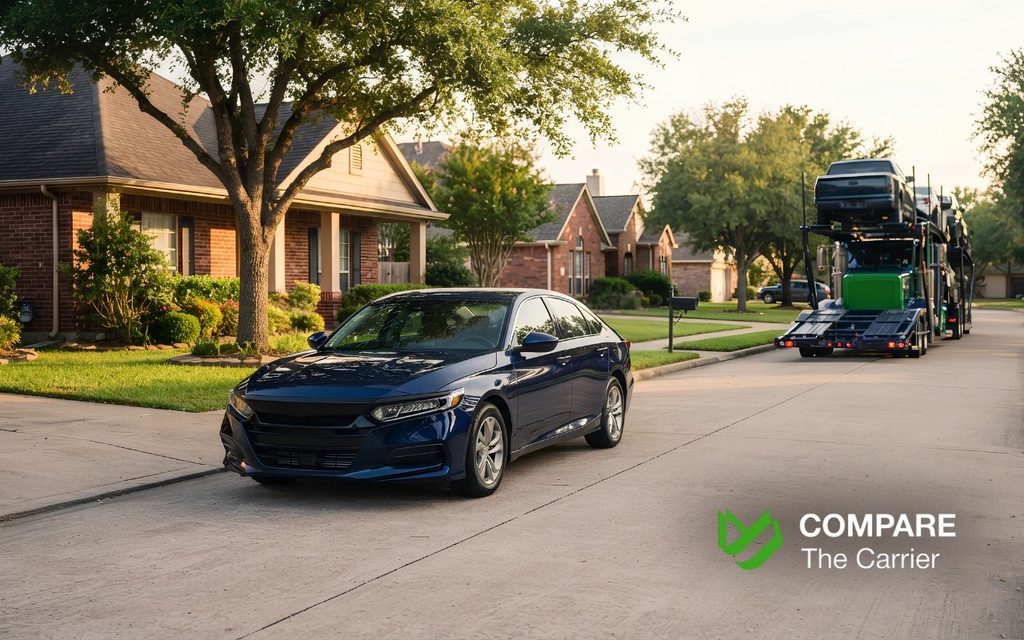
Door-to-door service is what most people picture: the driver picks up and drops off at the addresses you provide. When a residential street or gated community can’t accommodate a full-size car carrier, the driver calls ahead to agree on a nearby open lot instead – a routine adjustment that usually doesn’t change your quoted price.
Terminal-to-terminal service can cost less than a comparable door-to-door quote, often by around $100–$200. You drop your vehicle at a storage lot and pick it up at one on the other end, which works well if your schedule is flexible and you have a way to get to and from the terminal yourself.
A car that doesn’t start or roll under its own power can still be shipped, but it needs special handling. Carriers use a winch to load it onto the trailer, which usually adds to the quote depending on the vehicle’s condition and weight. Mention this when you request a quote – a carrier that arrives expecting to drive your car onto the trailer may have to delay pickup or decline the job.
Expedited service often adds roughly $200–$400 to a standard rate in exchange for priority scheduling, which typically means pickup within a day or two instead of a wider pickup window. If you have a strict deadline, expedited shipping can be worth the additional cost because it prioritizes your vehicle for earlier pickup – useful for a military deployment, a job start date, or a closed vehicle sale.
A little prep work the day before pickup makes delivery smoother. Run through this before the driver arrives:
Once the basics are in place – pickup and delivery addresses, the vehicle’s year, make, and model, whether it runs, and a target ship date – booking takes just a few minutes. Keep your registration or title information handy, as some brokers ask for it before confirmation, and a form of identification for the person who signs the Bill of Lading at pickup.
If you’re shipping to or from a state with different requirements – say, relocating from Virginia or heading down to Georgia or Florida – it’s worth confirming registration timelines on both ends before your car ships, so you’re not caught off guard once it arrives.
North Carolina’s high-volume corridors attract a lot of quote activity, and not every low price holds up. If the typical estimate for a sedan on your route is around $450 and one quote comes in far below that, that quote may not reflect the final market price. Ask whether the price can change before pickup and what happens if no carrier accepts the load at that rate.
A few habits protect you regardless of who you book with:
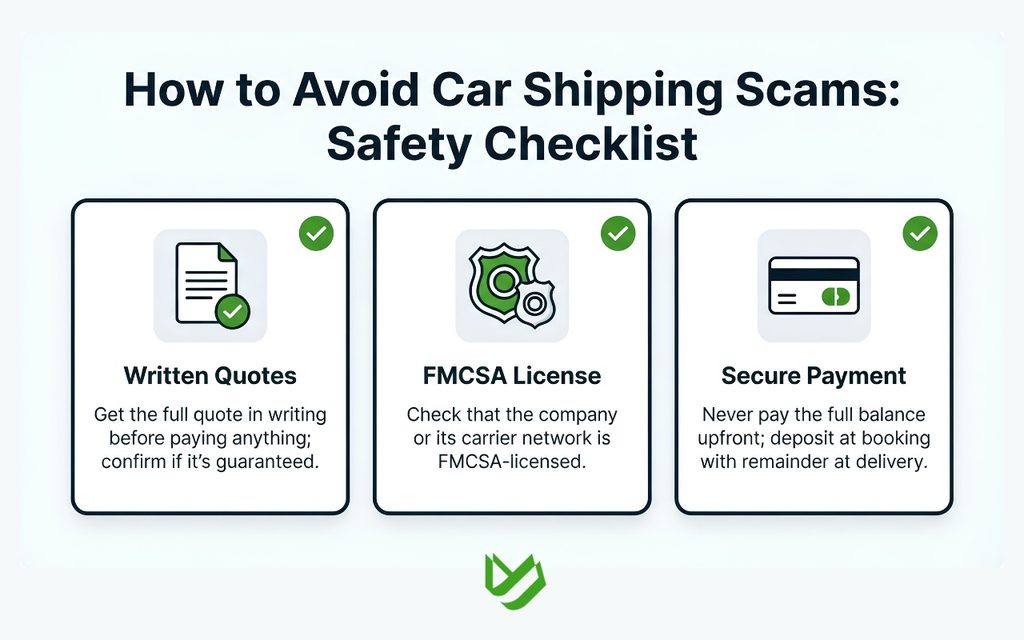
Interstate carriers must hold active FMCSA operating authority and carry federally required liability insurance, and reputable auto haulers also carry cargo insurance that covers vehicles in transit. Brokers must be registered with the FMCSA and maintain a surety bond, but a broker usually arranges the shipment rather than insuring the vehicle itself – the carrier’s policy is typically what responds to a damage claim. Before you book, ask for the carrier’s certificate of insurance and check a few details:
If you want extra protection for a valuable vehicle, check whether your own auto policy covers it during transport. Our full breakdown of auto transport insurance coverage covers what’s typically included and what isn’t.
The Bill of Lading isn’t just paperwork; it’s your protection. It records the vehicle’s condition at pickup and is signed by you and the driver. It’s also the document used to compare the vehicle’s condition when assessing any damage claim at delivery. Avoid signing a blank or incomplete Bill of Lading, and take your own photos in addition to the driver’s.
Many carriers don’t offer live GPS tracking the way a rideshare app does, but reputable ones will give you a dispatcher contact and update you at key points – when the vehicle is loaded, roughly when it’s expected to arrive, and if anything changes along the way. Ask at booking how updates are handled and get a direct number for the driver or dispatcher rather than relying on a general customer service line once your car is en route.
If a carrier goes quiet for more than a day during a multi-day haul, it’s worth a follow-up call. It doesn’t always mean something is wrong, but consistent, proactive communication is one of the clearest signs of a reliable carrier.
Inspect the vehicle against your pre-shipment photos and the original Bill of Lading before you sign anything. Walk around the full exterior, check the interior for anything shifted or missing, and note even minor damage in writing on the delivery paperwork – once you sign without noting an issue, filing a claim afterward becomes considerably harder.
If you do find damage, photograph it immediately, keep a copy of the signed Bill of Lading, and contact the transport company the same day. Claim windows can be short, so report anything you notice at delivery right away.
There are no shipping-specific restrictions on the transport itself. If you’re moving to the state, plan for NCDMV requirements: a North Carolina driver license within 60 days of establishing residency, and vehicle registration once you accept employment in the state or your prior state’s reciprocity period ends (usually 30 days). An inspection isn’t needed for the first registration but is required before each renewal.
Fall and spring snowbird migration toward and away from Florida, plus August and January college move-in weeks at schools like UNC, Duke, and NC State, are the tightest windows for truck availability.
Somewhat. Rural and mountain addresses away from the main I-95, I-85, and I-40 corridors can add a day or two to pickup and delivery windows because fewer carriers run those routes regularly.
It can, but usually not by a large margin. Access is limited and fewer carriers serve the area, so the main difference is typically a longer pickup window rather than a significantly higher price.
Yes. Summer relocations, snowbird traffic, and college move-ins overlap with national peak season, and rates on North Carolina’s corridors rise with demand the same way they do elsewhere.
Start with companies that have active runs on your specific route. Check that the broker and carrier are registered with the FMCSA, ask how they communicate during transit and handle delays, look for detailed reviews rather than star averages, and compare more than one quote before booking. A state-to-state vehicle transport provider with a wide network can often match you with a carrier faster than a single company with limited runs.
Photograph the damage before signing the delivery paperwork, note it in writing on the Bill of Lading, and contact the transport company the same day. Keep every document from the shipment – the original quote, the signed Bill of Lading from pickup, and your delivery-day photos – since a claim is resolved faster with a complete paper trail.
A Bill of Lading is the inspection record signed by you and the driver at pickup, documenting your vehicle’s condition before it’s loaded. It’s the baseline every delivery inspection and damage claim is compared against, so an incomplete or rushed Bill of Lading at pickup can weaken your position if something goes wrong in transit. Compare offers and request car shipping quotes from more than one provider before booking, and keep your Bill of Lading until the shipment is fully settled.










Don't have time to fill out the form?
Call a transport company directly to get a quote now!
Select the category you need
Partner with Compare The Carrier & Grow!
We're open to collaborations, partnerships, and mutual growth! Whether you're an individual or a business, we offer exciting opportunities to work together. Fill out the form below to explore how we can collaborate.
Something Went Wrong
We're sorry, but something went wrong. Please briefly describe the problem you experienced in the text area below. Providing your contact information will allow us to follow up if needed.

Thank you,
your form has been accepted.
Your form has been successfully submitted. We appreciate your effort — our team will review it shortly and take the next steps.


