

Car Shipping from Florida to Puerto Rico – Costs, Ports & Timelines [2026]
Shipping a car from Florida to Puerto Rico typically cost...
16 July 2026
Shipping a car from California to Georgia covers one of the longest and most consistently booked cross-country corridors in the country – roughly 2,100 to 2,500 miles depending on your exact pickup and delivery cities. Whether you’re relocating for work, buying a vehicle sight-unseen, or sending a car to family, this coast-to-coast route runs through a dense carrier network along I-10, I-20, and I-40, which keeps availability strong and pricing predictable most of the year.
Calculate Shipping Quotes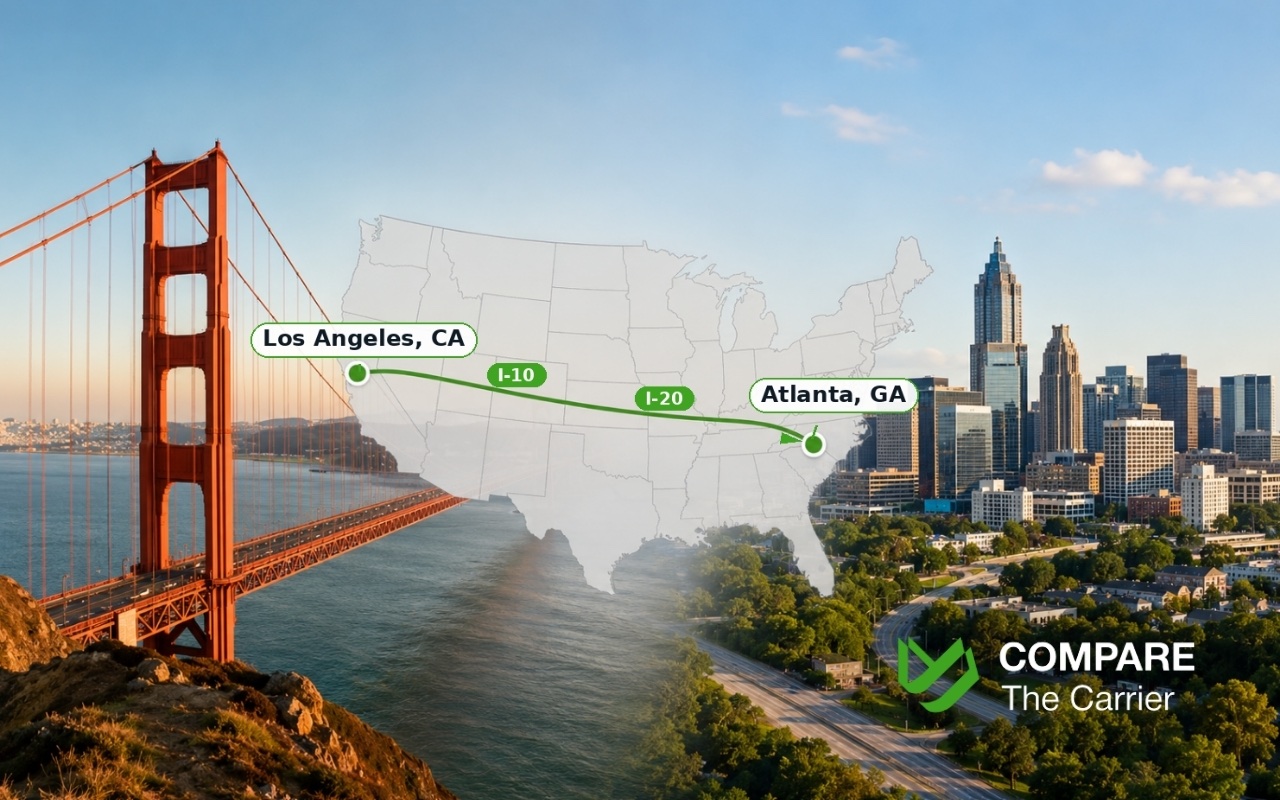
Shipping a car from California to Georgia covers one of the longest and most consistently booked cross-country corridors in the country – roughly 2,100 to 2,500 miles depending on your exact pickup and delivery cities. Whether you’re relocating for work, buying a vehicle sight-unseen, or sending a car to family, this coast-to-coast route runs through a dense carrier network along I-10, I-20, and I-40, which keeps availability strong and pricing predictable most of the year.
This guide breaks down what cross-country auto transport actually costs from California to Georgia in 2026, how long it takes, what moves the price up or down, when to ship, and how to avoid the scams and mistakes that turn a routine shipment into a delayed, overpriced one. If you already know your route and dates, you can get an instant estimate now and use the rest of this guide as a reference.
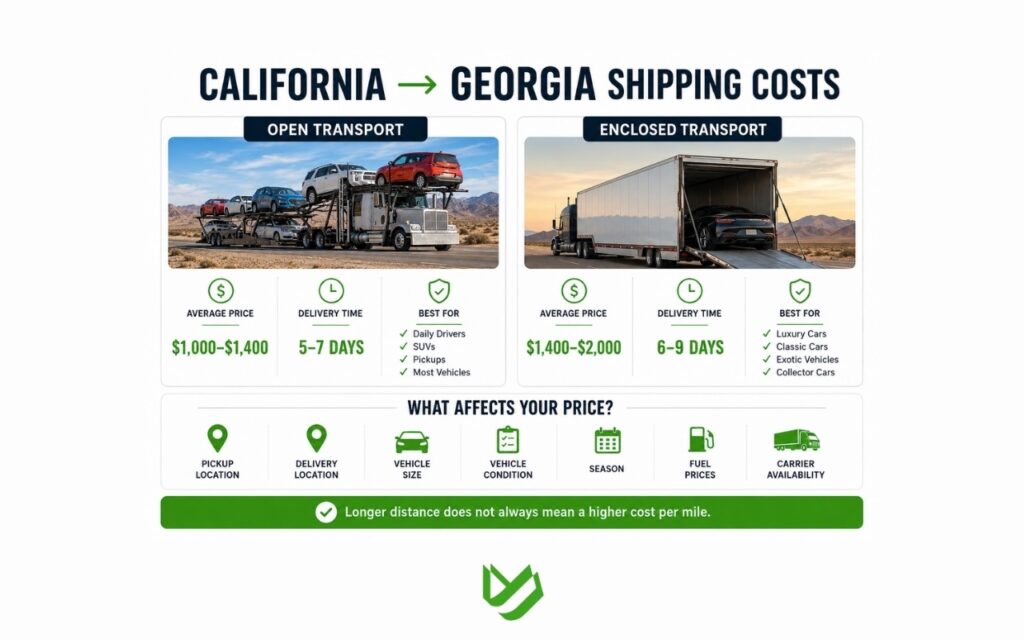
Before the city-by-city detail, here’s the quick snapshot. A West Coast to Southeast shipment on this lane covers roughly 2,100 to 2,500 miles and usually takes 5 to 8 days on an open carrier. Open transport runs $950 to $1,700 for a standard vehicle; enclosed runs higher for the added protection over this distance.
| Metric | Typical range |
|---|---|
| Distance | 2,100 – 2,500 miles |
| Transit time (open carrier) | 5 – 8 days |
| Transit time (enclosed carrier) | 7 – 13 days |
| Open transport cost | $950 – $1,700 |
| Enclosed transport cost | $1,600 – $2,600 |
| Main highway corridor | I-10 / I-20 / I-40 |
These figures reflect a standard sedan or midsize SUV in normal conditions. Larger vehicles, inoperable cars, and peak-season bookings all shift the price – the breakdown below walks through each factor.
Understanding the physical corridor helps explain both the transit window and the pricing. Carriers on this interstate lane follow a fairly consistent path across the southern tier of the country, which is part of why capacity stays high and delivery windows stay tight.
California → Arizona → New Mexico → Texas → Louisiana → Mississippi → Alabama → Georgia
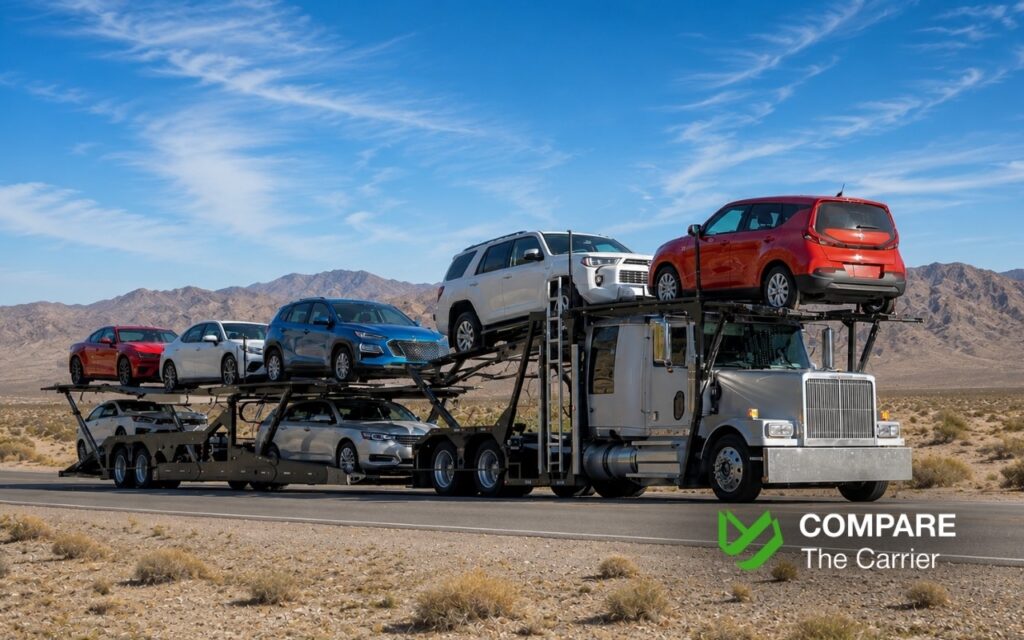
Most drivers pick up in the Los Angeles or Bay Area metros, run east on I-10 or I-40, and connect to I-20 for the final stretch into Atlanta and central Georgia. Each of those states – Arizona, New Mexico, Texas, Louisiana, Mississippi, and Alabama – sits on a heavily trafficked freight route, so trucks rarely run empty and back-hauls are common. That density is the single biggest reason CA to GA auto transport stays competitively priced.
Most shipments on this corridor run between a handful of high-volume city pairs. Carrier density is highest on these lanes, which generally means faster pickup and more competitive pricing than less common origin-destination combinations.
| Route | Distance | Open transport | Enclosed transport |
|---|---|---|---|
| Los Angeles, CA → Atlanta, GA | 2,180 mi | $840 – $1,325 | $1,650 – $2,450 |
| San Francisco, CA → Atlanta, GA | 2,480 mi | $950 – $1,450 | $1,750 – $2,600 |
| San Diego, CA → Atlanta, GA | 2,190 mi | $1,100 – $2,000 | $1,800 – $2,650 |
| Sacramento, CA → Savannah, GA | 2,430 mi | $1,050 – $1,600 | $1,700 – $2,550 |
| San Jose, CA → Augusta, GA | 2,460 mi | $980 – $1,530 | $1,700 – $2,500 |
The city pair you ship on shapes both price and pickup speed more than most people expect:
Los Angeles → Atlanta is the busiest lane on the corridor. It has the most carriers competing, the fastest pickup windows, and typically the lowest per-mile rate, since drivers are almost always running this route anyway.
San Francisco → Atlanta runs slightly longer and usually costs a bit more than the LA lane. Bay Area pickup is still strong, but carrier density is a notch below Southern California.
San Diego → Atlanta often adds a little pickup time. San Diego sits south of the main I-10 on-ramp, so drivers sometimes consolidate a load in the LA basin first, which can widen the pickup window.
Sacramento and San Jose origins and Savannah or Augusta destinations are healthy but lower-volume, so a flexible pickup window matters more here to keep the price down.
For a genuine coast-to-coast haul, California to Georgia is one of the better-value long routes – largely because it terminates in Atlanta, one of the busiest vehicle-transport hubs in the Southeast. Comparing it against other common California long-hauls puts that in perspective:
| Route from California | Approx. distance | Typical open cost | Relative value |
|---|---|---|---|
| → Georgia (Atlanta) | 2,100 – 2,500 mi | $950 – $1,700 | Strong – high carrier density into a major Southeast hub |
| → Florida (Miami/Orlando) | 2,400 – 2,700 mi | $1,000 – $1,800 | Similar, sometimes higher on far-south delivery |
| → Texas (Dallas/Houston) | 1,400 – 1,700 mi | $800 – $1,400 | Cheaper overall – shorter distance |
| → New York | 2,800 – 3,000 mi | $1,100 – $1,900 | Pricier – longer distance, denser Northeast delivery |
The takeaway: on a per-mile basis, the California-to-Georgia lane prices below the California-to-Northeast routes and roughly in line with – often slightly under – the California-to-Florida lanes. If you have flexibility on where in the Southeast you deliver, an Atlanta-area drop-off is usually the most economical.
Distance and exact ZIP codes. Carriers price on mileage between the specific pickup and delivery ZIPs, not the general state-to-state distance. A metro address near I-10 or I-20 costs less than a rural one that pulls the driver off the main corridor.
Vehicle size and weight. A standard sedan takes one slot on a multi-car trailer. A full-size SUV or pickup truck eats more deck space and weight, reducing how many vehicles the hauler can carry – that capacity loss adds roughly 10–25% over sedan rates. Larger units like vans, commercial trucks, or RVs and travel trailers fall outside standard car-shipping pricing and are quoted separately.
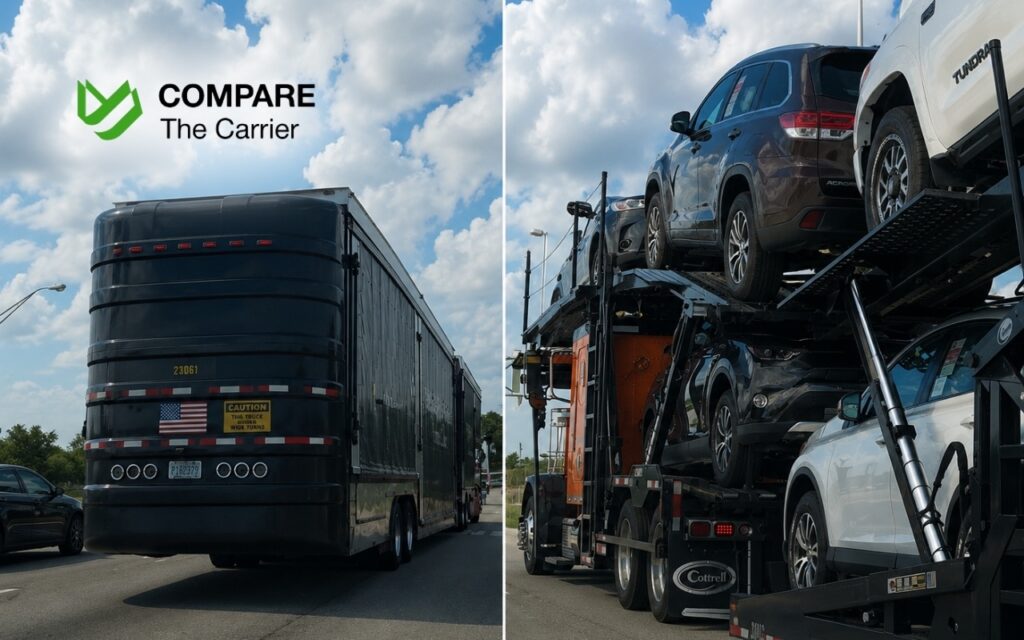
Open vs. enclosed transport. Open is the standard and covers the vast majority of shipments on this route. Enclosed shields the vehicle from road debris and weather across the full 2,000-plus-mile trip, which matters more on a coast-to-coast haul than a short regional one – but it runs 60–90% more and takes longer, since enclosed trailers carry fewer cars per load.
Pickup window flexibility. A rigid same-day pickup costs more than a flexible window. A five-day pickup window typically saves around 5–15% versus a fixed date, because it lets a carrier already running the corridor slot your vehicle in without an empty detour.
Condition and operability. A non-running vehicle needs a winch or forklift and an equipped carrier, which adds cost. Flag it upfront so your quote is accurate the first time.
Timing is the lever most people leave unused. Demand on this corridor is seasonal, and the price moves with it.
Summer and early fall (roughly May through September) are the busiest months, driven by relocations, college moves, and military PCS orders. Rates climb and pickup windows tighten. Late fall through early spring (November through March) is generally the cheapest stretch to book, assuming your schedule has some give.
Two practical rules keep costs down regardless of season: book two to three weeks before your target pickup date so you aren’t paying an expedite premium, and give a five-day pickup window rather than a single fixed day. Those two choices together often matter more to the final price than the calendar month.
Standard open carriers average about 400–500 miles per day, which puts most California-to-Georgia shipments at 5 to 8 days door-to-door. Enclosed carriers move slower – often 7 to 13 days – because they run smaller, less frequent routes. Drivers coordinate exact pickup and delivery timing 24 to 48 hours out, so keep your phone reachable through the window.
The sequence is consistent: a carrier assignment and dispatch once a truck is matched to your lane, a vehicle inspection and Bill of Lading signed at pickup, transit across the corridor, and a second inspection at delivery. If your timeline is tight, ask specifically about expedited service – covered below.
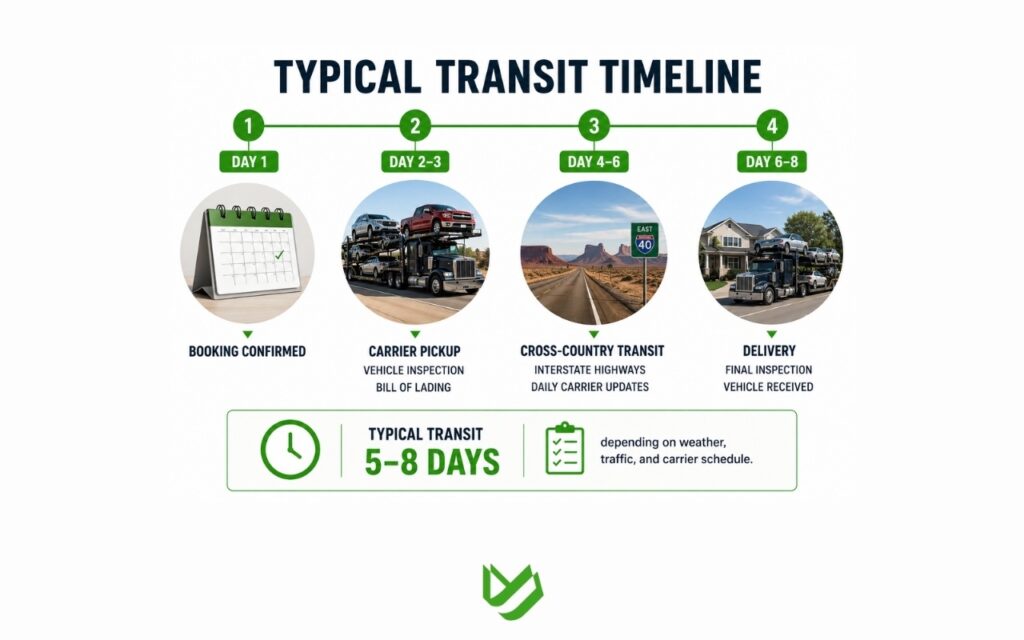
Standard bookings ride the normal dispatch rotation – your car goes on the next suitable truck running the lane. Expedited or guaranteed pickup service pays a premium to jump that queue and prioritize your vehicle on the next available carrier, with a firmer pickup date.
It’s worth it in a few specific situations: a job start date that won’t move, a vehicle purchase with a hard handoff deadline, or a military report-by date. Expect to pay meaningfully above the standard range for the guarantee. For flexible relocations, standard service on a five-day window is almost always the better value.
At 2,100-plus miles, driving the route yourself is a 32–36 hour trip behind the wheel before stops – and that’s before fuel, food, hotels, and the wear a cross-country drive puts on the car. Towing with a dolly or trailer avoids some of those costs but introduces its own risks and restrictions, covered in our state-to-state car towing guide: not every vehicle can be flat-towed without drivetrain damage, and rental tow equipment carries daily costs that add up over a multi-day haul.
| Driving yourself | Towing (dolly/trailer) | Professional shipping | |
|---|---|---|---|
| Your time | 32–36+ hours driving | 32–36+ hours driving | 0 hours – you fly or drive unloaded |
| Added mileage/wear | 2,100+ miles on your car | None on the shipped car; wear on the tow vehicle | None |
| Estimated cost* | $450–$700 (fuel, food, lodging) | $550–$900 (rental + fuel + lodging) | $950–$1,700 (open transport) |
| Risk | Driver fatigue, breakdown | Drivetrain damage on some cars, skill required | Carrier handles all driving and liability |
Driving and towing estimates assume solo travel at standard fuel prices; costs rise quickly with tolls, unexpected repairs, or a second driver’s flight home. For most people, shipping a single vehicle this distance ends up costing about the same as driving it – without two days of highway fatigue.
A handful of concrete choices – not just “book early” – actually move the price on this route:
For a broader rundown of savings tactics beyond this route, see our full guide: Cheapest Way to Move a Car to Another State.
Long cross-country routes attract the most bait-and-switch activity, precisely because the quote spread is wide and buyers can’t easily judge a fair number. A few checks filter out almost every bad actor:
The lowest quote on a coast-to-coast lane is rarely the cheapest final cost. Start with the FMCSA SAFER system to confirm licensing, then compare several state-to-state car shipping quotes side by side.
California to Georgia is a heavily traveled PCS lane, connecting West Coast installations to Georgia bases like Fort Stewart, Fort Moore, and Robins Air Force Base. If you’re shipping under military orders, a few things are worth planning around.
Summer is peak PCS season, which is also when this corridor is most expensive and most booked – locking in your carrier as early as your orders allow protects both price and timing. Keep a copy of your orders handy, since some carriers offer military pricing and it can affect scheduling flexibility. Many service members ship one vehicle and drive the other, and coordinating the shipped car’s delivery window around your report-by date is where expedited service occasionally earns its premium. Our military car shipping overview covers the process in more depth.
| Open transport | Enclosed transport | |
|---|---|---|
| Best for | Standard daily-driver vehicles | Classic, luxury, or high-value cars |
| Cost vs. open | Baseline | 60–90% higher |
| Weather exposure | Fully exposed | Fully protected |
| Availability on this route | High – most common option | Lower – fewer trucks, longer lead time |
Compare both directly through open car shipping or enclosed auto transport before booking, since the price gap on a route this long is larger than on short regional hauls.
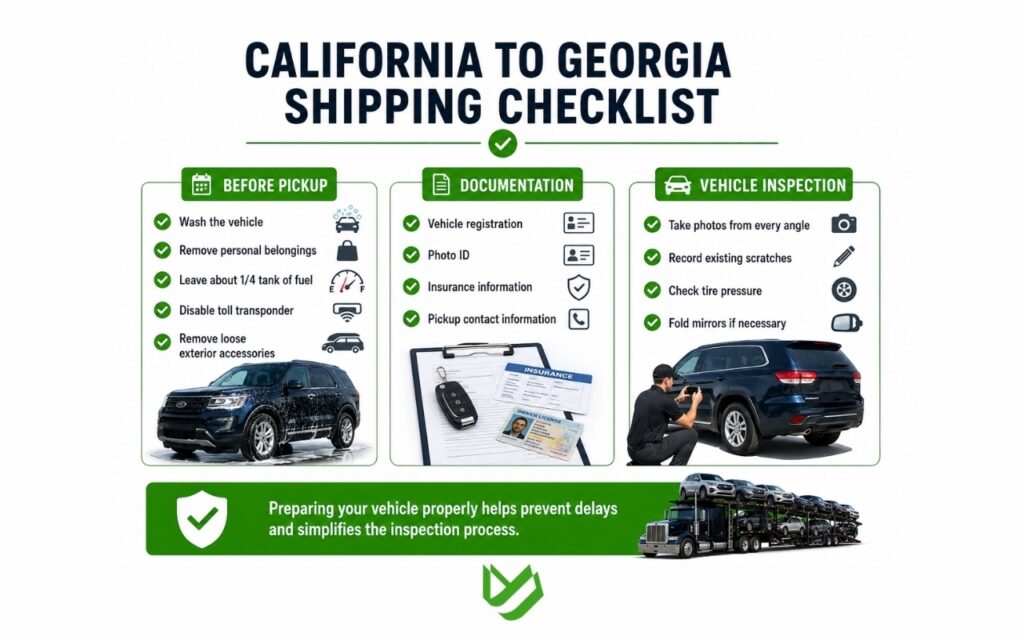
A 2,000-plus-mile trip means more handling and more time on the trailer than a short regional move, so a few prep steps matter here:
Because this is a high-volume corridor, you’ll see a wide spread of quotes – and the gap between the cheapest and most expensive offer is usually a signal, not a bargain. Beyond the scam checks above, weigh carrier availability, the quoted delivery window, and how transparent the dispatch process is. A broker with a large carrier network can match your lane faster and confirm a carrier assignment sooner than one working a thin roster.
Compare multiple vetted, licensed carriers side by side through state-to-state car shipping – the simplest way to confirm you’re not overpaying or walking into a bait-and-switch.
If you’re relocating rather than sending a car to family, Georgia has requirements that take effect once your vehicle arrives:
Budget for the TAVT separately from your shipping cost – like an excise tax, it’s paid to the state directly and has nothing to do with what your carrier charges.
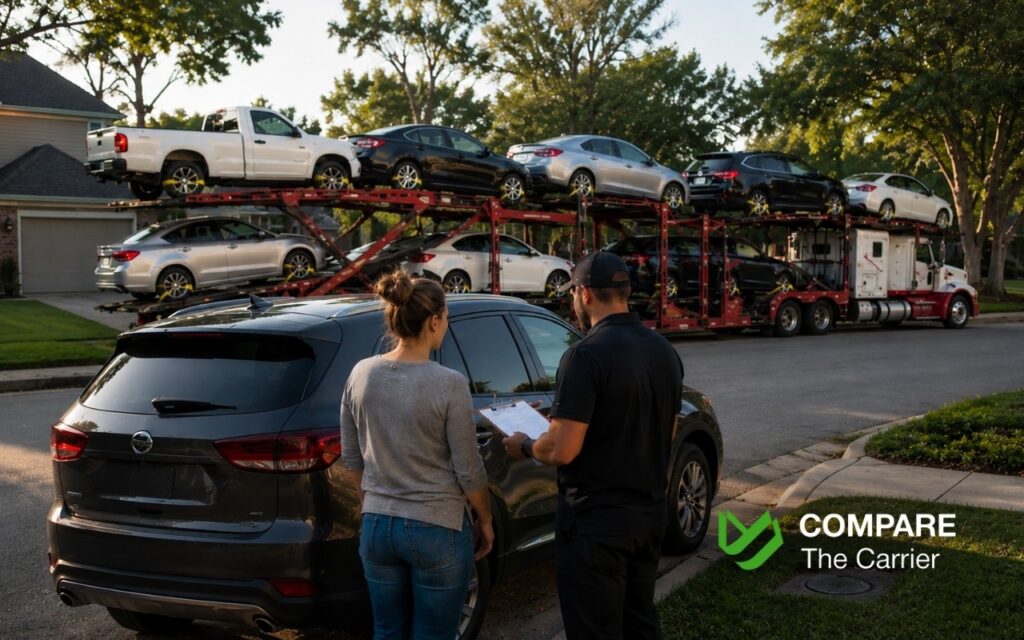
California to Georgia is one of the most established coast-to-coast corridors in the industry, which works in your favor – strong carrier availability keeps pricing competitive and pickup windows short, as long as you sidestep the two biggest cost traps: booking during peak season with no flexibility, and taking the lowest quote without verifying the carrier’s FMCSA status. Compare carrier prices from vetted, licensed operators, or run your exact route and dates through the auto transport calculator for a personalized estimate.
Open transport typically runs $950 to $1,700 for a standard sedan or SUV; enclosed runs $1,600 to $2,600. Exact pricing depends on your specific pickup and delivery cities, vehicle size, and season.
Open carrier shipments typically take 5 to 8 days door-to-door. Enclosed transport usually takes 7 to 13 days, since enclosed carriers run smaller, less frequent routes.
Open transport is the most affordable option. Booking two to three weeks out in the off-season, offering a five-day pickup window, and using door-to-door service on a major metro lane all help lower the price further.
Late fall through early spring is generally cheapest. Summer and early fall are peak season due to relocations and military moves, which push prices up and tighten pickup windows.
Los Angeles to Atlanta is the highest-volume city pair, followed by San Francisco to Atlanta and San Diego to Atlanta. High-volume lanes generally mean faster pickup and more competitive pricing.
Carriers generally advise against it. Most cargo insurance does not cover personal items, added weight can affect the quote, and DOT rules limit what can ride in a vehicle on a transport trailer. Some carriers allow a small amount in the trunk at your own risk – confirm first.
Most brokers and carriers provide status updates and driver contact, and many offer GPS or check-call tracking. Ask what tracking is available before you book if real-time visibility matters to you.
Yes. You can designate another adult to inspect the car against the Bill of Lading and sign off at delivery – just give the carrier that person’s name and contact ahead of time.
Yes – a clean vehicle makes the pre-shipment inspection accurate, so any existing scratches or dings are clearly documented on the Bill of Lading and you can verify condition on arrival.
Yes. EVs ship on standard open and enclosed carriers. Their heavier battery weight can nudge pricing slightly, and drivers may ask that the charge sit around 50% for loading and unloading. Mention the make and model so you’re matched with an equipped carrier.
Yes, but lifted trucks, oversized pickups, and vehicles with roof racks or accessories may need a specialized carrier and are priced by their actual height and footprint. Provide the modified dimensions upfront for an accurate quote.
Yes. Most carriers on this route can move a non-running vehicle using a winch or forklift, but it requires equipped carriers and adds to the cost – let your broker know upfront.
Weather, mechanical issues, and traffic can shift a cross-country timeline by a day or two, and quoted windows are estimates rather than guarantees. A reputable carrier keeps you updated. If a firm date is critical, ask about guaranteed or expedited service, which commits to a tighter window.
You or a designated adult must be present to inspect the vehicle, confirm its condition against the Bill of Lading, and sign off at both ends.
Your vehicle’s registration or title, a valid ID, and – if leased or financed – written authorization from your lender. Georgia also requires new residents to register and pay the Title Ad Valorem Tax within 30 days of establishing residency.










Don't have time to fill out the form?
Call a transport company directly to get a quote now!
Select the category you need
Partner with Compare The Carrier & Grow!
We're open to collaborations, partnerships, and mutual growth! Whether you're an individual or a business, we offer exciting opportunities to work together. Fill out the form below to explore how we can collaborate.
Something Went Wrong
We're sorry, but something went wrong. Please briefly describe the problem you experienced in the text area below. Providing your contact information will allow us to follow up if needed.

Thank you,
your form has been accepted.
Your form has been successfully submitted. We appreciate your effort — our team will review it shortly and take the next steps.


