

5 Reasons To Choose Enclosed Auto Shipping Over Open Transportation
Hey, moving a luxury vehicle but not sure if you need to ...
23 February 2022
Yes, you can ship an inoperable RV, but the transport method depends on its condition. An RV that does not start but still rolls may only need winch loading, while one with seized wheels, locked steering, or severe damage may require a forklift, crane, or specialized trailer.
Calculate Shipping Quotes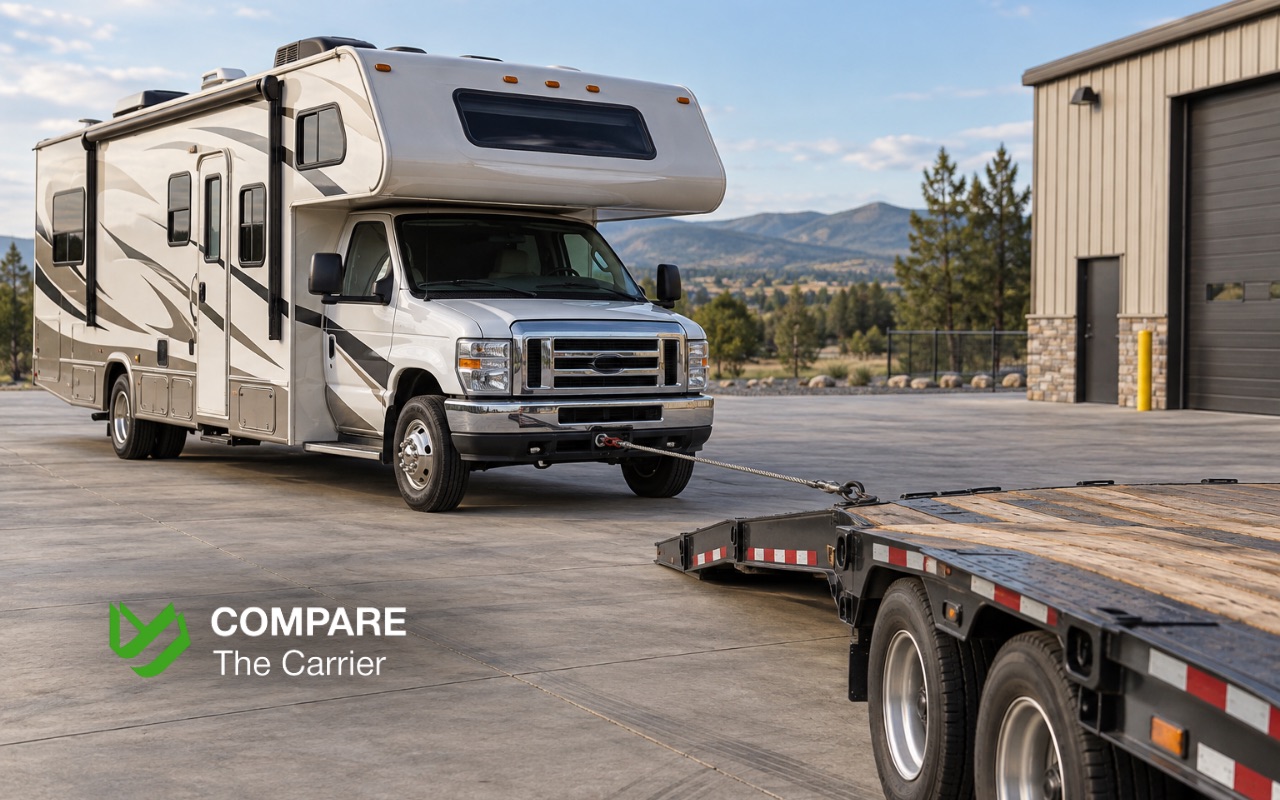
This guide explains how inoperable RVs are loaded and transported, what equipment may be required, how much the shipment can cost, and which factors can affect the quote. You’ll also learn how to prepare the RV, what to expect at pickup, and when specialized transport may be necessary.
Ready to arrange transport? Explore Compare The Carrier’s RV and travel trailer shipping service to compare available transport options and request quotes.
In this guide
Most inoperable RVs can be transported with the right equipment. Severe structural damage, hazardous leaks, inaccessible pickup or delivery locations, or unusual dimensions can complicate things and may call for a specialized transport plan – but they rarely rule out shipping entirely.
What Does “Inoperable RV” Mean?
“Inoperable” covers a wide range of situations, and the specifics matter a lot for how the RV gets loaded:
| Condition | Typical Mobility | Typical Loading |
| Engine won’t start | May still roll, steer, and brake | Winch |
| Transmission failure | May still roll | Winch or specialized loading |
| Flat or dead tires | Depends on tire/wheel condition | Winch + support equipment |
| Locked steering | Cannot steer normally | Specialized loading |
| Seized wheels or axles | Cannot roll normally | Forklift or crane |
| Severe accident damage | Limited or unknown | Heavy equipment / specialized plan |
Which Transport Method Does Your RV Need?
A quick way to think about it:
| RV Condition | Likely Loading Method | Main Consideration |
| Doesn’t start but rolls | Winch | Safe rolling and attachment points |
| Rolls but steering is limited | Specialized loading | Carrier equipment and control |
| Wheels or axles seized | Forklift or crane | Site access and lifting capacity |
| Oversized | Flatbed, lowboy, or step-deck | Dimensions, weight, and permits |
| Severe accident damage | Specialized equipment | Structural condition and safe loading |
Does an Inoperable RV Need Special Transport?
A standard RV tow-away service assumes the RV can be driven or at least steered and braked normally. Once any of that isn’t true, you’re generally looking at a carrier equipped for winching or heavy-equipment loading rather than a standard driveaway arrangement.
Can You Ship an RV That Doesn’t Start but Still Rolls?
Yes – this is one of the more straightforward inoperable scenarios. If the RV rolls freely and can be safely controlled, a winch can typically pull it onto a trailer without much extra complexity.
Can You Ship an RV That Doesn’t Roll?
Also yes, but it takes more planning. An RV with seized wheels, locked brakes, or missing tires generally needs a forklift, crane, or other heavy equipment to get it loaded, which narrows down which carriers can take the job.
Winch Loading
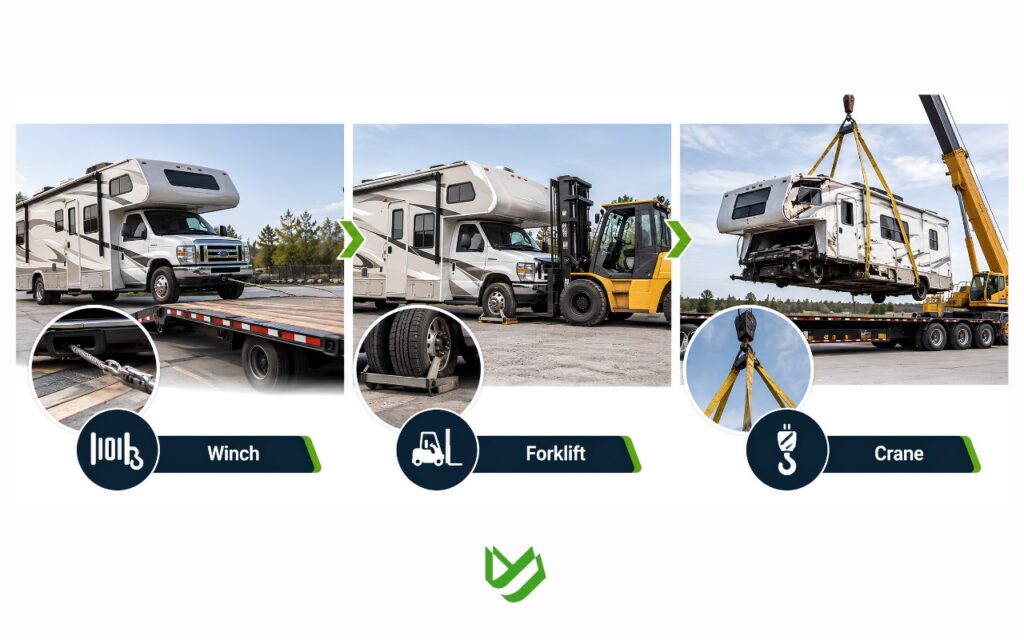
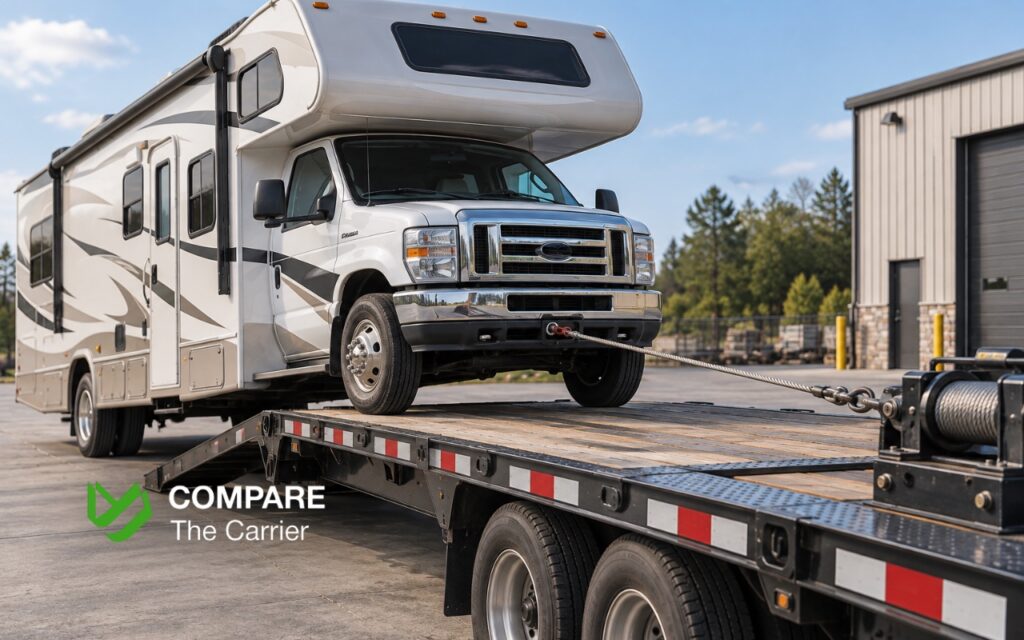
A winch pulls the RV onto the trailer using a cable attached to secure points on the frame. This works when the RV can roll or otherwise be moved onto the trailer, and the carrier has a safe way to control and secure it during loading. Whether it needs to be in neutral, have working steering, or meet other specific conditions depends on the RV itself and the equipment being used – it’s worth confirming with the carrier rather than assuming.
Forklift Loading
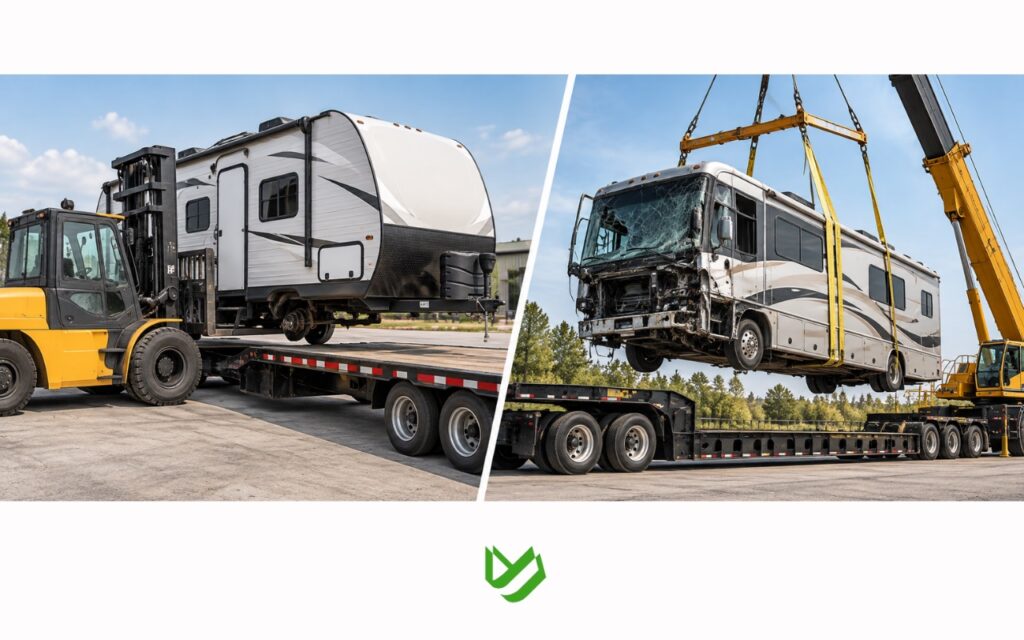
Forklifts come into play when the RV can’t roll at all: seized axles, missing wheels, or a severely damaged chassis. The forklift lifts and positions the RV rather than pulling it, which requires side access and enough clearance to maneuver.
Crane Loading
Crane loading is reserved for the more difficult cases – an RV that can’t be reached by forklift, sits somewhere with limited access, or is too heavy or awkwardly positioned for standard equipment. It’s not a routine option and typically adds meaningfully to cost and scheduling.
Other Specialized Loading Equipment
Some smaller travel trailers or campers can be loaded with a hydraulic liftgate or other specialized equipment, depending on weight and dimensions. This isn’t standard across all carriers, so it’s worth asking about specifically rather than assuming it’s available.
What Happens If the RV Cannot Be Put in Neutral?
This is a detail that changes everything for winch loading. If the transmission is locked, the parking brake is seized, or the RV otherwise can’t be shifted into neutral, the job typically shifts to forklift or crane loading instead – a different type of carrier, and likely a different price. Mentioning this upfront, rather than discovering it on pickup day, saves a lot of back-and-forth.
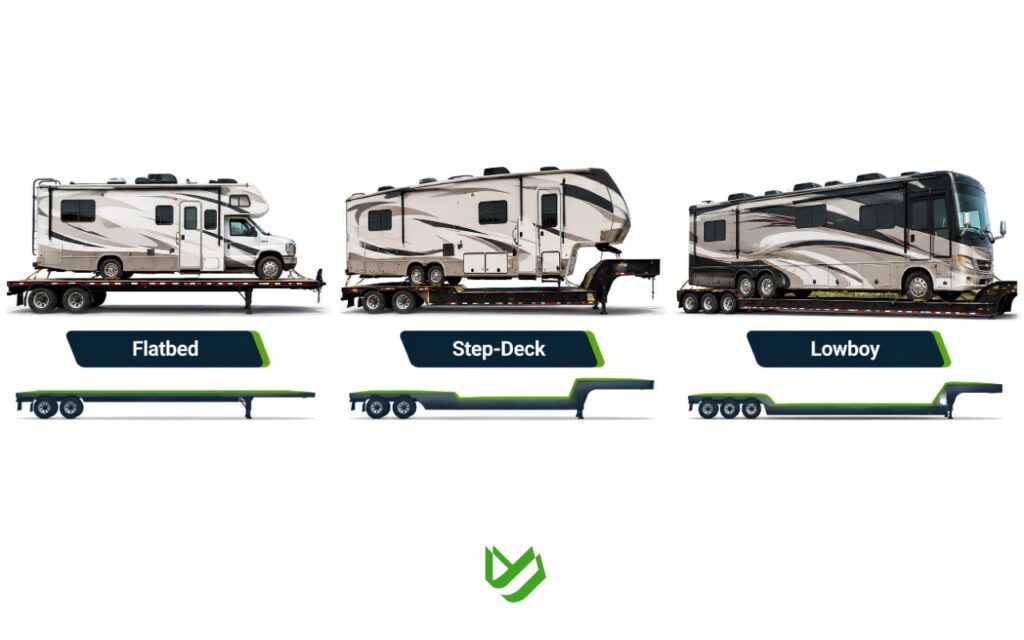
Flatbed Trailer
A flatbed is a common option for winch-loaded RVs of moderate size and weight. It provides an open loading surface and can work well for many travel trailers and smaller motorhomes.
Lowboy Trailer
A lowboy trailer’s lower deck height may be appropriate for larger Class A motorhomes or oversized units, when reducing overall loaded height or improving weight distribution matters for the route.
Step-Deck Trailer
A step-deck trailer places part of the load lower than a standard flatbed, which can help when the RV’s total loaded height is a limiting factor for the route. The carrier still has to check the RV’s actual dimensions and the route’s clearances before deciding whether a step-deck is the right call.
Open vs. Enclosed Transport for an Inoperable RV
For a closer look at how these two methods compare in general, see our guides to open car shipping and enclosed auto transport. The basics apply to RVs too, though equipment and availability can differ:
| Open | Enclosed | |
| Cost | Lower | Higher |
| Availability | Usually higher | More limited |
| Weather protection | No | Yes |
| Oversized RV suitability | Often better | Limited by trailer dimensions |
| Best for | Standard or durable RVs | High-value or specialty RVs |
Which trailer type and transport method you actually need comes down to the RV’s condition and dimensions, not a fixed rule – a rig that can be winch-loaded onto a standard flatbed is a very different job from one that needs a crane and a lowboy.
The cost to ship an inoperable RV depends on the RV’s size, weight, distance, route, accessibility, and loading requirements. A non-running surcharge often applies, and winching, heavy equipment, permits, and special routing can add separate costs on top of the base transport fee.
Average Cost to Ship an Inoperable RV
Costs vary widely by scenario:
Treat any number you see as a planning range, not a quote – get exact pricing with the auto transport calculator using your RV’s actual details.
RV Class and Type
Class A, Class B, and Class C motorhomes, travel trailers, fifth wheels, toy haulers, and camper trailers all have different dimensions, weights, and loading needs, which shifts pricing accordingly.
RV Dimensions
Length, width, and height all factor into which trailer type is needed and whether oversize permits apply.
RV Weight
Heavier RVs may require different equipment and can affect which carriers are even able to take the job.
Distance and Route
As with any shipment, distance sets the baseline, and route specifics – bridges, road restrictions, terrain – can add to it.
Mechanical Condition
The more limited the RV’s mobility (can’t roll, can’t steer, can’t brake), the more specialized – and typically more expensive – the loading process becomes.
Loading and Unloading Requirements
Winch, forklift, or crane – each comes with a different cost and availability profile.
Pickup and Delivery Accessibility
Tight streets, low clearance, or limited turning room can complicate loading regardless of the RV’s mechanical condition.
Season and Carrier Availability
Demand for RV transport shifts seasonally, and specialized equipment for inoperable units is less common than standard carriers, so availability can tighten at busy times of year.
Oversize Permits and Escorts
Larger RVs may require permits and, in some cases, pilot vehicles, which add both cost and lead time.

Information You Need Before Requesting a Quote
Why “It Doesn’t Run” Isn’t Enough Information for a Quote
“It doesn’t run” could mean a dead battery or a completely seized chassis – two situations with very different loading requirements and very different prices. The more specific you can be about what does and doesn’t work, the more accurate your quote will be from the start.
Photos That Help Get an Accurate Quote
What to Tell the Transporter About the RV’s Condition
Be specific about what’s actually wrong – mechanical issue, tire condition, whether it’s been recently moved, and any damage – so the carrier can plan the right equipment before arriving.
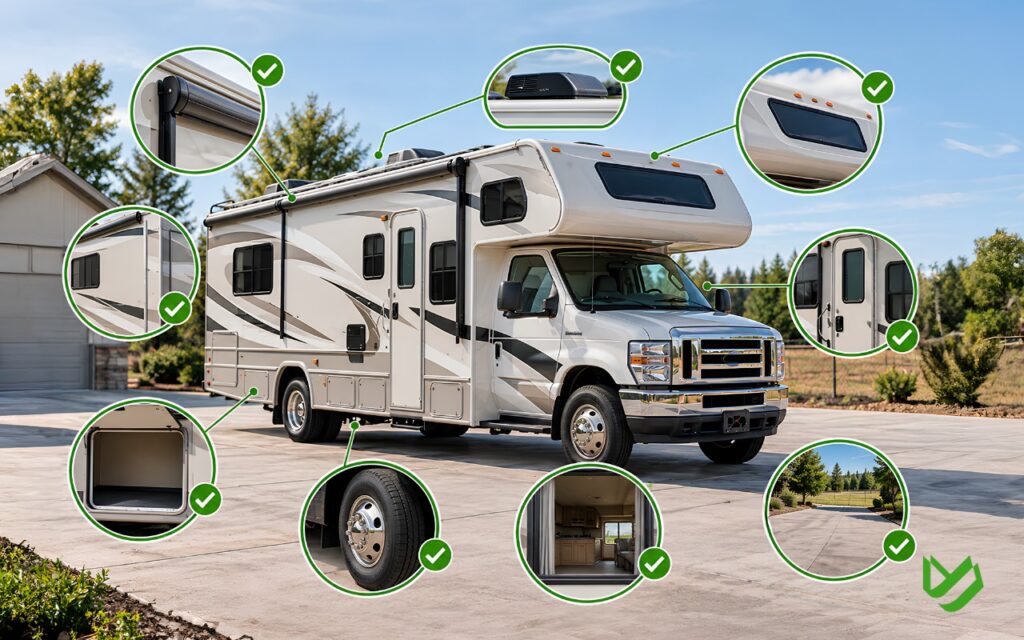
Remove or Secure Personal Belongings
Anything loose inside can shift during loading and transit – clear out what you can.
Retract Slide-Outs and Awnings
These need to be fully retracted and secured before the RV can be loaded safely.
Secure Doors, Windows and Exterior Components
Latch or tape anything that could open or come loose in transit.
Disconnect Batteries and Secure Propane
Standard safety steps for any RV transport, operable or not.
Drain or Secure Tanks When Required
Ask your carrier whether holding tanks need to be drained before pickup.
Check Tires and Wheels
Even if the RV won’t be driven, tire and wheel condition affects how it can be winched or lifted.
Document Existing Damage
Take your own photos and keep a written record before pickup, separate from the driver’s documentation.
Clear the Loading Area
Make sure the space around the RV is clear enough for winching or heavy equipment to operate safely – an easy-to-overlook step since it’s about the site, not the RV itself.
Inspection and Condition Documentation
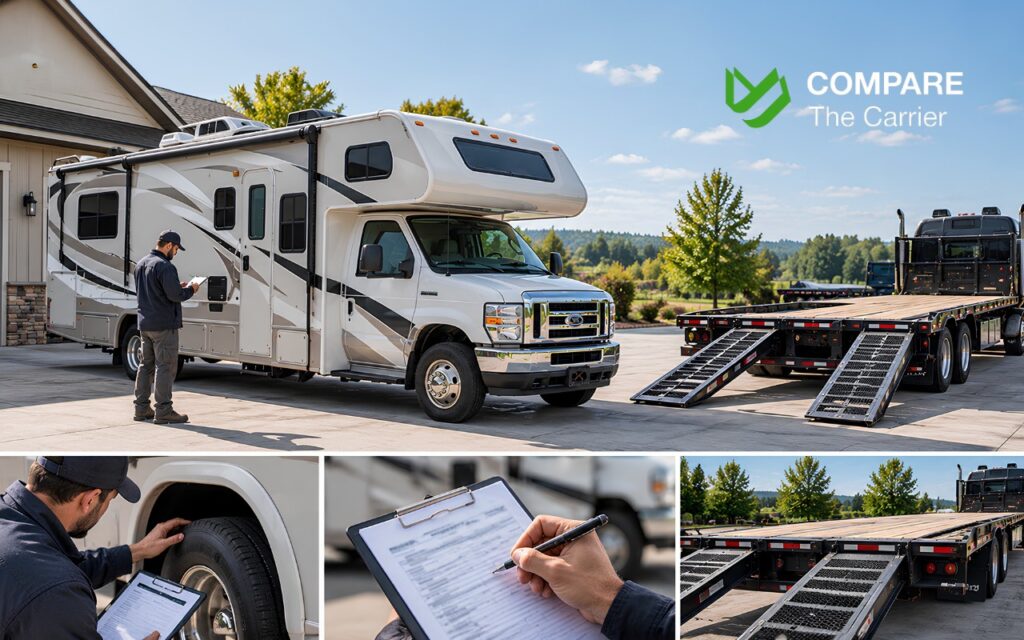
The carrier arrives, assesses the site, and inspects the RV against what was described when booking – typically with photos and notes on the Bill of Lading.
Loading the RV
Loading equipment is positioned – winch, forklift, or crane, depending on the plan – and the RV is moved onto the trailer.
Securing the RV
Once loaded, the RV is secured for transit.
Completing the Bill of Lading
Both parties review and sign the Bill of Lading before the carrier departs.
What If the RV Cannot Be Loaded?
If the RV’s actual condition doesn’t match what was described – it turns out not to roll when you thought it did, for example – the driver may not be equipped to load it that day. This is exactly why accurate details and photos upfront matter: mismatches here usually mean a rescheduled pickup with the right equipment, which costs time either way.
Pickup Time
Scheduling for inoperable RVs often takes longer than a standard shipment, since fewer carriers carry the right equipment.
Transit Time
Once loaded, transit time follows the same general logic as any shipment – distance, route, and weather are the main variables.
Why Inoperable RVs Can Take Longer to Schedule
Fewer compatible carriers, specialized equipment, possible permits, and specific loading requirements all narrow the pool of carriers who can take the job on short notice.
Does Oversize Transport Require a Different Route?
Sometimes. Bridge clearances, road restrictions, and permit requirements can mean an oversized RV takes a longer or different route than a standard vehicle would on the same trip.
Does Standard Carrier Insurance Cover an Inoperable RV?
Not automatically in every case – coverage and exclusions vary by carrier, so this is worth confirming directly rather than assuming.
What Should You Ask About Insurance?
Why Loading Is a Higher-Risk Part of the Shipment
Winching, forklift, or crane loading involves more mechanical handling than driving a vehicle onto a trailer, which is part of why it’s worth understanding exactly what’s covered during that specific step.
Equipment Capability
Confirm the carrier actually has the winch, forklift, or crane capability your RV needs – not every auto transport carrier does.
Experience With Inoperable RVs
A carrier that regularly handles non-running RVs is generally better equipped to anticipate complications than one that occasionally takes the job.
Insurance
Verify coverage specifically for loading, unloading, and transit.
Licensing and Carrier Credentials
You can verify a carrier’s or broker’s registration directly through the FMCSA’s SAFER system, and it’s worth reading the agency’s consumer advisory on automobile transporters – see also our guide on how to verify a carrier’s MC number.
Written Quote and Fee Breakdown
Get an itemized quote that separates base transport from loading, permits, and any surcharges.
Pickup and Delivery Plan
Confirm the plan for accessing the RV at both ends before the day of pickup.
Questions to Ask Before Booking
When RV Shipping Makes More Sense
For longer distances, or when the RV can’t be safely or legally towed on public roads, professional transport is generally the more practical option.
When Local Towing May Be More Practical
For very short, local moves – say, from a driveway to a nearby repair shop – towing can sometimes be simpler and faster than arranging full transport.
Why Long-Distance Towing and Transport Are Different
Long-distance towing may not be practical or legal depending on the RV’s condition, equipment, route, and state requirements. Trailer transport can be a better fit when the RV can’t be safely moved under its own running gear – it removes that risk entirely, since the RV isn’t being pulled at all. Which option makes sense for you depends on distance, the RV’s condition, and where it’s headed.
Shipping an Inoperable Class A, B, or C Motorhome
Motorhomes are self-contained and typically heavier, which often points toward flatbed or lowboy transport depending on size – see our motorhome hauling page for more.
Shipping an Inoperable Travel Trailer
Travel trailers have no engine of their own, so “inoperable” here usually comes down to the hitch, axles, and tires rather than a drivetrain issue. More detail is available on our travel trailer and RV shipping page.
Shipping an Inoperable Fifth Wheel
Fifth wheels have their own hitch and axle considerations that affect loading – see our fifth wheel shipping page.
Why Hitch Type and Running Gear Matter
For towable RVs, the hitch and axle condition often matter more than anything resembling an “engine” issue – a seized axle on a travel trailer changes the loading plan just as much as a seized engine would on a motorhome.
Ready to get a quote for your RV? Use the auto transport calculator with your RV’s details, or explore shipping services to see the full range of transport options available.
Ready to get a quote for your RV?
Use the auto transport calculator with your RV’s details, or explore shipping services to see the full range of transport options available.
Yes. Most non-running RVs can be shipped with the right equipment – typically a winch if the RV rolls and can be safely controlled, or a forklift or crane if it can’t.
It depends on the RV’s size, weight, distance, condition, and loading requirements. A non-running surcharge often applies, and specialized equipment or permits can add to the total.
Yes, but it typically requires a forklift or crane rather than a winch, since the RV can’t be moved onto the trailer that way.
Most commonly with a winch, which pulls the RV up using cable and secure attachment points. RVs that can’t roll need a forklift or crane instead.
Yes – this is one of the more straightforward inoperable cases, as long as the RV still rolls and can be safely controlled during loading.
Yes, as long as it can still be moved onto the trailer safely. If it can’t roll at all, forklift or crane loading is usually needed.
Not always. A flatbed works for many winch-loaded RVs, but taller or heavier units may need a lowboy or step-deck trailer instead.
Often, yes, though severe structural damage may require crane loading and more careful route planning.






Don't have time to fill out the form?
Call a transport company directly to get a quote now!
Select the category you need
Partner with Compare The Carrier & Grow!
We're open to collaborations, partnerships, and mutual growth! Whether you're an individual or a business, we offer exciting opportunities to work together. Fill out the form below to explore how we can collaborate.
Something Went Wrong
We're sorry, but something went wrong. Please briefly describe the problem you experienced in the text area below. Providing your contact information will allow us to follow up if needed.

Thank you,
your form has been accepted.
Your form has been successfully submitted. We appreciate your effort — our team will review it shortly and take the next steps.


