

Is Carvana Delivery Really Free? The Truth About Shipping Fees [2026]
No, Carvana delivery is not always free. Carvana only wai...
22 July 2026
Buying a car in 2026 looks nothing like it did fifteen years ago. You no longer have to spend a weekend driving between lots, haggling over invoice prices, or sitting in a finance office for two hours while someone tries to sell you rustproofing. Three services have done more than anything else to reshape that experience: the Costco Auto Program, CarMax, and Carvana. Each one attacks the same problem – the car-buying process is unpleasant, opaque, and stressful – but from completely different angles.
Calculate Shipping Quotes
Understanding which one fits your situation requires knowing exactly what each service does, where each one falls short, and what the comparison guides you’ll find elsewhere don’t bother to tell you. This is that guide.
If you’re deciding between Costco Auto Program, CarMax, and Carvana, here’s the short answer:
Table of Contents
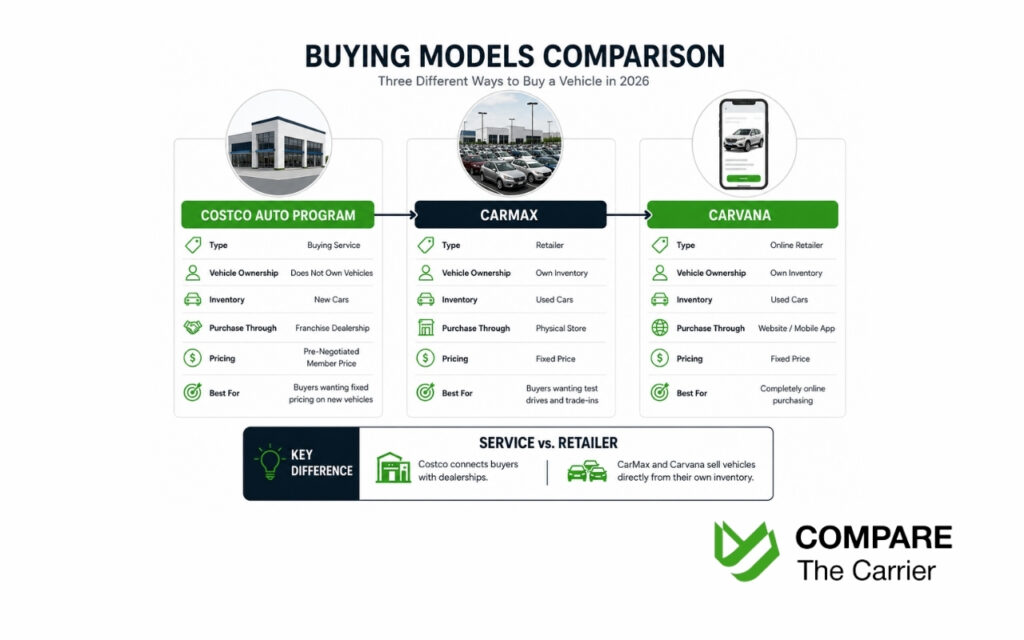
Before comparing prices, fees, and return policies, it’s important to understand one thing that many comparison articles overlook: Costco Auto Program, CarMax, and Carvana serve different purposes. Although all three help people buy vehicles, they operate under very different business models.
| Feature | Costco Auto Program | CarMax | Carvana |
| Business Model | Car-buying service | Used-car retailer | Online used-car retailer |
| Owns Vehicle Inventory | ❌ No | ✅ Yes | ✅ Yes |
| Primary Focus | New vehicles through partner dealerships | Used vehicles | Used vehicles |
| Buying Experience | In-person dealership purchase | Physical retail stores | Fully online |
| Price Model | Pre-negotiated member pricing | Fixed, no-haggle pricing | Fixed, no-haggle pricing |
| Home Delivery | Dealer-dependent | Limited | ✅ Standard service |
| Best For | New-car buyers seeking transparent pricing | Buyers who want to inspect and test-drive vehicles | Buyers who prefer a fully digital purchase |
Costco Auto Program is a car-buying service, not a retailer. Costco doesn’t own any vehicles. Instead, it connects members with vetted franchise dealerships that agree to offer pre-negotiated pricing. You’re still purchasing from a traditional dealership – Costco simply removes much of the negotiation from the process.
CarMax is a used-car retailer. It purchases, reconditions, and sells its own inventory through large physical locations, offering a fixed-price shopping experience with the ability to inspect and test-drive vehicles before buying.
Carvana is a digital-first used-car retailer. Like CarMax, it owns and sells its own inventory, but the entire transaction takes place online. Buyers complete the purchase through the website or app, and the vehicle is delivered directly to their home.
This distinction – buying service vs. retailer, new vs. used inventory, and in-person vs. online purchasing – should guide your decision before you compare prices, financing options, or return policies.
Costco has roughly 133 million cardholders in the US. Most of them know Costco for bulk groceries and $1.50 hot dogs. Far fewer know that Costco’s auto-buying program moves over 700,000 vehicles a year, making it one of the largest car-buying services in the country.
Here’s the actual process. You go to the Costco Auto Program website, enter your membership number, and select the make, model, and trim you want. The system finds a pre-approved dealer in your area – not just any dealer, but one that has agreed to Costco’s standards for pricing transparency and member treatment. You receive a Member Pricing Certificate showing the pre-negotiated price before you ever set foot on the lot.
At the dealership, you show the certificate, the dealer honors the price, and you proceed with the purchase like any normal dealer transaction – test drive, financing, paperwork. The difference is that you already know the price going in and the dealer has contractually agreed to stick to it.
What Costco is actually selling you is not a discount, exactly. Member prices vary by vehicle and sometimes land only a few hundred dollars below sticker. The real value is the removal of uncertainty. You walk in knowing the number. The psychological weight of “am I leaving money on the table?” is largely gone.
The part Costco doesn’t advertise: The finance office is still there. Costco’s protection covers the vehicle price, not what happens once you sit down with the finance manager. Extended warranties, gap insurance, paint sealant packages – these are still offered, sometimes aggressively, and they are not subject to Costco’s member pricing framework. If you go in unprepared, you can easily give back whatever savings you got on the car price.
Who owns the program: Costco Auto Program is operated by Affinity Auto Programs, Inc., a third-party administrator. Costco licenses its brand and member network to the program; the operational side is run externally. This matters because it means your experience can vary significantly depending on which dealer you’re matched with.
Best for: Members buying new cars who want a fixed price baseline and a vetted dealer. The Costco advantage narrows considerably on used vehicles, where CarMax and Carvana’s inventory and processes are more purpose-built.
One thing many buyers don’t consider until after choosing a vehicle is how they’ll get it home. If you’re purchasing from a Costco-affiliated dealer outside your local area, professional auto transport can often be more convenient than flying out and driving the vehicle back. Compare shipping options and get instant estimates with our Auto Transport Calculator.
CarMax was founded in 1993 in Richmond, Virginia, with a single idea: what if buying a used car felt like buying anything else in a retail store? Fixed prices. No commissioned sales pressure. A clean, organized lot. That model, radical at the time, has since become the template that CarMax’s competitors are still trying to replicate.
Today CarMax operates over 240 locations and sells roughly 800,000 vehicles a year. Their lot inventory runs anywhere from 200 to 600+ cars per location, spanning every major make and model in the used-car market. Every car they sell goes through a CarMax-certified inspection covering 125+ points and comes with vehicle history included.
The CarMax shopping experience in practice: You can browse their entire inventory online – filtered by make, model, year, price, mileage, color, and dozens of other parameters – before you ever visit a store. You can also transfer a car from another location if a vehicle you want is at a store 150 miles away, though this takes a few days and costs a transfer fee.
On the lot, you test drive what you want. If you want to take a car home overnight before deciding, CarMax offers a 24-hour test drive on select vehicles. If you buy and change your mind, you have 10 days and up to 1,500 miles to return it for a full refund.
The trade-in process is genuinely simple. CarMax will make you a written offer on your current vehicle – redeemable at any CarMax location for seven days – whether or not you buy from them. You can walk in, get your trade appraised, and if you like the number, use it against a purchase or just take a check. No obligation.
Pricing reality: CarMax prices sit above private-party market rates. You’re paying for the no-pressure environment, the infrastructure, the inspection, and the return policy. On a $25,000 car, you might pay $1,500–$3,000 more than you’d pay buying the same vehicle from a private seller, and possibly more than buying from a smaller independent dealer. That premium is real. Whether it’s worth it depends on how much you value the experience and the safety nets.
What CarMax doesn’t offer: New cars. If you want a new vehicle, CarMax can’t help you. They also don’t offer manufacturer financing or new-car incentives, for obvious reasons.
Best for: Used-car buyers who want to physically compare multiple vehicles, test drive before buying, trade in their current car in the same visit, and work with a company that has the scale and established policies to back up its promises.
Carvana launched in 2012 with a premise that seemed almost absurd at the time: you can buy a car entirely online, finance it in minutes, and have it delivered to your house without ever speaking to a salesperson. A decade-plus later, that premise is the standard business model for a significant slice of the used-car market.
The Carvana process: You browse their inventory on the website or app. Each listing includes a 360-degree interior and exterior photo tour, a Carfax report, and a detailed description of any cosmetic issues. You select a vehicle, get financing approved (or link your own pre-approval), sign documents electronically, and choose between home delivery or pickup at one of their car vending machine locations. In most major markets, delivery can happen within days.
When the car arrives, you have seven days to decide if you want it. During that window – which Carvana calls the seven-day return period – you can drive the car, have it inspected by an independent mechanic, and return it for any reason. If you return it, Carvana picks it up and refunds your payment. No questions asked in theory, though the process is more logistically involved than walking back into a CarMax.
The vending machines are a genuine Carvana innovation. Rather than lots, Carvana operates multi-story glass towers in select cities where customers can pick up their vehicles. It’s theatrical, but it also solves a real problem – giving buyers a physical touchpoint and a memorable experience without requiring a traditional lot infrastructure.
Where Carvana struggles: Condition variability. Every car Carvana sells goes through a 150-point inspection, but “inspected” doesn’t mean “perfect.” Buyer complaints about misrepresented condition have historically been more common with Carvana than CarMax. The seven-day return policy is the corrective mechanism, but only if you actually use it – and use it early, before discovering something during the second week.
You also cannot test drive before purchase. The car arrives; that’s your first time behind the wheel. For buyers switching to an unfamiliar model or who are particular about seat position, visibility, or NVH characteristics, this is a genuine limitation.
On financial stability: Carvana went through a severe financial restructuring in 2022–2023 after overexpanding during the used-car boom. The company took on significant debt, its stock dropped over 95% from peak, and there were legitimate concerns about its survival. By 2024–2025, Carvana had stabilized – reducing headcount, cutting costs, and returning to profitability. As of 2026, Carvana operates as a going concern with no imminent threat of closure. That said, its warranty program and return guarantee are company-backed, not insured by a third party. It’s worth being aware of.
Best for: Buyers who have done their research, know the specific car they want (or are confident in the listing), and want to complete a transaction from their phone without visiting a lot. Also well-suited to buyers in markets underserved by CarMax physical locations.
Most comparison articles will give you a table with columns for “pricing model,” “return policy,” and “inventory type.” Here’s what those tables don’t cover.
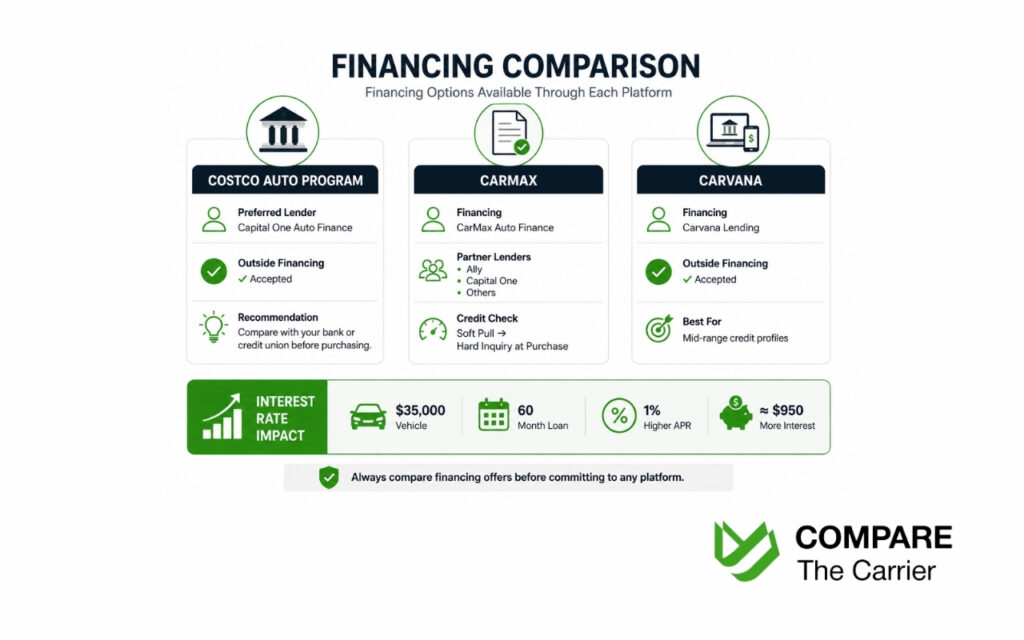
All three services offer financing, but the comparison is not apples-to-apples.
Costco connects members with Capital One Auto Finance as a preferred lender. The rate you get is subject to your credit profile, and the “member rate” isn’t always the lowest rate available in the market. You should get pre-approved from your bank or credit union before walking into any Costco-affiliated dealer. If your rate is better, use it. The dealer can’t force you to use Costco’s lender.
CarMax offers financing through CarMax Auto Finance and a network of partner lenders including Ally, Capital One, and others. They run a soft pull to show you pre-qualified offers, then a hard inquiry when you commit. Their rates are competitive but not always market-leading, particularly for buyers with excellent credit who can access credit union rates.
Carvana offers financing through Carvana’s proprietary lending arm. Rates are competitive for mid-range credit scores but can be less competitive for buyers at the top of the credit spectrum. Like the others, Carvana accepts outside financing – and you can link your pre-approval before committing.
On a $35,000 vehicle over 60 months, a one-percentage-point rate difference costs roughly $950 in additional interest. Shop rates before you commit to any of these platforms.
This is where the three services diverge most significantly in ways buyers don’t anticipate.
Costco offers no trade-in program of its own. Your trade goes to the dealer, who values it through their own process. Even though the purchase price is locked, the trade-in value is not. A dealer motivated to protect margin has every incentive to offer below-market on the trade to compensate for the locked purchase price. Use a competing offer from CarMax, Carvana, or KBB Instant Cash Offer to establish a baseline before any dealer conversation.
CarMax gives you a written offer good for seven days at any location. It’s independent of whether you buy from them. This is genuinely useful as a floor for your trade – even if you end up buying from a dealer, bring a CarMax offer to the table.
Carvana provides an instant online trade offer. Like CarMax, it’s generated algorithmically based on VIN, mileage, and market data. Offers are competitive in active markets and can swing significantly by region and season.
Practical advice: Get offers from both CarMax and Carvana before selling or trading anywhere. They take five minutes and give you a real market benchmark.
Carvana delivers to over 300 US markets, but delivery fees apply in some locations and can run $200–$600 for more remote areas. Always check the total delivered price, not just the listing price.
CarMax requires proximity to a physical store. If you’re not in a major metro, the nearest location might be an hour-plus away – which makes the test drive and same-day trade-in process significantly more cumbersome.
Costco’s program depends on which dealers are participating in your local market. In some metros, you have three or four authorized dealers per brand. In smaller markets, you might have one – and the quality of that one dealer matters a lot. There’s no guarantee of consistency.
Every car-buying service looks good when everything works as expected. The real test is what happens when it doesn’t.
CarMax: With a physical location, you have somewhere to go. Their 10-day return policy is well-documented and their customer service process is comparatively straightforward. Disputes are handled by people you can speak to in person if needed.
Carvana: The return process requires scheduling a pickup, which introduces logistics. Carvana’s customer service quality has historically varied – during their 2022–2023 financial stress, delays in titling and registration were widely reported. By 2025–2026, those issues had largely been resolved, but the company lacks the physical infrastructure that makes dispute resolution at CarMax more direct.
Costco: Because you’re dealing with an independent dealer, dispute resolution goes back to that dealer first. Costco does have a complaint process and will remove dealers from the program for repeated issues, but you’re not dealing with Costco directly when something goes wrong at the dealership.
The shift toward online car buying has real benefits. You save time, skip the pressure tactics, and can comparison-shop nationally rather than being limited to what’s available locally. Online car buying platforms have matured significantly, with photo quality, vehicle histories, and pricing transparency vastly improved from even five years ago.
But something real is lost when you skip the physical inspection.
A used car has a history that no Carfax report fully captures. Paint depth gauges reveal previous bodywork. Brake dust patterns suggest recent service or long neglect. The way a car sits on its suspension tells you something. The smell of the interior tells you something. A 360-degree photo tour can document visible cosmetic issues; it cannot document deferred maintenance, odors, or the dozens of sensory inputs that experienced buyers use to assess a vehicle.
This isn’t an argument against buying online – millions of people do it successfully every year. It’s an argument for using the return window aggressively. When you buy from Carvana, budget time and money for an independent pre-purchase inspection within the seven-day window. Most independent mechanics charge $100–$200 for a used-car inspection. That’s among the best money you can spend.
One aspect of all three services that buyers don’t think about until after the transaction: what happens if you’re buying a car that needs to travel to you?
With Carvana, delivery is built into the model – the car comes to you. With CarMax, if you transfer a vehicle from another location, they handle internal logistics. But there’s a third scenario that applies increasingly to Costco buyers and to anyone buying used vehicles through non-local dealers: you find the right car somewhere that isn’t near you, and you need to get it home.
Dealerships do deliver cars – and membership-based programs like the Costco Auto Program have made this more common, connecting members with dealer networks that can arrange transport through partner carriers. If you’re buying through Costco and your ideal vehicle is at an authorized dealer two states away, transport is an option worth understanding before you commit.
The cost of shipping a car between states typically runs $500–$1,500 depending on distance, route density, and vehicle type. On a $40,000 purchase, that’s a rounding error. Knowing it’s a viable option expands your effective inventory dramatically – you’re no longer limited to what’s available within driving distance. For more context on what to expect with interstate transport, this guide on moving out of state and shipping a car covers the logistics in detail.
The platform you choose matters less than many buyers think. Timing often matters more.
For new cars through Costco: The end of the calendar year – October through December – produces the most aggressive new-car pricing. Dealers are closing out model-year inventory and pursuing year-end volume bonuses. December is statistically the single best month to buy a new car. The Costco member price gives you a fixed ceiling; what you can sometimes negotiate additionally are add-ons, dealer fees, and financing terms.
For used cars through CarMax and Carvana: January and February tend to be the softest used-car market months. Holiday spending has thinned buyer demand, and sellers who listed in the fall are motivated. Summer (June–August) is typically the most expensive window for used vehicles – families are moving, college students are buying first cars, and demand peaks.
The 30-60-90 rule that experienced used-car buyers reference: cars sitting on a lot for 30 days are worth inquiring about, 60-day inventory often means flexible pricing, and 90-day listings are frequently headed to auction – which means the window to negotiate before that happens is narrow. This dynamic applies primarily to CarMax and independent dealers, not Carvana, which reprices algorithmically and doesn’t have the same lot-sitting economics.
The cheapest month overall: December for new, January-February for used. If you have any flexibility on timing and aren’t replacing a car that just died, buying in these windows can save you money that no platform comparison will.
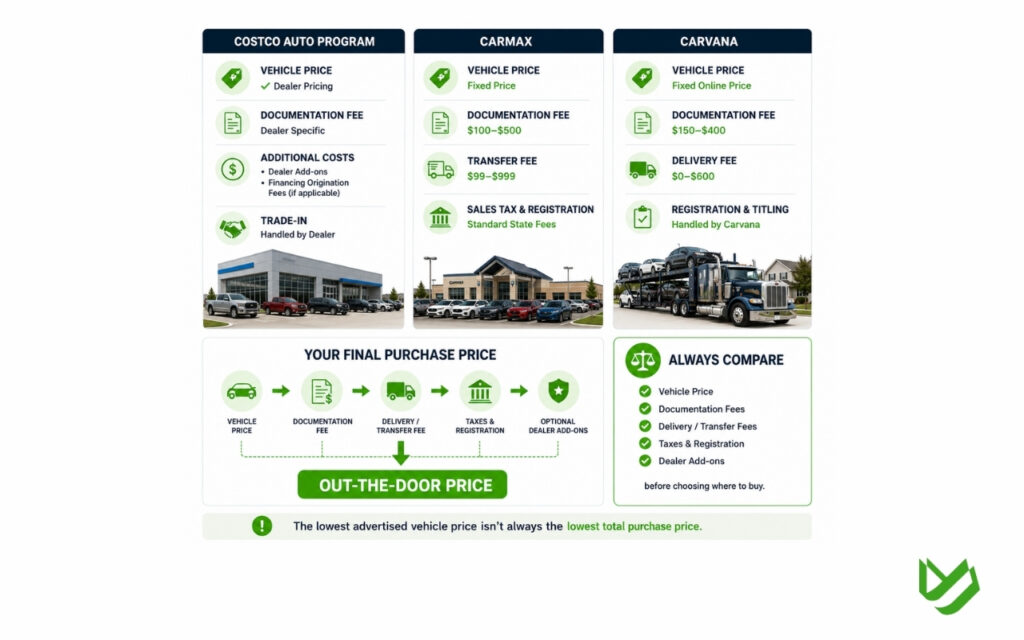
All three services charge fees beyond the listed vehicle price. These are the ones most buyers encounter.
CarMax:
Carvana:
Costco/Dealer:
The practical takeaway: always ask for the out-the-door price before comparing numbers across platforms. A vehicle listed at $28,000 on Carvana and $27,500 at a dealer can easily reverse once all fees are added.
This is the question everyone wants a clean answer to, and there isn’t one. Price depends on vehicle, market, timing, and negotiating behavior (where it’s allowed). That said, here are the honest general patterns:
New cars: Costco member pricing tends to land 1–8% below MSRP depending on model and market conditions. This is competitive but not extraordinary – an informed buyer who negotiates can often match or beat it on popular models. On vehicles in high demand, even Costco pricing lands near MSRP. Where Costco adds value isn’t always pure dollars; it’s the removal of the negotiating process itself.
Used cars: CarMax and Carvana both price at or slightly above book value for popular vehicles in clean condition. Neither is typically the cheapest option in a given market – smaller independent dealers and private sellers routinely undercut them. The premium you pay at either platform is for the infrastructure: inspections, return policies, financing in one place, and title/registration handling.
One cost that rarely appears in any platform comparison: transport. If the right car is at a Costco-affiliated dealer two states away, or you’re buying used from a non-local market, shipping adds real dollars to the final number. Use the auto transport calculator to factor that in before you commit to a purchase.
Bottom line: If saving maximum dollars is the priority and you’re willing to put in the work – research, independent inspection, negotiation – the open market beats all three. If you’re buying the experience along with the car, each of these platforms prices that experience into the vehicle.
One decision point that doesn’t appear in most comparison guides: what happens when the right car isn’t near you?
Carvana delivers nationally. CarMax transfers between locations. But for Costco buyers matched to a dealer in another city, or for anyone who finds the right vehicle on a platform outside their local market, professional auto transport is often the most practical solution.
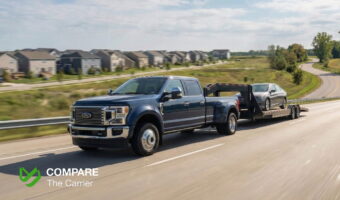
The logistics of transporting a car from a dealer are more straightforward than most buyers assume. And if you bought through Costco specifically, there’s a dedicated breakdown of how Costco auto transport works – including what their partner carrier network offers versus what you can find independently by comparing quotes. A licensed company picks up the vehicle, loads it onto an enclosed or open hauler, and delivers it to your address – typically within one to two weeks depending on route and availability. Costs for cross-country routes run $900–$1,500; shorter regional hauls often come in at $500–$800. On a $35,000+ vehicle purchase, that cost rarely changes the decision.
For buyers using online platforms like Carvana who want to expand their geographic search, or for Costco members working with a dealer across state lines, understanding how car shipping between states works opens up your effective inventory significantly. The right car at the right price in a neighboring state almost always beats a compromised choice available locally.
None of these three services is universally better than the others. They solve different problems for different buyers.
Use Costco Auto Program if you’re buying new, have a membership, and want a guaranteed price without sitting through a negotiation. Walk in with the member certificate, know your number, and stay disciplined in the finance office.
Use CarMax if you’re buying used, want to physically compare and test drive multiple vehicles, and value the ability to trade in your current car in the same visit. Pay the modest premium for the no-pressure environment and the 10-day return window.
Use Carvana if you’ve done your research, know the car you want, and want to complete the transaction from your phone. Use the seven-day window to have the car independently inspected. Don’t skip that step.
Expanding your search beyond local dealerships often means finding a better vehicle at a better price. If that happens, the next step is arranging reliable transportation. Learn how state-to-state car shipping works, what it costs, and how long delivery typically takes before making your purchase decision.
Bought through any of these platforms and now need to get the car home, or shipping a vehicle to a family member?Compare carriers and get a quote at CompareTheCarrier – they work with vetted, licensed auto transport companies across all US routes, with transparent pricing and no obligation.
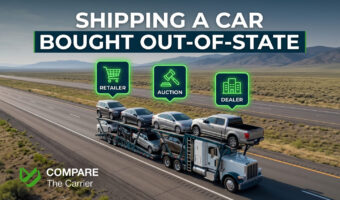
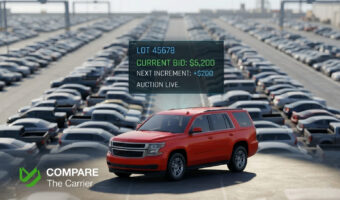
One mistake online car buyers make consistently is skipping due diligence on the transport or logistics side of a deal. If you buy remotely – through a Costco dealer in another state, through an auction, or through a smaller online marketplace – verify that whoever is moving the car is properly licensed.
Every legitimate auto transport carrier operating interstate is required to have an active MC number registered with the FMCSA. How to verify an MC number takes about two minutes and tells you whether a carrier is licensed, insured, and in good standing. Brokers who refuse to provide this information, or carriers whose MC numbers don’t match the company name they’re operating under, are red flags you shouldn’t ignore. On a $30,000+ vehicle purchase, two minutes of verification is time well spent.
The same principle applies to documentation when the car arrives. Documenting your vehicle’s condition before shipping – timestamped photos, a completed Bill of Lading, and a post-delivery walkthrough – is the difference between having a clean dispute resolution path and having no recourse at all if something goes wrong in transit.
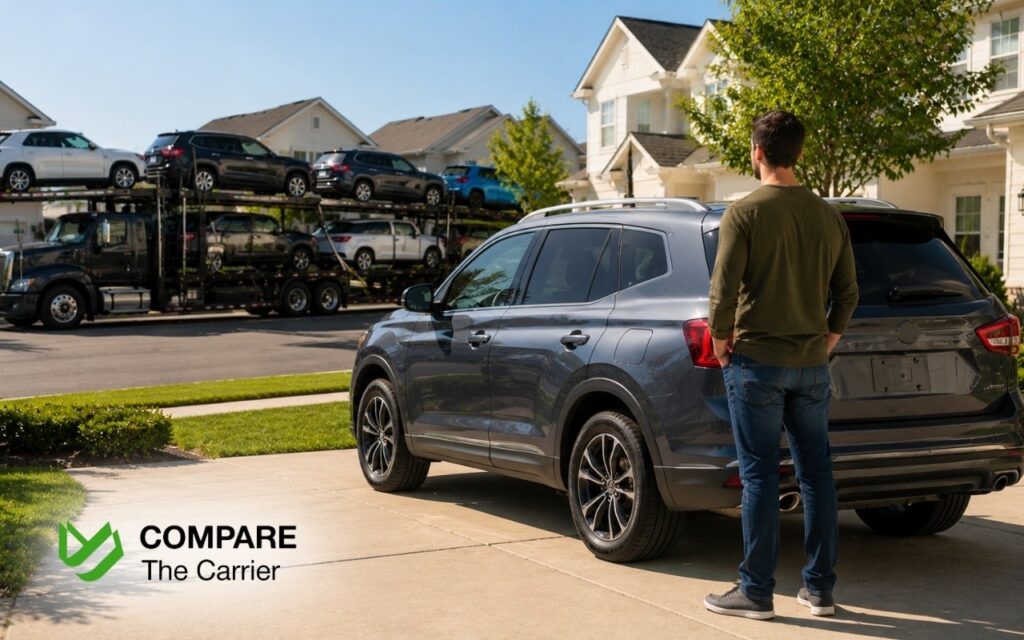
The right choice ultimately comes down to what you’re buying and how you prefer to buy it.
If you’re shopping for a new vehicle, the Costco Auto Program offers transparent, pre-negotiated pricing through participating dealerships. If you’re buying used, CarMax is ideal for buyers who want to inspect and test-drive a vehicle in person, while Carvana is best suited to those who value the convenience of a fully online purchase.
No matter which platform you choose, don’t let location limit your options. Expanding your search beyond your local area can help you find the right vehicle at a better price and professional auto transport makes long-distance purchases simple and cost-effective.
Need to Ship Your New Car?
If you found the right vehicle through Costco Auto Program, CarMax, Carvana, or another dealership, Compare The Carrier makes it easy to compare licensed auto transport companies, estimate shipping costs, and book reliable nationwide delivery.
For most first-time used-car buyers, CarMax is the safer option. You can physically inspect and test drive the vehicle before committing, the 10-day return window gives more time than Carvana’s seven days, and having a physical location makes any post-sale issues easier to resolve. Carvana makes more sense for experienced buyers who’ve already narrowed down to a specific vehicle, are comfortable buying without a test drive, and want the convenience of full home delivery. Neither is universally better – it depends on how much the physical experience matters to you.
No. Both operate on fixed, non-negotiable pricing. The listed price is the purchase price. There is no floor to beat, no manager to call over, no end-of-month pressure to exploit. What you can do is use competing offers to decide whether to buy or walk. If Carvana has a car priced $1,200 above a comparable listing at a local dealer, the answer is to buy from the dealer – not to try to get Carvana to match.
CarMax charges a documentation fee that varies by state, typically ranging from $100 to $500. If you transfer a vehicle from another location, the transfer fee runs $99 to $999 depending on distance. These fees are disclosed before you sign, but they’re not included in the listed vehicle price. Always ask for the full out-the-door price before comparing listings.
Fixed pricing is the foundation of their business model. CarMax was built on the premise that the negotiation process was the worst part of buying a car – and that removing it entirely would attract buyers willing to pay a modest premium for the experience. Their sales staff are paid salaries rather than commissions tied to margin, which eliminates the financial incentive for pressure tactics. The model has held for 30+ years.
Depends on the dealership and the vehicle. Carvana’s pricing is competitive with mid-tier franchise dealers on popular used vehicles, and their total-cost transparency is better than most traditional dealers. However, smaller independent dealers and private sellers routinely undercut Carvana on comparable vehicles. Where Carvana wins is on convenience and no-pressure experience, not on raw price.
It pre-negotiates a fixed member price with vetted local dealerships, then connects Costco members to those dealers. You don’t buy from Costco – you buy from the dealer, but at a Costco-approved price. The program works best for new cars. The dealer still handles financing, trade-ins, and paperwork, so those elements are subject to normal dealer dynamics.
The primary benefit is a pre-set, verified price on a new car without having to negotiate. Members show the member price certificate at the dealer, and the dealer is contractually bound to honor it. This works best for buyers who hate the negotiation process and want a known number before walking in. The savings versus a well-negotiated deal aren’t always large, but the certainty and comfort are real.
December is consistently the best month for new-car pricing. Dealers are pursuing year-end volume targets, closing out current model-year inventory, and motivated to move units before the calendar turns. October and November are also favorable. Spring and early summer tend to be the most expensive windows for new car buying.
It refers to how long a used car has been sitting on a dealer’s lot. A 30-day listing is worth asking about. A 60-day car suggests a dealer open to movement on price or terms. A 90-day car is likely heading to auction – meaning the window to get the best deal closes soon, but you may also find the most flexibility right before the cutoff. This applies to traditional dealers and CarMax physical inventory, not Carvana’s algorithmically repriced listings.






Don't have time to fill out the form?
Call a transport company directly to get a quote now!
Select the category you need
Partner with Compare The Carrier & Grow!
We're open to collaborations, partnerships, and mutual growth! Whether you're an individual or a business, we offer exciting opportunities to work together. Fill out the form below to explore how we can collaborate.
Something Went Wrong
We're sorry, but something went wrong. Please briefly describe the problem you experienced in the text area below. Providing your contact information will allow us to follow up if needed.

Thank you,
your form has been accepted.
Your form has been successfully submitted. We appreciate your effort — our team will review it shortly and take the next steps.


