

Best Open Car Shipping Companies in 2026
Montway, Sherpa, SGT, Mercury, and AmeriFreight are the f...
10 November 2026
Shipping a car from the East Coast to the West Coast means moving it roughly 2,700 to 3,100 miles across the country, and for a standard sedan on an open trailer, that usually costs somewhere between $1,450 and $2,600, depending on the exact route. Transit typically runs 7 to 15 days once a driver picks the car up, and that pickup can take a few days to arrange on top.
Calculate Shipping Quotes
This guide breaks down the cost by route, explains what changes the price, compares the main cross-country corridors, and shows how transit time differs from the total time you should plan for.
Compare The Carrier is a comparison platform, not a carrier. Prices change with your exact cities, dates, and vehicle run your route through the auto transport calculator, or call +1 (321) 361-4140, to compare offers from licensed brokers.
In this guide
Coast-to-coast is the longest common route in the country, so it sits at the high end of car shipping prices. The figures below are 2026 market estimates for a standard, running sedan on open transport. Treat them as a planning range, not a locked-in quote.
Average Cost of East-to-West Coast Car Shipping
For a standard sedan on an open trailer, a coast-to-coast move usually falls between about $1,450 and $2,600. A smaller car on a flexible date sits near the bottom; a large SUV, a pickup, a fixed pickup date, or enclosed transport pushes it toward the top or beyond.
East Coast to West Coast Car Shipping Cost by Route
The exact cities matter. Here’s how four common coast-to-coast routes compare, using 2026 estimates from moveBuddha for open transport:
| Route | Approx. distance | Open transport (est.) | Transit time |
| New York, NY → Los Angeles, CA | ~2,790 miles | 1,453-2,375 | 7–15 days |
| Miami, FL → Los Angeles, CA | ~2,734 miles | 1,552-2,641 | 7–15 days |
| Washington, D.C. → San Francisco, CA | ~2,810 miles | 1,618-2,528 | 7–15 days |
| Boston, MA → Seattle, WA | ~3,053 miles | 1,671-2,458 | 7–15 days |
Independent market estimates from moveBuddha, checked October 15, 2026, not Compare The Carrier prices: NY–LA, Miami–LA, DC area–SF, Boston–Seattle. Your quote depends on your exact ZIP codes, vehicle, and dates.
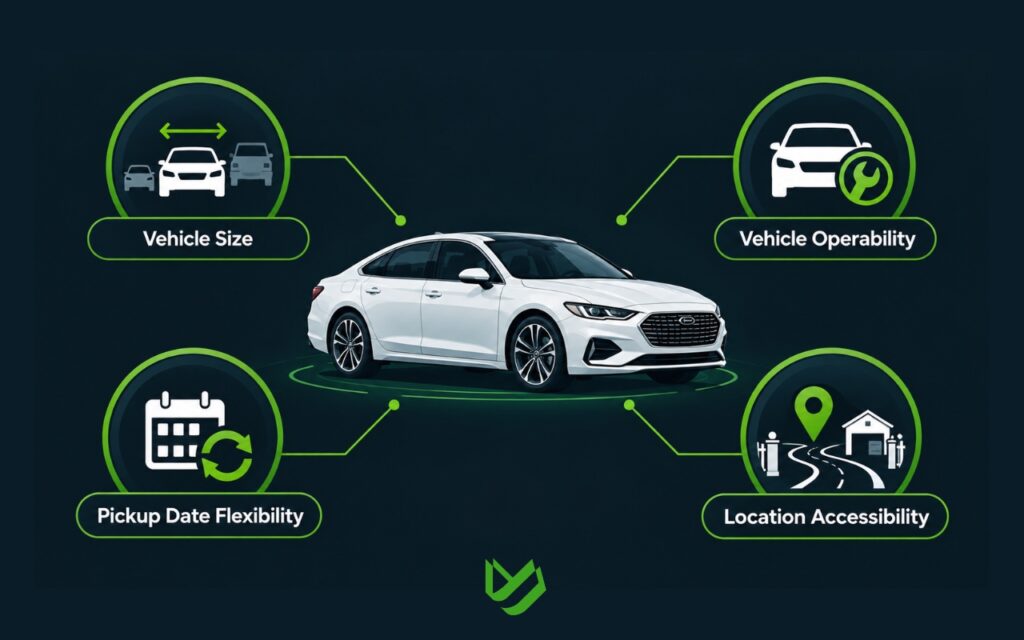
What Affects the Cost of Cross-Country Car Shipping?
Is East-to-West Shipping More Expensive Than West-to-East?
Direction can nudge the price. When more people are moving one way than the other, drivers discount the slower direction to avoid hauling an empty trailer back. Which way is cheaper shifts with the season and the route, so it’s not a fixed rule. The only way to know for your move is to compare a quote for your actual direction and dates.
Busy routes between major cities are the easiest to book and usually the best priced, because many drivers run them. Here are four common coast-to-coast pairs and what to expect on each.
New York to Los Angeles Car Shipping
A high-demand route between two major hubs, which usually means good driver availability and competitive open-transport pricing. Within each metro, how far your pickup and delivery addresses sit from the main interstates can affect how quickly a driver is assigned.
Miami to Los Angeles Car Shipping
A southern route that often follows Sun Belt interstates. Florida demand peaks in snowbird season, so prices on Florida routes can climb in fall and early winter. Booking earlier helps during those months.
Washington, D.C. to San Francisco Car Shipping
Both cities are well served by car haulers, so this route books readily. A delivery to a central San Francisco address is usually simpler than one to an outlying town off the main corridors.
Boston to Seattle Car Shipping
The longest of the four, running across the northern tier. In winter, snow and mountain passes on northern routes can affect timing, so a flexible pickup window is worth keeping.
For other city pairs, the same logic applies: our state-to-state car shipping page and route guides cover specific origins and destinations.
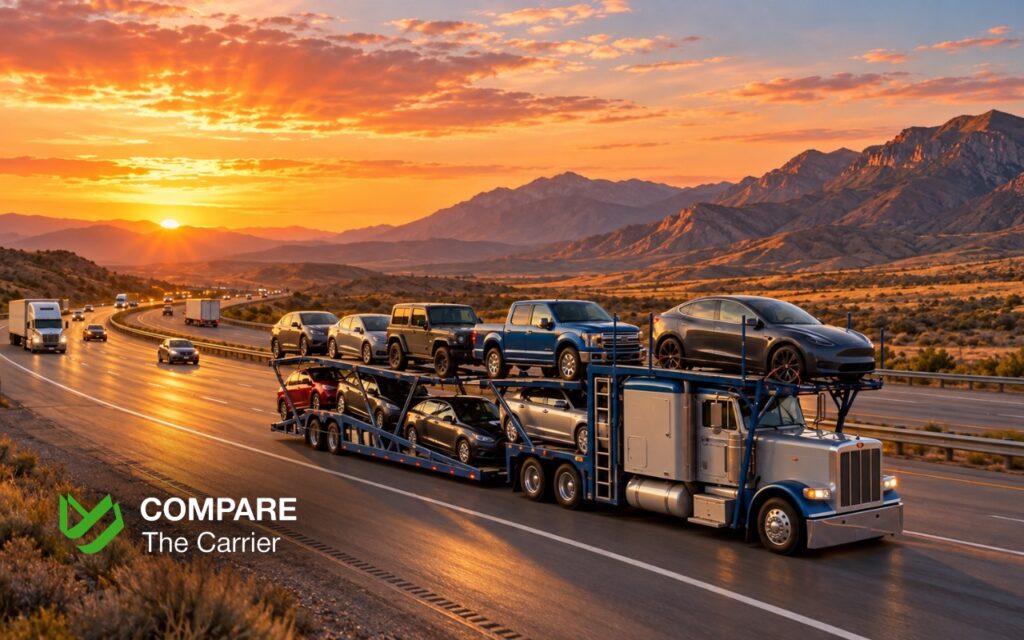
A car hauler doesn’t take a straight line between your two cities. It follows the major interstates and the loads it already has on board.
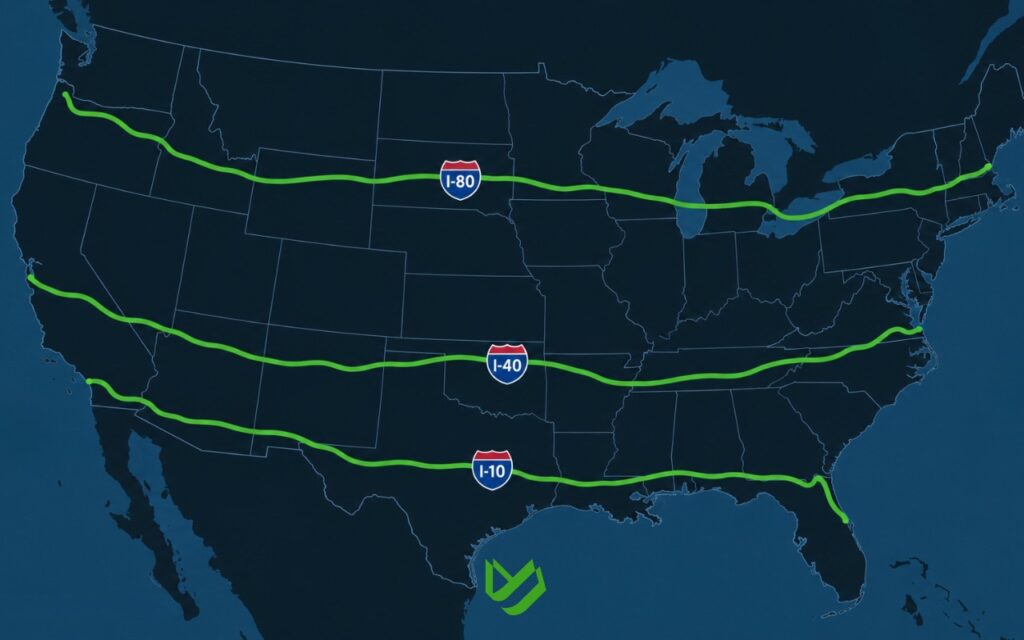
Southern, Central and Northern Cross-Country Corridors
Drivers generally stick to the major interstates, and the path depends on your cities and the season. Common examples include:
These are illustrations, not fixed routes. The exact highways a driver uses depend on the cities, the other cars on the trailer, and the conditions.
The season, the weather, and your pickup and delivery cities decide which corridor a driver uses.
Does the Truck Follow a Fixed Route?
No. The map distance between your cities is not the path your car takes. A driver plans the trip around the other vehicles on the trailer, picking up and dropping off along the way, and adjusts for weather and road conditions. That’s why two cars on the “same” route can have slightly different timing. What you’re quoted is the service between your two points, not a specific highway.
Plan on about 7 to 15 days in transit for a coast-to-coast move, plus a few days to get the car picked up. Distance sets the floor, but it doesn’t translate directly into days.
Typical Coast-to-Coast Transit Time
Once a driver has your car, a cross-country trip usually takes about 7 to 15 days. Estimates vary by source and route, so treat any range as a guide instead of a promise. A hauler covers a few hundred miles a day and makes other stops along the way, and federal hours-of-service limits cap how long a driver can be on the road each day. That’s why a 2,800-mile trip takes a week or more, not two days.
Pickup Window vs. Transit Time vs. Total Delivery Time
These three are easy to confuse, and the difference matters when you’re planning a move:
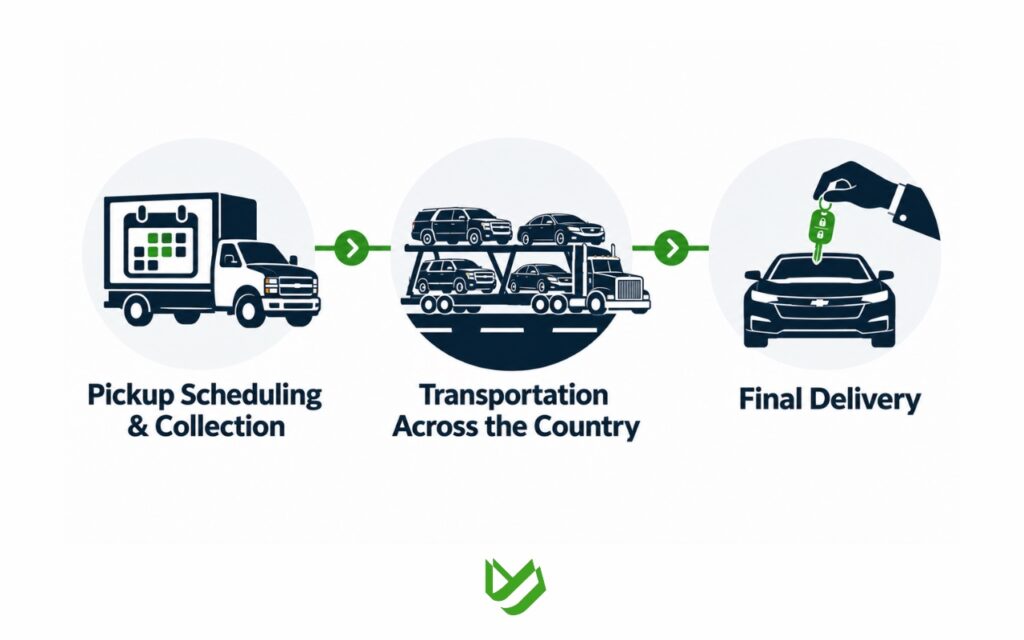
So if you need the car in California by a certain date, count back the transit time and the pickup window, and book with room to spare. Our guide on how long car shipping takes goes deeper on timing.
What Can Delay a Cross-Country Car Shipment?
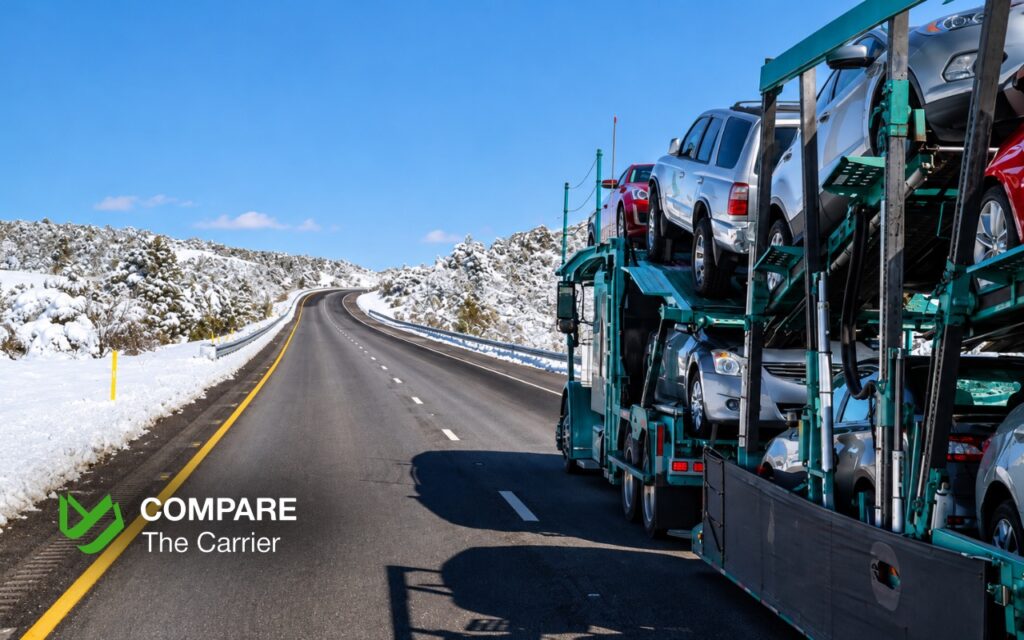
Can You Ship a Car Across the Country Faster?
Yes, to a point. Expedited transport prioritizes your shipment for a higher price, which can shorten the wait before pickup. How much it helps depends on the service and driver availability, and it isn’t an absolute guarantee of a delivery date, since weather and traffic still apply.
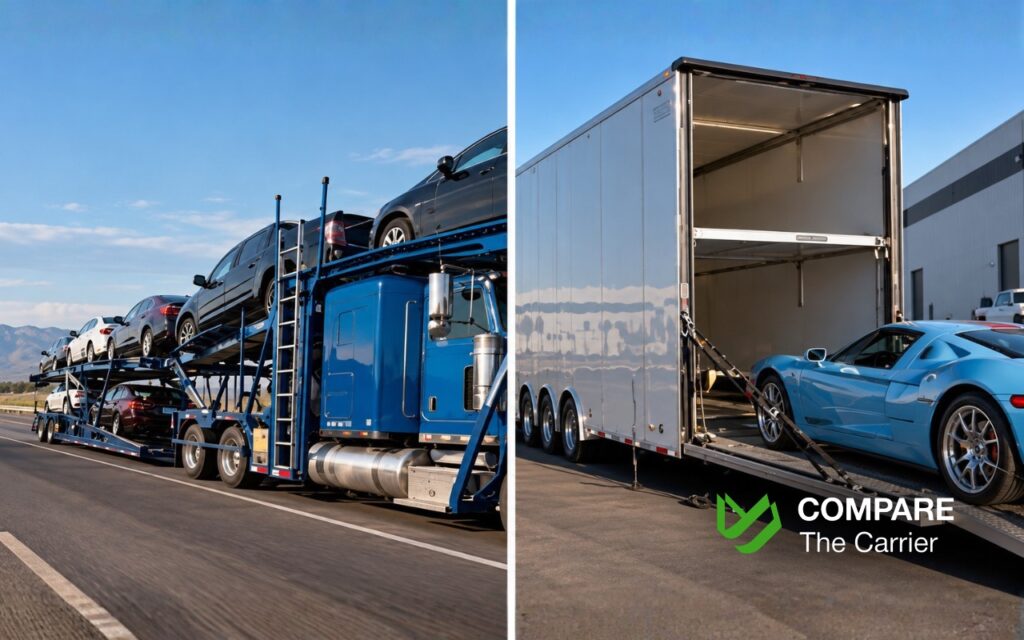
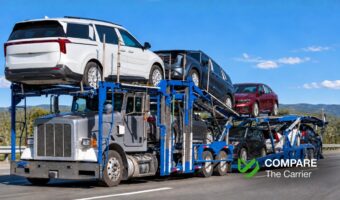
On a trip this long, the choice between open and enclosed affects both the price and the protection. Most people ship on open trailers; enclosed is for cars that need extra cover.
| Open transport | Enclosed transport | |
| Price | Lower | Higher |
| Protection | Exposed to weather and road debris | Covered for the whole trip |
| Availability | Easy to book on most routes | Fewer trailers, may take longer |
| Best for | Everyday cars and used cars | Classic, exotic and high-value cars |
When Open Transport Makes Sense
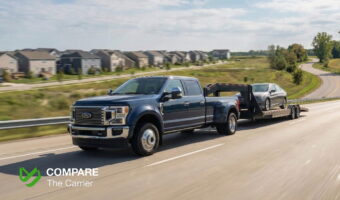
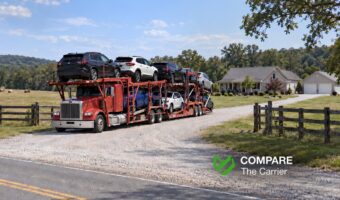
For a daily driver or a used car, open car shipping is the practical choice. It’s cheaper, widely available, and the same way new cars reach dealerships. Over a long trip, the car may pick up some road dust, which a wash handles on arrival.
When to Choose Enclosed Transport
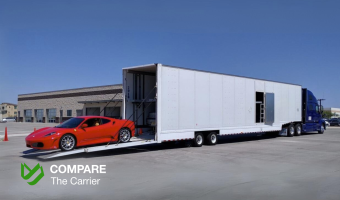
If you’re moving a classic, an exotic, a new luxury car, or anything with custom paint, enclosed auto transport keeps it away from weather and gravel for the whole trip. It costs more, but on a long haul the extra protection can be worth it for a valuable vehicle.
When Should You Book Your Shipment?
Book two to three weeks ahead when you can, and more during busy seasons. Early booking with a variable pickup window gives drivers room to fit your car into a cross-country load, which helps with both price and timing.
What Information Do You Need for a Car Shipping Quote?
Have these ready for an accurate quote:
What to Check Before Confirming a Company
Before you book, confirm the company is licensed with the FMCSA by looking up the USDOT or MC number. If you book through a broker who arranges the move, you can also check the trucking company that actually hauls your car. Confirm what insurance applies, and get the price, pickup window, and cancellation terms in writing. Our guide on how to read a car shipping quote covers what to look for.
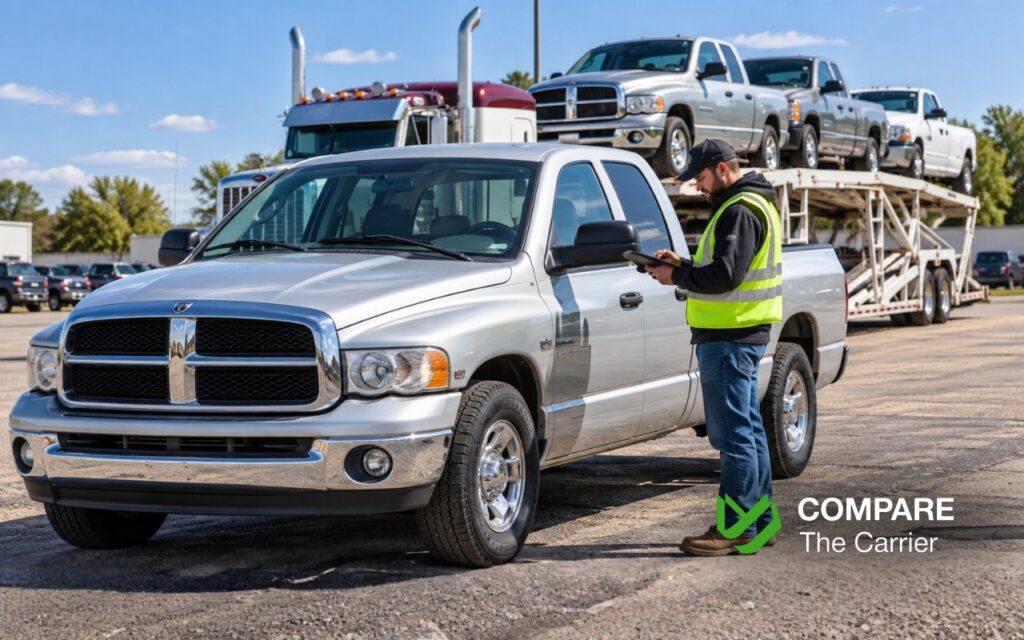
Coast-to-coast is a long, variable route, so the price for your move depends on your exact cities, vehicle, and dates. The best way to budget is to compare real offers for the same route rather than relying on an average. Because licensed brokers compete for your shipment, you compare real offers side by side instead of being locked into a single bid that can fall through, the way a bidding marketplace works.
Get Free Coast-to-Coast Car Shipping Quotes
Enter your route in the auto transport calculator or call +1 (321) 361-4140 , and we’ll gather offers from licensed brokers so you can compare price, timing, and transport type side by side.
For a standard sedan on open transport, it’s usually about $1,450 to $2,600, depending on the exact cities, the vehicle, and the dates. Larger vehicles and enclosed transport cost more. Get a quote for your route for an accurate number.
Usually around 7 to 15 days in transit once the car is picked up, depending on the route and conditions. That doesn’t include the pickup window, which can add a few days. See our car shipping timing guide for more.
Open transport on a flexible pickup window, booked in advance, is often one of the more affordable options, especially on busy routes between major cities. Comparing a few quotes for the same dates also helps you avoid overpaying.
Yes, in most cases. The driver picks up and delivers as close to your addresses as a large trailer can safely reach. For a narrow street, you may meet the driver at a nearby spot like a parking lot.
Yes, as long as the company has a winch or other loading equipment. Tell them at booking that the car is inoperable, since it affects the trailer and the price.
Yes. Tell the company it’s an EV when you book, and confirm any requirements for the battery or loading in advance. Otherwise, the process is much the same as for any car.
Policies vary. Many companies allow a small amount of items, often in the trunk and under a weight limit, but the transport insurance usually doesn’t cover them. Confirm the rules before pickup.
Often, yes. Driving 2,800 miles means days on the road plus fuel, hotels, meals, and wear on the car. Shipping lets you fly instead and keeps those miles off the odometer. Compare the full cost of each, not just the gas.





Don't have time to fill out the form?
Call a transport company directly to get a quote now!
Select the category you need
Partner with Compare The Carrier & Grow!
We're open to collaborations, partnerships, and mutual growth! Whether you're an individual or a business, we offer exciting opportunities to work together. Fill out the form below to explore how we can collaborate.
Something Went Wrong
We're sorry, but something went wrong. Please briefly describe the problem you experienced in the text area below. Providing your contact information will allow us to follow up if needed.

Thank you,
your form has been accepted.
Your form has been successfully submitted. We appreciate your effort — our team will review it shortly and take the next steps.


