

Everything You Need to Know About Hot Shot Car Transport
Hot shot car transport is a specialized vehicle shipping ...
21 April 2026
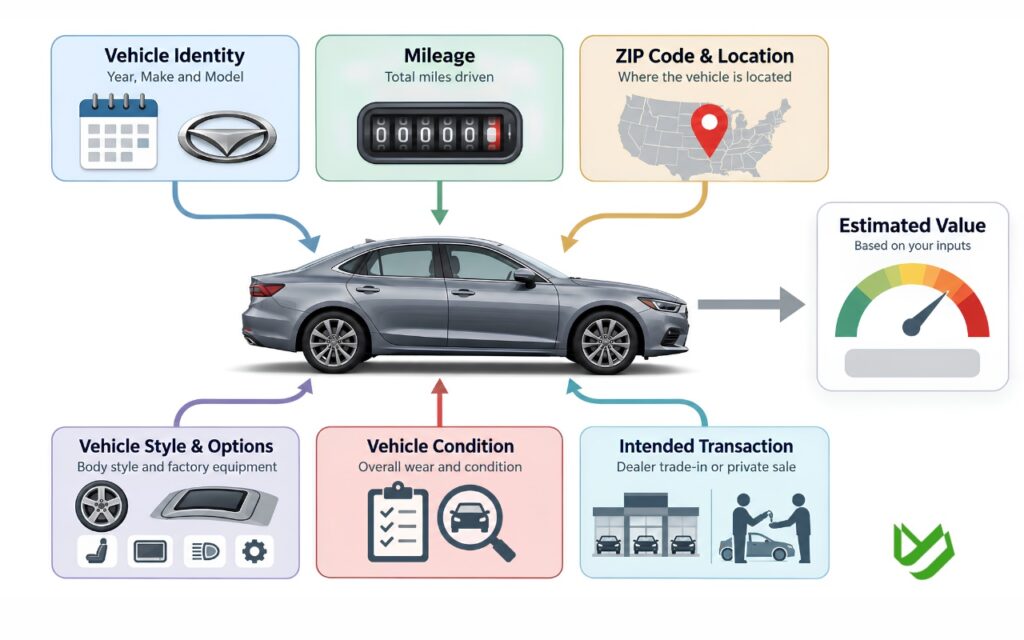
Kelley Blue Book value depends on the way you intend to use it. Whether you’re trading a vehicle at a dealership, selling it to another person, or shopping for a used car, Kelley Blue Book’s valuation tool provides a different number for each scenario. To get an accurate estimate, you’ll need your vehicle’s year, make, model, mileage, ZIP code, category and style, options, and an honest condition rating.
Calculate Shipping Quotes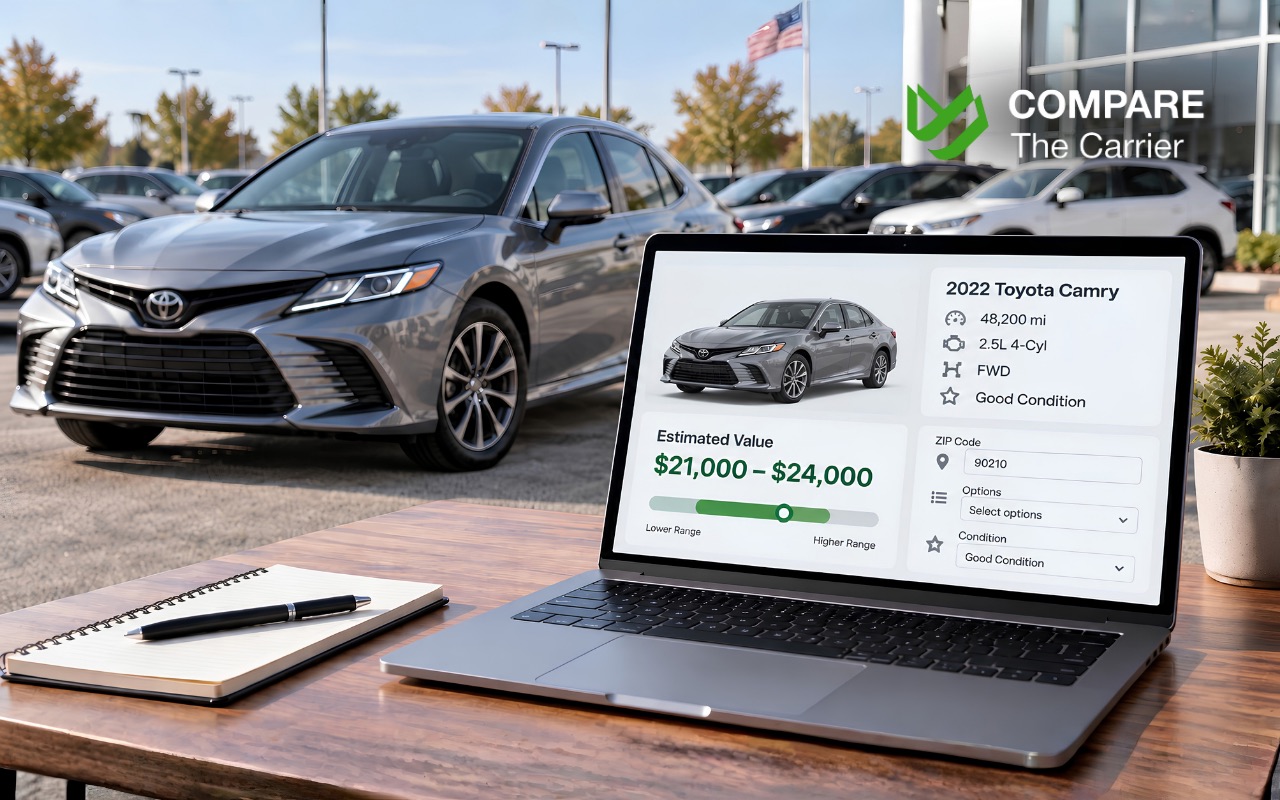
Here’s how to check the value, what each estimate type means, and what can make your car’s real-world selling price land above or below the number KBB shows you.
In this guide
Checking your KBB value takes just a few minutes once you have the right details. Here’s what the process looks like step by step.
Enter the Vehicle’s Basic Information
Start with the year, make, and model. KBB then asks for mileage, ZIP code, vehicle category and style, options, and condition to narrow the estimate to your specific vehicle.
Enter Your Mileage and ZIP Code
Mileage is one of the factors KBB uses when estimating a vehicle’s value – lower or higher mileage relative to comparable vehicles can affect the estimate. ZIP code matters too, since demand for a given vehicle type varies by region.
Select Category, Style, and Options
Choose the correct category and style, then add any factory-installed options: all-wheel drive, leather seating, a sunroof, premium audio, or a towing package. Factory-installed options can affect the estimate – don’t assume aftermarket modifications will add the same value as factory equipment.
Choose the Vehicle’s Condition
KBB uses four condition tiers – Excellent, Very Good, Good, and Fair. Most vehicles land in the Good range. Be realistic here: an overly optimistic condition rating can make your estimate less representative of what a dealer may actually offer.
Select How You Plan to Sell or Buy
Indicate whether you’re trading in, selling directly, or buying from a dealer – this determines which value type you’re shown.
Review Your Value
KBB uses your vehicle details along with transaction data, local market conditions, and other market factors to generate the estimate.
Depending on whether you’re selling, trading in, or buying a vehicle, KBB provides several different value and pricing figures:
Trade-In Value – an estimate of what a dealer might offer when you trade your vehicle toward a purchase.
Private Party Value – an estimate of what you could reasonably expect selling the vehicle directly to another person.
Fair Market Range – KBB’s estimate of what you can reasonably expect to pay for a comparable used vehicle from a dealer in your area.
Fair Purchase Price – KBB’s estimate of what buyers typically pay a dealer for a used vehicle with typical mileage and options in good condition or better.
The right KBB figure depends on what you’re doing with the vehicle. Use Trade-In Value when you’re trading the car to a dealer, and Private Party Value when you’re selling it yourself. If you’re buying a used vehicle from a dealer, look at the Fair Market Range and Fair Purchase Price instead. Choosing the right figure keeps you from comparing a dealer purchase price against a private-sale estimate.
The four figures break down by use case as follows:
| Value | Used For | What It Tells You |
| Trade-In Value | Trading at a dealership | Estimated value of your vehicle as a trade-in |
| Private Party Value | Selling to another person | Starting point for a private-party sale |
| Fair Market Range | Buying from a dealer | Expected price range for a comparable vehicle |
| Fair Purchase Price | Buying from a dealer | Typical price buyers pay for a comparable vehicle |
Year and Model
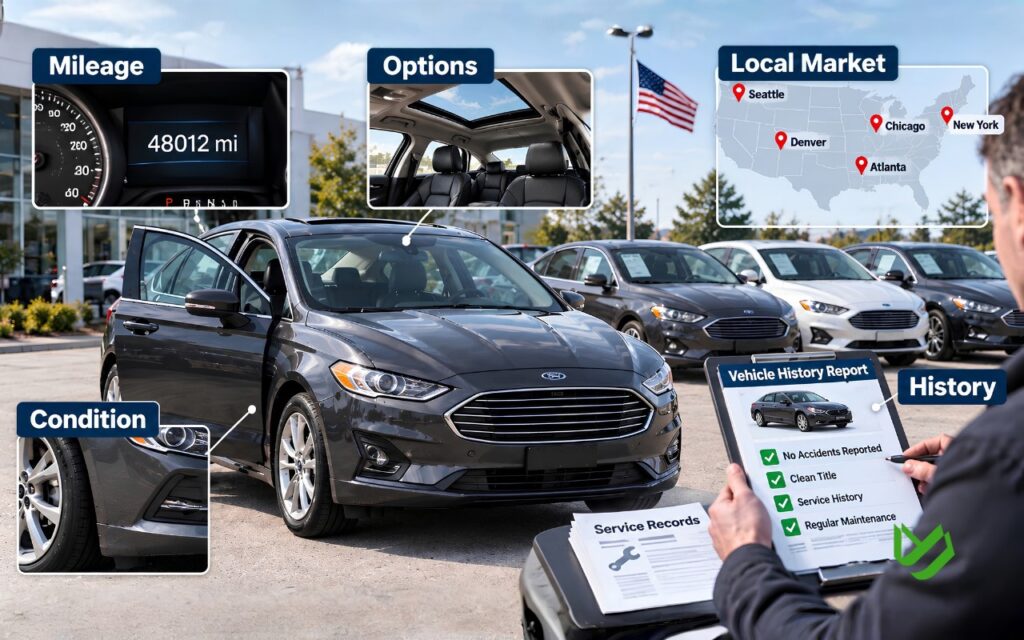
Newer vehicles generally hold more value, and some models retain their value better than others over time.
Mileage
Mileage relative to comparable vehicles is one of the inputs KBB uses to adjust the estimate.
Condition
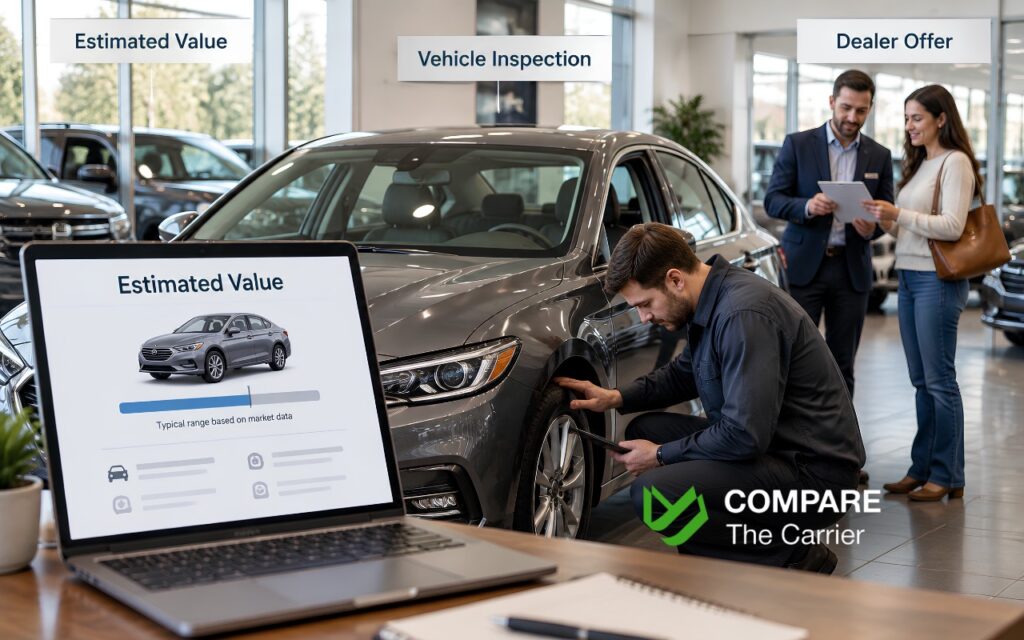
This is one of the biggest swing factors – the gap between an honestly rated “Good” vehicle and an overstated “Excellent” one can be significant.
Category, Style, and Options
Factory options like AWD, leather, a sunroof, or a tow package can raise the estimate. Aftermarket modifications don’t necessarily add the same value as factory-installed equipment.
Location
Regional demand changes values. A truck may be worth more in a rural market with strong demand than in a metro area where it’s common.
Market Demand and Seasonality
Local demand and seasonal trends can affect vehicle pricing, particularly for vehicles whose popularity changes during the year.
Vehicle History
Even when two vehicles share the same year, model, mileage, and options, their real-world marketability can differ because of title history, accidents, maintenance records, and overall condition.
Is KBB Value the Same as the Actual Selling Price?
No. A KBB value is a market estimate, not a guaranteed transaction price. KBB itself notes that dealers set their own prices, and the final transaction can vary with actual condition, popularity, and local market conditions.
Why Can a Dealer Offer Less Than the KBB Value?
Dealers also have costs associated with reconditioning, advertising, sales commissions, and other expenses of doing business. Those costs help explain why a trade-in offer can differ from a private-party value.
If you’re trading a vehicle in at a dealership, use the Trade-In Value as your baseline. If you’re selling directly to another buyer, use the Private Party Value instead – it’s usually higher, since it doesn’t need to account for a dealer’s resale costs and margin. Knowing which figure applies to your situation keeps expectations realistic before you start negotiating.
A KBB estimate is a starting point, not a guarantee – several factors can push the final price above or below it.
Why Your Car Might Sell for More Than the KBB Estimate
Why It Might Sell for Less
Before setting an asking price, it’s worth comparing your KBB estimate against what similar vehicles are currently listed for in your area – that comparison often tells you more about real-world pricing than the estimate alone.
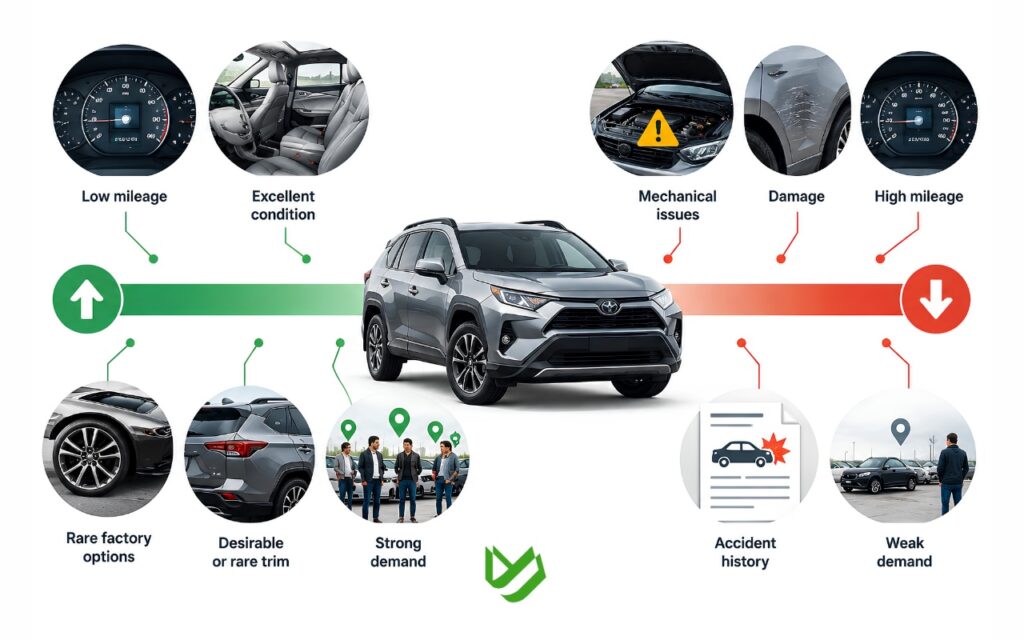
KBB isn’t the only valuation source. Sites like Edmunds and J.D. Power offer their own valuation tools, and current local listings show what similar vehicles are currently asking. Different tools can show different numbers for the same vehicle because each uses its own data and methodology.
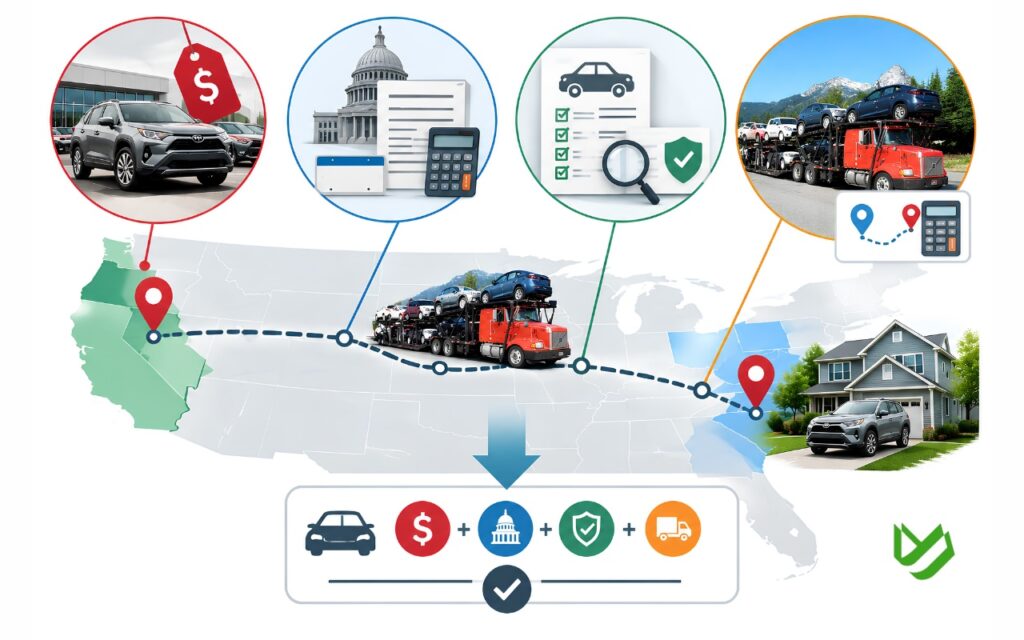
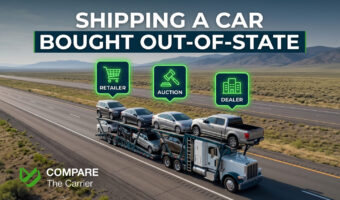
If you’re shopping for a used vehicle listed in another state, the KBB value is only one part of your total cost.
Check the KBB value. Confirm the listed price is in line with the Fair Market Range for that year, mileage, and condition.
Compare local listings. Look at similar vehicles for sale in your own area to see whether the out-of-state price is genuinely a better deal once other costs are factored in.
Check the vehicle history. Before buying, the FTC’s used-car buying guidance recommends checking the vehicle’s history and having it inspected. For title and brand information, buyers can also use an NMVTIS-approved vehicle history provider.
Calculate taxes and fees. Sales tax, registration, and title fees vary by state and can meaningfully change the total cost of an out-of-state purchase.
Estimate transportation costs. Use a car shipping cost calculator to estimate transportation costs before comparing the total delivered price with local options. For a vehicle purchased in another state, state-to-state car shipping can be a practical way to include transportation in your total purchase budget.
Once you know the KBB value, the vehicle’s history, and what it will cost to have it shipped to you, you have the full picture needed to decide whether an out-of-state purchase is worth it.
No. KBB’s Fair Market Range excludes taxes, title and fees when you’re buying from a dealer.
Buying a Car Out of State? Estimate Your Shipping Cost
A good purchase price is only part of the equation. Use the Compare The Carrier car shipping cost calculator to estimate transportation expenses and compare them with the total cost of buying locally.
It depends on how you’re using it – trade-in, private sale, or dealer purchase each returns a different number based on your vehicle’s year, mileage, condition, and location.
Enter your vehicle’s year, make, model, mileage, ZIP code, category/style, options, and condition into KBB’s valuation tool.
Yes, checking a KBB estimate costs nothing.
It’s a reliable market estimate, but the actual selling price depends on the vehicle’s real condition, local demand, and negotiation.
Trade-In Value estimates what a dealer might offer; Private Party Value estimates what you could get selling directly to another buyer, and is usually higher.
Yes, mileage relative to comparable vehicles is one of the factors KBB uses.
Yes. KBB adjusts values based on regional demand for that vehicle type.
Significantly. Most vehicles fall in the Good range rather than Excellent, and an honest rating gives a far more useful estimate.
No, taxes, title, and registration fees are calculated separately based on your state.
KBB provides online values for used cars and trucks up to 21 years old. Vehicles older than that generally don’t have enough transaction data for KBB to publish a value.








Don't have time to fill out the form?
Call a transport company directly to get a quote now!
Select the category you need
Partner with Compare The Carrier & Grow!
We're open to collaborations, partnerships, and mutual growth! Whether you're an individual or a business, we offer exciting opportunities to work together. Fill out the form below to explore how we can collaborate.
Something Went Wrong
We're sorry, but something went wrong. Please briefly describe the problem you experienced in the text area below. Providing your contact information will allow us to follow up if needed.

Thank you,
your form has been accepted.
Your form has been successfully submitted. We appreciate your effort — our team will review it shortly and take the next steps.


