

Car Registration When Moving to Another State – DMV Guide
When you move to a new state, you generally need to trans...
7 October 2026
Hot shot and full-size car carriers serve different shipping needs, so neither is universally better. A hot shot setup can offer more flexibility for smaller loads and difficult-access locations, while a full-size carrier is often more efficient for multiple vehicles and standard routes.
Calculate Shipping Quotes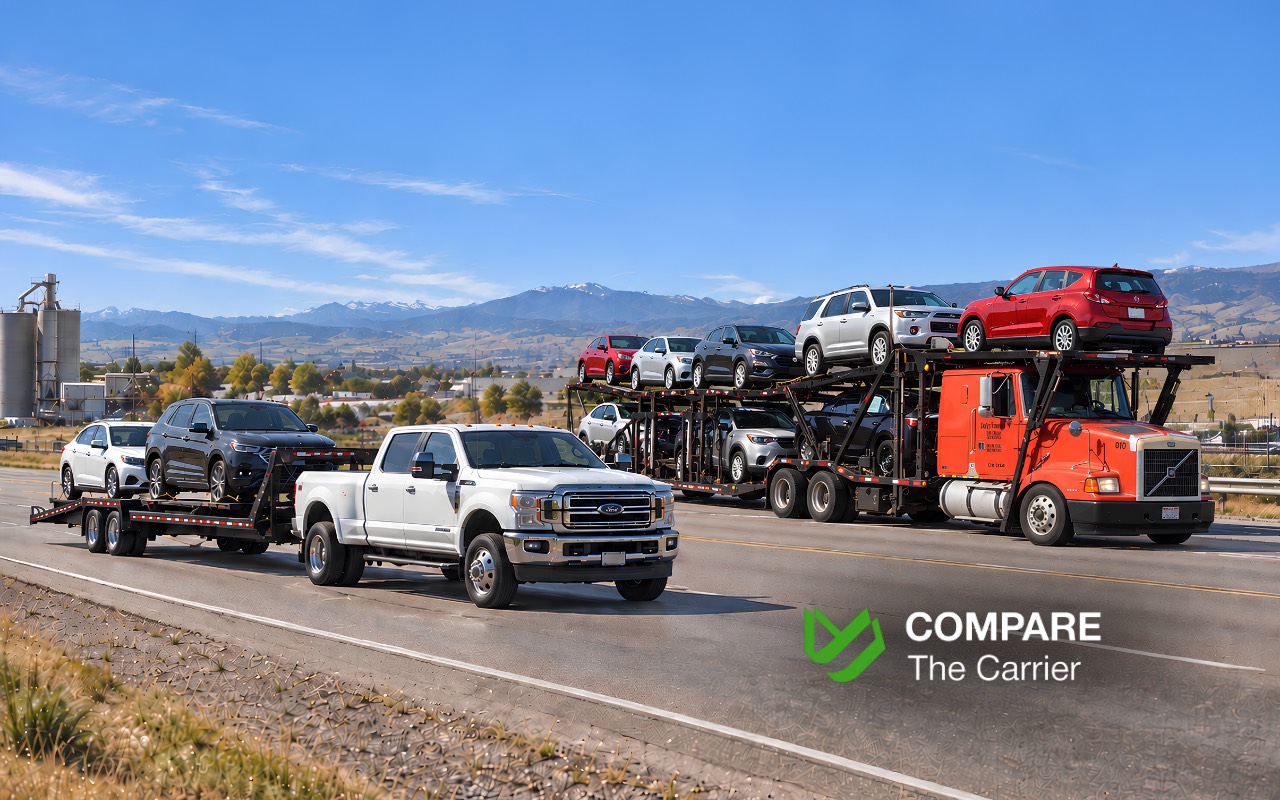
So which option makes more sense for your shipment? The answer depends on cost, vehicle capacity, pickup access, equipment, and timing. Below, we compare hot shot and full-size car carriers side by side to help you determine which setup fits your vehicle and route.
Ready to Ship Your Car?
Compare hot shot and full-size car carrier options for your route and find the right fit for your vehicle, budget, and timeline. Use our auto transport calculator to get a quote, or call 1 (321) 294-0589 tto discuss your shipment with our team.
In this guide
Here’s the basic difference between the two:
| Factor | Hot Shot | Full-Size Car Carrier |
| Typical vehicles per load | Often 1-3 | Multiple vehicles |
| Truck setup | Heavy-duty pickup or medium-duty truck + trailer | Full-size commercial tractor + car-hauling trailer |
| Trailer size | Compact | Large, multi-level |
| Route flexibility | Often higher | More limited |
| Rural/residential access | Often easier | May require an alternate pickup location |
| Cost per vehicle | Can be higher | Usually lower when sharing trailer capacity |
| Best for | Difficult access or smaller vehicle loads | Standard vehicle shipping and multi-vehicle loads |
| Enclosed option | Available from some operators | Widely available, depending on carrier |
| Fleet/dealer shipping | Limited | Better suited |
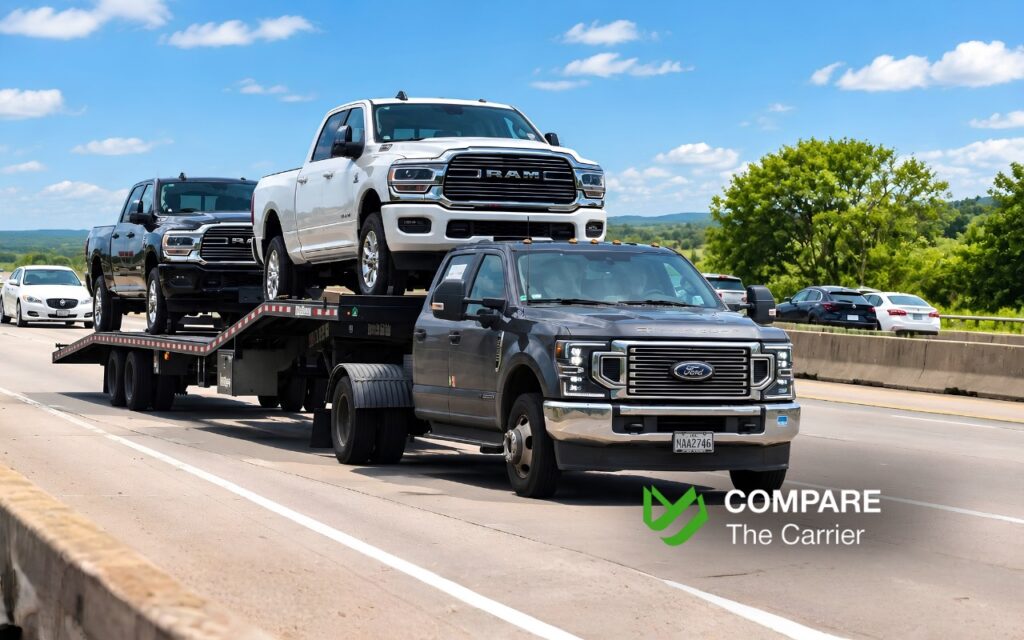
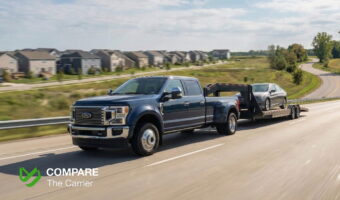
Hot shot transport uses a heavy-duty pickup or medium-duty truck pulling a smaller trailer, built to move one to a few vehicles at a time. It’s a setup that trades capacity for maneuverability – a hot shot rig can generally reach places a full-size hauler can’t, and it doesn’t need to coordinate a multi-stop route the way a larger carrier does.
For the full breakdown of hot shot equipment, truck classes, trailer types, and pricing, see our complete guide to hot shot car transport.
How a Standard Car Carrier Works
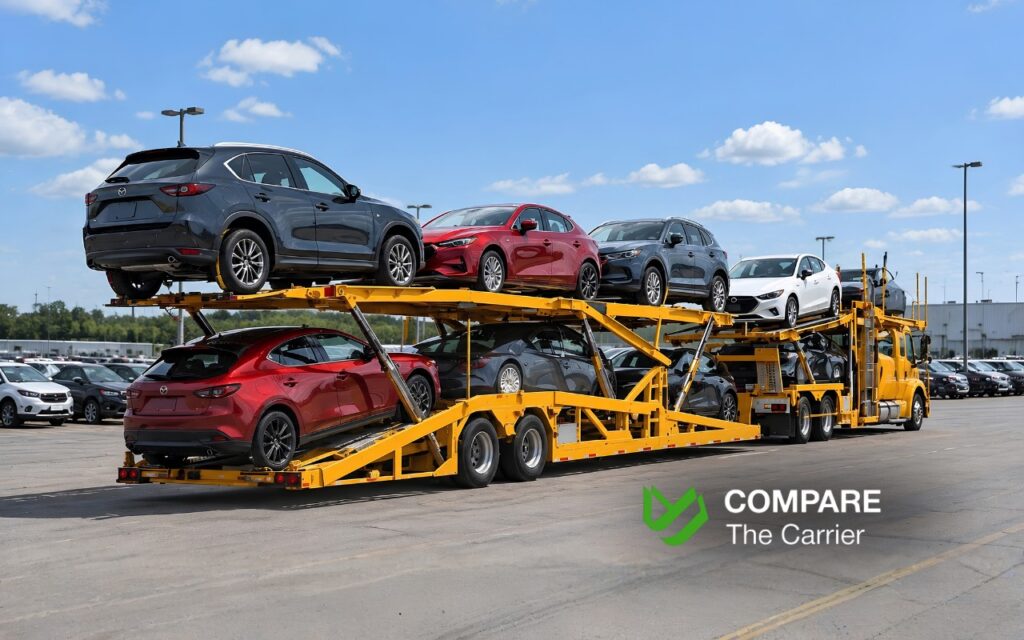
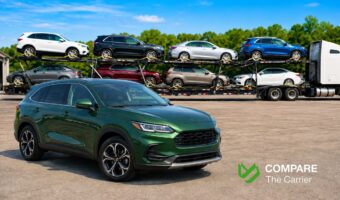
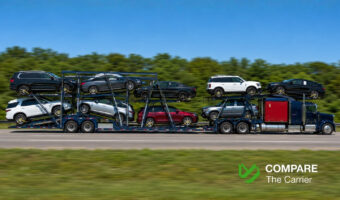
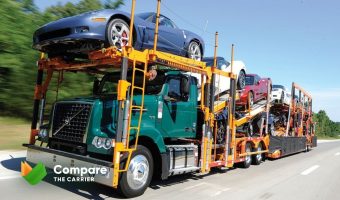
A full-size car carrier pairs a commercial tractor with a specialized multi-level trailer built to haul several vehicles on one load. These carriers typically run planned routes with multiple pickups and deliveries along the way, which helps keep costs down – but it also means the truck is large and needs a reasonably accessible location to load and unload safely.
How Many Cars Can a Full-Size Car Carrier Hold?
There’s no single fixed number here. Capacity depends on the trailer’s configuration, the size and weight of the vehicles being hauled, how the deck is arranged, and the mix of sedans, SUVs, and trucks on that particular load. A trailer full of compact sedans can carry more vehicles than one carrying a mix of SUVs and pickups. Treat any specific “10-car carrier” figure as a general reference point rather than a guarantee.
Truck and Trailer Size
The physical footprint is the core difference. Hot shot rigs are built around a pickup or medium-duty truck and a compact trailer; full-size carriers use a full commercial tractor-trailer combination.
Vehicle Capacity
Hot shot setups typically handle one to a few vehicles per trip. Full-size carriers are built to move considerably more, which is where their cost efficiency comes from.
Route Flexibility
A smaller rig can generally navigate tighter turns, narrower streets, and less-developed roads more easily than a full-size hauler, which needs more room to maneuver and park safely.
Pickup and Delivery Logistics
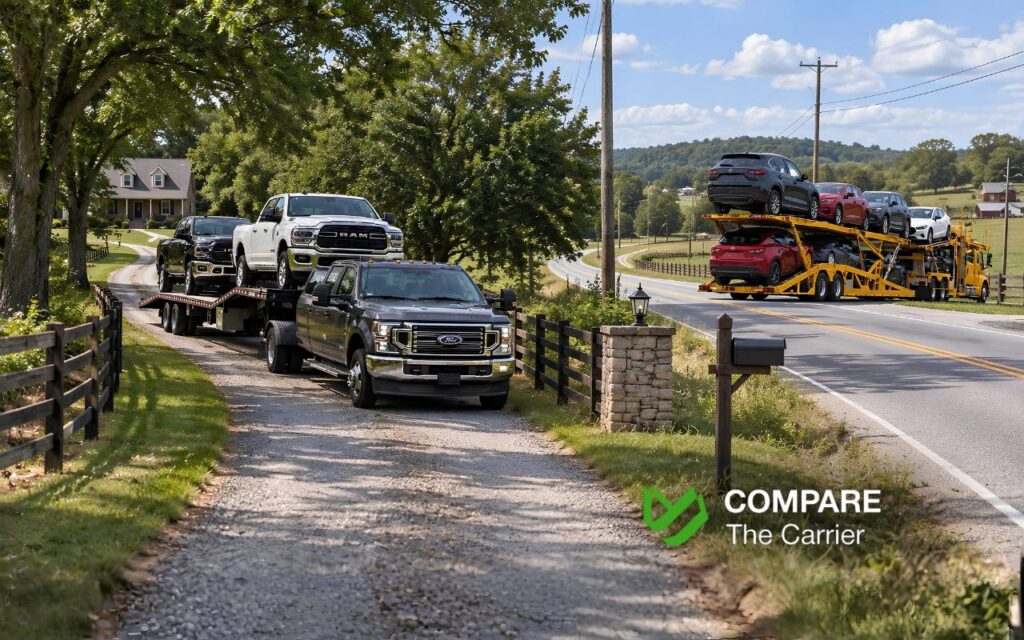
Both types can offer door-to-door transport, but the physical size of a full-size carrier can make direct access difficult in some neighborhoods, rural roads, apartment complexes, or streets with weight or height restrictions. In those cases, the driver may ask to meet at a nearby, more accessible location rather than skipping the address entirely. For more on how that arrangement typically works, see our guide to door-to-door auto transport.
How Booking and Routing Differ
Booking a hot shot usually means arranging transport around one or a few vehicles, which can offer more scheduling flexibility depending on the operator and route. Booking a full-size carrier means your vehicle is typically one stop among several on a planned route – the carrier controls the exact sequence, and your pickup or delivery date may shift slightly to fit the broader route.
Neither equipment type has a fixed price advantage. In general, full-size carriers can reach a lower cost per vehicle by spreading fuel, driver time, and tolls across several vehicles on the same load. Hot shot transport, moving fewer vehicles per trip, can end up costing more per vehicle – though it can still make economic sense for short-distance or hard-to-access moves where a large carrier isn’t practical anyway.
What Affects the Price?
Regardless of which type you choose, the same variables move the price: distance, route demand, vehicle size and weight, whether the vehicle runs, pickup and delivery accessibility, open vs. enclosed transport, urgency, season, and the number of vehicles being shipped.
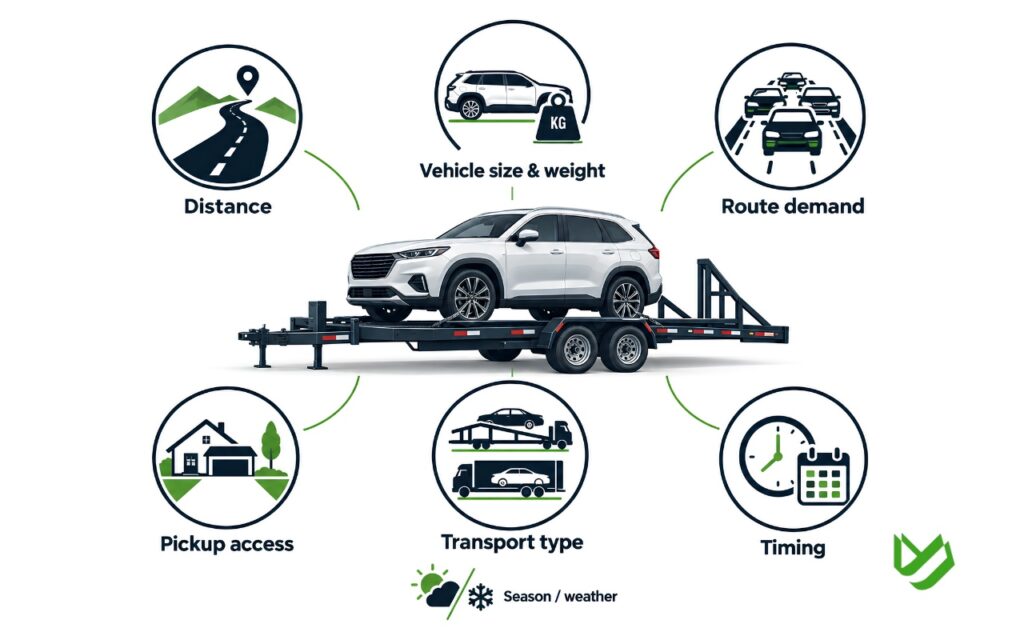
Example Cost Scenarios
One sedan, 300 miles. A full-size carrier can often serve this route efficiently if it’s already running nearby, keeping the per-vehicle cost competitive. A hot shot may cost more for a single short-distance vehicle, but could still make sense if pickup access is limited.
One SUV, 1,500 miles. On longer hauls, a full-size carrier’s ability to combine your shipment with others on the same route usually gives it a cost advantage. A dedicated hot shot trip that far, for one vehicle, is usually the pricier option.
Three vehicles, same route. A full-size carrier may be more economical here, especially when all three are heading to the same area. Some hot shot operators can handle three vehicles on a single load, but equipment and capacity vary, so confirm what a specific operator can take before assuming a full-size carrier is the only option.
The key point: the cheaper equipment type on paper isn’t always the cheaper option for a specific shipment. Compare quotes for the same vehicle, route, service level, and pickup conditions.
Get an actual number for your route with the auto transport calculator.
Pickup Speed
Hot shot operators sometimes offer more scheduling flexibility since they’re not coordinating a large multi-stop route – but that’s not a guarantee, and it varies by operator and availability.
Transit Time
Transit time depends on the route, driver hours, number of stops, weather, traffic, and how many vehicles are being delivered along the way – factors that apply to both equipment types.
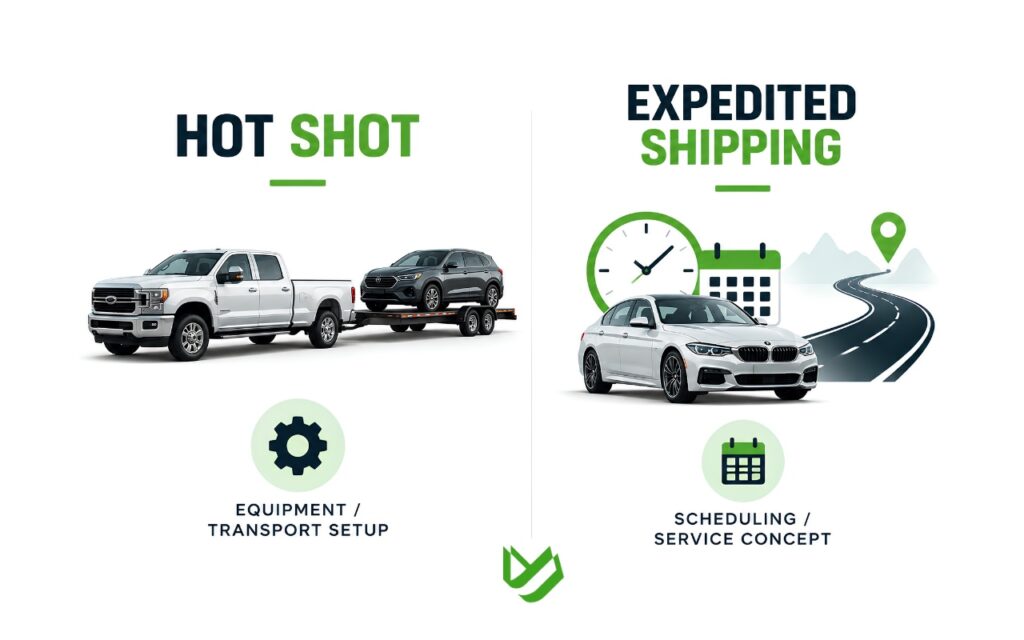
Does Hot Shot Always Mean Expedited Shipping?
No. “Hot shot” describes the equipment and operating model, not a guaranteed delivery time. If your timeline genuinely can’t move, expedited car shipping is a distinct service designed around priority scheduling and faster pickup or delivery options – it’s not automatically what you get with a hot shot rig.
Access is often the real deciding factor for rural and residential shipments – more so than price.
Hot shot may be more practical when:
Full-size carrier may need:
A full-size carrier can still serve rural destinations in plenty of cases – it just may mean meeting the driver somewhere more accessible than your exact front door.
Choosing by Vehicle Type
Vehicle size and condition can also affect what’s practical.
Sedans and compact cars. Both options handle these easily; a full-size carrier is usually the lower-cost choice.
SUVs and pickup trucks. Hot shot equipment varies in payload capacity, so confirm that the specific truck and trailer are rated for your vehicle before booking.
Large or heavy vehicles. These need equipment rated for the load. Not every hot shot setup is built for oversized or heavy-duty vehicles.
Low-clearance and modified cars. Loading angle matters. Ask about ramp incline and ground clearance regardless of which carrier type you’re considering.
Luxury and classic cars. These often pair well with enclosed transport, which both hot shot and full-size equipment can offer, depending on the operator.
Inoperable vehicles. A non-running vehicle needs winching equipment to load safely – confirm the specific rig has it before booking either type.
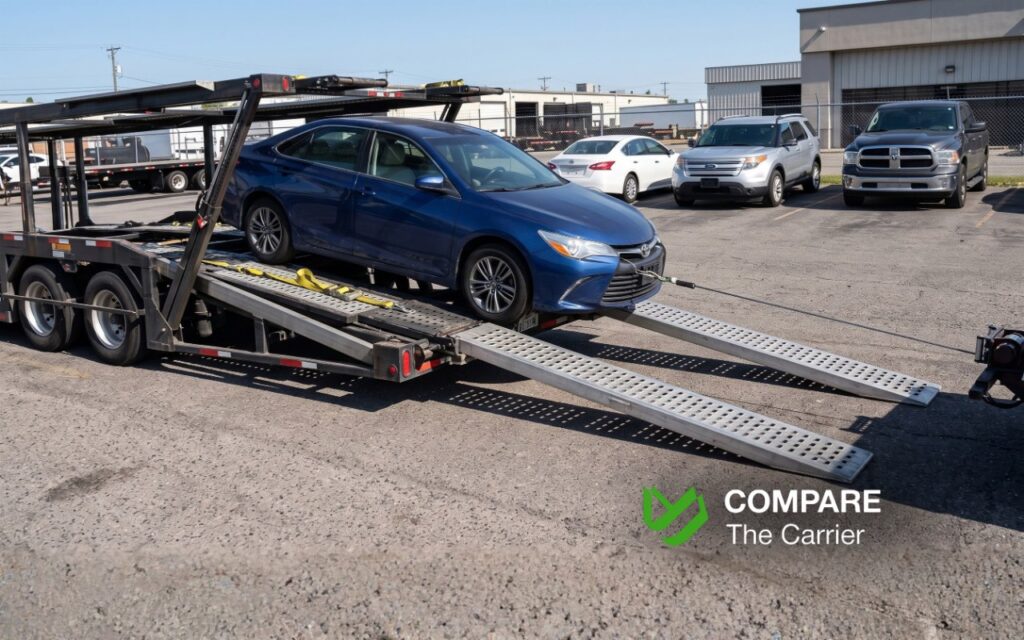
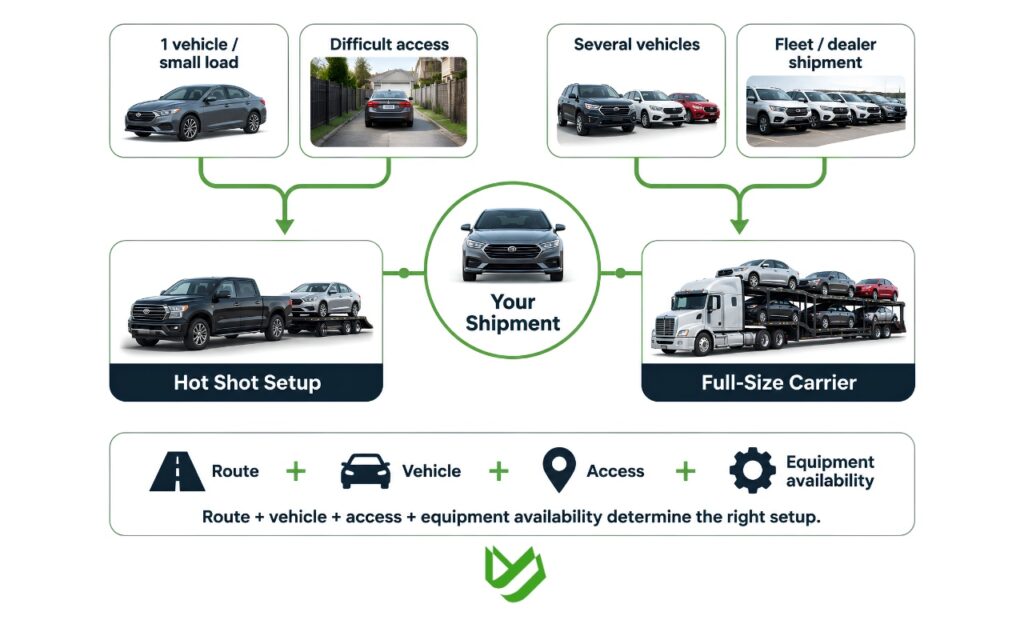
1 vehicle. Either option can work – the deciding factor is usually access and timing rather than capacity.
2–3 vehicles. Still workable for hot shot depending on the operator’s equipment, though a full-size carrier often becomes more cost-effective once you’re past a single car.
4+ vehicles. This is where a full-size carrier’s capacity advantage becomes hard to beat.
Fleet or dealership shipments. Full-size carriers are generally the better fit for moving multiple vehicles efficiently, since their larger capacity allows several cars to move on the same load.
| Hot Shot | Full-Size Carrier | |
| Open transport | Common | Very common |
| Enclosed transport | Available from some operators | Widely available |
| Weather protection | Depends on trailer type | Depends on trailer type |
| Low-clearance loading | Depends on equipment | Depends on equipment |
For more on how open and enclosed transport compare in general, see our guides to open car shipping and enclosed auto transport.
Before booking either type of carrier:
You can look up a carrier’s operating authority and status directly through the FMCSA’s SAFER system, and read the agency’s consumer advisory on automobile transporters for what to check before you book. For a deeper look at what’s typically covered, see our guide to auto transport insurance, and how to verify a carrier’s MC number before booking.
Hot shot rigs tend to work best for tight spots and small loads – think a narrow driveway or just one or two cars to move. The tradeoff is capacity: you’re paying more per vehicle, and what the truck can actually handle varies quite a bit from one operator to the next.
Full-size carriers make more sense once you’re moving several vehicles at once, since they’re built for that and tend to run along well-established routes. The catch is size – they’re harder to route into tight spaces, and because they’re often juggling multiple stops, things can get more complicated logistically.
Shipping one vehicle? Both options can work – access and timing usually decide it.
Difficult rural or residential access? Ask whether the carrier can safely reach the address; a smaller hot shot setup may be more practical.
Shipping several vehicles? Compare full-size carrier capacity and pricing first.
Need specialized equipment? Ask about trailer type, loading angle, and winch capability regardless of carrier type.
Is price the main factor? Compare actual quotes for your specific route rather than assuming one equipment type is always cheaper – get a free quote for both if you’re unsure.
Not sure which fits your shipment? Compare pricing for your exact route with the auto transport calculator, or browse shipping services to see what’s available for your vehicle type.
Not necessarily. Full-size carriers often have a lower cost per vehicle because they spread operating costs across multiple loads, while hot shot pricing depends more on the specific route and vehicle.
Not automatically. “Hot shot” refers to the equipment, not a guaranteed delivery time – transit time still depends on route, distance, and scheduling.
Often one to three, depending on the specific truck and trailer setup.
It varies by trailer configuration and the size and weight of the vehicles being hauled – there’s no single fixed number.
Often, yes, but tight streets, low clearances, or rural roads may require meeting the driver at a nearby, more accessible location.
No. Expedited shipping is a distinct service built around priority scheduling, separate from the type of truck and trailer used.
Either can work. Compare the actual quote, pickup access, equipment, and available schedule for your specific route.
A full-size carrier is often more efficient for multiple vehicles, since its larger capacity allows several cars to move on the same load.




Don't have time to fill out the form?
Call a transport company directly to get a quote now!
Select the category you need
Partner with Compare The Carrier & Grow!
We're open to collaborations, partnerships, and mutual growth! Whether you're an individual or a business, we offer exciting opportunities to work together. Fill out the form below to explore how we can collaborate.
Something Went Wrong
We're sorry, but something went wrong. Please briefly describe the problem you experienced in the text area below. Providing your contact information will allow us to follow up if needed.

Thank you,
your form has been accepted.
Your form has been successfully submitted. We appreciate your effort — our team will review it shortly and take the next steps.


