

Auto Transport Companies To Avoid in 2026: Scams & Red Flags
Dozens of auto transport companies operating in the US in...
9 December 2022
When you ask an auto transport company for the Puerto Rico car shipping timeline, you will usually get a wildly optimistic answer like “5 to 7 days.” This is the biggest point of confusion for people moving to the island.
Calculate Shipping Quotes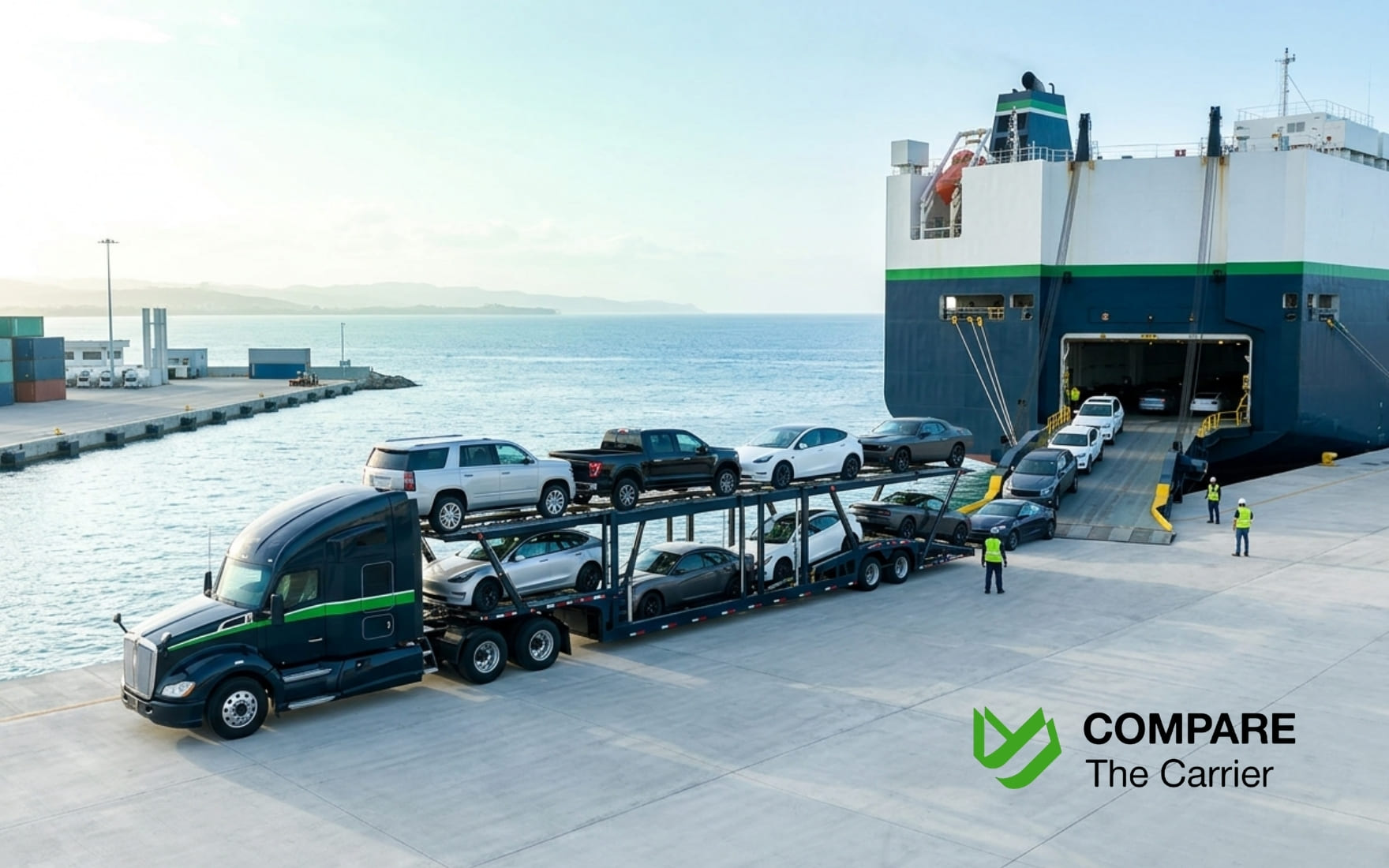
That 5-day quote is not a lie, but it is missing critical context. Transport companies are often quoting the ocean transit time only – the exact number of days the vessel spends on the water between the US mainland and the Port of San Juan. Shipping a car to Puerto Rico is not just a boat ride. It involves land transport to the departure port, port processing, the ocean crossing itself, and customs clearance including the Puerto Rico excise tax assessment.
If you are planning a move and need to know exactly how many days to ship a car to Puerto Rico, you need to budget for the entire door-to-door reality. Depending on where you live on the mainland, the actual timeline ranges from 8 to 18 days. Here is the exact breakdown of where your car is during that time.
Key Takeaways
The total time it takes to get your vehicle into your driveway in Puerto Rico is dictated by your starting ZIP code. A car leaving Florida will obviously arrive faster than a car leaving Washington, but the ocean leg for both is identical once they hit the departure port.
| Departure Region | Land Transport to Port | Ocean Transit | Customs + Delivery | Total Estimated Time |
| Florida (Local) | 1–2 days | 5–7 days | 2–4 days | 8–13 days |
| East Coast (NY, NJ) | 2–3 days | 4–6 days | 2–4 days | 8–13 days |
| Midwest (IL, TX) | 3–5 days | 5–7 days | 2–4 days | 10–16 days |
| West Coast (CA, WA) | 5–7 days | 5–7 days | 2–4 days | 12–18 days |
Why do some brokers say “1 to 3 weeks” while others say “3 to 10 days”? Brokers quoting the lower number assume you are driving the car to the port yourself on the exact day of departure and picking it up at the San Juan port the moment it clears customs. Brokers quoting the higher number are factoring in the reality of dispatching a truck to your home in Ohio, hauling it to Florida, waiting for the next available ship, and delivering it to your new address in Ponce. Always ask your broker whether their quote is port-to-port or door-to-door – the difference between a carrier and a broker matters here more than on any domestic route.

To understand your Puerto Rico auto transport transit time accurately, you must break the process down into its four distinct logistical stages. A delay in any single stage creates a domino effect for the rest of the trip.
Unless you live near a major maritime hub, your car must first travel by standard open or enclosed carrier truck to a departure port.
The most popular departure ports for Puerto Rico are:
If you live in Florida, you can significantly compress your timeline by driving the vehicle to the port in Jacksonville or Port Everglades yourself. If you live in California, you are entirely dependent on a cross-country truck driver to navigate 2,500 miles of highway before your car even sees the ocean – which adds 5 to 7 days to your timeline before the process has even properly begun.

This is the hidden delay that almost nobody warns you about. Ships do not leave for San Juan every single day. Ocean freight operators like Crowley and TOTE Maritime run on strict sailing schedules.
From Jacksonville, for example, vessels typically depart two to three times per week. If your mainland truck driver drops your car off at the port on a Tuesday afternoon and the cutoff for that day’s sailing has already passed, your car will sit in the port lot until the next available departure – potentially three full days.
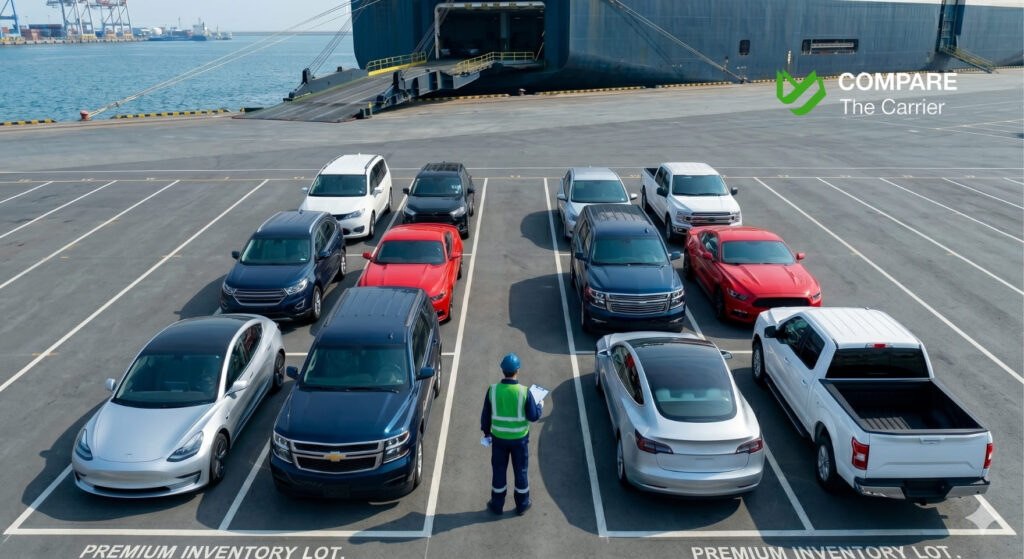
Port processing is also not a drive-through experience. If you are dropping the vehicle off yourself, expect to spend a minimum of 45 minutes handling paperwork. If your documents – such as a lienholder authorization letter – are incomplete, the port authority will reject the vehicle entirely.
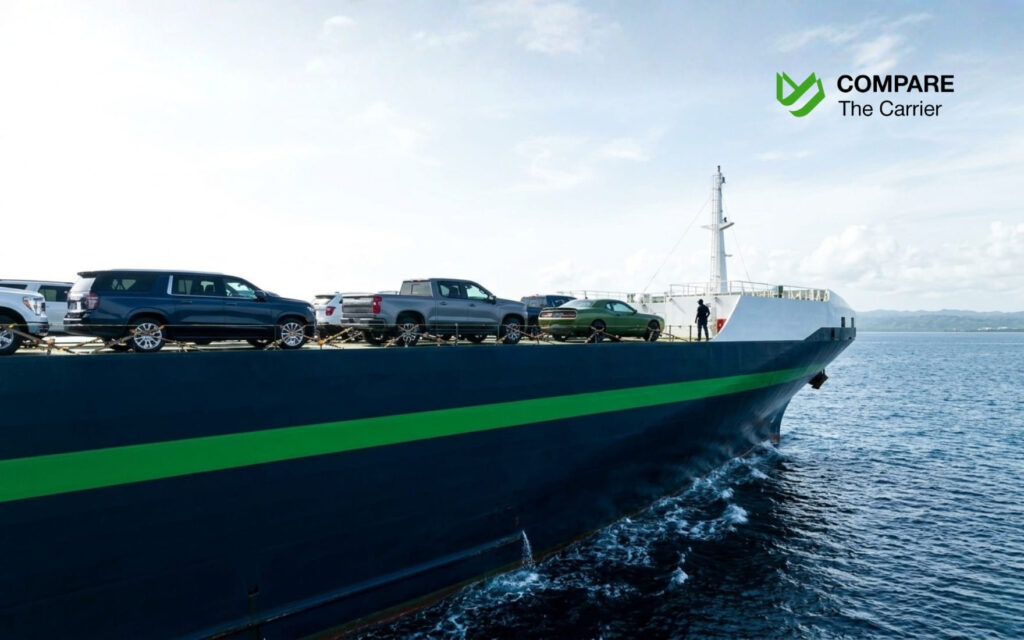
This is the stage transport companies love to advertise. Once the vehicle is loaded onto the vessel, the timeline becomes highly predictable, barring severe weather.
The two primary operators, Crowley and TOTE Maritime, have refined this route over decades, making the ocean transit the most reliable stage of the entire process. Some vessels make a direct crossing to San Juan, while others have scheduled stops in the Dominican Republic or the US Virgin Islands first.
Arrival in San Juan does not mean you can drive your car away immediately. Puerto Rico is a US territory, but it operates its own distinct tax system. Your vehicle must go through a structured clearance process.
First, the vehicle undergoes a Department of Transportation and Public Works (DTOP) inspection. Second, you must pay the excise tax – Puerto Rico charges up to 11.5% of the vehicle’s appraised value, assessed by the Departamento de Hacienda using their own schedule, not Kelley Blue Book. The port authority will not release your vehicle until proof of payment is presented.
Once cleared, you either travel to the port in San Juan to pick it up yourself, or wait an additional 1 to 3 days for a local carrier to complete door-to-door delivery within the island.
When shipping a car to Puerto Rico, you have two primary methods: Roll-on/Roll-off (RoRo) and Container Shipping. While most people compare them on price, the method you choose directly affects your timeline.
| Shipping Method | Avg Transit Time | Sailing Frequency | Delay Risk | Best For |
| RoRo (Roll-on/Roll-off) | Fastest | High (2–3x per week) | Low | Standard vehicles, speed |
| Container (Exclusive) | Moderate | Medium (1–2x per week) | Medium | Luxury, high-value cars |
| Container (Shared) | Slowest | Low (consolidation dependent) | High (+5–14 days waiting) | Moving household goods + car |
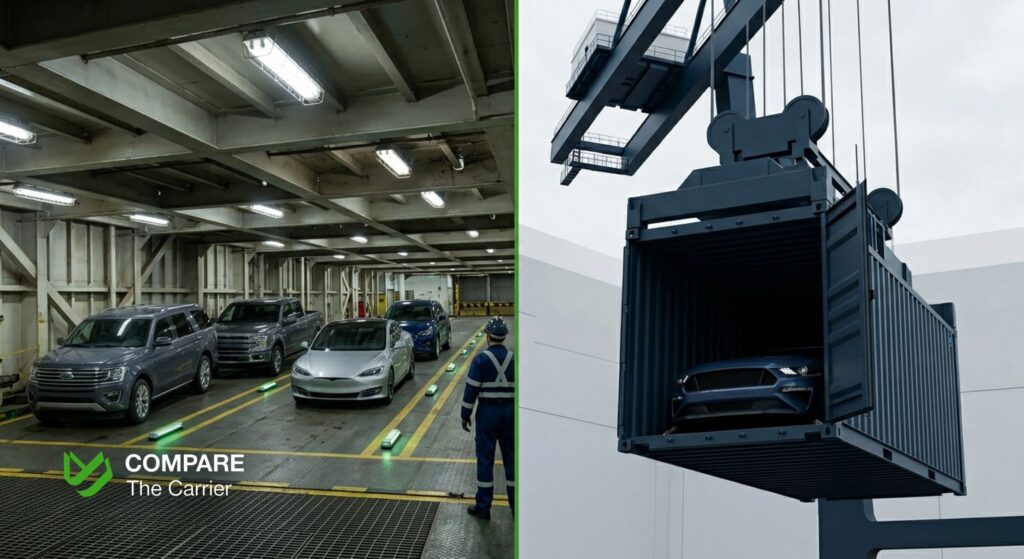
The verdict on speed: RoRo is universally faster – usually by 2 to 4 days. Container shipping requires time to properly secure the vehicle inside the box, wait for crane operations at both ports, and reverse the entire process in San Juan. If you share a container with another customer to reduce costs, your car will not leave the mainland until the shipping company locates a second vehicle to fill that specific container – which can add 5 to 14 days of waiting. The same logic applies when considering container auto transport for any overseas route.
Even a well-planned shipment can stretch from 10 days to 25 days. If your timeline extends significantly, one of these six bottlenecks is almost certainly the cause.
Incomplete port documentation. Port authorities operate with zero tolerance. If your driver’s license does not match the name on the vehicle title, they will turn you away. Correcting the paperwork and returning can push you to the following week’s sailing schedule, adding 3 to 7 days. Keep a vehicle shipping document checklist ready before you approach any port.
Missed cut-off times. Vessels have firm loading cut-off windows. If your mainland carrier hits traffic on I-95 and arrives after the loading window has closed, your car waits on the tarmac until the next available departure.
Hurricane season. The Atlantic hurricane season runs from June through November. During severe weather, the US Coast Guard closes ports and ocean carriers reroute or suspend sailings. A tropical storm in the Caribbean can add 3 to 10 days with no recourse. NOAA’s National Hurricane Center is the most reliable source for active storm tracking during your shipment window.
Peak season port congestion. Between May and August, freight volume moving to San Juan spikes significantly, meaning longer queues for DTOP inspections and slower release times.
Excise tax disputes. If the Hacienda misclassifies your vehicle and you choose to dispute the appraisal, your car remains frozen in customs until the dispute is formally resolved.
Financed vehicles without lender authorization. If you have an active auto loan, you must have an original, notarized letter of authorization from your lender. If this letter is missing or incorrectly formatted, the port authority will deny the export entirely.

You cannot control the weather or the speed of the cargo ship, but you can control every administrative process surrounding the shipment. These strategies can realistically shave 3 to 5 days off your total timeline.
Route through Jacksonville. Ask your broker specifically to route the car through Jacksonville, FL. It handles more Puerto Rico-bound maritime traffic than any other US port, which means shorter gaps between sailings and less waiting time on the tarmac.
Time your port arrival. Look up the current sailing schedule directly on the Crowley or TOTE Maritime websites. If the ship departs on a Friday, arrange for your vehicle to arrive at the port on Thursday morning – not Tuesday.
Pay the excise tax online before arrival. Once the vehicle has been appraised and loaded on the mainland side, you can pay the excise tax in advance through the SURI portal on the Hacienda website. Arriving at the San Juan port with a pre-paid tax receipt dramatically accelerates your release time.
Choose RoRo. Unless you are shipping a high-value vehicle that genuinely requires a sealed steel container – such as a classic or exotic car – book Roll-on/Roll-off transport. It is faster, cheaper, and has more frequent sailings.
Ship in the off-season. If your relocation timeline is flexible, shipping in January, February, or March means you avoid both the summer relocation rush and the entire Atlantic hurricane season. The impact of seasonality on auto transport costs applies equally to maritime routes.
Do not approach a port on the mainland or in Puerto Rico without a physical folder containing every one of these documents:
Once the vessel docks and your vehicle clears the Hacienda and the initial DTOP port inspection, the ocean phase is officially complete. Your administrative responsibilities, however, are not.
If you did not book door-to-door delivery, you must travel to the port in San Juan to retrieve the vehicle. Before signing anything:
Inspect before signing. Walk around the car with the port agent and compare its condition against the outbound Bill of Lading. Look specifically for new scratches, dents, or signs of water damage. If you find damage that was not on the outbound BOL, note it before you sign – a clean delivery signature results in an automatic denial of any auto transport claim.
Check the odometer. Your car was driven onto the ship and driven off. The odometer should show the exact same mileage it had at mainland drop-off, plus a maximum of 2 to 5 miles for port maneuvering at both ends.
Register with DTOP within 30 days. Puerto Rico law gives you exactly 30 days from the date of arrival to register the vehicle with the Department of Transportation and Public Works and obtain local license plates.
Obtain a local driver’s license within 60 days. If you are permanently relocating, you are legally required to obtain a Puerto Rico driver’s license within 60 days of establishing residency.
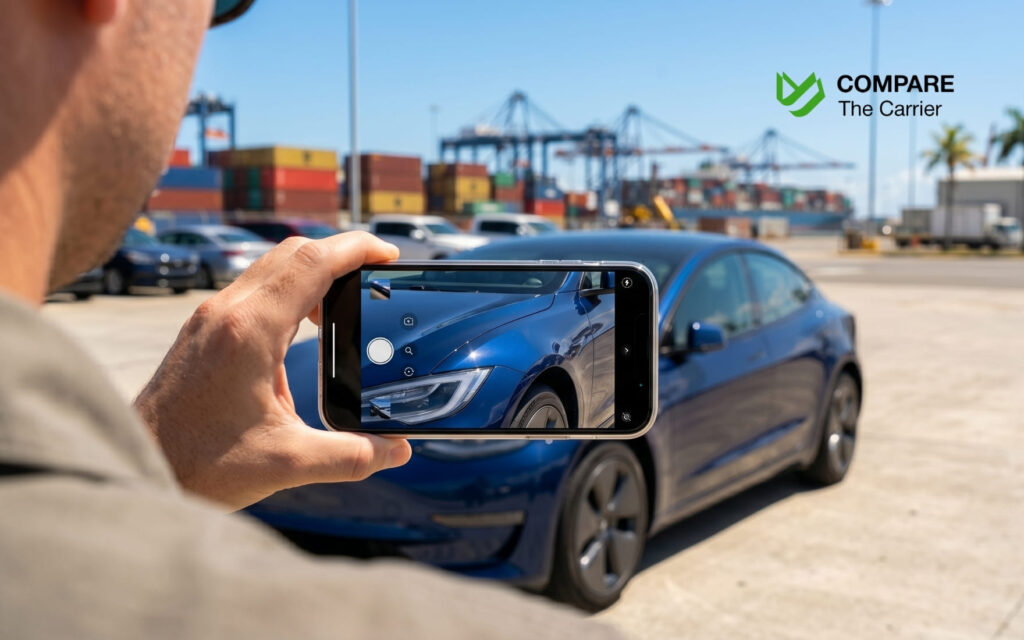
When your time on the island ends, the logistical process reverses – but the administrative rules change. There is no excise tax when leaving Puerto Rico, but you must officially de-register the vehicle with DTOP before it can be exported. This requires proof that all outstanding traffic fines and AutoExpreso toll balances are paid in full, plus an official export certificate (Certificado de Exportación).
Additionally, the USDA’s Animal and Plant Health Inspection Service (APHIS) will inspect and wash the undercarriage and tires of your vehicle at the San Juan port to ensure no local agricultural pests or invasive species are transported to the US mainland.
| Departure Region | RoRo (Port-to-Port) | Container (Port-to-Port) | Door-to-Door Land Leg |
| Florida | $1,100–$1,800 | $2,500–$3,500 | +$300–$500 |
| East Coast (NY, NJ) | $1,600–$2,300 | $3,000–$4,000 | +$400–$800 |
| Midwest (IL, TX) | $1,900–$2,300 | $3,200–$4,200 | +$500–$900 |
| West Coast (CA, WA) | $2,500–$3,400 | $3,800–$5,000 | +$800–$1,200 |
These figures cover freight shipping costs only and exclude the Puerto Rico excise tax and local DTOP registration fees. Individual quotes vary by carrier, vehicle size, and current demand. For a full cost picture, use our Puerto Rico auto transport guide alongside the rate table above, and get an instant quote for your specific route.
Shipping a car to Puerto Rico is not a single event – it is a four-stage process, and the total timeline depends almost entirely on how well you plan the first two stages: getting the vehicle to the right port, and arriving with complete documentation on a sailing day.
Most people underestimate the timeline because they only hear about the ocean crossing. Budget the full 8 to 18 days depending on your starting location, add a buffer for port processing and customs clearance in San Juan, and your arrival will be predictable rather than stressful.
Book early, use Jacksonville if you can, and have every document ready before the truck shows up. The ocean does the rest.
Ready to get a transit estimate for your specific route? Get instant quotes from carriers with direct sailings to San Juan:
Calculate Your Puerto Rico Shipping Cost
Shipping a car from Florida to Puerto Rico takes 8 to 13 days in total. This includes 1 to 2 days for local land transport to the port in Jacksonville or Port Everglades, 1 to 3 days of waiting at the port for the next available vessel, and 5 to 7 days of ocean transit to San Juan.
Shipping a vehicle from California to Puerto Rico requires 12 to 18 days. The car must travel approximately 2,500 miles on an overland transport truck to reach a departure port like Houston or Jacksonville, which takes 5 to 7 days. Standard port processing and the 5-to-7-day ocean transit apply after that.
The fastest method is to drive the vehicle yourself to the port of Jacksonville, Florida, the day before a scheduled sailing, and book Roll-on/Roll-off (RoRo) transport. By eliminating the mainland trucking leg and container loading delays, you can reduce the total timeline to as few as 6 to 8 days.
Yes. Crowley and TOTE Maritime, the two primary operators on this route, both provide a booking number or Bill of Lading number. You can enter this on their official tracking portals to see the vessel’s current position and estimated arrival time at the Port of San Juan.
Because Puerto Rico is a US territory, no federal international customs duties apply. However, you must pay a mandatory Puerto Rico excise tax to the Departamento de Hacienda. This tax is assessed at up to 11.5% of the vehicle’s appraised value and must be paid before the port authority will release the car.
If you discover transit damage, note every scratch or dent on the delivery Bill of Lading before signing it at the San Juan port. Once documented, you have 24 to 48 hours to file a formal claim against the maritime carrier’s cargo insurance policy to cover repair costs. A signed clean BOL will result in automatic denial of any subsequent claim.
Puerto Rico law gives you exactly 30 days from the date of arrival to register the vehicle with the Department of Transportation and Public Works (DTOP). You must present proof of excise tax payment, the original title, your mainland registration, and pass a local emissions test to receive Puerto Rico license plates.











Don't have time to fill out the form?
Call a transport company directly to get a quote now!
Select the category you need
Partner with Compare The Carrier & Grow!
We're open to collaborations, partnerships, and mutual growth! Whether you're an individual or a business, we offer exciting opportunities to work together. Fill out the form below to explore how we can collaborate.
Something Went Wrong
We're sorry, but something went wrong. Please briefly describe the problem you experienced in the text area below. Providing your contact information will allow us to follow up if needed.

Thank you,
your form has been accepted.
Your form has been successfully submitted. We appreciate your effort — our team will review it shortly and take the next steps.


