

All You Need To Know About Auto Transport Claims
Discovering damage to your vehicle after shipping is a ni...
21 February 2023
Whether you need to push a dead car out of a busy intersection, slide a project car sideways in a tight garage, or transport a non-running vehicle across the country, moving a car without starting the engine requires a specific strategy.
Calculate Shipping Quotes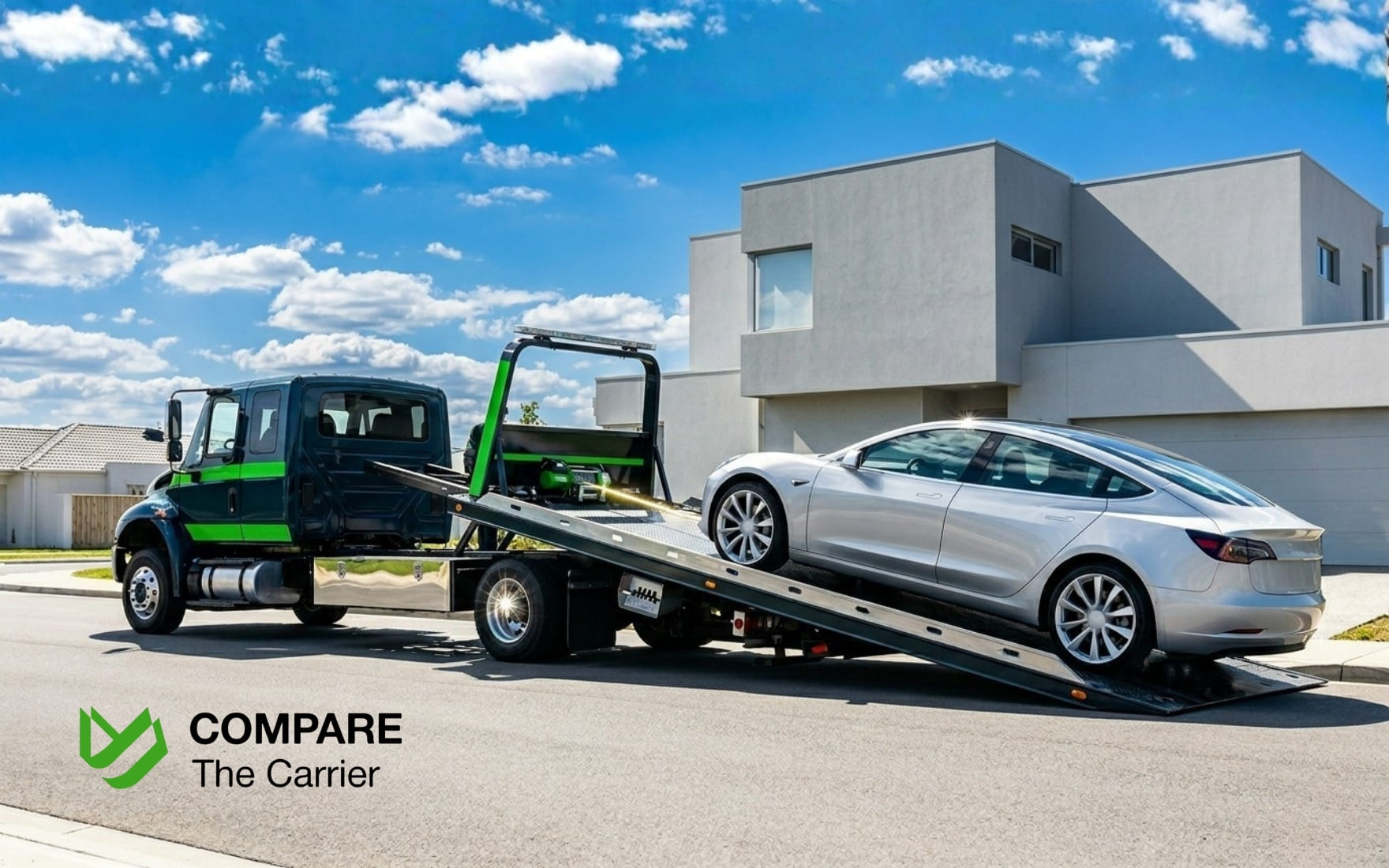
Doing this wrong is not just an inconvenience – it is a fast way to cause catastrophic mechanical failure. Dragging an All-Wheel Drive (AWD) vehicle on a tow dolly or forcing a modern electronic transmission out of park without auxiliary power will destroy the drivetrain within miles.
Every situation is governed by three strict variables: how far the car is going, whether it has power, and its drivetrain layout. This guide covers the exact mechanical steps, equipment requirements, and compatibility warnings for every method available.
Do not rent equipment or call a tow truck until you identify exactly which method your specific situation requires.
| Distance | Vehicle Condition | Drivetrain | Recommended Method |
| Under 50 feet | Dead battery / Engine failure | Any | Method 1: Push by Hand |
| Inside a Garage | Non-running | Any | Method 2: Wheel Dollies |
| 1 to 100 miles | Rolls and steers safely | FWD or RWD | Method 3: Tow Dolly |
| 1 to 100 miles | Stuck in Park / Locked wheels | AWD / 4WD / EV | Method 4: Flatbed Tow Truck |
| Over 100 miles | Non-running / Project car | Any | Method 5: Professional Auto Transport |
If you are dealing with an AWD vehicle, a modern Electric Vehicle, or a car with a locked steering column, skip the DIY towing methods entirely. You require a flatbed.
Before you can push a car, load it onto a dolly, or pull it onto a flatbed with a winch, the vehicle must be in Neutral. If the car is stuck in Park or in gear, the drive wheels are mechanically locked. Dragging locked wheels will shred your tires and permanently damage the transmission parking pawl.
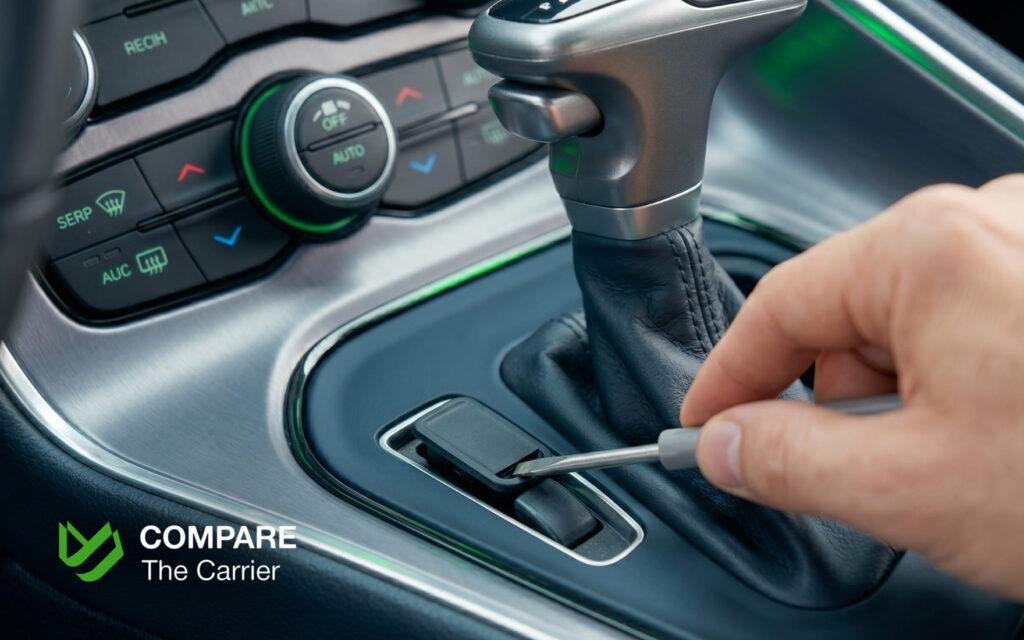
This is the easiest scenario. You do not need battery power or a key.
Since 2010, federal safety mandates require all automatic vehicles sold in the US to have a shift lock interlock system. If your battery is completely dead, this electronic solenoid will not release, trapping the car in Park. You must use the Shift Lock Override – a mechanical bypass built into the shifter assembly.
How to use it:
Where to find the override slot by brand:
If you drive a modern car with a push-button shifter, a rotary dial, or a joystick – common in BMW, Range Rover, Volvo, and most post-2020 vehicles – there is no physical mechanical linkage to the transmission. It is shift-by-wire.
If the battery is completely dead, the Shift Lock Override does not exist. You must provide auxiliary power via a portable lithium jump pack or jumper cables. Once the dashboard powers up, engage Neutral electronically. If the vehicle has suffered total electrical failure and cannot be jumped, the only safe option is a professional flatbed equipped with wheel skates.
EVs do not have a traditional transmission or a true mechanical Neutral. Attempting to tow an EV with its wheels on the ground can generate electricity back through the drive motors via regenerative braking, overheating and damaging the battery pack and motors.
Tesla specifically requires activating Transport Mode through the touchscreen (Service > Towing). If the 12V battery is dead, jump it first – terminals are typically accessible under the hood – before the screen will power on.
Rule for all EVs: Automakers universally mandate flatbed transport. Never tow an EV with a rope, chain, tow dolly, or tow bar.
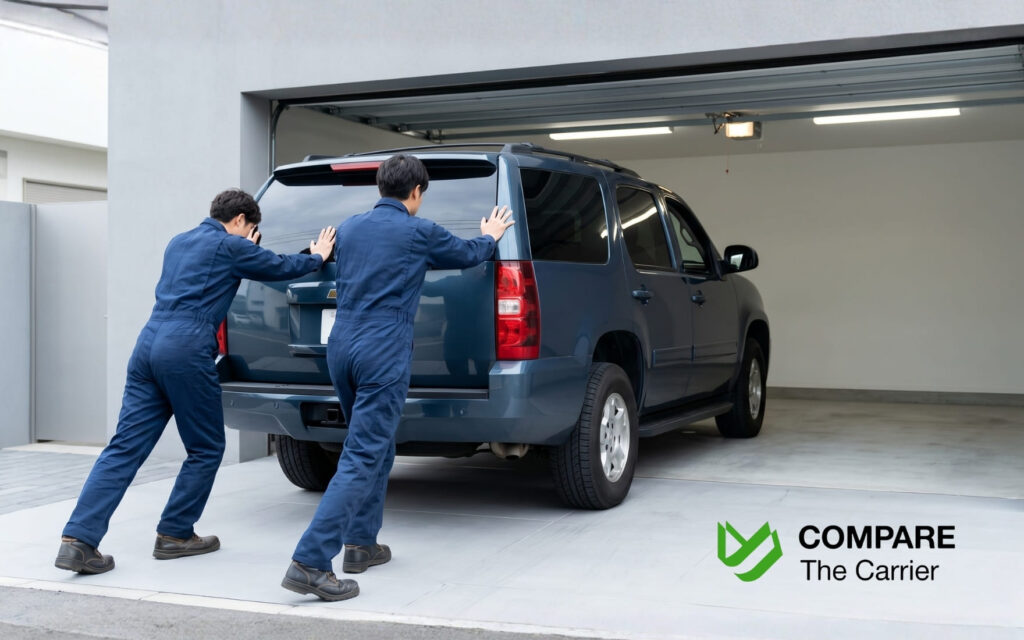
Best for: Moving a car out of an intersection, repositioning it in a driveway, or getting it into a garage – distances under 50 feet.
How to do it safely:
Critical warnings:
Best for: Project cars and tight garages where you need to move a vehicle laterally.
Standard pushing won’t work sideways because tires only roll forward and backward. Wheel dollies are individual platforms with swiveling caster wheels that slide under each tire, allowing movement in any direction.
Types of Wheel Dollies:
How to use them:
Limitation: Wheel dollies only work on smooth, flat concrete. Never use on any inclined surface.
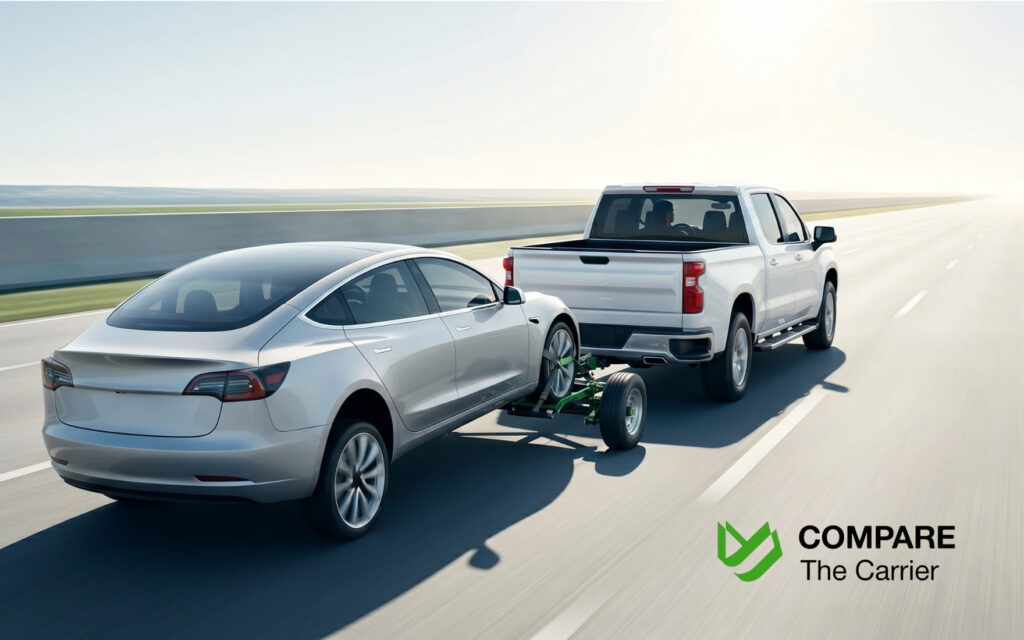
Best for: Front-Wheel Drive (FWD) vehicles being relocated locally, up to approximately 100 miles.
A tow dolly lifts the front wheels off the ground and lets the rear wheels roll freely. Rentals run $60–$100/day from U-Haul or Penske. However, tow dollies are responsible for thousands of destroyed transmissions every year due to drivetrain incompatibility. For anything over 100 miles, state-to-state car towing via a professional carrier is a safer and more cost-effective solution.
Drivetrain Compatibility:
How to use a tow dolly safely:
Towing rules: You cannot reverse with a tow dolly – it will jackknife immediately. Maximum safe speed is 55 mph.
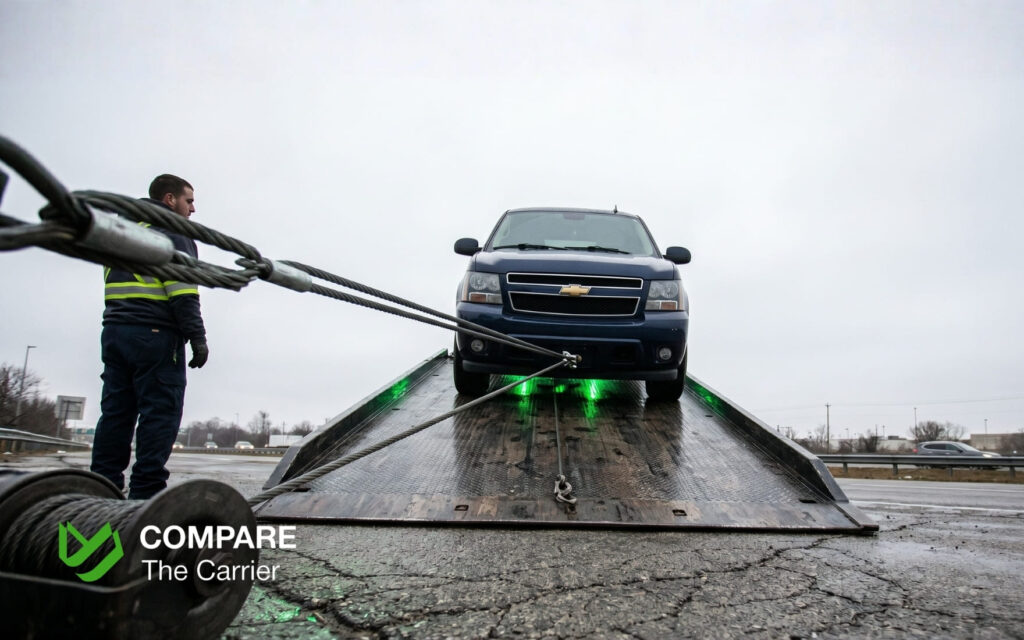
Best for: Any vehicle in any condition for local or regional distances of 1 to 100 miles.
A flatbed removes all four wheels from the road entirely – making the vehicle’s mechanical state completely irrelevant during transit.
A flatbed is mandatory for:
How winch loading works: The operator lowers the hydraulic bed, attaches a steel cable to the vehicle’s structural tow hooks or lower control arms, and the winch slowly pulls the dead car up the inclined deck. As long as the car is in Neutral and wheels can turn, this is straightforward.
Cost: Hook-up fee of $75–$125, plus $2–$4 per mile. The extra cost over a dolly eliminates all drivetrain liability and highway risk.
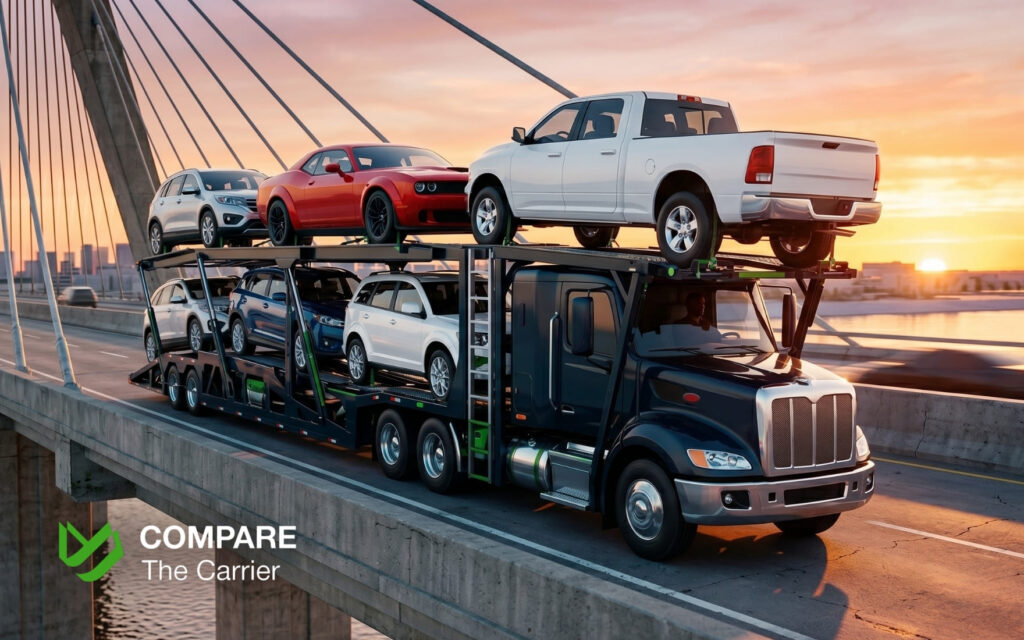
Best for: Moving a non-running car more than 100 miles, buying a project car out of state, or any cross-country relocation.
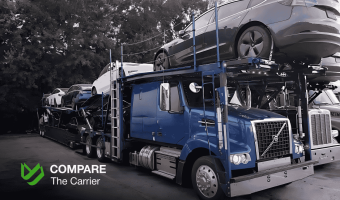
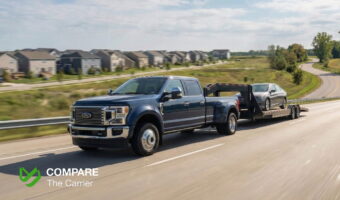
For distances over 100 miles, a local tow truck at $3/mile is financially unworkable. You need a professional auto transport company. Professional car shipping is how dealerships, auction buyers, and collectors move non-running vehicles coast to coast safely and affordably.
Standard auto transport quotes assume the car rolls on and off the trailer under its own power. If it cannot, expect an inoperable vehicle surcharge of $150–$200 on top of the standard shipping rate.
If you conceal the vehicle’s condition to avoid the surcharge, the driver will arrive, discover the car is dead, refuse the load, and keep your deposit. Be upfront and answer these three questions:
If the car is missing wheels, has a completely locked steering column, or is a bare stripped shell, a standard multi-car hauler cannot take it. You will need a specialized salvage hauler or a single-vehicle flatbed. See our guide on salvage car shipping for the exact process.
Most standard open carriers have winches, but loading a dead car onto the top deck of a nine-car hauler is logistically difficult. For high-value non-running cars – classics, exotics, or enclosed transport is often recommended because enclosed trailers feature lift-gate loading systems that keep the vehicle level during loading.
Best for: RV owners towing a certified secondary vehicle, or select older vehicles with manual transmissions.
Also called flat towing or dinghy towing, this attaches a rigid A-frame to the front of the non-running car and drags it on all four wheels.
Why this is rarely appropriate for modern cars:
Most automatic transmissions will overheat if flat-towed for any meaningful distance because the internal lubrication pump is engine-driven. Only a very specific list of manufacturer-certified vehicles – including the Jeep Wrangler and certain Ford trucks with a true mechanical Neutral in the transfer case – can be flat-towed safely. If your owner’s manual does not explicitly state the car can be “recreationally towed on all four wheels,” do not use a tow bar.
Not every towing method works with every vehicle. The table below consolidates all compatibility rules in one place – use it before you rent any equipment or call a tow truck. One wrong choice based on drivetrain type can destroy a transmission within miles.
| Drivetrain Type | Push by Hand | Tow Dolly | Flat Tow | Flatbed |
| FWD | ✓ | ✓ | ✗ | ✓ |
| RWD | ✓ | ✗ (unless driveshaft removed) | ✗ (except specific older manuals) | ✓ |
| AWD / 4WD | ✓ | ✗ NEVER | ⚠️ Only with manufacturer approval | ✓ |
| EV | ✓ (Transport Mode required) | ✗ NEVER | ✗ NEVER | ✓ |
Not every situation fits neatly into the standard towing methods above. These four edge cases require a different approach – and getting them wrong can damage the vehicle, injure bystanders, or leave you stranded with no good options.
Use a kinetic recovery rope – not a rigid tow strap with metal hooks – attached to dedicated structural recovery points. Kinetic ropes stretch under load and use stored energy to snap the vehicle free without the shock force that tears off bumpers. If you lack proper recovery equipment, call a specialized off-road recovery service.
Place GoJacks or hydraulic dollies under all four tires. A single person can then push a 4,000-pound car completely sideways out of the space and into an open lane where a tow truck can reach it.
The car must go on a flatbed. The operator places heavy-duty plastic towing skates under the front tires and winches the vehicle up the ramp in a straight line, with the front wheels sliding on skates rather than dragging on rubber.
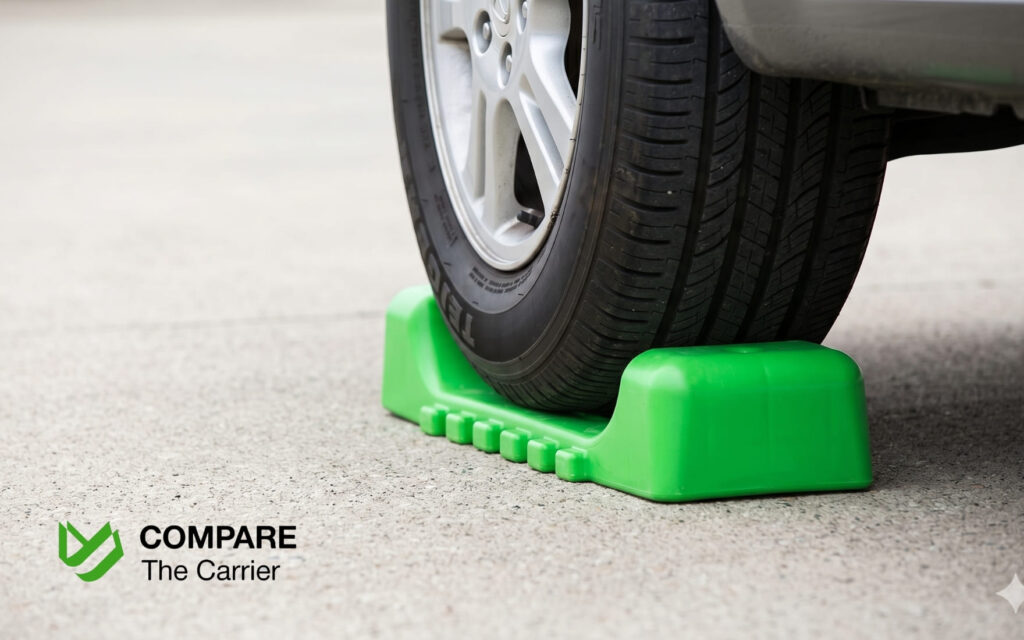
Request a flatbed operator who carries race ramps or wooden 2×4 blocks placed at the base of the hydraulic bed. This reduces the incline angle and protects the front bumper and undercarriage during loading. The same approach is used for shipping electric vehicles, which often have very low ground clearance from the factory.
Before you tow any vehicle on a public road, you need to understand the legal requirements that apply in your state. Ignoring them can result in fines, liability for accidents, or having your vehicle impounded on the spot.
Towing with a rope or chain: In nearly all 50 states, towing a vehicle on a public highway using a soft strap or chain is illegal except as a temporary emergency measure to clear an active traffic lane.
Lights and signals: Any vehicle towed on a dolly or tow bar must display working brake lights, taillights, and turn signals. If the dead car has no battery power, you are legally required to attach magnetic or wired towing light pods to the rear.
Speed limits: Most rental tow dollies have a hard contractual limit of 55 mph. Several states enforce lower maximums – California restricts all vehicles towing anything to 55 mph statewide regardless of posted limits.
The method you choose comes down to three questions: how far does the car need to go, what is its drivetrain type, and whether it can be shifted into Neutral at all. Get those three answers right and every other decision follows logically.
For anything over 100 miles – or any AWD, 4WD, or electric vehicle regardless of distance – professional auto transport on a flatbed carrier is the safest and most cost-effective solution once you factor in rental equipment, fuel, and the very real risk of drivetrain damage.
Ready to ship a non-running car? Get quotes from carriers equipped with winches for inoperable vehicle pickup:
Get Your Non-Running Car Transport Quote
Yes, but you must first manually bypass the electronic shift lock. Find the shift lock override slot near your gear shifter – usually hidden under a small plastic cover – insert a flathead screwdriver, press down, and move the shifter into Neutral. On cars with electronic push-button shifters (most post-2018 vehicles), this mechanical override does not exist and you must provide external power via a jump pack before the shifter will respond.
No. You must never tow an AWD or 4WD vehicle with its rear wheels rolling on the ground. Even with the transmission in Neutral, the center differential will attempt to transfer rotation from the spinning rear wheels to the stationary front wheels, causing catastrophic overheating and mechanical failure in the drivetrain.
The transmission parking pawl – a small metal pin – physically locks the output shaft. Dragging a car in Park will first flat-spot all four tires. The sustained friction will eventually shear the parking pawl inside the transmission, which requires a full transmission rebuild to repair.
Yes, with the right equipment. Wheel dollies allow you to push a car with locked wheels within a garage by supporting the tires on caster platforms. On the road, a tow truck operator can place plastic towing skates under locked tires to winch the vehicle onto a flatbed without dragging or damaging the rubber.
Without keys, the steering column locks and you cannot electronically shift into Neutral. If the vehicle has a mechanical shift lock override, you may be able to get it into Neutral and push it a short distance in a straight line. For anything beyond that, you need a flatbed tow truck with skates to pull the car in a controlled straight line out of its space.
It depends entirely on the drivetrain. Towing a FWD car with its front wheels on a dolly causes no transmission damage. Towing any automatic RWD or AWD vehicle with its drive wheels spinning on the road will destroy the transmission because the internal fluid pump only runs when the engine is running.
Apply pushing force only to structural points – door sills, A-pillars, C-pillars, or the flat reinforced edge of the trunk lid. Never push against body panels, plastic bumper covers, or rear glass. For loading onto a flatbed or dolly, ensure the operator uses proper wheel straps rather than chains on painted surfaces.






Don't have time to fill out the form?
Call a transport company directly to get a quote now!
Select the category you need
Partner with Compare The Carrier & Grow!
We're open to collaborations, partnerships, and mutual growth! Whether you're an individual or a business, we offer exciting opportunities to work together. Fill out the form below to explore how we can collaborate.
Something Went Wrong
We're sorry, but something went wrong. Please briefly describe the problem you experienced in the text area below. Providing your contact information will allow us to follow up if needed.

Thank you,
your form has been accepted.
Your form has been successfully submitted. We appreciate your effort — our team will review it shortly and take the next steps.


