

Skip the Paper Panic! Get Your Free Checklist and Make Vehicle Shipping a Breeze (for Any Transport!)
"What do I need to ship a car?" Stop the Google s...
30 January 2024
Shipping your hybrid is an investment in the future, not just a car. Learn how to protect its sensitive batteries and electronics during transit. We provide the essential safety checklist and expert tips you need for a smooth, worry-free transport.
Calculate Shipping Quotes
Shipping a hybrid vehicle requires a bit more preparation and attention than transporting a regular gasoline car. Why? Hybrids are sophisticated machines – they blend the familiarity of an internal combustion engine with the power of a high-voltage battery system. This means proper handling, meticulous preparation, and clear documentation are absolutely essential to ensure safe and damage-free transport.
It doesn’t matter if you’re relocating, selling, or simply sending your ‘green’ vehicle to another state – this detailed guide has all the information you need to take the guesswork out of the process. We know your hybrid is valuable. We see it as your investment in a greener future, and we make sure its delivery is handled flawlessly.
Hybrid cars come packed with unique components – High Voltage batteries, regenerative braking systems, battery cooling modules, and complex electronic controls. These sensitive systems must be treated with care to avoid costly damage during loading, transport, and unloading. Don’t leave the safety of your advanced vehicle to chance!
A reputable shipping company experienced with hybrid vehicles will know how to:
Proper preparation is your first line of defence against damage and ensures a smooth, stress-free pickup process. Think of this as your personal pre-flight check.
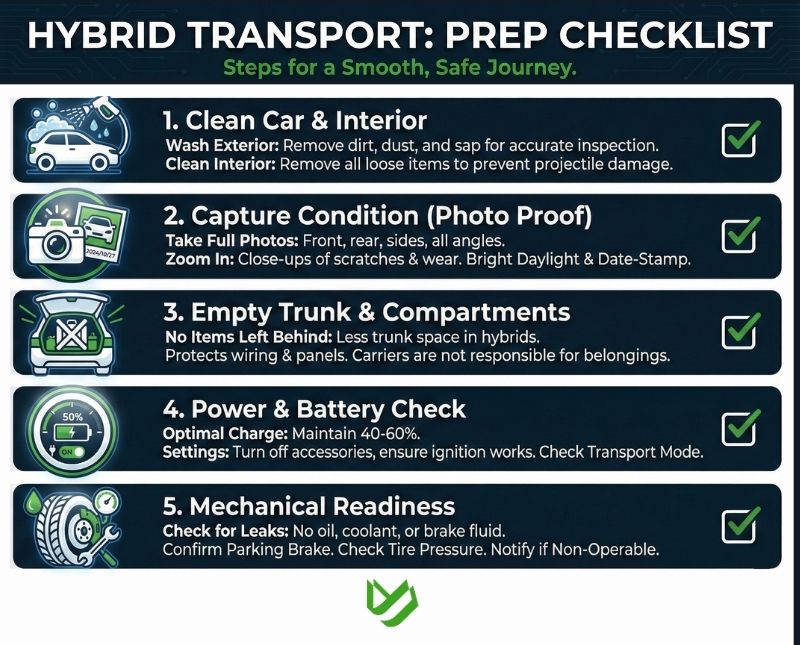
A clean vehicle makes the inspection simple and ensures accuracy – you don’t want dirt hiding a scratch! A clean car shows we care, and it protects you later.
Documentation is critical; it’s your insurance policy against unwarranted claims. It’s all about peace of mind.
Hybrid vehicles often have less trunk space due to the battery pack. Do not leave items inside, as they might damage interior panels or wiring during movement. We can’t be held responsible for belongings, so please empty them out!
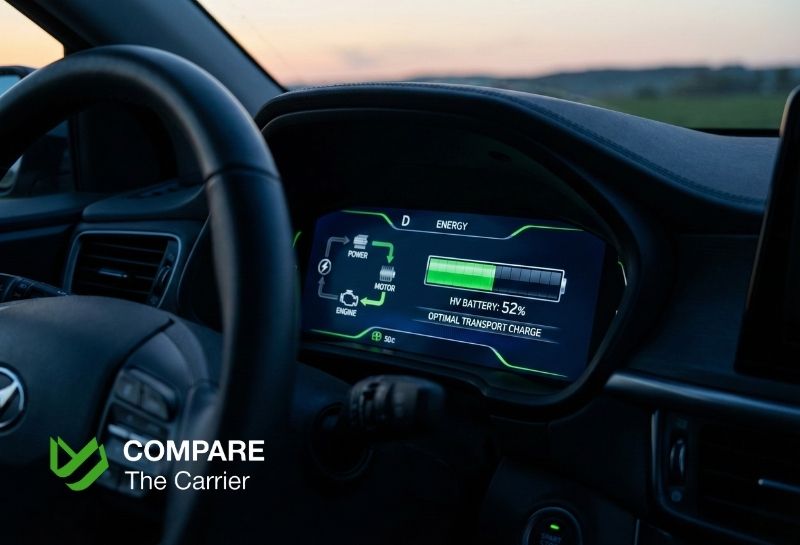
Hybrids are different from pure EVs – their batteries should ideally be shipped with a moderate charge. This step is non-negotiable for hybrid safety.
A healthy hybrid is a shippable hybrid. Nobody wants a roadside surprise.
The method you choose depends on your budget and the sentimental or financial value of your hybrid. This decision is yours, but we offer our expert guidance.
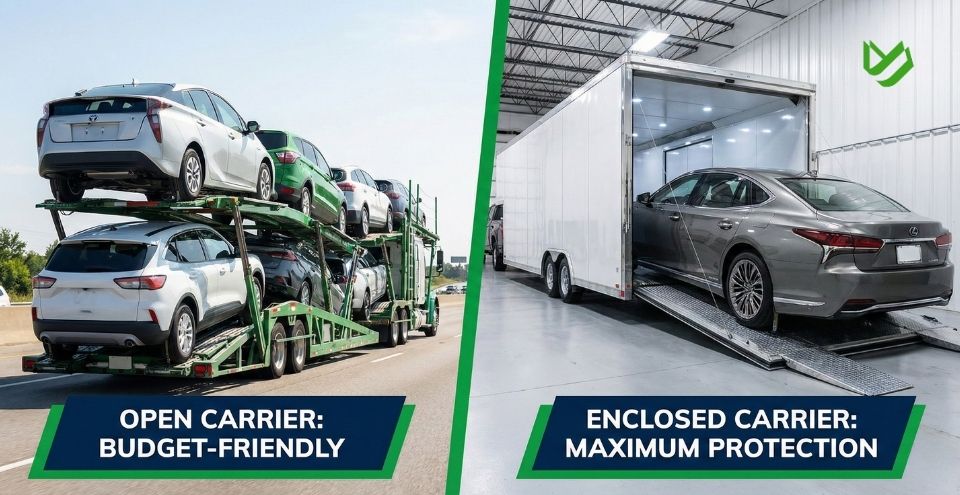
This is the most affordable option, where your hybrid is transported on an open trailer with other vehicles.
Enclosed transport protects your valuable investment on all sides and is generally recommended for hybrids. It’s worth the peace of mind.
Hybrid cars contain heavy battery packs, changing their weight distribution compared to conventional cars. This isn’t just about weight; it’s about balance and road safety.
This difference directly affects:
Don’t settle for a generic estimate! The cost of shipping a hybrid vehicle is specific to its unique characteristics:
To get a precise quote, the shipping company will ask for: Full addresses, the year, make, and model of your hybrid, whether the vehicle runs, and your preferred shipping method.
Most reputable companies offer real-time tracking or updates from a dedicated shipping agent. We believe communication is key to a happy client. You’ll always know:
When your hybrid arrives at its destination, do not rush the driver! Take your time to protect your investment.

Shipping a hybrid vehicle is safe, straightforward, and hassle-free when you prepare it properly and choose an experienced shipping company. Hybrids require specific handling due to their sensitive battery systems and electronics – but with the right preparation and transport method, your valuable vehicle will arrive in perfect condition, ready for the next leg of your journey. Don’t hesitate – start your stress-free shipping quote today!
Yes. Hybrids have both a gasoline engine and a high-voltage battery system, so they require additional steps: properly charging the battery, removing personal items, cleaning the car for inspection, and documenting its condition with photos.
Most hybrids should be shipped with a battery level of 40-60%. This protects the high-voltage system during transit. Avoid fully charging or fully draining the battery.
The cost depends on the make/model, distance, transport type, and vehicle weight. Hybrids tend to cost slightly more than standard cars due to heavier battery components.
Take date-stamped photos in daylight from all angles (including close-ups of damage). This serves as your critical evidence for insurance claims.
Typically, 3–10 days, depending on the distance. You will receive real-time tracking to monitor your vehicle’s progress.










Don't have time to fill out the form?
Call a transport company directly to get a quote now!
Select the category you need
Partner with Compare The Carrier & Grow!
We're open to collaborations, partnerships, and mutual growth! Whether you're an individual or a business, we offer exciting opportunities to work together. Fill out the form below to explore how we can collaborate.
Something Went Wrong
We're sorry, but something went wrong. Please briefly describe the problem you experienced in the text area below. Providing your contact information will allow us to follow up if needed.

Thank you,
your form has been accepted.
Your form has been successfully submitted. We appreciate your effort — our team will review it shortly and take the next steps.


