

Full State-To-State Car Towing Guide
State-to-state car towing is the process of moving a vehi...
27 July 2025
Transparency and security are the foundations of any successful vehicle relocation. Relocating a vehicle over a long distance requires clear documentation, as handing your car over to a transport company involves inherent risks. Proper documentation is the primary safeguard that protects your investment during the loading, transit, and unloading phases.
Calculate Shipping Quotes
How to write a vehicle condition report? To write a comprehensive vehicle condition report, conduct a systematic walk-around to identify pre-existing damage, including scratches, dents, and paint chips. Record these findings on the Bill of Lading (BOL) and supplement the report with 20–30 high-resolution, time-stamped photos. This document must be signed by both the owner and the carrier at pickup to serve as the legal baseline for any future insurance claims.
The importance of a formal record is even greater given environmental factors and the physical pressures of the shipping process. This guide will demonstrate how to develop a vehicle condition report that holds everyone accountable, ensuring a transparent and secure experience from pickup to delivery.
A vehicle condition report is an objective, legal document that provides a formal assessment of a car’s physical and mechanical condition at a given time. When this document is included in a Bill of Lading for a car and truck logistics business, it serves as the primary protection for the vehicle owner and the shipping company. The key role of this report is to prevent disagreements, as it is hard to dispute the existence of a preexisting condition.
A vehicle condition report is a formal document that documents your car’s physical and mechanical condition at a given time. In vehicle shipping, it is usually included in the Bill of Lading and protects you and the shipping firm. It is primarily aimed at avoiding any disagreement by demonstrating precisely any pre-ship pre-damage. lear contractual understanding. There is a report on the structural integrity, from the aesthetic niche to the highest level of security, that provides the degree of security paramount to high-stakes logistics, such as those for luxury or classic cars.
Vehicle transport condition report is a pre-planned process that demands a rigorous method and is a time-consuming undertaking. This is not the kind of job that is supposed to be carried out in a rush, as the precision of the condition report is directly related to the level of utility in the event of a claim. It is done through a multi-layered, detailed inspection which fills the gap between the expectations of the owner and the observations of the carrier. This part provides the professional approach to the work that is necessary to make sure that all the points of the vehicle are considered before the signing of the report.
| Inspection Category | Pre-Shipping Focus (Pickup) | Post-Shipping Focus (Delivery) |
| Exterior Body | Documenting all pre-existing scratches, dents, and paint chips on clean surfaces. | Checking for new abrasions, structural shifts, or road-induced impacts. |
| Glass and Mirrors | Recording the integrity of windshields, windows, and mirror casings. | Inspecting for new cracks, star-chips, or vibration damage to mounts. |
| Mechanical State | Verifying if the car is “Operable” and noting dashboard warning lights. | Confirming the car starts/stops as before and checking for new leaks. |
| Interior Condition | Documenting upholstery wear, electronics status, and odometer reading. | Verifying that the interior remains untouched and mileage is consistent. |
| Legal Documentation | Signing the initial Bill of Lading (BoL) and obtaining a timestamped copy. | Comparing the vehicle against the BoL and signing the final delivery receipt. |
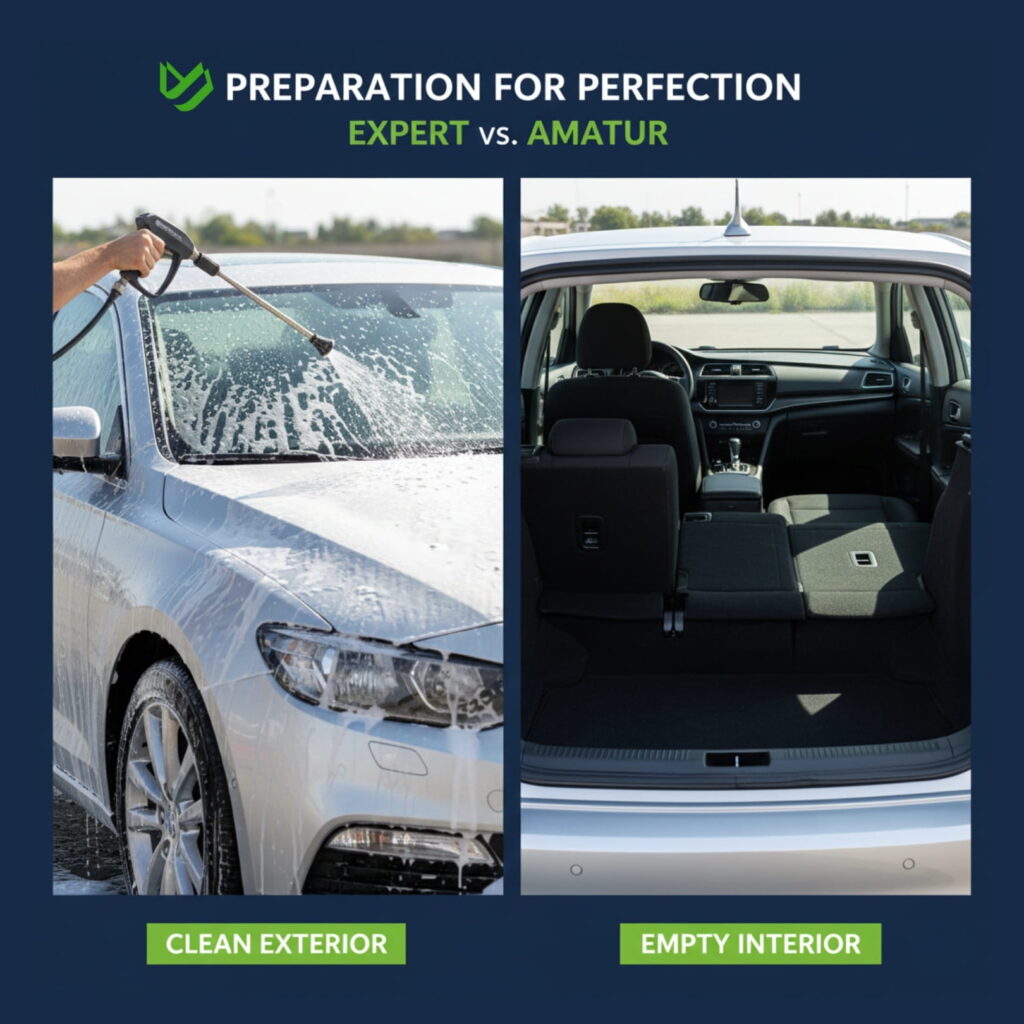
There are certain car shipping regulations that the owner must comply with before the transport carrier arrives to help make a precise evaluation. Washing the exterior of the vehicle is the most important need at this stage of preparation. When a vehicle is dusted, covered with road salt or grime, the exposure of minor surface scratches, paint chips, or minor dents is significantly reduced. It would be possible to observe the actual condition of the paintwork and body panels with a clear surface, and make the shipping company accept the reality.
You must also leave nothing personal in the car trunk and cabin. Carriers are prohibited from transporting household goods in cars, particularly on long routes such as shipments to Hawaii. Additional goods are cumbersome and may break if they are shifted during transportation. With an empty car, the vehicle’s condition is the only thing that can be assessed during the inspection, which helps maintain a safe and efficient process.
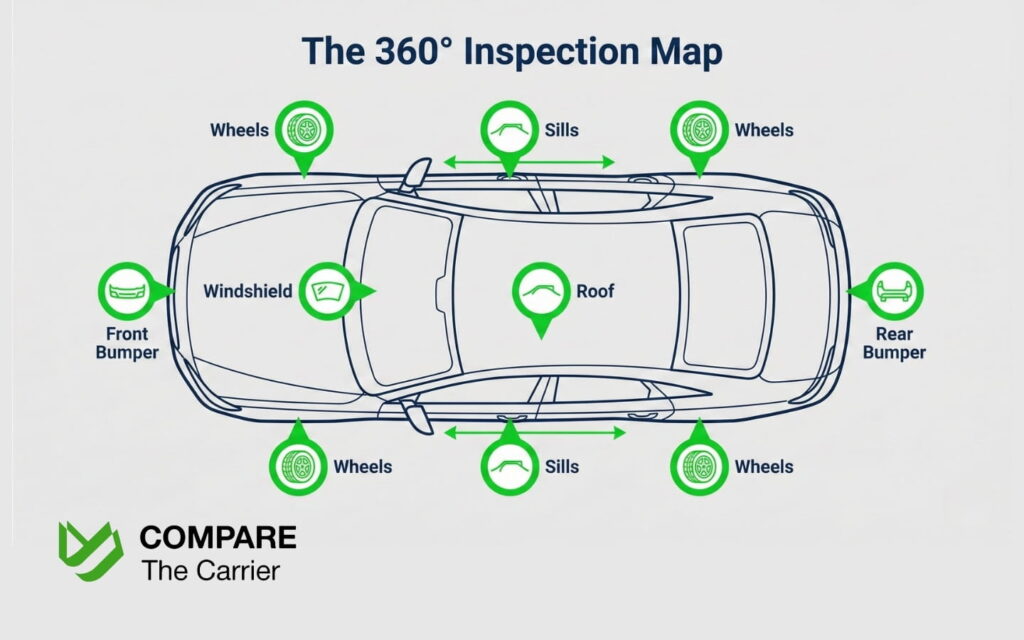
The specific examination is at the moment you gather the critical information to include in your report on condition. As the owner, you ought to inspect the car with the driver, providing a second pair of eyes. Get around the car in good natural light so that you can see everything. Begin with the front bumper and inspect the grille, headlights, and the hood, then go around the car.
Be careful with areas that are easily damaged during transportation, such as lower rocker panels, door edges, and side mirrors. Another thing to do is to check the mileage and examine the dashboard warning lights. Check the interior, the seats, and the electronics to see if they are in good condition. This comprehensive check ensures that your condition is accurately reflected in your report when your car is delivered.
The process moves to the next stage when you sign the report, officially transferring responsibility to the carrier. Before signing, make sure everything written matches what you saw during the inspection. Once signed, this document serves as the official record of your car’s condition throughout the trip. If the report is digital, ask for a copy to be sent to your email right away so you have an unchanged record.
The process reaches its critical conclusion during the post-transport inspection at the point of destination. Upon the vehicle’s arrival, a secondary, equally rigorous examination must be conducted before the delivery receipt is signed. Given the lighting and potential road debris encountered during transit, the car should be inspected for any discrepancies between its current state and the original condition report. If new damage is identified, it must be noted explicitly on the delivery document in the driver’s presence. Signing the receipt without noting new damages typically waives the right to future insurance claims, making this final step the most significant safeguard in the entire shipping process.
To appreciate the various implications of a CV, it is important to understand the legal and financial frameworks that govern the logistics industry. The report does not just constitute a descriptive list; it is the main legal protection weapon the consumer has. Given the complexity of shipping across states or countries, the vehicle may be handled by multiple parties, and without a thorough vehicle condition report, it will be impossible to attribute liability for damages. The report serves as a clear-cut line: the shipping company will be held liable only for damage caused by it under its immediate supervision, whilst the ship’s owner will not lose the investment.
Regarding the insurance claims, the document states that the adjusters have the necessary burden of proof to establish permission to make repairs. When a claim is presented in the case, the insurance company will do a comparative analysis of the pre-shipment report and the post-shipment results. When one insurance company seeks reimbursement from another, the initial documentation determines the outcome of the recovery. Also, a detailed report serves as a preventive measure against fraudulent assertions and helps ensure that every relationship between the owner and the carrier is based on objective reality. With proper documentation, the vehicle owner would have reduced the risk of financial losses; in the event of a dispute, factual evidence will be used to resolve it rather than anecdotal testimony.
Our company is an intermediary in a sophisticated contemporary logistics environment, connecting vehicle owners with a network of professional vehicle shipping. It is important to note that, even though we provide the knowledge and the means to coordinate your transport, the actual physical transport of the asset is handled by the shipping company or carrier. We are supposed to provide transparency and security by vetting these carriers and ensuring they comply with the industry’s best documentation standards.
We fill the gap by helping you understand your rights and obligations through the resources you need. The fact that we use the services of carriers who have trained inspectors who are aware of the specifics of vehicle logistics. Nevertheless, the contractual relationship of the actual physical delivery of the car is between the owner and the carrier. We are well-experienced in navigating this relationship and can help you with the best ideas for using the condition report to your advantage. By focusing on the roles of the carrier and the broker, we provide a clearer understanding of the accountability scheme, ensuring you never find yourself without professional support throughout the transport process. We serve as your representative and ensure the carrier meets their end of the bargain as stated in the shipping contract.
To ensure a positive experience with the shipping company, it is best to follow a detailed checklist that covers not only safety but also regulatory requirements. The best way to avoid delays is to prepare and ensure that vehicle transport proceeds smoothly.
In addition to the minimum requirements, the most comprehensive preparation for organizing a shipping company involves considering the vehicle’s physical vulnerabilities. Considering aerodynamics and exterior attachments, the owners need to make the effort to keep the car ready to travel.
The modern period of logistics is characterised by the fact that a written report on a vehicle’s condition can be as good as the visual evidence that underlies it. To ensure maximum transparency and protection, the owners of the photography should be professional about photographic documentation. This is not a question of taking snapshots; it is about creating an elaborate digital record that can withstand an insurance adjuster’s scrutiny.
The quality of equipment and the setting are the most crucial considerations when taking images to present as your condition report vehicle. The pictures that come out in low-light or bad-weather conditions might not be as clear as they should be to detect pre-existing microscratches or paint chips. It has been advised that the photo session be held during the golden hours, i.e., after sunrise or before sunset, when the light is soft and even, reducing harsh glare and revealing the body’s imperfections.
It is important to factor in the aspects of camera resolution, whereby a dedicated DSLR or a high-end smartphone with a clean lens is needed. The photos must be captured using the maximum resolution possible in case they can be zoomed in during a subsequent viewing. It is advised that at least 20 to 30 photos be taken, all body parts with varying angles.
A systematic approach to photographing ensures that every section of the vehicle is documented. Begin by taking the four corners of the car to portray the car in its entirety. Then pass to a panel-by-panel method:
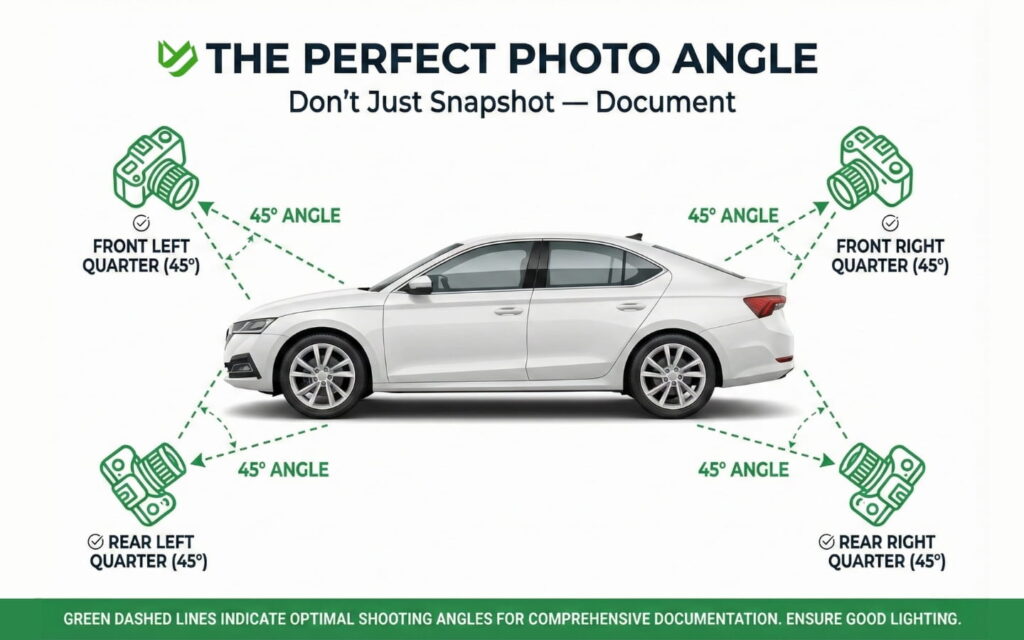
Through such a high degree of detail, the vehicle condition report customer forms a digital twin of the state of the car that offers additional protection to the legal rights that words alone do not offer.
Bill of Lading (BoL) plays a significant role in the vehicle transport industry, and it serves as a receipt of the goods, as well as a contract of carriage. The legal weight is much greater when a vehicle condition report is attached to this document. One should know that BoL is a living document; it is continuously developed from the time of pickup to delivery.
The BoL is the key part of evidence in a court of law or during arbitration, including the factors of maritime and interstate commerce laws. By signing this document when you picked up the vehicle, you are certifying that the description of the vehicle is correct. In case the shipping company does not deliver the vehicle as it was said, your claim is based on the BoL.
Moreover, the report specifies the capping of the carrier’s responsibility. The majority of professional car shipping services are liable for a certain amount of dollars, and the condition report aids in determining whether the damage is within the scope of this liability. Knowledge of these nuances will make the process of transporting goods a stress-free experience, as the owner will understand the expectations and have sufficient supplemental insurance in case the vehicle’s value exceeds the standard coverage offered by the carrier.

When an owner makes a decision in the case, assuming that the insurance of a carrier covers the blanket coverage without any restrictions, he/she can be placed in an insecure situation when a high-value claim occurs without a vehicle condition report. It is vital to note that the association between the condition report and the insurance policy is symbiotic. The report also includes the elements of Actual Cash Value (ACV) and Agreed Value, which serve as guidelines for measuring the magnitude of a loss. The liability of a shipping company taking a vehicle to deliver it is usually regulated by federal legislation, which fixes a certain amount of cargo insurance, but the adoption of the latter is largely contingent upon the quality of the pre-shipment paperwork.
Moreover, the existence of prior damage makes the process of valuation complex. An insurance adjuster can use a betterment clause in the situation where the car already has slight structural or aesthetic defects, implying that restoring any damage would result in the vehicle being in a better state than it was before the incident. With such a detailed inspection on record, it will be easy to identify old and new damage and keep the insurance claims process fair, focused on restoration rather than negotiation. It is this degree of transparency and security that enables the professional management of claims of high stakes, especially in the case of classic or rare automobiles, where the parts and labor expenses are much above the industry average.
The logistics of delicate machines, such as race cars and high-performance exotics, present distinct challenges that extend beyond standard logistics. Motorsport logistics’ special needs determine the increased degree of accuracy in the process of organizing the vehicle condition report. Such cars normally have low-profile aerodynamics, the use of special carbon fiber parts, and sensitive suspension systems that are very susceptible when loading and unloading the car in a car carrier.
Given the ground clearance and delicate bodywork, the shipping company will need to use specialized equipment, e.g., hydraulic lift gates or load ramps that are extra long. Undercar documentation should include a designated section on the vehicle transport condition report in such cases. When a vehicle is fitted with a front splitter or a rear diffuser, the owner shall leave a record of the precise clearance height, as well as the state of the fastening points. With the assistance of professional, licensed carriers focused on this niche, you will ensure that the staff who will be dealing with your asset are trained to be aware of these particular vulnerabilities. This special treatment ensures the integrity of the automotive engineering during its transportation, even with the most delicate engineering, as a combination of both physical care and strict documentation.
Despite the most thorough preparations, there are instances where a disagreement may arise between the owner and the shipping company regarding the condition of the vehicle upon arrival. In the case when a discrepancy is identified, the dispute prevention mechanisms established at the beginning of the process become the primary tool for resolution. The first step in any dispute is to avoid signing the delivery receipt as “clear” or “received in good condition.” Instead, provide a detailed description of the new damage directly on the driver’s paperwork.
Including the factors of mediation, our role as a broker is to facilitate communication between you and the carrier’s insurance department. We provide the platform where your high-resolution photos and the original vehicle condition report can be compared against the post-transport evidence. Most disputes are resolved in favor of the party with the most consistent and professional documentation. In the case when the carrier denies liability, having a timestamped, signed report allows for the escalation of the claim to the Federal Motor Carrier Safety Administration (FMCSA) or appropriate legal channels. This underscores the necessity of the report not just as a piece of paper, but as a robust legal shield that ensures your financial and emotional interests are protected during a stress-free transport.
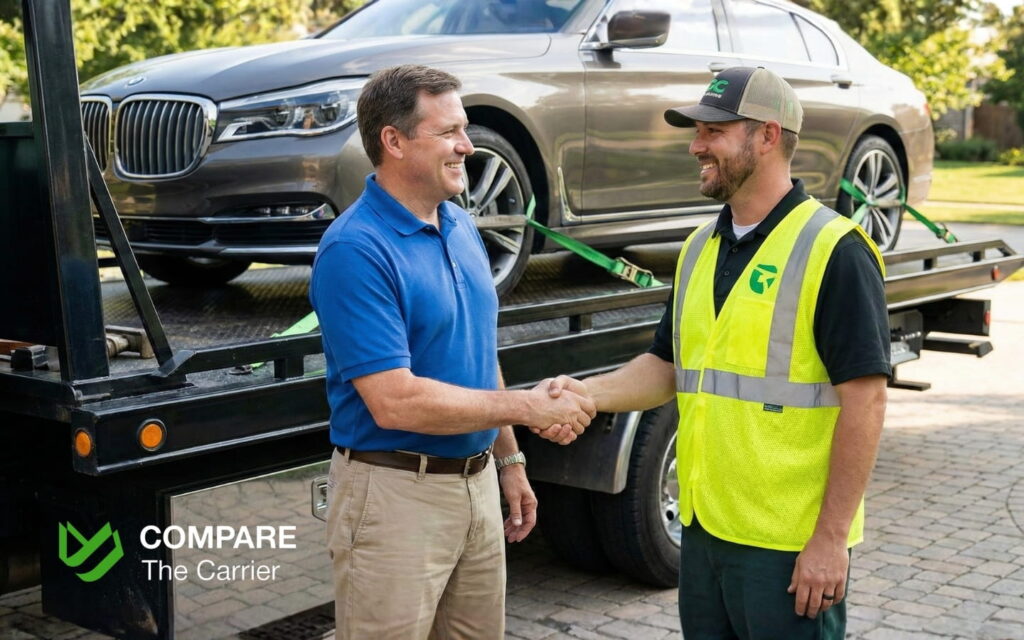
The process of moving a vehicle across the country or overseas is a complex operation that demands a high level of professional oversight and personal diligence. As we have explored in this comprehensive guide, the vehicle condition report is the most vital component of a successful transport strategy. By providing a clear, legally binding record of the vehicle’s state, you establish a framework of transparency and security that protects all parties involved. From the initial thorough washing of the exterior to the final post-transport inspection, every step you take contributes to the overall success and safety of the shipment.
Including the factors of insurance, carrier liability, and the specialized requirements of fine-tuned machines, it is evident that preparation is the key to avoiding the common pitfalls of the logistics industry. While the shipping company is responsible for the physical handling of your asset, you are the architect of its legal and financial protection. By adhering to the car shipping rules and maintaining a disciplined approach to documentation, you ensure a stress-free transport that respects both your time and your investment.
If you are prepared to experience a higher standard of vehicle logistics, our team is ready to assist. We specialize in connecting discerning owners with professional and licensed carriers who prioritize the integrity of your vehicle as much as you do. Our expertise in standardized documentation and carrier vetting ensures that your transport process is handled with the utmost care from start to finish.
Contact us today to receive a free quote and discover how our commitment to excellence can simplify your next vehicle relocation. Let us handle the complexities of the logistics network while you enjoy the peace of mind that comes with knowing your vehicle is in the most capable hands in the industry.
If a driver refuses to wait for a thorough inspection, do not sign a clean Bill of Lading (BOL). You must clearly write “Driver refused to wait for inspection” or “Subject to further inspection” on the document before signing. Immediately contact the carrier’s dispatch office or your broker to report the incident. A signed, unannotated BOL serves as a legal waiver of your right to claim pre-existing damages.
Standard carrier cargo insurance typically excludes “Acts of God,” such as hail, floods, or earthquakes, under Force Majeure clauses. While a condition report documents the vehicle’s state, it does not guarantee financial recovery for environmental damage. For maximum protection, owners of high-value assets should utilize enclosed auto transport, which provides a physical barrier and often carries comprehensive insurance policies covering a wider range of environmental risks.
A standard vehicle condition report primarily covers visible exterior panels and interior surfaces. However, drivers are required to note active leaks or obvious undercarriage damage. For vehicles with low ground clearance, owners must independently document the underside and front splitters before loading. These areas are high-risk zones for contact with hydraulic ramps on multi-car haulers and are frequently omitted from a driver’s initial visual assessment.
Filing a claim for damage discovered days after delivery is extremely difficult because the signed Bill of Lading acts as a final legal receipt. To contest a “clear” delivery, you must provide high-resolution, time-stamped photos from the exact moment of arrival that contradict the signed report. Without these immediate digital records, the burden of proof shifts to the owner, and most insurance companies will deny the claim.
A trusted representative can perform the inspection, but their signature on the vehicle transport condition report is as legally binding as the owner’s. The third party must be briefed on identifying “rail dust,” frame scratches, and mechanical discrepancies. Once the representative signs the delivery document, any overlooked damage becomes the owner’s responsibility, making thorough pre-inspection training for your proxy essential for a successful transport.




Don't have time to fill out the form?
Call a transport company directly to get a quote now!
Select the category you need
Partner with Compare The Carrier & Grow!
We're open to collaborations, partnerships, and mutual growth! Whether you're an individual or a business, we offer exciting opportunities to work together. Fill out the form below to explore how we can collaborate.
Something Went Wrong
We're sorry, but something went wrong. Please briefly describe the problem you experienced in the text area below. Providing your contact information will allow us to follow up if needed.

Thank you,
your form has been accepted.
Your form has been successfully submitted. We appreciate your effort — our team will review it shortly and take the next steps.


