

Car Shipping Tax Deductions 2026: What You Can Claim
For the 2026 tax year, car shipping costs are primarily d...
12 May 2026
The 1,000-mile rule serves as a simple benchmark: if your move exceeds 1,000 miles, shipping your car often costs less than driving it – once you factor in fuel, hotels, meals, and physical wear on the vehicle. But the rule isn’t universal. Route conditions, vehicle type, seasonal timing, and what your personal time is worth all shift the math significantly.
Calculate Shipping Quotes
Most people make this decision based on one number: the gas estimate. They open Google Maps, multiply the miles by their car’s MPG, and conclude that driving is obviously cheaper. What that calculation misses is everything else – the hotel you’ll need after eight hours on the highway, the meals you’ll eat at rest stops, the two days of your life you won’t get back, and the quiet depreciation that happens every time you put long highway miles on a car you plan to keep or sell.
The 1,000-mile threshold exists because that’s roughly where the math stops favoring the driver. Below it, driving usually wins. Above it, the real costs of a road trip start catching up to – and often exceeding – a professional shipping quote.
When people face a major relocation and ask themselves, “Should I ship my car or drive it?”, they usually hit a wall of confusing math. You look at a $600 auto transport quote and instinctively think you can buy a massive amount of gas for that same price. This is where the 1,000-mile rule car shipping concept comes into play. Logistics professionals and seasoned movers use this distance as the exact break-even point at which the hidden costs of a road trip begin to outweigh the upfront cost of a professional carrier.
The rule emerged because 1,000 miles represents roughly two full days of driving. The moment a trip spills over into a second day, you are no longer just buying fuel. You are buying a hotel room, multiple meals on the road, and burning through two days of your own time.
Think of it this way: driving from New York to Florida is roughly 1,200 miles. At current fuel prices, that’s about $120–$160 in gas alone – before you add a night in a hotel, food on the road, and the fact that you just put 1,200 miles on your odometer. At 1,000 miles, the physical and financial toll of the highway catches up.
People consistently underestimate the cost of a long-distance drive because they calculate the journey based purely on what they pay at the gas pump. A real car transport vs driving cost comparison 2026 requires looking at the full cost of moving a car across the country.
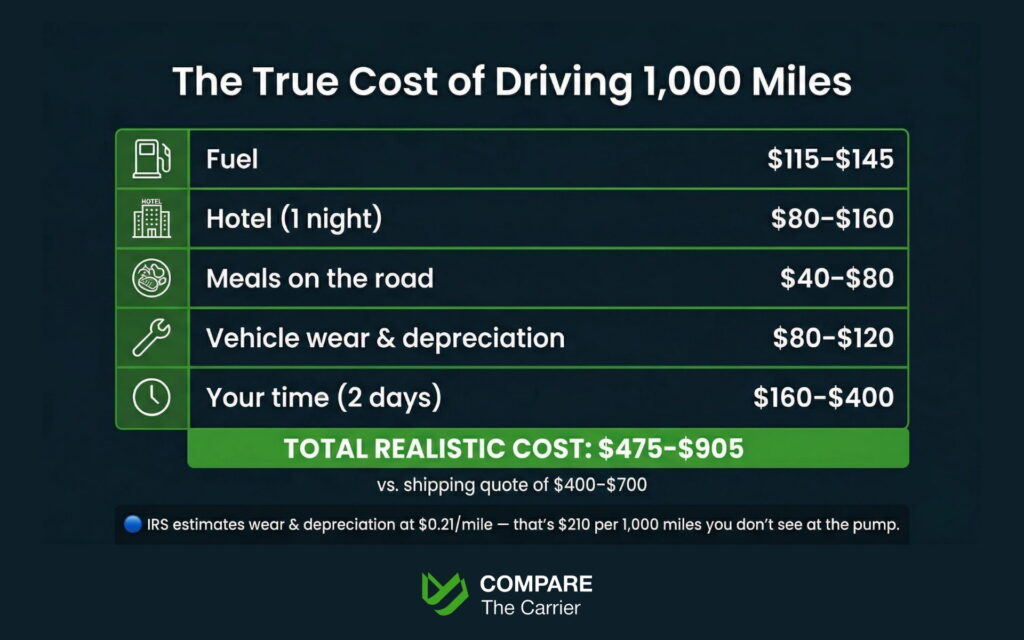
Here is what a standard two-day, 1,000-mile highway journey actually pulls out of your wallet.
| Cost Category | Estimated Cost | Notes |
| Fuel (avg 30 MPG, $3.40/gal) | $115–$145 | Varies by vehicle & state |
| Hotel (1 night minimum) | $80–$160 | Budget motel to mid-range |
| Meals on the road | $40–$80 | 2 days of travel food |
| Vehicle wear & depreciation | $80–$120 | Based on standard wear formulas |
| Your time (2 days @ avg wage) | $160–$400 | Based on $20–$25/hr median |
| Total realistic cost | $475–$905 | vs. shipping quote of $400–$700 |
Note: Fuel estimates align with AAA driving cost datafor standard sedans.
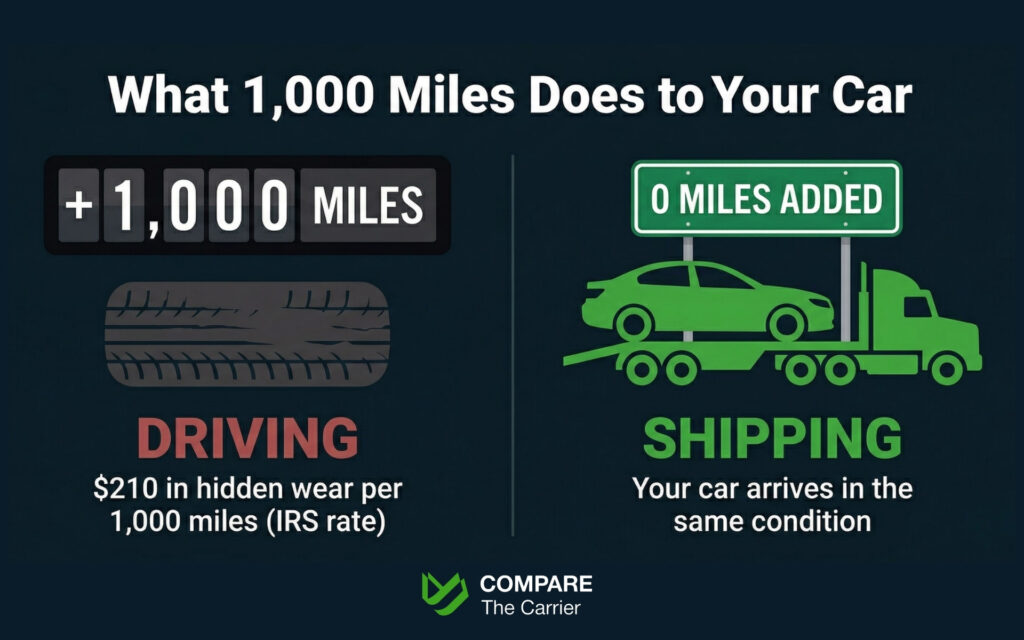
The number most people completely ignore is vehicle wear. Cars are depreciating assets, and highway miles accelerate that depreciation. Every 1,000 miles you drive shortens your tire tread life, advances your next required oil change, wears down your brake pads, and chips away at the car’s overall resale value. The government actually quantifies this exact loss. According to the IRS standard mileage rates, the pure depreciation and maintenance component of driving costs roughly $0.21 for every single mile you travel.
If you drive a standard sedan worth $30,000, burning up $210 in invisible wear-and-tear on a 1,000-mile trip is a real financial hit. You don’t pay that $210 at a cash register today, but you absolutely pay it at the mechanic’s shop next month or at the dealership when you trade the car in next year.
When you look at a shipping quote, you are seeing a comprehensive, bundled price. You pay one number, and the truck handles the fuel, the driver’s wages, the highway tolls, and the wear on their own equipment rather than yours.
Here is what you can generally expect to pay for standard auto transport across different mileage tiers this year.
| Distance | Open Transport | Enclosed Transport |
| 500–1,000 miles | $350–$550 | $600–$900 |
| 1,000–2,000 miles | $500–$800 | $900–$1,400 |
| 2,000–3,000 miles | $700–$1,100 | $1,200–$1,800 |
| 3,000+ miles | $900–$1,400 | $1,500–$2,200 |
That single quote covers the pickup at your location, the physical transit across the country, full cargo insurance while the vehicle is loaded on the trailer, and the final drop-off at your new address.
What is not included in that base quote? You will pay extra if you live an hour away from the nearest interstate and demand the driver navigate rural backroads to reach your driveway. You will also pay extra if you require priority offloading or a guaranteed delivery date, which forces the carrier to disrupt their standard route.
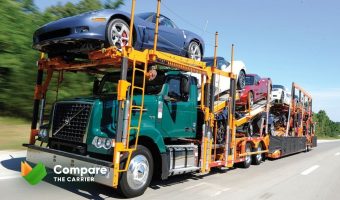
The transport method you choose also dictates the price. Standard open car transport remains the cheapest and fastest way to move a vehicle because these massive multi-car trailers dominate the highways. Upgrading to enclosed auto transport protects your car from rain, snow, and highway debris, but it significantly increases the price. To understand exactly how brokers calculate these numbers and where every dollar goes, see the full cost breakdown.
Numbers on a table only tell part of the story. To figure out if car shipping vs driving makes sense for your specific life event, we need to look at how this rule applies in the real world. Here is how the math plays out in four common moving scenarios.
You landed a new job two states away. You are moving alone, and you need to get your daily commuter car to the new apartment.
The Verdict: Shipping wins easily. Driving 1,200 miles alone requires a grueling two-and-a-half days on the highway. Your realistic driving cost, including two nights in a motel, fast food, gas, and vehicle wear, hits roughly $600 to $700. A standard open transport quote for this distance hovers right around $500 to $650. By shipping the car, you book a cheap two-hour flight, arrive at your new apartment completely rested, and spend those extra two days unpacking instead of staring at highway lines.
You and your spouse are moving to a neighboring state with two kids in a mid-size SUV.
The Verdict: Driving wins. At 800 miles, you fall under the 1,000-mile threshold, which means shipping struggles to justify its cost. More importantly, flying four people costs a small fortune. Four one-way plane tickets, plus luggage fees, plus the $400 to ship the SUV, completely destroy your moving budget. The family packs into the car, makes a solid road trip out of it, splits the driving duties, and saves hundreds of dollars by absorbing the labor themselves.
You just bought a pristine classic Porsche at an auction two states away, or you are moving your high-end luxury sedan to a summer house.
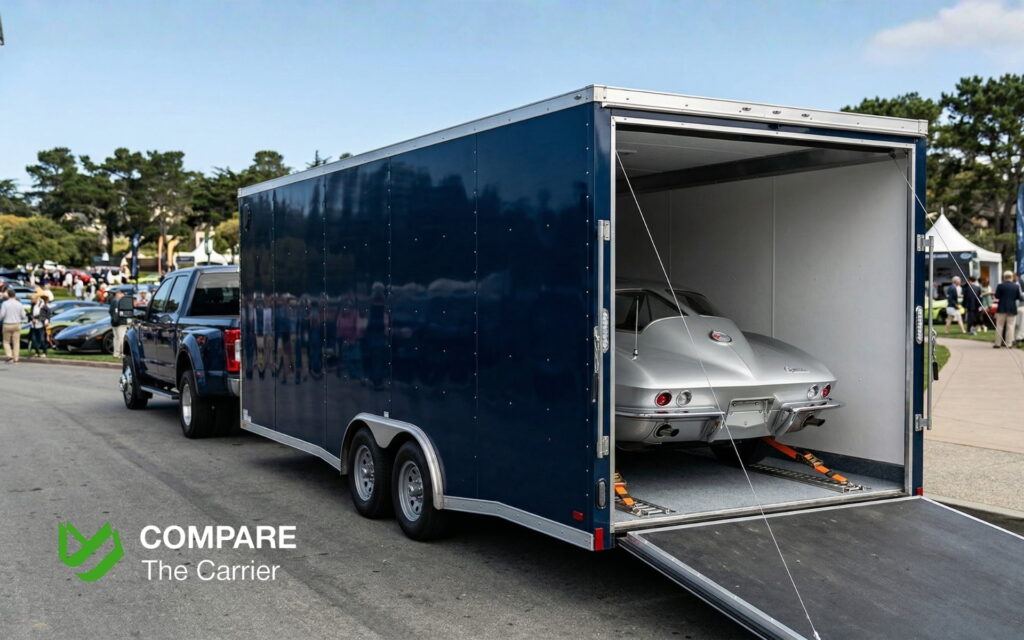
The Verdict: Enclosed shipping wins at almost any distance. The 1,000-mile rule does not apply to specialty vehicles. The moment you drive a $60,000 or $100,000 car down the interstate, you expose it to rocks kicked up by semi-trucks, harsh weather, and immediate depreciation. Putting 500 hard highway miles on a classic car drops its value far more than the $700 you would spend to put it inside a hard-sided enclosed trailer. You are paying for preservation, not just transportation.
You spend your winters in the sun, making the annual 1,100-mile migration down the I-95 corridor.
The Verdict: Shipping wins clearly. If you are already purchasing a plane ticket because you refuse to endure a multi-day drive through unpredictable fall weather, the debate is already over. You’re already flying – why force yourself to drive 1,100 miles solo, pay for gas and a hotel, and then deal with the exhaustion? Thousands of retirees ship their cars on these exact routes every season because the convenience vastly outweighs the carrier’s base cost.
No rule is flawless. Sometimes the math points toward shipping, but the reality of your specific move makes driving the smarter choice. You need to recognize when the standard advice fails. Here are three situations where driving beats shipping, even when crossing the country.
Auto transport trailers are designed to haul cars, not moving boxes. The Department of Transportation strictly monitors weight limits on commercial haulers. While some drivers allow a small box or two in the trunk, you cannot pack your SUV to the roof with televisions, heavy tools, and furniture. If you try, the driver will either charge you massive overweight fees or flat-out refuse to load the vehicle. If you are doing a DIY move and need your vehicle to double as a makeshift moving van, driving is logistically necessary. Make sure you read up on exactly what you can leave inside the car before you try to bend the rules.
The 1,000-mile rule assumes you are moving between populated areas. Carriers thrive on high-traffic corridors, like Los Angeles to Dallas, or Chicago to Atlanta. If you are moving from a remote cabin in the mountains of Montana to a tiny coastal village in Maine, carriers rarely drive those routes. For a full breakdown of how state-to-state transport works on these major routes, see our state-to-state car towing guide. Because you live far off the beaten path, dispatchers struggle to find a truck willing to make the detour. Your price skyrockets, and your pickup window stretches from days into weeks. In deep rural areas, driving the car yourself provides certainty that a rural shipping quote cannot.
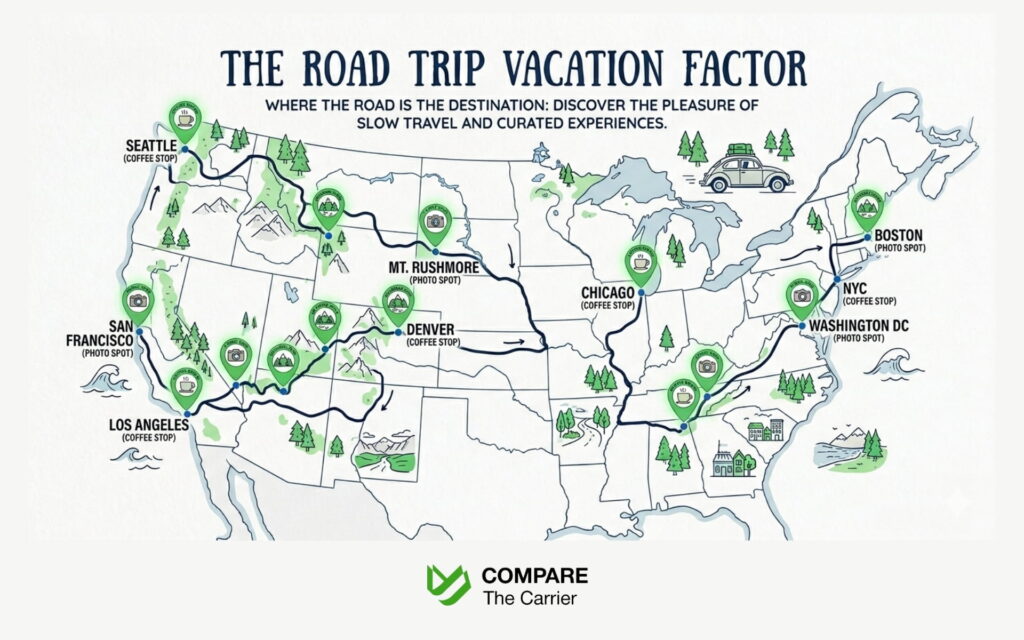
We calculate the “cost of your time” assuming you hate long highway drives. But if you view a cross-country move as a chance to visit national parks, see friends in other states, and enjoy the open road, the entire equation flips. Personal enjoyment holds real value. If a four-day drive sounds like a vacation rather than a burden, then the “labor” cost of driving drops to zero. You do not need to optimize your budget if driving the car brings you genuine happiness.
Beyond distance and base prices, several hidden variables sneak into the moving process. These are the logistical blind spots that catch people off guard when they try to finalize their plans.
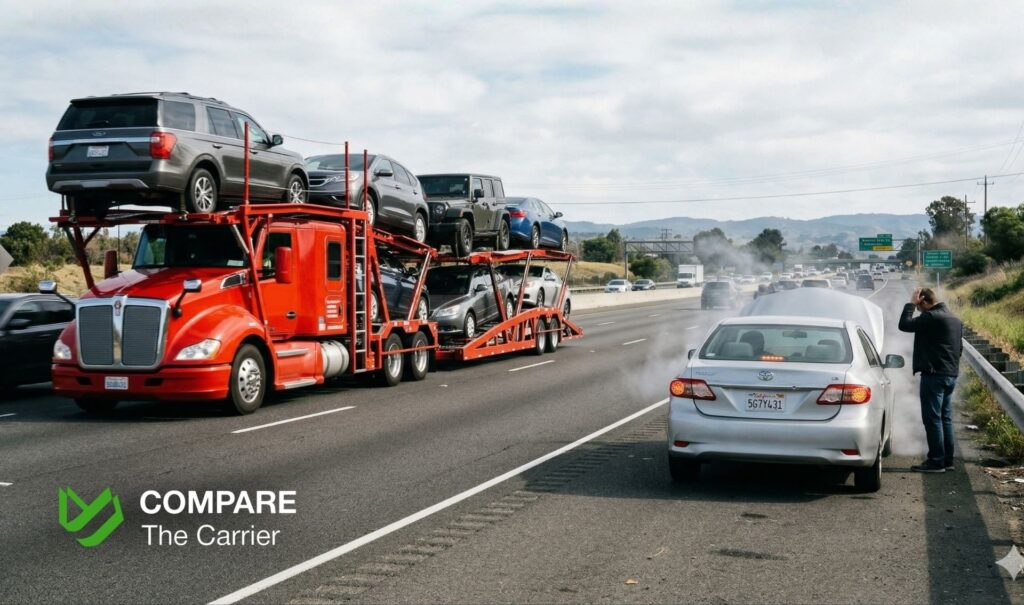
The 1,000-mile rule assumes your car will actually survive a 1,000-mile trip without issue. Taking a 12-year-old car with 150,000 miles on the odometer across the Rocky Mountains carries immense risk. A single blown radiator hose or a shredded alternator belt in a town where you don’t know the mechanic immediately wipes out any money you saved by driving. Towing fees and emergency hotel stays turn a budget road trip into a financial disaster. If you doubt your car’s mechanical endurance, putting it on a trailer is an insurance policy against highway breakdowns.
When people choose to drive, they often forget how they plan to get back. If you are moving a car to a vacation home or delivering a car to a relative across the country, you have to buy a one-way flight home after you drop the vehicle off. The cost of a last-minute, one-way airline ticket from a regional airport easily devours the money you “saved” by avoiding a shipping carrier.
Relocating a two-car household requires a different set of logic. One person can only drive one car. If a couple needs to move two vehicles, driving them both means paying for double the gas, double the wear, and enduring the trip in separate cars rather than riding together. In these situations, families often choose a hybrid approach: they pack the larger SUV with essential items and drive it together, while booking the second car through Compare The Carrier – where you can compare live shipping rates and find the most affordable option for your route in minutes.
Driving allows you to control your exact arrival time. Shipping requires flexibility. If your new employer demands you show up on Monday morning, and you only have the weekend to relocate, shipping might not align with your aggressive schedule. Weather delays or route consolidations can push delivery times back. If you are on a razor-thin timeline, you need to research how long shipping actually takes to see if a carrier can meet your hard deadline, or if you simply must drive through the night yourself. Sometimes, exploring options like shipping a car by train as an alternative offers a slightly different schedule, but standard road transport remains the primary choice for tight windows.
You do not need a spreadsheet to determine whether it is worth shipping a car. The decision usually becomes clear when you answer a few targeted questions about your specific move.

Before you decide, run through these four questions:
You also need to make sure you are gathering quotes from legitimate businesses. The industry has its share of bad actors who promise artificially low prices, so take a moment to learn which companies to avoid when booking.
If you’re leaning toward shipping, Compare The Carrier lets you run the numbers in under two minutes. The car shipping cost calculator gives you a real quote for your route – so you can compare it directly against your driving estimate before committing. Once you have a firm number, get a shipping quote to lock in your timeline and eliminate the stress of a long road trip.
At exactly 1,000 miles, the costs are roughly comparable. Driving typically runs $400–$700 when you honestly include fuel, one hotel night, meals, and vehicle wear. Open transport shipping on a 1,000-mile route costs $400–$650. Beyond 1,000 miles, shipping generally becomes the cheaper option – especially once your time is factored in.
Most logistics professionals use 1,000 miles as the threshold, but the real answer depends on your vehicle and situation. For standard sedans, shipping becomes cost-competitive around 800–1,000 miles. For high-value or classic vehicles, shipping can be worth it at any distance over 500 miles, as it reduces exposure to road damage and depreciation.
Beyond fuel, long-distance driving adds hotel costs ($80–$160 per night), meals ($40–$80 per day), and real vehicle wear – tires, oil life, and depreciation. The IRS estimates the wear component of driving at roughly $0.21 per mile. On a 1,500-mile drive, that’s $315 in vehicle costs alone, not counting fuel.
For most standard vehicles, shipping a car 500 miles costs $450–$700 – often more than the fuel and time required to drive it yourself. The exception is high-value or classic vehicles where road exposure matters, or situations where the owner cannot drive (flying separately, medical reasons, deployed military). For moves under 800 miles with a standard vehicle, driving is usually the practical choice.
Yes, and this is one of the most common use cases for car shipping. You ship the vehicle, book a flight, and both you and your car arrive at the destination within a similar timeframe – often with less stress and a total cost that’s similar or lower to a solo cross-country drive plus a return flight or second-driver logistics.
For most people moving over 1,000 miles, shipping is the better choice. When you add up fuel, one or two hotel nights, meals, and vehicle wear, the total cost of driving often matches or exceeds a professional shipping quote — without the exhaustion of two days on the highway. Driving makes more sense if you enjoy road trips, need to transport personal items in the car, or are moving a family where buying multiple plane tickets would bust the budget.
A breakdown on a long-distance drive can quickly erase any money you saved by not shipping. A tow to the nearest mechanic can cost $150–$400 alone, and if the repair takes a day or two, you are paying for a hotel and meals on top of that. If your car is older or has high mileage, this risk is real. Shipping eliminates it entirely – the vehicle travels on a trailer, not under its own power, so mechanical reliability becomes irrelevant during transit.







Don't have time to fill out the form?
Call a transport company directly to get a quote now!
Select the category you need
Partner with Compare The Carrier & Grow!
We're open to collaborations, partnerships, and mutual growth! Whether you're an individual or a business, we offer exciting opportunities to work together. Fill out the form below to explore how we can collaborate.
Something Went Wrong
We're sorry, but something went wrong. Please briefly describe the problem you experienced in the text area below. Providing your contact information will allow us to follow up if needed.

Thank you,
your form has been accepted.
Your form has been successfully submitted. We appreciate your effort — our team will review it shortly and take the next steps.


