

Will Gas Cars Lose Value Soon? My 5-Year Expert Forecast
This isn’t just a discussion about technology trends it’s...
9 February 2026
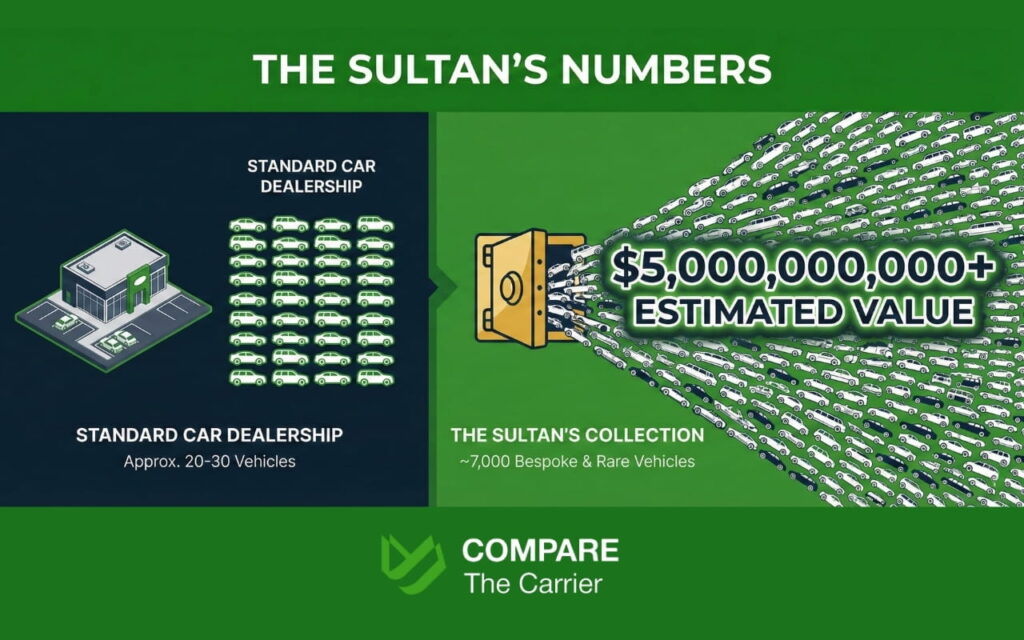
Okay, be honest with me for a moment, the entire luxury car market in 2026 is simply off-the-wall. In a good way, mostly. But the money involved? It’s honestly stupid. Who owns the most expensive car collection in the world? The Sultan of Brunei holds the world’s most expensive private car collection, valued at over $5 billion. His 2026 fleet comprises approximately 7,000 vehicles, including the world’s largest private Rolls-Royce collection and bespoke Ferraris like the F50 Bolide. While Brunei leads in volume, Ralph Lauren’s collection is recognized for the highest average value per car, featuring museum-grade rarities like the Bugatti Type 57SC Atlantic.
Calculate Shipping Quotes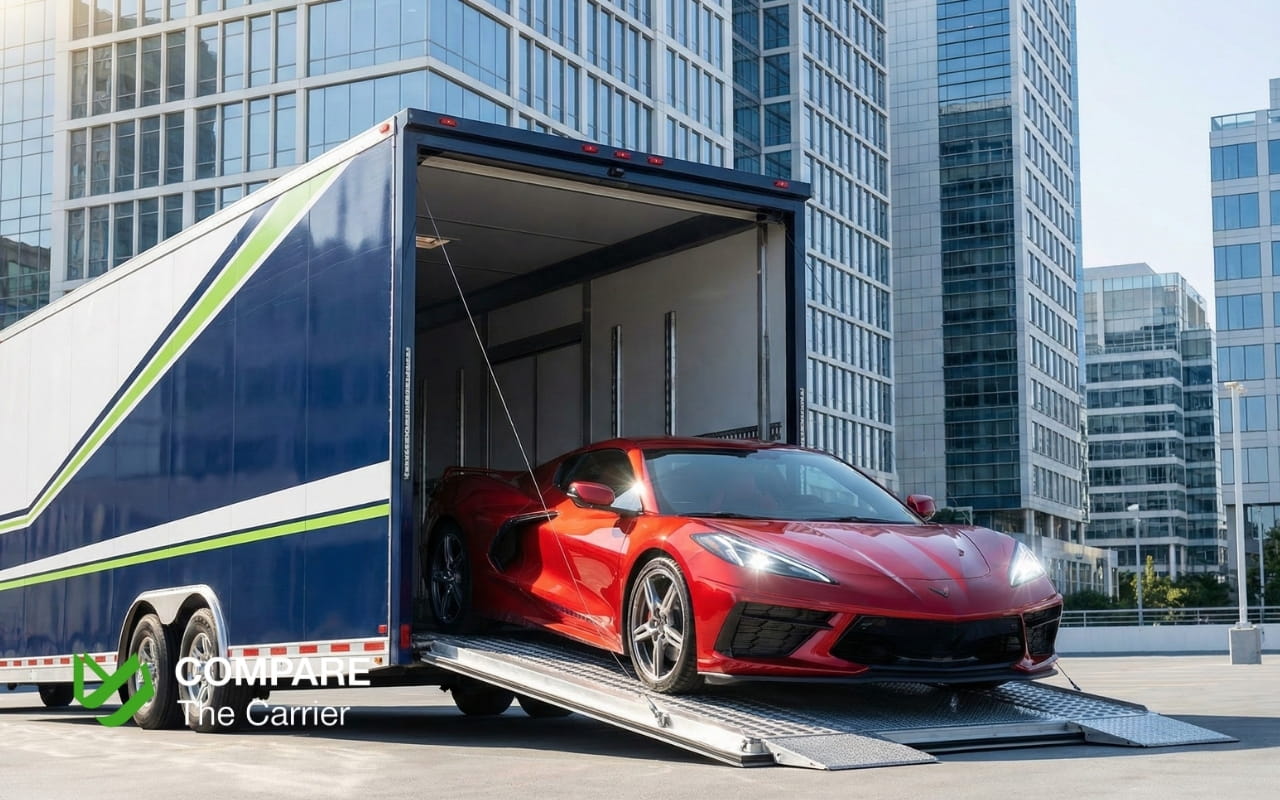
When you still find yourself believing that even a high-end garage only consists of two glossy Ferraris and a floor that you can dine on, then you are still in the year 1995. Stop it. Today, it’s all about the grit. It has to do with where we find this car. It is all about the untamed audacity of individuals who care less about the laws of physics and their bank balances than about mere friendly advice.
Trust me: they aren’t exactly losing sleep over the ‘impossible’. I have even too many times stuck my head in the door of so-called world-class collections, with engines that had not sucked a breath of air in a century. Honestly? I hate that. It is all a nightmare for anyone with real fuel in his veins. The automobile, which cannot move, is only a glorified six-figure paperweight. The guys on this list, though? They’re built differently. These are shrines to speed. And the logistics… do not make me start. Maintaining these beasts in existence is an art in the province of pure and clinical obsession.
We have to start with the “Final Boss” of car collecting. Sultan Hassanal Bolkiah’s collection in Brunei is the stuff of urban legend, whispered about in the boardrooms of Maranello and Crewe. With an estimated 7,000 vehicles worth over $5 billion, it’s not a garage it’s a national infrastructure project.
What makes it a “must-see” in 2026 is the sheer volume of bespoke “one-of-ones.” The Sultan didn’t just buy cars; he forced manufacturers to invent them.
Maintaining this fleet is a logistical impossibility for most. Because Brunei is humid and remote, the cars require constant climate control. When a rare piece from this collection finally hits the market, enclosed car shipping is the only way to move it without the tropical air destroying thirty years of preservation. Honestly, the secrecy surrounding this place is what makes it so fascinating it’s the ultimate forbidden fruit for gearheads.
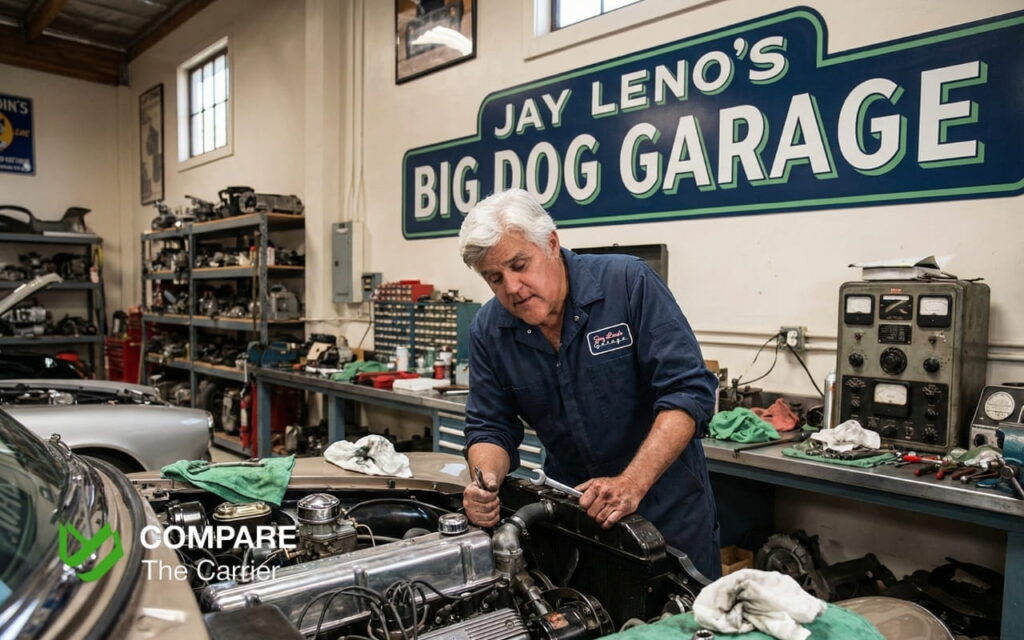
Jay Leno is the collector we’d all be if we had a few hundred million dollars and a serious addiction to steam engines. Located at the Burbank Airport in California, Jay’s “Big Dog Garage” isn’t a museum; it’s a high-tech restoration shop.
What I love about Jay is that he’s a “hands-dirty” expert. He knows the difference between a 1909 Stanley Steamer and a 1934 Duesenberg like he knows his own kids. In 2026, his collection of over 180 cars and 160 motorcycles remains a rotating masterclass in automotive history.
Jay is a huge advocate for door-to-door car transport when he’s moving his cars for charity events, but he’s just as likely to be seen driving a 100-year-old car through the streets of LA. He treats every car with respect, whether it’s a $20 million McLaren or a humble 1960s Nash Metropolitan.
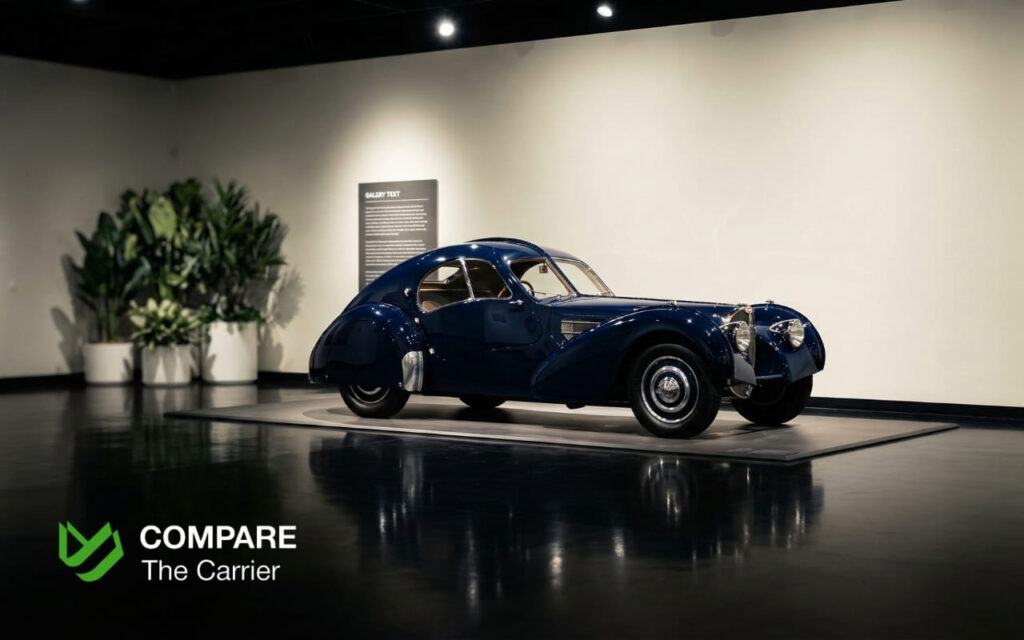
Ralph Lauren treats his cars like he treats his suits: classic, elegant, and perfectly tailored. His collection in Westchester County, New York, is widely considered the most beautiful in the world. The cars aren’t just parked; they are displayed on white pedestals against black floors, like jewels in a Cartier window.
The centerpiece is the 1938 Bugatti Type 57SC Atlantic one of only three in existence. It’s a car so beautiful it almost hurts to look at.
I’ve seen a lot of collections, but Ralph’s “aesthetic-first” approach is unmatched. To move these cars to elite events like the Pebble Beach Concours d’Elegance, he uses only the most specialized luxury car shipping companies. When your car is worth more than a small jet, you don’t take risks with standard carriers.
Located in Naples, Florida, the Revs Institute is where cars go to be studied. Miles Collier has built a research library for the automotive soul. This isn’t just a place to look at cars; it’s a place to understand why they matter.
They focus on the “Firsts” the cars that pioneered technology we now take for granted.
The Revs Institute is obsessed with “Active Matter.” They believe cars should be kept in running condition. Because they move these cars frequently for vintage races, they are masters of professional vehicle delivery. (Actually, I think every modern car designer should be required to spend a week here to remember what “soul” feels like).
Look, let’s be real. The Rainbow Sheikh is just built differently. You want a Mercedes S-Class? Fine. He wants seven. One for every day of the week. In every color of the rainbow. Because why not? It’s wild. It’s expensive madness. He’s got the Guinness World Record for 4x4s. Over 700 of them. That’s a lot of tires. A lot of oil.
I’ve seen his giant Jeep. It’s not “big.” It’s a house. It’s a literal two-story building with a steering wheel. You can sleep in it. It’s a replica of a WWII Willys Jeep, but it’s scaled up like a monster movie. Then there’s the Dhabiyan. Ten wheels. It’s an SUV that looks like it wants to eat other cars. It’s a nightmare to park. Can you imagine the heavy equipment needed to transport that? It’s a logistical circus. No, it’s a carnival. He doesn’t care about “classic lines.” He cares about “Absolute.” If it isn’t massive, he isn’t interested. And I kind of love him for it. It’s a total middle finger to traditional collecting.

Ken Lingenfelter is a man who loves horsepower more than almost anything else. His collection in Brighton, Michigan, is a massive 40,000-square-foot facility where muscle cars and exotics live in harmony.
What makes Lingenfelter’s collection a “must-see” in 2026 is the sheer variety.
Because he runs Lingenfelter Performance Engineering, these cars are always tuned to perfection. He is a pro at state-to-state car shipping, moving his collection across the country for major shows. He knows that when you’re moving an 800-horsepower car, you need a carrier that understands ground clearance and specialized tie-downs.
Jerry Seinfeld’s collection is the ultimate example of “Niche Focus.” While others buy whatever is expensive, Seinfeld is a scholar of Porsche history. He famously sold a portion of his collection for $22 million a few years ago, and he still has the best Porsche garage on the planet.
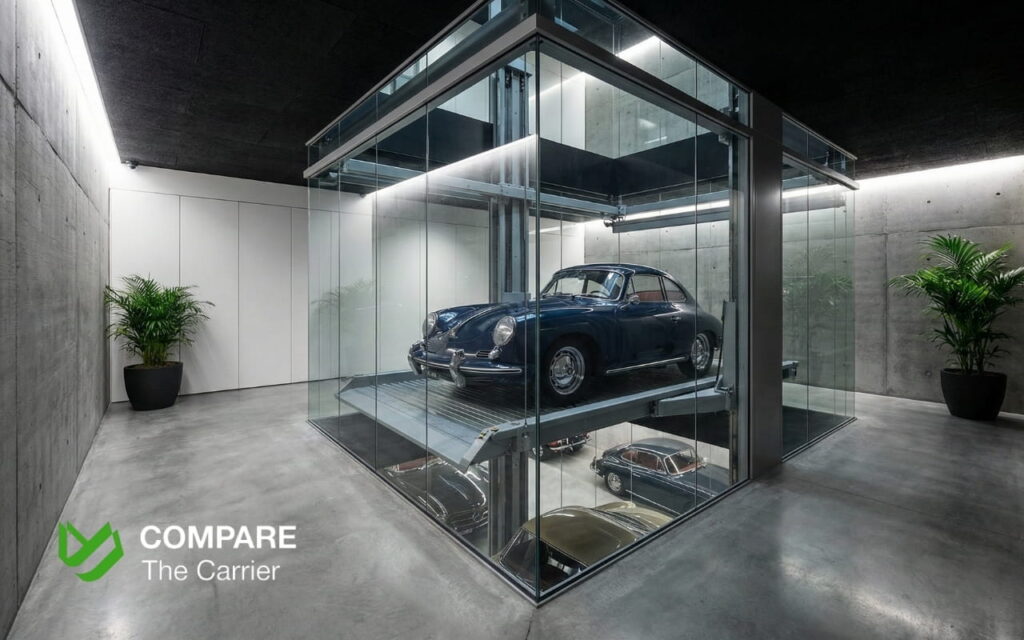
He keeps his collection in a secret, multi-story underground garage in Manhattan.
Seinfeld is a driver. He values the mechanical connection. Whenever he needs to move his cars from New York to his home in the Hamptons, he uses premium auto transport to navigate the tight, congested streets of the city. He isn’t interested in “trailer queens”; he wants cars that feel alive.
If you can only visit one place on this list, make it the Petersen in Los Angeles. While technically a public museum, “The Vault” at the Petersen is a rotating collection of the world’s most famous private cars. It is the cultural heart of the automotive world.
In 2026, Petersen expanded its focus to a massive emphasis on the transition to electric.
The Petersen relies on a massive global car logistics network to swap out exhibits every few months. Moving a priceless movie prop requires a different level of care than a standard car; it’s about preserving the “patina” as much as the metal.
Located in Danville, California, the Blackhawk Museum is where you go to see “Art on Wheels.” They specialize in the “Great Era” of coachbuilding, the 1920s and 30s when cars were built like fine furniture.
The Blackhawk collection is a reminder of a time before mass production. These cars are incredibly delicate. When they are moved for international events, specialized car hauling is the only option. You can’t just put a 100-year-old Hispano-Suiza on a standard trailer and hope for the best.
For the final spot, we have to look toward Munich. The BMW Museum, combined with several high-end private European garages, represents the peak of German engineering. In 2026, the focus on “Youngtimers” (cars from the 80s and 90s) has made these garages a must-see.
The European collecting scene is more about “driving tours” through the Alps. Collectors here often use international vehicle shipping to move their cars from Germany to the South of France for summer rallies. It’s a lifestyle of high-speed luxury and precision.
You can have $100 million in cars, but if you don’t have a plan to move them, you have $100 million in paperweights. Every collector on this list shares a common obsession: safe car delivery.
When we talk about the world’s best garages, we are also talking about the world’s best maintenance schedules. A Ferrari 250 GTO needs to have its seals checked constantly. A McLaren F1 needs a specific service that involves removing the entire engine.
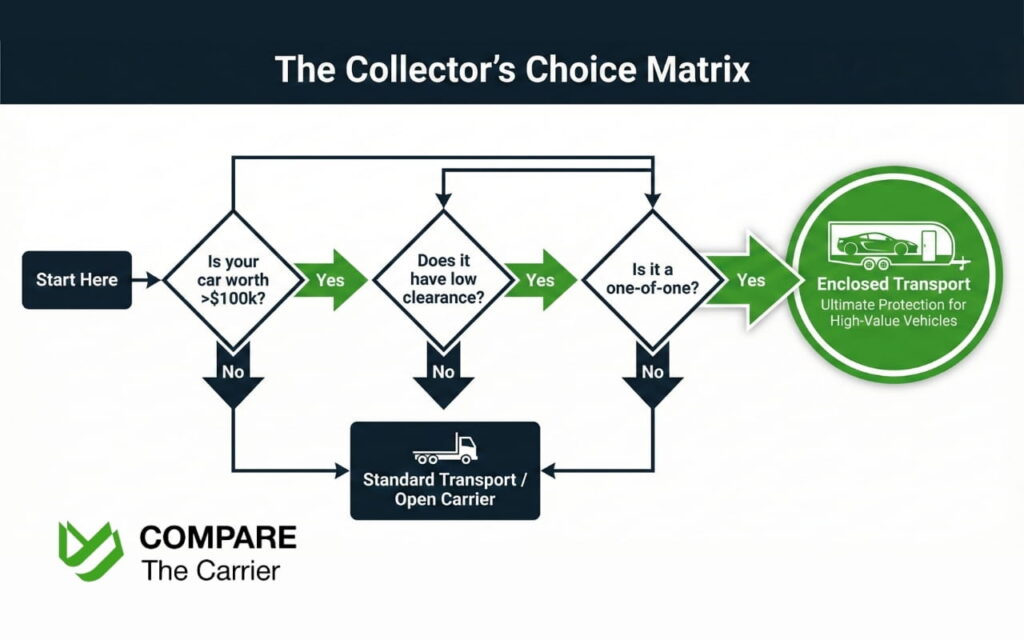
For these top-tier garages, open car transport is simply not an option.
Savvy buyers always use an auto shipping cost calculator to estimate their logistics budget, but they know that the cheapest price is often the most expensive in the long run. If a carrier saves you $500 but scratches a rare carbon-fiber splitter, you’ve lost thousands.
The greatest car collections of the world in 2026 are not only wallets of money but time machines. They enable us to view technological progress, changes in taste in aesthetics, and the crude force of human aspiration. These garages are the highest level of car love, whether it is the refined taste of Ralph Lauren or the insanity of the Rainbow Sheikh.
It is a huge burden to own such a collection. It demands a team of skilled mechanics, curators, and trusted auto transportation partners. Why, anyway, when you have the most beautiful car in the world, should you not be able to drive it to the best road in the world?
Do you want to open your own collection, or would you like to take your present “pride and joy” to another house? Whether you have a vintage Mini or a more modern Ferrari, the first step to ensuring your vehicle receives the royal treatment it deserves is to request a free car shipping quote.
The Sultan of Brunei holds the world’s most expensive private car collection, valued at over $5 billion with approximately 7,000 vehicles. While his fleet is unmatched in volume, Ralph Lauren’s collection is recognized for the highest average value per vehicle. His curated assembly features ultra-rare models like the Bugatti Type 57SC Atlantic and Ferrari 250 GTO, prioritizing historical significance over sheer quantity.
International collectors utilize specialized air freight and climate-controlled sea containers to transport high-value vehicles. Air transport via Boeing 747-8F or 777F cargo planes is the preferred method for multi-million dollar assets requiring rapid, secure delivery. For less time-sensitive movements, cars are secured in sealed 20-foot or 40-foot containers to prevent environmental exposure, salt air corrosion, and physical damage during maritime transit.
Jay Leno’s “Big Dog Garage” in Burbank, California, remains a private facility and is not open for regular public tours. Access is primarily granted through high-value charity auctions, such as those hosted by Charitybuzz, or through invitation-only events for car clubs. However, the collection is extensively documented for the public via the “Jay Leno’s Garage” YouTube series and televised specials.
Professional collectors maintain vehicles in climate-controlled environments with temperatures between 50°F and 80°F and relative humidity levels of 40% to 55%. This stability prevents leather cracking, wood warping, and metal oxidation. Maintenance protocols include monthly mechanical exercise to circulate fluids, the use of battery maintainers, and fuel stabilizers to prevent internal engine corrosion during long-term storage in specialized automotive vaults.
In 2026, enclosed door-to-door transport for supercars typically ranges from $1,500 to $5,000 per shipment, depending on distance and service level. Short-haul regional moves average $2.00 to $3.00 per mile, while cross-country “white-glove” services command higher premiums. This cost includes specialized loading equipment for low-clearance vehicles, comprehensive insurance coverage, and protection from road debris and adverse weather conditions.
Agreed Value insurance is the industry standard for high-end collections because it guarantees a fixed payout amount in the event of a total loss. Unlike standard “Actual Cash Value” policies, which factor in market depreciation, an Agreed Value policy locks in a pre-determined worth based on expert appraisals and market rarity. This ensures collectors recover their full investment regardless of temporary market fluctuations.









Don't have time to fill out the form?
Call a transport company directly to get a quote now!
Select the category you need
Partner with Compare The Carrier & Grow!
We're open to collaborations, partnerships, and mutual growth! Whether you're an individual or a business, we offer exciting opportunities to work together. Fill out the form below to explore how we can collaborate.
Something Went Wrong
We're sorry, but something went wrong. Please briefly describe the problem you experienced in the text area below. Providing your contact information will allow us to follow up if needed.

Thank you,
your form has been accepted.
Your form has been successfully submitted. We appreciate your effort — our team will review it shortly and take the next steps.


