

What to Do When Your Car Gets Flooded: Survival Guide
Seeing your vehicle surrounded by rising water is a night...
23 December 2025
Buying a salvage vehicle is usually a decision made with either passion or money. You could be a restoring soul searching for an old classic with an improved reputation, or a clever shopper hunting for a “parts donor” from a highly competitive auction like Copart or IAAI. Regardless of the incentive, once the hammer hits and the lot belongs to you, you’ll encounter a real logistical problem that most car owners wouldn’t experience: how do you move a vehicle that can’t move itself?
Calculate Shipping Quotes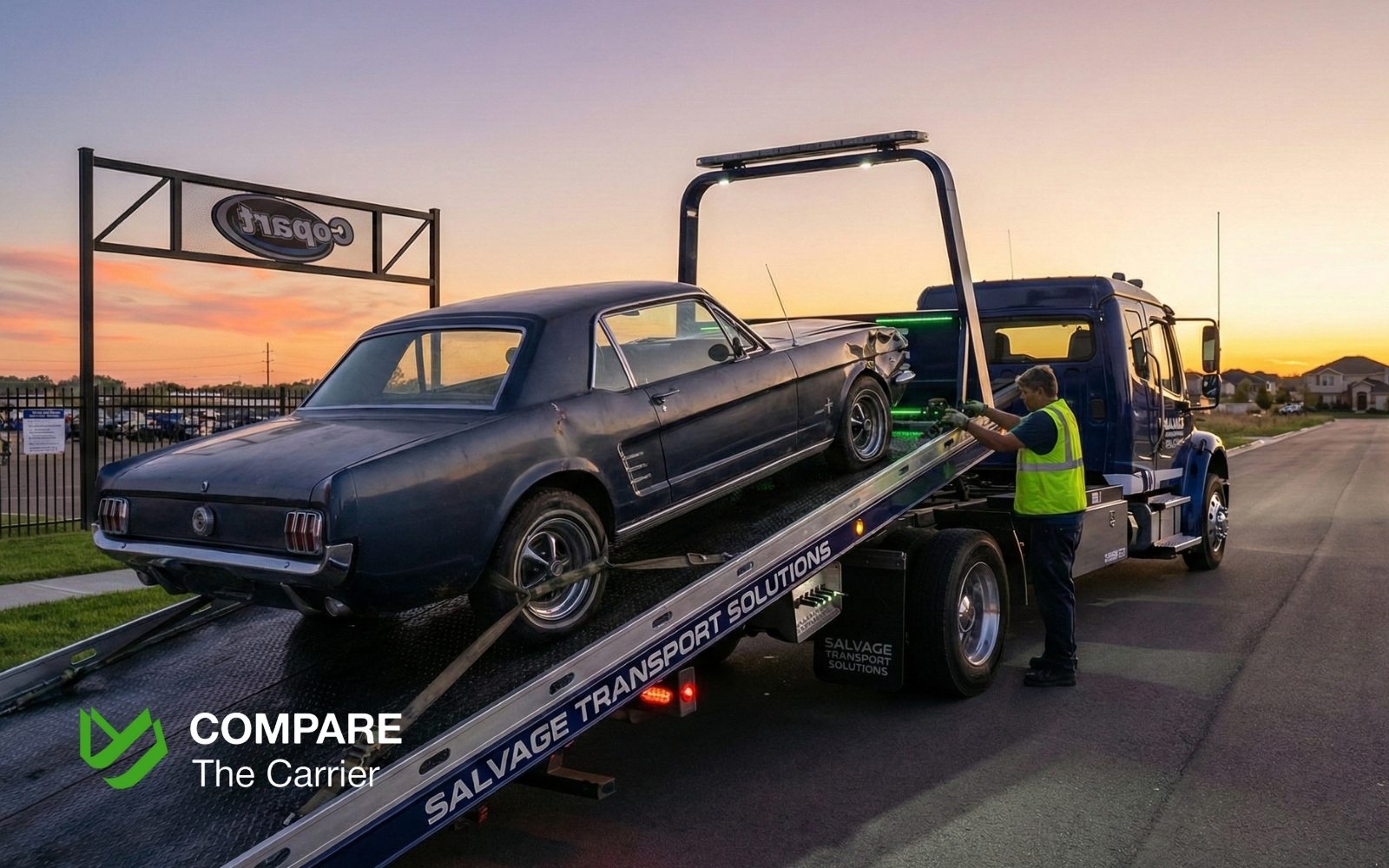
Whether you’re in the auto transport industry shipping on-road motor vehicles to market, it’s a common practice. But shipping a salvage vehicle – one that might have broken its axle, shattered glass, or a fully seized engine – is a specialized craft. It will require heavy-duty equipment, a driver with particular rigging expertise, and a level of planning beyond simply “pick up and drop off.” This guide is intended to guide you through the dirty world of salvage logistics from the auctioneer’s gate right up to the road you drive down beside your house.
‘Wrecks’ are not all created equal. To the transporter, the condition of your salvage vehicle is the most critical element of the price and type of equipment you ultimately need. A car is usually reported as “total loss,” the Insurance Information Institute tells me; the cost of repairs generally exceeds a certain value threshold, but that doesn’t always imply that the car is a stack of scrap.
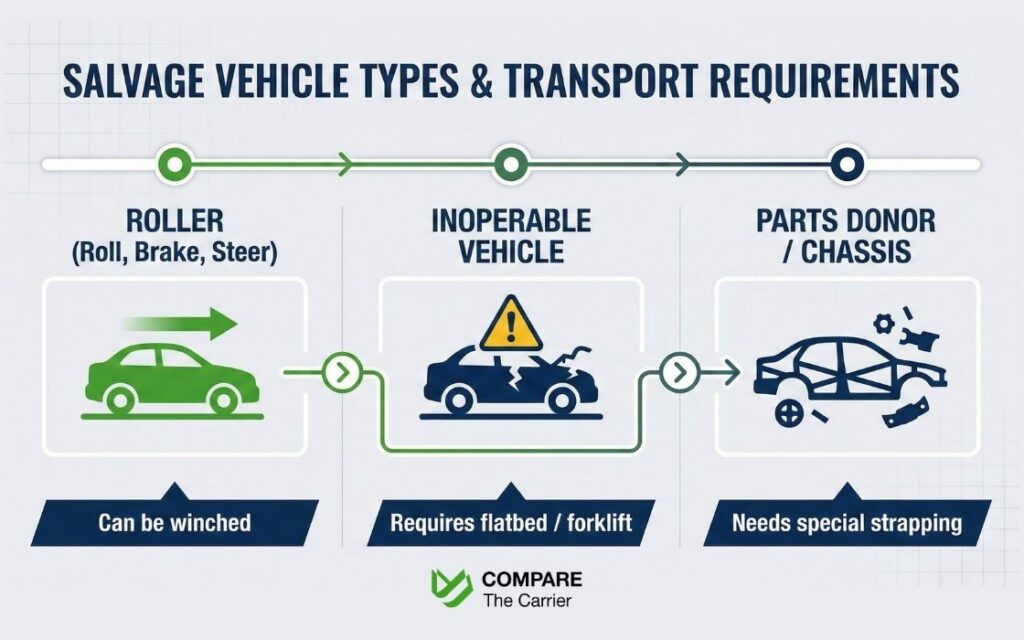
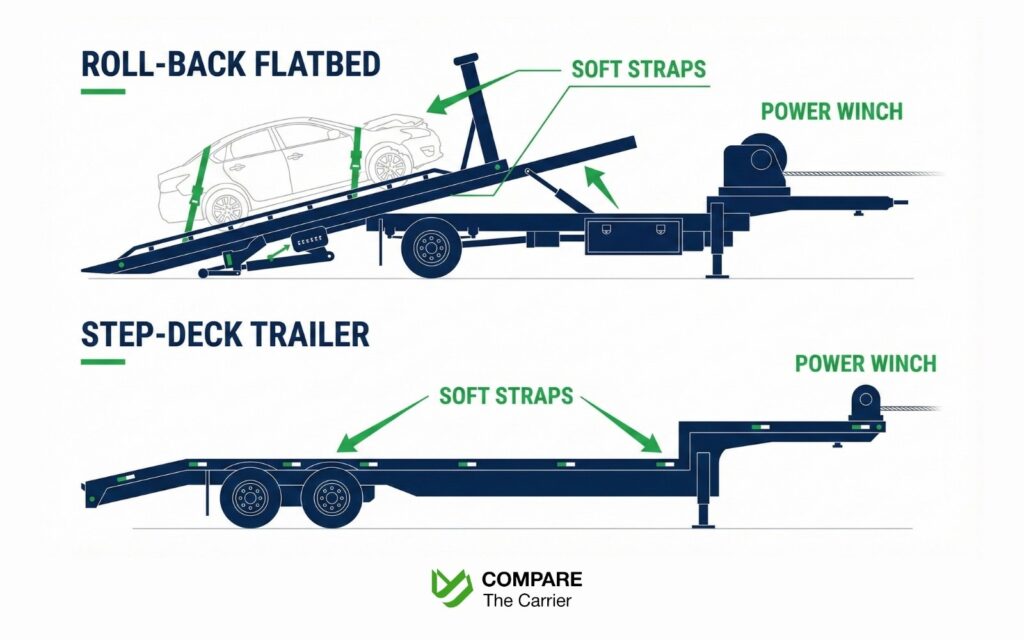
If your salvage car is capable of being pushed, steered and stopped using its own mechanical systems, it’s known as a “roller.” These are the most common salvage shipments. A driver might pull the car onto a regular multi-car carrier using a power winch. Even if an engine isn’t turned on, as long as the wheels turn and the steering rack stays standing, the logistics are rather straightforward.
A real “Inop” vehicle is one that is locked, the tires shredded or the suspension collapsed. These vehicles cannot be winched onto a standard trailer without causing catastrophic damage to the car or the trailer’s ramps. These require specialized “forklift-to-forklift” service or a flatbed with “roll-back.”
And sometimes you’re only shipping a shell or chassis. They are often the hardest to move because they don’t have the structural points to secure them safely. When transporting a frame-only salvage unit, you’ll have to make sure that the carrier is protected with the right “soft straps” and dunnage to immobilize the metal so it won’t move in transit.
When you book professionally done door-to-door car transport for a wrecked car, you don’t just pay for empty space in that trailer; you’re paying for specialized machinery to deal with dead weight.
Using a car shipping cost calculator will quickly show you that checking the “Inoperable” tab adds a major layer to your quote. This is not a “hidden fee” – the increased labor and risk it represents is a true measure of what it costs.
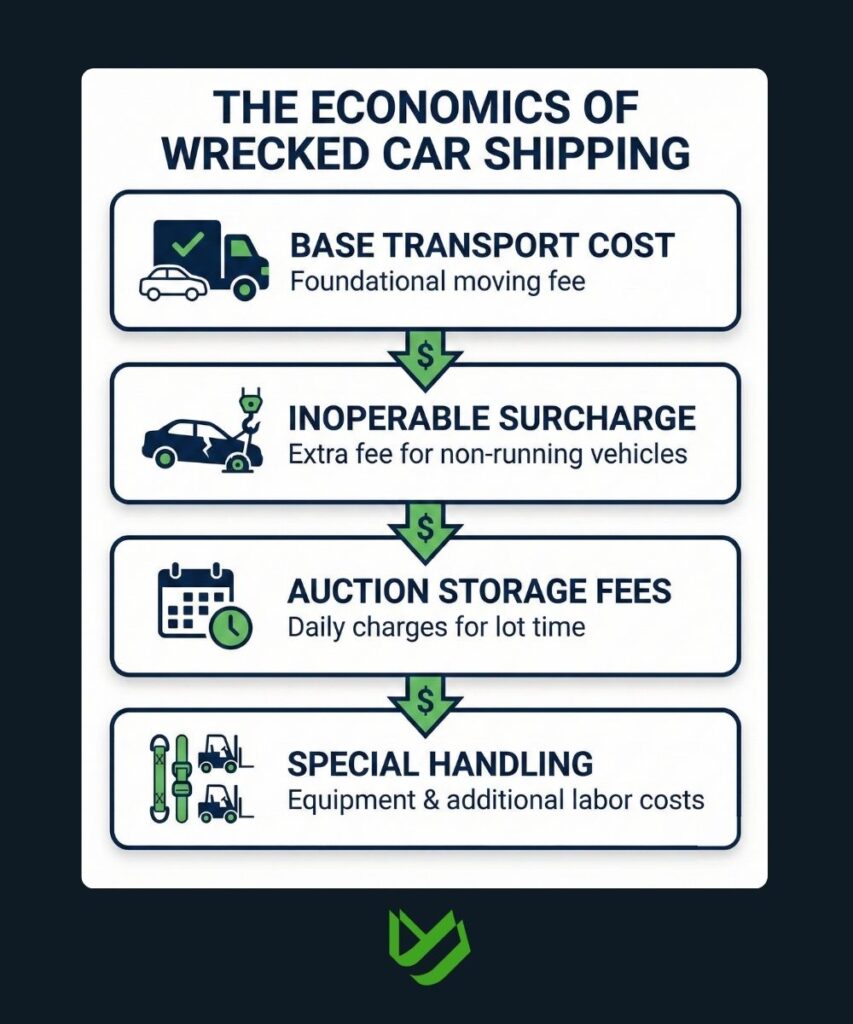
Normally, you’d pay between $150 and $500 more for a non-functioning salvage vehicle. This fee covers:
But auctions like Copart and IAAI aren’t parking lots; they’re high-turnover businesses. They generally will allow for only 2-3 days of free storage. And thereafter there are $50-100 (a day in exorbitant sums). If your transporter is delayed or if you submitted an incorrect Buyer Number, those fees come out of your pocket. Before bidding, you need to read the most current industry advice on auction logistics to make sure you don’t run into these traps.
Shipping a car from your neighbor’s driveway is simple. Sending one from a large salvage yard is a bureaucratic obstacle course. The National Motor Vehicle Title Information System (NMVTIS) tracks every salvage move to avoid “title washing” and fraud, but as a buyer, you need to deal with the paperwork.
When you move a wrecked automobile, you are transporting a risk. The shipper and the carrier bear the responsibility of safety.
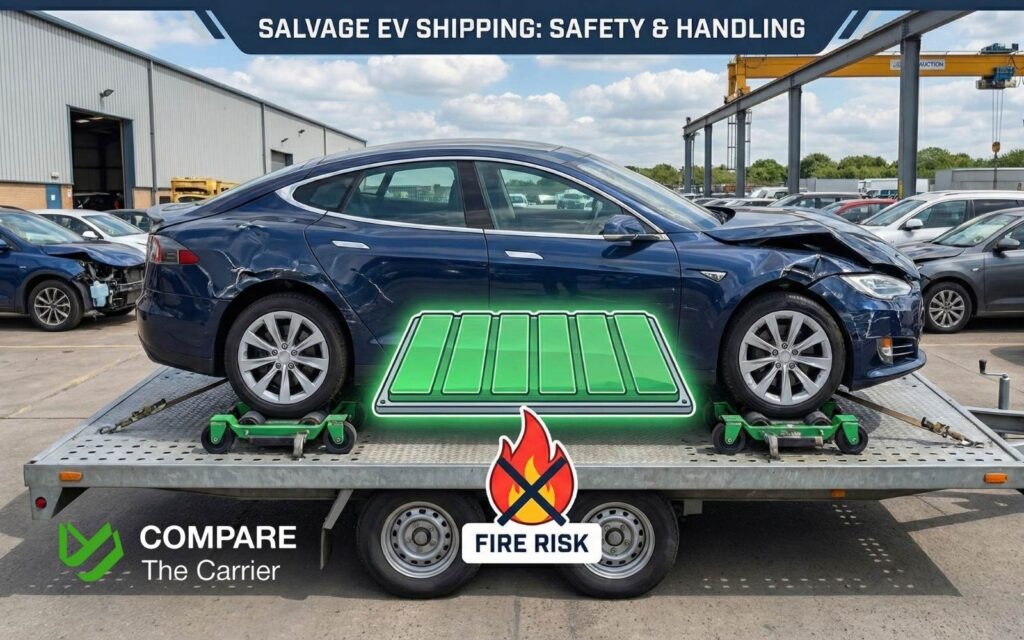
With the surge of electric vehicle (EV) adoption, today salvage auctions include Teslas, Rivians, and Lucids. Shipping a salvage EV is a totally different beast from shipping a gas car.
If you’re shipping a salvage vehicle abroad, the rules get much stiffer. Many countries have laws against importing “junk” or “scrap.”
At the end of the day, salvage car shipping is a trust thing. You are trusting a driver to carry a fragile, broken thing that will very likely break further if you don’t take proper care. As many brokers will quote you the lowest possible price, those “budget” carriers often don’t have the winches or insurance coverage for high-risk salvage moves.
You have to look past the number when you compare shipping rates. Look for “Inop” experience and check reviews of other auction buyers. A carrier familiar with the particular gate procedures at a Copart yard in Texas is worth more than a carrier who has sold new vehicles from a dealership.
The trip does not stop when the truck leaves the auction lot. You have to be ready for the “landing.”
Transporting a salvage vehicle is a complex puzzle, but with the right information and a specialized carrier, it is solvable. By disclosing the car’s true condition, preparing your documentation, and understanding the specialized equipment required, you can ensure your project car arrives safely and ready for its second life.
Safety, transparency, and the right equipment are the pillars of salvage logistics. Whether you’re a hobbyist or a professional rebuilder, the goal is the same: getting the car home without adding to the damage.
Ready to move your salvage project? Don’t leave the logistics to luck. You can find a specialized salvage carrier and get an honest, all-inclusive quote today. Let the experts handle the heavy lifting while you focus on the rebuild.
Yes, but it is much more difficult. Without keys, the steering column may be locked, preventing the wheels from turning. The carrier will need to use “wheel dollies” or a forklift to load the vehicle. Always inform your transporter if the keys are missing.
A dry run fee is charged when a driver arrives at the pickup location (e.g., an auction) but cannot load the car. This usually happens because the storage fees haven’t been paid, the Gate Pass is missing, or the car is in much worse condition than described (e.g., it was listed as a “roller” but is actually an “Inop”). You will be charged for the driver’s time and fuel.
Most personal auto insurance policies do not cover a vehicle while it is in the possession of a commercial transporter. However, the carrier’s insurance should cover the vehicle. Be aware that for salvage cars, insurance typically only covers new damage that occurred during transit.
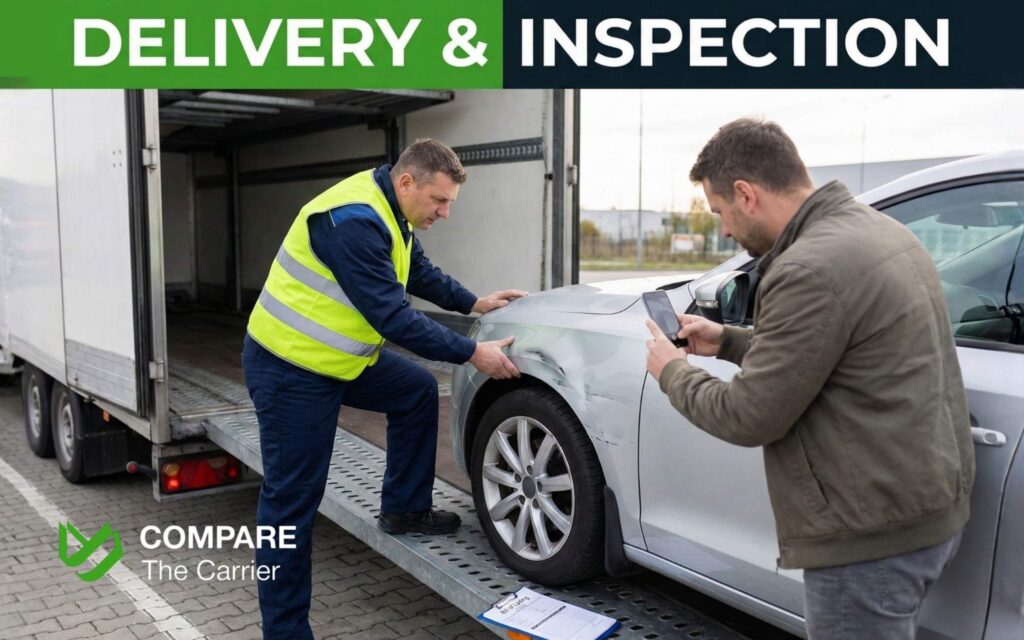
This is the most common dispute in salvage shipping. The key is the Bill of Lading (BOL). You must have high-resolution photos from the auction (or have the driver take them) at the time of pickup. If the car arrives with a new dent or a smashed windshield that wasn’t there before, the BOL is your primary evidence.
Generally, no. Most carriers and auction yards prohibit loose parts inside the vehicle. They can shift and break glass or fly out during transit. If you must ship parts, they should be boxed, secured in the trunk, and disclosed to the carrier.
Auctions can be a nightmare for drivers. Wait times can be 3–4 hours, and the yards are often cramped and muddy. Some carriers avoid them entirely to maintain their schedules. This is why you need a carrier who specifically advertises “Auction Pickup” services.
Usually, you have 2–3 business days from the date of sale. After that, storage fees begin to accrue daily. It is critical to book your professional door-to-door car transport as soon as you know you are the winning bidder.
It is possible, but rare. Enclosed trailers have very low clearance and are designed for high-end, running vehicles. Most winching operations for salvage cars require the space and angles only available on an open trailer.






Don't have time to fill out the form?
Call a transport company directly to get a quote now!
Select the category you need
Partner with Compare The Carrier & Grow!
We're open to collaborations, partnerships, and mutual growth! Whether you're an individual or a business, we offer exciting opportunities to work together. Fill out the form below to explore how we can collaborate.
Something Went Wrong
We're sorry, but something went wrong. Please briefly describe the problem you experienced in the text area below. Providing your contact information will allow us to follow up if needed.

Thank you,
your form has been accepted.
Your form has been successfully submitted. We appreciate your effort — our team will review it shortly and take the next steps.


