

Tow Dolly vs. Car Hauler: Which Transport Method Is Better?
Let's be honest for a second. The process of moving a car...
16 February 2026
Buying a truck in 2026 can feel like a battle between your wallet and your ego. Prices are insane, full-size trucks easily top $60,000, which is crazy for a vehicle made to haul stuff. The good news? You don’t have to spend a fortune to get a solid workhorse that won’t leave you stranded on a Tuesday morning.
Calculate Shipping Quotes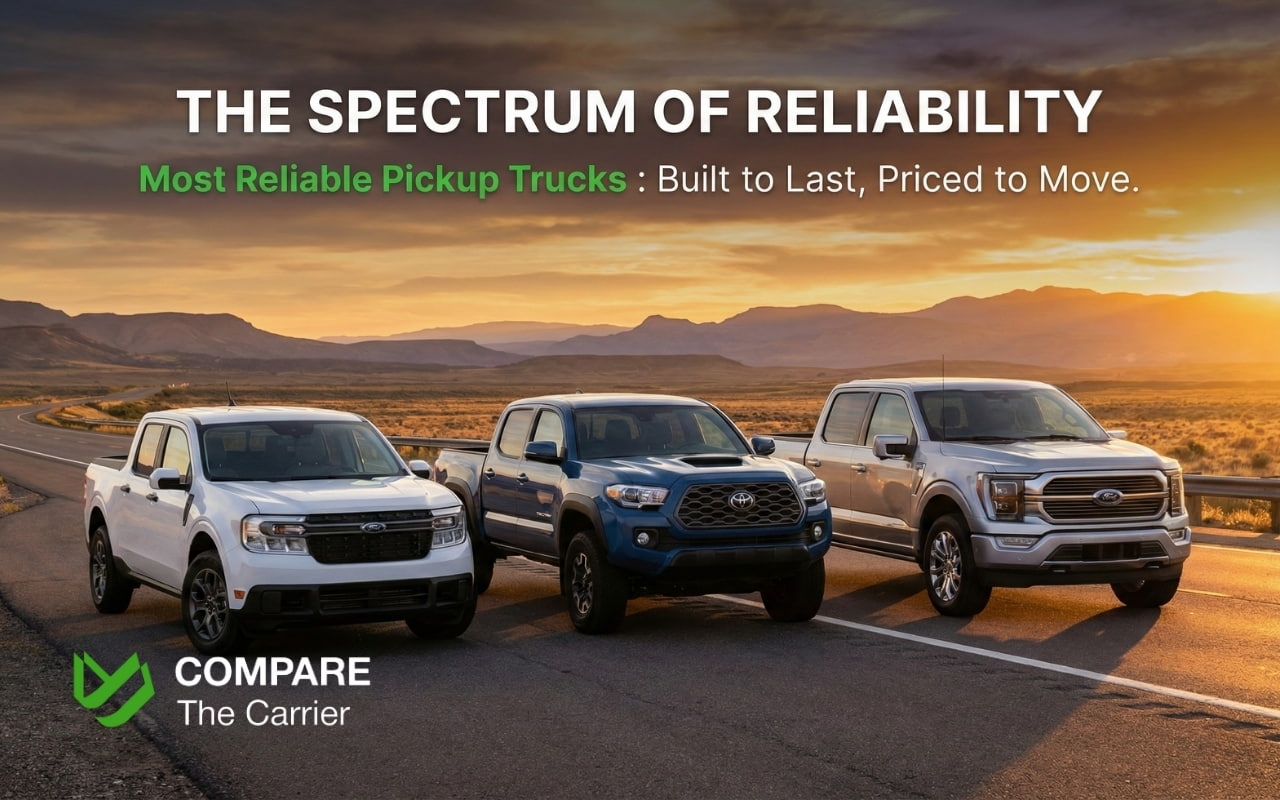
What is the most reliable used truck under $20,000? For a budget of $20,000, the 2012–2015 Toyota Tacoma and 2011–2014 Toyota Tundra with the 5.7L V8 are the most reliable options in 2026. The Nissan Frontier (2013–2019) also remains a top-tier choice due to its simplified mechanical design and high availability of affordable replacement parts. These models consistently exceed 200,000 miles with standard maintenance, offering the best long-term value in the used market.
Picking a reliable truck isn’t just about spotting a Toyota badge and calling it a day. It’s about knowing which engines and drivetrains really hold up over time and which are just fancy headaches waiting to happen. Whether you’re after a small, city-friendly Maverick or a big 2500 for heavy towing, the goal is the same: a truck that lasts.
In this guide, we’re breaking down the most dependable trucks for every budget. We’re not just eyeballing spec sheets; we’re looking at real-world data, mechanic reports, and hands-on experience. If you want a truck that can hit 300,000 miles without a transmission swap, you’re in the right place.
If your budget is tight, you are likely looking at the used market or the “compact” segment. Let’s get one thing straight, low cost doesn’t have to mean high risk. Actually, some of the most reliable engines ever built reside in the older, simpler pickups that people often overlook.
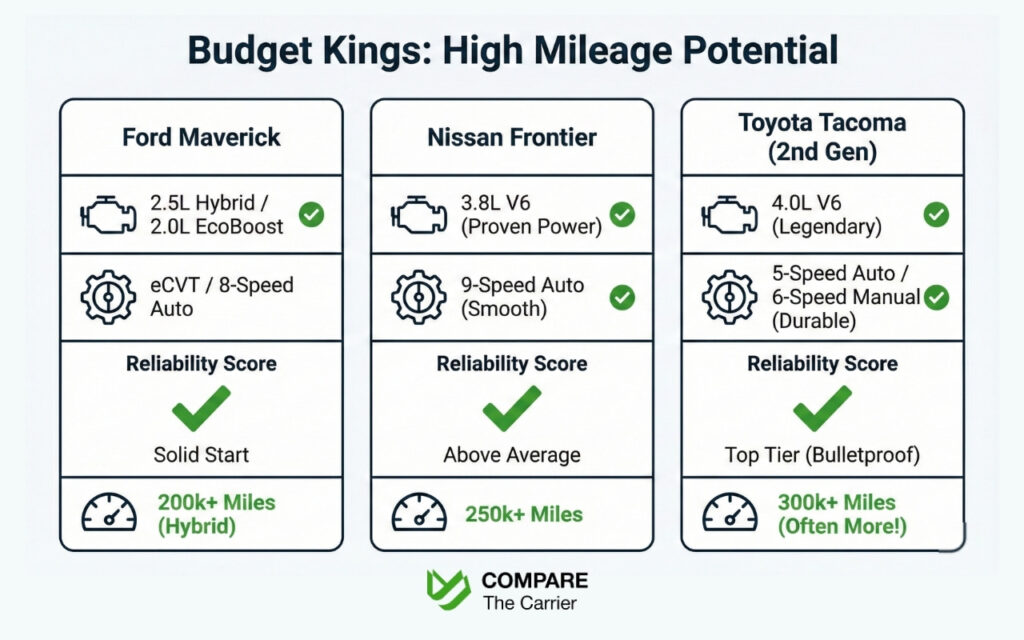
The Maverick is currently the MVP of the budget world. Starting around $27,000, it’s a unibody truck that shares its DNA with the Escape, which makes it drive like a car but work like a mule.
I’ve seen these trucks hit a quarter-million miles with nothing but oil changes and prayer. The second-gen Frontier is old-school. It uses a naturally aspirated V6 and a five-speed automatic that is virtually bulletproof. It’s not flashy. The interior looks like it belongs in 2008 because, well, it does. But it works. If you are shipping one of these across the country after finding a clean example on Marketplace, you should look for the best car shipping companies to ensure it arrives exactly as described.
Yes, the “Tacoma tax” is real. You will pay more for a 15-year-old Toyota than a 10-year-old Chevy. But you are paying for a legendary 4.0L V6 that is arguably one of the best engines ever made. Actually, from a buyer’s point of view, these are the safest places to park your money. They hold their value so well that it’s almost frustrating.
This is the sweet spot. You get modern safety features, decent tech, and enough towing capacity to handle a boat or a small camper.
The “Taco” recently underwent a massive redesign. It now uses a 2.4L turbocharged four-cylinder. I know what you’re thinking, “Turbos mean more problems.” But Toyota has a reputation for over-engineering their cooling systems and turbos. It’s a beefier truck than its predecessor, with a much more refined ride. Just be prepared to wait; the demand is still high.
I hate when traditional truck guys call the Ridgeline a “minivan with a bed.” Honestly? It’s a total nightmare for their ego, but it’s the smartest buy on this list for 90% of people. Because it’s unibody, it handles like an SUV. The 3.5L V6 is a Honda staple, smooth, reliable, and efficient. It won’t rock crawl like a Jeep, but it will last forever. If you find one in a different state, using open auto transport is a cost-effective way to get it home without adding unnecessary miles.
The Colorado is a versatile workhorse. With up to 308 horsepower from its V6, it offers plenty of grunt. Longevity-wise, these can comfortably hit 250,000 miles. I’ve seen some owners complain about minor electrical gremlins, but the core mechanicals are solid.
When you move into full-size territory, you are paying for capability. You want a frame that won’t flex and a transmission that can handle 10,000 pounds on a 6% grade.
America’s favorite truck for a reason. The F-150 offers a massive array of engines, but for reliability, the 5.0L “Coyote” V8 and the 2.7L EcoBoost are the ones to beat. The aluminum body panels mean you don’t have to worry about the cab rusting out in five years if you live in the Salt Belt.
The Tundra is currently in a weird spot. The new twin-turbo V6 had some early-production issues (machining debris in the engines), but Toyota is standing by them amid massive recalls. By 2025, these kinks will be largely ironed out. It’s a high-tech beast that still embodies Toyota’s “built to last” philosophy. If you’re buying a top-tier Capstone trim, you should definitely consider enclosed car shipping to protect that premium paint and chrome during transport.
The “Ram 1500 Classic” is still a fantastic value. It uses the legendary 5.7L HEMI V8 or the 3.6L Pentastar V6. Both are proven. The ride quality of a Ram is usually superior to that of Ford or Chevy, thanks to the coil-spring rear suspension. Just watch out for the “HEMI tick” as the miles rack up.
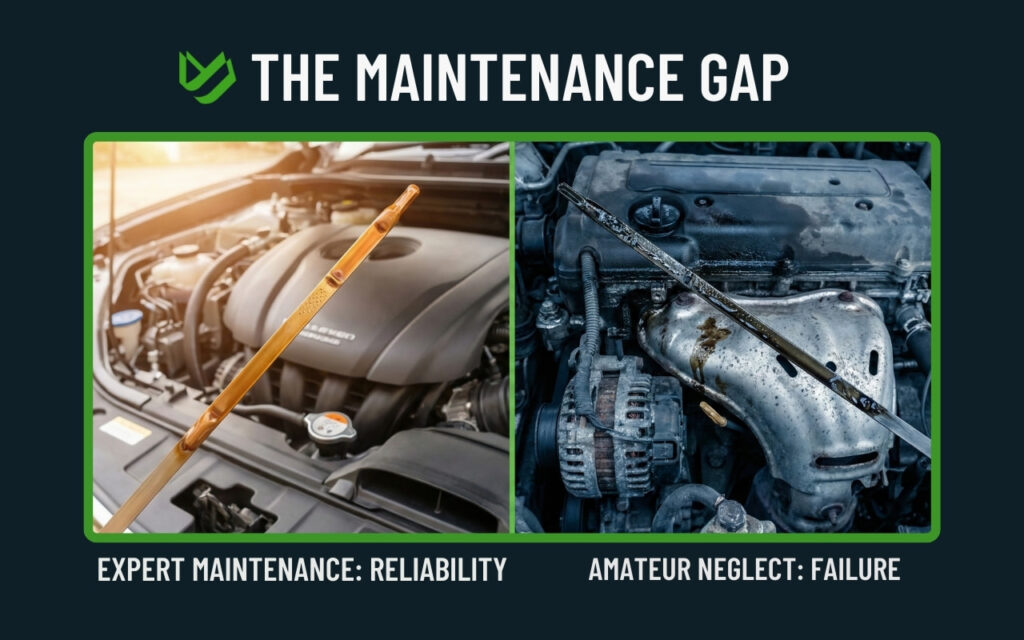
Let’s be real, trucks don’t break down because they’re poorly built. Most of the time, they fail because maintenance was ignored. Maybe you skipped it, or maybe the previous owner did. Most trucks die in what I call the “maintenance gap,” that period between when a part starts acting up and when it completely fails.
Physics doesn’t care about excuses. Hauling a 7,000-pound trailer every weekend without changing the transmission fluid? You’re asking for trouble. And that “lifetime” fluid? It’s marketing hype, not magic.
I’ve seen it happen too many times: someone buys a “reliable” Silverado, skips oil changes, ignores a manifold leak, and six months later, there they are on the side of the road, white-knuckling the steering wheel, wondering why their engine just turned into an expensive paperweight. Total nightmare.
Trucks are living machines. They need grease, clean air, and proper care. If you’re not willing to crawl under the chassis with a grease gun, don’t buy a used rig with 150,000 miles. You’re not saving money, you’re just delaying the inevitable. Buying a truck is only half the battle. Getting it home, keeping it running, and knowing you can trust your transport, that’s the real skill. Don’t be the guy with the broken truck. Be the one with the clean dipstick.
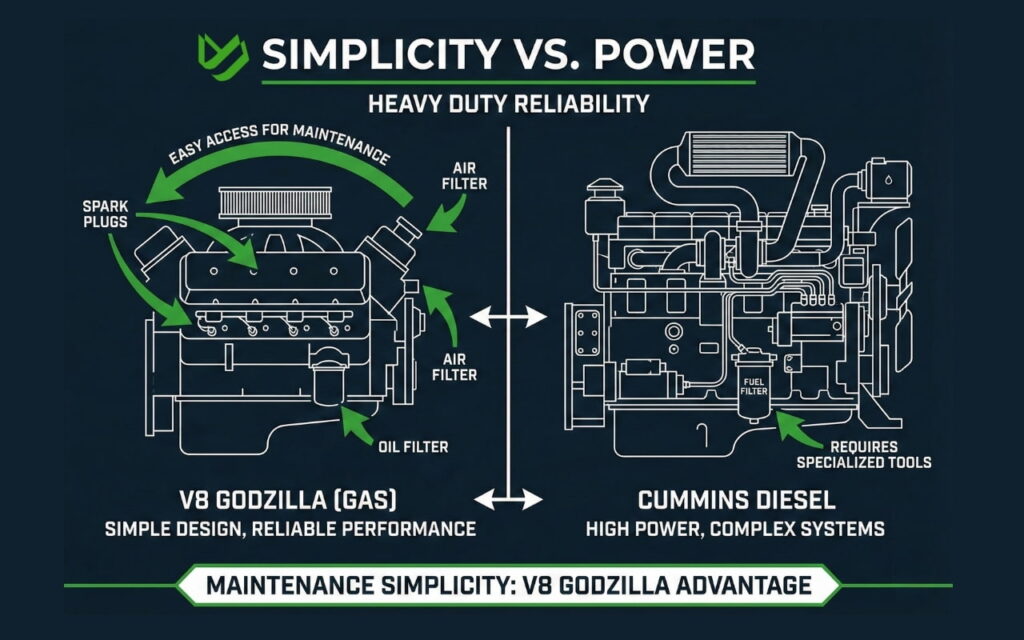
If you need to move a 15,000-pound horse trailer, you aren’t looking at a 1500. You need a 2500 or 3500. Here, diesel is king, but gas has its place.
The 6.7L Power Stroke diesel is a monster. It’s designed for a 500,000-mile service life. If you don’t need a diesel, the 7.3L “Godzilla” V8 is an old-school pushrod engine that is incredibly reliable because it’s so simple. There are fewer things to break.
The inline-six Cummins diesel is the gold standard. Because it’s an I6, there is more room in the engine bay for cooling and maintenance. It’s a loud, vibrating beast that feels like a tractor, but it will pull your house off its foundation and ask for more.
Being reliable isn’t just about avoiding the mechanic, it’s about the real cost of keeping your truck on the road.
Before making a long-distance purchase, always check an auto shipping cost calculator. It can mean the difference between a smart deal and a financial headache.
Don’t just trust the seller trucks can hide problems, and people aren’t always honest.
Finding the right truck in 2026 isn’t just about the lowest price it’s about getting the best value. Your truck is a tool. It gets you to work, the job site, or the campsite without headaches.
Whether it’s a vintage Ranger or a modern Silverado, giving your truck proper care isn’t a luxury it’s how you make it last. If you’re shipping a specialty or high-value rig, don’t trust just any carrier. Go with companies that know how to handle valuable vehicles safely.
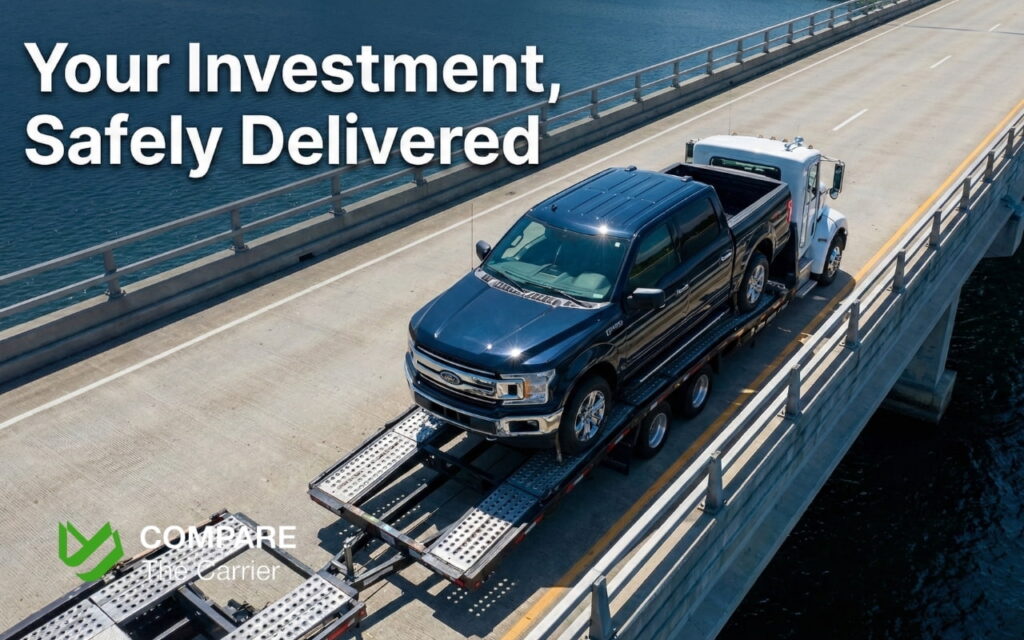
The choice is simple: do you want to end up fixing your truck on the side of the road, or driving it where you need to go? A poorly maintained truck is stressful and unnecessary.
Do you want a reliable fleet for your business, or just to move your current truck safely across state lines? The first step to making sure your vehicle is handled properly is to request a free car shipping quote.
Don’t let your truck turn into a glorified paperweight. Take care of it, drive it, and ship it the right way. Monarch Transport Group is here to help make it easy.
Under $10,000, the most reliable used trucks in 2026 are the 2006–2011 Ford Ranger and the 2005–2009 Toyota Tacoma. For full-size capability, the 1999–2006 Chevrolet Silverado 1500 with the 5.3L V8 and the 2003–2008 Toyota Tundra offer exceptional longevity. These models frequently exceed 250,000 miles, provided the chassis remains rust-free and scheduled maintenance, specifically timing belts and transmission fluids, is documented.
The Ford Maverick remains the best affordable new truck, with 2026 MSRPs starting around $35,000 for hybrid models. For used buyers seeking maximum value, the 2010–2013 Ford Ranger offers a robust, body-on-frame design that is easy to maintain. These compact trucks provide the best balance of fuel efficiency and utility for light-duty work, making them ideal for urban contractors and daily commuters.
A well-maintained Ford F-150 typically lasts between 200,000 and 250,000 miles, with many reaching the 300,000-mile mark. Longevity depends significantly on engine choice; the 5.0L Coyote V8 and 2.7L EcoBoost are currently rated as the most durable powertrains. Following a strict 5,000-mile oil change interval and servicing the 10-speed transmission every 50,000 miles is critical to achieving maximum engine life.
Standard open auto transport is the most efficient and cost-effective method for shipping pickup trucks cross-country. However, for trucks with modifications like lift kits, oversized tires, or high-value paint jobs, enclosed car shipping is recommended. Enclosed carriers provide climate-controlled environments and protection from road debris, which is essential for preserving the condition of specialized or custom-built automotive assets during long-distance transit.
Pickup trucks consistently maintain higher resale values than sedans and electric vehicles. In 2026, data shows that trucks lose approximately 35% to 40% of their value over five years, compared to over 50% for standard passenger cars. This superior value retention is driven by high demand in the secondary market for reliable work vehicles, making trucks a safer long-term investment for private owners.
Shipping a pickup truck typically costs $150 to $200 more than a standard sedan due to increased weight and cargo space requirements. In 2026, average open-carrier rates range from $0.60 to $1.25 per mile, depending on the distance. Using an auto shipping cost calculator is essential for obtaining accurate quotes, as final pricing fluctuates based on the truck’s height, weight, and seasonal route demand.









Don't have time to fill out the form?
Call a transport company directly to get a quote now!
Select the category you need
Partner with Compare The Carrier & Grow!
We're open to collaborations, partnerships, and mutual growth! Whether you're an individual or a business, we offer exciting opportunities to work together. Fill out the form below to explore how we can collaborate.
Something Went Wrong
We're sorry, but something went wrong. Please briefly describe the problem you experienced in the text area below. Providing your contact information will allow us to follow up if needed.

Thank you,
your form has been accepted.
Your form has been successfully submitted. We appreciate your effort — our team will review it shortly and take the next steps.


