Decoding Drayage: Navigating Costs and Strategies in the US Shipping Industry
Unlock the secrets of drayage costs in the USA. Discover ...
12 January 2024
Stop letting demurrage and detention fees eat your margins. If your containers are sitting at the terminal, you’re likely making a critical mistake in how you manage your drayage leads and carrier capacity.
Contact Us Now
Drayage is arguably the most volatile segment of the global supply chain. When a container drops at a congested port, the clock immediately starts ticking on your free time. Every hour wasted searching for a reliable truck with the right chassis means escalating per diem charges, frustrated shippers, and disrupted warehouse schedules. Messy drayage operations don’t just create a bottleneck; they actively drain your profitability.
The root cause of these headaches rarely comes down to port operations alone. More often, it’s a direct result of poor lead management and outdated capacity sourcing. Relying on fragmented carrier lists, endless phone calls, or generic load boards to move high-priority boxes sabotages your own efficiency. Securing the right carriers, verifying compliance, and providing accurate quotes shouldn’t be a daily scramble.
To eliminate these delays, modern brokerages and drayage providers need a predictable, automated system for attracting and qualifying high-intent B2B leads. By streamlining how you source both shippers and carriers, you stop fighting for capacity and start scaling a highly profitable port operation.

Drayage is the critical “first mile” of imported freight the specialized trucking leg that moves shipping containers from congested ports to warehouses or rail yards.
In 2026, drayage is far more complex than just a short truck ride. It’s a high-stakes operation where delays are measured in thousands of dollars. Here’s why managing drayage capacity is more challenging than ever:
Efficient drayage isn’t just about hiring a trucker; it’s about strategic sourcing and building a pipeline of reliable B2B capacity.
Smooth drayage operations hinge on one crucial factor: the quality of your B2B leads. Whether you are a broker looking for reliable owner-operators or an asset-based carrier hunting for direct shippers, poor lead management will derail your operations.
Here are the top mistakes logistics companies make in 2026:
These lead mishaps can create a domino effect, leading to higher costs, delayed shipments, and ultimately, unhappy customers.
These drayage headaches can be avoided! Learn specific tips and strategies for overcoming drayage delays.
And one more good news is, there’s a better way! In the next section, we’ll explore the power of quality drayage leads and how they can revolutionize your drayage operations.
So, you’ve seen the lead-related pitfalls that can snag your drayage operations. Now, let’s dive into why high-quality drayage leads are the secret weapon for efficient “first-mile” success.
A consistent pipeline of high-quality drayage leads is the ultimate cheat code for protecting your margins and scaling your port operations. Here is how upgrading your lead generation strategy transforms your business:
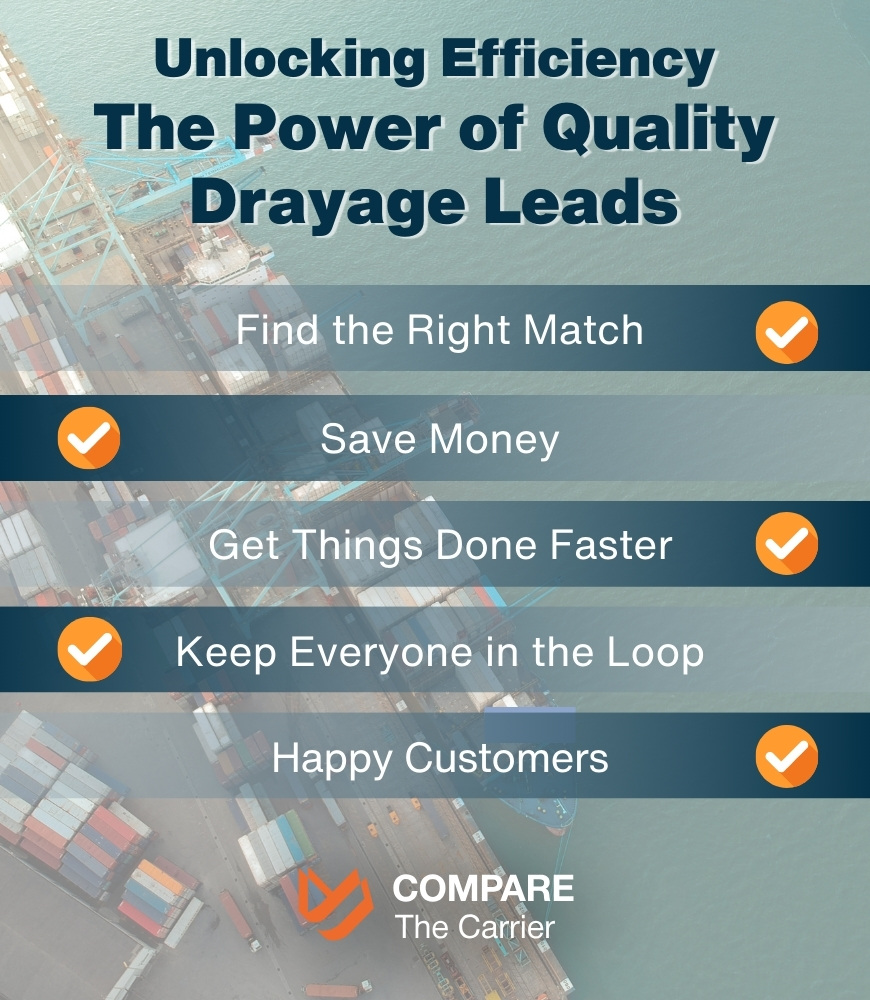
Overall, quality drayage leads empower you to make smarter decisions throughout your drayage operations. They save you time, money, and the frustration of dealing with unreliable carriers.
Drayage costs can be unpredictable, fluctuating with market conditions. Get a breakdown of those factors and how to control them in our article on drayage costs.

Let’s face it, we’ve all been there. You’ve got a shipment arriving at port, and the clock is ticking. But instead of a smooth transition to the warehouse, you’re stuck in drayage quicksand.
Here are a couple of scenarios that might look familiar:
The Sourcing Labyrinth: Sarah is a freight broker managing medical supply imports. Because her agency lacks a digital presence, she relies on manual outreach to find drayage carriers. The process is painfully slow, and half the carriers she contacts don’t have the necessary TWIC cards or reefer capacity. By the time she secures a truck, her client has already incurred two days of demurrage fees.
The Spot Market Trap: John runs a regional drayage fleet. Because he doesn’t generate his own direct shipper leads, he relies entirely on third-party dispatchers and spot market freight. He has zero leverage to negotiate rates and suffers from extreme revenue volatility during off-peak seasons.
These are just a couple of examples of how poor drayage lead management can create headaches and eat away at profits.
So, what’s the solution?
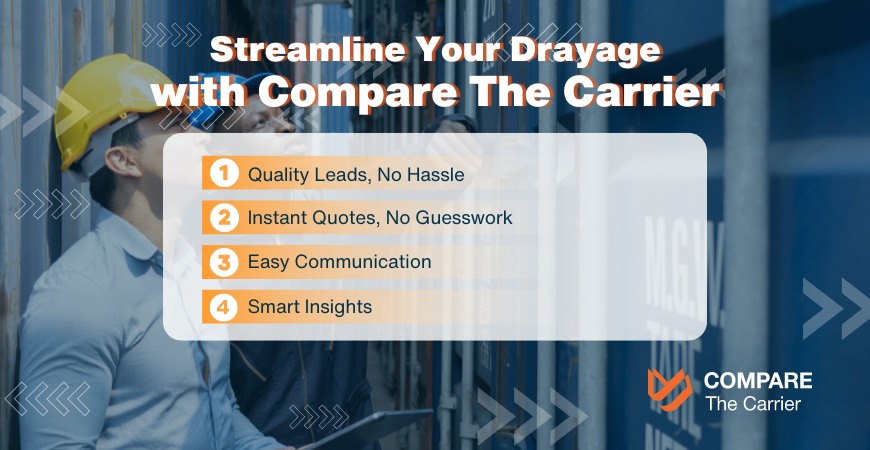
To stop chasing freight and start attracting high-volume shippers and reliable carriers, you need a specialized marketing approach. That’s where Compare The Carrier Digital Agency comes in. We don’t just sell leads; we build the infrastructure so your logistics business generates its own.
Here is how we help you dominate the drayage market:
By leveraging the power of Compare The Carrier’s drayage lead generation and management tools, you can avoid the costly mistakes that plague so many businesses. Imagine the peace of mind of knowing your shipments are in the hands of reliable carriers, at competitive rates, and with clear communication throughout the process. That’s the Compare The Carrier difference!
We’ve learned that drayage is that crucial link in the global supply chain. Yet, many companies overlook the importance of effective drayage lead management. Poorly handled leads lead to delays, rising costs, and customer frustration.
The good news is, you don’t have to settle for drayage drama. Quality drayage leads are the key to ensuring timely deliveries, keeping costs down, and building trust with your customers.
Compare The Carrier simplifies the process. Our platform connects you with pre-vetted carriers, puts real-time quotes in your hands, and streamlines communication for smooth drayage operations. This allows you to focus on the big picture of your logistics strategy, knowing that the “first mile” of your import journey is covered.
Ready to ditch the drayage headaches and ship smarter?
Visit Compare The Carrier today or get in touch with our team to discover how we can transform your drayage operations!
In 2026, successful drayage carriers and brokers generate B2B leads by shifting from public load boards to targeted inbound marketing. This involves utilizing localized SEO to capture searches like “Port of Long Beach drayage capacity,” running specific LinkedIn ad campaigns targeting supply chain directors, and showcasing API integration capabilities.
Drayage rates in 2026 are heavily driven by port congestion, fluctuating fuel surcharges, and strict environmental compliance mandates, such as California’s zero-emission vehicle requirements. Additionally, chassis split fees, terminal dwell times, and driver shortages significantly impact spot market pricing, making long-term contracted capacity more appealing for high-volume shippers.
Brokers can significantly reduce demurrage and detention fees by building a robust network of specialized drayage carriers equipped with real-time GPS tracking and automated terminal appointment systems. Proactive lead generation ensures immediate access to compliant capacity, allowing brokers to retrieve containers well before the allotted free time expires.
The sales cycle for dedicated B2B drayage contracts typically ranges from three to six months. Securing consistent port freight requires multiple touchpoints with procurement teams, proving safety compliance, and demonstrating technological capabilities like EDI/API tracking. Spot market leads close much faster but offer lower margins and higher volume volatility.
Localized SEO is critical because supply chain managers actively search for capacity near specific maritime terminals or rail ramps. Ranking for targeted long-tail keywords, such as “hazardous materials drayage Port of Newark,” directly connects carriers and brokers with high-intent shippers, drastically lowering customer acquisition costs compared to cold calling.










Select the category you need
Partner with Compare The Carrier & Grow!
We're open to collaborations, partnerships, and mutual growth! Whether you're an individual or a business, we offer exciting opportunities to work together. Fill out the form below to explore how we can collaborate.
Something Went Wrong
We're sorry, but something went wrong. Please briefly describe the problem you experienced in the text area below. Providing your contact information will allow us to follow up if needed.

Thank you,
your form has been accepted.
Your form has been successfully submitted. We appreciate your effort — our team will review it shortly and take the next steps.