

Hot Shot vs. Full-Size Car Carrier: Which Is Better?
Hot shot and full-size car carriers serve different shipp...
20 October 2026
A small rental startup in Ohio can pick up a few used sedans at auction, get them titled and insured, and work the rest out as bookings come in. Try that order in Dubai and you’ll own some nice cars you aren’t allowed to rent out. Over there the permits come first. They also quietly decide which cars make sense at all.
Calculate Shipping Quotes
The fleet itself looks different, too. American newcomers mostly start with midsize sedans and crossovers, because that’s what airport travelers and insurance-replacement customers ask for. Dubai leans the other way. Open a listing page to rent supercars in Dubai and you’ll find a Ferrari next to a Lamborghini next to a McLaren, put up by small local outfits that compete on deposit and mileage terms rather than on the car alone. For a would-be operator, that page is free market research. Who are you up against? And is budget really the only lane?
In this guide
In the U.S., sourcing mostly comes down to who you buy from. Dealer fleet desks and wholesale auctions are the usual answer. Big players also use manufacturer buyback programs, where the carmaker takes the vehicle back at a set value after a few months, but small operators often can’t get in. They end up with “risk cars” they own outright and have to resell themselves. So resale value matters from day one.
Moving them is a trucking job, and a familiar one to anyone who has booked a carrier. Open trailers work fine for everyday models. Anything you’d hate to see stone-chipped on I-80 goes enclosed, which costs noticeably more per car.
Dubai is a different puzzle. Local dealers are the simple route, but some operators import, especially at the exotic end, and those cars usually come in through Jebel Ali. Customs duty is 5% of the CIF value (price plus insurance and freight), with 5% VAT on top. The car has to be left-hand drive, and GCC spec is strongly preferred. A U.S.-spec import can still be registered, though it typically needs a conformity certificate first. Check that before you book the container, not after.
Setup consultancies in Dubai describe roughly this sequence:
The U.S. has no national rental license. You register the business, title and register cars state by state, and buy coverage written for a rental fleet, since a standard auto policy usually won’t cover paying renters. Rental taxes and airport fees change from one state or county to the next.
Tolls show the gap well. An American operator juggles E-ZPass on the East Coast, SunPass in Florida, FasTrak in California and pay-by-plate bills on some roads. Dubai has one system, Salik. Each rental car carries a tag on the company’s account, and crossings are usually billed to the renter after the car comes back, often out of the deposit. Traffic fines come through the company as well. Somebody on staff will spend real time matching fines to rental agreements.
Then there’s the heat. A Dubai summer is brutal on batteries and air conditioning, and a supercar with a dead battery is a very expensive paperweight. Peak season flips as well. Visitors arrive in numbers from roughly October to April, while U.S. leisure rentals usually peak in summer.
In the U.S., you can learn the trade with a few cars and a carrier you trust. In Dubai, get a landed-cost quote from a freight forwarder and your RTA questions answered before you sign a lease on anything. There, the permit file is the business plan.
Getting that first batch of cars to the lot is its own job. A few questions come up again and again when the fleet starts at an auction.
How do car rental companies transport vehicles from auctions?
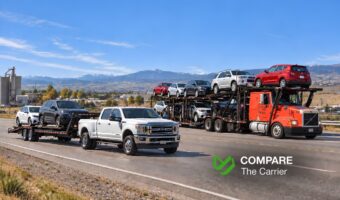
Standard sedans and SUVs usually ride on open carriers – the same trailers dealers use for new stock. Luxury, exotic, or high-value cars tend to go enclosed for the extra protection. The right call comes down to the car’s value and condition, the pickup yard, and how tight the delivery window is. Line up transport early so the first cars don’t sit racking up storage fees.
Is enclosed transport worth it for luxury rental cars?
For an exotic or six-figure car, often yes – an enclosed trailer keeps off road debris, weather, and dust in transit, and a single stone chip can cost thousands to put right. For everyday fleet vehicles, open transport is cheaper and does the job. Weigh the price gap against what the car is worth and how exposed the route is.
How much does it cost to ship several cars for a fleet?
Price moves with the number of cars, the distance, vehicle size, open vs. enclosed, and how flexible pickup and drop-off are. Booking multiple cars together can lower the average cost per car, but how much depends on carrier availability and the route. Get quotes against your real fleet size and locations before you set a budget.
What should a rental company check before shipping auction cars?
Confirm each car is released for pickup and note the auction’s removal deadline – storage fees start once it passes. Check whether the car runs, since a non-runner needs a carrier with a winch or special loading. Pass on accurate dimensions and flag any damage up front. These details decide which carriers can take the job and what they’ll charge.
Can you ship auction cars across state lines for a new fleet?
Usually yes. Cars are moved between states before registration is finished all the time – the title and temporary-permit rules depend on the states involved, but the transport itself is routine. The main variables are distance and route: a regional run can take a few days, coast-to-coast more like a week to ten days once the car is loaded. If your auctions and your lot sit in different states, state-to-state car shipping is the piece to plan around when you set launch dates.








Don't have time to fill out the form?
Call a transport company directly to get a quote now!
Select the category you need
Partner with Compare The Carrier & Grow!
We're open to collaborations, partnerships, and mutual growth! Whether you're an individual or a business, we offer exciting opportunities to work together. Fill out the form below to explore how we can collaborate.
Something Went Wrong
We're sorry, but something went wrong. Please briefly describe the problem you experienced in the text area below. Providing your contact information will allow us to follow up if needed.

Thank you,
your form has been accepted.
Your form has been successfully submitted. We appreciate your effort — our team will review it shortly and take the next steps.


