

State-to-State Car Towing & Shipping: Complete 2026 Guide
State-to-state car towing costs $250–$1,500 depending on ...
27 July 2025
The auto transport industry is a massive, complex machine that moves millions of vehicles across the country every year. Yet, for the average person, it remains a mystery wrapped in misconceptions. If you are browsing forums or listening to a friend who shipped a car ten years ago, you might be building a strategy based on outdated information.
Calculate Shipping Quotes
Shipping a car isn’t like mailing a package. It involves heavy logistical lifting, federal regulations, variable weather conditions, and a network of drivers working under strict timelines. When you approach this process with false assumptions, you set yourself up for frustration.
We are here to dismantle the biggest myths surrounding vehicle logistics. From the “Amazon Prime” tracking expectation to the reality of delivery dates, let’s separate fact from fiction so you can ship with confidence. If you are ready to start planning, you can get legitimate vehicle shipping service quotes to see real numbers.
This is the grandfather of all auto transport myths. On the surface, the math seems simple: the cost of a shipping quote versus the cost of a tank of gas. But this calculation is dangerously incomplete.
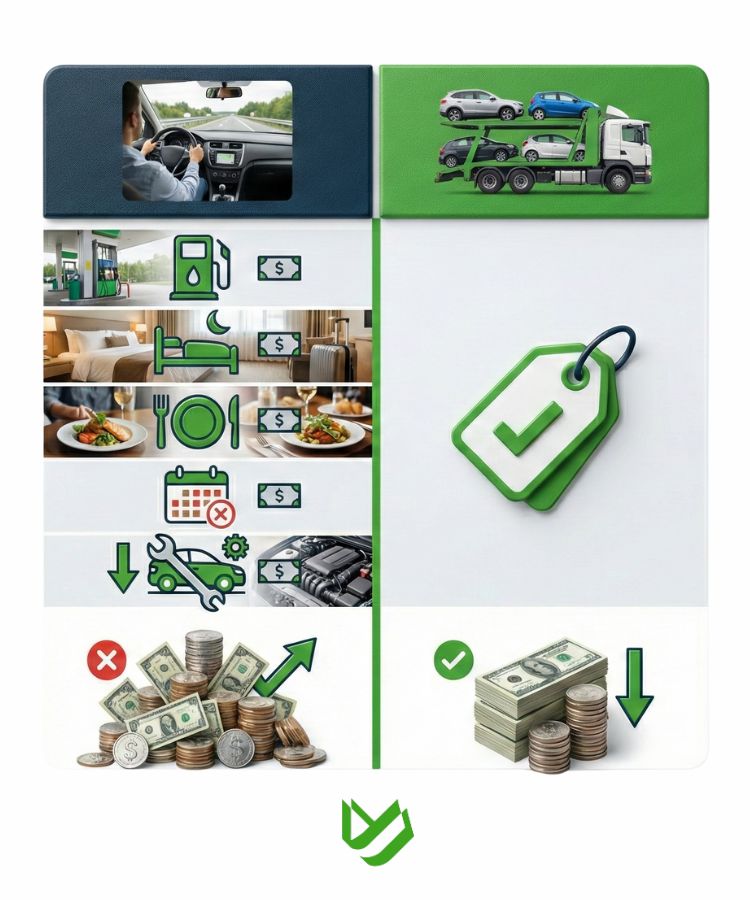
When you decide to drive a vehicle cross-country, you aren’t just paying for fuel. You are paying for:
If you are looking for cross country auto transport in 2026, doing the math correctly often reveals that professional shipping is comparable in price and infinitely superior in convenience.
The Safety Factor
Beyond the money, there is the stress factor. Long-distance driving is exhausting. Navigating unfamiliar highways, dealing with potential breakdowns in the middle of nowhere, and the physical toll of sitting for 10 hours a day is not a vacation. Professional carriers do this for a living; let them handle the wear and tear.
Pro Tip: If you are moving due to a job relocation, car shipping is often tax-deductible or covered by your employer. Always check your relocation package first.
In the age of e-commerce, we are spoiled. We expect a package to arrive on Tuesday between 2 PM and 4 PM. However, a 40-ton car carrier is not a local delivery van.
The trucking industry operates on a window, not an appointment basis. Mechanical issues, traffic jams, weather delays (such as snowstorms that close passes in the Rockies), and strict Department of Transportation (DOT) regulations on driver hours all affect the schedule.
If a driver gets stuck at a weigh station for an inspection or hits unexpected construction, that “Tuesday at 2 PM” quickly becomes “Wednesday morning.” Legitimate companies will provide you with a pickup window (usually 1-3 days) and a delivery window.
If you absolutely must have a vehicle by a specific date, standard shipping might not be the right fit. In this case, you need to look into expedited auto transport: when you need your car fast. Expedited shipping usually involves “hotshot” trucks (smaller trailers hauling 1-2 cars) or team drivers who drive in shifts to keep the truck moving 24/7. It costs more, but it buys you tighter timelines.
This is one of the most persistent and risky myths out there. Many customers think, “I’m paying for the space, why not fill it?”
Car carriers are strictly regulated by the Federal Highway Administration. They have weight limits for each axle and the total gross weight. If everyone on a 9-car hauler packs 300 lbs of personal items, the truck could be overweight by nearly 3,000 lbs. This leads to massive fines for the driver, or worse, they may have to unload their items on the side of the highway to pass inspection.
Auto transport insurance covers the vehicle, not the toaster oven or clothes inside it. If those items are stolen, you are out of luck. Furthermore, loose items can shift during transport, smashing your windows or damaging the interior upholstery.
However, rules are evolving. To understand exactly what you can and cannot do, review the car shipping with personal items. Some carriers allow a small limit (e.g., 100 lbs in the trunk), but it must be arranged beforehand.
We are used to watching our Uber driver turn the corner on our phone screens. Customers often expect the same granularity from auto transport.
While the industry is modernizing, not every truck has a public-facing GPS tracker. Drivers use ELDs (Electronic Logging Devices) for compliance, but these don’t always feed a customer app.
If you are anxious about the location, working with a responsive broker is key. They bridge the communication gap between you and the driver.
You might think that shipping a car from A to B has a fixed price, like a postage stamp. In reality, it’s like the stock market prices fluctuate based on supply and demand.
If you get three quotes for $1,200 and one for $600, the lowest one isn’t a “deal,” it’s a red flag. Unscrupulous companies use “bait and switch” tactics. They quote a low price to get your deposit, then fail to find a driver willing to move the car for that rate. They then come back to you days later, asking for more money.
To avoid surprises, you need to provide accurate details. The price depends on:
Don’t guess. Get a legitimate estimate based on real market data that reflects current carrier availability and fuel prices.
You’ve seen those open trailers on the highway, exposed to rain and wind. It’s natural to worry that your car will arrive dirty or damaged.
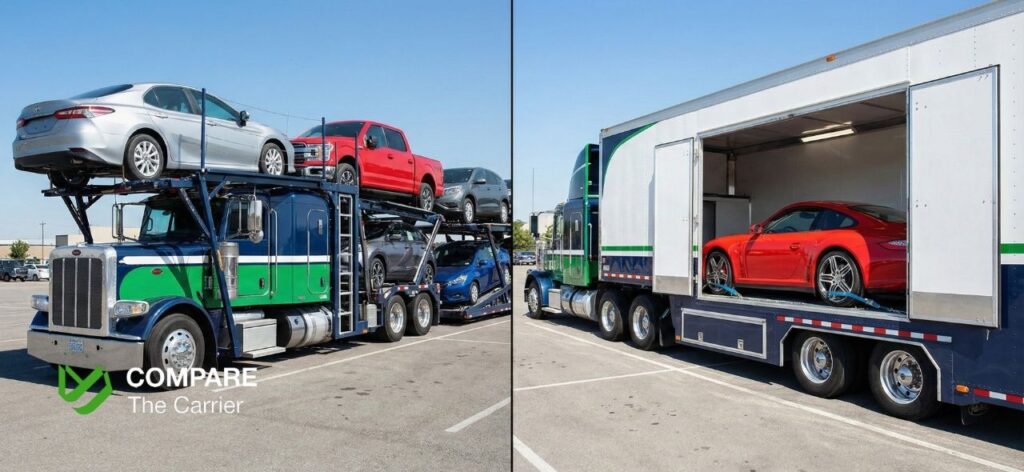
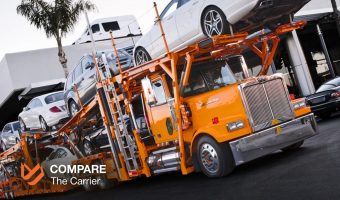
Open transport is the industry standard. It is how dealerships get their inventory. Statistically, damage occurs in less than 5% of shipments, and most of that is minor cosmetic issues. Your car is exposed to the same elements it would face if you drove it, minus the wear on the engine.
For a deeper understanding of the risks and benefits, check out open auto transport. For 90% of daily drivers (Sedans, SUVs, Minivans), this is the most cost-effective and logical choice.
However, if you are shipping a restored classic, a luxury sports car, or a vehicle with custom paint, you shouldn’t take the risk. Road debris or hail could be costly. In this case, you need protection. The top enclosed car shipping companies offer hard-sided trailers that seal your vehicle off from the outside world completely. It’s a VIP service for VIP cars.
Many people sell old cars or buy project cars online and assume they have to tow them to a shop before shipping.
The “Inop” Solution
Carriers deal with “non-runners” (inoperable vehicles) every day. As long as the vehicle can roll, brake, and steer, it can be shipped. The driver will simply use a winch to pull the vehicle onto the trailer.
This is standard practice for people buying from salvage auctions. If you are looking at ship a car from Copart, you’ll see that winching is part of the standard procedure. Just be prepared to pay a “winch fee” (usually $100-$200) because it requires extra labor and equipment.
There is a misconception that brokers are just useless middlemen adding a fee. People think, “I’ll just find a truck driver and pay them directly.”
Most drivers are owner-operators. They are busy driving 10 hours a day. They don’t have marketing departments, websites, or customer service teams. They rely on brokers to fill their trucks. If you try to find a driver yourself, you are looking for a needle in a haystack: a driver who happens to be in your city today and going to your destination tomorrow.
Brokers have access to national load boards. They can see every truck in the country. A good broker vets the carrier, checks their insurance, and negotiates the rate. The best experience usually comes from a top-rated broker managing a top-rated carrier.
The term “Door-to-Door” is an industry shorthand, but it shouldn’t be taken literally if you live in a cul-de-sac or a downtown apartment complex.
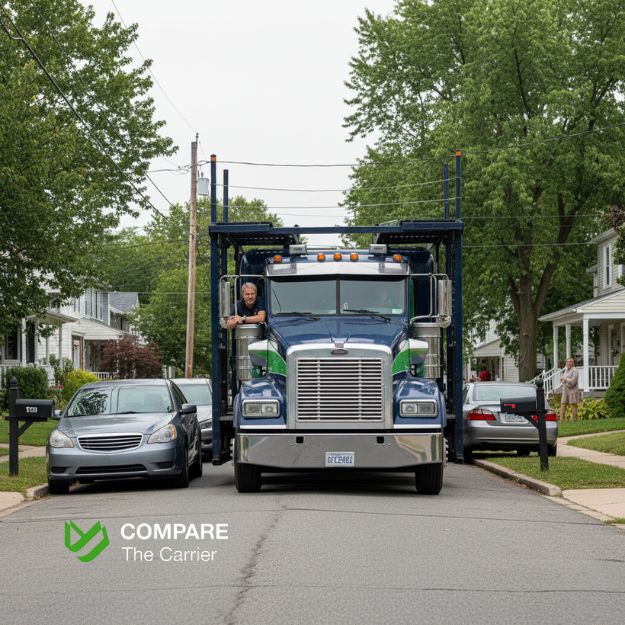
We are talking about 80-foot-long trucks. They cannot navigate narrow suburban streets with low-hanging trees, nor can they turn around in tight spaces.
If you are debating between convenience and cost, it’s worth reading about Door-to-Door vs Terminal-to-Terminal Auto Transport. Terminal shipping (dropping your car at a depot) can be cheaper, but it adds hassle. For most, direct delivery remains the superior option, even if it requires a short drive to meet the truck.
The car market has changed. You are no longer limited to your local dealership. Yet many buyers hesitate to pull the trigger on a car three states away because of the logistics.
Platforms like Carvana, Vroom, and private listings on eBay have normalized remote buying. The shipping component is now seamless. If you are looking for the best online car buying platforms, you will notice that almost all of them integrate with shipping solutions.
A common follow-up question from online buyers is whether platforms like Carfax deliver cars directly to your door. They don’t – Carfax provides the vehicle history report, while a separate transport service handles the actual delivery. Understanding this distinction removes one of the biggest sources of confusion for first-time online buyers.
Don’t let geography limit your purchase. If you find a great deal on Amazon, independent shipping brokers can get it to your driveway. Realize that you can separate the purchase from the shipping to get better control over the process.
When we say “Auto Transport,” people imagine sedans. But the logistics network handles almost anything with wheels (and some things without).
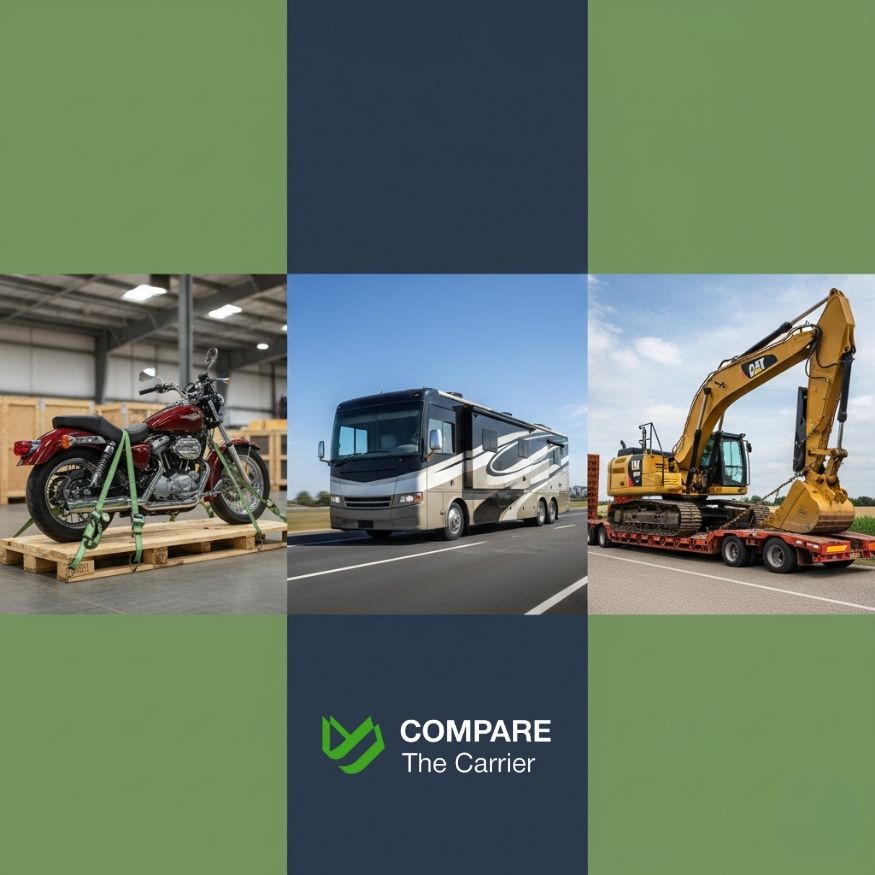
Shipping a bike is different from shipping a car. It requires specific pallets and tie-downs to prevent tipping. You can’t just throw it in the back of a truck. Check the common mistakes when shipping a motorcycle to avoid damage to handlebars and fairings.
Moving a massive RV is a different beast. It often requires a “Power Only” service (where a truck comes to tow your trailer) or a specialized flatbed. The RV & travel trailer shipping is essential reading here. You need to verify ride height and width clearance.
Farmers and construction managers use transport services, too. Moving a combine harvester or a bulldozer requires permits for “Oversize Load” transport. The top heavy equipment movers are experts in navigating state laws regarding wide loads and escort vehicles.
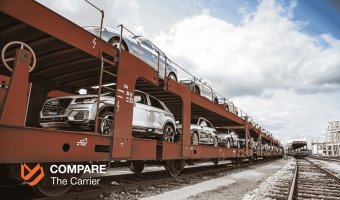
This is a nostalgic myth. People often associate car shipping with endless lines of freight cars moving new inventory from factories.
The Commercial Reality While rail is efficient for manufacturers moving thousands of vehicles at once, the infrastructure simply isn’t designed for individual private shipments. Arranging transport for a single car on a freight train is incredibly complex, bureaucratic, and often impossible for the average consumer.
Why Trucks Win Even if you find a route, rail transport is strictly terminal-to-terminal, requiring you to drop off and pick up your vehicle at specific depots that might be hours away. For the vast majority of shipments, truck transport is the superior choice because it offers door-to-door convenience, faster transit times, and the flexibility to reach any zip code in the country.
“I have full coverage, so I’m good.” This assumption can cost you thousands.
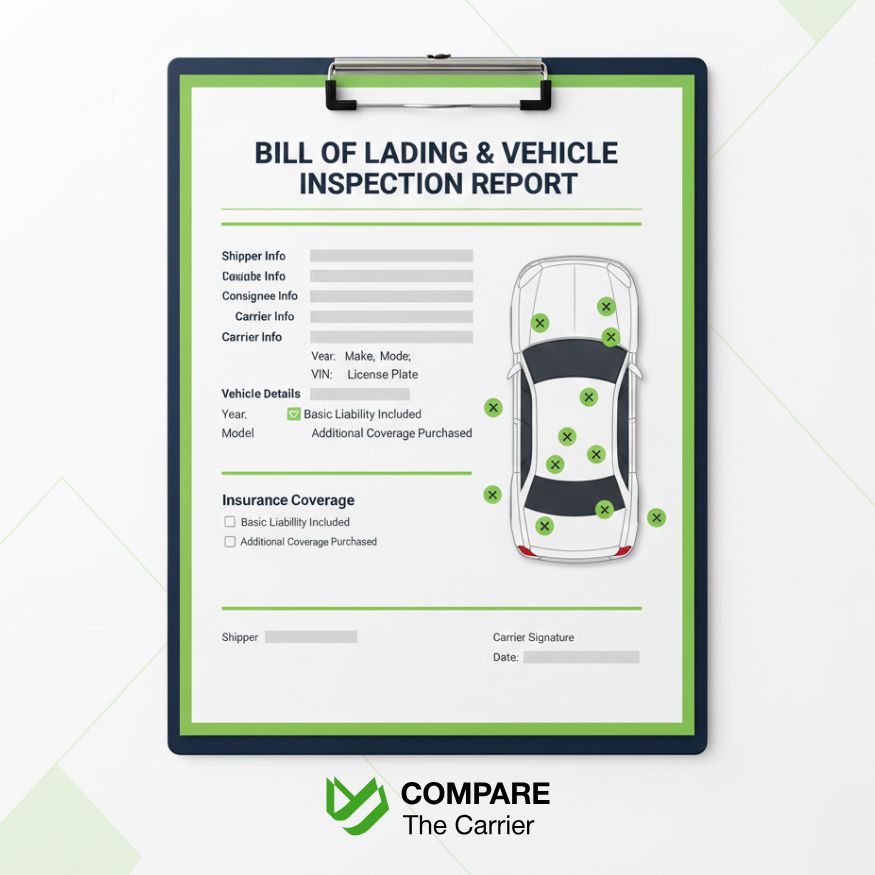
Your personal auto insurance might not cover the vehicle while it is being transported for commerce. You rely on the carrier’s cargo insurance. The Bill of Lading is your holy grail. It is the inspection report generated at the time of pickup.
To ensure you have all your documents in order, download resources. Being organized is your best defense.
“It’s just a $5,000 Toyota, why pay $1,000 to ship it?”
It’s not just about the car’s book value; it’s about replacement cost. If you sell your reliable car for peanuts and try to buy a new one in your new city, you might face inflated dealer markups or mechanical issues you don’t know about. Even budget-friendly vehicles are worth preserving. Shipping ensures you keep the vehicle you know and trust.
If you are buying from wholesale auctions, you might assume they offer delivery.
Auctions like Manheim or Copart are focused on volume. They want the car gone. While some offer basic towing, it is often overpriced and slow. Experienced buyers know that arranging your own transport is key to profitability. You need a broker who understands “gate passes” and the strict pickup hours of auction yards to avoid storage fees.
The US trucking industry is diverse. Many drivers speak Spanish, Russian, or other languages. Some customers fear this will lead to miscommunication.
This is where a high-quality broker shines. They act as translators and mediators. Furthermore, many top brokerages offer multilingual support. For Spanish-speaking customers, resources regarding transporte carros en Estados Unidos are becoming standard. A good company ensures clear communication regardless of the driver’s native tongue.
We trust big brands because they represent quality and consistency.
Programs associated with major memberships are highly reliable and offer peace of mind. You can learn more about how these streamlined services operate in our guide: Costco Auto Transport Made Easy: 3 Steps to Ship Your Car. These partnerships are built on trust and offer a very straightforward process for members.
However, the auto transport market is dynamic. Rates across the entire industry can vary significantly depending on the carrier network, specific routes, and seasonal demand. While membership programs offer great stability, it is always a smart strategy for any consumer to compare quotes from multiple reputable specialists to ensure they see the full picture of what the market offers for their specific dates.
“I’ll just call a tow truck to take it to the next state.”
A tow truck (wrecker) lifts two wheels off the ground. This is bad for long distances it wears out tires and the transmission. Auto transport involves loading the entire car onto a trailer. For short distances, a tow is fine. You will see that for anything over 100 miles, a car carrier is safer and cheaper per mile.
For a complete breakdown of every method – tow dollies, open carriers, and professional transport – and when each one makes sense, see our state-to-state car towing guide.

Shipping a vehicle doesn’t have to be a source of anxiety. The horror stories you read online usually stem from a mismatch of expectations or a failure to prepare.
By understanding that dates are estimates, insurance requires documentation, and quality costs money, you are already ahead of 90% of customers.
Don’t let myths dictate your move. Trust the process, verify your carrier, and prepare your vehicle properly. Whether you are moving a family SUV, a vintage motorcycle, or a heavy excavator, the right logistics partner can make it happen seamlessly.
Ready to get a real number based on facts, not fiction? Get your vehicle shipping service quotes today and move with confidence.
Be careful. Reputable brokers generally do not charge a deposit until they have actually assigned a carrier to your load. If a company demands money up front before even finding a truck, that is a red flag.
Usually, no. Drivers are not licensed to haul household goods. However, some drivers may allow up to 100 lbs of personal items in the trunk as a courtesy. Always ask before the truck arrives. If you sneak items into the load, the driver may refuse to accept it.
The “sweet spot” is usually 2 to 3 weeks before your desired pickup date. Booking months in advance doesn’t help because rates change daily. Booking at the last minute (less than 48 hours) will likely cost you an “expedited” premium.
Yes. Standard carriers have steep ramps. If your car has low ground clearance (less than 4-5 inches), it may scrape the ground. You will need a carrier with “race ramps” or a hydraulic lift gate (enclosed transport), which costs more.
1. Note the damage on the Bill of Lading (BOL) at delivery. Do not sign the BOL without noting damage. 2. Take photos immediately. 3. Contact your broker and the carrier to initiate a claim against the carrier’s cargo insurance.
Online “instant quotes” are often algorithms based on historical data. Real-time quotes require a broker to check current truck availability on your specific route. Fuel prices, weather events, and driver shortages can change the price in minutes.
It is very difficult. Most carriers can winch a car that doesn’t start, but it must have working brakes and steering to be loaded safely. If it has no brakes, you likely need a forklift-capable transport, which is specialized and expensive.




Don't have time to fill out the form?
Call a transport company directly to get a quote now!
Select the category you need
Partner with Compare The Carrier & Grow!
We're open to collaborations, partnerships, and mutual growth! Whether you're an individual or a business, we offer exciting opportunities to work together. Fill out the form below to explore how we can collaborate.
Something Went Wrong
We're sorry, but something went wrong. Please briefly describe the problem you experienced in the text area below. Providing your contact information will allow us to follow up if needed.

Thank you,
your form has been accepted.
Your form has been successfully submitted. We appreciate your effort — our team will review it shortly and take the next steps.


