Importing goods from China to USA: How your Smartphone comes to the stores in 2025
Ever wondered how the smartphone you use every day makes ...
24 January 2024
Tired of chasing unqualified leads for your vehicle shipping business? Discover the smarter way to generate high-quality leads and boost your bottom line.
Contact Us Now
Whether you’re a seasoned auto transport company or a new player in the field, one thing remains constant: you need customers. In the world of auto transport brokerage, those customers start as leads.
But how do you find those coveted leads?
The classic debate rages on – should you pay for lead generation services, or put your time and effort into building your own marketing machine?
Most lead providers simply say forget about this, just buy our leads. But let’s dive a little bit deeper and figure out if it’s true.
There’s no easy answer, and it often comes down to your business’s specific needs. That’s why we’re diving into the world of vehicle shipping lead generation. We’ll weigh the pros and cons of buying leads against rolling up your sleeves with strategic marketing.
Here at Compare The Carrier we help logistics companies both ways – with managed Google Ads that generate your own auto transport leads and with high-quality ready-to-buy leads when you need volume fast. We are going to share with you our experience and help you to choose the way of getting leads that works for you best.

Let’s cut to the chase: a lead, in the world of vehicle shipping, is anyone who shows an interest in getting their car, truck, motorcycle, or even boat moved. They might fill out a quote form on your website, call with questions, or reach out through social media. They’re not customers yet, but they’re the folks who could become customers.
So, why is lead generation such a big deal?
Here’s the simple truth: no leads, no business.
Think about it – every time someone books their car shipment with you, it probably started with them being a lead at some point.
Now, there are a couple of ways to get those all-important leads:
While traditional methods like buying leads and SEO are still important, the field of lead generation is constantly evolving. New technologies like Artificial Intelligence (AI) are making waves in the logistics industry. If you’re curious about how AI can potentially supercharge your lead generation efforts, check out our blog post “AI in Logistics”.
There’s no right or wrong answer – it depends on your budget, your goals, and how much of a hands-on approach you want to take. In the next few sections, we’ll break down the pros and cons of each method so you can decide what makes the most sense for your auto transport business.
Sometimes, you just want to cut to the chase and get your hands on a list of potential customers. That’s where buying leads comes in. It’s like ordering takeout instead of cooking a meal – sure, it costs a bit more, but it’s fast and convenient.
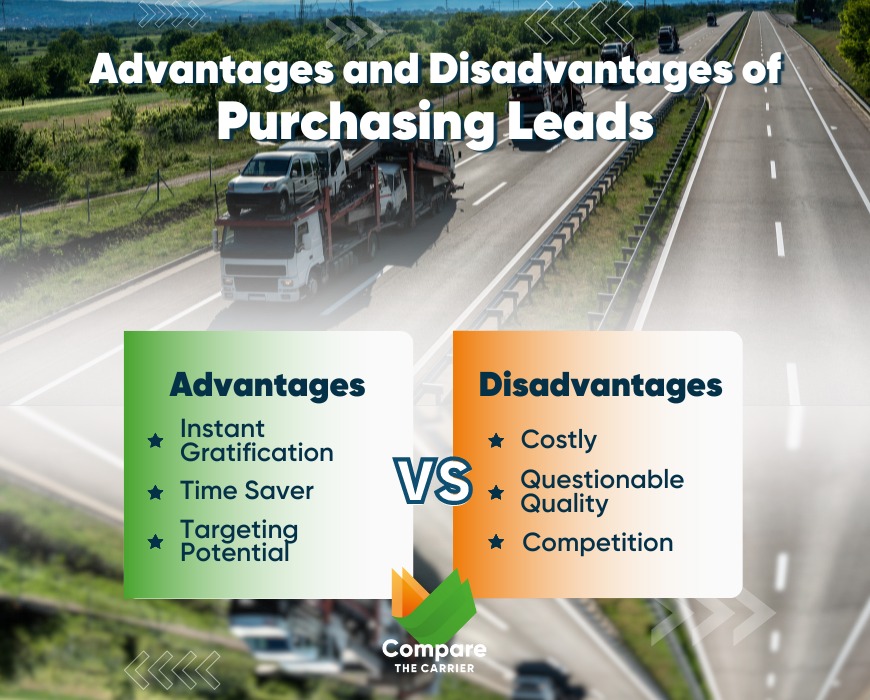
This option can be a good quick fix if you’re in a pinch, or if you’re new and trying to get some traction or scale your business. But in the long run, relying solely on buying leads can get expensive.
You’ll be facing the typical situation when processing more leads your operation expenses increase, but the leads margin is the same, or even worse because of the side factors. And it’s the exact time to think about changing the approach – shifting spend from bought leads toward generating your own with managed Google Ads.
First of all, it’s crucial to do your research and choose a reputable auto transport lead generation company. Otherwise, you could end up pouring money into a black hole.
Ready to explore the alternative? Let’s dive into DIY marketing strategies that can attract those high-quality vehicle shipping leads over time.
If your budget is tight but you have the energy to build an asset, DIY marketing is the way to go. To do this right, you need a foundation. Without a high-performing company website, most DIY opportunities are closed to you.
Here are the heavy hitters for organic growth:
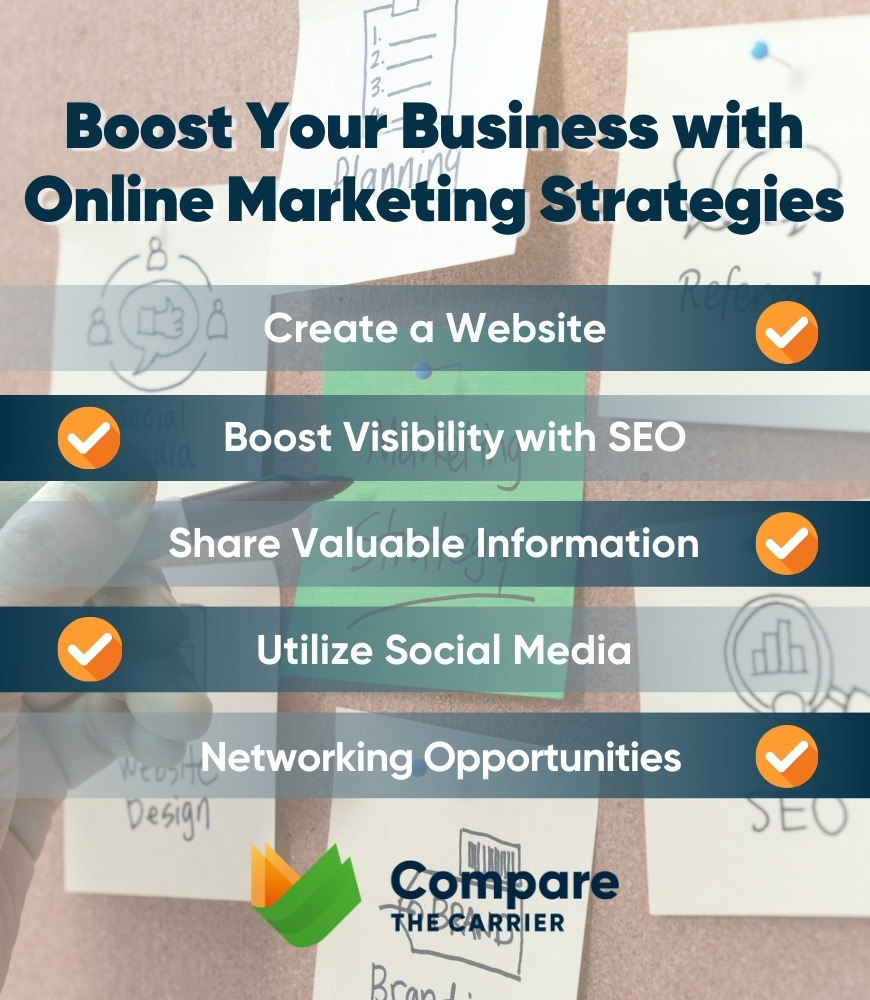
Fact: According to the Demand Metric Content Marketing Institute Content Marketing, companies that publish 16 or more blog posts per month generate 4.6 times as many leads than those who publish only 0-4 posts per month. This shows the significant impact content marketing can have on attracting potential customers.
The best part about this approach? You’re usually getting higher-quality leads. Since they found you organically, they’re likely more interested in your particular services, and you haven’t had to compete with a dozen other companies for their attention.
Plus, while these strategies might be “free” in terms of direct cost, they do take an investment of your time. You’ve got to learn the ropes, be consistent, and be patient.

Okay, enough theory! Let’s talk about businesses like yours that have found success with different lead generation strategies. We`re going to keep the specifics about the companies vague, but the stories are 100% real.
A small family-owned auto transport company was stuck in a rut. They didn’t have a lot of money for marketing, so they decided to put most of their effort into blogging. They focused on topics like “How to prepare your car for shipping” and “What to look for in an auto transport company.” At first, things were slow. But over the course of a year, their website started ranking well in search results. Now, they get a steady stream of organic leads without spending a dime on paid advertising.
One savvy auto transport business owner recognized that their ideal customers hang out in Facebook groups for classic car enthusiasts and military families relocating to new bases. They started joining those groups and offering advice or answering questions about vehicle transport. They didn’t do any hard selling, just positioned themselves as the helpful expert. This approach led to consistent inbound inquiries and a reputation as the go-to auto transport company for those communities.
These examples might sound simple, but that’s the point! You don’t need some crazy marketing scheme to see results. Consistency and focusing on the right audience with helpful information are what often make the biggest difference.
Important Note: While these examples highlight DIY marketing wins, there are absolutely successful companies that utilize a mix of marketing and purchased leads. It’s all about finding the balance that works best for your business.
Let’s be honest – lead generation takes work, whether you’re buying leads or grinding it out with those DIY marketing strategies. That’s where Compare The Carrier steps in to streamline the process and bring you better results.
Think of us as the middle ground between the two extremes. Instead of getting a generic list of leads or spending all your own time finding customers, here’s what Compare The Carrier offers:
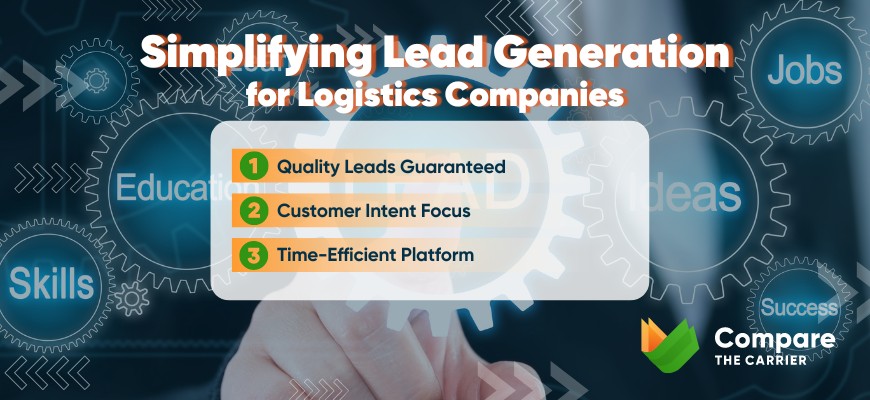
From Website & Systems Development to help you capture leads, to Google Ads management built for auto transport brokers for immediate, high-intent traffic, we cover the full spectrum.
The most successful companies don’t just “buy” or “build” – they do both. They use purchased leads to keep the lights on while investing in their own managed Google Ads that eventually takes over.
Shared leads are sold to multiple brokers simultaneously, often sparking a price war and requiring a rapid response to win the customer. Exclusive leads are sold only to your company, offering higher conversion rates and better margins. While exclusive leads have a higher upfront cost, they eliminate direct competition, allowing you to focus on service quality rather than just the lowest price.
SEO typically requires four to nine months to generate a consistent stream of organic leads. The timeline depends on your website’s current authority and the competitiveness of your target keywords. Although it requires patience, organic leads often have the highest conversion intent because the customer actively sought out your services, creating a sustainable, long-term asset that reduces your dependency on paid lead providers.
Speed to lead is the most critical factor; contacting a prospect within the first five minutes increases conversion probability significantly. Beyond speed, using a structured follow-up sequence via phone, email, and SMS ensures you stay top-of-mind. Providing transparent pricing and demonstrating industry expertise early in the conversation helps build the trust necessary to convert a cold lead into a paying shipment.
Content marketing builds authority by answering specific customer concerns, such as “how to prepare a car for transport” or “understanding shipping insurance.” When potential clients find helpful, non-promotional information on your site, they perceive your company as an expert practitioner. This trust-based approach attracts high-intent users who are more likely to book with you than with a company they found through a generic advertisement.
Lead quality is determined by data accuracy, timeframe, and intent. A high-quality lead provides a valid phone number, a specific shipping date, and an accurate vehicle description. Leads generated through organic search or educational content generally exhibit higher intent than those from “low-quote” bait sites. Evaluating these factors allows brokers to prioritize their sales efforts on prospects most likely to complete a booking.
AI enhances lead generation by automating the initial qualification process and predicting booking probability based on historical data. Machine learning algorithms can identify high-value prospects, allowing your team to focus their energy where it matters most. Additionally, AI-powered chatbots capture lead data 24/7 and provide instant responses, ensuring that your sales pipeline remains active even outside of standard business hours.
Both have a place. Buying leads gives you immediate volume when you need bookings now. Running your own managed Google Ads costs more to set up but lowers your cost per lead over time, because you own the channel instead of renting it. Most successful brokers do both – buying leads to keep volume steady while building their own auto transport Google Ads campaigns that eventually take over.
Buying leads has a lower upfront cost but a fixed price per lead that never drops. Generating your own leads through SEO and Google Ads costs more initially, but your average cost per lead falls as your campaigns and rankings mature. Over 12+ months, brokers who build their own pipeline typically pay less per booked order.








Select the category you need
Partner with Compare The Carrier & Grow!
We're open to collaborations, partnerships, and mutual growth! Whether you're an individual or a business, we offer exciting opportunities to work together. Fill out the form below to explore how we can collaborate.
Something Went Wrong
We're sorry, but something went wrong. Please briefly describe the problem you experienced in the text area below. Providing your contact information will allow us to follow up if needed.

Thank you,
your form has been accepted.
Your form has been successfully submitted. We appreciate your effort — our team will review it shortly and take the next steps.