Advanced PPC Tactics for Logistics Advertising in 2026
If your freight and logistics ads are burning budget with...
7 August 2025
Dominate the digital highway. Learn how to build a high-conversion Google Ads engine and capture more freight revenue in 2026 than ever before.
Contact Us Now
Ever feel like your competitors have a “sold out” sign on every high-margin lane while you’re still grinding on low-intent load boards? It’s not luck, it’s a precision-engineered Digital Marketing Strategy.
By early 2026, digital ad spending in the U.S. logistics and transportation sector has reached record highs, proving that the battle for shippers has fully moved online. If you aren’t visible on the first page of search results, you simply don’t exist for the 94% of logistics managers who now research carriers digitally.
Google Ads is the engine that drives your business past the noise. It allows you to put your freight services directly in front of shippers at the exact millisecond they need a truck. Whether you are scaling LTL volume, hunting for cross-country backhauls, or offering specialized freight solutions, this guide will walk you through setting up a campaign that doesn’t just “get clicks,” but actually boosts your bottom line.
Whether you’re a seasoned fleet owner or a growing brokerage, here is exactly how to advertise your freight services effectively in 2026.
The logistics market has fundamentally shifted. Today, 94% of logistics managers initiate their search for new carriers or brokers online. Google Ads isn’t just about “being seen”, it’s about bypassing the noise of low-quality leads and targeting “high-intent” shippers. By leveraging Inbound Marketing for Logistics, you ensure that when a shipper searches for “refrigerated LTL Chicago to Newark,” your fleet is the first professional solution they encounter.
Key competitive advantages for 2026 include:
Trying to increase freight revenue without a solid Google Ads strategy?
Yeah, that’s not gonna cut it. 😉
Did you know that 92% of shippers now use the internet to research and select transportation providers?
If your freight company isn’t showing up in those search results, you’re losing potential customers to your competitors. Google Ads is your weapon in this digital battleground, allowing you to:
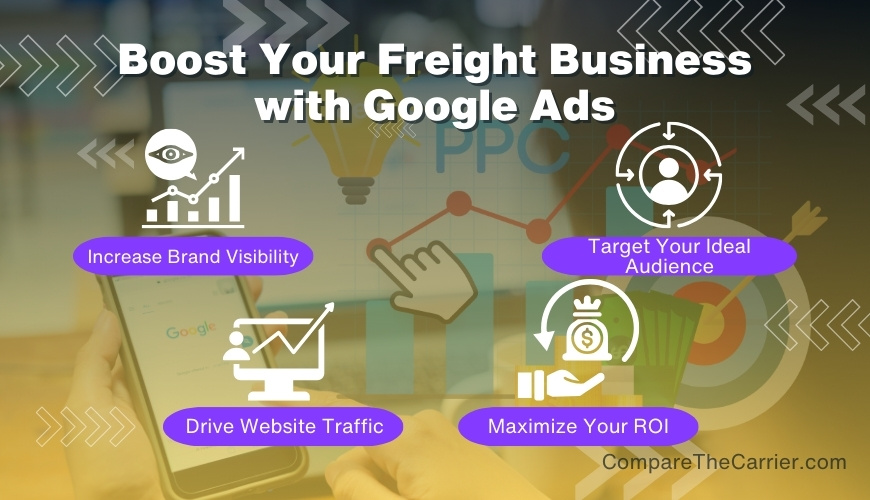
Ready to take your freight business to the next level? Let’s dive into the world of Google Ads!
Alright, you’re ready to dive into the world of Google Ads and boost that freight revenue. First things first, you need to set up your base of operations – your Google Ads account. Think of it as your digital marketing command center where you’ll launch campaigns, track performance, and optimize your strategy.
Here’s a step-by-step guide to get you started:
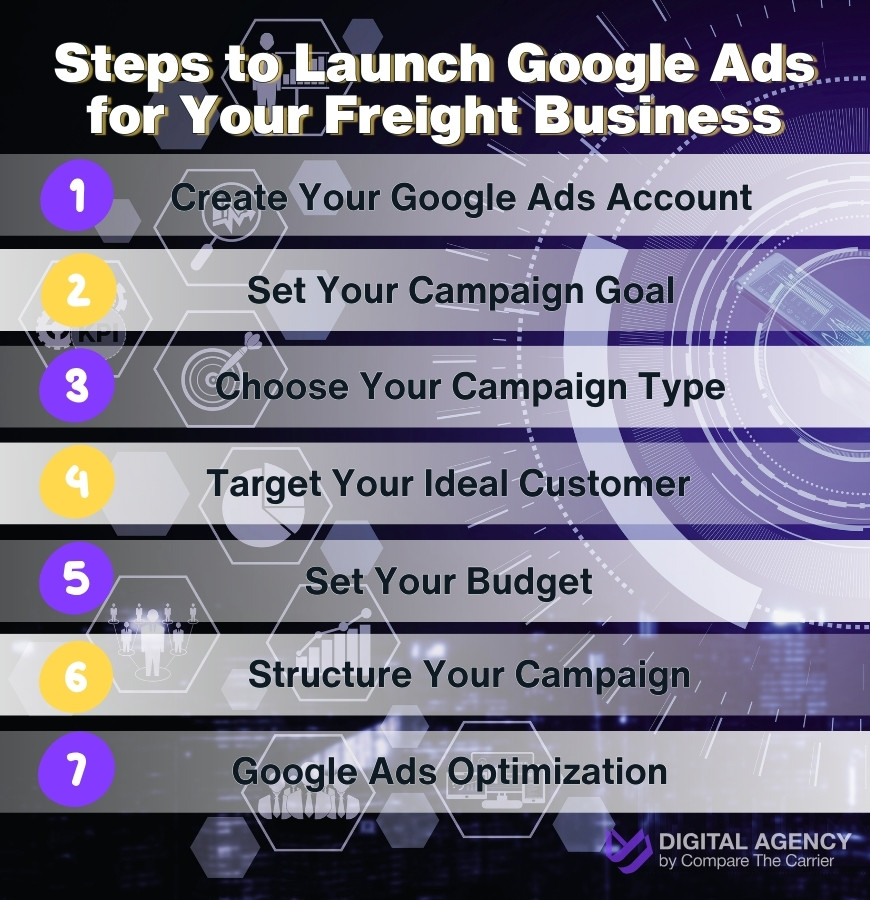
First things first, you need a Google Ads account. If you already have a Google account for Gmail or YouTube, you can use that to sign in. Otherwise, you’ll need to create one (Google Account).
Head over to the Google Ads website and click on “Start Now.” Follow the prompts, enter your business information, and voilà!
You’re officially in the game.
Google Ads Promocode:
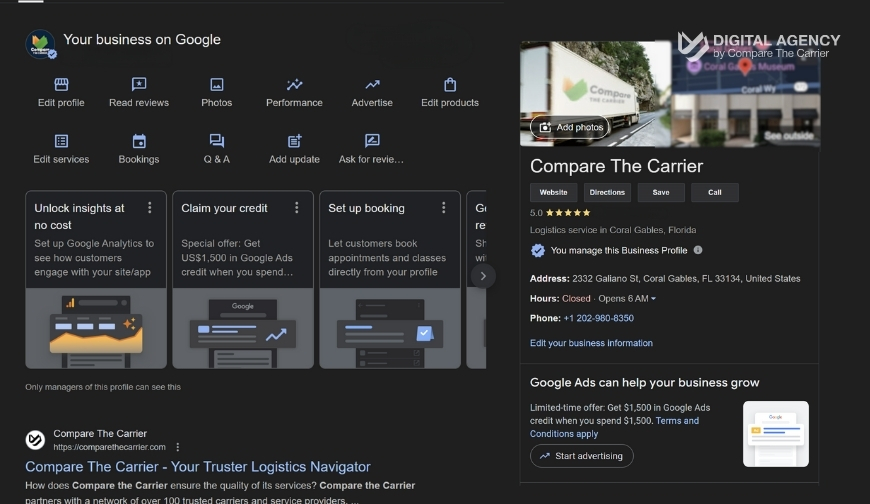
If, on your email account, you haven’t created a Google Ads account and have a Google My Business account, you can create Google Ads from it and claim the $1000 bonus for your ads.
See below a sample from our GMB account.
Before you start throwing money at keywords, take a minute to think about what you want to achieve with your Google Ads campaign, much like when developing a comprehensive logistics marketing plan. Do you want to:
Google Ads allows you to tailor your campaigns to specific goals, so choose the one that aligns with your current priorities, for example, drive phone calls to your sales team for immediate inquiries, which is a crucial step towards transforming cold calls into hot leads.
Google Ads offers a variety of campaign types, each with its own strengths and weaknesses, and choosing the right one can significantly impact your campaign’s success.
For expert guidance on selecting the optimal campaign type for your freight business, consider consulting with a specialized digital agency.
For freight companies, here are a few popular options:
One of the most powerful features of Google Ads is its targeting capabilities. You can refine your audience based on:
Google Ads gives you complete control over your advertising spend.
You can set a daily or monthly budget, and you’ll never be charged more than your limit. Start with a budget you’re comfortable with and adjust it as you monitor your campaign performance, and to maximize your return on investment while keeping spending in check, integrating effective CRM systems can ensure no customer slips through the cracks.
Think of your Google Ads account like a well-organized warehouse. You want to structure your campaigns in a way that makes them easy to manage and optimize. Here’s a basic structure:
While setting up your campaigns is a crucial first step, the real magic of Google Ads lies in ongoing optimization. It’s not a “set it and forget it” kind of thing. To achieve the best results—the lowest cost per lead and a consistent flow of those leads—you need to be prepared to monitor, analyze, and adjust your campaigns regularly.
Think of it like fine-tuning a high-performance engine. You need to make sure all the parts are working together seamlessly to achieve peak efficiency. This process can take anywhere from 1.5 to 3 months before you start seeing those top-tier results. During this period, you’ll analyze performance, adjust bids, refine targeting, and test different ad variations. This continuous improvement process is what ultimately drives down your cost per lead and increases your conversion rates.
Now that you’ve walked through the essential steps to build your Google Ads command center, it’s time to put theory into practice. Watch our exclusive video tutorial that shows you exactly how to create your first Google Ads campaign—from signing up and setting your account details to launching your first ad. This hands-on demonstration is tailored for freight companies like yours, so you can start driving more qualified leads and boosting your revenue immediately.
Once you’ve seen the video, you’ll be ready to dive deeper into the advanced features and optimization strategies that will keep your campaigns running at peak performance.
Mastering Google Ads means understanding the platform’s core features and how they align with your goals. Whether you’re trying to get ads for your website, boost freight revenue, or simply learn how to advertise freight services, knowing what’s available can make all the difference. Google Ads offers flexible tools and targeting capabilities that are perfect for freight companies looking to connect with their ideal audience.
Here’s a detailed breakdown of the most important features, along with how to use them effectively.
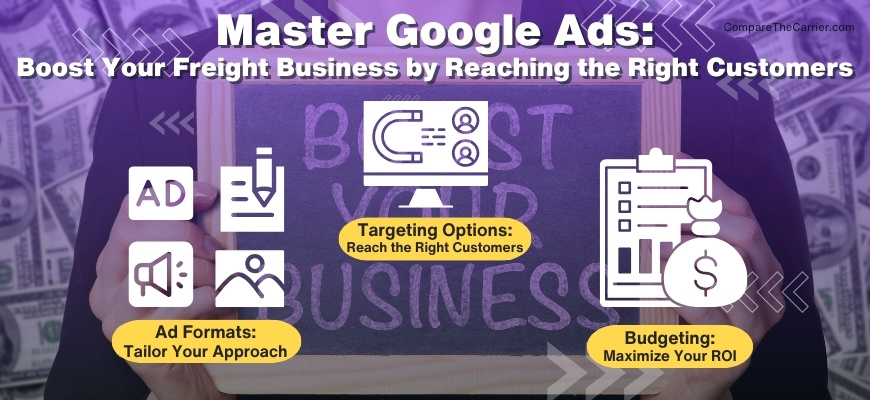
Google Ads offers several formats, each designed for different marketing objectives. Here’s how they can work for freight companies:
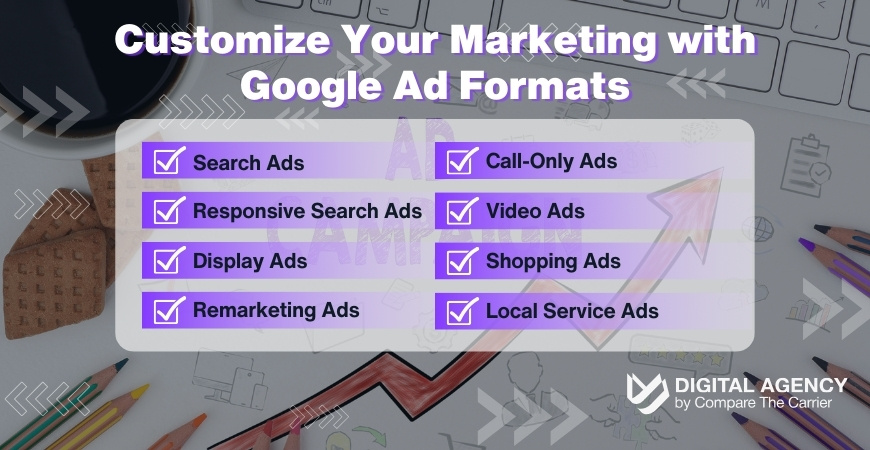
These are text-based ads that appear at the top of Google search results when potential customers look for terms like “affordable freight services” or “freight shipping near me.”
These ads automatically adjust their size, appearance, and format to fit available ad spaces, allowing for more flexibility.
Visual banners shown across Google’s Display Network, which includes millions of websites and apps.
These ads target people who have already visited your website but didn’t convert.
If your primary goal is to drive phone calls, call-only ads prominently display your phone number and encourage users to call directly.
Want to showcase your fleet, your team, or your commitment to customer satisfaction? Video ads on YouTube and other platforms can be a powerful way to build brand awareness and connect with potential customers on an emotional level.
If you offer any products related to freight or logistics (e.g., packaging supplies, tracking devices), Shopping ads can be a great way to drive sales. These ads appear alongside search results and showcase product images, prices, and your company name.
These ads are specifically designed for businesses that serve customers in local areas. They appear at the top of search results for local searches and can include features like customer reviews and a “Get a Quote” button.
By strategically using a variety of ad formats, you can create a comprehensive Google Ads strategy that reaches your target audience at different stages of the customer journey and maximizes your return on investment.
One of the best parts of Google Ads is its precision targeting. Freight companies can narrow their audience based on several factors:
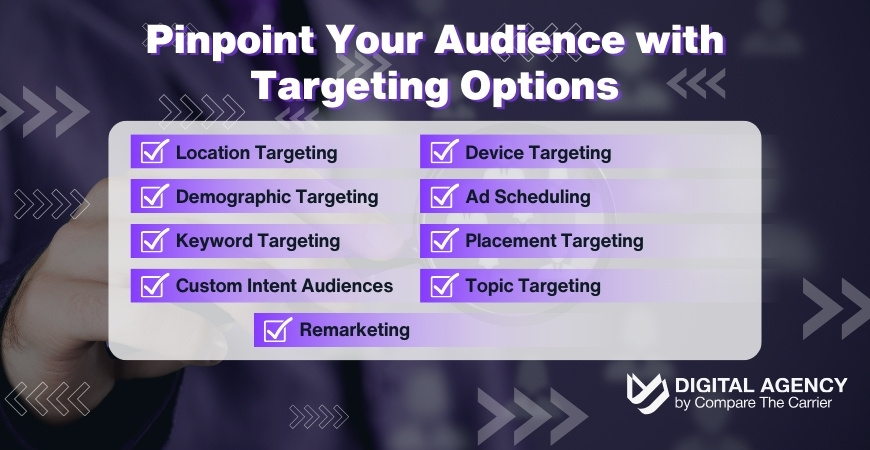
Focus on areas where your freight services are in high demand.
Customize your ads based on age, income, or business type. For more insights into effective targeting strategies, see our detailed guide on How to Find Freight Shippers: Freight Lead Generation for Brokers.
Keywords are the foundation of your targeting strategy. They’re the words and phrases potential customers use when searching for freight services. Choose keywords that align with your services and match the search intent of your ideal customer.
Build audiences based on specific search habits and interests.
Adapt your campaigns for mobile or desktop users.
Control when your ads appear to match your audience’s behavior, each the right customers at the right time, which is essential for effective freight lead generation.
Choose specific websites, YouTube channels, or even mobile apps where you want your display ads to appear. This allows you to reach your target audience on platforms they frequent.
Target your ads based on broad topics relevant to your freight services. This allows you to reach a wider audience interested in related subjects.
Reconnect with people who have previously interacted with your website or ads. This keeps your brand top-of-mind and encourages repeat visits.
By strategically combining these targeting options, you can ensure your ads are seen by the most relevant audience, maximizing your ad spend and driving the best possible results for your freight business.
Budgeting can feel like a guessing game, but Google Ads makes it easier to control costs and maximize results.
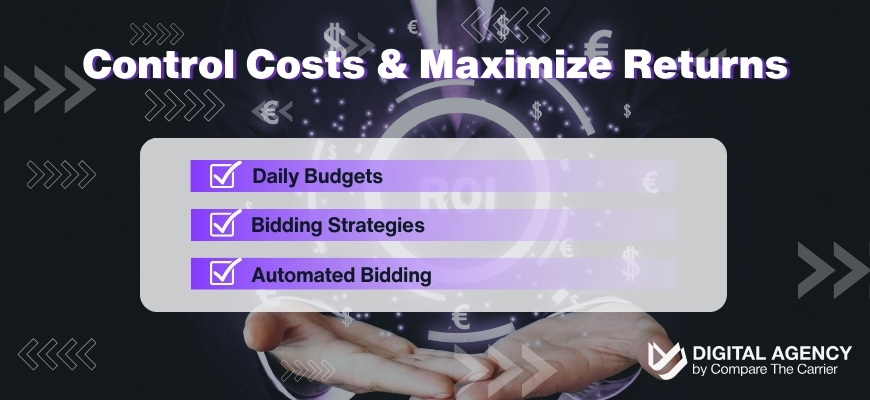
Set a maximum daily spend for each campaign
Google Ads offers automated bidding options that align with your goals.
Let Google’s algorithms optimize your bids based on your campaign goals.
Google Ads offers flexible budgeting options that allow you to maximize your return on investment while keeping spending in check.
A freight company implementing search ads with location targeting increased their conversions by 40% within 3 months. By focusing on long-tail keywords like “affordable freight services” or “freight shipping near me,” they connected directly with businesses ready to ship. Their optimized budget of $5000/month brought them a couple of business clients each delivering a $5,000 return monthly, proving the long-term value of a strategic approach.
Discover more about our strategies and real success stories at Compare The Carrier Case Studies.
Google Ads offers freight companies the tools to target specific audiences, control spending, and deliver measurable results. By leveraging the right ad formats, targeting options, and budgeting features, you’ll not only get ads for your website but also turn clicks into substantial freight revenue. For expert guidance on how to advertise on Google, connect with Compare The Carrier and see the difference tailored campaigns can make.
Setting up your Google Ads campaigns is like building a powerful engine, but to really get things moving and maximize freight revenue, you need to fine-tune it for peak performance. Here’s how:
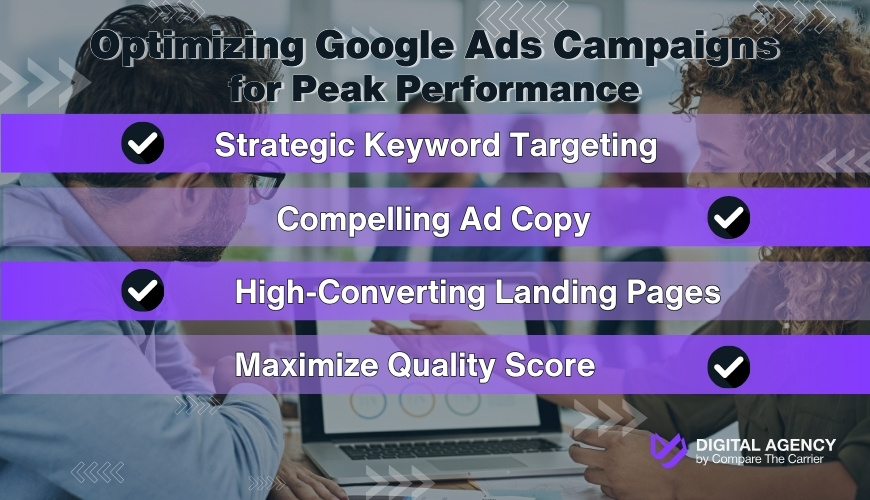
Keywords are the linchpin of your Google Ads strategy. They’re the words and phrases potential customers use when searching for freight services online. Think like your customers! What would they type into Google when looking for a company like yours?
For a comprehensive guide to keyword research, check out our article on SEO strategies to rank #1 in auto transport.
Your ad copy is your first impression. It’s what convinces potential customers to click on your ad and learn more about your freight services. Make it count!
When someone clicks on your ad, where do they land? Hopefully, it’s a dedicated landing page optimized for conversions.
But remember, driving traffic is only half the battle. You also need a steady stream of qualified freight leads to keep your sales pipeline full.
Google assigns a Quality Score to your keywords and ads, which affects your ad ranking and how much you pay per click. A higher Quality Score means a better ad position and lower costs.
By focusing on keyword research, ad copywriting, and landing page optimization, you can improve your Quality Score, lower your costs, and drive more conversions.
For expert assistance in managing and optimizing your Google Ads campaigns, consider partnering with a digital agency specializing in the logistics industry.
It’s a win-win-win!
Effective Google Ads management goes beyond the initial setup and launch. To truly maximize your freight revenue, you need to dive deep into analytics and make data-driven adjustments. Here’s how to harness Google Analytics along with Google Ads insights to optimize your campaigns, boost your performance, and increase your return on investment (ROI).
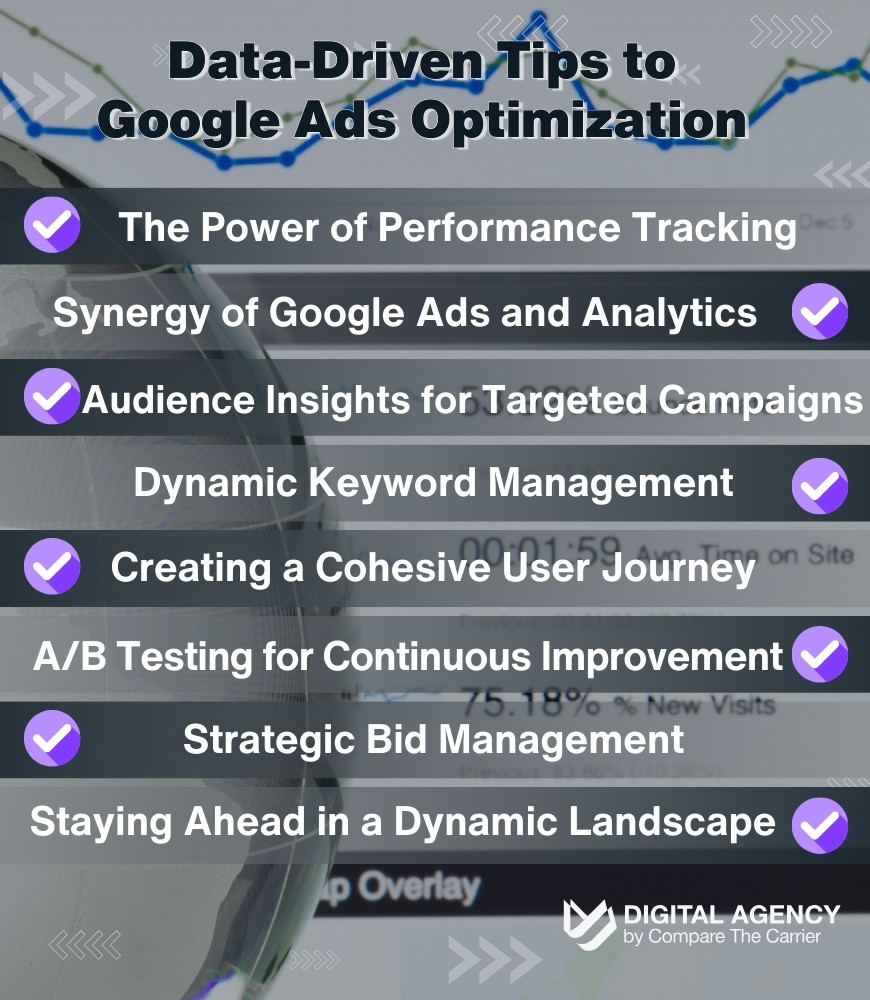
By regularly analyzing your data and making data-driven adjustments, you can ensure your Google Ads campaigns are always running at peak efficiency, driving more leads, which freight brokers can even purchase from us and ultimately, boosting your freight revenue, much like how freight brokers can optimize their lead generation strategies by partnering with our agency.
Remember, the digital advertising landscape is always evolving, so staying agile and informed about your campaign performance is key to staying ahead.

In 2026, the logistics landscape doesn’t reward those who wait for the phone to ring. Mastering Google Ads is no longer optional, it is your fastest route to high-margin shippers and consistent freight revenue. From the technical setup to the final conversion tracking, you now have the roadmap to move your marketing from “expensive guesswork” to a predictable ROI engine.
However, remember that a winning campaign is never truly “finished.” The digital highway moves fast, and staying ahead requires constant bid adjustments, creative testing, and a rock-solid Digital Marketing Strategy for Logistics. Whether you are a fleet owner or a broker, staying agile and data-informed is the only way to secure your spot at the top of the search results.
We know that running a logistics business is a 24/7 job. If managing complex bidding strategies and analyzing CTR feels like a distraction from your core operations, we can take the wheel. At Compare The Carrier Digital Agency, we specialize in Google & Bing Ads for Logistics, turning search intent into booked loads. And if auto transport is your lane specifically, we run Google Ads built for auto transport as a dedicated vertical, not a generic freight campaign.
Stop leaving your revenue to chance. Start your first campaign today and watch your freight company dominate the 2026 marketplace.
In 2026, freight-related Google Ads costs are determined by keyword competition and geographic targeting. Average Cost-Per-Click (CPC) for high-intent keywords like “LTL shipping rates” ranges between $4.50 and $11.00. Most mid-sized logistics providers maintain a monthly budget of $2,500 to $6,000 to remain competitive. Total expenditure depends on bidding strategies, such as target CPA or Maximize Conversions, and keyword popularity.
Google Ads increases freight revenue by capturing high-intent shippers during the active search phase. Unlike passive marketing, search advertising targets users specifically seeking transportation solutions. By appearing for transactional queries, companies bypass low-margin load boards and connect directly with shippers. This targeted approach reduces sales cycles, improves lead quality, and allows carriers to secure higher-margin spot freight or long-term shipping contracts.
The most effective keywords in 2026 are long-tail, intent-driven phrases. Broad terms like “trucking” are often replaced by specific queries such as “refrigerated LTL carriers Midwest” or “specialized heavy haul transport quotes.” Bidding on lane-specific keywords and equipment types like “flatbed freight TX to CA” minimizes wasted spend. High-intent terms should focus on “shipping rates,” “carrier services,” and “logistics providers” to attract decision-makers.
Targeting LTL leads requires service-specific ad groups and granular keyword filtering. Advertisers should utilize location extensions for terminal proximity and price extensions for pallet-rate transparency. Headlines must emphasize “less-than-truckload” capabilities and “guaranteed delivery dates.” Successful LTL campaigns segment traffic by commodity type and geographic region, ensuring ads only show to users in areas where the carrier maintains active capacity and terminal coverage.
Cost-effective budget management in 2026 relies on AI-driven Smart Bidding and aggressive negative keyword lists. Excluding non-transactional terms like “CDL jobs,” “trucking school,” and “driver salary” prevents budget drain from job seekers. Allocating approximately 75% of the budget to high-intent search terms and 25% to remarketing optimizes the funnel. Continuous monitoring of Cost-Per-Acquisition (CPA) ensures funds are redistributed to the highest-performing geographic lanes.
A high-converting freight landing page must load in under 2.5 seconds and prioritize a quote request form above the fold. Essential elements include valid MC/DOT numbers, safety ratings, and specific equipment photos to establish trust. Mobile optimization is critical, as a majority of logistics research occurs on mobile devices. Successful pages use “frictionless” forms with minimal fields to encourage immediate quote requests from time-sensitive shippers.










Select the category you need
Partner with Compare The Carrier & Grow!
We're open to collaborations, partnerships, and mutual growth! Whether you're an individual or a business, we offer exciting opportunities to work together. Fill out the form below to explore how we can collaborate.
Something Went Wrong
We're sorry, but something went wrong. Please briefly describe the problem you experienced in the text area below. Providing your contact information will allow us to follow up if needed.

Thank you,
your form has been accepted.
Your form has been successfully submitted. We appreciate your effort — our team will review it shortly and take the next steps.