Boost Freight Revenue: How to Set Up Google Ads in 2026
Dominate the digital highway. Learn how to build a high-c...
21 November 2024
In 2026, relying on organic traffic alone isn’t enough to scale a freight brokerage or auto transport company. Google Ads is one of the most direct pipelines to shippers actively looking for capacity.
Contact Us Now
This guide breaks down the exact Google Ads account creation process. We will walk you through the essential setup, billing configurations, and the proper way to grant access to a specialized agency without risking account suspension. If you want to skip the trial and error, professional Google & Bing Ads for logistics management is the fastest way to start generating high-ROI freight leads.
Before we dive into how to create a Google Ads account, let’s cover some basics.
Google Ads (formerly known as Google AdWords) is Google’s online advertising platform. It allows businesses to create ads that appear on Google’s search results pages, other websites, and apps.
Here’s the lowdown:
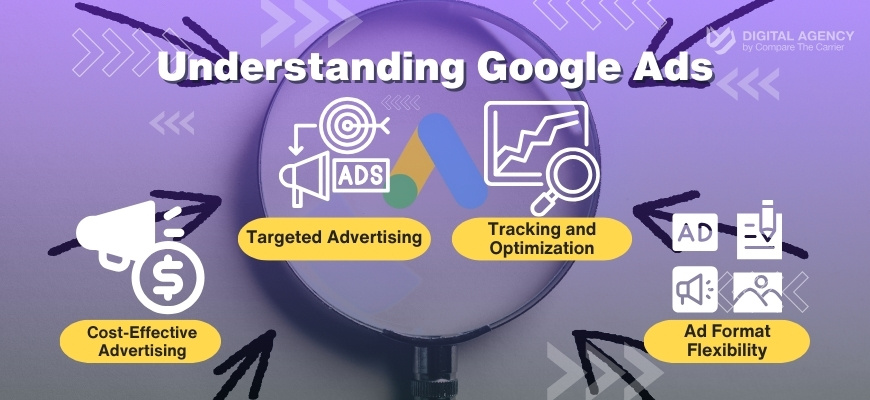
Essentially, Google Ads is a powerful tool that can help you reach new customers, grow your business, and achieve your marketing objectives, acting as a key driver in your logistics marketing strategy. And the first step to harnessing that power is creating your Google Ads account.
Ready to jump in? Let’s get started!
Creating a Google Ads account is a straightforward process. Before you begin, here’s what you’ll need to have handy:
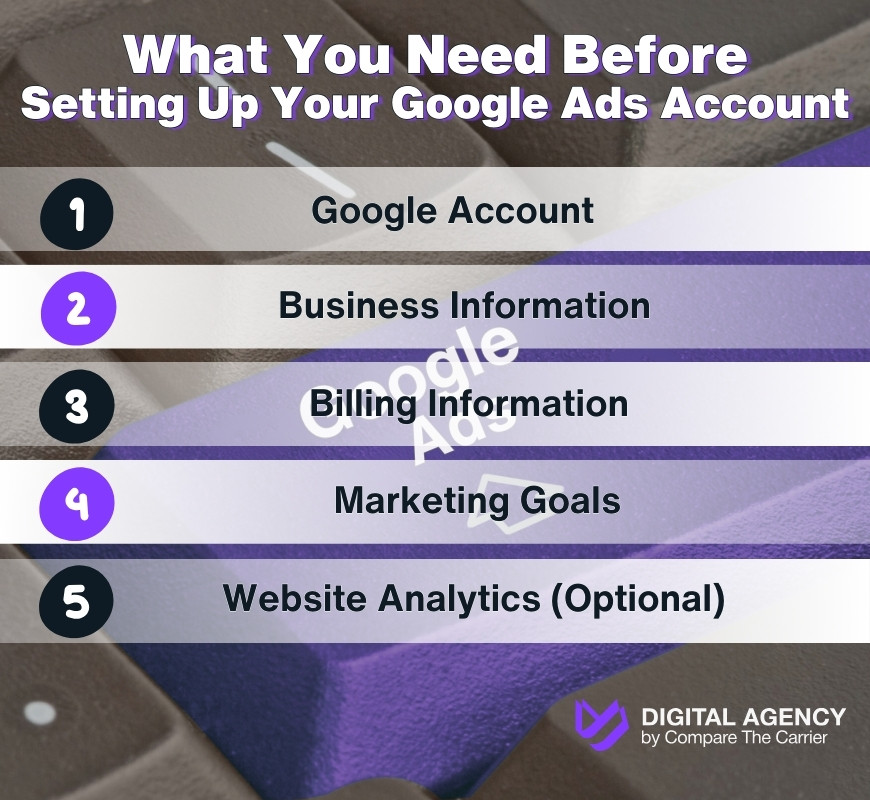
That’s it! With these essentials in place, you’re ready to begin the Google Ads account creation process. Let’s move on to our step-by-step tutorial.
Alright, let’s get down to business! This step-by-step tutorial will walk you through the Google Ads account creation process, ensuring you’re up and running in no time.
Follow these simple instructions, and you’ll be a Google Ads pro and generate 5X more transport leads before you know it.
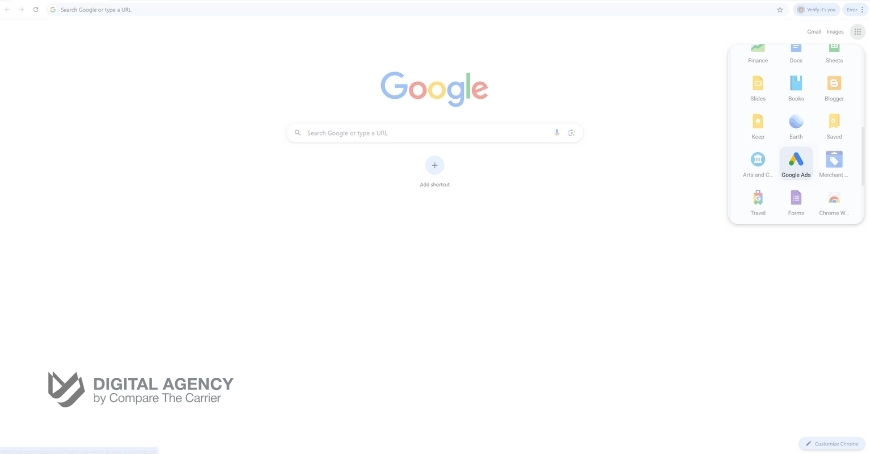
the first step in your journey to mastering Google AdWords and generating 5X more transport leads. You’ll be greeted by a clean, user-friendly interface designed to make navigation a breeze.
Check out our specialized auto transport leads to jump-start your campaign.
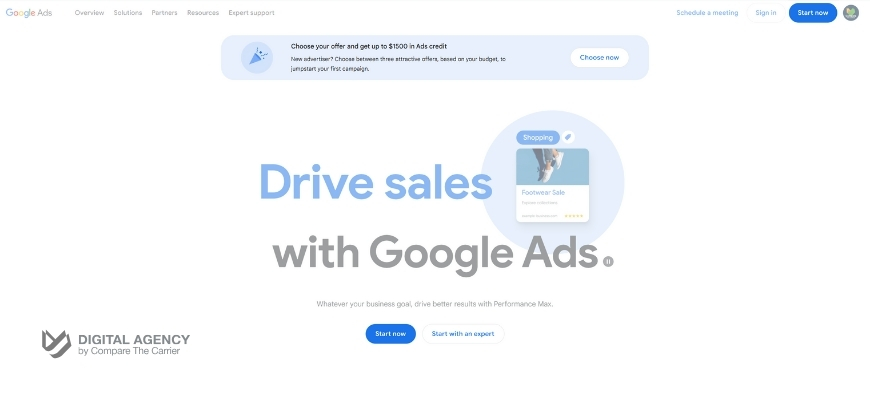
This will initiate the Google Ads account setup process. If you’re already signed in to a Google account, you might be prompted to choose between using that account or creating a new one specifically for Google Ads. It’s generally recommended to create a separate account for business purposes.
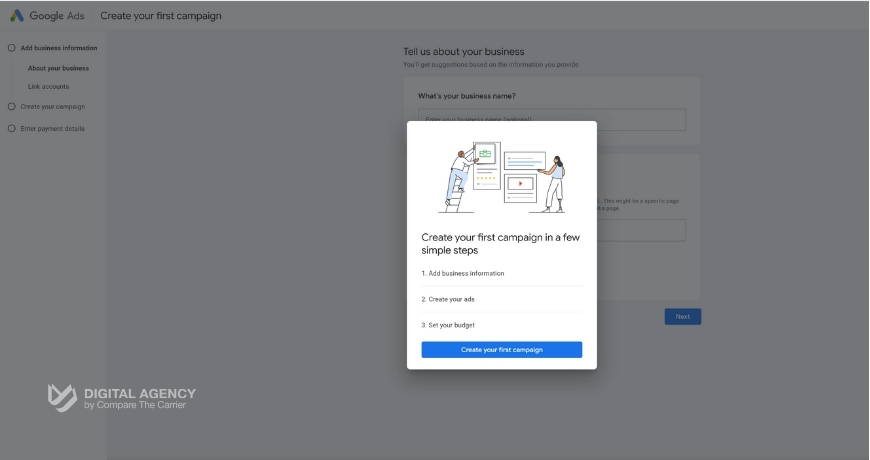
After signing in, you might encounter a pop-up window outlining the process of creating your first campaign. This window simply explains the upcoming steps: providing your business details, creating a campaign, and adding your payment method.
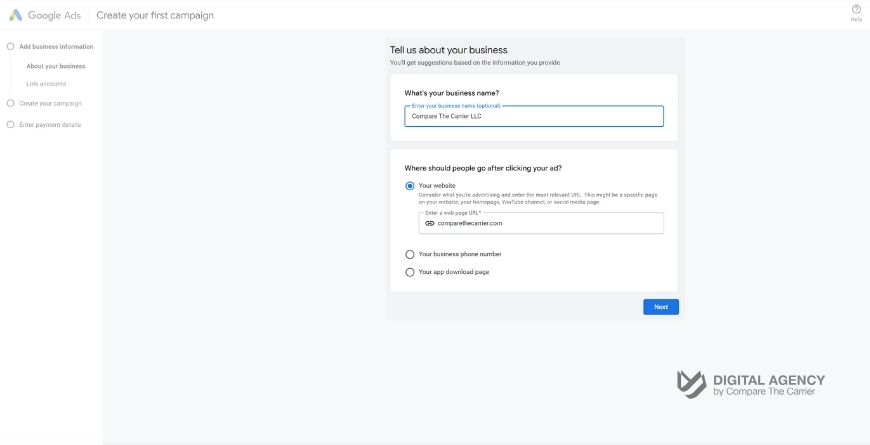
You’ll now be asked to provide some basic information about your business. This helps Google Ads tailor your experience and offer relevant suggestions.
In the “Tell us about your business” section, you’ll see fields for your business name and website URL.
You may also see options to link your YouTube channel or add your business phone number. These are optional, so feel free to skip them if you prefer.
Once you’ve filled in the necessary details, click “Next” to proceed.
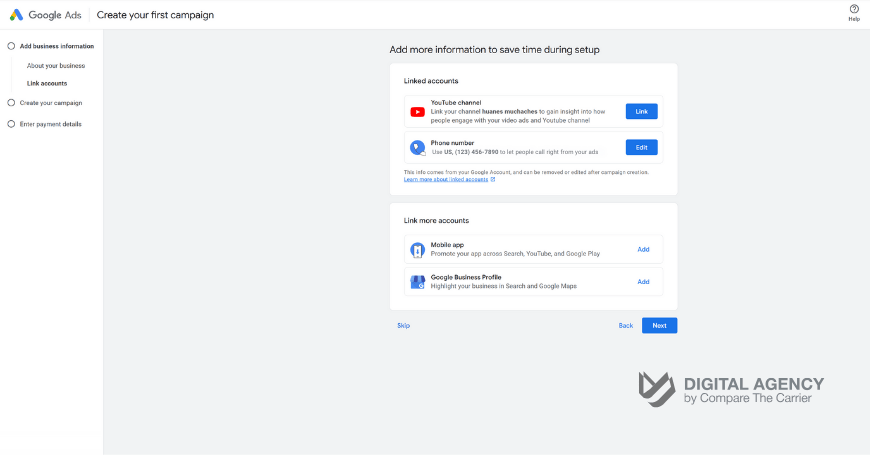
Google Ads offers the ability to streamline your advertising efforts by linking other relevant accounts. This can enhance your campaigns and provide a more unified approach to your online presence.
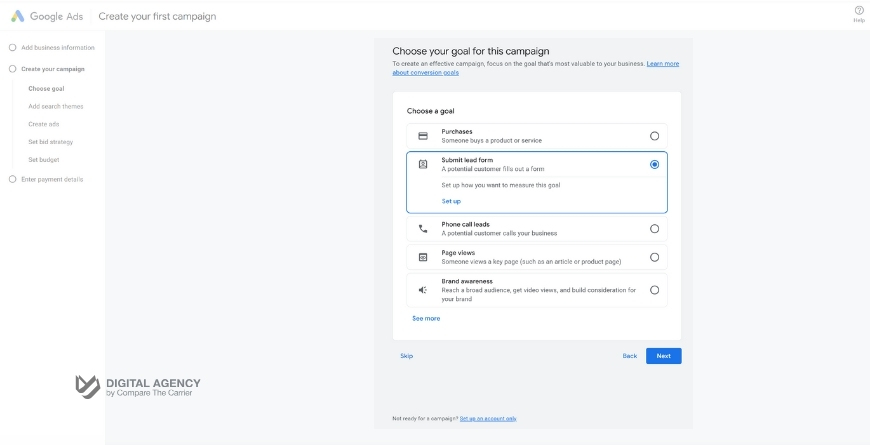
Now, Google Ads will ask you about your primary advertising goal for this campaign. This helps the system recommend relevant features and settings.
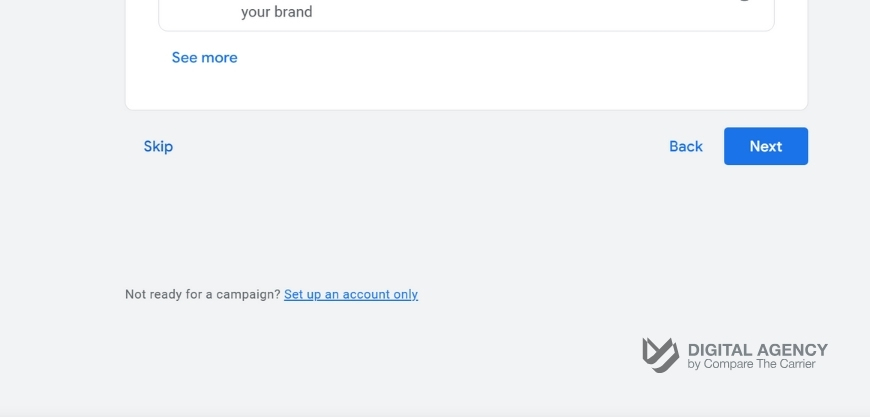
Google may encourage you to create a campaign immediately. However, this initial setup is simplified and might not be the most cost-effective for lead generation. Instead, look for the “Set up an account only” option. It’s usually written in a smaller font at the bottom of the screen. Clicking this option allows you to bypass the simplified campaign setup and proceed with setting up your account. You’ll have more control over your campaign settings later.
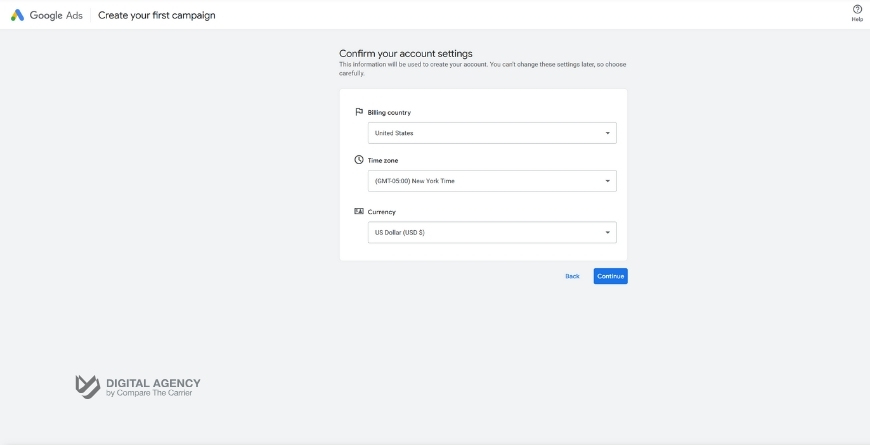
Before you move on to payment details, Google Ads wants to make sure your account is set up correctly. This is where you confirm crucial information that will affect how your account operates.
Important: Double-check that all these settings are accurate, as you won’t be able to change them later. If you need to make any adjustments, do so now before clicking “Continue.”
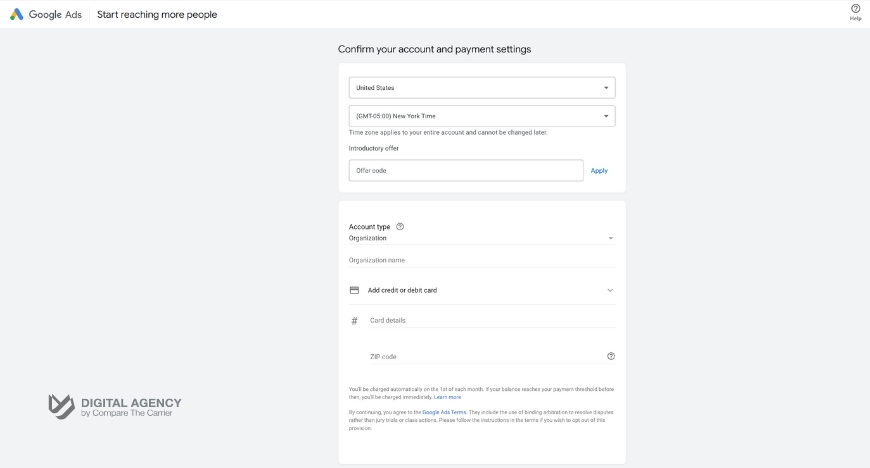
This is where you finalize the setup of your Google Ads account by providing essential information about your business and how you’ll be paying for your advertising.
Important: Ensure all the information you provide is accurate and up-to-date. Once you’ve filled in all the necessary details, click “Continue” to proceed.

Google Ads wants to ensure you have the support you need to succeed. At this stage, you might encounter a screen asking if you’d like personalized guidance from a Google Ads expert.
This is entirely optional, so choose the path that best suits your needs and comfort level.
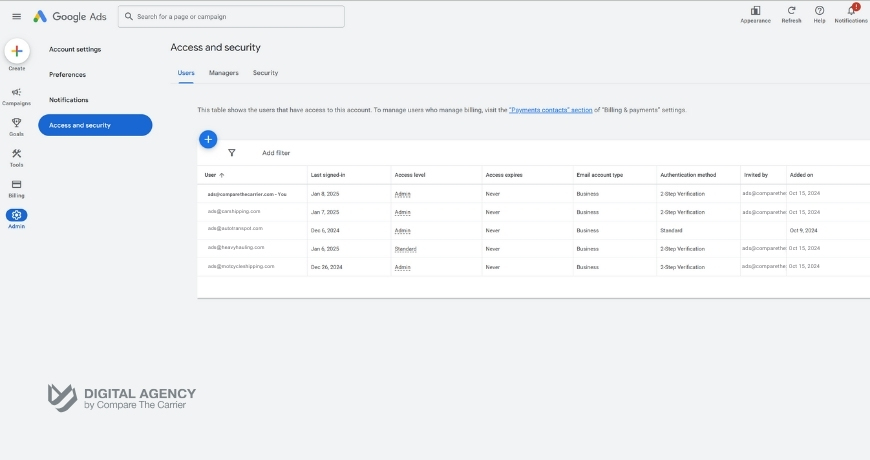
If you are partnering with our agency for your digital marketing strategy, you should never share your personal Google password. Instead, you need to grant our manager secure access directly through the platform. Here is how to do it safely:
To allow our team to assist you with your Google Ads campaigns, you’ll need to grant us access to your account. This step is crucial for seamless collaboration and expert support.
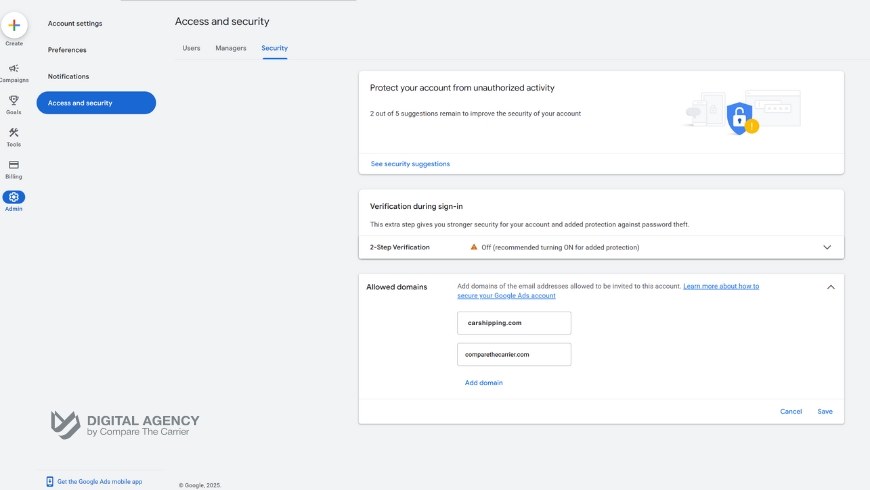
Before inviting our team, it’s essential to enhance your account’s security by adding our domain to your allowed domains list. This ensures that only authorized users from our organization can access your account.
By taking this extra security measure, you’re adding an additional layer of protection to your Google Ads account.
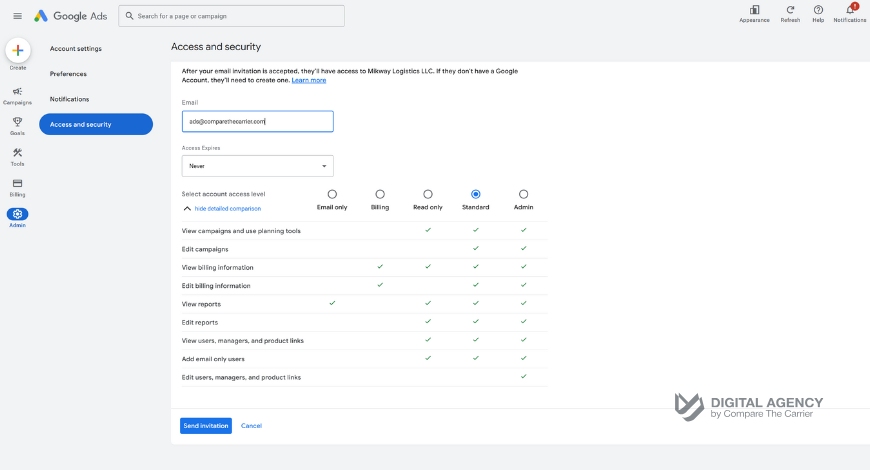
Once you’ve navigated to the “Access and security” section and are ready to add a new user, you’ll need to provide some information about the team member you want to invite.
After sending the invitation, our manager will receive an email and accept the invitation to your account.
That’s it! You’ve successfully created your Google Ads account.
Congratulations!
As you’ve set up your Google Ads account, you’re now poised to launch your first campaign. But how do you ensure that your campaign is effective, reaches the right audience, and drives results?
To help you through this critical next step, we’ve prepared a detailed video tutorial titled ‘How to Create Your First Google Ads Campaign.’
This video will guide you step-by-step through the process of crafting a campaign that not only reaches but also engages your target audience effectively.
With the insights from the video, you’re now better equipped to create compelling Google Ads campaigns that can drive significant traffic and conversions. Remember, the key to success with Google Ads is not just about launching campaigns but also about ongoing optimization and monitoring.
Now, let’s take a quick tour of your new dashboard and explore its key features.
You’ve successfully created your Google Ads account!
Now, let’s get you acquainted with your dashboard. This is your command center for managing campaigns, tracking performance, and optimizing your ads.
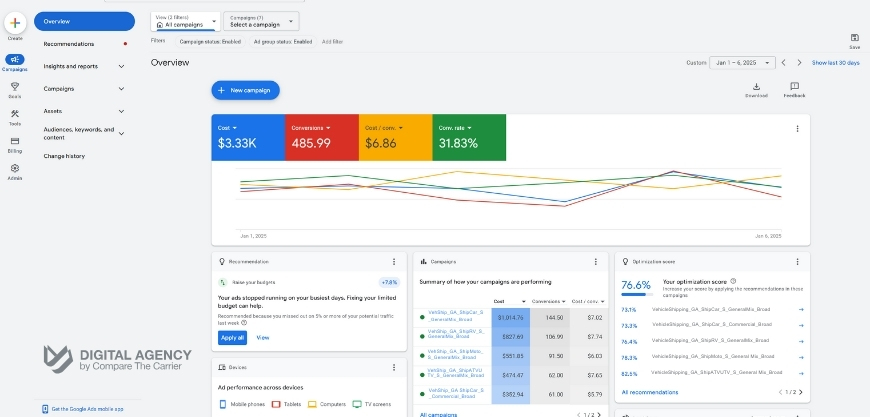
Here’s a quick rundown of the key sections:
Familiarize yourself with these key areas, and you’ll be well-equipped to navigate your Google Ads account like a pro. If you’d prefer a more hands-on approach, our team of experts can manage your campaigns for you, allowing you to focus on your core business operations.
But don’t be overwhelmed by all the features! As a beginner, focus on the “Campaigns” tab. This is where you’ll spend most of your time creating and refining your ads.
Congratulations! You’ve officially entered the world of Google Ads.
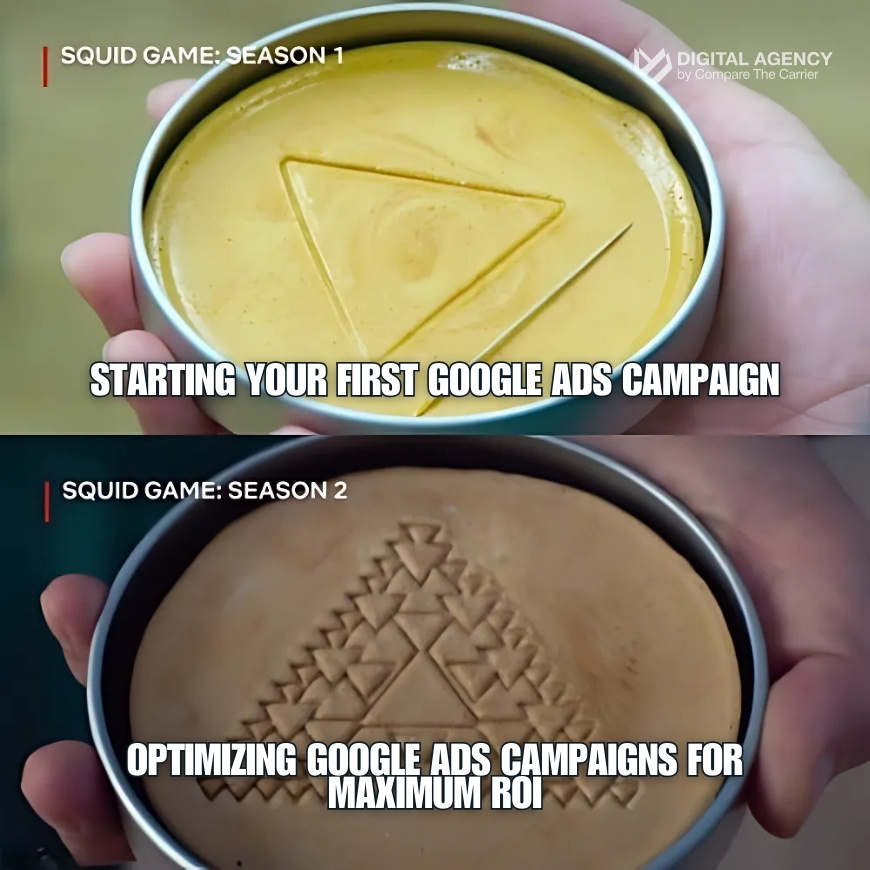
You may start simple, but mastering Google Ads is about evolving strategies and rising to new challenges. It’s not just about playing the game; it’s about staying ahead in the game.
As you embark on your advertising journey, here are some essential tips to help you navigate the platform and maximize your success:
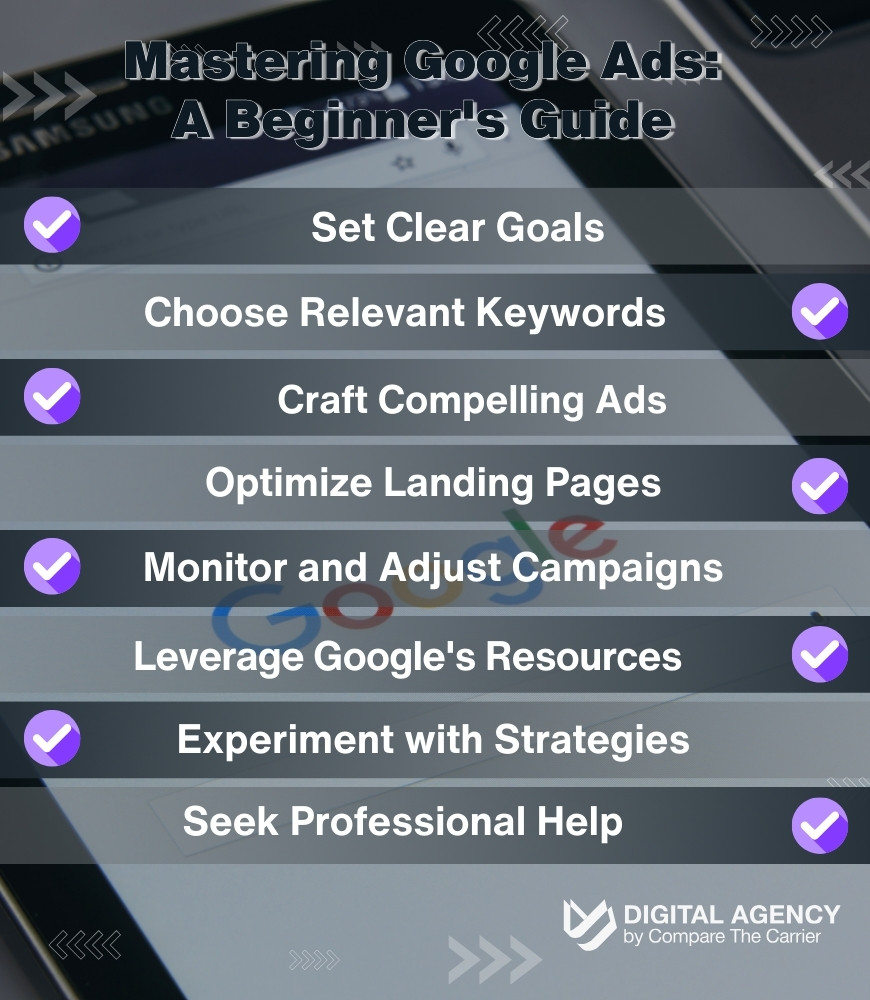
By following these tips, you’ll be well on your way to mastering Google Ads and achieving your advertising goals. For additional support and expertise, explore our agency services designed to help you navigate the complexities of online advertising.
Remember, Google Ads is an ongoing process of learning and optimization. Stay curious, keep testing, and never stop improving your campaigns.

Creating a Google Ads account is your first step towards unlocking the immense potential of online advertising. By following this step-by-step Google Ads tutorial, you’ve gained the knowledge and confidence to navigate the platform, build effective campaigns, and reach your target audience.
Remember, Google Ads account setup is just the beginning. Continuous learning and optimization are key to maximizing your results. Explore Google’s resources, experiment with different strategies, and never stop refining your campaigns.
Now that you’ve mastered the basics of Google Ads account creation, take your campaigns to the next level with our professional digital marketing services.
Dive in, explore the platform, and watch your business grow!
Google Ads uses a pay-per-click (PPC) model, giving you full control over your daily budget. In the logistics industry, the cost per click (CPC) is highly competitive. Bidding on high-intent B2B commercial freight keywords typically ranges from $5 to $20+ per click. Your total cost depends on geographic targeting and campaign optimization.
Logistics providers must avoid broad consumer terms and focus on long-tail commercial intent keywords. Utilizing tools like Google Keyword Planner helps identify specific queries, such as “flatbed trucking rates” or “commercial auto transport companies.” This strategy drives qualified B2B leads rather than retail inquiries, maximizing the return on ad spend.
Google Ads is highly effective for regional carriers and local freight brokers. You can restrict your ad targeting to specific geographic locations, states, or radius areas around your cross-docking facilities. This ensures your budget is spent only on shippers actively looking for capacity or drayage services within your specific operational lanes.
A specialized agency understands complex freight terminology, average profit margins, and long B2B sales cycles. They implement proven account structures and advanced bidding algorithms to bypass the steep learning curve. This expertise immediately reduces the cost per acquisition (CPA) and ensures your budget targets verified supply chain decision-makers.
Tracking Google Ads ROI requires moving beyond basic click-through rates. Logistics companies must connect ad platforms directly to their CRM. By implementing advanced performance tracking and analytics, brokers can measure lead quality, exact cost per acquisition (CPA), and offline conversions, ensuring every ad dollar is tied to a signed freight contract.
Negative keywords are terms you exclude from your campaigns to prevent ads from showing on irrelevant searches. For a B2B freight broker, adding “jobs,” “careers,” or “cheap moving boxes” as negative keywords stops the ad from appearing to truck drivers looking for employment or retail consumers, instantly preventing wasted ad spend.
Logistics professionals should rely on industry-specific B2B marketing resources rather than generic retail advice. Accessing dedicated guides, such as our downloadable logistics marketing plan, provides tailored frameworks. These resources teach brokers how to structure campaigns, write compelling ad copy, and capture high-intent freight traffic without overspending.






Select the category you need
Partner with Compare The Carrier & Grow!
We're open to collaborations, partnerships, and mutual growth! Whether you're an individual or a business, we offer exciting opportunities to work together. Fill out the form below to explore how we can collaborate.
Something Went Wrong
We're sorry, but something went wrong. Please briefly describe the problem you experienced in the text area below. Providing your contact information will allow us to follow up if needed.

Thank you,
your form has been accepted.
Your form has been successfully submitted. We appreciate your effort — our team will review it shortly and take the next steps.