

Enclosed Auto Transport - How It Works & Much It Costs
Usual auto transport is rather easy, especially when movi...
14 July 2022
Door-to-door or terminal-to-terminal auto transport? Which is the best auto transport option for you? In this article, we’ll compare the two methods to help you make an informed decision. Click now to learn more!
Calculate Shipping Quotes
If you need to transport your vehicle, choosing the right auto transport method is crucial. The two primary approaches, door-to-door and terminal-to-terminal auto transport, offer unique advantages and potential drawbacks. It’s not always easy to determine which one best aligns with your route, schedule, and overall priorities. That’s why we created this in-depth resource. This guide provides all the information necessary to help you fully understand the differences between door-to-door auto transport and terminal to terminal auto transport, so you can select the most suitable option. Whether you’re moving across the country or buying a car from another state, our analysis will help you make the right call.
Door-to-door auto transport is the most popular auto shipping service in the modern logistics industry. In this model, the carrier picks up your vehicle from your desired location, usually your driveway, and delivers it to your preferred destination. The carrier will come directly to your doorstep, whether it’s your home, office, or any other convenient location, to load your vehicle onto their trailer. Once your vehicle is loaded, it will be transported directly to the delivery location without intermediate storage stops.
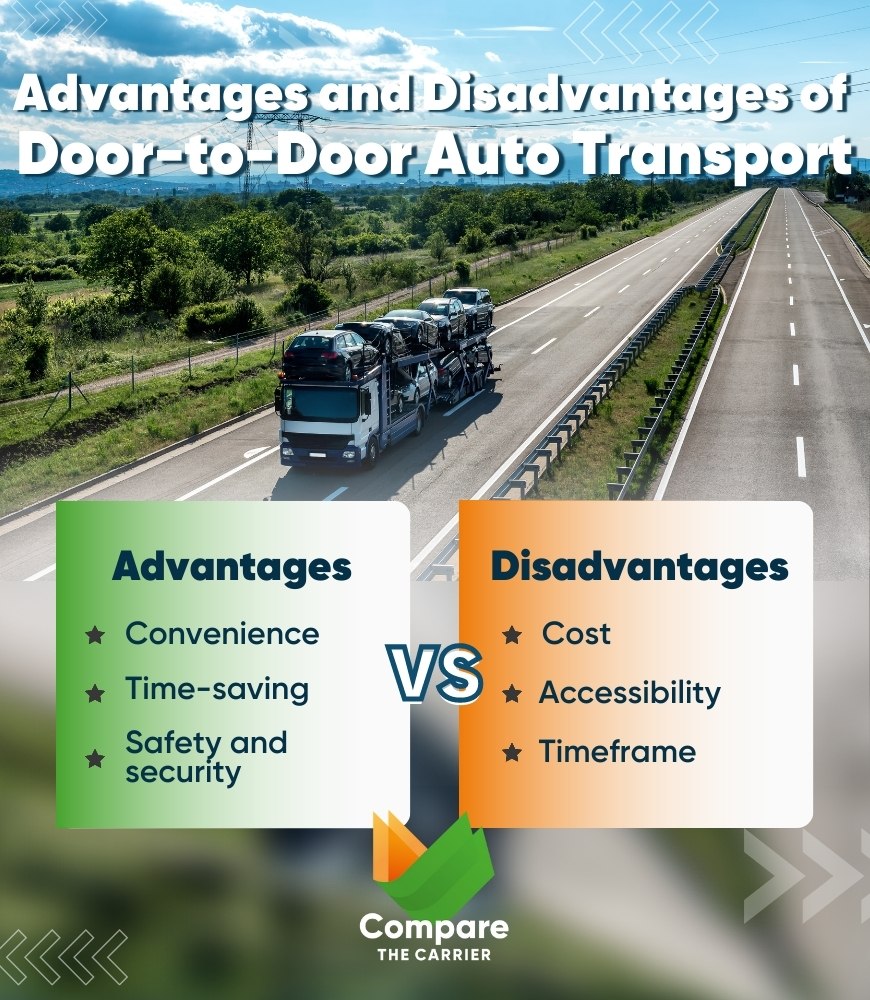
Despite its limitations, door-to-door transport remains an excellent choice for individuals who prioritize convenience, safety, and efficiency. It’s particularly beneficial for customers with high-value vehicles or those who want a fully managed shipping process. Overall, if your schedule, location, and budget allow for it, door-to-door shipping provides a stress-free and reliable experience one that often justifies the added cost when compared to terminal to terminal auto shipping.
Terminal-to-terminal auto transport is an auto shipping service in which customers drop off their vehicle at a designated terminal, and the carrier transports the vehicle to another terminal near the destination. The customer then picks up the vehicle from the delivery terminal. These terminals are typically secure lots or storage facilities that coordinate multiple shipments.
This method makes it easy for carriers to consolidate vehicles on the same route, lowering operating costs and making terminal to terminal car transport generally more affordable than door-to-door shipping. Many customers choose terminal services to reduce shipping costs while maintaining flexibility with pickup and drop-off.
Terminals themselves vary significantly in size and function. Some are small, gated lots, while others are large, industry-grade depots that handle hundreds of vehicles at once. Regardless of size, they operate with structured procedures to maintain order and safety during vehicle intake and release. Because carriers can load multiple cars onto the same trailer at a terminal, this method reduces fuel consumption and travel time between customer stops, an efficiency that appeals to environmentally conscious customers and supports more economical terminal-to-terminal shipping operations.
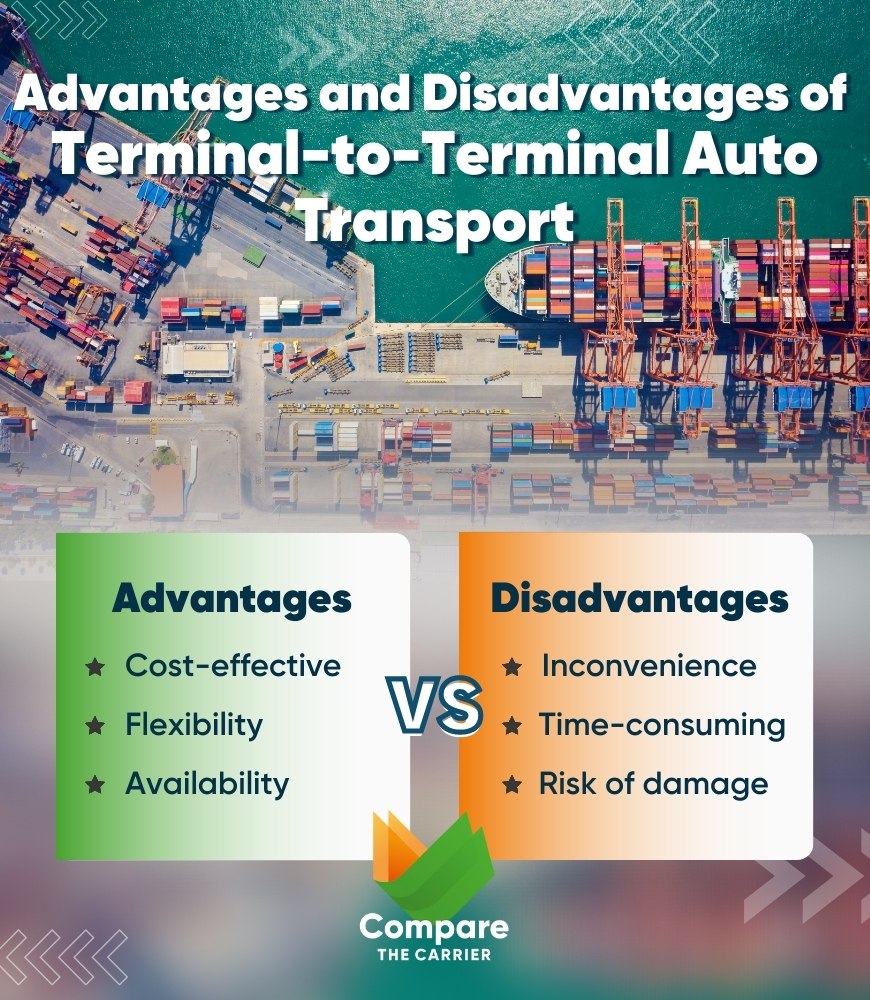
Finally, potential delays may occur as carriers wait for enough vehicles to fill a route. Terminal coordination introduces schedule variability, similar to group freight logistics. This is one reason some customers prefer door-to-door transport despite the higher cost, while others who value budget savings and flexibility still find terminal to terminal auto transport the best match for their situation.
Both door-to-door and terminal-to-terminal auto transport options serve different customer needs and priorities. Understanding the distinctions helps you choose the option that best fits your situation.
Door-to-door shipping is unquestionably the most convenient option. The carrier handles all logistics, and your vehicle moves directly from your chosen point to your destination with minimal handling. This reduces risk, increases efficiency, and saves time. Many customers prefer door-to-door service because of the personalized approach, something generally not available with terminal to terminal auto shipping.
In contrast, terminal-to-terminal transport focuses on affordability and structured coordination. Because carriers can consolidate shipments, costs are lower and operations more efficient. Customers who value budget savings often choose terminal shipping, especially when they have flexible schedules or live near a major terminal hub. The availability of secure storage also appeals to many people researching terminal to terminal car shipping for long-distance or delayed-delivery scenarios.
When comparing delivery speed, door-to-door shipping usually wins. The absence of terminal stops allows vehicles to travel faster on consistent routes. Terminal shipping may involve waiting for route consolidation or dealing with variable release schedules. However, both methods depend on factors such as distance, season, vehicle type, and carrier availability, which also influence the cost.
Ultimately, the choice between door-to-door and terminal-to-terminal shipping depends on budget, convenience preferences, time constraints, and location. Some people prioritize savings and flexibility. Others value an all-inclusive, fully managed shipping experience. Both methods remain important components of the auto transport industry and are well-suited to different customer priorities.
To help you navigate this complex terrain, we’ve prepared an insightful video:
This comprehensive guide takes you through the different components that contribute to the cost of auto transport, whether you choose door-to-door or terminal-to-terminal shipping.
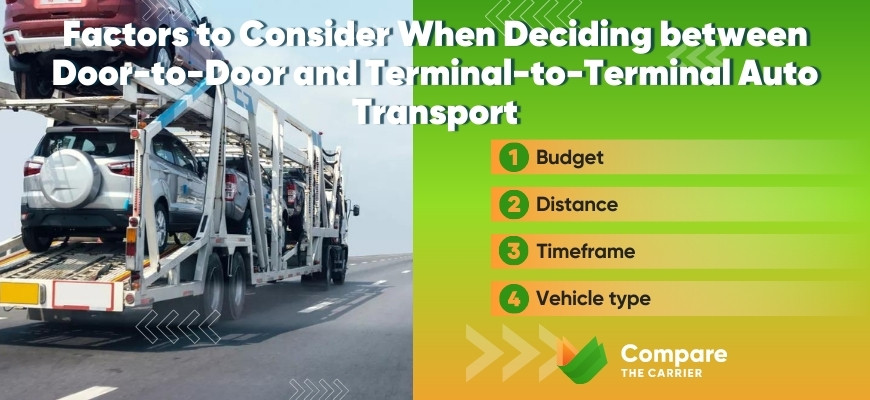
When it comes to shipping your vehicle, it’s important to choose the right method to ensure a smooth and hassle-free experience. The market is vast, and finding the right fit requires analyzing your personal situation. Here are some detailed factors to consider when deciding between door-to-door and car shipping terminal to terminal:
At Compare The Carrier, we understand that shipping your vehicle can be stressful and overwhelming. That’s why we’re dedicated to helping you find the best auto transport option for your specific needs. With our easy-to-use platform, you can compare shipping quotes from the best auto transport companies and choose the carrier that meets your needs and budget. Plus, all of our carriers are licensed and professional, so you can have peace of mind knowing that your vehicle is in good hands.
At the end of the day, there’s no single right answer when it comes to shipping a car. Choosing between door-to-door and terminal to terminal auto shipping really boils down to your personal situation. You just have to weigh your budget against your timeline and decide what makes the most sense for you right now.
The most important thing? Do your homework and pick a carrier you can actually trust. It makes all the difference. That’s exactly why Compare The Carrier exists. We’re here to help you cut through the noise, find a reliable option that fits your needs, and save you both time and money.
Door-to-door shipping prioritizes convenience and speed, handling the logistics directly from your driveway to the destination.1 In contrast, terminal-to-terminal service prioritizes budget savings, requiring you to handle the “first and last mile” by driving your vehicle to and from regional storage hubs.
Terminal shipping is typically cheaper because carriers save time and fuel by loading and unloading multiple cars at a single central location. Door-to-door service usually commands a higher price tag due to the personalized convenience and the extra mileage required for the driver to reach your specific address.
Door-to-door auto transport is typically faster because it involves fewer stops and less vehicle handling than terminal-based services, which often require waiting for a full load before departure.
Yes. Carriers may have limitations based on vehicle size, weight, modifications, or ground clearance. Oversized or heavily modified vehicles might require special equipment and may not be accepted at all terminals. Always confirm eligibility with the carrier in advance.
When comparing auto transport companies, make sure the one you choose is properly licensed and insured. It’s also a good idea to read through recent customer reviews to see how they handle communication, delays, and claims. Clear, upfront pricing and a company that’s willing to answer your questions without avoiding details are usually good signs. And of course, pick someone who has experience moving your type of vehicle.
Sometimes, yes. Depending on the company, you might run into extra charges—like fees for terminal storage, remote or hard-to-reach pickup locations, faster delivery, or optional insurance upgrades. To avoid surprises, just ask for a complete list of all possible fees before you finalize the booking.
If you spot damage when your car arrives, snap a few photos and have the driver note it on the Bill of Lading. After that, contact the carrier immediately to file a claim. Most carriers have cargo insurance for these cases, but it’s best to check their coverage beforehand.





Don't have time to fill out the form?
Call a transport company directly to get a quote now!
Select the category you need
Partner with Compare The Carrier & Grow!
We're open to collaborations, partnerships, and mutual growth! Whether you're an individual or a business, we offer exciting opportunities to work together. Fill out the form below to explore how we can collaborate.
Something Went Wrong
We're sorry, but something went wrong. Please briefly describe the problem you experienced in the text area below. Providing your contact information will allow us to follow up if needed.

Thank you,
your form has been accepted.
Your form has been successfully submitted. We appreciate your effort — our team will review it shortly and take the next steps.


