4 Proven Tactics to Optimize Auto Transport Lead Cost
To optimize auto transport lead cost in 2026, brokers mus...
15 November 2024
Let’s cut to the chase. If you’re in the business of moving vehicles whether it’s everyday sedans, heavy equipment, or specialized rigs you know the lifeblood of your brokerage is a consistent pipeline of high-quality vehicle shipping leads.
Contact Us Now
But here’s the reality: the industry has a massive fragmentation problem. The average multi-vehicle transport company juggles leads from at least five different sources. That means five different dashboards, five different billing cycles, and, worst of all, wildly inconsistent levels of lead quality.
With the rapid adoption of AI-driven lead filtering and tightening margins across the logistics space, that complexity is no longer just annoying it’s actively eating into your profits. You end up hoarding data, calling the same shared leads as ten other brokers, and managing a lead generation circus instead of actually dispatching freight.
To stop the broker bleed, you don’t need more leads. You need a centralized strategy. Consolidating your scattered auto transport leads into a single, focused pipeline one of the most effective ways to ensure you’re working real, qualified opportunities that convert, rather than just chasing noise.
In the multi-vehicle shipping industry, diversity in vehicle shipping leads is essential. Whether you’re moving cars, RVs, boats, or heavy equipment, each vehicle type requires a unique approach to lead generation. This is why many transport companies turn to multiple platforms — but while it seems like a smart move, it often creates more problems than it solves.
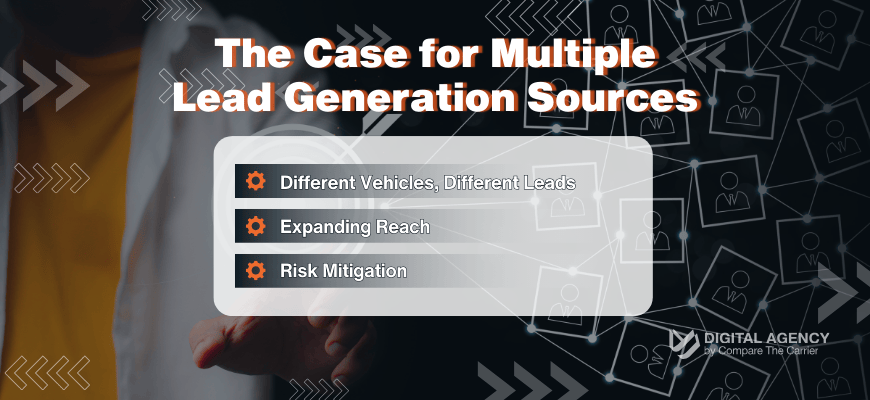
Transport companies need diverse vehicle shipping leads, but they don’t need multiple platforms to get them.
A unified solution like Compare The Carrier consolidates leads from all sources into one streamlined system, eliminating inefficiencies and boosting ROI.
While using multiple platforms to source vehicle shipping leads might seem like a smart strategy, it often leads to a tangled web of inefficiencies. For auto transport brokers and logistics companies, managing disparate lead sources can feel like trying to solve a puzzle with missing pieces.
The reality of managing multiple lead sources can often feel overwhelming. You end up hoarding leads, but they’re spread across platforms, difficult to track, and often duplicated. It’s a bit like this:

It’s like Gollum with the rings – you’ve got ’em all, but they’re scattered, duplicated, and causing more headaches than they’re worth.
Here’s a closer look at the challenges — and real-life examples of how they play out in the industry.
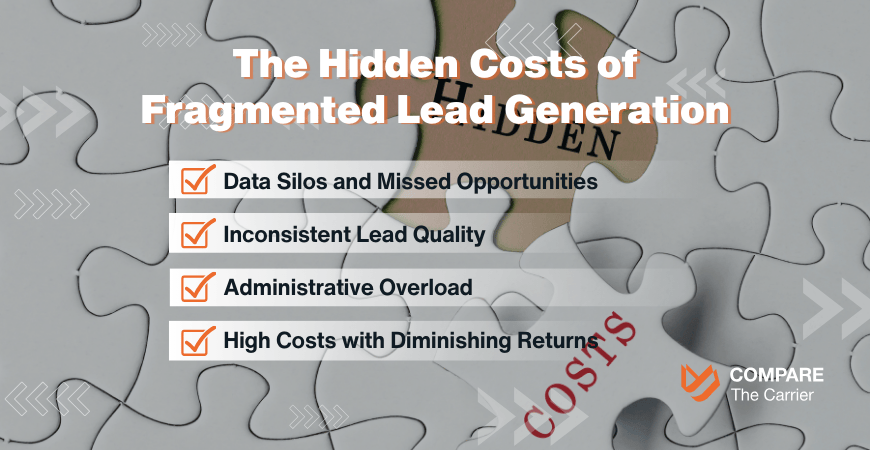
A freight broker in Texas shared how they sourced the same logistics lead from three different platforms: Truckstop.com, 123Loadboard, and a general B2B provider. Not only did they pay for the same lead multiple times, but the lack of integration meant they didn’t realize it was a duplicate until after they’d spent hours following up.
The disparate lead source trap is a real problem for transport companies. While diversifying your vehicle shipping lead generation strategy might seem like a good idea, the inefficiencies and costs often outweigh the benefits. What brokers really need is a unified solution that consolidates leads from all sources into one streamlined system—eliminating the chaos and maximizing ROI.
To truly understand your marketing performance, you need to identify the shipping KPIs that drive revenue growth.
For auto transport brokers, the struggle of managing scattered vehicle shipping leads is a massive bottleneck. You waste time, face inconsistent quality, and burn through your marketing budget. But what if you could take complete control of your acquisition channels instead of relying on third-party vendors for shared, low-converting lists?
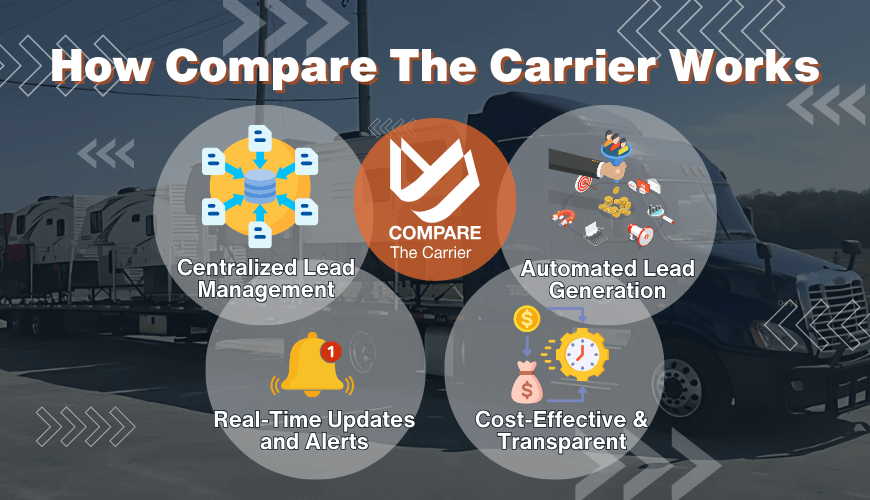
Successful brokerages are building their own sustainable pipelines. This is where Compare The Carrier steps in to consolidate, automate, and scale your growth. Here’s how a unified approach changes the game:
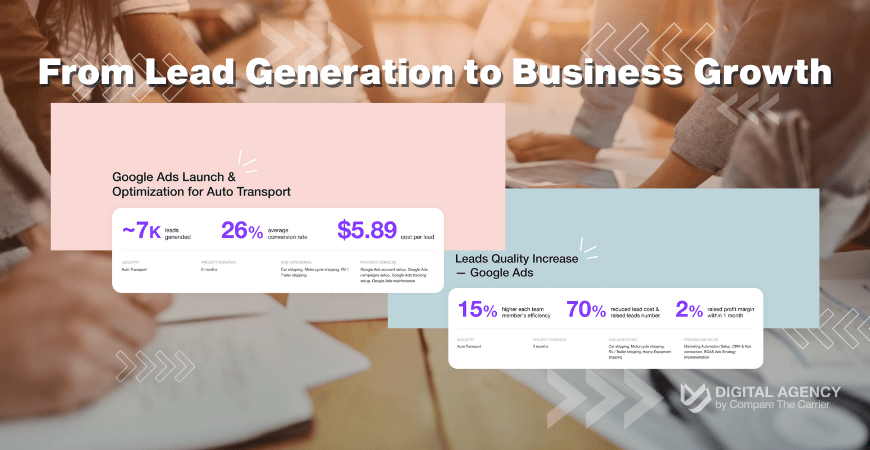
One of our clients, a growing auto transport company, struggled with skyrocketing costs and low-quality shared leads. They were paying for volume but getting zero exclusivity, which led to administrative overload and frustrated sales reps.
By partnering with us, they shifted their entire strategy. We moved them away from disparate platforms, launched targeted PPC campaigns, and streamlined their backend with deep business process automation to ensure leads were instantly routed to the right agents.
The result? We generated ~7,000 exclusive leads at an average cost of just $5.89 per lead.
Because these were high-intent shippers and because their team was equipped with the right logistics sales training to handle industry-specific objections their conversion rate jumped by 32%. Team efficiency increased by 70%, proving that when you consolidate your efforts, you stop managing a lead generation circus and start actually dispatching freight.
In an industry where time is money, Compare The Carrier offers a smarter way to source and manage leads.
By consolidating your auto transport leads, freight leads or moving leads into one platform, we help you eliminate waste, improve efficiency, and focus on what really matters — growing your business. This approach aligns with the top online marketing strategies for logistics in 2026, focusing on efficiency and effectiveness.

For auto transport brokers and logistics companies, the struggle to manage vehicle shipping leads across multiple platforms is all too real. From fragmented data and inconsistent lead quality to skyrocketing costs and wasted time, the pitfalls of disparate lead sources can cripple even the most efficient operations.
But it doesn’t have to be this way. By consolidating your auto transport leads, freight leads or moving leads and more into a single, unified platform, you can eliminate inefficiencies, reduce costs, and focus on what truly matters — closing deals and growing your business.
Compare The Carrier is your partner in this transformation. With our automated lead generation tools and centralized system, we help you streamline your lead management process, improve ROI, and stay ahead in the competitive logistics industry.
Ready to simplify your lead generation and take your business to the next level? Reach out to Compare The Carrier today and discover how we can turn your vehicle shipping lead generation challenges into opportunities for growth.
The most profitable niches in auto transport include heavy machinery, RVs, and classic or luxury cars. These specialized shipments command higher premiums and face less broker competition compared to standard sedan transport. Generating leads for enclosed transport or oversized freight typically yields a significantly higher return on investment per closed deal.
Brokers verify lead quality by implementing automated data validation tools that check for accurate contact information, valid vehicle specifics, and realistic shipping timeframes. High-quality leads are typically exclusive and generated through high-intent channels like targeted search ads, whereas low-quality leads often contain duplicate data shared among multiple transport companies simultaneously.
CRM integration automates the pipeline, ensuring leads generated from landing pages or ad campaigns are instantly routed to sales representatives. This eliminates manual data entry and allows brokers to trigger immediate email sequences or SMS follow-ups. Since conversion rates drop drastically after the first five minutes, an integrated CRM is essential for speed-to-lead execution.
The ROI for exclusive freight leads depends heavily on the broker’s closing ratio, but industry benchmarks suggest a target of 400% to 600%. While exclusive leads cost more upfront often between $10 and $25 they convert at a much higher rate compared to shared leads, ultimately reducing the overall customer acquisition cost.
A well-structured PPC campaign for auto transport leads can begin generating high-intent inquiries within the first 48 hours of launch. However, fully optimizing the cost-per-lead and refining the sales team’s closing process typically requires 30 to 60 days of continuous data analysis, A/B testing of landing pages, and adjustment of bidding strategies.
Small brokerages can successfully compete by targeting hyper-specific long-tail keywords and focusing on niche markets, such as local dealership transport or specific regional routes. By avoiding broad, highly competitive search terms and prioritizing exclusive lead generation through highly optimized local SEO, smaller teams can achieve higher conversion rates with lower volume.








Select the category you need
Partner with Compare The Carrier & Grow!
We're open to collaborations, partnerships, and mutual growth! Whether you're an individual or a business, we offer exciting opportunities to work together. Fill out the form below to explore how we can collaborate.
Something Went Wrong
We're sorry, but something went wrong. Please briefly describe the problem you experienced in the text area below. Providing your contact information will allow us to follow up if needed.

Thank you,
your form has been accepted.
Your form has been successfully submitted. We appreciate your effort — our team will review it shortly and take the next steps.