Brokerage Growth Strategies: Supercharge Your Marketing in 2026
Unlock explosive brokerage growth in 2026. Get the inside...
12 March 2024
Shipping just got smarter! Buckle up and discover how Artificial Intelligence (AI) is revolutionizing the logistics landscape.
Contact Us Now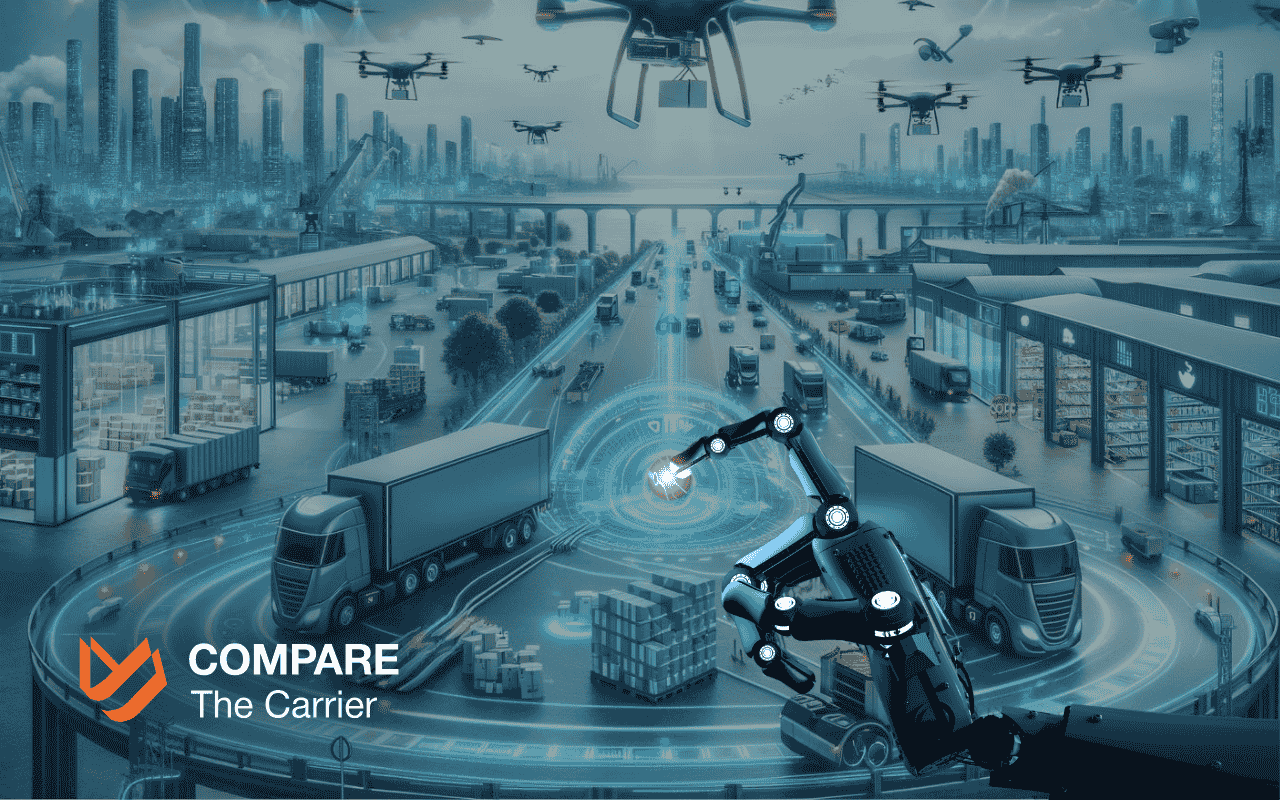
The logistics industry has moved past the AI hype. Today, artificial intelligence isn’t a futuristic concept, it’s the baseline for staying competitive. With shrinking margins, unpredictable supply chain disruptions, and rising customer expectations, traditional management methods are no longer enough. By integrating AI-driven solutions, logistics companies are transforming raw data into automated decisions. Can help reduce operational inefficiencies that impact cost.
In this guide, we’ll cut through the noise and show you exactly how practical AI applications are driving measurable results in logistics right now, and how Compare The Carrier leverages this tech to optimize your daily operations.
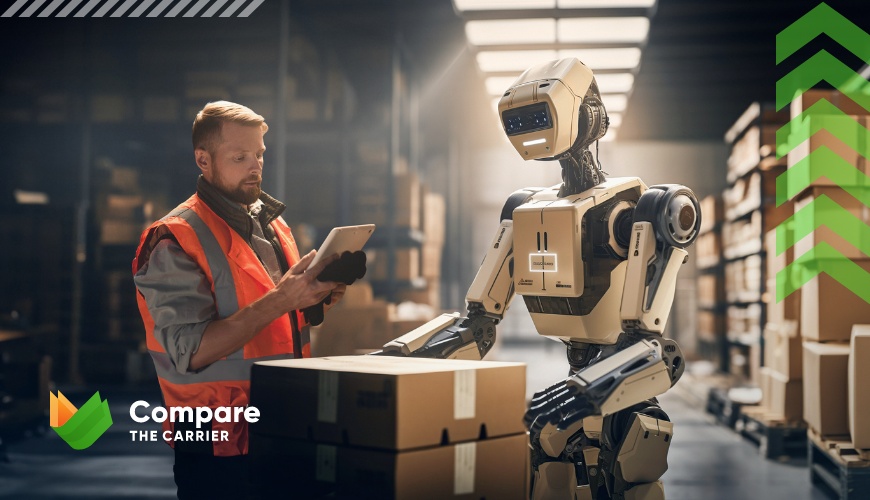
The logistics industry, long known for its complex operations and intricate networks, is undergoing a significant transformation fueled by artificial intelligence (AI). This powerful technology is no longer just a futuristic concept; it’s rapidly becoming a game-changer for businesses and consumers alike, paving the way for a future of smarter, faster, and more efficient logistics.
At the heart of this transformation lies a suite of powerful AI technologies, including:
The impact of AI in logistics extends far beyond mere automation. It’s about unlocking new levels of digital logistics efficiency and supply chain visibility. This translates to cost reductions, faster delivery times, and a more reliable experience for everyone involved – from businesses to consumers.
As AI technology continues to evolve and become more sophisticated, we can expect to see even more innovative applications emerge, further revolutionizing the way we move goods around the world.
The potential of AI in logistics is vast, but it’s not just a futuristic vision; it’s already transforming the industry with real-world applications that benefit both businesses and consumers. Let’s explore some compelling examples, including innovative solutions implemented by Compare The Carrier:
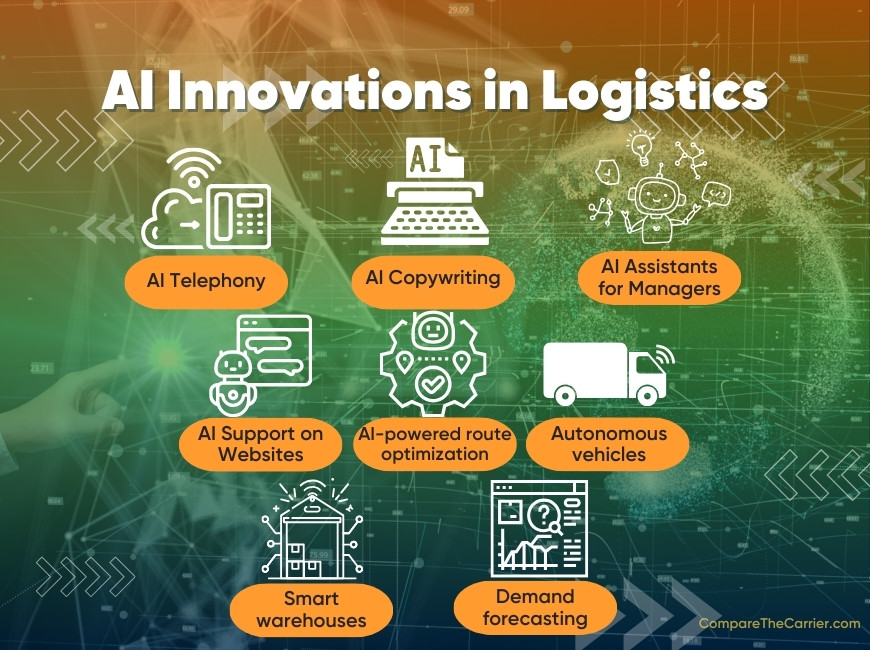
At Compare The Carrier, we’re actively harnessing the power of AI to:
While we’re proud of our own AI implementations, the applications extend far beyond our company. Here are some additional examples of how AI is transforming the logistics landscape:
The rise of AI in logistics is no longer a question of “if” but “when.” By harnessing the power of this transformative technology, companies can unlock new levels of efficiency, optimize operations, and deliver exceptional customer experiences.
At Compare The Carrier, we’re committed to staying at the forefront of AI innovation in the logistics industry.
Ready to experience the future of logistics?
Contact Compare The Carrier today at info@comparethecarrier.com. Our team of experts can help you leverage the power of AI to optimize your supply chain and achieve your business goals.
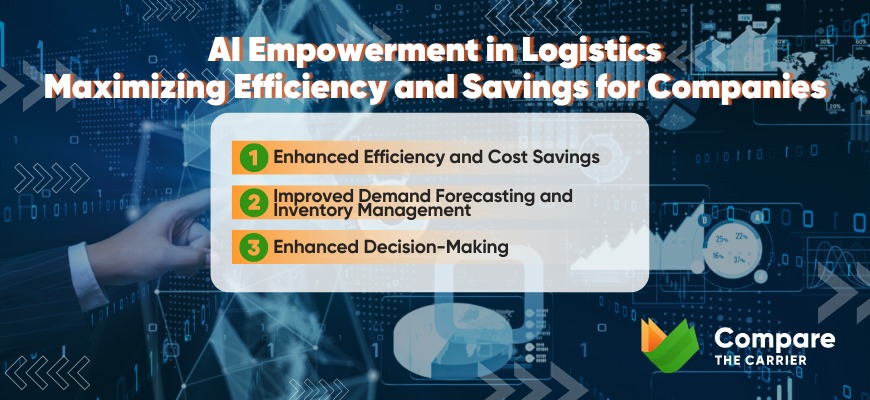
The integration of AI into logistics isn’t just about technological advancement; it’s about creating a win-win situation for both companies and customers. Let’s explore the tangible benefits this powerful technology offers:
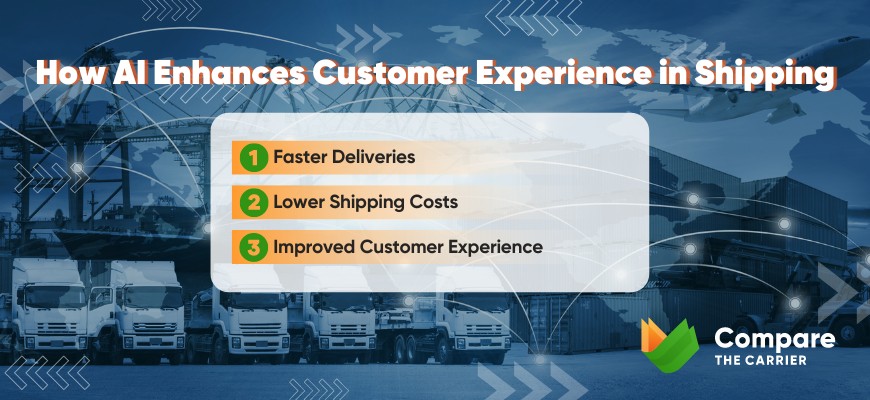
At Compare The Carrier, we’re committed to leveraging AI to enhance the customer experience in every aspect. Our quote comparison tool utilizes complex algorithms to analyze real-time data from various carriers, providing you with competitive quotes and the most efficient shipping options. Additionally, our AI-powered customer support is available 24/7 to answer your questions and address any concerns you may have.
The integration of AI into logistics is not just a passing trend; it’s a enormous force shaping the future of the technology in transportation industry. This powerful technology holds immense potential to revolutionize the way we manage and experience the supply chain, offering greater efficiency, cost savings, and improved customer satisfaction for all stakeholders.
At Compare The Carrier, we’re at the forefront of this exciting transformation. We are committed to leveraging the power of AI to provide you with a seamless, efficient, and cost-effective logistics experience. Whether you’re a business owner shipping across the country or an individual sending a package across town, Compare The Carrier is here to help you navigate the future of logistics.
Contact us today to learn more about how AI can optimize your supply chain and empower your business to thrive in the ever-evolving world of logistics.
AI in logistics includes Automated Guided Vehicles (AGVs) that autonomously transport goods within warehouses to boost efficiency. It also enables precise demand forecasting for perishable goods by analyzing historical and weather data to minimize spoilage. Additionally, AI drives real-time, dynamic pricing models by continuously assessing market conditions and competitor rates.
AI acts as a “copilot,” not a replacement. By automating routine dispatching, document processing, and track-and-trace updates, AI frees up your team to focus on high-value tasks: strategic vendor negotiations, complex exception management, and building client relationships. We can help you train your team through our logistics sales training to maximize these new AI capabilities.
Don’t invest in tech just for the sake of it. Start with an audit of your biggest bottlenecks. Are you losing money on deadhead miles? Is customer support overwhelmed? Through comprehensive growth opportunities research, we help identify exactly where AI will deliver the fastest ROI for your specific supply chain model.
The primary limitation of AI in logistics is its heavy reliance on high-quality, structured data; inaccurate inputs lead to flawed outputs. AI also struggles with unprecedented disruptions, known as “black swan” events, where historical data cannot predict future outcomes. Furthermore, AI lacks the emotional intelligence necessary for complex customer conflict resolution.
Contact us today! Our team of experts can answer your questions, assess your specific needs, and help you leverage the power of AI to optimize your logistics experience.
Initiating AI adoption begins with identifying specific operational inefficiencies, such as high fuel costs or document processing delays. Companies typically start with pilot programs focused on a single metric, utilizing specialized logistics AI integration services to seamlessly embed the technology into existing supply chain workflows without disrupting daily operations.







Select the category you need
Partner with Compare The Carrier & Grow!
We're open to collaborations, partnerships, and mutual growth! Whether you're an individual or a business, we offer exciting opportunities to work together. Fill out the form below to explore how we can collaborate.
Something Went Wrong
We're sorry, but something went wrong. Please briefly describe the problem you experienced in the text area below. Providing your contact information will allow us to follow up if needed.

Thank you,
your form has been accepted.
Your form has been successfully submitted. We appreciate your effort — our team will review it shortly and take the next steps.