U.S. vs. UAE Logistics for a Newly Established Car Rental Company
A small rental startup in Ohio can pick up a few used sed...
20 October 2026
When small businesses start importing, they usually focus on the ocean leg. They compare container rates, ask how long the sailing takes and track the vessel across the Pacific. Then the container lands in Los Angeles or Savannah and a second, less familiar trip begins: getting the goods off the terminal and onto a truck to your warehouse.
Calculate Shipping Quotes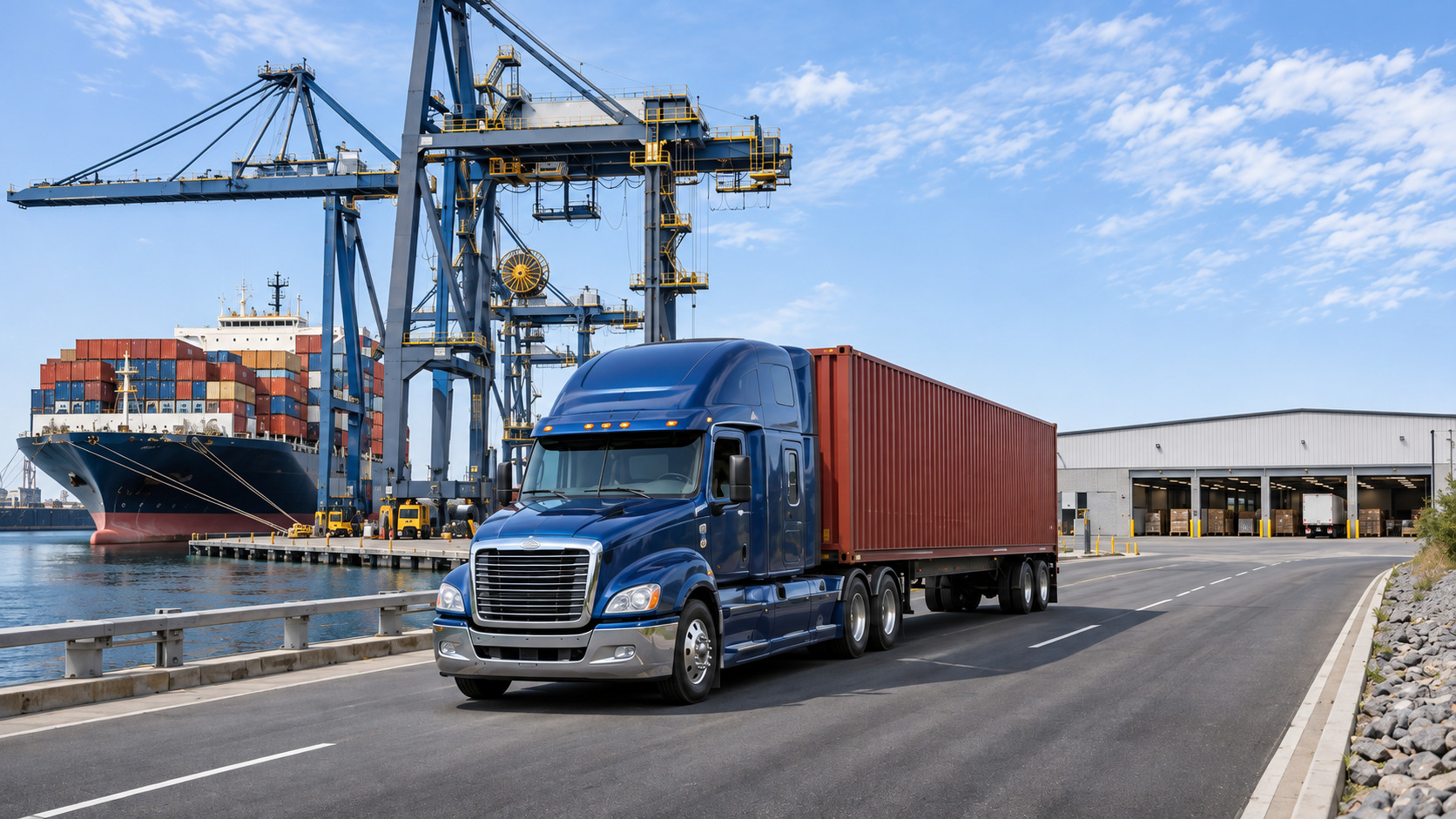
That second half is where a lot of first-time importers get caught out. Terminal fees, chassis shortages, missed delivery appointments and detention charges can add hundreds of dollars and several days to a shipment that looked simple on paper.
This guide walks through the whole journey, from the factory floor overseas to the dock door at your business. It explains what happens at each stage, where costs and delays tend to hide, and how to decide who should handle each part.
In this guide
Each step is usually handled by a different party. The handoffs between them are where most of the cost and delay creeps in.
An ocean quote rarely shows everything you’ll pay. These are the charges that most often surprise small importers:
Most of these come down to timing and coordination. Paperwork that’s ready before the vessel arrives, a broker who files early, and a trucker booked ahead of time can turn a stressful week into a routine delivery.
Tip:
Ask every provider for its free time, daily rates and accessorial list in writing before you book. Two quotes that look similar can end up hundreds of dollars apart once these are added.
Small importers usually choose between two approaches.
Door-to-door with one forwarder. A single company books the ocean freight, handles customs and arranges delivery to your door. You get one quote, one invoice and one point of contact. This suits businesses that import a few times a year and don’t have a logistics team.
Split the journey. You book ocean freight with one provider, use your own customs broker, and arrange US trucking separately, often by comparing carrier quotes for the drayage, LTL or FTL leg. This takes more work but can save money, especially if you ship regularly or already have trusted carriers on the domestic side.
Many businesses mix the two. They let a forwarder handle the international side and clearance, then compare domestic carriers for the last leg from the port or warehouse.
Whichever route you choose, the ocean booking is now much easier for small shippers than it used to be. Digital forwarders let you get an instant quote, book and track online, without the back-and-forth emails. Ship4wd is one example aimed at small and mid-sized importers. Launched in 2021 with the expertise of the ocean carrier ZIM, it lets businesses book ocean freight online, FCL or LCL, from Asia to the US and Canada, and add customs clearance, cargo insurance and door delivery to the same booking.
When you compare options, look at more than the headline rate. Check what’s included at each end, how much free time you get at the terminal, how tracking works, and who you can call when something goes wrong.
Importing is no longer just for large companies with logistics departments. Online booking, transparent quotes and carrier comparison tools have opened it up to small businesses too. The key is to treat the shipment as one journey, from the factory to your dock door, rather than a sea voyage followed by a scramble. Plan both halves, ask about the hidden charges upfront, and line up your trucking before the container lands. Your freight will arrive on time, and your landed cost will match what you planned.
The total cost depends on the shipment size, origin, destination, shipping method, product type, and applicable duties. In addition to ocean freight, businesses should budget for customs clearance, terminal handling, drayage, inland trucking, and possible storage or detention charges.
A customs broker is not legally required for every import, but using one can simplify the process. A licensed broker can prepare and submit customs entries, calculate applicable duties, and help resolve documentation issues.
FCL (Full Container Load) means one shipper uses an entire container, while LCL (Less-than-Container Load) combines cargo from multiple shippers in one container. FCL is generally more suitable for larger shipments, while LCL allows small businesses to import smaller volumes without booking a full container.
Ocean transit from Asia to the US West Coast often takes around two to three weeks. East Coast and Gulf destinations usually require longer. Customs clearance, port congestion, inland transportation, and seasonal demand can extend the total delivery time.
The shipment must clear customs and receive terminal release before pickup. A drayage carrier then collects the container, transports it to a warehouse or transloading facility, or delivers it directly to the final destination. Additional inland trucking may be needed depending on the shipment and delivery location.






Select the category you need
Partner with Compare The Carrier & Grow!
We're open to collaborations, partnerships, and mutual growth! Whether you're an individual or a business, we offer exciting opportunities to work together. Fill out the form below to explore how we can collaborate.
Something Went Wrong
We're sorry, but something went wrong. Please briefly describe the problem you experienced in the text area below. Providing your contact information will allow us to follow up if needed.

Thank you,
your form has been accepted.
Your form has been successfully submitted. We appreciate your effort — our team will review it shortly and take the next steps.