

eBay Motors Car Shipping: How to Get the Car You Bought to Your Door
Does eBay ship cars? No. eBay Motors does not operate aut...
22 September 2026
CarGurus is a search engine for car listings, not a dealer. It’s free for buyers, its Deal Ratings are a genuinely good way to spot underpriced cars, and its inventory is bigger than any single retailer’s. The weak spot is the handoff: CarGurus locates the car for you, then steps back and lets an independent dealership run the actual sale. Many of the complaints you’ll read trace back to that moment, not to the platform itself. Used with a little discipline, it’s a sharp shopping tool. Treat it like a guarantee, and it’ll burn you.
Calculate Shipping Quotes
First things first: CarGurus is legitimate. It’s a publicly traded marketplace with millions of cars from thousands of dealers. However, you buy the car from the dealership behind the listing, and that transition is where most reviews skip important details.
A quick note on where I’m sitting. Compare The Carrier is an auto transport broker, not a car seller or carrier, and we have no deal with CarGurus one way or the other. What we do see, constantly, is the tail end of this process: someone finds a car a few states away, buys it, and needs it in their driveway. So I’ll cover how the platform works and what it costs, but I’ll be straight with you about what many glossy reviews skip: what happens after you click “check availability.”
In this guide
CarGurus launched in 2006 out of Cambridge, Massachusetts, founded by Langley Steinert (who also had a hand in TripAdvisor, which tells you something about the model). It’s a listings marketplace. Dealers pay to put their inventory in front of shoppers; buyers search, filter, and compare; then the sale happens with the dealer. For cars listed by dealers, CarGurus doesn’t own the vehicle, inspect it, or set the asking price. The dealership runs the actual sale.
This setup explains most things about CarGurus. While you use the site, the main customer is the dealer who pays for leads. CarGurus has over four million U.S. listings from thousands of dealers and reported 41.4 million global monthly users in its Q4 2025 SEC filing. That wide reach is why its inventory is so large.
The feature everyone knows it for is the pricing engine. CarGurus runs an algorithm it calls Instant Market Value (IMV), which estimates what a given car should sell for based on comparable listings, then adjusts for mileage, trim, options, and location. Every listing gets a badge: Great Deal, Good Deal, Fair Deal, High Priced, Overpriced. Green to red. It’s the same idea as a Kelley Blue Book estimate, just baked into the search results.
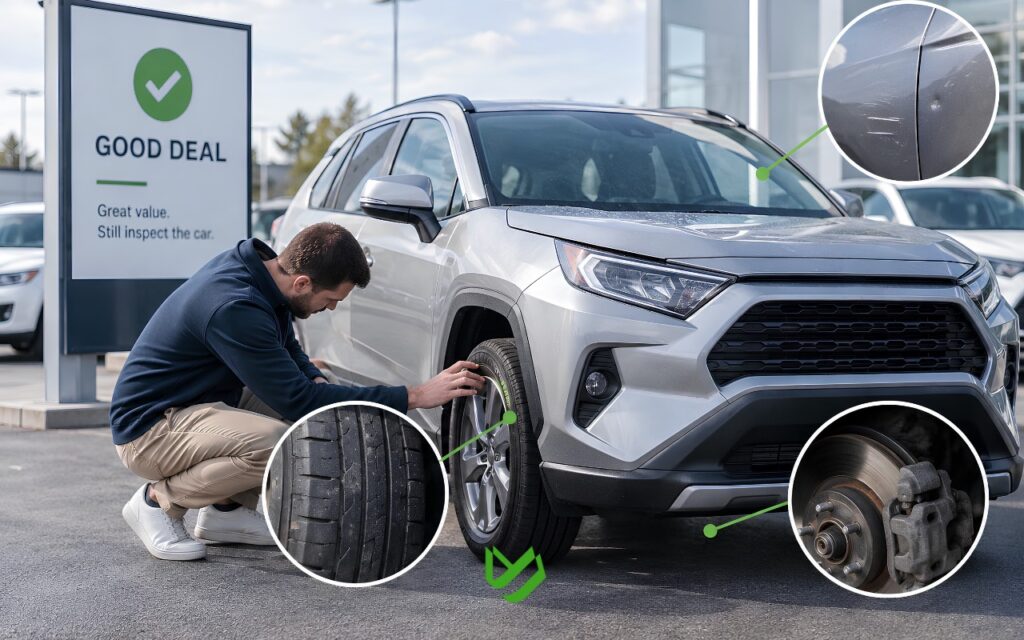
There’s something important to know before you rely on the Deal Ratings. CarGurus says that less than a third of listings get a Good or Great rating, so the system really helps narrow down your options. Dealers know this and sometimes price cars to get the green badge. The rating means the price is good compared to similar cars, but it doesn’t tell you about things like hidden damage, worn tires, or extra fees added at signing. A Great Deal means you should look closer, not skip the inspection.
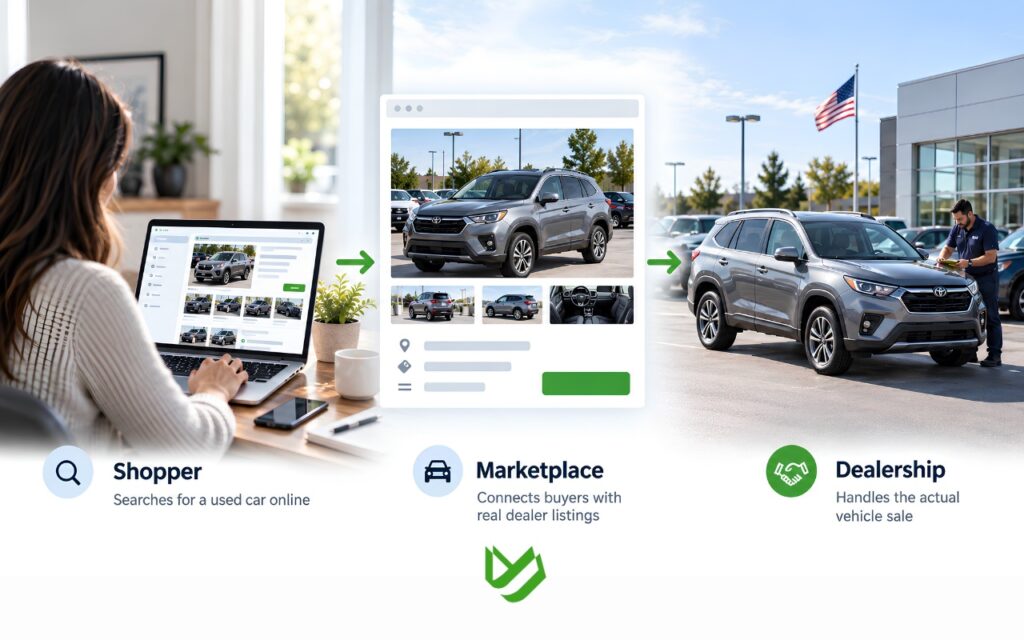
I reviewed CarGurus from our customers’ perspective: how the marketplace works, who pays, buyer fees, the selling process, how much to trust the Deal Rating, how it compares to other big car-buying sites, common complaints, and the out-of-state buying process we see often. The scores below are our own editorial opinions, not CarGurus’s or third-party ratings.
Here’s how I’d rate it, weighted toward what actually changes how a purchase turns out.
| Category | Score | The honest read |
| Search, filters & inventory | 9/10 | Biggest selection of any major marketplace, and the filtering is the best in the category |
| Deal-rating transparency | 8/10 | A genuinely useful shortlist signal, with the limits above |
| Cost to buyers | 9/10 | Free to search, compare, and contact dealers |
| Listing accuracy | 7/10 | Only as good as the dealer; photos and disclosures are all over the map |
| Selling experience | 6.5/10 | Instant offers are fast, but the offer getting cut on arrival is the top complaint |
| Support after a bad deal | 6/10 | Thin, because your contract is with the dealer, not CarGurus |
| Overall | 8/10 | Excellent at finding the car; the sale is only as good as the dealer behind it |
For context, at the time of writing CarGurus sits around 3.3 stars on Trustpilot and 3.6 on ConsumerAffairs, and it’s BBB accredited with an A+ rating. Scores shift over time. Read enough of those reviews and a pattern shows up: many one-star complaints target the dealership the shopper reached through CarGurus rather than CarGurus itself. The platform is the map. It isn’t the territory.
For buyers, CarGurus is free. It doesn’t charge shoppers to search listings, compare vehicles, view Deal Ratings, or contact dealers. Older reviews can steer you wrong on the selling side, because the whole model changed in 2024. If you find an article quoting a “$99 when your car sells” fee or a monthly listing charge, it’s outdated. That was the old private-seller pricing, and private-seller listings are gone.
Here’s what you actually pay now.
| Who | What you pay | Notes |
| Buyers | $0 | Search, Deal Ratings, price history, and dealer contact are all free |
| Sellers (instant offer) | $0 directly | The dealer’s resale margin is your real cost; offers hold ~7 days or 250 miles |
| Private-party sellers | Not available | CarGurus no longer offers private-party listings |
| Dealers | Subscription + lead fees | This is who funds the platform, and whose interests come first |
When people buy the car, they don’t have to pay anything at all. To sell the vehicle, use the ‘Sell My Car’ tool by entering your plate number or VIN, mileage, and condition; dealerships then send instant offers. You then select one and get paid. Online sales are paid by bank transfer within one to three business days, and local dealer sales are usually paid the same day. If you still have a loan on the car, the sale will pay it off, and you keep the remainder. The process is convenient, but you won’t receive the highest possible price because dealers need to make a profit.
What it does well
Where it falls short
CarGurus is at its best when you’re buying. The price-history graph shows if a listing has been sitting and dropping in price. Days-on-lot helps you spot motivated dealers. The deal-rating sort saves you hours of comparing tabs. Make a shortlist online, check the car in person or with a third-party inspection, and negotiate the final price. Used this way, CarGurus is one of the best search tools among major sites.
The weakness is everything after the click. Once you contact a dealer, you’re in the dealer’s world, and the federal FTC Used Car Rule – the Buyers Guide sticker, the warranty disclosures – is the floor you’re standing on, not any CarGurus policy. Buyers who treat the listing as the start of their homework do fine. Buyers who treat the green badge as the finish line are the ones writing angry reviews later.
When the best car is 500 miles away
If you carry out a national deal-rating search, you will quickly pick up on the fact that the best prices are seldom to be found in your own area. Inventory surpluses are regional in nature. For example, diesel trucks become cheap in Texas, convertibles are discounted in Michigan in November, and CarGurus shows all of these deals across the nation. In this way, every such search effectively becomes a tool for sourcing vehicles from outside the state, even if that was not the intention.
And distance matters less than most people assume. Registration and sales or use tax generally depend on where you register the car and how the sale is handled, so confirm the specifics with your home-state DMV or tax authority – but most dealers process out-of-state paperwork every week. Transport is a solved problem. For a typical 500 to 1,000-mile route, the cost of open transport varies a lot by vehicle, timing, and season, so the only figure that means anything is the one for your exact route – our auto transport calculator gives you that in about a minute.
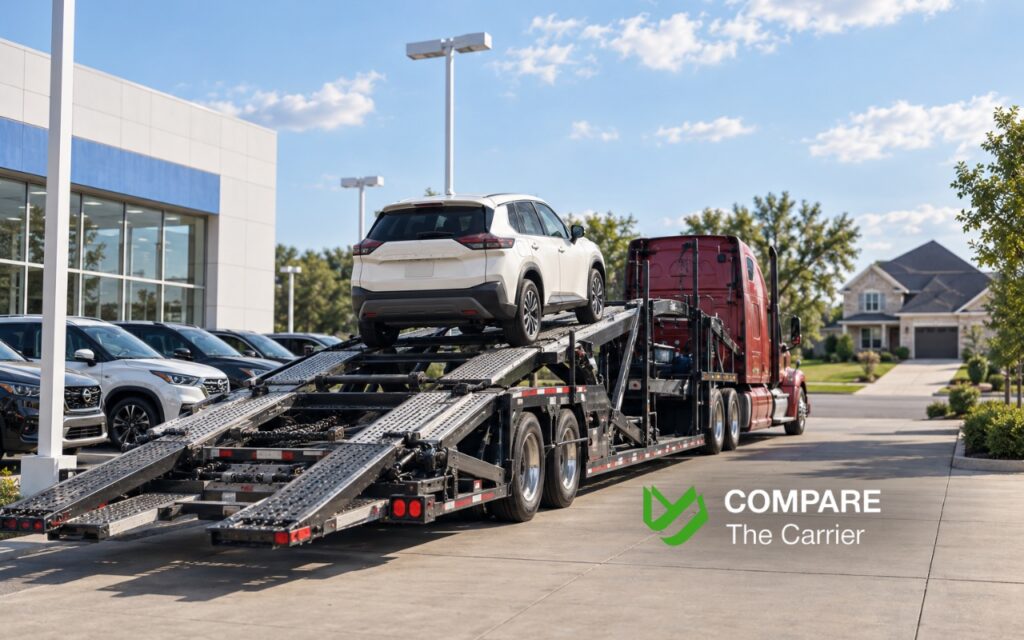
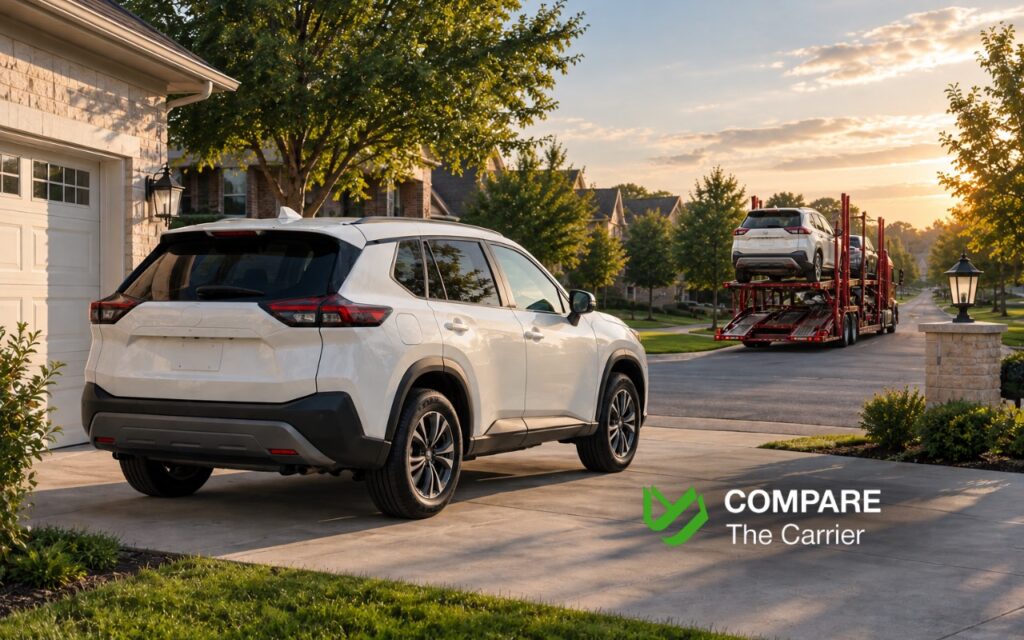
Here’s a quick example, and it’s just illustrative: a car priced $2,500 below your local market, sitting 800 miles away, still leaves you around $1,750 ahead after $750 of shipping – before you factor in taxes, fees, and inspection. It rides straight from the selling dealer’s lot to your driveway, and someone at the dealership signs off on the pickup condition report for you. We walk through the whole process in our guide to shipping a car you bought out of state. The point for now is simpler: don’t cross a Great Deal off your list just because it has an out-of-state ZIP code.
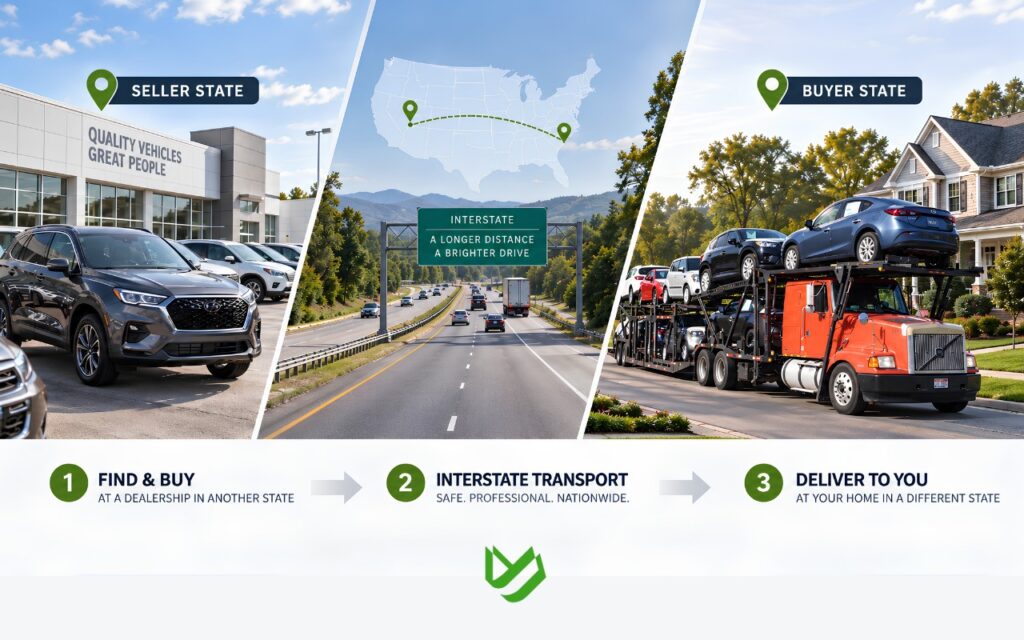
CarGurus hands you off to the dealer when you click “check availability,” so the rest of the purchase runs the way any dealership sale does. Four steps to expect:
Since the private listings were shut down, selling through CarGurus now involves gathering dealer instant offers. You can view it as a convenient option rather than one that provides a high price. The procedure is fast – once the details have been entered, the offers are provided and for eligible vehicles you can collect them at home with the money arriving in a few days. The drawbacks include the risk of the offer being reduced when the dealer carries out the inspection, and the simple fact that dealers need a margin.
If getting the most money matters more than getting it fast, you have better options. A private sale on a platform that still supports one. Or lining up competing instant offers from CarMax and Carvana against your CarGurus number. Collecting two or three offers costs you an hour and routinely moves the figure by four digits. Our Costco vs CarMax vs Carvana comparison breaks down how those instant-offer programs stack up.
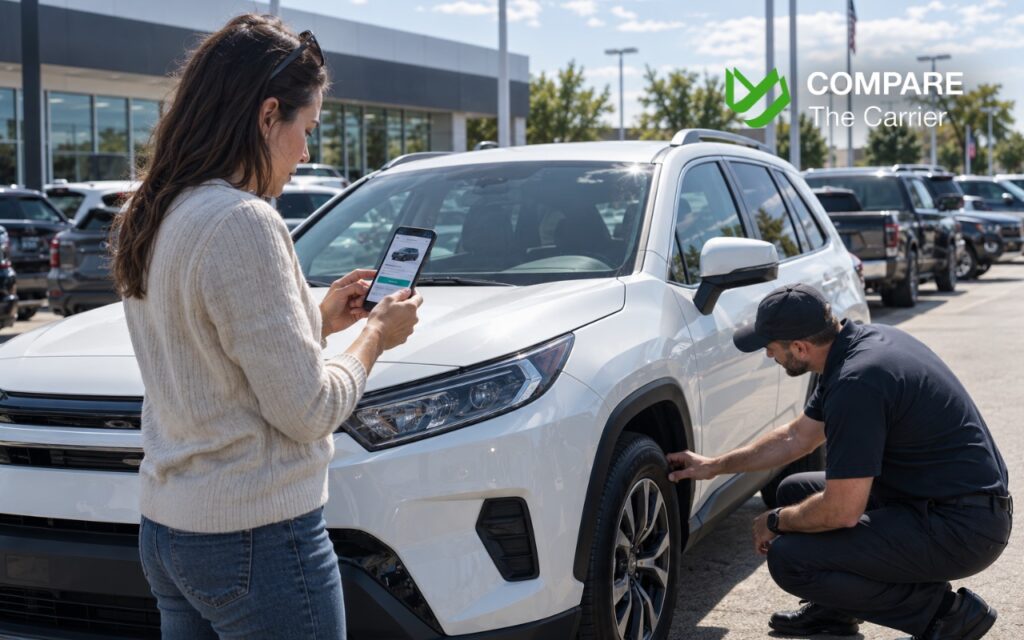
People compare these three constantly, and they really shouldn’t, because they’re built differently.
| CarGurus | Carvana | CarMax | |
| What it is | Search marketplace | Online retailer | Brick-and-mortar retailer |
| Who sells you the car | Independent dealers | Carvana itself | CarMax itself |
| Inventory | ~4 million listings | Its own fleet | Its own fleet |
| Haggling | Yes, with the dealer | No-haggle | No-haggle |
| Return window | Dealer’s policy, often none | 7-day money-back | 30-day / 1,500-mile |
| Best for | Widest choice, lowest prices for careful shoppers | A fixed, hands-off process | In-person reassurance, easy trade-in |
The honest summary: CarGurus wins on selection and on price ceiling, and loses on consistency. A no-haggle retailer gives you a predictable, fine-every-time experience. CarGurus serves up both the 9s and the 4s, and your own diligence decides which one you get. If you want to see whether “free delivery” from a retailer is really free, our take on Carvana’s delivery fees is worth a read, and our rundown of online car-buying platforms puts the whole field side by side.
CarGurus and AutoTrader are more direct competitors than Carvana or CarMax since both of them are listing marketplaces rather than companies that hold their own inventory. The practical difference is that CarGurus places greater emphasis on its Instant Market Value and Deal Ratings, which makes it quicker to shop around for prices, whereas AutoTrader has in the past maintained a more private-seller orientation. For a buyer, CarGurus’s deal-rating feature is the better tool for finding good prices. For a seller who wants to reach individual buyers rather than just receive instant offers from dealers, AutoTrader may be worth considering, as CarGurus no longer offers private listings.
I read through the complaint patterns on Trustpilot, ConsumerAffairs, the BBB, and a few owner forums so you don’t have to. The complaints I found tend to fall into a handful of buckets, and for each one the useful question is the same: is this CarGurus’s fault, or the dealer’s?
| Complaint | Whose fault | How to protect yourself |
| Advertised price grows add-on fees at signing | Dealer | Get an itemized out-the-door price in writing before you drive over; refuse pre-installed accessory charges |
| Instant offer gets cut when you show up | Shared – offers are estimates, dealers do the cutting | Photograph every flaw before you submit; a lowball with no new findings is your cue to walk |
| Deal rating feels gamed | CarGurus (perception), dealers (gaming) | Treat ratings as a filter, verify with your own comps and an inspection |
| Nobody helps after a bad transaction | CarGurus | Go in knowing your contract is with the dealer, and that’s where your leverage lives |
| The 2026 cybersecurity incident | CarGurus | If you were affected, follow CarGurus’ security guidance, use a unique password, and be wary of “your listing” phishing emails |
That doesn’t mean CarGurus is a scam; it just means it is a marketplace. Just as a BBB page containing numerous one-star reviews from dealers can be next to tens of millions of people who use the site each month. Is it possible to get scammed? Yes, through a dishonest dealer or a listing that sounds too good, just as it is everywhere else. Check the dealer’s reviews, get the vehicle history, and never send money by wire for a deal that seems too good to be true.
Use it when you are motivated by price, willing to do the detailed inspection work required, comfortable negotiating with a dealership, or looking for a model that is rare in your area. In all four cases, the national deal-rating search is unmatched.
Skip it, or use it only for research, if any of this is you:
If I were to buy a car on CarGurus tomorrow, I would select three Great Deal models from across the country rather than choosing just one that was local, arrange for an independent inspection on the car I was most interested in (at a cost of between $150 and $200, which is the best value throughout the entire process), and ask the dealer’s internet sales manager to send me an email with a signed, itemized out-the-door price before I decided to go ahead. I would then calculate the cost of transporting each of the final choices and compare their total landed costs, not just the sticker price. If the figures change when it’s time to sign, I’ll go with the second finalist. When you run a national search, there’s always a second finalist.
CarGurus is a legitimate platform, and in 2026 it remains one of the best tools for used-car shopping. It offers a huge inventory, detailed pricing data, and is free for buyers. Its main weaknesses are built into the system: you’re handed off to independent dealers, and that’s where most problems happen. Use CarGurus with an itemized out-the-door quote, an independent inspection, and be ready to walk away if needed. This approach will help you find cars that aren’t available in your local market.
Wherever the car you find on CarGurus is located – if it’s several states away – transportation will have to be included in the total purchase cost. Before you decide whether the offer is cheaper, compare the vehicle price, dealer fees, inspection, and shipping cost. The Carrier can assist you in estimating the transport element of that cost – so use our auto transport calculator before you make the purchase.
If you go ahead and make the purchase, you will also need to arrange car shipping if you can’t collect the vehicle locally. If you know the transport cost in advance, it will be easier to compare the total cost of buying a car from another state through CarGurus with the prices of similar options available nearer to home.
Yes. CarGurus is a legitimate publicly traded marketplace used by millions of car shoppers. However, the safety of an individual purchase depends largely on the dealership behind the listing. Check the dealer’s reviews and get an itemized out-the-door price in writing before completing the purchase.
No. CarGurus is free for buyers to search listings, view Deal Ratings and price history, and contact dealers. CarGurus generates revenue through its relationships with automotive dealers rather than charging shoppers to use the platform.
CarGurus does not charge platform fees to buyers. However, the dealer may add taxes, registration costs, documentation fees, accessories, or other charges to the advertised price. Ask for an itemized out-the-door price so you can see the full cost before signing a contract.
CarGurus’ Instant Market Value is designed to show how a vehicle’s asking price compares with similar listings. It does not account for every aspect of an individual vehicle’s condition, dealer fees, or other extras, so treat the Deal Rating as a pricing signal rather than a final verdict.
No. CarGurus discontinued its private-party listings in 2024. Its current selling process connects sellers with dealer offers, and home pickup may be available for eligible sales.
Not directly. CarGurus’ “Sell My Car” process connects sellers with offers from its dealer network. The dealership that makes the offer handles the purchase. If you still have a loan on the vehicle, the transaction can also involve paying off your lender and sending you any remaining equity.
Yes. An out-of-state purchase can make sense when the vehicle price or selection is better in another market. However, registration, sales or use tax, temporary tags, and other requirements vary by state. Check with your state’s DMV and the selling dealer before buying. If the car needs to be transported, get a quote for the actual route and include that cost when comparing the deal with local options.
No. CarGurus is a listing marketplace and does not independently inspect the vehicles listed on its platform. The selling dealer is responsible for representing the vehicle’s condition. For an out-of-state or otherwise remote purchase, consider arranging an independent pre-purchase inspection before completing the sale.
The vehicles are owned and sold by the dealerships or other sellers behind the listings, not by CarGurus. CarGurus provides the marketplace where shoppers can search and compare inventory, while the purchase contract is between the buyer and the seller.
Compare The Carrier is an auto transport broker and is not affiliated with CarGurus. Platform features, fees, and policies change; verify current details directly on CarGurus before deciding. This article is general information, not financial or purchasing advice.










Don't have time to fill out the form?
Call a transport company directly to get a quote now!
Select the category you need
Partner with Compare The Carrier & Grow!
We're open to collaborations, partnerships, and mutual growth! Whether you're an individual or a business, we offer exciting opportunities to work together. Fill out the form below to explore how we can collaborate.
Something Went Wrong
We're sorry, but something went wrong. Please briefly describe the problem you experienced in the text area below. Providing your contact information will allow us to follow up if needed.

Thank you,
your form has been accepted.
Your form has been successfully submitted. We appreciate your effort — our team will review it shortly and take the next steps.


