

State-to-State Car Towing & Shipping: Complete 2026 Guide
State-to-state car towing costs $300–$1,400 depending on ...
27 July 2025
Buying a car is one of the most significant financial decisions you’ll make, and in 2026, the “where” is just as important as the “what.” Finding the cheapest state to buy a car involves looking past the sticker price to consider sales tax, registration fees, and local market demand.
Calculate Shipping Quotes
The cheapest states to buy a car in 2026 are New Hampshire, Oregon, Florida, and Ohio. These states offer a combination of zero state sales tax (NH, OR), low dealership fees, or high inventory that drives down the initial purchase price. For used cars, Delaware and New Jersey currently provide the lowest median listing prices due to high market density and competitive dealer environments.
When you start browsing for a new ride, it’s easy to get tunnel vision. You look at the trim, the mileage, and that “out-the-door” price quoted on a website. But here’s the reality: that price isn’t universal. A Ford F-150 in the middle of a Texas truck surplus is going to be priced differently than the same truck in a high-demand urban center like San Francisco.
In the current 2026 market, the “cheapest” state isn’t just one winner. It’s a puzzle. To find your personal “best deal,” you have to balance three main pillars:
If you’re sitting in a high-tax state like California or Nevada, crossing a state line isn’t just a road trip, it’s a financial strategy. Many buyers are even looking into online car buying platforms to compare prices across the country without leaving their couch.
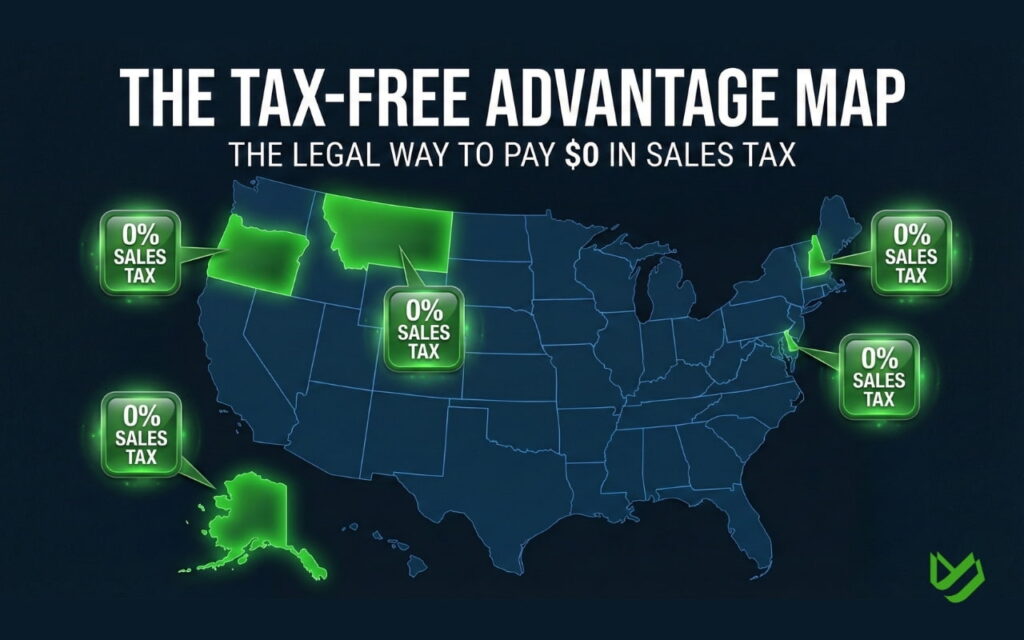
If you want to save the most money instantly, you look for the “NOMAD” states (New Hampshire, Oregon, Montana, Alaska, and Delaware). These states do not charge a general state sales tax on vehicles. On a $35,000 car, avoiding a 7% tax saves you $2,450 before you even negotiate the price.
Top States with No Vehicle Sales Tax
| State | Sales Tax Rate | Why It’s a Winner |
| New Hampshire | 0% | No sales tax and very low registration fees. |
| Oregon | 0% | Zero sales tax, though registration can be slightly higher. |
| Delaware | 0% | No sales tax and often has the lowest used car prices. |
| Montana | 0% | A favorite for luxury buyers, but watch for residency rules. |
| Alaska | 0% | Great for locals, but shipping costs usually eat the tax savings for outsiders. |
Pro Tip: While these states are tax-free, most states require you to pay sales tax in the state where you register the car, not where you buy it. However, if you are a resident of these states or moving there, the savings are massive.
Sometimes, a state with tax still wins because the market is so saturated that dealers are desperate to move units. In 2026, we’re seeing a significant inventory “thaw” in the Midwest and South, which means lower markups.
Oklahoma consistently ranks as one of the cheapest places for the initial purchase. Why? Lower overhead for dealerships and a very aggressive competitive market. When there are ten dealerships within a 50-mile radius all selling the same SUVs, the buyer wins. Oklahoma also benefits from relatively modest registration fees compared to its neighbors.
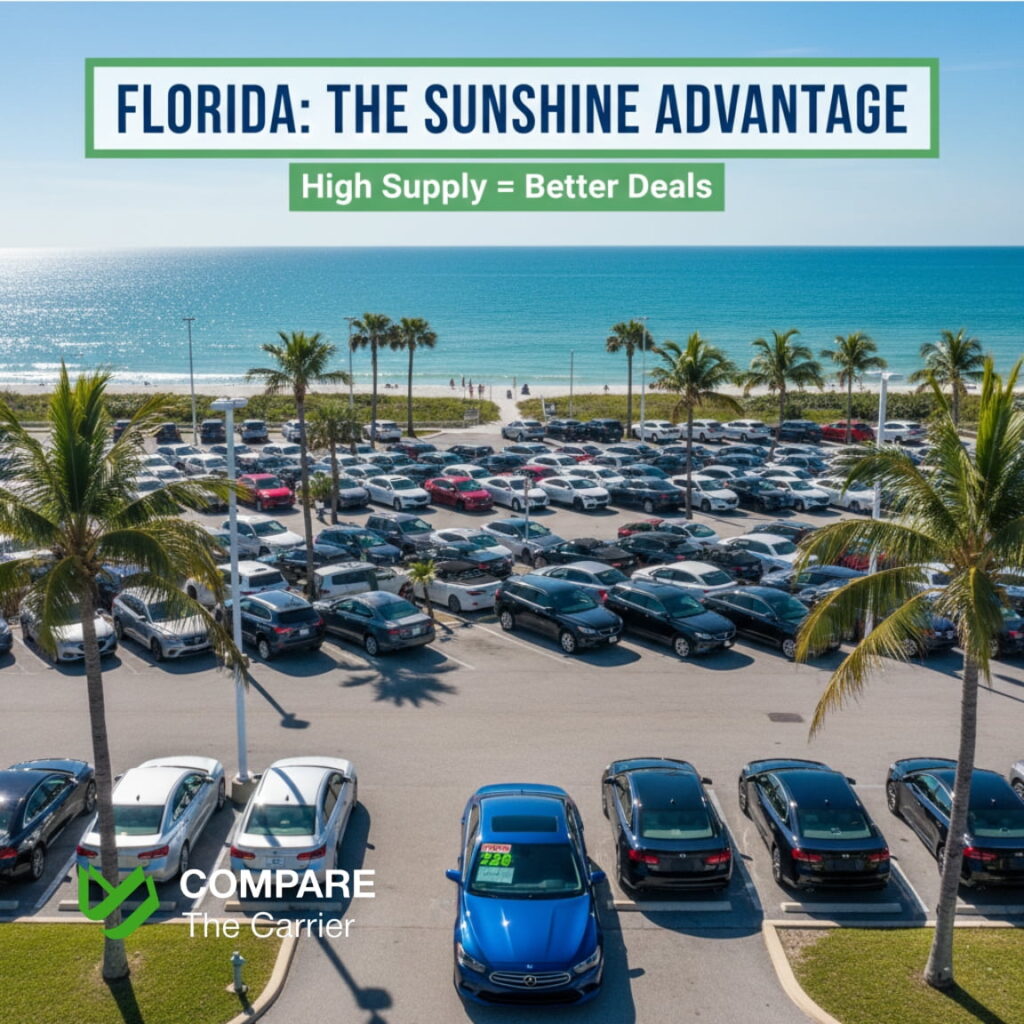
Florida is a massive hub for well-maintained, low-mileage vehicles. While you might pay a higher doc fee here, the starting price is often low enough to offset it. If you find a deal in the Sunshine State but live up North, you can easily ship a car from Florida to Michigan or any other state using a reliable broker.
Ohio is frequently overlooked, but it’s a powerhouse for affordable car buying. It offers a balanced mix of lower-than-average listing prices and reasonable state fees. It’s particularly strong for domestic brands (Ford, Chevy, Jeep) because of its proximity to manufacturing hubs, reducing the “destination charges” sometimes passed on to consumers.
If you aren’t looking for that “new car smell,” Delaware has the lowest median used car prices in the country. New Jersey follows closely behind. For those on a budget, these regions are great for finding used BMW models under $20K or other luxury brands that have depreciated significantly.
New Jersey follows closely behind. Because the Garden State is so densely populated and serves as a major transit hub, the used car inventory is refreshed faster than almost anywhere else. High supply equals lower prices. However, be a savvy shopper, cars from this region have often dealt with “salt air” or harsh winters, so always get a pre-purchase inspection.
Median Used Car Price Comparison (2026 Estimates)
As you can see, looking in the right zip code can literally cut your purchase price in half if you’re willing to do the legwork.
In 2026, the “days’ supply” of cars (how long a car sits on the lot) has hit a healthy average of about 93 days nationwide. But this isn’t even across the board.
When a dealer has a lot full of cars and a quota to hit at the end of the month, they are much more likely to drop those “market adjustment” fees that plagued the industry a few years ago.
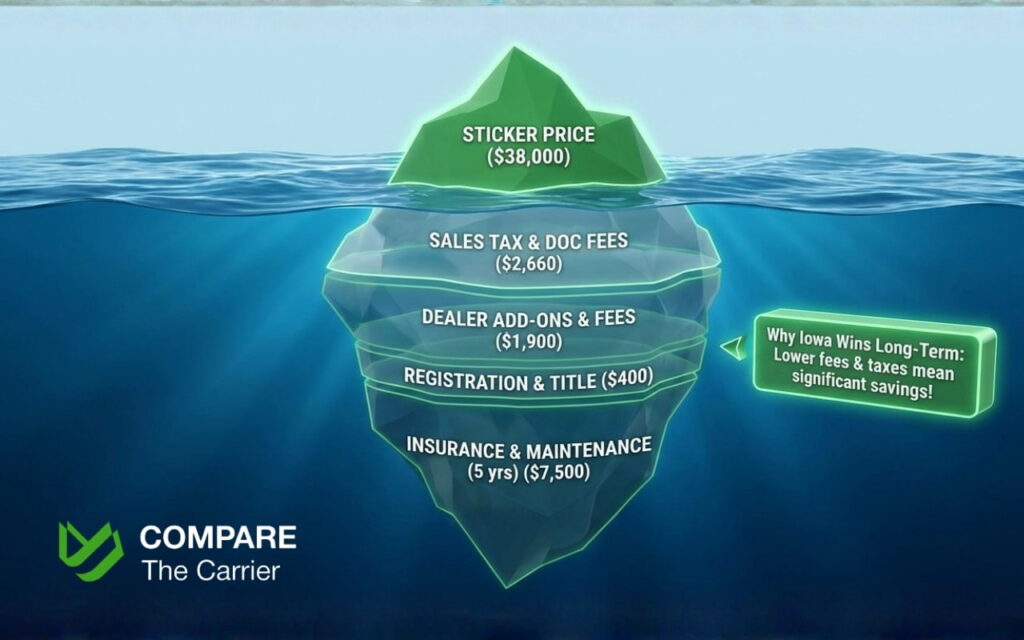
Finding a low sticker price is only half the battle. If you’ve ever walked into a dealership, shook hands on a price, and then sat in the “finance box” only to see the total jump by $4,000, you’ve met the hidden killers: dealer fees and state-mandated charges. In 2026, these costs are more aggressive than ever. To find the cheapest state to buy a car, you have to look at the “Out-the-Door” (OTD) price, which includes every line item from the floor mats to the title processing.
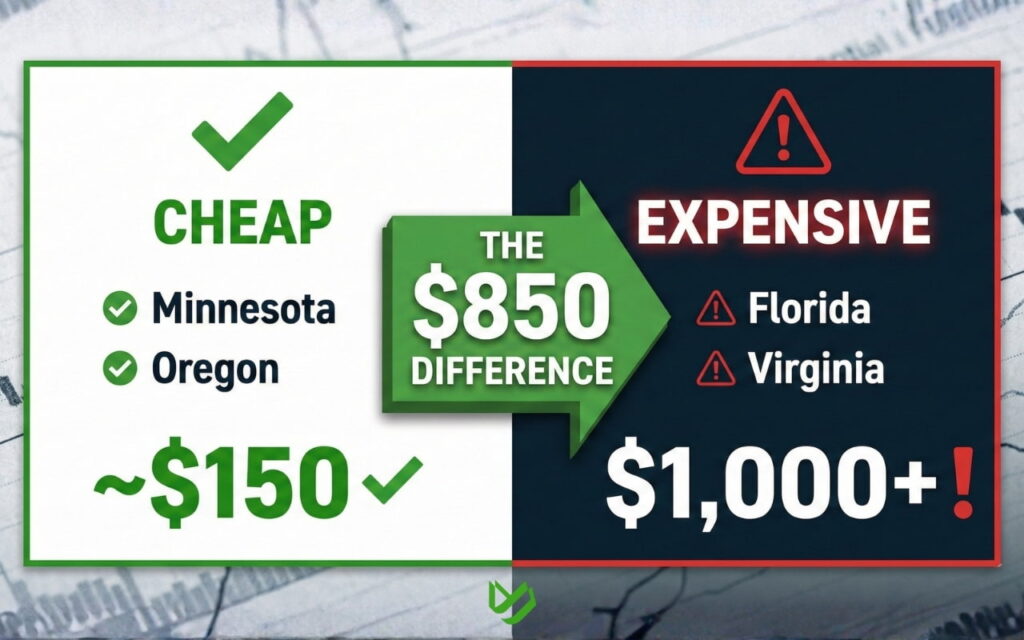
One of the most frustrating parts of buying a car is the “Documentation Fee” (or “Doc Fee”). This is what the dealer charges you to process the paperwork. The catch? Some states cap these fees at a few hundred dollars, while others allow dealers to charge whatever they want.
States with the Lowest (and Highest) Doc Fees
| State | Average Doc Fee | Regulation Status |
| Minnesota | ~$125 | Capped by law |
| Oregon | ~$150 | Capped by law |
| New York | ~$175 | Capped by law |
| Florida | $900 – $1,200 | Uncapped (The most expensive) |
| Virginia | $600 – $800 | Uncapped |
If you buy a car in Florida, you might find a vehicle priced $1,000 lower than in Minnesota, but once you add that $1,000 doc fee, your “savings” vanish. When shopping across state lines, always ask: “What is your dealer doc fee, and is it included in the online quote?” Most reputable dealers will be transparent, but the “uncapped” states are notorious for using low lead prices to lure you in, only to hammer you with fees at the finish line.
You don’t just buy a car; you feed it every month. Insurance premiums have skyrocketed over the last two years due to rising repair costs and the high price of replacement parts for EVs and high-tech hybrids. If you live in a state where insurance is cheap, your “Total Cost of Ownership” (TCO) drops significantly over five years.
For years, Maine has consistently ranked as the cheapest state for auto insurance. Why? It’s simple: low population density, fewer accidents, and a very straightforward legal environment for claims. In 2026, a driver in Maine might pay $900 a year for full coverage, while the same driver in a different state could pay triple that.
Iowa and New Hampshire also offer some of the lowest premiums in the country. New Hampshire is particularly interesting because it is the only state that doesn’t strictly mandate auto insurance (though you are still financially responsible for any damage you cause). This creates a highly competitive insurance market that keeps rates low for those who do choose to buy it.
If you are looking for a bargain, there are several states you should generally avoid unless you find a truly “one-in-a-million” private sale. These states are expensive due to a “triple threat” of high taxes, strict regulations, and geographical isolation.
California is a tough place to be a car buyer. First, you have some of the highest sales taxes in the country (averaging 7.25% to 10.25% depending on the city). Second, California has the strictest emissions standards in the world (CARB compliance). Dealers often charge a premium for “California-spec” vehicles. Add in high registration fees based on the vehicle’s value and the highest gas prices in the lower 48, and California is the clear “winner” for the most expensive state.
It’s no surprise that an island chain is expensive. Almost every car in Hawaii has to be shipped in from the mainland. That “destination charge” is passed directly to you. Furthermore, Hawaii has unique “impact fees” and registration costs that make even a used Honda Civic feel like a luxury purchase.
While Michigan is the heart of the American auto industry, it is often the most expensive state to insure a car. Because of Michigan’s “No-Fault” insurance laws and Personal Injury Protection (PIP) requirements, premiums are astronomical. You might save $500 on the purchase of a Chevy in Detroit, but you’ll pay that back to the insurance company within the first six months.
This is the most common mistake buyers make. You see a car in Montana (0% sales tax) and you live in Washington (6.5% sales tax). You think, “I’ll just drive to Montana, buy the car, and save $3,000!”
It doesn’t work that way.
When you bring that car back to your home state to get your license plates, the Department of Motor Vehicles (DMV) will ask for proof that you paid sales tax. If you didn’t pay it in Montana, they will charge you the “Use Tax”, which is exactly equal to your local sales tax, before they give you your tags.
When does buying out-of-state actually work?
Smart buyers in 2026 are using the “Border Town” strategy. They live in a high-priced city but shop in the rural dealerships of a neighboring state.
For example, buyers in Seattle are increasingly looking at dealerships in Idaho. While they still have to pay Washington sales tax, the “Doc Fees” in Idaho are much lower, and the dealership markups are less aggressive because the overhead (rent, labor) for an Idaho dealer is a fraction of what it is in downtown Seattle.
Expert Note: If you buy out-of-state, make sure the dealer provides you with a “Transit Plate” or a temporary tag. This allows you to legally drive the car across state lines to your home. Also, ensure you have your insurance binder ready before you drive off the lot; your current policy usually has a “grace period” for new purchases, but it’s always worth a 5-minute phone call to your agent.
If you’ve followed the trail through taxes and dealer fees, you’ve realized that the “cheapest” state isn’t just about the lowest price on the windshield. It’s about the state that lets you keep the most money in your pocket over the next 3 to 5 years.
In 2026, one state consistently crushes the competition when you look at the big picture: Iowa.
Iowa is currently the most affordable state to own a car in America. While Oklahoma might win on the initial sticker price, and New Hampshire wins on sales tax, Iowa wins on the marathon.
If you are looking for a state that doesn’t “nickel and dime” you at every stage of the process, the Hawkeye State is your best bet for 2026.
So, you found the perfect deal in a state 1,000 miles away. Now comes the “How do I get it home?” dilemma. You have two real choices: the classic road trip or professional auto transport.
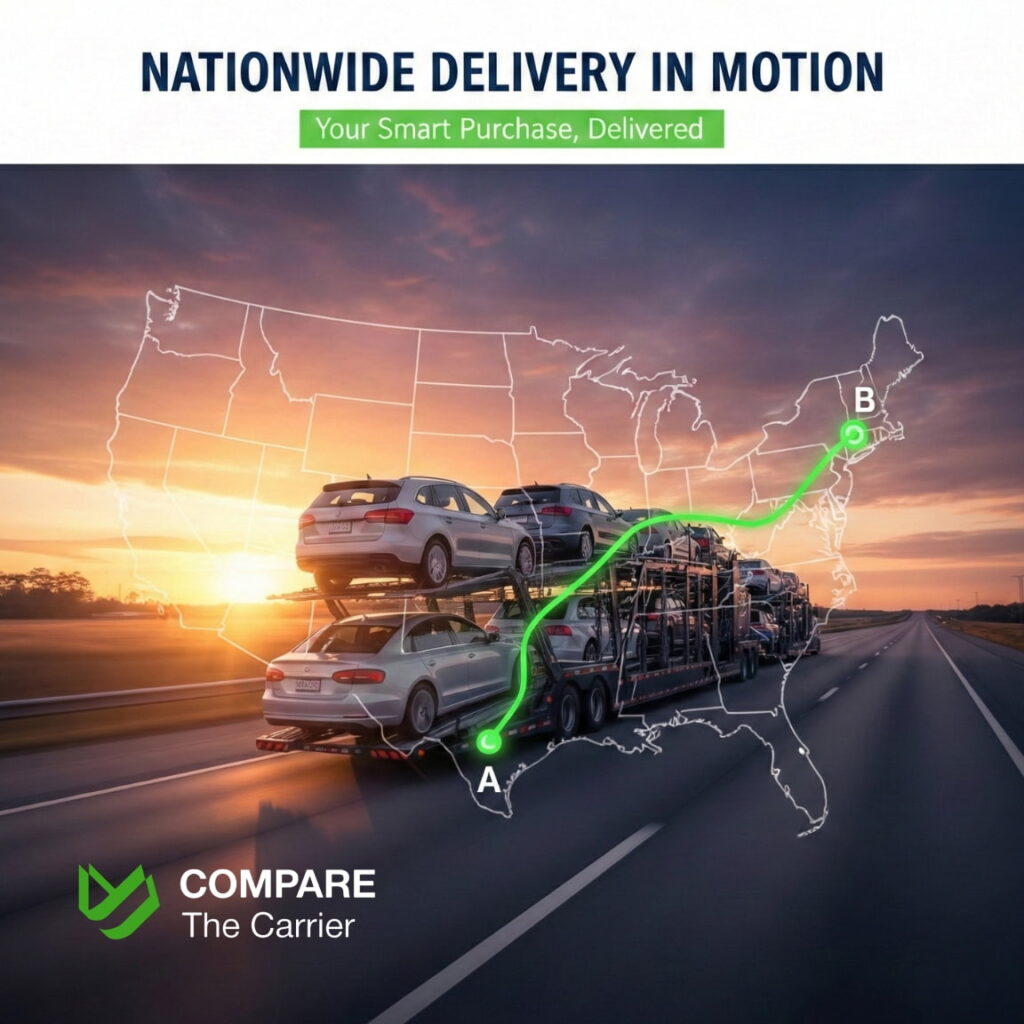
Driving is the romantic choice, but in 2026, it’s rarely the cheapest.
For most out-of-state buyers, shipping is the smarter logistical move. You can use an auto transport calculator to get an instant estimate of the costs.
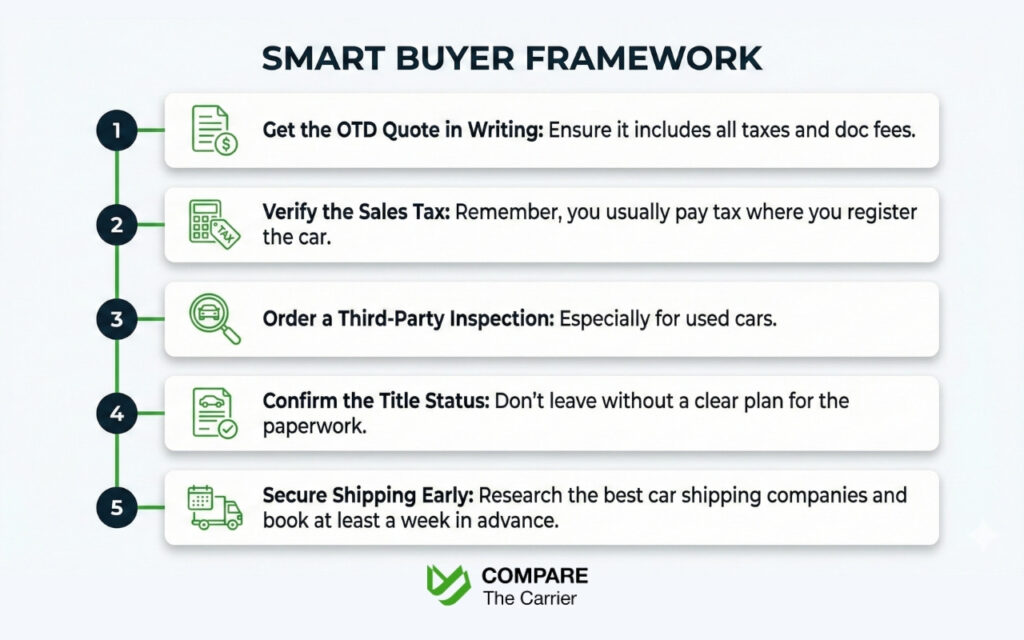
To make sure your “great deal” doesn’t turn into a nightmare, follow this workflow:
In 2026, the “cheapest” state is a moving target. If you want the lowest taxes, look at New Hampshire. If you want the lowest starting price, look at Oklahoma. But if you want the lowest total cost of ownership over the life of the vehicle, Iowa is the undisputed king.
Do your homework, get your quotes in writing, and don’t be afraid to look a few hundred miles away, the savings are waiting if you’re willing to travel (or ship) for them.
Arizona and Georgia offer some of the lowest base registration fees, often under $25. However, Arizona adds a “Public Safety Fee” and Georgia uses an “Ad Valorem” tax system based on the vehicle’s value. For a flat, low-cost experience, Ohio and Minnesota are more consistent, keeping total registration costs under $100 for most standard vehicles.
You can buy the car there, but you generally won’t save on taxes unless you live there. Most states require you to pay a “Use Tax” equal to your local sales tax rate when you register the vehicle in your home state. The only exception is if you are a resident of a tax-free state like Oregon or New Hampshire.
Rural areas are almost always cheaper for the initial purchase price. Urban dealerships have higher rent and labor costs, which they pass on through higher markups and documentation fees. In 2026, “Border Town” shopping, where urban residents buy from dealerships 50+ miles outside the city is the most effective way to find lower prices.
Documentation fees vary wildly by state because many states do not cap them. In regulated states like Minnesota or New York, you’ll pay under $200. In “Uncapped” states like Florida or Virginia, dealers frequently charge between $800 and $1,200. Always ask for a fee breakdown before visiting the dealership to avoid “sticker shock” during closing.
Shipping a car cross-country (e.g., New York to Los Angeles) typically costs between $1,300 and $1,800. For most routes, the average cost is roughly $1.15 per mile for short trips and drops to $0.60 per mile for journeys exceeding 2,000 miles. Using an open-air carrier is the most budget-friendly option, while enclosed transport adds a 50% premium.









Don't have time to fill out the form?
Call a transport company directly to get a quote now!
Select the category you need
Partner with Compare The Carrier & Grow!
We're open to collaborations, partnerships, and mutual growth! Whether you're an individual or a business, we offer exciting opportunities to work together. Fill out the form below to explore how we can collaborate.
Something Went Wrong
We're sorry, but something went wrong. Please briefly describe the problem you experienced in the text area below. Providing your contact information will allow us to follow up if needed.

Thank you,
your form has been accepted.
Your form has been successfully submitted. We appreciate your effort — our team will review it shortly and take the next steps.


