

Why Pre-Purchase Inspections Matter for Used Car Buyers
Purchasing a secondhand car is often compared to a high-s...
12 January 2026
This guide goes beyond rankings to explain how modern safety systems work, how ratings are calculated, and how to protect that technology in real-world ownership. Choosing a car today isn’t as different from five years ago as it was. We are out of the age when some extra airbags and a decent seatbelt were sufficient to convince a buyer. Safety in 2026 is determined by silicon just as much as it is by steel. Today, your vehicle is a rolling supercomputer; it uses millions of lines of code to predict accidents before they ever occur.
Calculate Shipping Quotes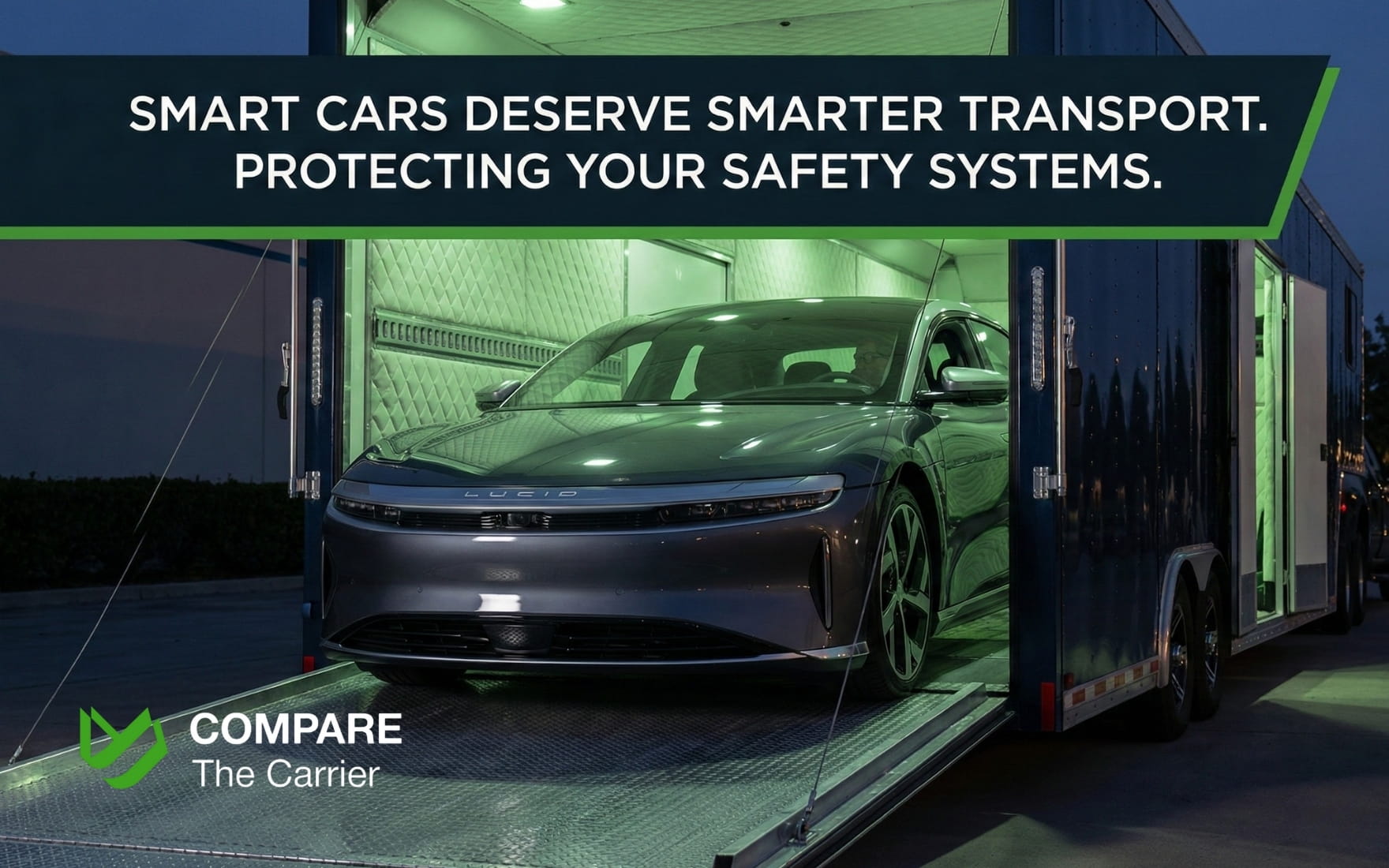
Choosing a car today isn’t as different from five years ago as it was. We are out of the age when some extra airbags and a decent seatbelt were sufficient to convince a buyer. Safety in 2026 is determined by silicon just as much as it is by steel. Today, your vehicle is a rolling supercomputer; it uses millions of lines of code to predict accidents before they ever occur.
In practice, the car landscape is different. We aren’t just looking at how a car survives a crash anymore; we’re looking at how it evades one altogether. But as technology progresses, standards for a “safe” car have shifted. The National Highway Traffic Safety Administration (NHTSA) and the Insurance Institute for Highway Safety (IIHS) have essentially lifted the bar so high that what was defined as a “cutting-edge” feature for an entry-level sedan in 2020 is now considered the bare minimum.
In this thorough guide from Compare the Carrier, we’re going to take a deep dive into who won at the 2025-2026 safety cycle, the engineering marvels that keep us alive, and why the most “safe” car on the road may be the one you never actually have to drive on your own across the country.
For decades, the “gold standard” of safety was the 35-mph frontal crash. It was predictable, and manufacturers got very good at passing it. However, real-world data showed that people were still dying in side-impact collisions and accidents involving pedestrians at night. This led to a complete overhaul of how we define “crashworthiness.”
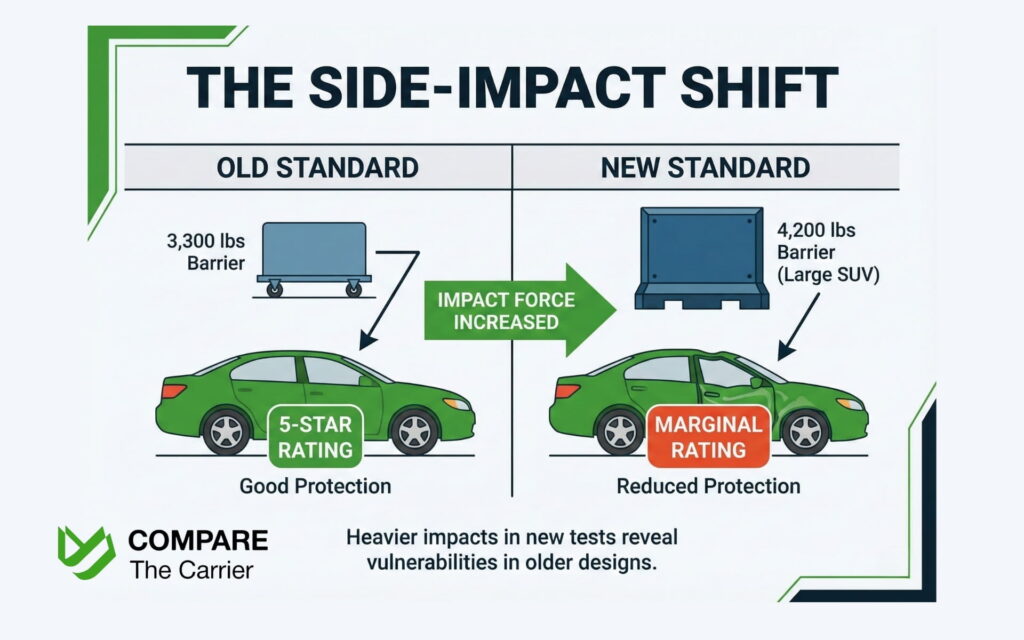
From a buyer’s point of view, the updated 2026 testing protocols are the most honest assessments we’ve ever seen. The IIHS now uses a 4,200-pound striking barrier for side-impact tests simulating the weight of a modern electric SUV rather than the old 3,300-pound barrier. If a car doesn’t have reinforced B-pillars or advanced side-curtain airbags, it simply won’t pass.
In the past year, many popular mid-size SUVs that previously held “Good” ratings were downgraded to “Marginal.” Why? Because as our vehicles have gotten heavier (thanks to EV batteries and larger frames), the energy of a side collision has skyrocketed.
It is worth noting that not every dealership handles these updates transparently. You might see a “5-star” sticker on a window, but you need to check if that rating was based on the old criteria or the new 2026 standards. A “Marginal” score in the new side-impact test is a significant red flag for families.
Statistics from the Governors Highway Safety Association show that the majority of pedestrian fatalities happen after dark. Consequently, a vehicle can no longer earn a Top Safety Pick+ award in 2026 unless its automatic emergency braking (AEB) system can “see” a child-sized mannequin in total darkness using only its headlights. This has forced manufacturers to move away from cheap camera-only systems toward sophisticated radar and LiDAR setups.
After analyzing over 200 data points for each model ranging from structural integrity to the brightness of the high beams we’ve identified the top performers for 2025 and 2026.
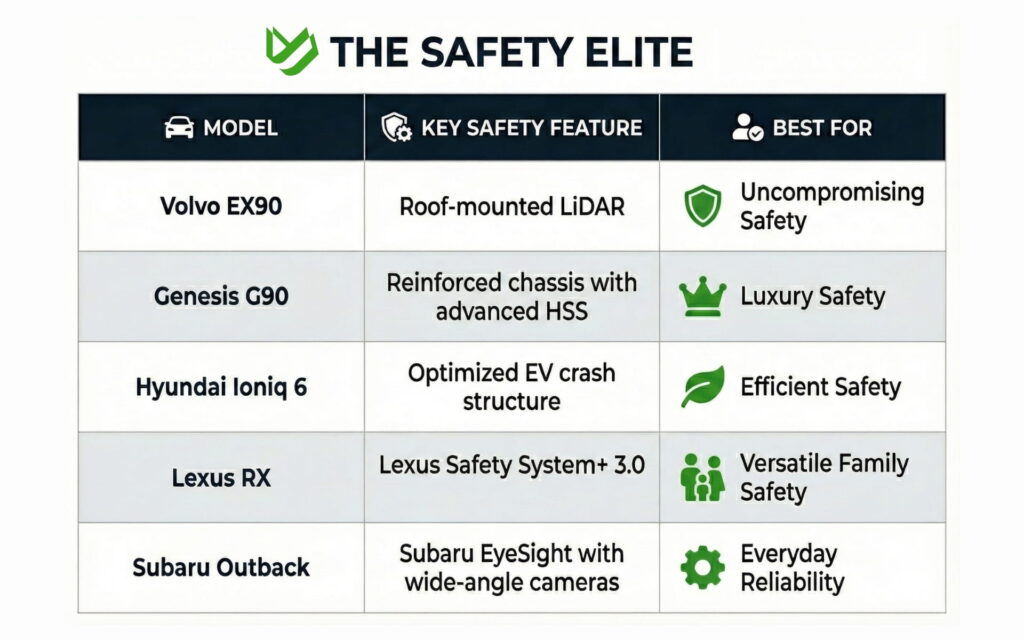
In real-world purchases, these vehicles often command a higher resale value. Safety isn’t just a health choice; it’s a smart financial hedge against depreciation.
In real-world purchases, these vehicles often command a higher resale value. Safety isn’t just a health choice; it’s a smart financial hedge against depreciation.
Not everyone wants an $80,000 luxury SUV. Whether you’re a college student in a compact hatchback or a contractor in a pickup truck, safety should be accessible.
In the past, small cars were the “sacrifice” segment. That’s no longer the case. The Mazda 3 and Subaru Impreza are proof. Subaru’s EyeSight technology, now in its latest generation, uses dual cameras to create a 3D map of the road.
In practice, this means the car can distinguish between a bicycle and a pedestrian, adjusting its braking force accordingly. It’s worth noting that smaller cars still face a physical disadvantage in collisions with larger SUVs, which is why their “active” safety (avoiding the crash) is even more critical than their “passive” safety (the metal frame).
While SUVs rule the road, sedans like the Toyota Prius and Honda Accord are actually performing better in specific offset crash tests. Their lower center of gravity makes them more agile, allowing drivers to swerve around obstacles that might cause a top-heavy SUV to lose control.
From a buyer’s point of view, a safe sedan is often the best “bang for your buck” because you aren’t paying the “SUV tax” for a higher driving position that doesn’t actually add to structural safety.
As vehicles get heavier, mainly due to massive EV batteries and the American obsession with size, the physics of safety are changing. According to data from Consumer Reports, the mass of a vehicle is a significant factor in multi-car collisions, but it’s a double-edged sword.
The Kia Telluride and Honda Pilot have redesigned their second and third rows to include side-curtain airbags that actually cover the entire window area. Previously, many SUVs left third-row passengers (often children) vulnerable to glass shards and head strikes.
If you’re looking for a vehicle to transport your most precious cargo, the Volkswagen Atlas has also made significant strides, specifically in its post-collision braking system, which stops the car after an initial impact to prevent secondary “rebound” collisions.
You’ll hear the term ADAS (Advanced Driver Assistance Systems) constantly when looking at 2026 models. But what does it actually do?
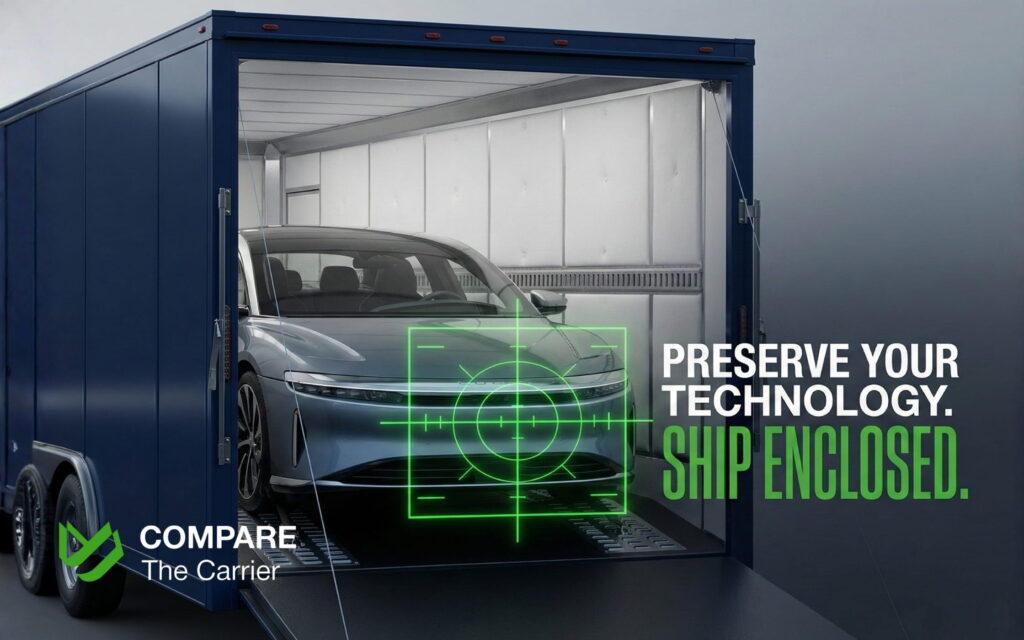
In practice, these systems are only as good as their calibration. This is why, if you are buying a car from an out-of-state dealer or moving to a new home, you should be extremely careful with how the vehicle is handled.
One strong jolt during a DIY tow or an improperly balanced open trailer can misalign the radar sensors in the front grille. This is why many owners of high-tech vehicles choose a professional service like Compare the Carrier. We understand that a Tesla or a Volvo isn’t just a vehicle; it’s a delicate instrument. Our car shipping cost calculator provides options for enclosed transport, ensuring those vital sensors stay perfectly calibrated during the journey.
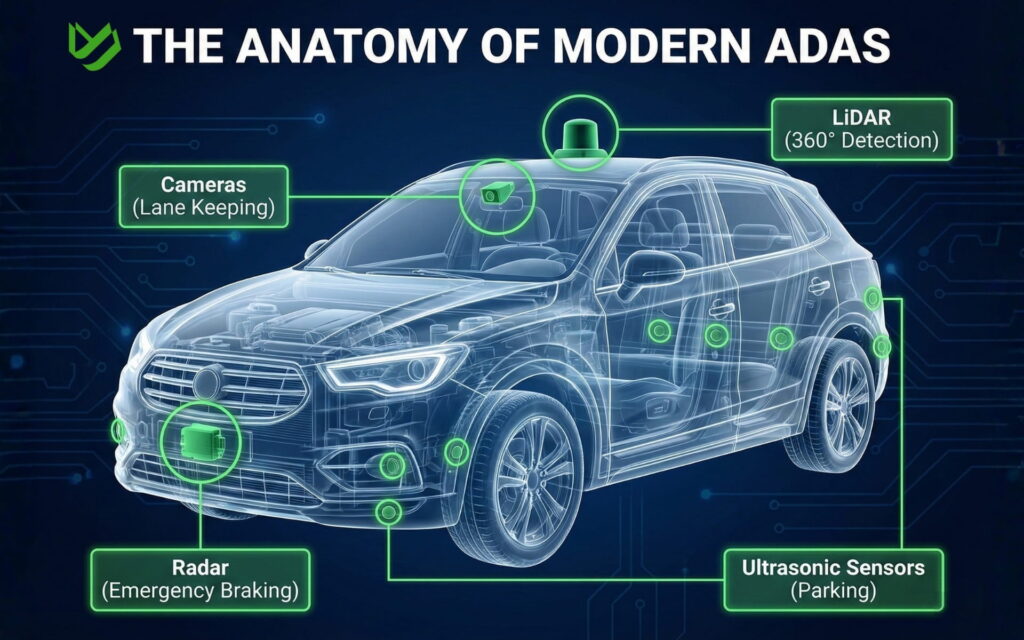
There is a hidden side to the safest cars of 2026. Because they are packed with sensors, even a “fender bender” can be a financial nightmare.
It’s worth noting that a cracked windshield on a 2026 Subaru can cost $1,500+ because the EyeSight cameras must be recalibrated by a specialist. A damaged bumper on a Genesis might involve replacing three ultrasonic sensors and a radar unit.
From a buyer’s point of view, you must check your insurance premiums before buying. A car with a “Top Safety Pick+” award might actually have higher insurance rates because, while it protects you better, it is much more expensive for the insurance company to fix. Always ask a provider like State Farm for a quote before finalizing your purchase.
EV safety, and especially battery fires, have long gone into discussions. But data for the two years 2025 and 2026 tell a different tale. For example, Euro NCAP and others demonstrate that EVs often outdo internal combustion vehicles in structural tests.
EVs, from the Rivian R1T to Lucid Air, have earned some of the best structural safety scores ever. Without a heavy engine block that can be thrust into the cabin during a crash, engineers have developed “mega-crumple zones” that absorb energy much more efficiently.
Moreover, the weight built into a battery pack is why these cars are extremely stable. In NHTSA rollover tests, countless EVs are nearly impossible to flip, even when rolling at high speeds.
If you’ve spent $60,000 on a vehicle specifically because it’s the safest thing on the road, the last thing you want to do is put 2,000 miles of “highway stress” on it during a move.
In real-world purchases, owners of top-tier safety vehicles like the Audi Q8 or BMW X5 prioritize preserving the vehicle’s technology. Long-distance driving exposes the car to:
At Compare the Carrier, we provide a logistics solution that honors the engineering of your vehicle. Whether you are using our car shipping cost calculator for a cross-country move or a seasonal relocation, we recommend enclosed shipping for any car with advanced ADAS. It’s the best way to ensure that the safety features you paid for are ready to work the moment you get back behind the wheel.
Can a screen make you safer? Or is it a distraction? The answer in 2026 is both.
In practice, large touchscreens can be dangerous if they require you to dig through menus to adjust the air conditioning. However, systems like Volvo’s Google-based interface prioritize voice commands, keeping your hands on the wheel.
The safest cars in our 2026 rankings almost all feature advanced Heads-Up Displays. By projecting speed, navigation, and blind-spot warnings directly onto the windshield, these systems keep your eyes on the road.
It’s worth noting that HUD technology is becoming a key factor in IIHS “ease of use” ratings. If a car makes it easier for you to stay informed without looking away from the asphalt, it’s a safer car.
Does the powertrain change how safe you are?
From a buyer’s point of view, the Toyota Prius (Hybrid) and Hyundai Ioniq 6 (EV) are the current leaders in their respective classes, showing that you don’t have to choose between fuel efficiency and a 5-star rating.
Don’t just trust the brochure at the dealership. Manufacturers often use “marketing speak” to make standard features sound unique.
It sounds like a luxury concern, but “interior quality” has a direct impact on safety. In practice, soft-touch materials on the dashboard and doors aren’t just for comfort they provide additional cushioning in a crash.
Furthermore, high-quality “anti-submarine” seats prevent passengers from sliding under the seatbelt during a collision. Brands like Volvo and Mercedes-Benz spend millions researching how different materials react under extreme G-forces. It’s worth noting that a “cheap” interior often means a “dangerous” interior when things go wrong.
Why is safety the #1 driver of car sales in 2026? Because the road has become a more distracted place. With smartphones and massive screens, the “human element” of driving is more fallible than ever.
From a buyer’s point of view, buying a high-safety car is a form of insurance. You aren’t paying for the crash you plan to have; you’re paying for the one you can’t see coming. Whether it’s a deer jumping across a dark road or a distracted driver blowing through a stop sign, these systems provide a margin of error that used to be impossible.
A 5-star car is only safe if its sensors can see. In practice, many drivers neglect the “maintenance” of their safety tech.
If you are shipping your car with Compare the Carrier, we ensure that these sensitive areas are protected from road grime and debris, keeping your tech in peak condition for your arrival.
The U.S. automotive market in 2026 offers more protection than ever before. Brands like Volvo, Hyundai, and Mazda have proven that safety is a primary engineering goal, not an afterthought. By choosing a vehicle from the top of the rankings, you are giving yourself the best possible chance of surviving the “unthinkable.”
And remember, safety extends beyond the driver’s seat. It’s about how you manage the vehicle throughout its life. When it’s time to move that vehicle, trust the experts at Compare the Carrier to get it there without compromising its integrity.
Right now, Hyundai Motor Group is leading. That includes Hyundai, Kia, and Genesis. Close behind are Volvo and Mazda. Safety rankings change every year, so it’s always smart to check the latest list directly on iihs.org.
It’s a very good starting point, but it doesn’t tell the whole story. The NHTSA tests are required by law, while IIHS testing is usually tougher and more detailed. If a car scores well in both systems, that’s when you can really feel confident.
Sometimes, yes. Cars with advanced safety tech often cost more to repair because of sensors, cameras, and specialized materials. The good news is that many insurance companies offer discounts for safety features, which can help offset those higher repair costs.
Minivans are built with families in mind. Models like the Honda Odyssey and Toyota Sienna offer excellent side-impact protection, well-designed LATCH systems, and strong safety coverage for third-row passengers.
Yes, it does. When you drive long distances, road debris can damage the protective covers around radar and LiDAR sensors. Shipping your vehicle with Compare the Carrier helps avoid that everyday wear and tear and can save you from costly sensor recalibration later.
You should be cautious. A car that earned a “5-star” rating in 2020 might not meet today’s tougher standards. Safety testing is becoming increasingly demanding each year, so it’s important to check the exact model year’s ratings.









Don't have time to fill out the form?
Call a transport company directly to get a quote now!
Select the category you need
Partner with Compare The Carrier & Grow!
We're open to collaborations, partnerships, and mutual growth! Whether you're an individual or a business, we offer exciting opportunities to work together. Fill out the form below to explore how we can collaborate.
Something Went Wrong
We're sorry, but something went wrong. Please briefly describe the problem you experienced in the text area below. Providing your contact information will allow us to follow up if needed.

Thank you,
your form has been accepted.
Your form has been successfully submitted. We appreciate your effort — our team will review it shortly and take the next steps.


