Advanced PPC Tactics for Logistics Advertising in 2026
If your freight and logistics ads are burning budget with...
7 August 2025
Stop wasting money on useless ads! Discover the Google AdWords secrets top transport companies use to flood their business with qualified leads.
Contact Us Now
Did you know that in 2026, over 92% of shippers used digital channels to source transport solutions? That’s a massive online marketplace you could be tapping into. While having a campaign is a start, winning in this space requires a comprehensive digital marketing strategy for logistics companies.
In this guide, we’ll break down proven AdWords strategies, share insider tips, and show you how to generate a consistent flow of high-quality leads.
Alright, let’s get down to brass tacks. You know you need to be online, but why should transport companies care specifically about Google AdWords (which, by the way, officially became Google Ads back in 2018)?
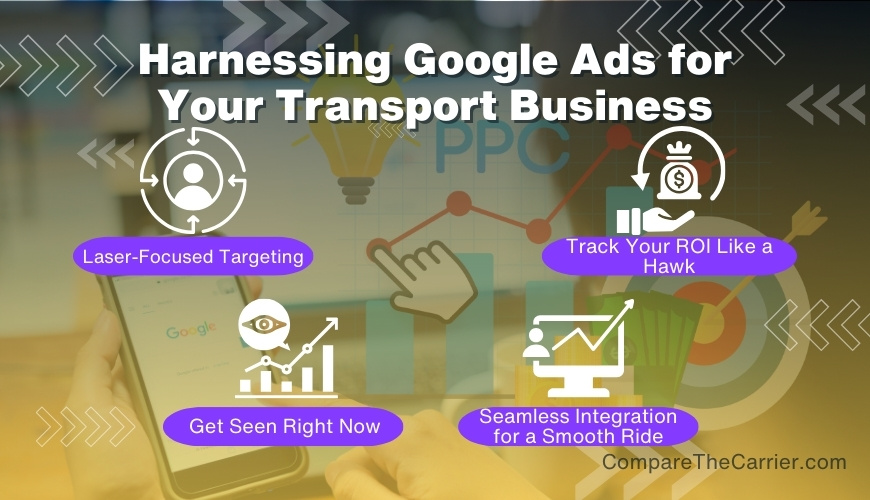
Well, here’s the deal:
Pro Tip: If you’re looking to accelerate lead generation on a limited budget, check out our article, “4 Ways to Make Shipping Lead Generation on a Budget”, for practical tips on attracting quality prospects cost-effectively.
Looking to upgrade your PPC campaigns? Request digital agency services from Compare The Carrier to learn how we can optimize your AdWords ads and funnel more qualified transport leads into your sales pipeline.
Ready to dive deeper into the world of Google Ads for transport companies? Let’s get rolling!
Okay, you’re convinced that Google AdWords (now Google Ads) is where it’s at for transport companies. But just throwing some ads together and crossing your fingers isn’t going to cut it. You need a rock-solid strategy. Think of it like planning a cross-country haul – you wouldn’t hit the road without a map, a full tank of gas, and a good night’s sleep, right?
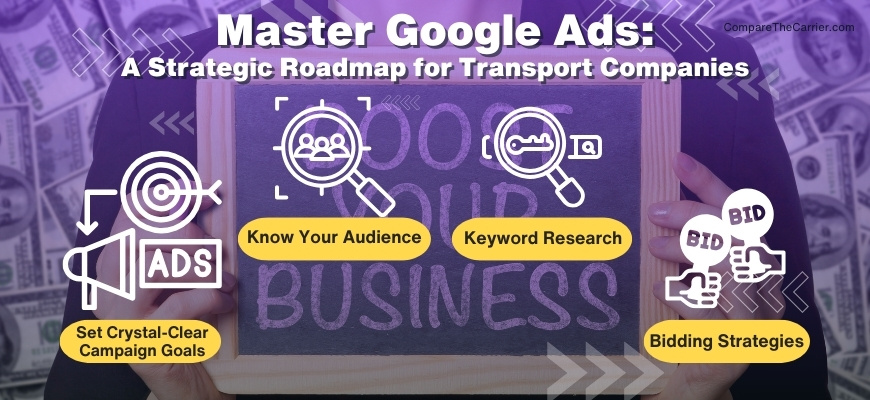
Here’s how to map out your route to AdWords success:
Are you looking for brand awareness or immediate quote requests? Your goals should be backed by growth opportunities research to identify which routes or services currently have the highest demand.
Defining your goals upfront will guide every decision you make and help you measure whether your campaign is actually delivering the goods.

You know the transport industry inside and out, but how well do you know your ideal customer? It’s time to go beyond basic demographics and really get into their heads.
The more you understand your target audience, the better you can tailor your ads to their specific needs and motivations. This understanding is crucial for navigating the logistics sales pipeline effectively and converting leads into loyal customers.
Keywords like “flatbed trucking companies in Texas” are your golden nuggets. To manage these effectively in a competitive market, consider logistics AI integration. AI-driven bidding strategies can optimize your costs in real-time, ensuring you don’t overpay for clicks.
Google Ads operates on an auction system. You bid on keywords, and the highest bidder gets the top spot. But there’s more to it than just throwing money around. Google Ads offers different bidding strategies, and choosing the right one can make a huge difference in your ROI.
The key is to find a strategy that aligns with your budget and your campaign goals.
Understanding the strategic elements of Google Ads is crucial, but seeing these strategies in action can make a big difference. That’s why we’ve included a step-by-step video tutorial below, ‘How to Create Your First Google Ads Campaign.’
This guide will walk you through setting up your campaign in real-time, from choosing the right keywords to crafting compelling ad copy. Watch now to see how you can apply these strategies to create effective Google Ads campaigns tailored for the transport industry.
Alright, you’ve built your Google AdWords (Google Ads) campaign, you’ve got your keywords locked and loaded, and your ads are live. Time to kick back and watch the leads roll in, right? Not so fast! Launching your campaign is just the first step in a marathon, not a sprint. To really squeeze every drop of performance out of your AdWords efforts, you need to optimize, optimize, optimize.
Think of it like fine-tuning a high-performance engine. You wouldn’t just fill it with gas and expect it to win the race. You’d tweak the carburetor, adjust the timing, and maybe even throw in some nitrous oxide (okay, maybe not that last one). Here’s how to get your AdWords campaigns running like a well-oiled machine:
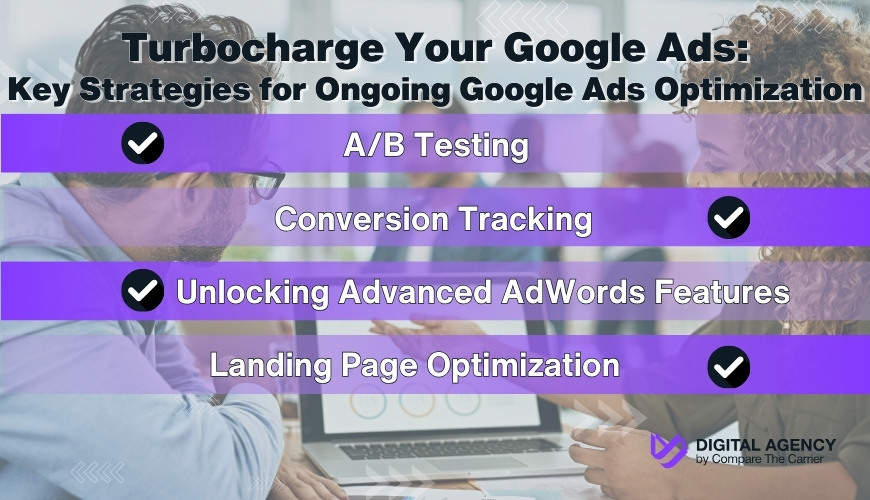
There you have it! By implementing these optimization strategies, you can transform your AdWords campaigns from good to great. Remember, it’s an ongoing process. Keep testing, keep analyzing, and keep refining your approach to stay ahead of the curve.
Managing AdWords is a full-time job. Our team of seasoned professionals lives and breathes digital marketing in the transport sector. We don’t just offer generic ads; we provide specialized Google & Bing Ads for logistics services designed to scale your fleet.
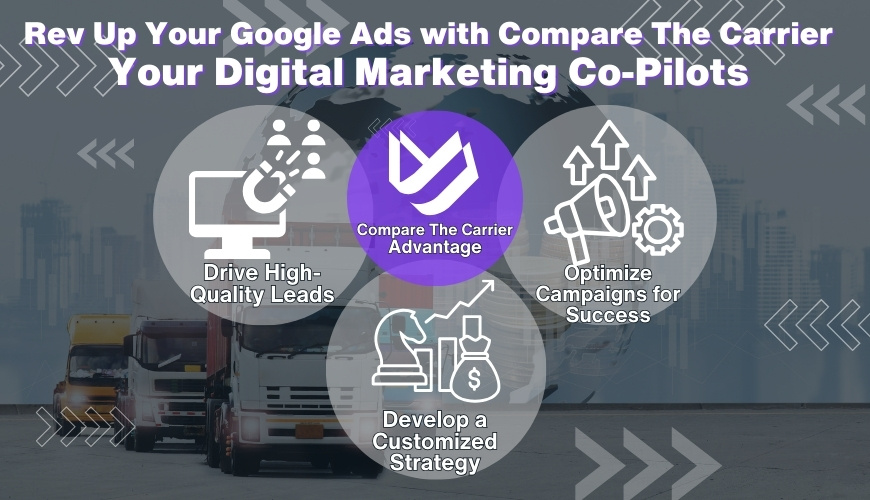
Here’s how we can help you shift gears and accelerate your results:
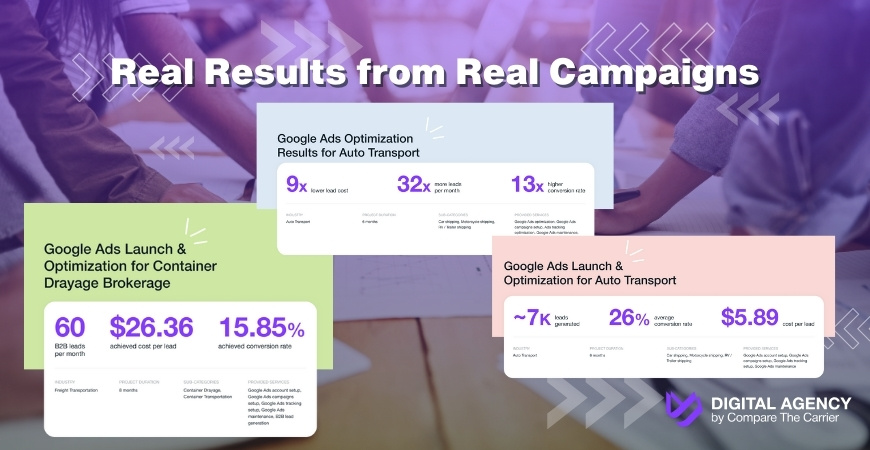
Ready to experience the Compare The Carrier difference?
Visit our agency services page to learn more and request a consultation. We’re confident that we can help you achieve your AdWords goals and take your transport business to new heights.

The transport industry is a competitive highway, and Google AdWords (Google Ads) is your vehicle to success. By strategically wielding the power of targeted keywords, compelling ad copy, and ongoing optimization, you can steer your business towards a steady stream of qualified leads and increased revenue. Remember, the journey to AdWords mastery requires a well-defined strategy, a deep understanding of your audience, and a commitment to continuous improvement.
Don’t navigate this road alone, especially when resources like “This Free Download Will 10X Your Logistics Marketing” are available to help.
Partner with Compare The Carrier and let our team of AdWords experts be your navigators. We’ll help you map out the optimal route, fine-tune your engine for peak performance, and ensure you reach your destination with a full load of satisfied customers.
Ready to hit the gas?
Contact Compare The Carrier today and let’s get your AdWords campaign rolling!
The cost of Google Ads in the transport sector typically depends on the niche and geographic competition. Average Cost-Per-Click (CPC) for logistics keywords ranges from $2.50 to $12.00. Most successful companies start with a minimum daily budget of $50 to $100 to maintain visibility for high-intent searches like “car shipping” or “heavy haulers,” focusing on maximizing Return on Ad Spend (ROAS).
Negative keywords prevent your ads from appearing for irrelevant search queries, which can save up to 30% of your monthly budget. For a transport broker, adding terms like “jobs,” “rentals,” or “cheap” ensures you don’t pay for clicks from job seekers or low-quality traffic. This improves your Quality Score and lowers your overall Cost Per Lead (CPL) by increasing relevance.
Success is measured through three primary Key Performance Indicators (KPIs): Conversion Rate, Cost Per Acquisition (CPA), and Click-Through Rate (CTR). By implementing conversion tracking for phone calls and quote forms, businesses can identify which specific keywords generate actual revenue. A healthy logistics campaign generally aims for a CPA that is 15–25% of the total profit margin per load.
Keyword match types control which searches trigger your ads. Broad match offers the widest reach but can lead to irrelevant clicks. Phrase match targets queries that include the meaning of your keyword, providing a balance of volume and intent. Exact match is the most restrictive, ensuring your ad only appears for specific terms like “enclosed car transport,” which typically yields the highest conversion rates.
A high-converting landing page must load in under 3 seconds and feature a prominent quote form above the fold. Key elements include trust signals like FMCSA licensing, customer reviews, and clear service area descriptions. Since many shippers search on mobile devices, responsive design and “click-to-call” buttons are essential for capturing urgent leads and reducing bounce rates in the transport industry.








Select the category you need
Partner with Compare The Carrier & Grow!
We're open to collaborations, partnerships, and mutual growth! Whether you're an individual or a business, we offer exciting opportunities to work together. Fill out the form below to explore how we can collaborate.
Something Went Wrong
We're sorry, but something went wrong. Please briefly describe the problem you experienced in the text area below. Providing your contact information will allow us to follow up if needed.

Thank you,
your form has been accepted.
Your form has been successfully submitted. We appreciate your effort — our team will review it shortly and take the next steps.