

Full State-To-State Car Towing Guide
Many people use the terms "state-to-state car towing" and...
27 July 2025
In an era when used-car prices can fluctuate by over $5,000 by crossing a state line, your location is the most powerful tool in your financial arsenal. Discover how the “geography of value” has redefined the US automotive market in 2026 and where you can find the absolute best deals for your next vehicle.
Calculate Shipping Quotes
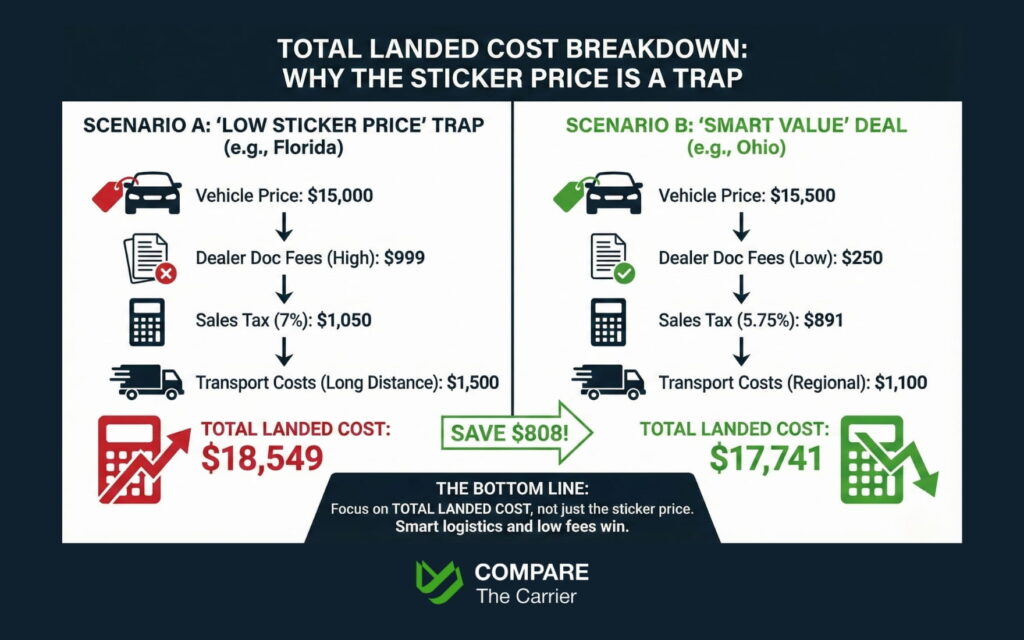
In 2026, the U.S. automotive market will have arrived at a magical moment of convergence. After years of supply chain spats and the rapid shift to electrification, a new “geography of value” has emerged. For people today, the question is no longer just what car to buy, but where to buy it. Using a vehicle from one state but needing to cross state lines is no longer only is the financial option, but rather a necessary financial one where the price delta for a used car between two states can now exceed $5,000. Buying and traveling in a conventional passenger car can more or less be cheaper in the Eastern half of the country, in the Midwest, especially, than in the suburbs. But in order to get these deals, you must look beyond the sticker price and calculate the “Total Landed Cost.” Tax and dealer fees plus the logistics of carrying these vehicles home, need to be factored into that cost. This guide gives details about the top ten states where your investment goes the furthest into and also suggests areas to work your way around in 2026’s car-buying picture.
2026 is an era of ‘Cross-State Arbitrage.’ And while the Mountain and Pacific states grapple with high listing prices and expensive fuel, the Midwest and Northeast have emerged as value hotspots. The higher intensity of East-market lease returns and more aggressive dealer landscape is accounting for the migration. Consider the “cheapest” states as a trifecta of metrics:
Our ranking is not just a list of low prices. We look at data from National Business Capital and regional market reports to score states on:
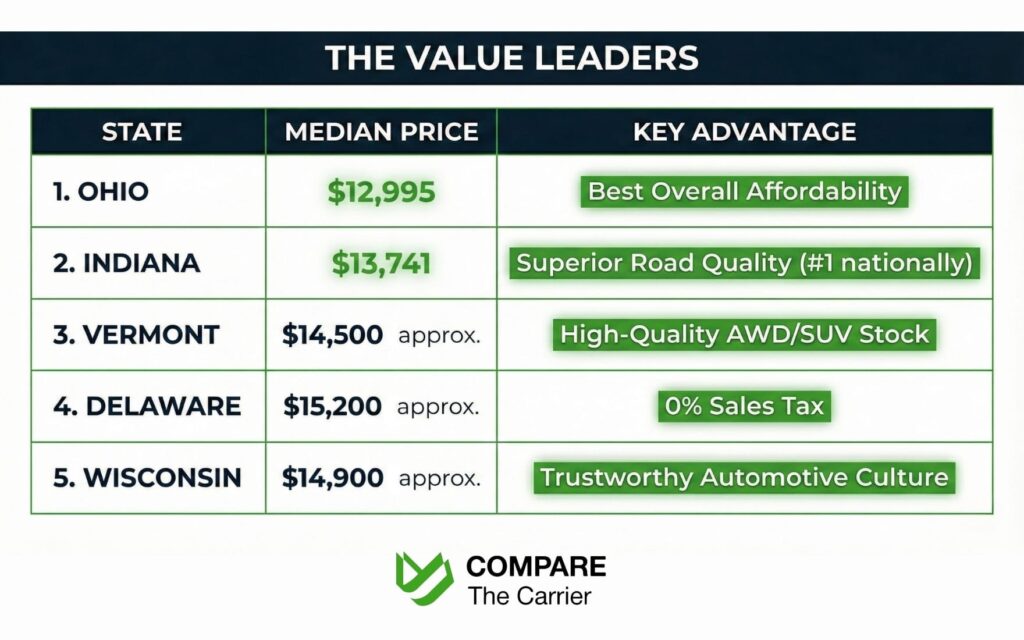
In 2026, Ohio again became the #1 state to buy and operate a motor vehicle. Not just one thing wins in a category of cars; it represents a winning combination: cheap used car prices ($12,995 or so for a median listing), low insurance costs, and manageable taxes. For the out-of-state buyer is paradise. The stock is also filled with loyal national brands and an influx of well-kept Japanese imports originating from the suburban corridors of Columbus and Cincinnati. For the state being such a logistics powerhouse, finding professional door-to-door car transport services in your own backyard is far cheaper there than it would be in rural or coastal regions.
Pro Tip: Look for inventory in the “Buckeye State” during late Q3 when lease cycles peak.
Indiana ranks second with a solid infrastructure ratio. This means an incredible 97.4% of the state’s roads are in good condition, which ranks it #1 nationally in terms of road quality. That means a used car from Indiana probably suffers less suspension wear and tear than one from potholes on the Northeast roads and pothole-pocked corners of the state. In addition, Indiana has very low dealer documentation fees and competitive rates for insurance. Though fuel prices here can be marginally higher than the national average, the upfront savings on a used car ($13,741, median price, listed) put it among the top options for those seeking a “mechanical safe bet.”
And even though it lost its crown to Ohio, Vermont is still a powerhouse for value spent on used vehicles. The state has somewhat lower sales taxes than some of its neighbors and limits dealer fees. Vermont has a particular reputation for high-quality AWD and SUVs – critical in the mountains. So the overall “cost to own” is low, yet despite listing prices climbing a bit, things are smooth, and mountain roads protect the car from falling apart. Wherever you drive a more expensive SUV from Vermont, you should ensure you take advantage of an enclosed auto transport service – one that covers all your needs and makes sure those aspects of your car don’t affect its finish when the move is made.
Delaware ranks #4 mainly because it is among the few states with 0% sales tax. For a $30,000 used car, this is an instant $1,800 to $2,400 saving compared to any other state. When combined with low recurring fees, that’s just too easy in Delaware to get a car “on the road.”
The catch? First State insurance premiums are amongst the highest in the country. However, if you are actually purchasing out of state, then you can exploit the low purchase price and tax-free status, and finally register the vehicle in your state (paying reciprocal tax there but often enjoying lower purchase-price bases).
Wisconsin ranks in the top 10 with its “modestly priced automotive culture.” With an average sales tax of roughly 6% and insurance rates as low as 10th on the nation’s list and its overall insurance costs, this is a state with almost constant annual cost of ownership. Though registration and title fees may rise slightly, the sheer amount of used inventory available in Milwaukee and Madison makes its rates affordable. Buyers should head here for late-model sedans, which frequently depreciate more than the national average and are a more favorable offering for second owners.
Iowa has crept its way into the rankings’ top ranking by zeroing in on the economics of the “average driver.” Low gas and low insurance costs could potentially save Iowans thousands of dollars a year. To the used-car buyer, Iowa boasts an incredibly low dealer documentation fee (averaging under $200), a far cry from states like Florida or Nevada that charge muster fees of over $1,000. The roads remain properly maintained (91.3 percent acceptable), so the car you purchase is not beaten to death by poorly maintained infrastructure.
Kentucky has made great strides in the 2026 rankings. The state is getting more competitive when it comes to listings of used cars, median prices can be 15 percent below that of the national average. Many Southern buyers find Kentucky a key asset. It provides relatively good gas prices and road conditions, but insurance costs are still a pain point for residents. For the remote buyer, Kentucky’s proximity to major interstate arteries also makes it a high-volume route for carriers, but the shipping prices will typically be lower in that case.
Massachusetts is the “most improved” state in 2026. As a technology and finance powerhouse, the state receives loads of “high-tech” used cars (EVs and luxury hybrids). These cars can also depreciate much faster than regular trucks, making the Bay State an excellent location for those seeking 2-3-year-old, high-end models. Massachusetts insurance costs are surprisingly affordable (rank 9th) and listing prices follow the Northeast pattern of being a lot lower than the West. Just keep an eye out for the state’s annual excise tax, which can be a surprise if you aren’t ready for it.
In case you’ll be needing a car under $10,000, head down to Keystone State. Pennsylvania’s median used car prices are the 3rd lowest in the United States. Sales tax is moderate; insurance coverage is middle-of-the-road. The downside? Pennsylvania’s roads were bad (42nd), so you expect used cars here to work harder for their miles. Always make a pre-purchase inspection focused on the suspension when buying from PA. To minimize the possibility of additional wear in transit, professional door-to-door car handling is far safer than driving a high-mileage PA car across the country.
North Dakota is the westernmost state to make our top 10. It’s an oasis for those seeking new or close-to-new used cars, with the advantage of low documentation fees and no annual ad valorem tax. The state is especially strong on truck and commercial vehicle inventory. Since 93.3% of roads are in great condition, these vehicles generally do not have as bad a mechanical condition as those from the coast. Although used listing prices may touch a bit higher ($20,000 median), the fact that there are no fees makes the out-of-door price extremely appealing.
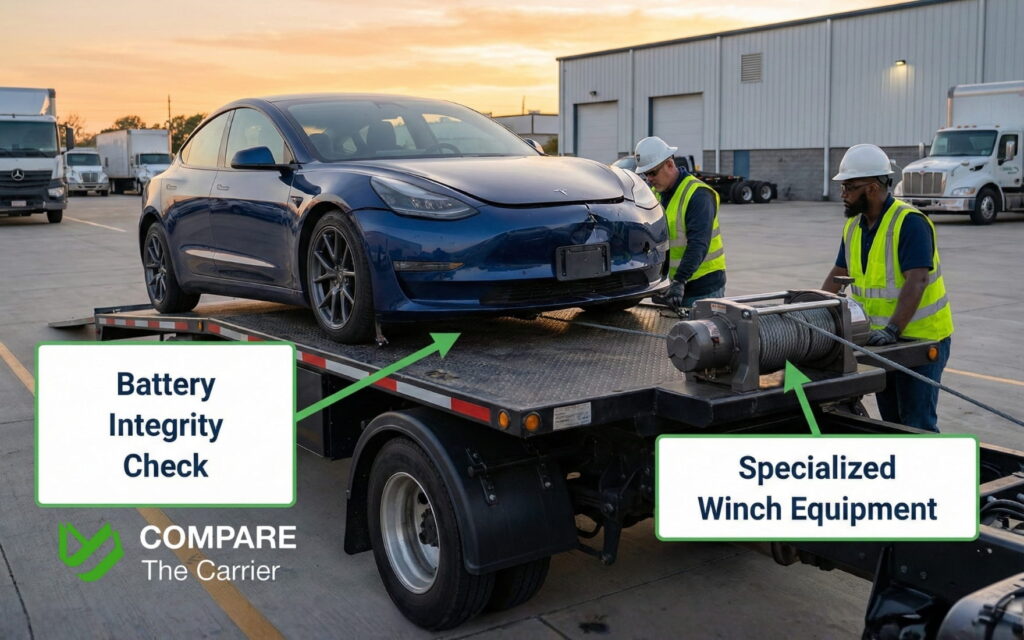
By the year 2026, a growing number of buyers are choosing “Salvage” or “Rebuilt” titles as a way to become part of the luxury market. Ohio and Pennsylvania have the cheapest salvage inventory through major auctions (Copart and IAAI), but the logistics are trickier. To ship a dysfunctional vehicle, special equipment is needed to complete the task of hauling, like a winch-equipped trailer. If you need to test out this option, go check this route our specialized transport guides for the surcharges (for non-running vehicles).
The data are solid: The Midwest is the top overall region for car ownership, with an average of 59.5 out of 100 points. The South lags, with low gas prices but hidden expenses, like heavy sales taxes or unrestricted dealer fees. The highest cost places are again in the Pacific and Mountain states. Gas prices in California, for example, can be as high as $4.61 per gallon, or 47% higher than in the South. If you live in these regions, the savings from buying an automobile in Ohio or Indiana and shipping it home can easily exceed $3,000 even after paying for transport.
Purchasing a car 1,000 miles from one location takes a different muscle than buying locally.
Many buyers think they will save money by flying to Ohio and driving the car back to California. Let’s do the math for 2026:
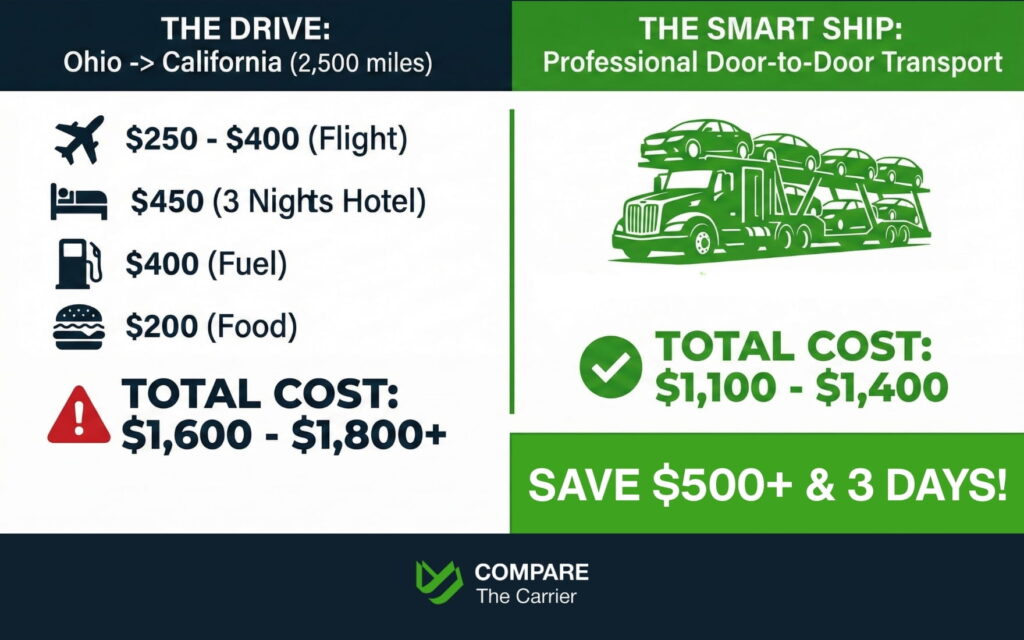
In contrast, professional door-to-door car transport for that same route often costs between $1,100 and $1,400. Not only is shipping cheaper, but it also saves you three days of your life and prevents a breakdown on a lonely highway in Nebraska.
As we move deeper into 2026, the market for salvaged electric vehicles (EVs) has exploded. States like Massachusetts and Ohio have become hubs for these “project” cars. However, shipping a damaged EV is significantly more regulated due to battery safety risks.
Carriers now require specific certifications for handling damaged Teslas or Rivians. If you are buying a salvage EV from our top-listed states, expect to pay a 20-30% premium for transport due to specialized safety handling.
The “cheapest” car is rarely the one closest to your driveway. By looking toward the Midwest (Ohio, Indiana) and the Northeast (Delaware, Pennsylvania), you are tapping into a market optimized for value, infrastructure, and low regulatory friction.
The strategy for 2026 is simple:
The Bottom Line: Don’t let geography limit your financial health. Once you find the right vehicle, let a professional handle the move.
Would you like me to help you calculate the shipping cost for your next out-of-state purchase, or are you ready to dive deeper into our state-specific registration guides?
Ohio is currently the best overall state. It offers a median listing price of approximately $12,995, combined with low insurance and documentation fees.
Delaware is the leader with 0% sales tax. Other states like Oregon, Montana, and New Hampshire also offer this benefit, though they may have higher listing prices.
Yes, provided you get a pre-purchase inspection. The 10% lower listing prices in the Northeast often more than cover the cost of a professional undercarriage cleaning or minor rust prevention.
Indiana ranks #1, with 97.4% of its roads in acceptable condition. This results in less wear on the car’s suspension and tires.
High demand, high gas prices ($4.61/gal in CA), and higher listing prices in the Mountain and Pacific regions drive up the total cost. Drivers in these states pay up to 47% more for gas than those in the South.
These are the fees dealers charge to process paperwork. In states like Iowa, they are often under $200, while in states like Florida, they can exceed $900, significantly increasing the vehicle’s “out-the-door” price.
Most states have “reciprocity” agreements. You typically pay the sales tax of the state where you will register the vehicle, not where you bought it. Always confirm with the dealer and your local DMV.
According to current market trends, Pennsylvania offers the highest volume of reliable used cars under $10,000, particularly for domestic sedans and small SUVs.






Don't have time to fill out the form?
Call a transport company directly to get a quote now!
Select the category you need
Partner with Compare The Carrier & Grow!
We're open to collaborations, partnerships, and mutual growth! Whether you're an individual or a business, we offer exciting opportunities to work together. Fill out the form below to explore how we can collaborate.
Something Went Wrong
We're sorry, but something went wrong. Please briefly describe the problem you experienced in the text area below. Providing your contact information will allow us to follow up if needed.

Thank you,
your form has been accepted.
Your form has been successfully submitted. We appreciate your effort — our team will review it shortly and take the next steps.


