Advanced PPC Tactics for Logistics Advertising in 2026
If your freight and logistics ads are burning budget without generating qualified leads, it’s time to rethink your approach. In 2026, the logistics PPC landscape has moved far beyond basic keyword bidding.
In the world of logistics, speed, efficiency, and precision are baseline requirements. Your advertising should operate with the same exactness. While Pay-Per-Click (PPC) remains a primary driver for B2B lead generation, rising costs per click (CPC) and algorithm shifts demand a much tighter, data-driven approach.
Success this year requires leveraging AI-powered bid models, hyper-targeted audience segmentation, and a comprehensive digital marketing strategy for logistics companies. Whether you’re a seasoned marketing director or just restructuring your current ad spend, this guide covers the exact tactics needed to lower your Cost Per Acquisition (CPA) and capture high-intent traffic.
But knowing the tactics is only half the battle; executing them without wasting ad spend is what actually matters.
That’s where Compare The Carrier Digital Agency comes in. We don’t just run ads; we specialize exclusively in logistics PPC. We know your margins, understand your operational challenges, and build campaigns that directly feed your sales pipeline.Just starting out? Our guides on acquiring your first clients and developing a logistics marketing plan (with a FREE downloadable template) can set you on the right path.
The PPC Revolution: What’s New in Logistics Advertising for 2026?
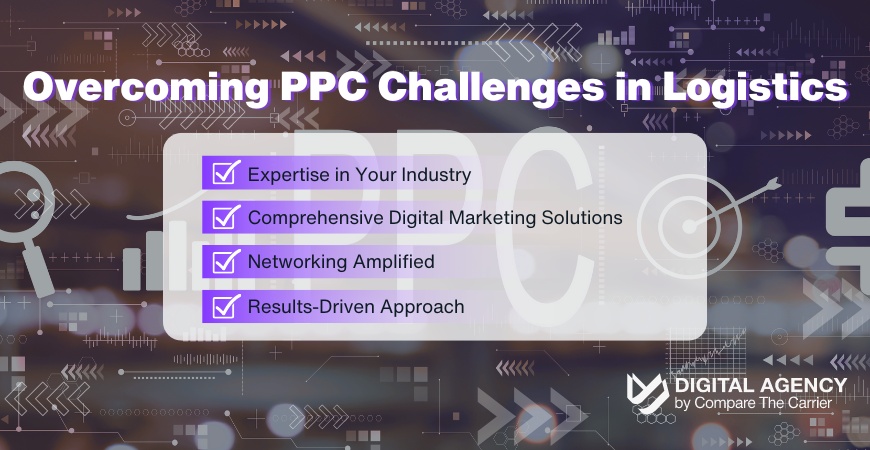
Common Roadblocks: Overcoming PPC Challenges in Logistics
Strategies That Deliver: Your PPC Playbook for 2026
Best Practices: The Nitty-Gritty of Successful PPC Campaigns
Why Compare The Carrier? The PPC Partner That Gets Logistics
FAQ
The PPC Revolution: What’s New in Logistics Advertising for 2026?
The logistics advertising landscape in 2026 is unforgiving to poorly managed budgets. With ad costs rising and platforms relying heavily on automation, basic keyword bidding is no longer enough to stay competitive. Here is what actually drives ROI today:
Algorithmic Bidding and Predictive AI: Artificial intelligence has moved from a trend to the core engine of ad platforms. Smart bidding utilizes massive datasets to adjust bids in real-time, focusing on conversion value rather than just clicks. However, to leverage these algorithms without burning budget on irrelevant traffic, professionalGoogle & Bing Ads for logistics management is crucial. It ensures the AI is trained on your actual target audience and high-margin services, not just broad freight terms.
High-Intent Video Assets: Video is a primary tool for building B2B trust. Shippers want to see your cross-docking facilities, your specialized fleet in action, and real customer testimonials. Deploying these assets through targetedSMM for social networks on platforms like LinkedIn or YouTube captures decision-makers’ attention much faster than static text ads.
Adapting to Long-Tail Intent Search: The way shippers search is shifting toward complex, highly specific queries (e.g., “best LTL carriers for refrigerated freight in Chicago”). Your PPC strategy must account for these intent-driven searches to capture leads at the bottom of the funnel, rather than competing for highly expensive, generic keywords.
Account-Based Marketing (ABM) and Micro-Targeting: General targeting wastes money. Today’s platforms allow you to focus your ad spend on specific job titles (like Supply Chain Director or Procurement Manager), company sizes, or even specific corporations you want to close. This precise segmentation means your ads are seen exclusively by actual decision-makers who need your capacity.
Full-Funnel Remarketing: In B2B logistics, the sales cycle is long. A shipper rarely signs a contract on the first click. Advanced remarketing strategies keep your brand in front of prospects who submitted a quote request but stalled in the pipeline, maintaining visibility until they are ready to finalize the deal.
By embracing these advanced, data-driven tactics, logistics providers can stop wasting ad spend and start generating consistent, high-quality freight leads.
Common Roadblocks: Overcoming PPC Challenges in Logistics
Running PPC in the logistics industry is notoriously difficult. High cost-per-click (CPC) rates and complex B2B sales cycles mean that minor campaign errors can quickly drain your marketing budget. Here is how top-performing carriers and brokers overcome these common hurdles:
High Competition and Bidding Wars: The logistics space is crowded, and bidding directly against massive 3PLs on broad terms like “freight shipping” is a losing battle. The solution is targeting long-tail, high-intent keywords. Shifting your focus to specific niches, like “refrigerated LTL shipping Chicago” or “heavy haul flatbed carriers”, drastically lowers competition and attracts highly qualified shippers ready to book capacity.
Budget Constraints and High CPA: You don’t need a massive budget to win; you need strict prioritization. If ad spend is limited, ruthlessly cut underperforming campaigns and reallocate dollars exclusively to the freight lanes and services that deliver the highest ROI. Consistent optimization is the only way to lower your overall Cost Per Acquisition (CPA).
Targeting the Actual Decision-Makers: In B2B logistics, generating clicks from warehouse floor workers or dispatchers doesn’t help you. You need to reach Supply Chain Directors and Procurement Managers. This requires advanced targeting techniques like Account-Based Marketing (ABM) and utilizing LinkedIn’s granular professional filters. To ensure these high-value leads are handled correctly once they click, professionalsales and marketing integration is essential, seamlessly bridging the gap between an ad click and a closed contract.
Proving Real ROI, Not Vanity Metrics: Clicks and impressions do not pay for truck maintenance. The only metrics that matter are Cost Per Lead (CPL), quote requests generated, and actual closed revenue. By implementing comprehensiveperformance tracking and analytics, you can connect your ad platforms directly to your CRM, gaining complete visibility into exactly which campaigns are driving actual freight contracts.
Navigating these challenges might feel like a winding mountain road, but with the right map and a steady hand on the wheel, you can reach your PPC destination.
Remember, it’s not about avoiding obstacles; it’s about knowing how to overcome them. And if you ever need a co-pilot, Compare The Carrier Digital Agency is here to guide you through the twists and turns of logistics PPC.
Strategies That Deliver: Your PPC Playbook for 2026
Knowing the PPC trends is just the first step. Now it’s time to roll up your sleeves and put those strategies into action. As part of your overall logistics marketing approach, make sure your PPC strategy is aligned with your broader goals and messaging.
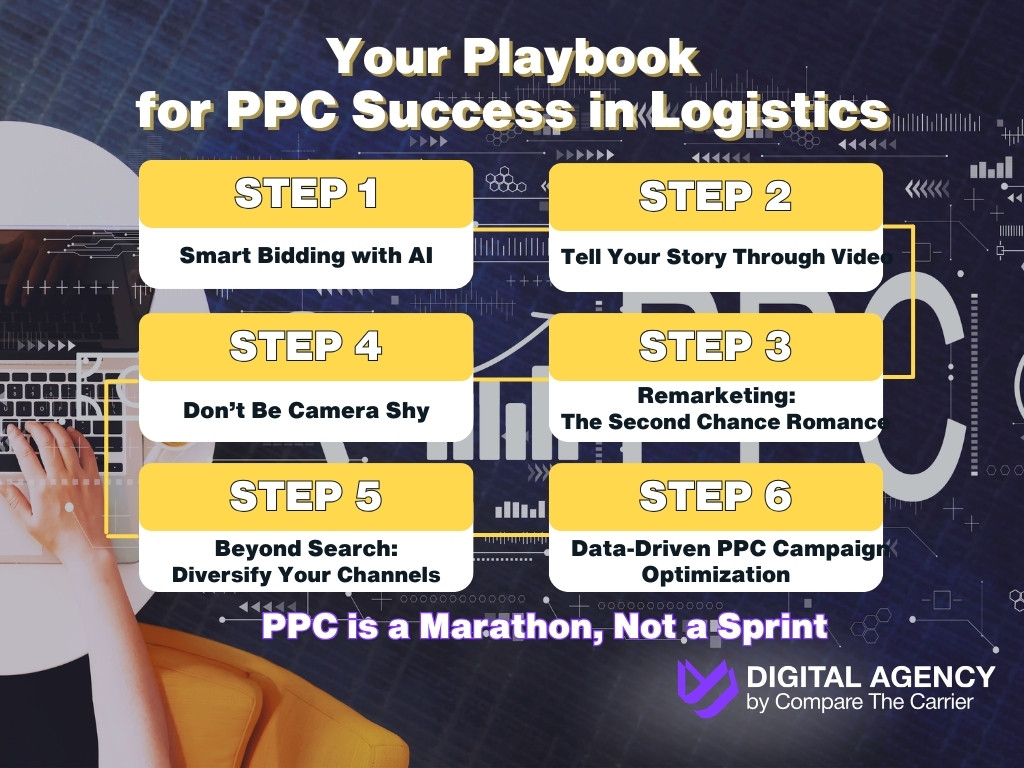
Here’s your playbook for PPC success in the logistics industry:
Smart Bidding with AI: Stop wasting time on manual bid adjustments. Let AI algorithms do the heavy lifting. Smart bidding strategies like Target CPA (Cost Per Acquisition) or Target ROAS (Return On Ad Spend) can automatically optimize your bids based on real-time data and your specific goals. This frees you up to focus on the bigger picture while AI works tirelessly to maximize your results.
Tell Your Story Through Video: Video ads remain a high-converting format for logistics companies. Showcase your specialized fleet, cross-docking facilities, or complex supply chain solutions. By integrating video into yourSMM for social networks, you can run highly targeted campaigns on LinkedIn or YouTube, building brand authority and driving B2B conversions.
Don’t Be Camera Shy: Live video is another powerful tool in your PPC strategies arsenal. Host live Q&A sessions on social media, give virtual tours of your warehouses, or even stream from industry events. Live video for logistics PPC is a great way to build trust and connect with your audience in a more personal way. Plus, it’s a cost-effective way to reach a large audience in real-time.
Remarketing: The Second Chance Romance: Remember those visitors who browsed your website but didn’t convert? Don’t let them slip away. Remarketing campaigns allow you to target these potential customers with tailored ads as they browse the web. It’s like a gentle nudge reminding them of the great services you offer. Remarketing is a highly effective way to re-engage lost prospects and boost your conversion rates. And once you’ve captured leads through PPC, explore tactics to maximize profit from those leads and turn them into loyal customers.
Beyond Search: Diversify Your Channels: Don’t put all your eggs in the Google basket. Explore other PPC channels like Bing Ads, social media advertising (think LinkedIn for B2B), and even display advertising. And if a specific vertical is your core business – like auto transport – a dedicated, vertical-specific campaign build usually outperforms broad logistics ads.Each platform offers unique targeting options and can reach different segments of your audience. A multi-channel approach can help you maximize your reach and get your message in front of more potential customers.
Data-Driven PPC Campaign Optimization: Don’t just set it and forget it. Regular analysis is critical. By implementing advancedperformance tracking and analytics, you can track exactly how PPC leads move through your sales pipeline. Monitor CTR, conversion rates, and cost per conversion to confidently reallocate budget to the highest-performing ad groups.
Remember, PPC is a marathon, not a sprint. It takes time, effort, and continuous optimization to achieve success. But by following these strategies and staying ahead of the curve, you can ensure your logistics company stays at the forefront of the PPC game in 2026 and beyond.
Best Practices: The Nitty-Gritty of Successful PPC Campaigns
Okay, you’ve got the trends and the strategies, but what about the nuts and bolts of actually creating those killer PPC campaigns?
Here’s where the rubber meets the road:
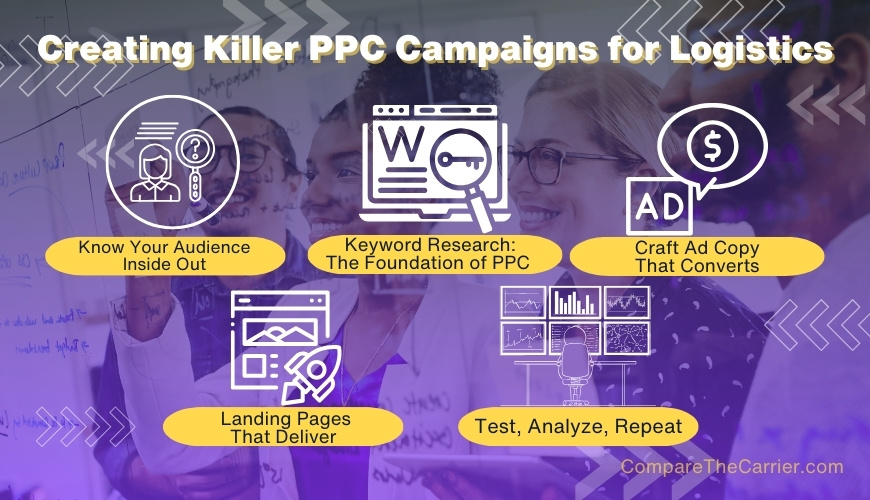
Know Your Audience Inside Out: Before you even think about keywords or ad copy, you need to know who you’re talking to. Are they small business owners shipping products across the country? Are they large corporations looking for international freight solutions? Understanding their pain points, motivations, and decision-making processes will guide your entire PPC strategy/ PPC strategies. A robust logistics CRM can help you segment your audience, personalize your messaging, and re-engage with past customers effectively.
Keyword Research: The Foundation of PPC Strategies: Keywords are the building blocks of your PPC campaigns. Choose the wrong ones, and your ads won’t get seen by the right people. Use keyword research tools like Google Keyword Planner or SEMrush to identify relevant keywords with high search volume and low competition. Remember, it’s not just about the most popular keywords; it’s about finding the keywords that your ideal customers are actually using.
Craft Ad Copy That Converts: Your ad copy is your first (and sometimes only) chance to make a good impression. Make it count! Write clear, concise, and benefit-oriented copy that speaks directly to your target audience’s needs. Highlight your unique selling points, offer a compelling call to action, and don’t forget to include those carefully chosen keywords.
Landing Pages That Deliver: Your ad may get the click, but it’s the landing page that seals the deal. Make sure your landing page is relevant to the ad, easy to navigate, and optimized for conversions. Use clear headlines, persuasive copy, and strong calls to action to guide visitors towards your desired outcome. A well-designed website is essential for turning PPC clicks into customers. Discover how to optimize your logistics website design for maximum conversions.
Test, Analyze, Repeat: PPC isn’t a one-and-done deal. It’s a continuous process of testing, analyzing, and refining. Experiment with different ad variations, keywords, and landing pages to see what works best. Use A/B testing to compare the performance of different elements and make data-driven decisions. The more you test and analyze, the better your campaigns will become.
This global logistics giant uses targeted PPC ads to promote specific services like international shipping and express delivery. Their ads are concise, highlight key benefits, and feature strong calls to action.
By following these best practices and learning from industry leaders, you can create PPC campaigns that deliver real results for your logistics business.
Remember, it’s not just about spending money; it’s about spending it wisely. With a strategic approach and a commitment to optimization, PPC can be a powerful tool for driving growth and achieving your business goals.
Why Compare The Carrier? The PPC Partner That Gets Logistics
Alright, you’ve got the lowdown on the latest PPC trends, the challenges, the strategies, and the best practices.
But let’s be real, executing a successful PPC campaign isn’t always a walk in the park. It takes time, expertise, and a deep understanding of the logistics industry.
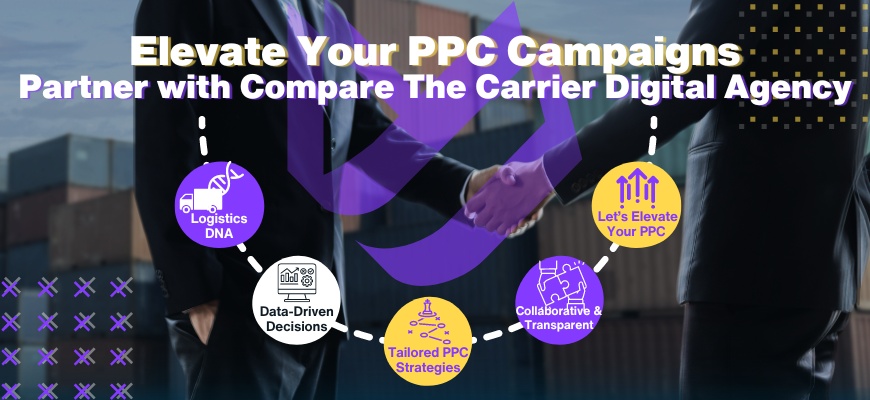
Logistics DNA: We’re not just marketers; we’re logistics enthusiasts. We understand the ins and outs of the industry, the lingo, the pain points, and the opportunities. This means we can create PPC strategies that speak directly to your target audience and resonate with their specific needs.
Data-Driven Decisions: We don’t just rely on gut instinct. We dive deep into the data to uncover insights that drive results. We track every click, every conversion, and every penny spent to ensure your campaigns are optimized for maximum ROI.
Tailored PPC Strategies: We don’t believe in one-size-fits-all solutions. We analyze your unique business goals to develop customized PPC frameworks. Whether you’re looking to increase brand awareness or drive direct freight quotes, our focus onsales and marketing integration ensures that every ad click seamlessly feeds qualified leads directly to your sales team.
Transparent and Collaborative: We believe in open communication and collaboration. We’ll keep you in the loop every step of the way, providing regular reports and insights into your campaign performance. We’ll work with you as a partner, not just a vendor, to ensure your PPC efforts are a success.
Conclusion
In the ever-evolving world of digital marketing, PPC remains a powerful tool for logistics companies to reach their target audience, drive traffic, and ultimately boost their bottom line. It’s just one piece of a comprehensive marketing strategy that can propel brokerage growth. For a holistic approach, explore our guide on marketing for brokerage growth.
And to truly maximize its potential, you need to stay ahead of the curve, embrace new technologies, and partner with experts who understand the nuances of the logistics industry.
If you’re ready to revolutionize your PPC game in 2026, contact us today.
We’ll show you how to leverage the latest trends, overcome common challenges, and create campaigns that deliver real results.
FAQ
What is PPC advertising, and how does it work for logistics companies?
Pay-per-click (PPC) advertising is a digital marketing model where logistics providers pay a fee each time a user clicks their ad. Companies bid on highly specific search terms, such as “refrigerated freight brokers” or “LTL transport.” This strategy captures high-intent traffic from search engines, directly connecting carriers with shippers actively looking to book immediate freight capacity.
How can a logistics company improve its PPC campaign on a limited budget?
To maximize a limited budget, logistics companies should prioritize high-intent, long-tail keywords rather than broad industry terms. Implementing strict negative keyword lists prevents wasted ad spend on irrelevant searches. Focusing on precise geographic targeting and scheduling ads during peak B2B business hours ensures the budget is spent exclusively on qualified commercial leads.
Is PPC advertising effective for small logistics businesses?
PPC is highly effective for smaller logistics providers when focused on niche markets. Instead of competing with global carriers on broad search terms, small brokers can target specific regional lanes or specialized equipment types. This focused approach generates high-quality B2B leads and allows smaller companies to achieve a positive return on ad spend (ROAS) without massive budgets.
How do specialized marketing agencies improve logistics PPC campaigns?
Specialized agencies improve results by applying industry-specific data to campaign management. They restructure ad accounts, implement advanced bidding algorithms, and utilize targetedGoogle & Bing Ads for logistics. This approach lowers the cost per acquisition (CPA) by ensuring ads only reach verified supply chain decision-makers rather than unqualified retail consumers or drivers seeking employment.
How can logistics companies ensure their PPC ads are compliant?
Logistics companies ensure PPC compliance by adhering to search engine policies regarding transparent pricing and accurate service descriptions. Ad copy must avoid misleading claims about transit times or carrier capacities. Additionally, landing pages must match the ad’s specific offer and clearly display proper licensing details, such as MC or DOT numbers, to establish instant B2B credibility.
How should logistics companies handle leads generated from PPC?
A critical step in maximizing PPC ROI is connecting ad platforms directly to a CRM. Through propersales and marketing integration, logistics companies can automatically route new quote requests to the right dispatchers or sales representatives in real-time. This reduces response times, prevents lead leakage, and allows companies to track the exact revenue generated from specific keywords.
Written by
Ryan Foster
Senior Auto Transport & Logistics Specialist
12+ Years Experience
Ryan leverages 12+ years of experience to simplify complex vehicle logistics. From interstate hauls to specialized shipping, he provides transparent, actionable advice to help customers navigate the transport process with confidence.
We're open to collaborations, partnerships, and mutual growth! Whether you're an individual or a business, we offer exciting opportunities to work together. Fill out the form below to explore how we can collaborate.
Something Went Wrong
We're sorry, but something went wrong. Please briefly describe the problem you experienced in the text area below. Providing your contact information will allow us to follow up if needed.
Thank you,
your form has been accepted.
Your form has been successfully submitted. We appreciate your effort — our team will review it shortly and take the next steps.