

Most Affordable SUVs of 2026: Best Value for the Money
In 2026, the search for the perfect SUV is less about fin...
7 April 2026
Mobile living is a lifestyle where your primary residence is a vehicle, such as a van, RV, or converted bus, allowing for constant travel and geographic flexibility. It prioritizes freedom and minimalism over traditional homeownership, enabling people to work remotely while exploring new locations without being tied to a fixed physical address or long-term lease.
Calculate Shipping Quotes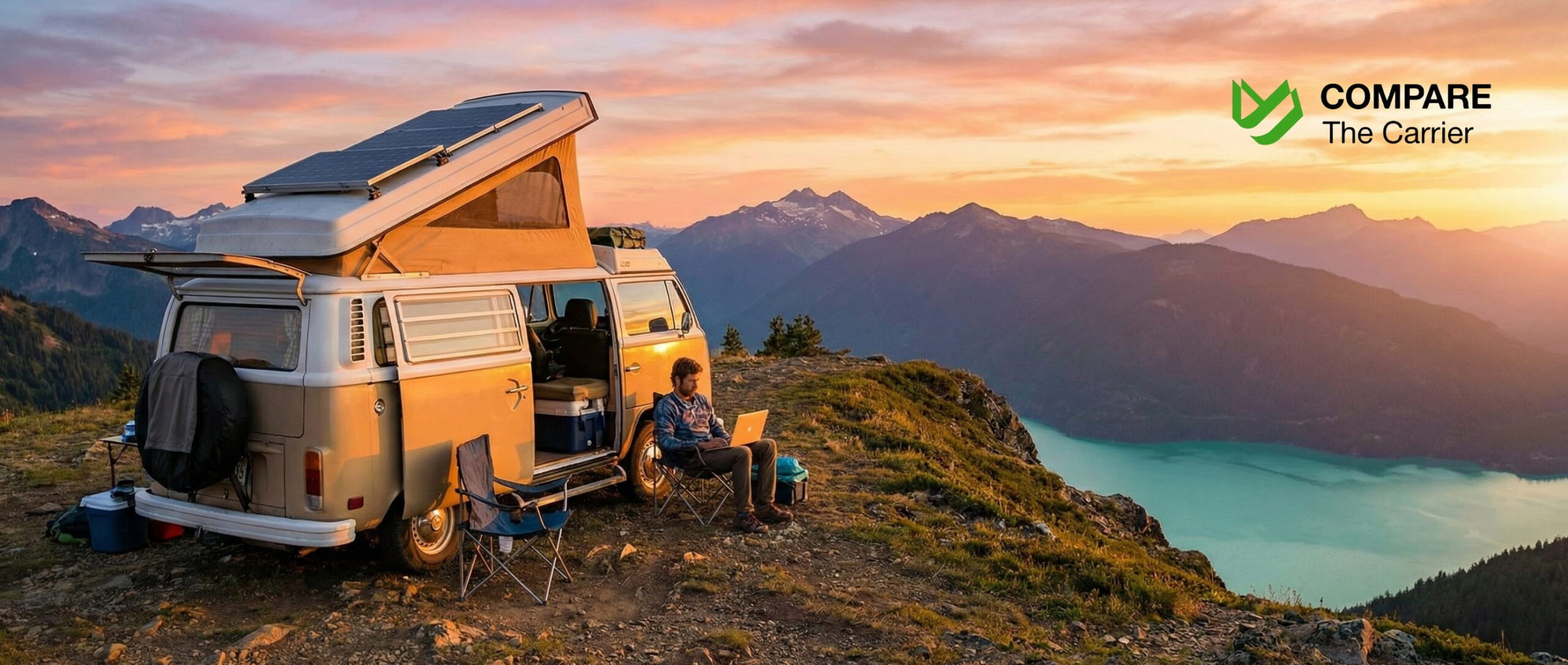
In 2026, over 1 million Americans identify as full-time vehicle dwellers. They are not all retirees in Class A motorhomes. They are remote developers, freelance writers, nurses on travel contracts, and young families who did the math and realized four wheels cost less than four walls.
The average US rent hit $2,000 per month in 2024. Mobile living cuts that number dramatically – most full-time nomads spend $1,200–$2,000 per month on everything: fuel, food, insurance, and shelter combined. The trade-off is not comfort. It is certainty. You give up a fixed address and gain the ability to move your home anywhere the road goes – or ship it there when driving does not make sense.
The nomadic lifestyle isn’t just about the vehicle; it’s a fundamental rejection of the “deferred life plan.” Most of us are taught to work for forty years to enjoy freedom in the last ten. Mobile living flips that script. It’s about “lifestyle design,” building a life where your surroundings change based on your curiosity rather than your commute.
We are seeing a massive shift because the barrier to entry has never been lower. High-speed satellite internet, a robust remote work economy, and a growing community of “van-lifers” have turned what was once a fringe movement into a viable alternative to the housing crisis. For many, it’s not just about the adventure; it’s about financial solvency. When you remove a $2,000 monthly rent or mortgage payment, your perspective on work and time changes overnight.
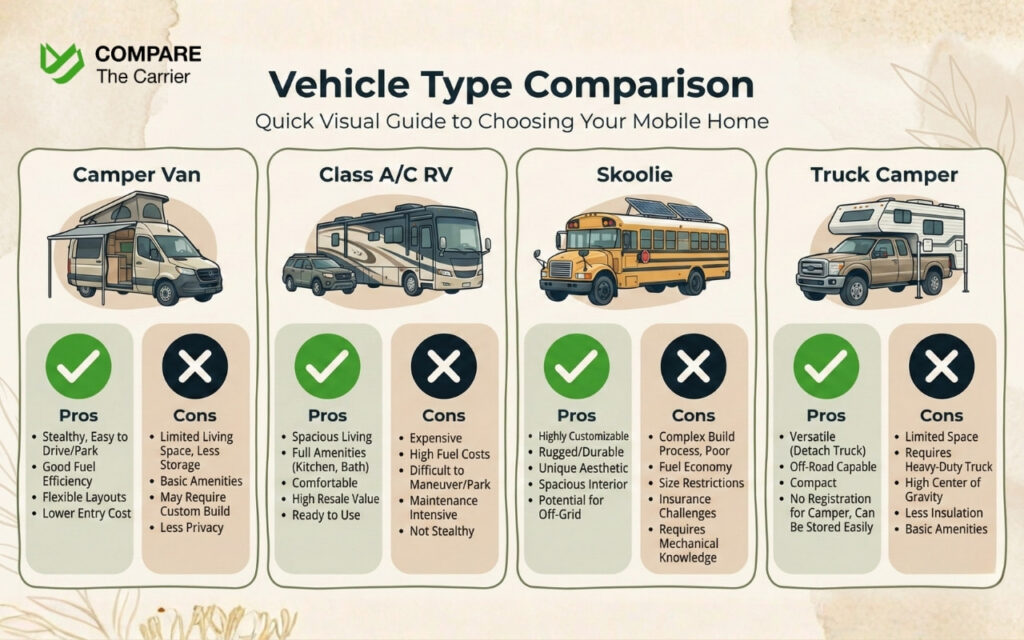
Before you buy a van and start ripping out the floors, you need to understand that your vehicle dictates your daily stress levels. There is no “perfect” rig, only the rig that fits your specific trade-offs.
There is no “perfect” rig, only the rig that fits your specific trade-offs. And once you’ve found it – whether it’s across the country or across the state – getting it to you is the easy part.
| Vehicle Type | Best For | Pros | Cons |
| Camper Van (Sprinter/Transit) | Solo travelers or couples | Easy to park, “stealth” camping is possible, better gas mileage. | Limited standing room (unless high-roof), cramped for long periods. |
| Class A/C RV | Families or comfort-seekers | Full kitchen, real shower, “plug and play” utilities. | Expensive to fuel, hard to park in cities, requires specialized repair. |
| Skoolie (Converted Bus) | DIY enthusiasts, long-termers | Massive living space, fully customizable, structurally very safe. | Hard to insure, often banned from traditional RV parks, slow. |
| Truck Camper | Off-road explorers | Can go anywhere a 4×4 can, detachable living unit. | Very small interior, weight limits are a constant concern. |
Expert Tip:
Don’t buy your “dream rig” first. Rent an RV or a van for two weeks. Live in it during a rainstorm. See how it feels to empty a grey water tank. The “romance” of the road often hits a wall when you realize you can’t find a place to park at 11:00 PM.
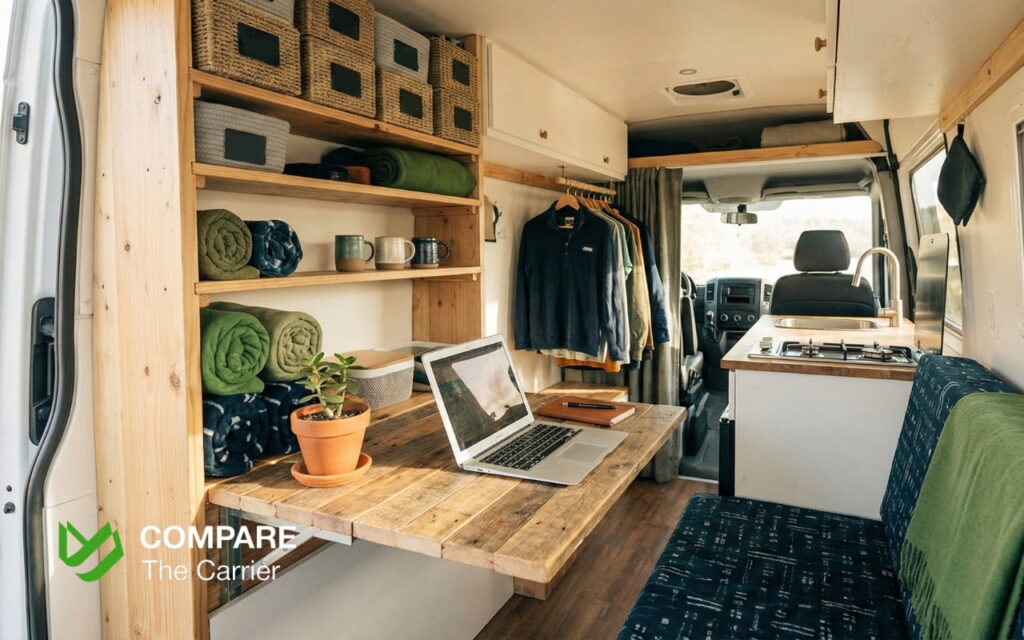
Minimalism in mobile living isn’t an aesthetic choice; it’s a survival mechanism. In a 60-square-foot space, every object you own must earn its keep. If a tool only has one use, it’s probably a waste of space.
This transition is often the hardest part for newcomers. We are culturally conditioned to collect things as markers of success. In a van, those things become literal weight that slows you down and clutter that ruins your mental clarity.
How to downsize without the panic:
Let’s be human for a second: mobile living can be exhausting. Social media is flooded with photos of sunrises over the Grand Canyon, but it rarely shows the 3:00 AM knock on the window from a security guard telling you to move.
It doesn’t show the “logistics fatigue,” the constant mental overhead of wondering where you will get water, where you will shower, and how much battery life your solar setup has left. Successful nomads are those who find a rhythm in these chores. You aren’t just a traveler; you are the captain, mechanic, and janitor of your own tiny ship.
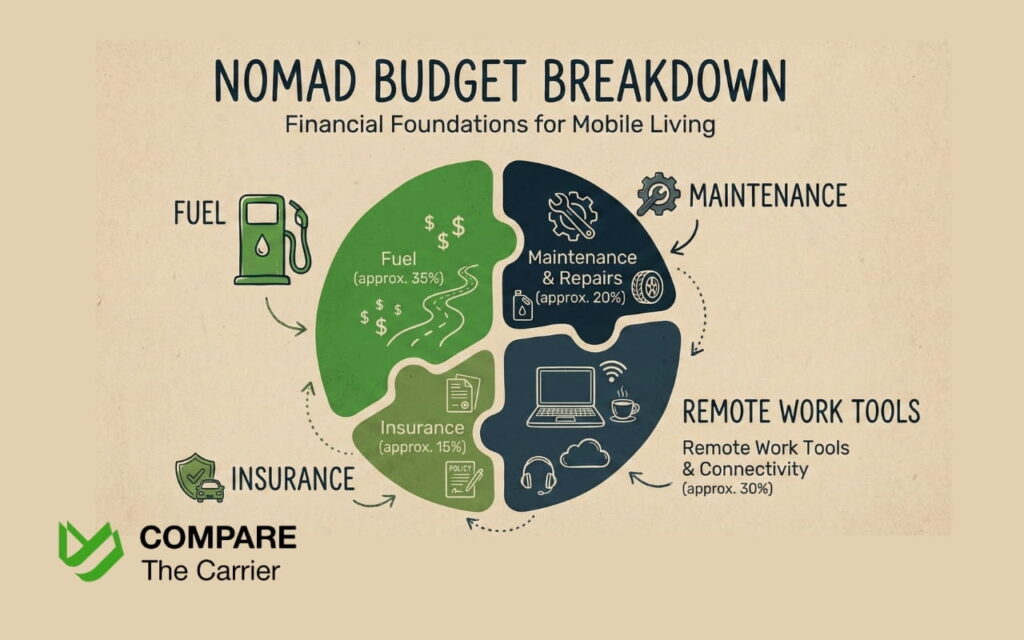
Living on the road can be significantly cheaper than living in a city, but it isn’t “free.” Your biggest expenses will shift from rent to fuel, maintenance, and insurance.
The Nomad Budget Breakdown:
Unless you are retired or have a massive inheritance, you need a way to fund the journey. The “Digital Nomad” label is broad, but most successful mobile dwellers fall into three camps:
The key is redundancy. Don’t rely on a single coffee shop’s Wi-Fi. Have a hotspot, a signal booster, and a backup plan. If you lose connection, you lose your income.
Mobile living infrastructure consists of the power, water, and climate systems required to maintain a functional home within a vehicle. Successful nomads prioritize integrated, “off-grid” setups such as lithium battery banks and diesel heaters to ensure comfort and productivity without relying on traditional RV parks or hookups.
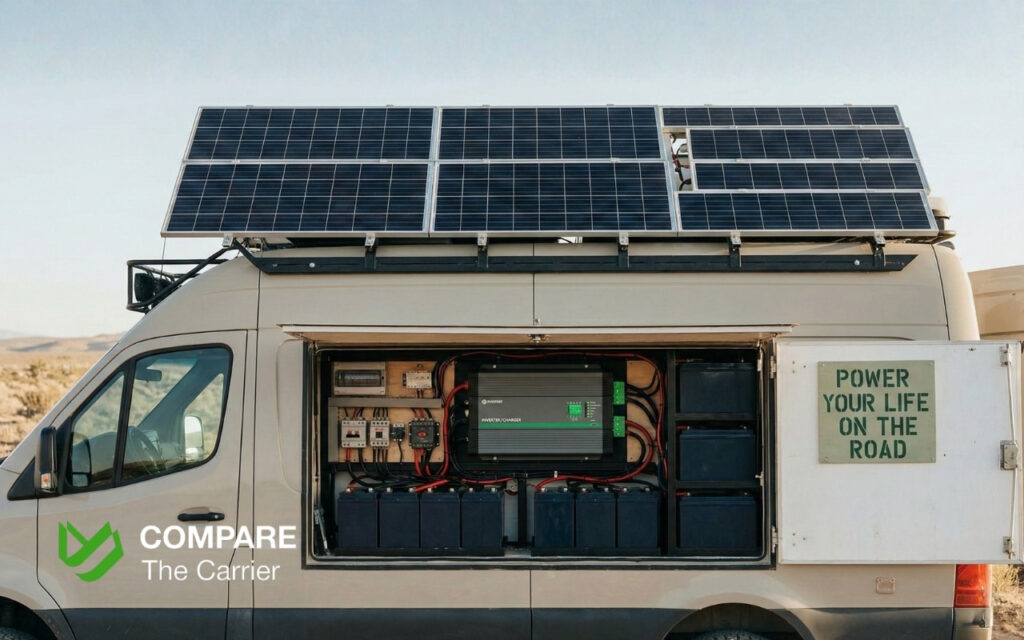
When you live in a vehicle, electricity is your most precious resource. It’s what keeps your laptop running for work, your food cold in the fridge, and your lights on at night. Most people start with a simple “power station” (like a Jackery), but for long-term living, a built-in system is usually the way to go.
The Three Pillars of Power:
A human reality check: You will become obsessed with the weather. You’ll find yourself checking the forecast not to see if you need a jacket, but to see if you’ll have enough power to join a Zoom call at 2:00 PM. It’s a bit of a mental load, but once you understand your “daily burn” (how much power you use vs. how much you generate), it becomes second nature.
In a house, you turn a tap and water appears. In a van, you are the water company. You have to find it, filter it, carry it, and most importantly, deal with it once it’s dirty.
How the system works:
Pro Tip:
Water is heavy. One gallon weighs about 8.3 lbs. If you carry 30 gallons, that’s nearly 250 lbs added to your vehicle. Always be mindful of your weight limits, as they affect your braking distance and fuel economy.
The biggest mistake new nomads make is underestimating the “tin can” effect. A vehicle is essentially a metal box; it gets freezing in the winter and becomes an oven in the summer.
Let’s be honest: this is the question everyone wants to ask. Where do you go? You have three main options, each with its own “ick” factor.
Parking isn’t just about finding a spot; it’s about finding a spot where you won’t be bothered. This is where the community relies on apps like iOverlander or Sekr, where other travelers leave reviews of campsites, parking lots, and Bureau of Land Management (BLM) land.
Types of Parking:
Is it dangerous? Occasionally. But most “danger” in mobile living comes from mechanical failure or bad weather, not “bad guys.”
Safety Essentials:
Sustainable nomadic living is the practice of maintaining a high quality of life while traveling long-term by balancing social connection, financial stability, and logistical organization. It relies on digital tools for mail management, community platforms like Worldpackers for social integration, and a “slow travel” mindset to prevent burnout and ensure the lifestyle remains viable for years rather than months.
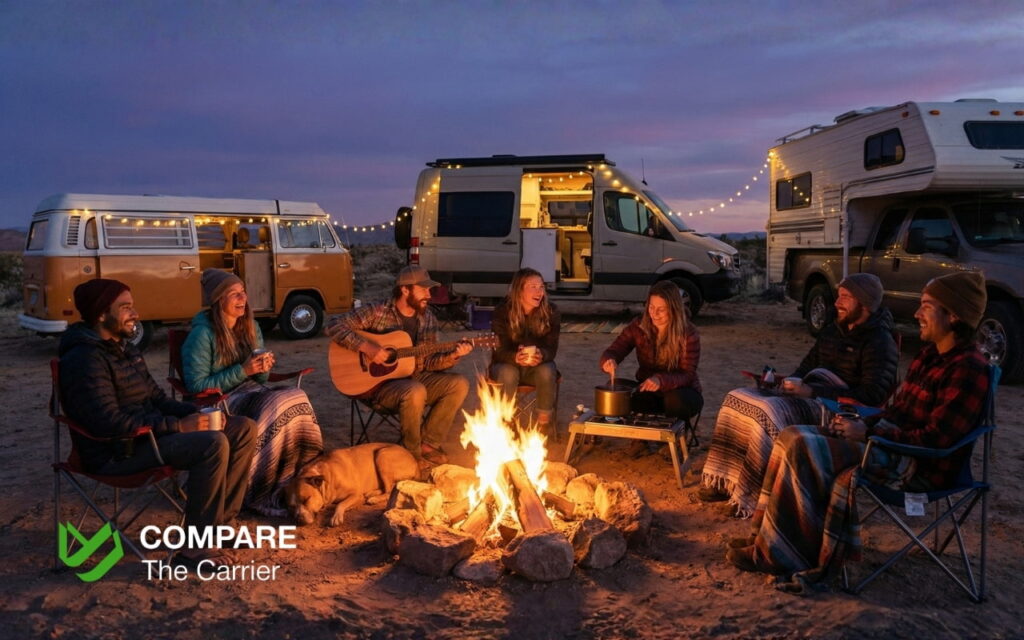
One of the most frequent questions people ask is: “Don’t you get lonely?” The honest answer is yes, sometimes. But there is a massive difference between being alone and being lonely. In a traditional neighborhood, you might live next to someone for ten years and never know their last name. On the road, the “Van Life” community is surprisingly tight-knit.
How to find your “Road Family”:
Mobile living can sometimes feel like you’re always a guest and never a member. This is where platforms like Worldpackers change the game. Worldpackers connects travelers with hostels, NGOs, eco-farms, and schools where you can trade a few hours of work for a place to stay and, often, meals.
For a nomad in a vehicle, this provides a “soft landing.”
You can leave your house, but you cannot leave the government. Even if you are 2,000 miles away from your “official” address, you still need to receive tax documents, renew your driver’s license, and get that Amazon package you desperately need.
Most long-term nomads use a Virtual Mailbox. You get a real physical street address (not a P.O. Box). When the mail arrives, the service scans the outside of the envelope and emails you a photo. You then decide:
The Tax Question: “Where do I live?” is a complicated question for nomads. Most choose a “State of Domicile” that is nomad-friendly (like South Dakota, Florida, or Texas) because they have no state income tax and allow you to use a mail forwarding address for your residency. This is a legal “anchor” that keeps your paperwork in order while your tires are in motion.
Most nomads assume they’ll always drive their vehicle from point A to point B. But there are situations where auto transport is the smarter, cheaper, or only option – and knowing when to use it can save you time, money, and serious mechanical wear.
1. Buying a Van or RV From Another State The used vehicle market is national. The “perfect” Sprinter with a professional build might be in Portland while you’re in Miami. Flying to inspect it, then hiring an auto transport carrier to deliver it to your location, is often cheaper than 3,000 miles of fuel, wear, and two days of your life on the highway.
2. Seasonal Repositioning Without the Drive Many long-term nomads follow a “snowbird” pattern – summers in the Pacific Northwest, winters in the Southwest or Baja. After two or three years, that same 1,800-mile repositioning drive gets old fast. Shipping your rig and flying to meet it means you arrive rested, not road-worn. Most snowbirds price out the route once – and never look back. [See vehicle shipping options →]
3. International Nomadism: Taking Your Rig Overseas If you want to drive through Europe, Central America, or Southeast Asia in your own vehicle, you’ll need to ship it across an ocean. Two main methods exist:
Budget reality: International shipping costs are just the beginning. Factor in destination country import duties, customs brokerage fees, and temporary import permits (TIPs), which most countries require for foreign-plated vehicles.
4. After a Major Breakdown Far From Home Your engine dies 2,000 miles from your “home base” mechanic – the one who knows your rig inside and out. Roadside assistance (AAA, Good Sam) will tow you locally, but getting your vehicle and yourself back to a trusted repair shop sometimes means calling an open-car or enclosed carrier to handle the long haul. This is why your emergency fund isn’t optional.
To find the right carrier for your rig, check our vetted list of the top RV shipping companies – ranked by price, transit time, and real customer reviews for 2026.
The industry runs on a load board system. When you request a quote, brokers post your shipment to a network of independent carriers who bid on the route. Here’s what you need to know before you book:
Mobile living isn’t a “fix” for a life you hate. If you are unhappy in a house, you might just be unhappy in a van, but with less legroom. However, if you are looking for a way to prioritize experience over accumulation, and if you are willing to trade the certainty of four walls for the variety of four wheels, it is the most rewarding way to see the world.
It forces you to be resourceful. It teaches you that “enough” is a much smaller amount than you thought. And most importantly, it gives you back the one thing we all run out of: time.
Ready to calculate your first move? Estimate your shipping cost and see how much it costs to get your rig exactly where you need it.
A basic setup (an older used van and a DIY build) can start around $10,000 to $15,000. Professional, brand-new conversions often exceed $100,000. Most successful long-term nomads find a middle ground around $30,000, focusing their budget on “reliable mechanics” first and “pretty cabinets” second.
In most countries, including the USA, it is legal to live in a vehicle, but where you park is heavily regulated. You must follow local “oversized vehicle” ordinances and parking laws. Using public lands (BLM/National Forests) is the most reliable way to stay legal and stationary for up to 14 days at a time.
Starlink Mini has revolutionized the nomadic world, offering high-speed satellite internet almost anywhere. Many also use “multi-carrier” setups, combining a T-Mobile and Verizon hotspot with a signal booster (like a WeBoost) to ensure they can take video calls even in remote areas.
Your vehicle is your home, so a breakdown is an emergency. You should always have a premium roadside assistance plan (like AAA or Good Sam) and an emergency fund covering at least three months of expenses. Many nomads stay in a cheap motel or with friends while the “house” is in the shop.
In the US, living in a vehicle is legal, but overnight parking is heavily regulated at the local level. BLM land and National Forests allow free camping for up to 14 days per location. City streets vary by ordinance – many cities prohibit overnight vehicle dwelling. Always check local laws before parking. Apps like iOverlander and Sekr show verified legal spots reviewed by other nomads.
South Dakota, Florida, and Texas are the top three choices. All have no state income tax and accept mail forwarding addresses for residency. South Dakota requires only a one-night stay to establish residency and has no vehicle inspection requirement, making it the most popular option. Florida is preferred for those who spend winters in the Southeast. Texas suits nomads with business or family ties to the state.
Hire a pre-purchase inspection service ($100–$150) before buying remotely. Then choose between flying to drive it home or hiring an auto transport carrier. For distances over 1,000 miles, shipping costs $900–$1,400 – often less than fuel, lodging, and two days of driving combined. Always get the title signed and notarized before the carrier is booked. Delivery takes 3–14 days depending on the route.






Don't have time to fill out the form?
Call a transport company directly to get a quote now!
Select the category you need
Partner with Compare The Carrier & Grow!
We're open to collaborations, partnerships, and mutual growth! Whether you're an individual or a business, we offer exciting opportunities to work together. Fill out the form below to explore how we can collaborate.
Something Went Wrong
We're sorry, but something went wrong. Please briefly describe the problem you experienced in the text area below. Providing your contact information will allow us to follow up if needed.

Thank you,
your form has been accepted.
Your form has been successfully submitted. We appreciate your effort — our team will review it shortly and take the next steps.


