Don’t Let Your Customers Slip Through the Cracks: CRM for Logistics Made Easy

Fed up with juggling spreadsheets and sticky notes? Your transport business deserves better. Unlock a smoother workflow, happier customers, and a healthier bottom line by choosing the right logistics CRM system.

Contact Us Now
logistics CRM options

In the high-speed world of logistics and transportation brokerage, staying organized and keeping customers happy is a non-stop challenge. If you’re relying on outdated methods to manage your business, you’re missing out on a serious competitive edge. A well-chosen CRM system (Customer Relationship Management) can transform the way you operate, giving you the tools to streamline your shipping process, boost customer satisfaction, and grow your business.

But with so many logistics CRM options out there, how do you know which one is right for you? That’s where this guide comes in. We’ll break down the essentials of CRM systems specifically designed for logistics and transportation brokerage. You’ll learn what features to look for, how to evaluate your options, and why Compare The Carrier Digital Agency is your go-to partner in finding the perfect CRM match.

Whether you’re a seasoned pro or just starting out, this guide will arm you with the knowledge you need to make a smart CRM decision.

Get readyto say goodbye to chaos and hello to efficiency.

Understanding CRM Systems for Logistics and Transportation
Finding Your Perfect Match: Key Considerations for Choosing a Logistics CRM
Supercharge Your Operations: How the Best CRM for Logistics Industry Transforms Your Business
From Selection to Success: Best Practices for Implementing Your New CRM System
Why Partner with Compare The Carrier?
FAQ

What is a CRM System, and Why Should Logistics Brokers Care?

What is a CRM System for logistics

Alright, let’s cut to the chase. You’ve heard the buzz about CRM systems maybe you’ve even seen a few demos but what exactly are they, and why should you, as a logistics broker, give a hoot?

In a nutshell, a CRM system (Customer Relationship Management) is like a high-tech command center for your customer interactions. It’s a centralized hub where you store all your client information, track every touchpoint, and manage your sales pipeline. Think of it as your digital co-pilot, helping you navigate the complexities of the logistics world.

But here’s the kicker: not all CRM systems are created equal.

Generic CRMs might get the job done for some businesses, but when it comes to logistics and transportation brokerage, you need a system that speaks your language.

That’s where logistics CRMs come in. These specialized systems are tailored to the unique needs of the transportation industry, offering features that can revolutionize the way you do business.
How Logistics CRMs Can Level Up Your Business

Why Should Logistics Brokers Care about CRMs
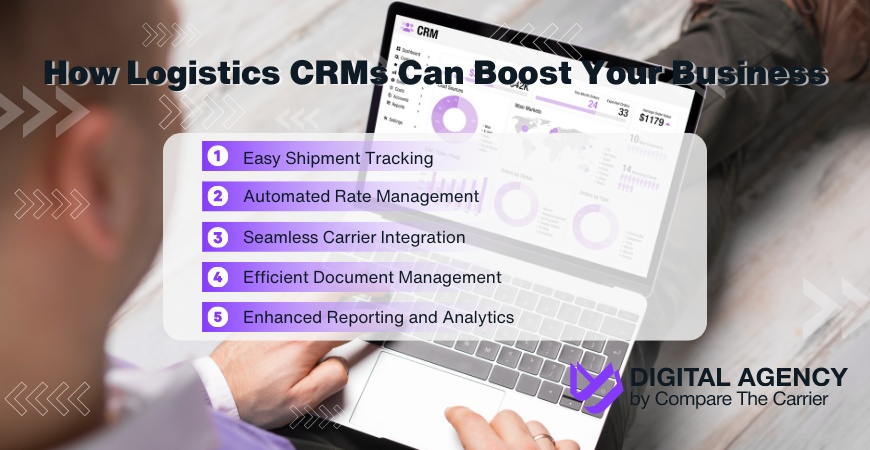
Shipment Tracking and Visibility (Transportation CRM): Say goodbye to endless phone calls and emails. A good logistics CRM lets you track shipments in real-time, giving you and your clients up-to-the-minute updates on their cargo’s whereabouts. This kind of transparency builds trust and takes the stress out of the shipping process.
Rate Management and Quoting: Tired of manually calculating rates and sending out quotes? A logistics CRM automates the process, saving you valuable time and reducing the risk of errors.
Carrier Integration (CRM software for transportation companies): Seamlessly connect your CRM with your preferred carriers, streamlining communication and ensuring a smooth flow of information from booking to delivery.
Document Management and Automation: Say farewell to overflowing filing cabinets. A logistics CRM lets you store, organize, and access important documents with ease. By leveraging proper business process automation, the system can instantly generate bills of lading and invoices, saving you time and headaches.
Reporting and Analytics: Gain valuable insights into your business performance. Setting up professional performance tracking and analytics allows you to identify trends, track KPIs, and make data-driven decisions that drive growth.

If you’re still on the fence about whether a CRM system for logistics is worth the investment, consider this: According to a study by the Aberdeen Group, companies that use CRM systems see a 29% increase in sales, a 34% increase in customer satisfaction, and a 42% reduction in sales cycle length.

A well-implemented CRM system is more than just a sales tool. It’s not just about managing data; it’s about building stronger relationships with your clients, improving your operational efficiency, and it can also serve as a powerful marketing platform, helping you attract and retain customers. To learn more about leveraging marketing for brokerage growth, check out our comprehensive guide.

Must-Have Features: Your Logistics CRM Checklist

Alright, now that you’re sold on the idea of a logistics CRM, let’s get down to brass tacks. Not all systems are created equal, so it’s important to know what to look for before you start shopping. Here’s your checklist of must-have features for a CRM that’ll actually make your life easier:
Your Logistics CRM Checklist for Must-Have Features
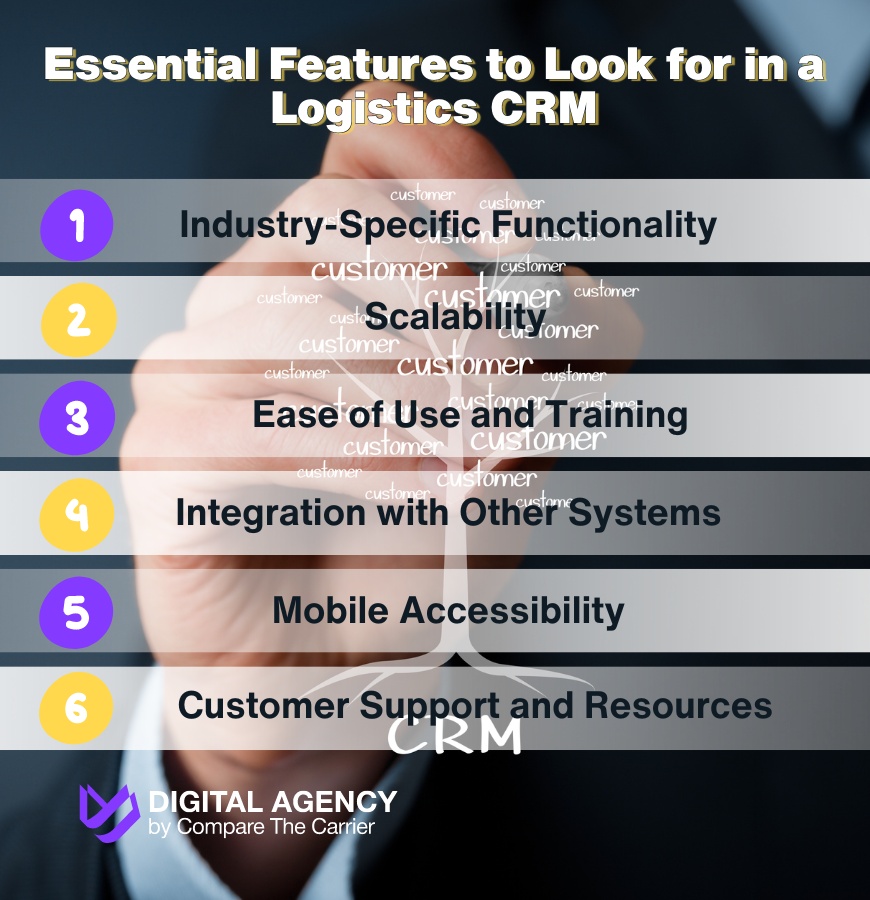
Industry-Specific Functionality: This is non-negotiable. You need a CRM system that understands the ins and outs of the logistics and transportation industry. Look for features like:
Shipment Tracking and Visibility (Transportation CRM): Real-time tracking is a game-changer. Your customers will love it, and it’ll save you countless hours on the phone.
Rate Management and Quoting: Simplify your pricing process and get accurate quotes out the door faster. Look for a CRM that integrates with major rate bureaus and allows for custom pricing rules.
Carrier Integration (CRM software for transportation companies): Seamlessly connect with your carrier network to streamline communication, booking, and document exchange. This can drastically reduce manual data entry and minimize errors.
Document Management and Automation: Say goodbye to paper trails. Store all your important documents in one place, easily accessible from anywhere. Bonus points if the CRM can automate document generation (think bills of lading, invoices, etc.).
Reporting and Analytics: Knowledge is power. A good logistics CRM will provide robust reporting and analytics tools to help you track key performance indicators (KPIs), identify trends, and make data-driven decisions.
Scalability and Growth Potential: Don’t get stuck with a CRM that can’t keep up with your growing business. Make sure the system you choose can handle an increasing number of users, customers, and shipments without slowing down.
Ease of Use and Training: The last thing you need is a complicated system that takes forever to learn. Look for a CRM with an intuitive interface and user-friendly design. The vendor should also offer comprehensive training and support to get your team up to speed quickly.
Integration with Other Systems: Your CRM shouldn’t be an island. It should seamlessly integrate with your other business systems, like accounting software, ERP systems, and transportation management systems (TMS). This will eliminate data silos and ensure a smooth flow of information across your entire operation.
Mobile Accessibility: The logistics world doesn’t stop when you leave the office. Choose a CRM with a robust mobile app that lets you access your data, track shipments, and communicate with clients from anywhere.
Customer Support and Resources: Even the best CRM systems will occasionally throw you a curveball. Make sure the vendor offers excellent customer support, including online resources, training materials, and responsive technical assistance.

Remember, choosing the right CRM system is an investment in your business’s future. Take the time to carefully evaluate your options and don’t be afraid to ask for demos or trials before making a decision. The right CRM can be a game-changer, streamlining your operations, boosting your efficiency, and ultimately, driving your business towards greater success.

What’s In It for You? The Benefits of a Logistics CRM

A CRM system is the backbone of your lead generation efforts. By focusing on proper sales and marketing integration, you ensure that you’re not just attracting leads, but seamlessly transitioning them from marketing campaigns directly into your active sales pipeline.

Here’s how these systems supercharge your business:
Top Benefits of a Logistics CRM Don't Let Your Customers Slip Through the Cracks: CRM for Logistics Made Easy 5
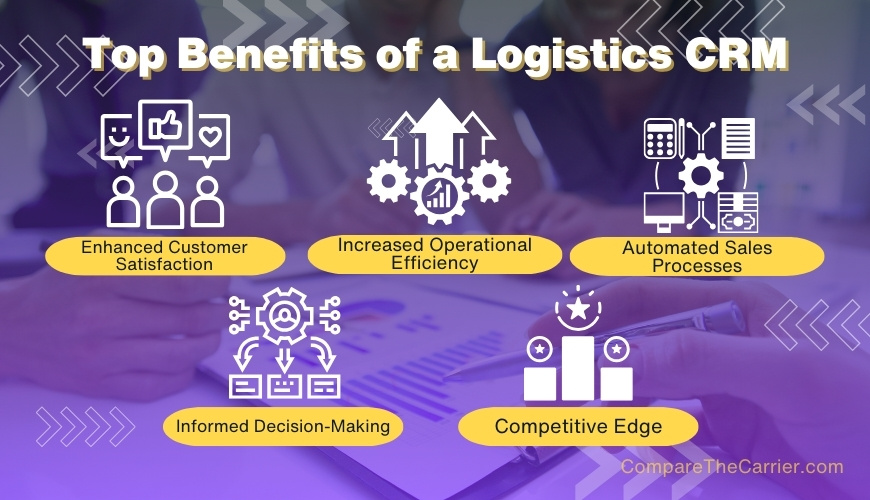
Happier Customers, More Repeat Business: With a logistics CRM, you can deliver a level of customer service that’ll make your competitors jealous. Imagine providing real-time shipment updates, personalized communication, and lightning-fast issue resolution. That kind of attention keeps customers coming back for more. According to Salesforce’s “State of the Connected Customer” report, 84% of customers say the experience a company provides is as important as its products or services.
Streamlined Operations, Boosted Productivity: Ditch manual data entry and frantic searching for lost paperwork. A study by Nucleus Research found that CRM systems can increase sales productivity by up to 34%.
Sales on Autopilot: A logistics CRM isn’t just about managing existing customers it’s about finding new ones. By utilizing targeted email marketing automation, you can nurture leads around the clock and close deals faster.
Data-Driven Decisions: Forget relying on gut instinct. A logistics CRM gives you a treasure trove of data that you can use to make informed decisions. See which marketing campaigns are working, identify your most profitable customers, and spot areas where you can optimize your operations. A report by McKinsey & Company found that data-driven organizations are 23 times more likely to acquire customers, six times as likely to retain customers, and 19 times as likely to be profitable as companies that aren’t. 
Competitive Advantage: In the cutthroat world of logistics and transportation, every advantage counts. A CRM system can give you the edge you need to stand out from the competition. By offering superior customer service, streamlined operations, and data-driven decision-making, you’ll be well-positioned for long-term success.

Investing in the best CRM for the logistics industry is like adding a turbocharger to your business. It’ll give you the speed, efficiency, and power you need to navigate the ever-changing landscape of the transportation world and come out on top.

CRM Implementation 101: Avoid These Common Pitfalls

So, you’ve found the best CRM for logistics industry that checks all the boxes.

Great!

But hold your horses before you dive headfirst into implementation. Rolling out a new CRM system can be a bumpy ride if you’re not prepared.

Rolling out a new CRM system can be a bumpy ride if you’re not prepared. Here’s how to make the transition smooth:
CRM Implementation 101: Avoid These Common Pitfalls
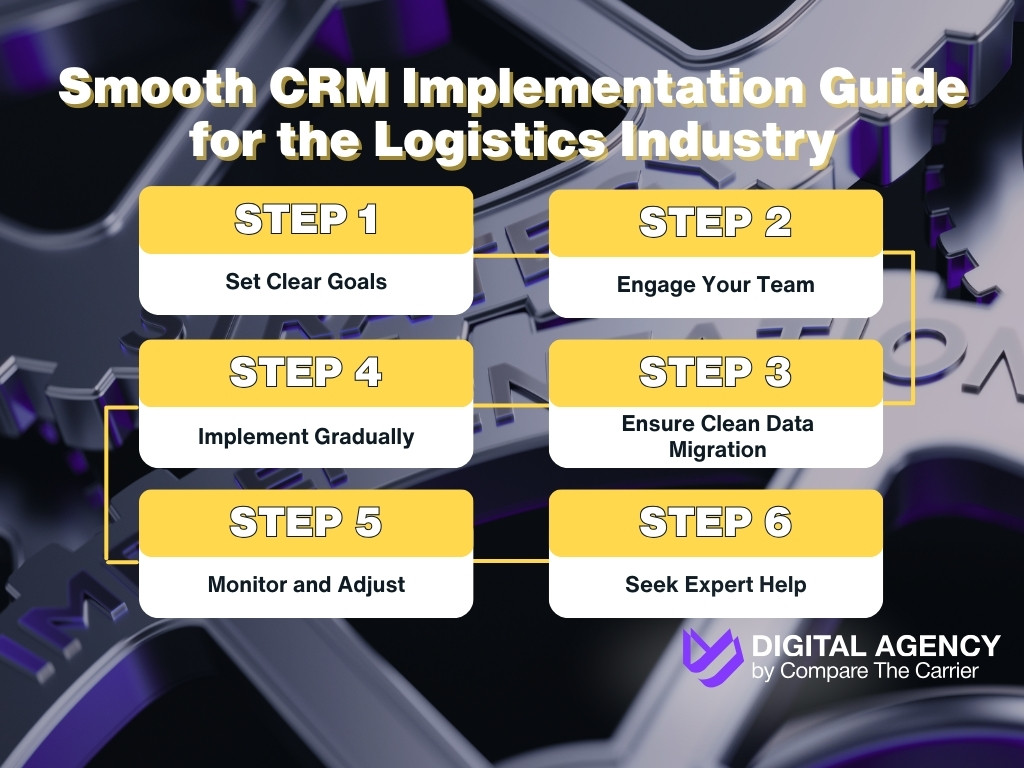
Set Crystal-Clear Goals: Don’t just implement a CRM because “everyone else is doing it.” What do you want to achieve? Increased sales? Improved customer satisfaction? Streamlined operations? Clearly define your goals upfront so you can measure the success of your CRM implementation. According to a study by Forrester, companies with well-defined CRM goals are 3.5 times more likely to achieve them.
Get Your Team On Board: A CRM system is only as good as the people using it. Beyond basic software onboarding, investing in dedicated logistics sales training helps your brokers understand how to leverage the new tool to close more freight.
Data Migration: A Clean Slate is Key: Don’t drag your messy data into your shiny new CRM. Take the time to clean up your customer records, eliminate duplicates, and ensure data accuracy. A HubSpot study found that companies with clean data see a 15% increase in lead conversion rates. Transitioning from cold calls to hot leads requires a well-structured approach, and a CRM can be the linchpin in converting potential customers into loyal clients.
Start Simple, Then Scale: Don’t try to implement every single feature of your CRM system at once. Start with the essentials that align with your immediate goals, then gradually add more functionality as your team gets comfortable. This phased approach will minimize disruptions and allow you to fine-tune the system as you go.
Track Your Progress: Regularly monitor your CRM’s performance and track your progress towards your goals. Are you seeing an increase in sales? Is customer satisfaction improving? Use the data from your CRM to make adjustments and optimize your processes. Remember, CRM implementation is an ongoing process, not a one-time event.
Don’t Go It Alone: If you’re feeling overwhelmed, don’t hesitate to seek help from experts. CRM consultants or implementation partners can guide you through the process, ensuring a successful rollout and maximizing the return on your investment. Compare The Carrier Digital Agency, for example, specializes in implementing CRM solutions for transportation companies and can provide tailored support to meet your specific needs.

By following these best practices and avoiding common pitfalls, you can set your CRM system up for success and reap the full benefits of this powerful tool.

Remember, a CRM is more than just software; it’s a strategic investment that can transform your logistics business.

Why Partner with Compare The Carrier for Your CRM Needs?

Choosing and implementing a CRM system is a big decision, and you don’t have to go it alone. That’s where Compare The Carrier Digital Agency comes in. We’re your one-stop shop for digital marketing and development solutions tailored specifically for the logistics industry.

For instance, our expertise in website systems development ensures your CRM communicates perfectly with your site, capturing every inbound lead without manual data entry.
implementing a CRM system is a big decision

Here’s how we can help you navigate the CRM landscape:

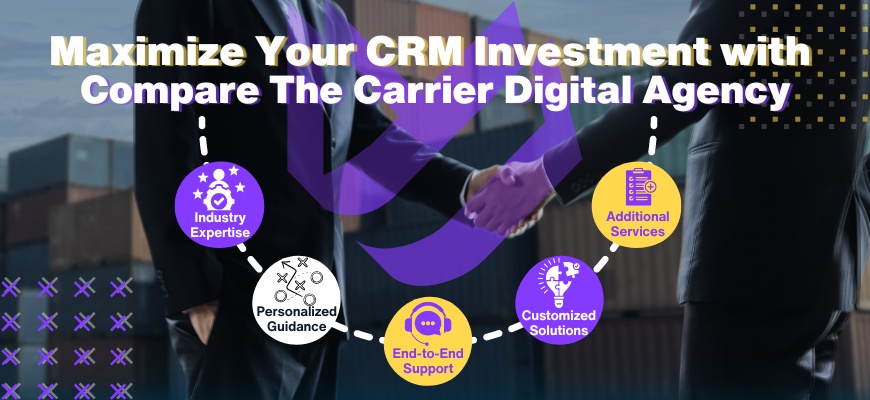
Industry Expertise: We know logistics inside and out. Our team understands the unique challenges and opportunities you face, and we can help you identify the CRM features that will make the biggest impact on your business.
Personalized Guidance: We don’t believe in one-size-fits-all solutions. We’ll take the time to understand your specific needs and goals, then recommend CRM systems that align with your budget and vision.
Comprehensive Support: From initial consultation to implementation and beyond, we’re here to support you every step of the way. We offer training, customization, and ongoing support to ensure you get the most out of your CRM investment.

Think of us as your trusted logistics advisor, guiding you through the CRM maze and helping you find the perfect path to success. In addition to CRM solutions, Compare The Carrier offers comprehensive logistics marketing services that can help you attract and retain customers. We’re committed to helping you leverage technology to streamline your operations, improve customer relationships, and drive your business forward.

Conclusion

Choosing the right CRM system for your logistics or transportation brokerage is a critical decision that can have a profound impact on your business. By carefully considering your needs, evaluating the available options, and partnering with experts like Compare The Carrier Digital Agency, you can harness the power of CRM to streamline your operations, enhance customer satisfaction, and propel your business towards greater success.

Remember, a CRM system isn’t just a software tool; it’s a strategic investment in your company’s future. With the right system in place and a commitment to continuous improvement, you can transform your business, stay ahead of the competition, and achieve your long-term goals.

If you’re ready to take the next step, don’t hesitate to reach out to Compare The Carrier Digital Agency. We’re here to help you unlock the full potential of your logistics business.

FAQ

What are the best CRM software options for transportation companies in 2026?

In 2026, top-rated logistics CRMs include Salesforce, HubSpot, Zoho CRM, Magaya, and Descartes. The best choice depends on specific brokerage needs. Modern platforms now integrate AI-driven freight matching, real-time API carrier connections, and automated TMS synchronization, making them vastly superior to legacy spreadsheet-based tracking methods.

How much does it cost to implement a logistics CRM system?

Logistics CRM implementation costs vary widely based on user count and API integrations. Basic cloud-based subscriptions start around $50–$150 per user monthly. Enterprise-level rollouts, which include custom TMS integrations, automated workflow setup, and data migration from legacy systems, typically require an upfront investment ranging from $5,000 to over $20,000.

How long does it take to implement a CRM in a freight brokerage?

The timeline for a logistics CRM implementation usually ranges from four to twelve weeks. Simple out-of-the-box setups for small brokerages can take under a month. However, enterprise deployments requiring custom API bridges to existing Transportation Management Systems (TMS), historical data migration, and comprehensive staff training require three to four months.

How does AI in a logistics CRM optimize freight operations?

Modern CRMs use AI to analyze historical shipping data, predict seasonal capacity crunches, and automate rate quoting. Predictive analytics instantly highlight inefficient routes, identify high-margin shippers, and trigger automated follow-up emails based on customer engagement. This eliminates manual data analysis and allows brokers to focus exclusively on closing profitable loads.

Can a logistics CRM integrate directly with a TMS?

Yes, seamless TMS integration is a standard requirement for logistics CRMs in 2026. Connecting a CRM with a Transportation Management System ensures that lead generation, rate quoting, dispatching, and invoicing happen in a unified workflow. This bi-directional data sync prevents double data entry, reduces costly administrative errors, and accelerates delivery cycles.

Review us on Trustpilot
0 0 votes
Article Rating
Subscribe
Notify of
guest
0 Comments
Oldest
Newest Most Voted
Inline Feedbacks
View all comments
Pass It Along!

If you found this article useful, share it with your friends