Brokerage Growth Strategies: Supercharge Your Marketing in 2026
Unlock explosive brokerage growth in 2026. Get the inside...
12 March 2024
Struggling to see results from your marketing efforts? Discover the common pitfalls and solutions to transform your strategy and achieve logistics success.
Contact Us Now
You’ve invested time, money, and effort into marketing your logistics business, yet the results are underwhelming. Leads are trickling in, your brand isn’t getting the recognition it deserves, and you’re starting to wonder if your marketing is actually anti-marketing.
Sound familiar?
You’re not alone. Marketing in the logistics industry comes with its own unique set of challenges, from navigating a complex B2B landscape to reaching a niche audience. But the truth is, ineffective marketing isn’t inevitable.
This guide is your roadmap to marketing success. We’ll dissect the common pitfalls that plague logistics companies, arm you with proven strategies to overcome them, and introduce you to Compare The Carrier Digital Agency your secret weapon for maximizing marketing effectiveness.
Whether you’re a seasoned logistics veteran or just starting out, this article will equip you with the knowledge and tools you need to transform your marketing from a cost center to a profit driver.
Get ready to say goodbye to guesswork and hello to a marketing strategy that truly delivers.
Listen, I get it. You’re in the logistics game, not the marketing game. But in today’s world, if you’re not marketing smart, you’re falling behind. So, let’s cut the fluff and dive into the five most common reasons your logistics marketing isn’t hitting the mark:
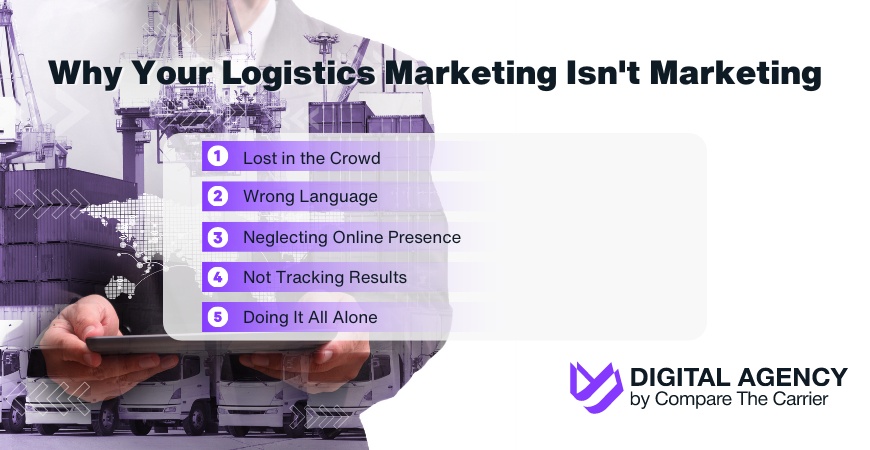
The logistics market is saturated. Everyone’s talking about on-time delivery, competitive rates, and global reach. If your message sounds like everyone else’s, why should a potential customer choose you?
You need a USP – the one thing that makes your business stand out from the crowd.
A recent study by Logistics Management (Council of Supply Chain Management Professionals) found that 72% of shippers consider a provider’s reputation and brand image when making purchasing decisions. If your brand isn’t differentiated, you’re missing out on a huge opportunity.
Are you targeting small e-commerce businesses that need affordable shipping, or multinational corporations with complex supply chain needs? Your marketing message needs to resonate directly with your target audience. Generic marketing simply won’t cut it anymore.
In 2026, a strong online presence is non-negotiable. If you’re not investing in search engine visibility, you’re missing out on high-intent organic traffic. 93% of online B2B experiences begin with a search engine.
Marketing is an investment. Are your campaigns generating leads? Are those leads converting? Without data, you’re flying blind. Companies that strictly track their marketing ROI are 1.6x more likely to exceed their revenue goals.
To understand the difference between lead generation and overall marketing efforts, read our in-depth comparison in Lead Generation vs. Marketing.
Marketing is a complex beast, and it’s easy to get overwhelmed. If you’re wearing too many hats, your marketing is likely to suffer.
Outsourcing your marketing can save you time and money, and it gives you access to specialized expertise you may not have in-house.
Remember, marketing is an ongoing process. It requires constant attention, analysis, and adaptation. But by addressing these common pitfalls, you can put your logistics marketing on the fast track to success.
So, we’ve identified the pitfalls. Now, let’s pave the road to success. Here are the marketing plays that are scoring big for logistics companies today:
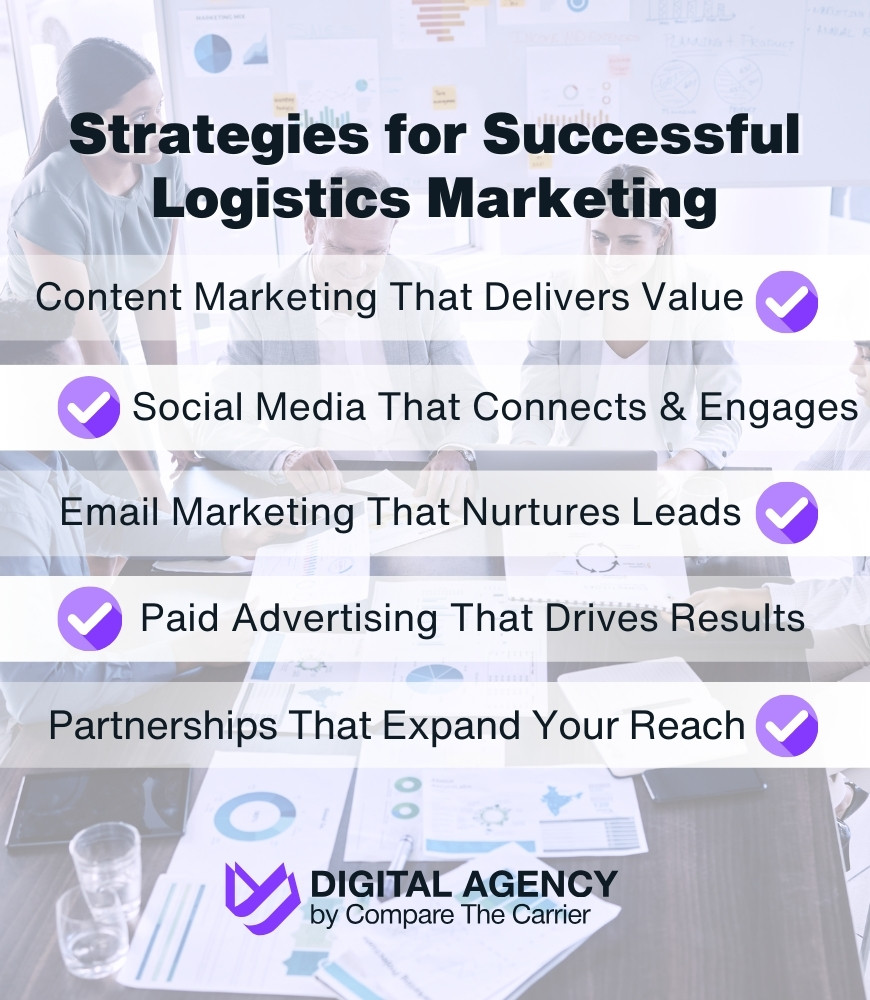
These strategies aren’t just theories; they’re real-world tactics that are moving the needle for logistics companies right now. By focusing on delivering value, building relationships, and utilizing the right tools, you can transform your marketing from a struggle into a strength.
Alright, you’ve got your marketing strategies firing on all cylinders. But how do you know if they’re actually working?
You need to measure your marketing effectiveness. Forget vanity metrics like social media likes and website traffic. Focus on the numbers that actually move the needle for your logistics business:
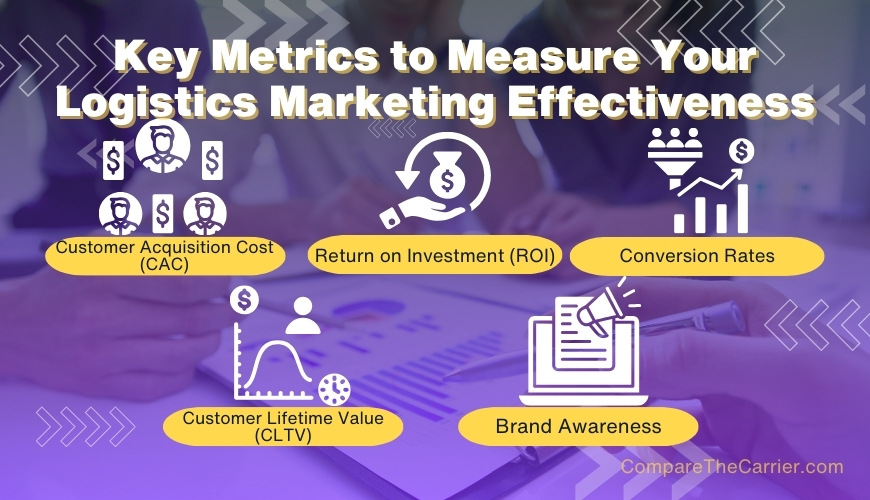
Don’t get overwhelmed by data overload. Start by tracking a few key metrics that align with your business goals. Use a marketing analytics platform or dashboard to make it easy to visualize your progress.
Remember, data is your friend. It tells you what’s working, what’s not, and where you need to make adjustments. By regularly measuring your marketing effectiveness, you can stay on track and achieve your desired results.
Let’s be real, marketing isn’t easy. It’s a full-time job, and if you’re busy running a logistics company, you probably don’t have the time or expertise to do it all yourself. That’s where we come in.
Compare The Carrier Digital Agency is your one-stop shop for logistics marketing solutions.
We’re not just another agency; we’re industry insiders who understand the unique challenges and opportunities facing logistics companies. We’ve helped countless businesses like yours overcome marketing challenges and achieve real results.
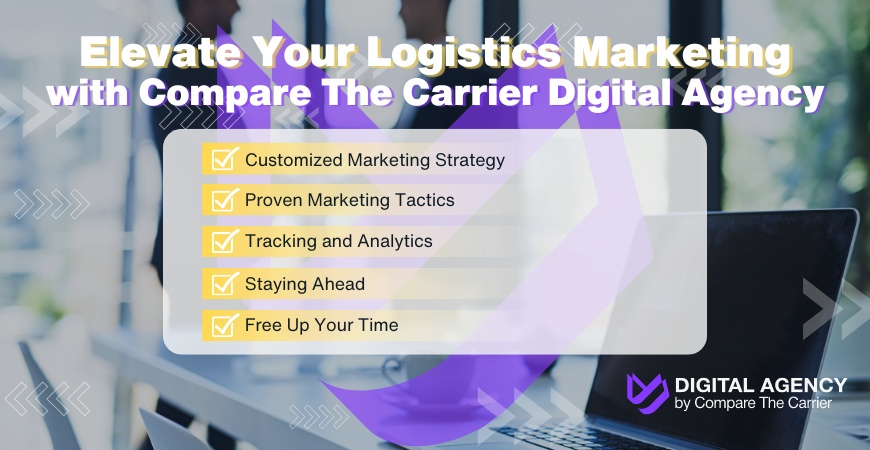
Here’s how we can help you:
We understand that every business is unique, which is why we offer flexible and scalable marketing solutions to fit your specific needs and budget. Whether you need a complete marketing overhaul or just a little help with specific areas, we’re here to support you.
Don’t let marketing be a roadblock to your success. Contact Compare The Carrier Digital Agency today to learn more about how we can help you achieve your marketing goals and drive your business forward.
Don’t let ineffective marketing weigh down your logistics business. By understanding the common pitfalls and implementing proven strategies, you can transform your marketing into a powerful growth engine.
Remember, marketing isn’t a one-and-done deal. It’s an ongoing process that requires constant attention and optimization. But with the right approach and the right partner, you can achieve the results you’ve been dreaming of.
So, what are you waiting for?
Ready to take control of your marketing?
Download our Free Logistics Marketing Plan to get started on the path to success.
In 2026, logistics and transportation companies typically allocate between 7% and 10% of their overall gross revenue to marketing. The exact budget depends on growth goals, company size, and the specific B2B market. Fast-growing third-party logistics (3PL) providers often spend closer to 10% to capture market share through aggressive digital acquisition and technology-driven campaigns.
Search engine optimization (SEO) and targeted paid advertising (PPC) consistently deliver the highest ROI for logistics companies. Because B2B freight decisions are intent-driven, ranking for specific supply chain queries captures active buyers. Additionally, automated email marketing and LinkedIn outreach are highly effective for nurturing long-term carrier and shipper relationships.
Artificial intelligence transforms logistics marketing by enabling predictive analytics, hyper-personalized email campaigns, and automated lead scoring. In 2026, AI tools allow marketers to analyze complex supply chain data to forecast shipper demand. This ensures promotional efforts target the right audiences precisely when they need freight or warehousing capacity.
Social media, particularly LinkedIn, functions as a primary networking and brand authority tool in the B2B logistics sector. It allows freight brokers and carriers to share industry insights, highlight operational capabilities, and directly engage with supply chain decision-makers. Consistent, data-backed social content builds trust and shortens the complex B2B sales cycle.
Success is measured using strict financial and performance metrics rather than vanity engagement. The most critical key performance indicators (KPIs) include Customer Acquisition Cost (CAC), Return on Ad Spend (ROAS), and Customer Lifetime Value (CLTV). Tracking the conversion rate of website visitors to qualified freight quotes provides the clearest picture of campaign effectiveness.
An optimized logistics website must feature lightning-fast load speeds, mobile responsiveness, and clear technical SEO structures. Content should focus on specific operational capabilities, such as temperature-controlled shipping or last-mile delivery. High-converting sites also include intuitive user interfaces, frictionless quote request forms, and transparent tracking portals to satisfy immediate user intent.








Select the category you need
Partner with Compare The Carrier & Grow!
We're open to collaborations, partnerships, and mutual growth! Whether you're an individual or a business, we offer exciting opportunities to work together. Fill out the form below to explore how we can collaborate.
Something Went Wrong
We're sorry, but something went wrong. Please briefly describe the problem you experienced in the text area below. Providing your contact information will allow us to follow up if needed.

Thank you,
your form has been accepted.
Your form has been successfully submitted. We appreciate your effort — our team will review it shortly and take the next steps.