Brokerage Growth Strategies: Supercharge Your Marketing in 2026
Unlock explosive brokerage growth in 2026. Get the inside...
12 March 2024
Stuck in logistics limbo? Don’t let “zero clients” be your final destination. This guide is your GPS to a booming client base – fast-track your logistics business to success.
Contact Us Now
So, you’ve launched your logistics business. Congratulations! You’ve got the trucks, the warehouses (maybe), and the ambition. But where are those first clients for logistics business?
Don’t worry, they’re not hiding in a cargo container halfway across the globe. They’re closer than you think, and we’re here to help you find them. This isn’t your average “how to get clients” article. We’re diving deep into the strategies that actually work for logistics companies – the marketing moves, the networking magic, and even how we can help you accelerate your growth.
Forget generic advice; this is your roadmap to landing those first crucial clients and setting your logistics business on the fast track to success. It’s time to crack the code of marketing for logistics companies to succeed in the logistics industry!
Before you can start hauling in those first clients for logistics business, you gotta know who you’re hauling for. It’s about smart targeting – understanding your niche, keeping up with industry trends, and knowing your customers inside and out.
Logistics is a massive industry, valued at over $9.8 trillion globally in 2022 and projected to reach $16.8 trillion by 2032 (Allied Market Research). To stand out, you need to carve out your own space. Are you a freight forwarding pro? A warehousing wizard? Or perhaps you specialize in cold chain logistics? Defining your niche is the first step to finding the right clients. If you aren’t sure which sector in your region is most profitable, professional Growth Opportunities Research can pinpoint exact market gaps.
The logistics industry is always evolving. New technologies and supply chain disruptions are changing the game. Stay informed through industry publications. This knowledge will help you tailor your services to meet current and future client needs.
This is where you get into your customers’ heads. Create detailed profiles: Industry, Size, Location, and Pain Points. By understanding your ideal clients inside and out, you can craft targeted marketing messages and sales pitches that speak directly to their needs.
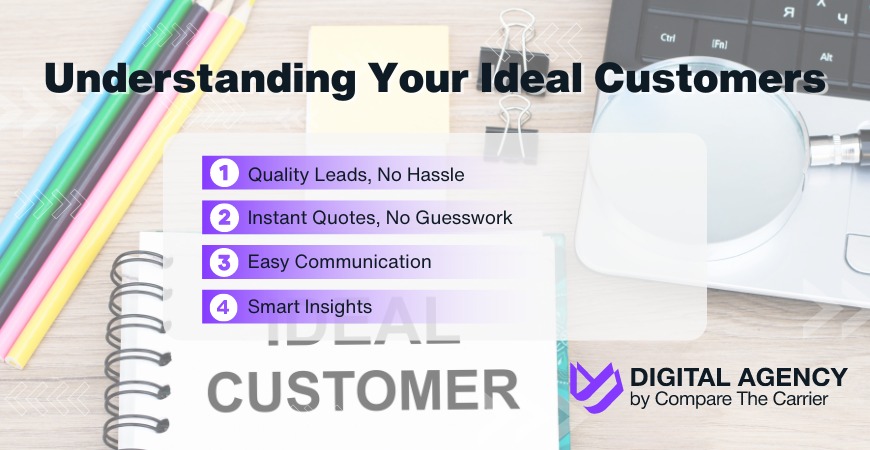
By understanding your ideal clients inside and out, you can craft targeted marketing messages and sales pitches that speak directly to their needs. This isn’t just guesswork, it’s strategic planning that’ll make your client acquisition efforts way more effective.
In the logistics game, your brand is your calling card. It’s what sets you apart from the sea of other carriers vying for clients. Here’s how to build a brand that attracts those first clients:
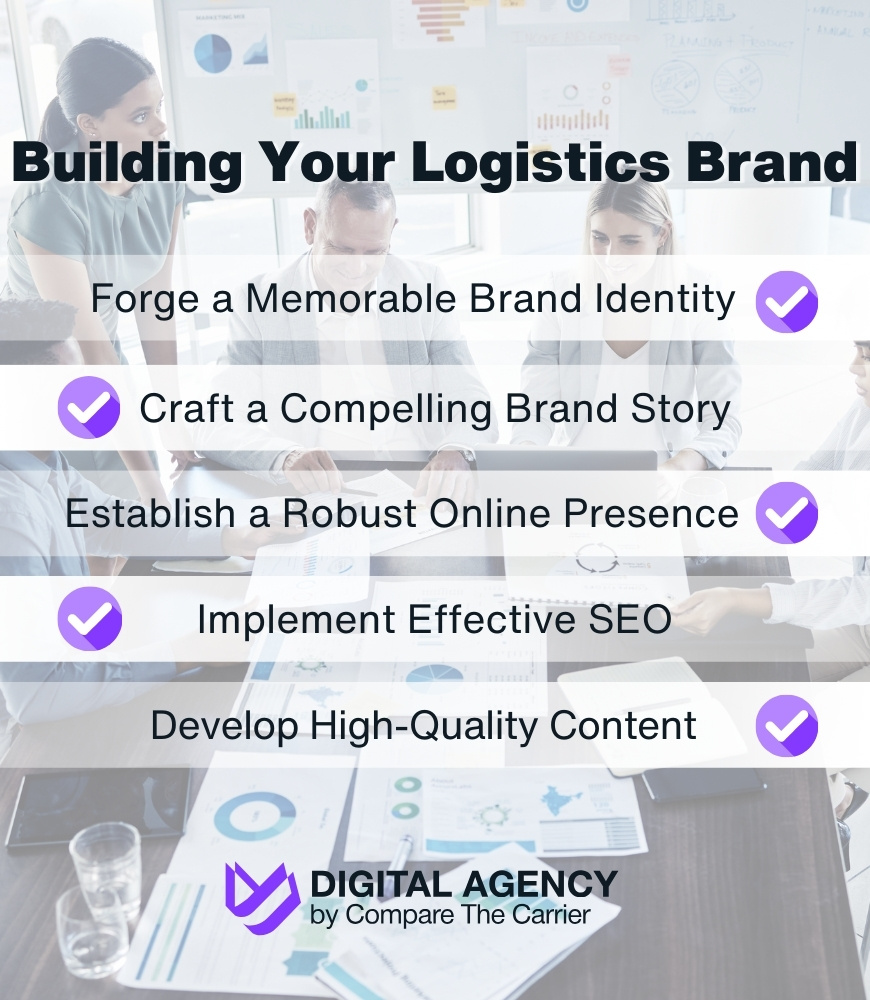
Here’s how to build a brand that attracts those first clients and keeps them coming back for more:
If you’re unsure where to start with content creation or need help refining your strategy, explore our guide on Marketing for Brokerage Growth, which offers valuable insights on content that resonates with potential clients.
By strategically building your brand, you create a powerful asset that attracts, engages, and retains clients. Remember, brand building is an ongoing process that requires consistent effort and adaptation. By focusing on these key areas, you can establish a logistics powerhouse that thrives in the competitive market.
If you’re looking for expert help in crafting your brand identity and digital strategy, consider partnering with one of the top digital agencies specializing in logistics.
Alright, you’ve got your brand spick and span, now it’s time to let the world know you’re open for business. And in today’s world, that means going digital. Digital marketing is your megaphone to reach those first clients, build a pipeline of leads, and ultimately increase sales in your logistics business.
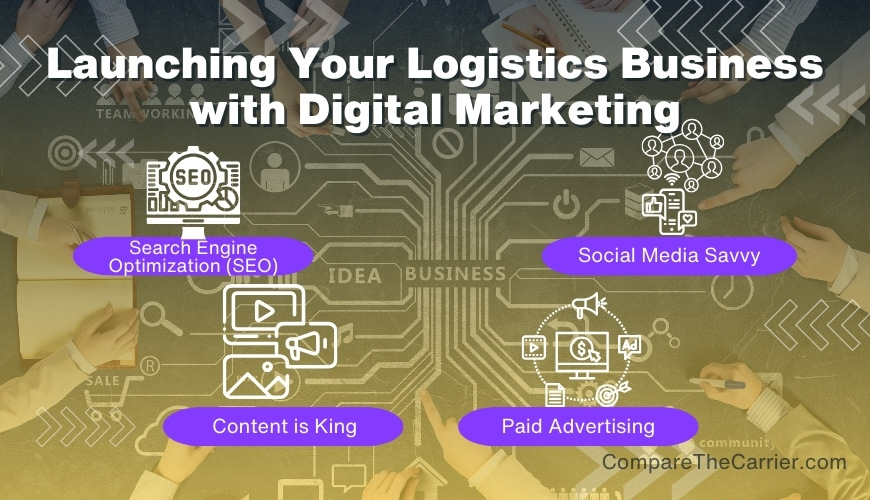
Remember, digital marketing is an ongoing process. You need to constantly monitor your results, tweak your strategies, and adapt to the ever-changing digital landscape. But with a solid digital marketing plan in place, you’ll be well on your way to attracting those first clients and building a thriving logistics business.
Keep in mind, folks, the goal here is to use digital marketing to get your brand in front of the right people, build relationships, and ultimately convert those leads into paying customers. It’s a powerful tool, so use it wisely and watch your business grow.
It’s not just about generating leads; it’s about nurturing those leads into paying customers.
Our article on Lead Generation vs. Marketing offers more insights on this topic.
Alright, let’s talk about the good ol’ handshake. In the logistics biz, it’s not just about who you know, but who knows you. Networking is how you get your foot in the door, build trust, and ultimately land those first few clients that’ll get your logistics business rolling.
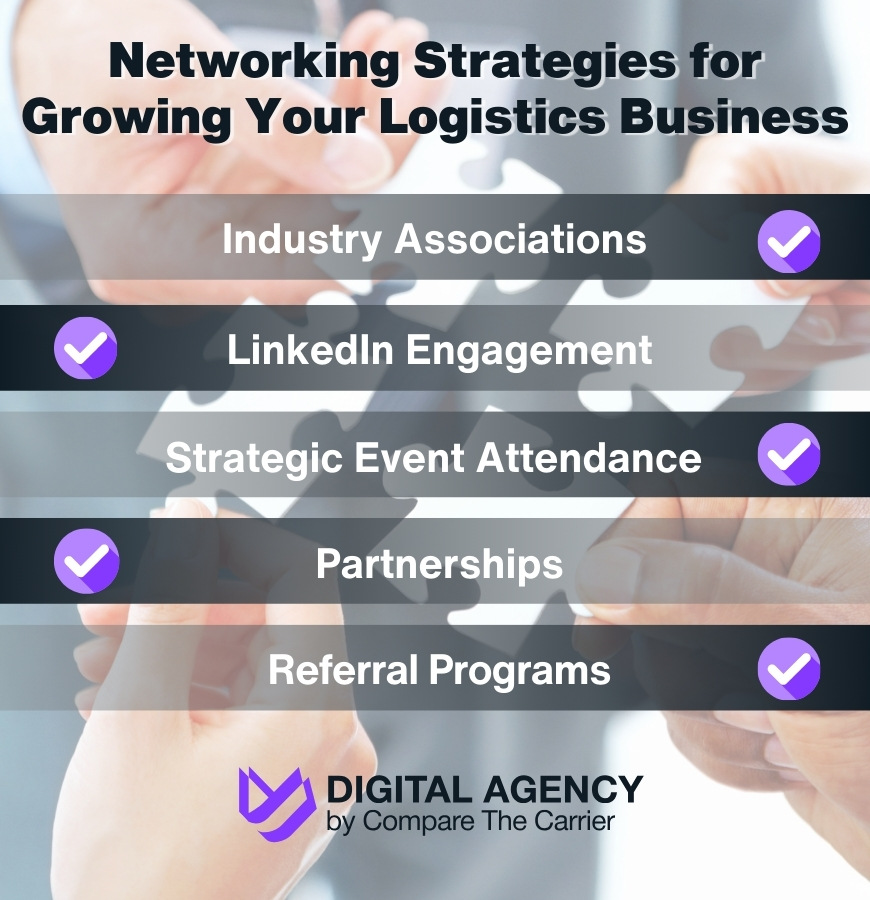
Remember, networking is about building relationships, not just collecting business cards. Be genuine, be helpful, and be memorable. You never know who you might meet that could lead to your next big client. And with the right connections, you’ll be well on your way to growing your logistics business.
You’ve built your brand and got some leads trickling in. Now it’s time to close the deal. If your team is struggling to convert leads into contracts, utilizing professional Logistics Sales Training can drastically improve your closing rates.
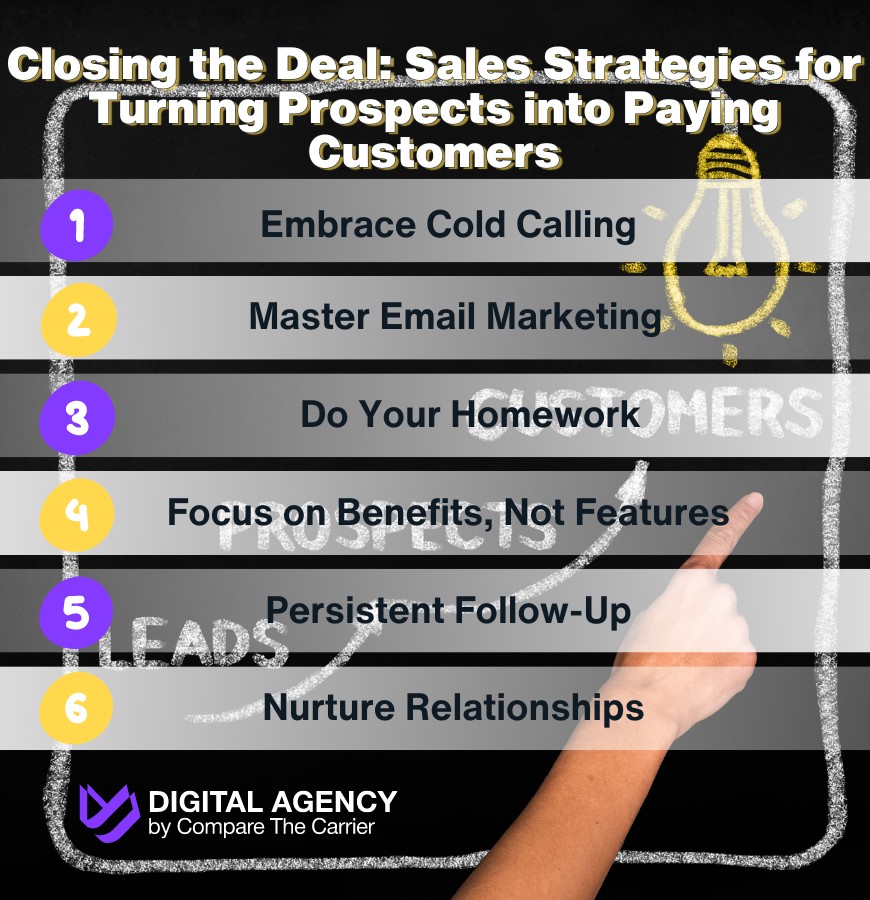
Remember, selling is about more than just closing the deal. It’s about building trust, establishing credibility, and demonstrating your value. By following these tips and putting in the hard work, you’ll be well on your way to growing your logistics business and achieving your sales goals.
Alright, you’ve been hustling to get those first clients for your logistics business. You’ve networked, marketed, pitched, and maybe even closed a few deals. Now, it’s time to take a step back and measure your progress.
Why?
Because in business, what gets measured gets managed.
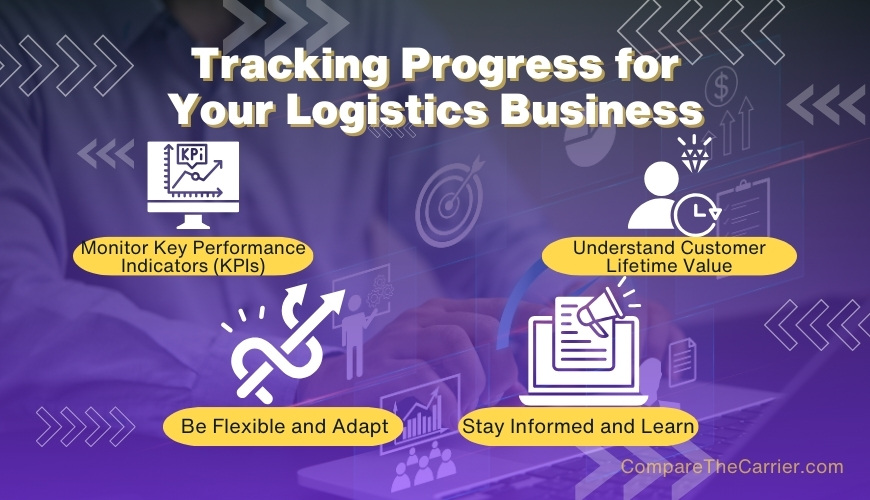
Remember, measuring your success isn’t just about vanity metrics. It’s about understanding what drives your business and making data-driven decisions that will help you grow. So, keep track of your numbers, stay informed, and be willing to adapt. With a little bit of effort and a whole lot of hustle, you’ll be well on your way to building a successful logistics business.
Listen, I know starting a logistics business is tough. You’re wearing all the hats – dispatcher, salesman, marketer, and everything in between. But you don’t have to go it alone. That’s where Compare The Carrier Digital Agency comes in. We’re not just a platform for comparing carriers; we’re a team of logistics experts and marketing pros who know how to get your business in front of the right people.
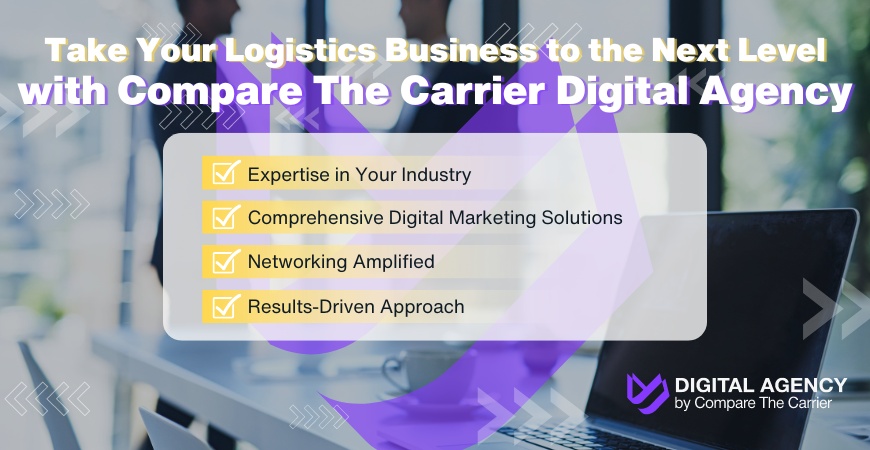
So, if you’re ready to take your logistics business to the next level, give Compare The Carrier a call. We’ll help you navigate the complexities of client acquisition and set you on the path to success.
Alright, folks, we’ve covered a lot of ground. From understanding your target market to building a killer brand, mastering digital marketing, networking like a pro, and closing deals, we’ve given you the roadmap to finding those first clients and growing your logistics business.
Remember, success in this industry doesn’t happen overnight. It takes hard work, perseverance, and a willingness to adapt. But with the right strategies and the support of partners like Compare The Carrier Digital Agency, you can overcome any obstacle and achieve your entrepreneurial dreams.
So, what are you waiting for? It’s time to hit the gas and start building your logistics empire. Your success story starts now.
Start by leveraging your immediate network and sub-contracting for larger, established freight brokerages. In 2026, many new carriers secure initial loads through specialized load boards or by targeting local manufacturers that require dedicated regional runs, rather than competing immediately for highly saturated cross-country lanes.
Search Engine Optimization (SEO) combined with highly targeted B2B LinkedIn outreach yields the highest return on investment. Optimizing your website for specific niche keywords, such as “refrigerated transport in [City],” captures high-intent traffic from shippers actively searching for specialized capacity to move their freight.
Small logistics providers win by offering hyper-specialized services and dedicated customer support. Instead of generalizing, focus on a specific niche, such as pharmaceutical cold chain or heavy-haul equipment transport. Shippers often prefer smaller carriers for high-value freight because they guarantee direct communication and customized handling.
The most effective strategy is a consultative, data-driven sales approach. Before pitching, analyze the shipper’s potential supply chain bottlenecks. Present a tailored solution that explicitly demonstrates how your services will reduce their deadhead miles, lower warehousing costs, or significantly improve their on-time delivery (OTD) metrics.
AI drastically accelerates client acquisition by automating lead qualification and predictive outreach. Modern CRM platforms utilize AI to analyze historical shipping cycles, triggering outreach alerts exactly when a prospect is most likely to experience capacity shortages, allowing brokers to pitch services at the precise moment of need.
Essential metrics include Customer Acquisition Cost (CAC), Lead-to-Close Ratio, and Customer Lifetime Value (CLV). For logistics, tracking the average volume of loads per newly acquired client during their first quarter is also critical to determine if the acquisition efforts are bringing in high-value, recurring business.











Select the category you need
Partner with Compare The Carrier & Grow!
We're open to collaborations, partnerships, and mutual growth! Whether you're an individual or a business, we offer exciting opportunities to work together. Fill out the form below to explore how we can collaborate.
Something Went Wrong
We're sorry, but something went wrong. Please briefly describe the problem you experienced in the text area below. Providing your contact information will allow us to follow up if needed.

Thank you,
your form has been accepted.
Your form has been successfully submitted. We appreciate your effort — our team will review it shortly and take the next steps.