

Do Car Modifications Increase Value? What Helps and What Hurts Resale
Most car modifications decrease a vehicle's resale value ...
17 March 2026
The automotive landscape of 2026 has made one thing clear: you don’t need to go full electric to save a fortune at the pump. Hybrids have officially become the “sensible middle ground,” offering the long-range reliability of gas with the city-sipping efficiency of electricity.
Calculate Shipping Quotes
The most fuel-efficient hybrid cars for 2025 and 2026 are the Toyota Prius (57 mpg), Hyundai Elantra Hybrid (54 mpg), and Toyota Camry (51 mpg). For those seeking utility, the Kia Niro (53 mpg) leads the hybrid SUV segment. These vehicles maximize gas mileage by combining efficient internal combustion engines with electric motors, significantly reducing fuel costs and emissions without the need for frequent charging.
Let’s be honest: while everyone was talking about EVs a few years ago, hybrids were quietly hitting the gym. In 2026, we’ve reached a point where hybrid technology is no longer a “niche” choice for eco-warriors it’s the standard for anyone who values their bank balance. The secret sauce? Modern hybrids (HEVs) and Plug-in Hybrids (PHEVs) have refined their transitions so much that you’ll barely notice when the gas engine kicks in.
Whether you’re looking for a sleek commuter or a family-hauling SUV, the “MPG penalty” for size has shrunk dramatically. If you are looking for these models across the country, it is a good idea to compare best online car buying platforms to find the best nationwide inventory.
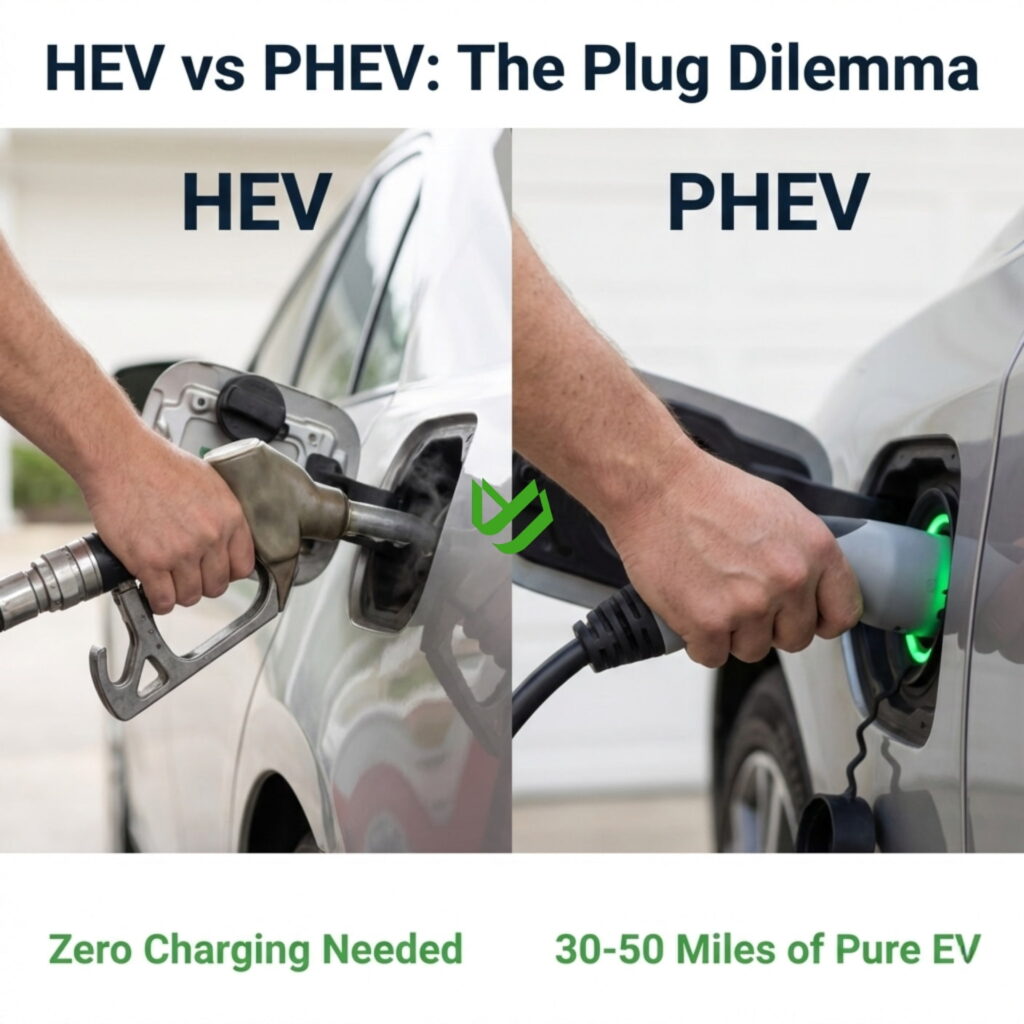
Before we dive into the rankings, let’s clear up the jargon.
If your primary goal is to see the gas station as rarely as possible, the sedan remains king. Aerodynamics play a massive role here lower to the ground means less wind resistance and higher MPG.
The Prius is practically synonymous with fuel economy, but the 2026 model has shed its “boring” reputation. It’s surprisingly quick and legitimately stylish.
Hyundai has been nipping at Toyota’s heels for years, and the Elantra Hybrid is a masterclass in value.
For 2025/26, the Camry is now hybrid-only. Getting 51 MPG in a car this spacious is a game-changer for families. If you find a great deal on a Camry in a distant state, you can use cross country auto transport to bring it to your driveway without adding thousands of miles to the odometer.
| Model | Combined MPG | Base Price (Est.) | Best Feature |
| Toyota Prius | 57 | $29,745 | Peak Efficiency & Performance |
| Hyundai Elantra Hybrid | 54 | $26,695 | Best Tech for the Money |
| Toyota Camry | 51 | $30,195 | Interior Space & Reliability |
| Honda Civic Hybrid | 49 | $30,490 | Driving Dynamics/Torque |
| Honda Accord Hybrid | 48 | $34,850 | Premium Interior Feel |
Honda fans rejoiced when the Civic Hybrid returned for 2025. It’s a slightly different beast than the Prius. While Toyota focuses on maximum efficiency, Honda focuses on torque.
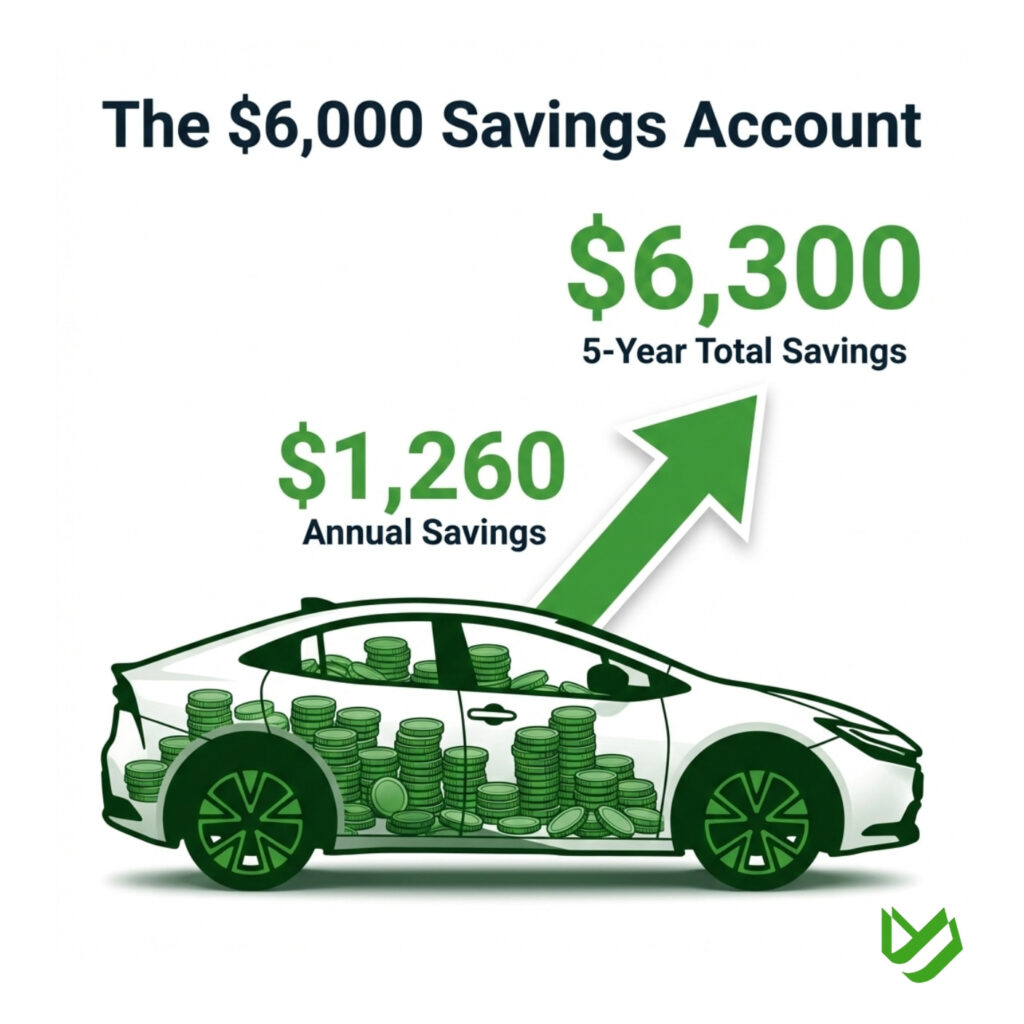
In 2026, the average American drives about 14,000 miles a year. In a standard gas SUV getting 25 MPG, you’re spending roughly $2,240 a year on gas (at $4.00/gallon). In a Prius getting 57 MPG, that number drops to $982.
That is over $1,200 in annual savings. Over a five-year loan, that hybrid isn’t just a car it’s a $6,000 savings account.
For a long time, the phrase “fuel-efficient SUV” was a bit of an oxymoron. If you wanted the high seating position and the cargo space, you simply accepted the “SUV tax” at the gas pump. In 2026, that compromise has officially disappeared. Modern hybrid SUVs and luxury crossovers are now hitting numbers that were reserved for tiny hatchbacks just a few years ago.
The most fuel-efficient hybrid SUV for 2026 is the Kia Niro Hybrid, delivering an industry-leading 53 MPG combined. For buyers requiring all-weather capability, the Toyota Corolla Cross Hybrid offers 42 MPG combined with standard all-wheel drive (AWD). These vehicles bridge the gap between family utility and extreme fuel economy, often exceeding 500 miles of total driving range on a single tank.
The Kia Niro doesn’t just lead the hybrid SUV class; it dominates it. By utilizing a highly optimized 1.6-liter four-cylinder paired with a smooth dual-clutch transmission, it avoids the “rubber band” feel common in some hybrids.
If the Niro is the city specialist, the Corolla Cross Hybrid is the suburban workhorse. Toyota’s fifth-generation hybrid system here is “nuclear bombproof” and comes standard with electronic AWD.
These models use a 1.6L Turbo engine, designed to feel “normal” while still delivering 38–43 MPG. If you’re upgrading from a larger, thirstier vehicle like an RV, check out the best RV shipping companies if you need to move your old rig while settling into your new hybrid SUV.
In the luxury segment, efficiency used to be secondary to leather and lumber. But in 2026, luxury buyers are looking for “Stress-Free Ownership.” That means fewer stops at the station and a silent cabin.
The Lexus UX 300h is the most fuel-efficient luxury crossover on the market today. It shares its DNA with the Prius but wraps it in a shell of acoustic glass and NuLuxe leather.
If you prefer a sedan, the Lexus ES 300h remains the benchmark for refined efficiency.
For many 2026 buyers, the Plug-in Hybrid (PHEV) is the ultimate goal. If you can charge at home, these vehicles function as EVs for your daily errands and gas hybrids for your weekend trips.
Human Perspective: If your daily commute is under 30 miles, a PHEV like the RAV4 Prime means you might only visit a gas station four times a year. However, if you can’t charge at home or work, stick with the standard Hybrid (HEV). You’ll save $5,000 on the purchase price and get better gas-only mileage.
The average hybrid battery in 2026 is designed to last between 150,000 and 200,000 miles, which for most drivers, translates to roughly 12 to 15 years of service. Thanks to plummeting lithium-ion and LFP (Lithium Iron Phosphate) costs, battery pack prices have dropped to approximately $80 per kWh this year, nearly 50% less than in 2023. If a replacement is eventually needed, it is no longer a “total loss” scenario for the vehicle’s value.

Most hybrid “failures” aren’t actually dead batteries, they are cooling issues. In 2026, we’ve learned that the secret to a 200,000-mile hybrid is a clean air filter for the battery fan. Modern hybrids like the Toyota Prius and Honda Civic now feature easily accessible battery cooling filters that you can clean yourself in five minutes.
Furthermore, the secondary market for “remanufactured” packs has exploded. Instead of buying a brand-new $4,000 unit from a dealer, specialty shops can now swap individual faulty cells for a fraction of the cost, often under $1,500.
It’s the dirty little secret of the hybrid world: your 57 MPG Prius will not get 57 MPG in a January blizzard. In 2026, we’ve quantified the “Winter Hit,” and it’s significant but manageable.
When the temperature drops below freezing, a hybrid’s fuel economy can decrease by 20% to 40% in city driving. This happens for two main reasons:
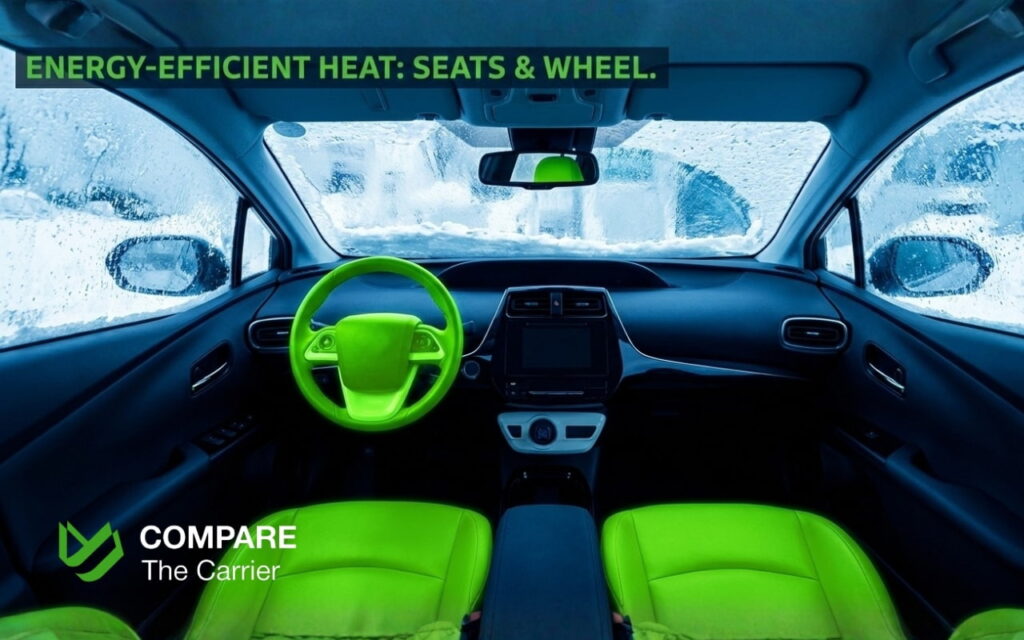
The Fix: Use your heated seats and heated steering wheel instead of the cabin’s air heater. They consume significantly less energy, allowing the engine to stay in “EV Mode” longer even on cold mornings.
After thousands of miles of testing and analyzing the 2026 search and sales data, we’ve narrowed the field down to the absolute best value-for-money hybrids currently on the road.
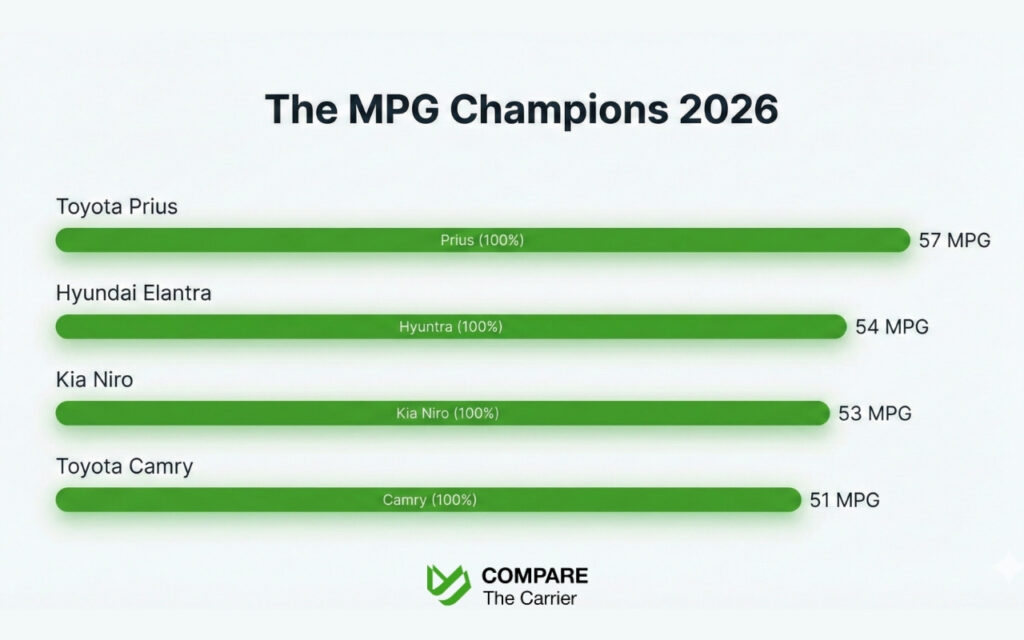
In 2026, the “best” hybrid isn’t just the one with the highest number on the window sticker. It’s the one that fits your driving reality. If you’re a city-based Uber driver, that 53 MPG Kia Niro will change your life. If you’re a highway cruiser, the 51 MPG Camry is your best friend. Whether you buy a car on Amazon or visit a local dealer, the era of “hybrid compromise” is over.
The era of “hybrid compromise” is over. We’ve entered the era of hybrid dominance.
The 2026 Toyota Prius is the most fuel-efficient hybrid on the market, achieving up to 57 MPG combined in its base LE trim. It utilizes a highly refined fifth-generation hybrid system and aerodynamic styling to outperform all other non-plug-in vehicles. For midsize sedan buyers, the Toyota Camry Hybrid is the runner-up at 51 MPG combined.
In 2026, the cost of a hybrid battery replacement has dropped significantly to between $1,500 and $3,500, depending on the model and whether you choose a remanufactured or new OEM pack. With battery cell prices now averaging $80/kWh, replacing a battery is often more cost-effective than major engine repairs on a traditional gasoline vehicle.
Yes, hybrid vehicles typically see a 20% to 40% drop in fuel economy during winter months. This is primarily due to the engine running more frequently to generate cabin heat and the reduced efficiency of the battery in cold temperatures. Using heated seats instead of the climate control’s air heater can help mitigate some of this efficiency loss.
Most 2026 hybrid batteries are projected to last between 150,000 and 200,000 miles or roughly 10 to 15 years. Manufacturers like Toyota and Kia now offer standard 10-year/150,000-mile warranties on their battery packs, reflecting high industry confidence in long-term battery chemistry and improved thermal management systems.
A Standard Hybrid (HEV) is better for those who cannot charge at home or who frequently drive long highway distances. A Plug-in Hybrid (PHEV) is the superior money-saver only if your daily commute is under 40 miles and you can charge nightly, effectively allowing you to drive on electricity for pennies while keeping the gas engine for occasional road trips.










Don't have time to fill out the form?
Call a transport company directly to get a quote now!
Select the category you need
Partner with Compare The Carrier & Grow!
We're open to collaborations, partnerships, and mutual growth! Whether you're an individual or a business, we offer exciting opportunities to work together. Fill out the form below to explore how we can collaborate.
Something Went Wrong
We're sorry, but something went wrong. Please briefly describe the problem you experienced in the text area below. Providing your contact information will allow us to follow up if needed.

Thank you,
your form has been accepted.
Your form has been successfully submitted. We appreciate your effort — our team will review it shortly and take the next steps.


