2026’s Top Online Marketing Strategies for Logistics

The most effective online marketing strategies for logistics in 2026 include targeted SEO for freight visibility, B2B content marketing to build authority, LinkedIn networking, and Google Ads for immediate lead generation. These combined channels maximize your transport revenue.

Contact Us Now
Top Online Marketing Strategies for Logistics

Today, a robust online marketing strategy isn’t just a luxury for transport and logistics companies it’s the key to unlocking untapped growth potential. Whether you’re a seasoned trucking veteran or a budding freight forwarder, the online world holds a treasure trove of opportunities.

But navigating this digital landscape can be daunting, especially for businesses focused on the tangible world of moving goods. That’s where Compare The Carrier Digital Agency comes in. We’re here to demystify online marketing and empower you to reach more customers, boost your brand, and drive your business forward.

In this comprehensive guide, we’ll delve into the importance of online marketing for the transport industry. We’ll unpack the unique challenges you face and outline the exact strategies you need to implement. Plus, we’ll showcase how Compare The Carrier’s expertise can help you achieve remarkable online results.

So, are you ready to shift your marketing into high gear? Let’s roll!

Importance of Online Marketing in Transport and Logistics
Navigating the Challenges of Logistics Online Marketing
Key Online Marketing Strategies for 2026
The Compare The Carrier Advantage: Empowering Your Online Marketing
Conclusion: Charting Your Course to Online Success
FAQ

Importance of Online Marketing in Transport and Logistics

The transport and logistics industry is the backbone of our economy, ensuring goods and services flow seamlessly from point A to B. But in this digital age, being the best at moving things isn’t enough. You need to be found, trusted, and chosen in a crowded online marketplace. That’s where online marketing comes in, transforming how logistics companies connect with customers and drive business growth.

Consider these eye-opening statistics:

93% of online experiences begin with a search engine. If your logistics company isn’t optimized for search engines through proper SEO strategy execution or leveraging logistics AI integration, potential customers won’t even know you exist. For expert guidance on building a strong foundation, check out our website systems development solutions for logistics leaders.
70% of consumers prefer getting to know a company via articles rather than ads. Inbound marketing isn’t just about selling; it’s about establishing trust and expertise in your field.
By 2028, the logistics industry scale is projected to exceed 14.08 trillion U.S dollars. In this competitive landscape, online marketing can be the key differentiator that sets you apart.

Let’s break down why online marketing is so essential for the transport and logistics industry:

Importance of Online Marketing in Transport and Logistics
Enhanced Visibility and Brand Awareness: A well-executed online marketing strategy ensures your company is seen by the right people at the right time. This boosts brand recognition and positions you as a go-to solution for logistics needs.
Targeted Lead Generation: Online marketing allows you to precisely target your ideal customers based on their location, interests, and search behavior. This means more qualified leads and higher conversion rates. Understanding whether to buy leads or invest in marketing is crucial for effective lead generation in logistics.
Improved Customer Engagement and Retention: Through social media, content marketing, and email campaigns, you can nurture relationships with existing customers, foster loyalty, and encourage repeat business.
Cost-Effective Marketing: Compared to traditional advertising methods, online marketing offers a cost-effective way to reach a wider audience and track your results in real-time.
Data-Driven Decision Making: Online marketing tools provide valuable insights into customer behavior and campaign performance. This allows you to refine your strategies and allocate resources more effectively.

In short, online marketing is the engine that drives growth and success in the modern transport and logistics industry. By investing in a well-rounded online marketing strategy, you can:

Attract new customers.
Build a loyal customer base.
Establish your brand as a leader in the industry.
Increase revenue and profitability.

If you’re ready to take your transport and logistics business to the next level, it’s time to embrace the power of online marketing.

Navigating the Challenges of Logistics Marketing

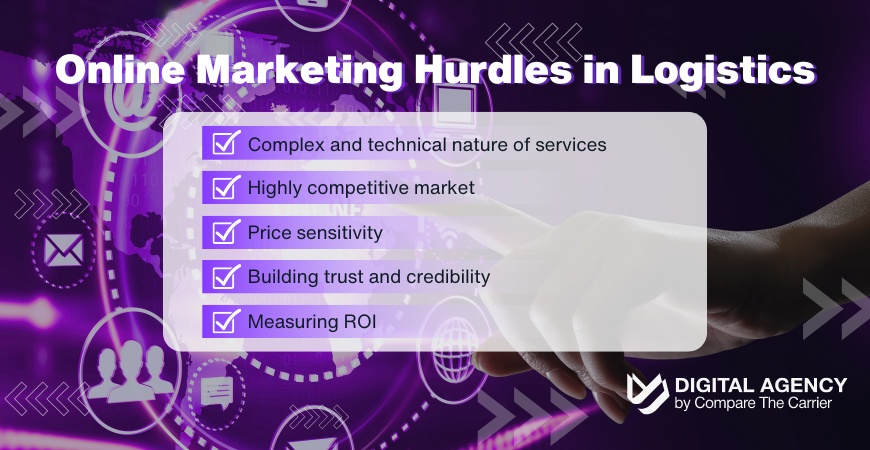
While the potential of online marketing in the transport and logistics industry is undeniable, it’s not without its hurdles. The logistics sector has unique characteristics that can make marketing a bit tricky. Let’s tackle some of the common challenges and how to overcome them:
Navigating the Challenges of Logistics Marketing
Complex and technical nature of services: Logistics isn’t exactly a walk in the park to understand. It involves intricate processes, industry jargon, and specialized knowledge. This can make it challenging to craft marketing messages that resonate with a broader audience.
Solution: Simplify your messaging. Use plain language, clear visuals, and relatable examples to explain your services in a way that anyone can grasp. Focus on the benefits and solutions you offer, not just the technical details. For inspiration, check out how industry leaders like UPS and FedEx simplify complex logistics concepts on their websites.
Highly competitive market: The logistics landscape is crowded with players, from local movers to global shipping giants. Standing out from the competition requires a strategic approach.
Solution: Carve out your niche. Identify what sets you apart – whether it’s your expertise in a specific type of cargo, your commitment to sustainability, or your personalized customer service. Highlight these unique selling points in your online marketing efforts. For brokerage firms looking to stand out, implementing advanced brokerage growth strategies is key to gaining a competitive edge.
Price sensitivity: In the logistics industry, cost is often a major factor in decision-making. Customers are always looking for the best value, which can put pressure on your pricing strategy.
Solution: Emphasize value over price. While competitive pricing is important, focus on showcasing the value your services provide. Highlight your reliability, efficiency, and track record of successful deliveries. Use testimonials and case studies to demonstrate how you’ve helped other customers save time and money. Consider offering value-added services like real-time tracking or customized logistics solutions to justify a premium price point.
Building trust and credibility: Trust is paramount in logistics. Customers are entrusting you with their valuable goods, so building credibility is essential.
Solution: Leverage social proof. Showcase customer testimonials, case studies, and industry certifications. Be transparent about your processes and pricing. Respond promptly to inquiries and address any concerns. Consider partnering with reputable organizations or industry associations to further enhance your credibility. The American Trucking Associations and the Council of Supply Chain Management Professionals are examples of organizations that can lend credibility to your business.
Measuring ROI: With so many online marketing channels and tactics available, it can be challenging to measure the return on investment (ROI) of your efforts.
Solution: Set clear goals and track key performance indicators (KPIs). Use analytics tools to monitor website traffic, lead generation, conversions, and customer acquisition costs. This data will help you identify what’s working and what’s not, allowing you to optimize your strategies for maximum ROI. Consider using tools like Google Analytics and marketing automation platforms to streamline your tracking and reporting.

By acknowledging and proactively addressing these challenges, you can pave the way for online marketing success in the transport and logistics industry. Remember, online marketing is a journey, not a destination. It requires ongoing effort, adaptation, and a willingness to learn and evolve.

If you’re feeling overwhelmed or unsure where to start, consider partnering with a digital agency specializing in logistics marketing. They can provide the expertise, tools, and support you need to navigate the complexities of the digital landscape and achieve your marketing goals.

Remember, Compare The Carrier’s Digital Agency is always here to help you overcome these challenges and achieve online marketing success. We specialize in providing tailored online marketing services for the logistics industry, and we’re ready to help you take your business to new heights.

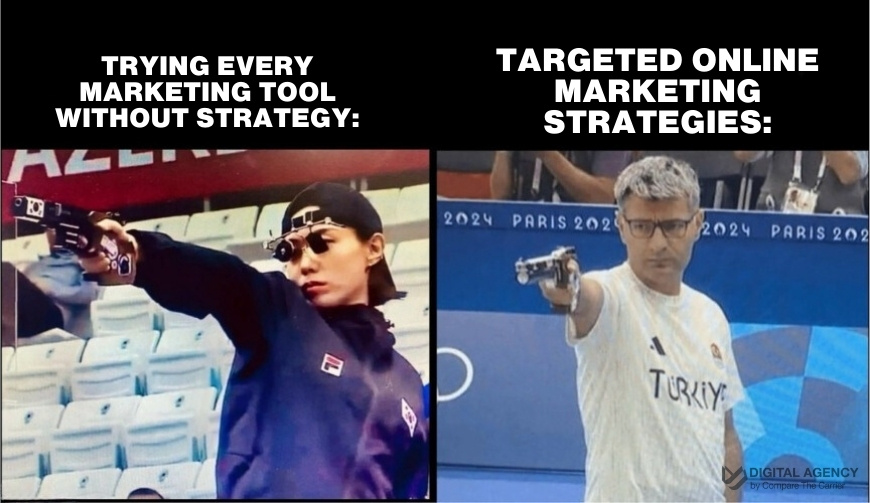
Let’s face it, the world of online marketing can be overwhelming, especially if you’re trying to tackle everything at once. It’s tempting to jump on every new trend and tool, but without a clear plan, you might just be shooting in the dark.
targeted online marketing strategies

In 2026, it’s all about precision. Ready to level up your logistics marketing?

This meme perfectly captures the mindset shift that logistics companies need to embrace. Instead of throwing everything at the wall to see what sticks, it’s time to hone in on targeted strategies that deliver real results. Just like the seasoned athlete in the meme who’s focused on hitting the target, your marketing efforts should be sharp, calculated, and designed to win.

Key Online Marketing Strategies for 2026

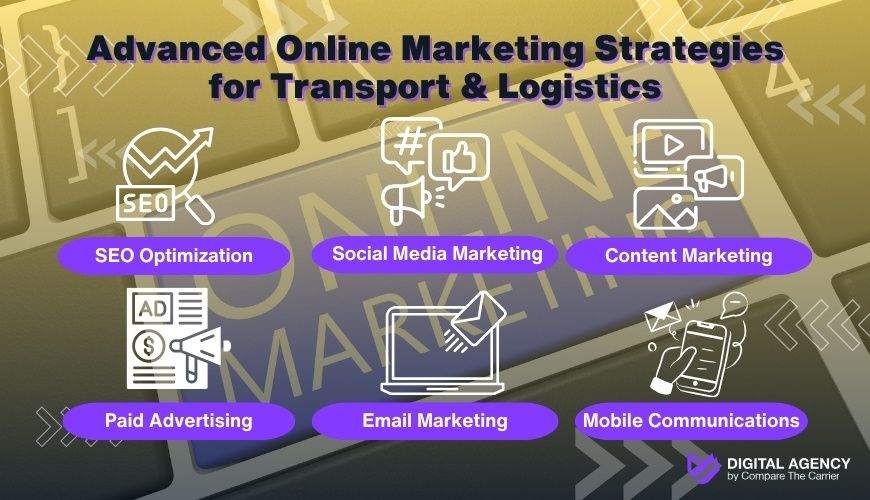
In the fast-paced world of 2026, where digital reigns supreme, your transport and logistics company needs a robust online marketing strategy to stay ahead of the curve. Let’s explore the key strategies that will propel your business forward:
Key Online Marketing Strategies for 2024
SEO Optimization: Think of SEO as the GPS guiding customers to your digital doorstep. By strategically executing an SEO strategy, you’ll climb the search engine rankings and attract more organic traffic. A well-optimized logistics website design is also critical to ensure that your SEO efforts are supported by a user-friendly and conversion-focused site.
Social Media Marketing: It’s time to get social! Platforms like LinkedIn, Facebook, and Instagram are buzzing with potential customers. Utilizing professional SMM for social networks helps you share engaging content, interact with your audience, and build a community around your brand.
Content Marketing: Don’t just tell customers you’re the best; show them. Create valuable, informative content like blog posts, white papers, and infographics that address their pain points. This establishes your expertise and drives your overall inbound marketing engine.
Paid Advertising: Need a quick boost in visibility? Setting up targeted campaigns through Google & Bing Ads for logistics allows you to target specific demographics and interests. This laser-focused approach ensures your message reaches the right people at the right time.
Email Marketing: Don’t underestimate the power of a well-crafted email. Nurture leads, share company updates, and offer exclusive promotions using email marketing automation to keep your audience engaged.
Mobile Communications: With the increasing reliance on smartphones, optimizing your online marketing for mobile is no longer optional it’s essential. Mobile-friendly websites and SMS marketing campaigns help you reach your audience wherever they are.

By combining these tactics, you’ll create a powerful online presence that drives leads, fosters customer loyalty, and ultimately boosts your bottom line.

The Compare The Carrier Advantage: Empowering Your Online Marketing

In the competitive world of transport and logistics, having a solid online marketing strategy is essential. But executing that strategy effectively requires expertise, time, and resources that many companies simply don’t have in-house. That’s where Compare The Carrier’s Digital Agency steps in.

We understand the unique challenges and opportunities in the logistics industry. Our team of seasoned marketers has a proven track record of helping transport and logistics companies achieve remarkable results online. We’re not just another agency; we’re your strategic partner, dedicated to your success.
Partner with Compare The Carrier Digital Agency for PPC Success 1 2026's Top Online Marketing Strategies for Logistics 6

Here’s how we can empower your brand with our online marketing services:

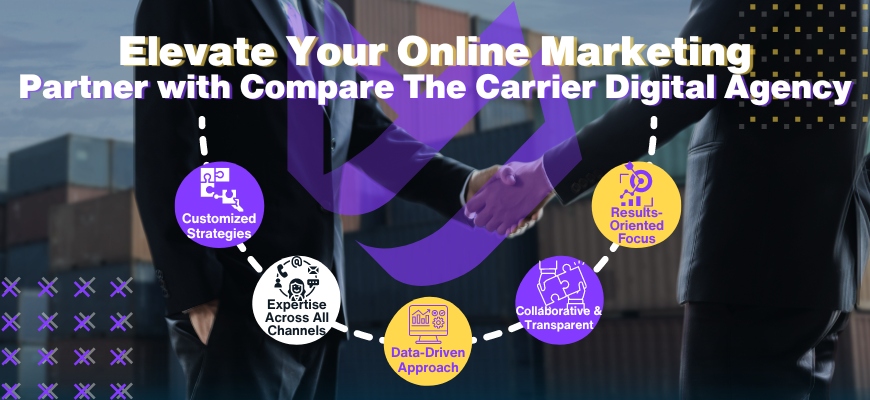
Customized Strategies: We don’t believe in one-size-fits-all solutions. We’ll work closely with you to understand your business goals, target audience, and competitive landscape. Then, we’ll craft a tailored online marketing strategy that aligns with your specific needs.
Expertise Across All Channels: From SEO and social media to content marketing and paid advertising, we have the expertise to execute your strategy seamlessly across all digital channels.
Data-Driven Approach: Using a data-driven approach, including advanced PPC tactics, ensures that your online marketing is both effective and efficient. We believe in measuring results, not just making promises. We’ll track key performance indicators (KPIs) and provide regular reports so you can see the impact of our efforts.
Transparency and Collaboration: We’ll keep you in the loop every step of the way. You’ll have full visibility into our work and the opportunity to provide feedback and input.
Results-Oriented: Our ultimate goal is to help you achieve your business objectives. We’re committed to delivering measurable results that drive growth and profitability.

Conclusion: Take the Wheel and Drive Your Online Marketing Success

The transport and logistics industry is undergoing a digital transformation. Companies that embrace online marketing will thrive, while those that don’t risk getting left behind. It’s time to take the wheel and drive your online marketing success.

Remember:

Online marketing is essential for visibility, lead generation, and customer engagement in the logistics sector, particularly when acquiring your first clients.
Overcome challenges like complex services, competition, and price sensitivity with strategic online marketing.
Utilize key strategies like SEO, social media, content marketing, paid advertising, and email marketing, transitioning from cold calls to hot leads for maximum impact.
Partner with Compare The Carrier’s Digital Agency to leverage expertise and achieve remarkable results.

Don’t wait for opportunities to come to you. Seize them by proactively implementing a robust online marketing strategy. Partnering with one of the top digital agencies can provide the expertise needed to navigate the complex landscape of logistics marketing.

With the right approach and the support of Compare The Carrier’s Digital Agency, you can navigate the digital landscape with confidence and achieve lasting success in the transport and logistics industry.

FAQ

How much should I budget for online marketing in the transport and logistics industry?

A standard baseline for logistics and transport companies is allocating 7-8% of gross revenue to marketing. B2B logistics firms should direct at least 50% of this budget specifically toward digital channels like SEO, content, and paid search. Adjust this baseline upward if you are aggressively scaling or entering new regional markets.

What are the most effective online marketing channels for logistics companies?

Search Engine Optimization (SEO) and targeted content marketing yield the highest long-term ROI by capturing supply chain managers actively searching for shipping solutions. Additionally, LinkedIn is the top-performing social channel for B2B logistics networking. For immediate lead generation, targeted Google Ads focused on specific freight routes or services work best.

How long does it take to see results from online marketing?

Timelines depend entirely on the chosen channel. Paid search campaigns (Google Ads) can generate qualified logistics leads within 24 to 48 hours. Conversely, organic strategies like SEO and content marketing require a sustained effort, typically taking three to six months to produce measurable increases in search rankings and organic traffic.

Can I handle online marketing in-house, or should I hire an agency?

In-house teams work well if you have the budget to hire dedicated specialists for SEO, PPC, and content creation. However, outsourcing to a specialized B2B digital agency is often more cost-effective for mid-sized logistics providers. Agencies supply immediate access to advanced analytics tools and established industry-specific marketing frameworks.

What are some common mistakes to avoid in transport and logistics marketing?

The most frequent mistake is relying entirely on outbound cold calling while ignoring inbound digital channels. Other critical errors include failing to optimize websites for mobile users (like truck drivers or on-the-go dispatchers), competing solely on price rather than service reliability, and not tracking customer acquisition costs across different campaigns.

What services should a digital marketing agency provide for a logistics company?

A specialized digital agency must offer industry-specific SEO, targeted B2B paid advertising, and technical website optimization. They should understand complex supply chain terminology, provide transparent performance tracking via analytics dashboards, and seamlessly integrate marketing efforts with your existing sales systems to convert digital traffic into booked freight contracts.

Review us on Trustpilot
0 0 votes
Article Rating
Subscribe
Notify of
guest
0 Comments
Oldest
Newest Most Voted
Inline Feedbacks
View all comments
Pass It Along!

If you found this article useful, share it with your friends