
But how do you actually find reliable freight partners? Not the ones with flashy websites and vague promises, but the ones who’ll still answer your calls at 5pm on a Friday when a shipment’s stuck in customs.
Here’s what matters.
Start with Their Track Record, Not Their Sales Pitch
Anyone can promise fast delivery and competitive rates. What you need is proof they’ve done it before.
Look for partners with at least 5 years of industry experience. Ten is better. Experience matters in freight because problems are inevitable. Containers get delayed. Paperwork goes missing. Weather happens. You want a partner who’s seen it all and knows how to fix things quickly.
Check their client retention rate if they’ll share it. A UK freight forwarding company that’s kept the same customers for years is doing something right. High turnover in their client base? That’s a red flag.
Ask for references. Actually call them. Don’t just tick a box and move on. Ask specific questions about how the freight partner handled problems, not just whether deliveries arrived on time.
Specialisation Matters More Than You Think
Some freight forwarders try to do everything. They’ll ship anything, anywhere, any time. Sounds great until you realise they’re mediocre at all of it.
You want specialists.
If you’re shipping temperature-controlled pharmaceuticals, find a partner who regularly handles pharma. Moving automotive parts? Work with someone who understands the compliance requirements for that sector. According to research from the Council of Supply Chain Management Professionals, companies using specialised logistics partners experience 23% fewer delays than those using generalist providers.
Geography matters too. A freight forwarder with strong European networks might struggle with Asian routes. Someone brilliant at air cargo might be useless for ocean freight.
Match their strengths to your actual needs. Not your theoretical future needs. Your real ones, right now.
Technology Integration Can Make or Break You
Technology Integration: Your Competitive Edge. You cannot afford blind spots in your supply chain. You need to know exactly where your freight is at all times. Real-time tracking isn’t a “nice-to-have” feature anymore; it’s the industry standard. Your logistics partner should plug directly into your current systems. Frankly, if they are still emailing you static Excel sheets or PDFs to keep you updated, you’re looking at yesterday’s logistics. Here is the functionality that actually matters:
Relying on manual processes is a trap. It wastes time, invites human error, and kills scalability. You simply can’t hire enough people to keep up with inefficient workflows. Good technology also gives you clarity. It provides actionable data on delivery speeds and costs, helping you make smart, fact-based decisions about which routes to expand and which partners aren’t pulling their weight.
Financial Stability Protects Your Business
A freight partner going bust while your shipment is on the road is the ultimate disruption. It is a risk you simply cannot afford to take.
Vetting their financial stability is just as important as checking their rates. Pay close attention to:
The numbers back this up. According to the International Road Transport Union (2024), nearly 20% of freight forwarders fail in their first three years. You don’t want to be the client caught in that collapse.
Finally, check their insurance. Proper coverage isn’t just about safety; it’s a litmus test. If they carry comprehensive insurance, it signals they have the financial strength and compliance discipline to be a long-term partner.
Communication Style Reveals Everything
Here’s a test: send them a complex query at 4pm on a Wednesday. See how fast they respond and whether they actually answer your question.
Good freight partners communicate proactively. They tell you about delays before you have to ask. They explain what went wrong and what they’re doing to fix it. They don’t hide behind jargon or blame others.
You want a partner who speaks your language. Literally and figuratively. If you’re handling international shipments and they can’t communicate clearly with overseas partners, problems multiply fast.
Response time matters. A lot. If it takes three days to get a quote, imagine how long it’ll take to resolve a real emergency.
Flexibility Beats Rigid Contracts
As you scale, things change. That is just the nature of growth. Naturally, your freight needs will fluctuate too.
Steer clear of logistics providers that try to trap you in strict, long-term commitments with heavy penalties for early exit. You need the freedom to adapt when the market shifts, not a piece of paper holding you back.
Instead, look for partners who offer:
According to Logistics Management, two-thirds of growing businesses switch freight partners in their first two years. Being stuck in an inflexible contract just makes that transition painful and costly.
Their Network Is Your Network
Your freight partner’s influence determines your success. It’s that simple.
Dig into their relationships. Do they have direct lines to carriers and customs agents in the regions that matter to you? Can they pivot to multi-modal shipping instantly? When a disruption hits, you want a partner who has a “Plan B” ready to go.
A deep network means you aren’t stuck. It gives you leverage for better prices and quicker solutions.
Ask them the hard questions: Are they a VIP customer with big carriers, or just one of thousands fighting for cargo space? That “preferred” status is what guarantees your goods get moving when capacity is tight.
Also, think ahead. As you enter new markets, make sure their network is wide enough to support your growth so you don’t outgrow them.
Customs Expertise Saves Time and Money
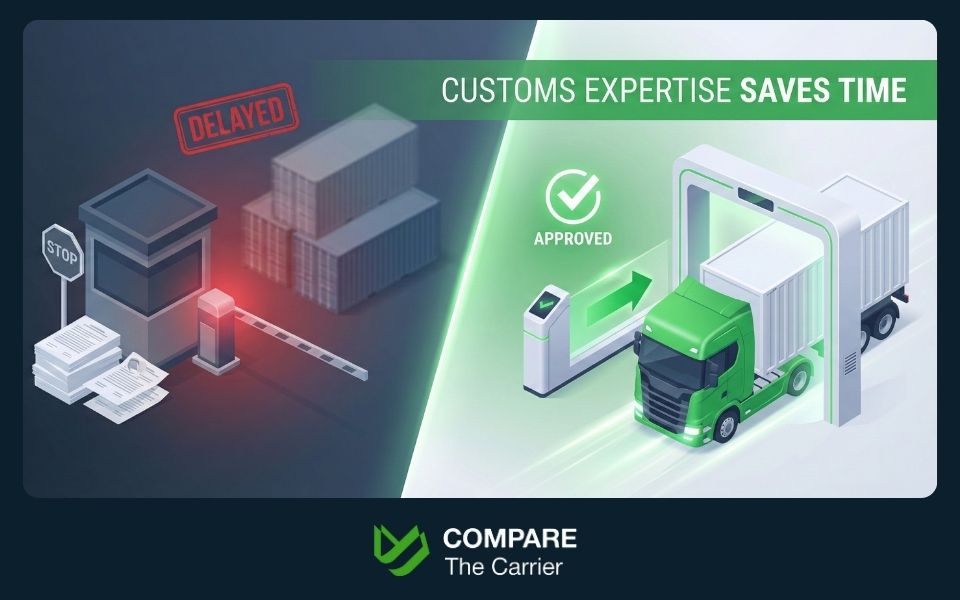
Customs delays are more than just an inconvenience; they destroy customer trust.
Your logistics partner needs to be a compliance expert, not just a mover of boxes. They need to navigate changing rules and complex documentation, so you don’t have to.
According to the World Customs Organisation (2023), 41% of cross-border delays come down to paperwork errors. That is a massive amount of preventable downtime.
Look for a partner who offers:
Here is how to vet them: Ask about a recent regulatory shift in your industry. If they stare at you blankly, they aren’t the experts you need.
Price Matters, But It’s Not Everything
Cheap freight partners cost you more in the long run.
Yes, you need competitive rates. But the cheapest option usually cuts corners somewhere. Maybe it’s insurance coverage. Maybe it’s tracking systems. Maybe it’s the quality of their carrier relationships.
Get detailed quotes from multiple partners. Compare like with like. What’s included? What costs extra? What happens if there’s a delay or damage?
Hidden fees are everywhere in freight. Fuel surcharges. Documentation fees. Customs clearance charges. Storage fees. Make sure you understand the total cost, not just the base rate.
A slightly more expensive partner who delivers consistently and handles problems quickly will save you money compared to a cheap option that creates constant headaches.
Start Small, Then Scale
Don’t hand your entire operation to a new freight partner on day one.
Start with a single lane or a small percentage of your volume. Test them properly. See how they handle routine shipments and whether they can solve problems when they arise.
Track their performance against specific metrics:
Give them three to six months to prove themselves. If they’re consistently hitting your standards, gradually increase their share of your business.
If they’re not performing, you haven’t risked everything on one partner. You can adjust quickly.
Trust Your Gut
Sometimes the numbers look good, but something feels off.
Maybe their sales team overpromises. Maybe they’re vague about their processes. Maybe they seem too eager to win your business without asking enough questions about your needs.
Good freight partners ask tough questions upfront. They want to understand your business, your pain points, and your growth plans. They’re honest about what they can and can’t do.
If a potential partner feels wrong, keep looking. There are plenty of reliable freight forwarders out there. Find one you trust.
The Bottom Line
Choosing freight partners isn’t about finding the cheapest option or the one with the best marketing. It’s about finding companies that will grow with you, solve problems proactively, and protect your reputation with your customers.
Do your homework. Test thoroughly. Start small. Scale gradually.
Your freight partners are an extension of your business. Choose them as carefully as you’d choose your own employees.
Because when they succeed, you succeed. And when they fail, it’s your phone that rings.